Keine Zollgebühren, weil wir aus deiner Region versenden. Versandkostenfrei ab 70 € / CHF 70 / $80 / £60
Unsere Website durchsuchen

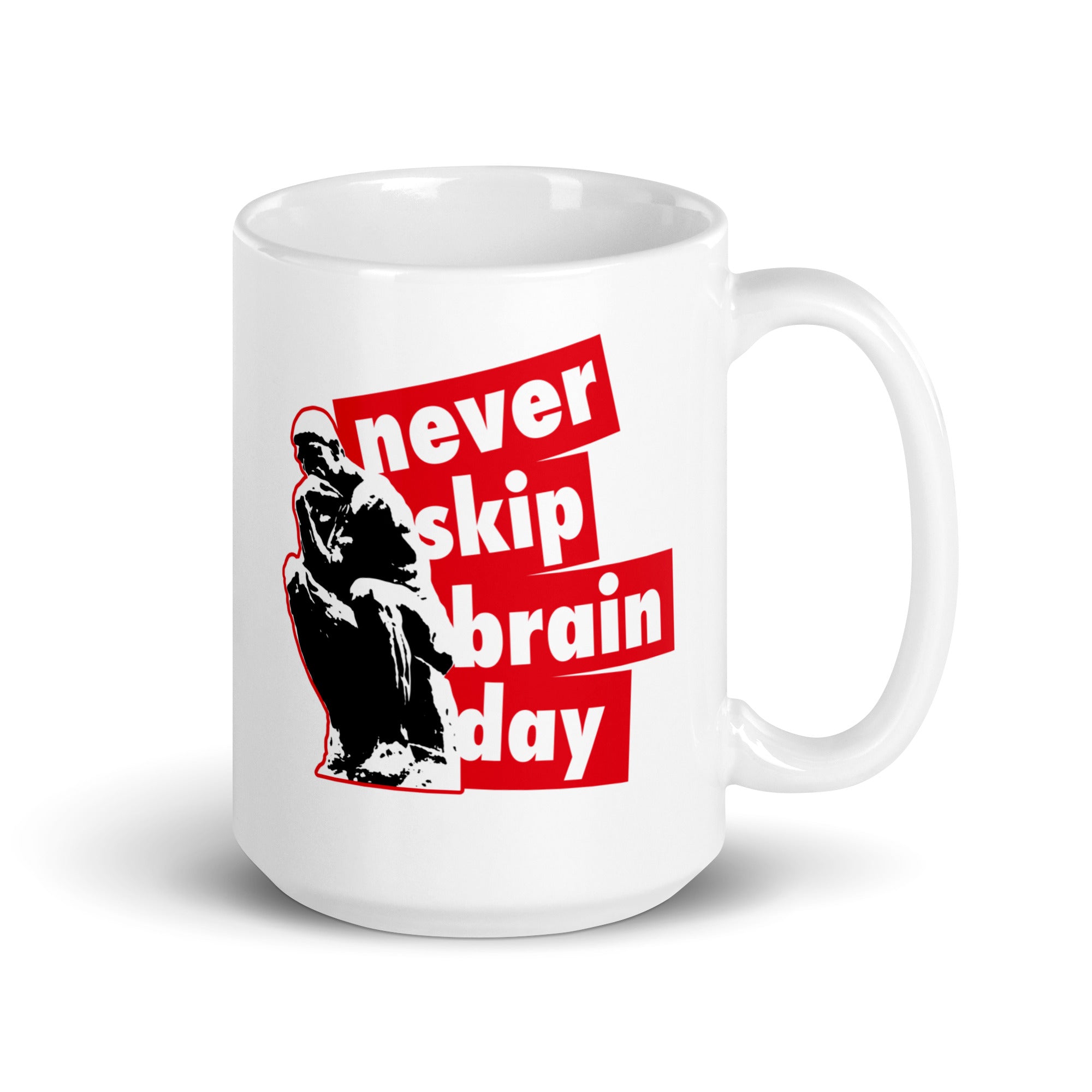
Never skip brain day

Everyone posts about leg day. Nobody posts about the muscle that decides whether any of it was worth doing.

Works in a squat rack and in a seminar, which very little does. The full range, in every format we make it in, all printed to order as you buy it. A funny philosophy gift for gym-going readers. Train the organ that has to live with your decisions.


Questions about this design

What does Never skip brain day mean?
It twists the gym saying never skip leg day – the warning not to train only the muscles you like showing off. Here the neglected muscle is the brain, and the trainer is Rodin’s The Thinker, shown in black and white next to bold red lettering. The point is old philosophy with a fitness accent; reading, arguing and doubting are training too, and the results last longer than a pump.
Who made The Thinker and what does it show?
The Thinker is a bronze sculpture by Auguste Rodin. He conceived it around 1880 as part of The Gates of Hell, a monumental doorway inspired by Dante’s Divine Comedy, where the seated nude figure looks down on the scenes below. It was first called The Poet; the name The Thinker came later. An enlarged version from 1902 became one of the most recognised images of thought itself.
Is Rodin’s Thinker meant to be Dante?
Originally, probably. On The Gates of Hell the figure sits above the door, contemplating the damned, and many art historians read it as Dante conceiving his poem. Others point out that the figure is nude and muscular, unlike the robed Dante of the Divine Comedy. Once Rodin exhibited it on its own, it became a universal symbol of human thought – body and mind straining together.
What does mens sana in corpore sano mean?
It is Latin for “a sound mind in a sound body”, from the Roman poet Juvenal’s Satire X (early 2nd century AD). In context it is not a fitness slogan but part of a prayer; since people pray for the wrong things, they should ask for a healthy mind in a healthy body, a brave heart unafraid of death and freedom from anger and greed. Only later did sports clubs and schools adopt it as a motto.
Was Plato really a wrestler?
According to Diogenes Laertius’ Lives of the Eminent Philosophers, yes. He trained under the wrestler Ariston of Argos, and some said the name Plato, from the Greek for broad, referred to his sturdy build – others to the breadth of his style or forehead. Diogenes also reports, citing Dicaearchus, that Plato wrestled at the Isthmian Games. Ancient biographies are not always reliable, but the image stuck.
Why did Plato and Aristotle teach in gymnasiums?
In ancient Athens the gymnasium was a public sports ground with tracks, colonnades and shaded walks – the natural place for young men to gather. Plato taught in the Academy, a gymnasium outside the city walls named after the hero Hecademus, and Aristotle in the Lyceum, another gymnasium, whose covered walkway, the peripatos, gave his Peripatetic school its name – tradition adds that he taught while walking. Training body and mind side by side was the norm.
What is the mind-body problem?
It is the question of how mental states such as thoughts and feelings relate to the physical body and brain. René Descartes made it famous by arguing in his Meditations (1641) that mind and body are two distinct substances. In 1643 Princess Elisabeth of Bohemia asked him how an immaterial mind could move a material body – a question that still shapes debates between dualism, materialism and functionalism.
Who is Never skip brain day a good gift for?
For gym regulars who also read, philosophy and psychology students, teachers, chess and quiz enthusiasts, and anyone who believes the most important workout happens between the ears. The design is available as a classic T-shirt, women’s T-shirt, sweatshirt, premium hoodie, mug and sticker – practical for the gym bag and the seminar room alike.