Keine Zollgebühren, weil wir aus deiner Region versenden. Versandkostenfrei ab 70 € / CHF 70 / $80 / £60
Unsere Website durchsuchen

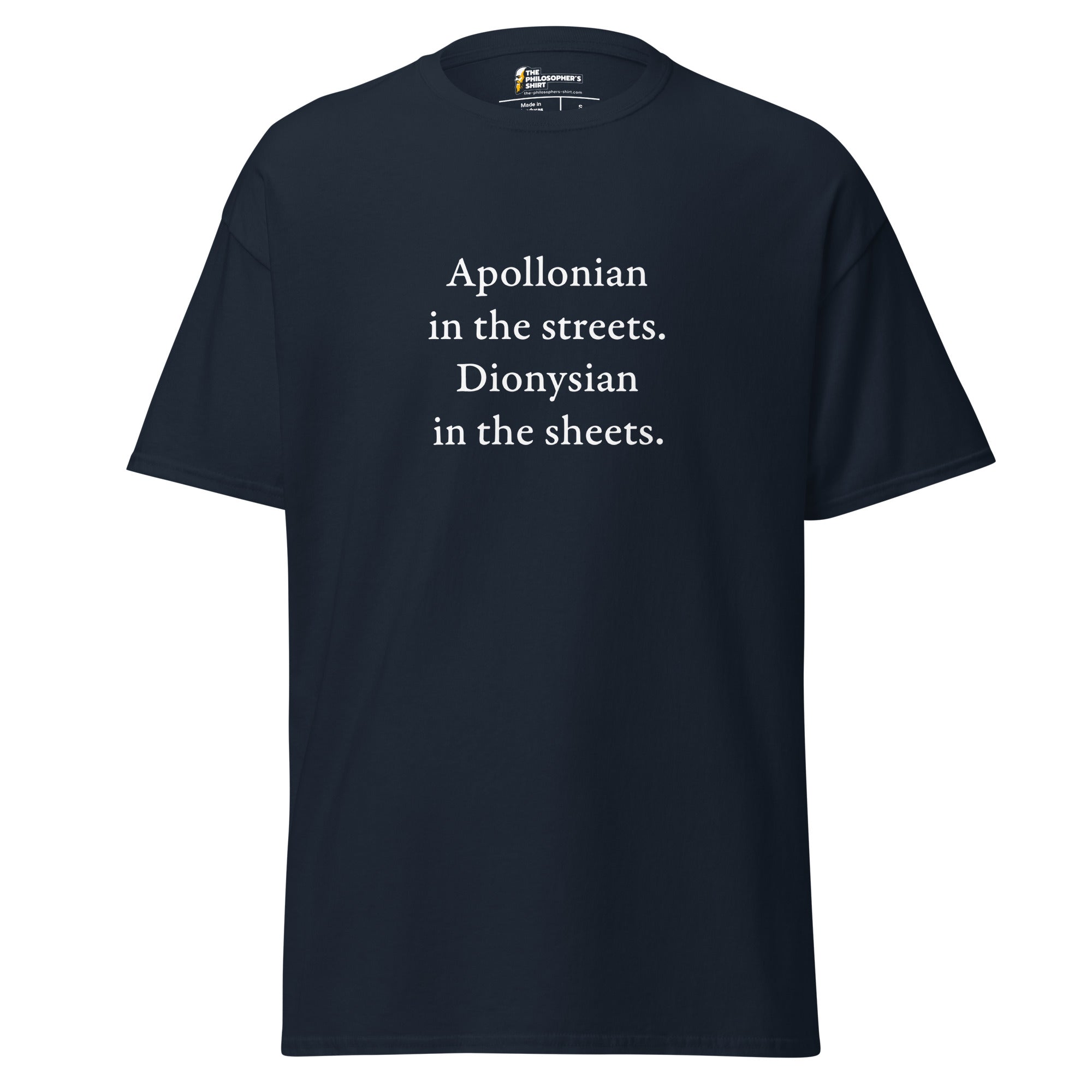
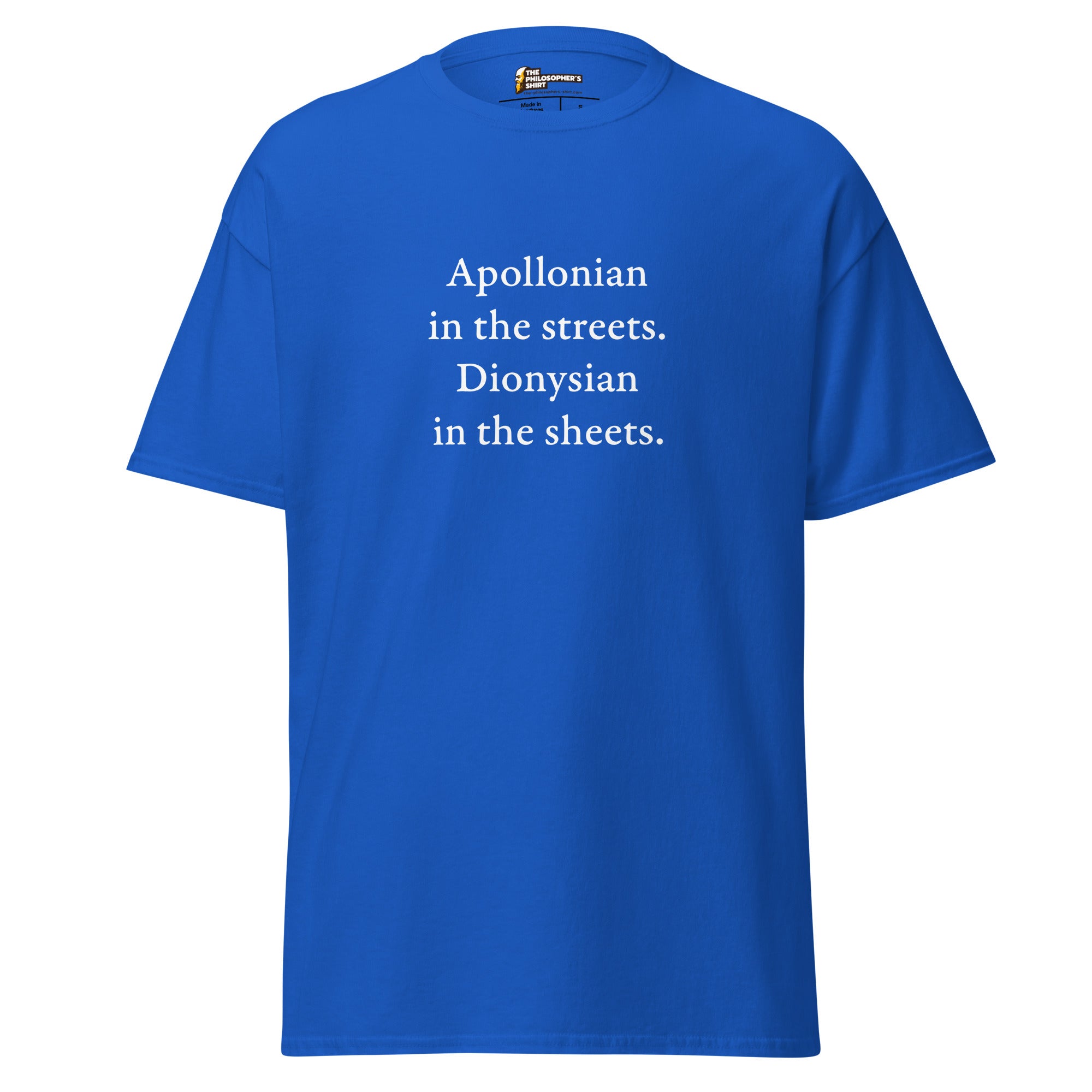
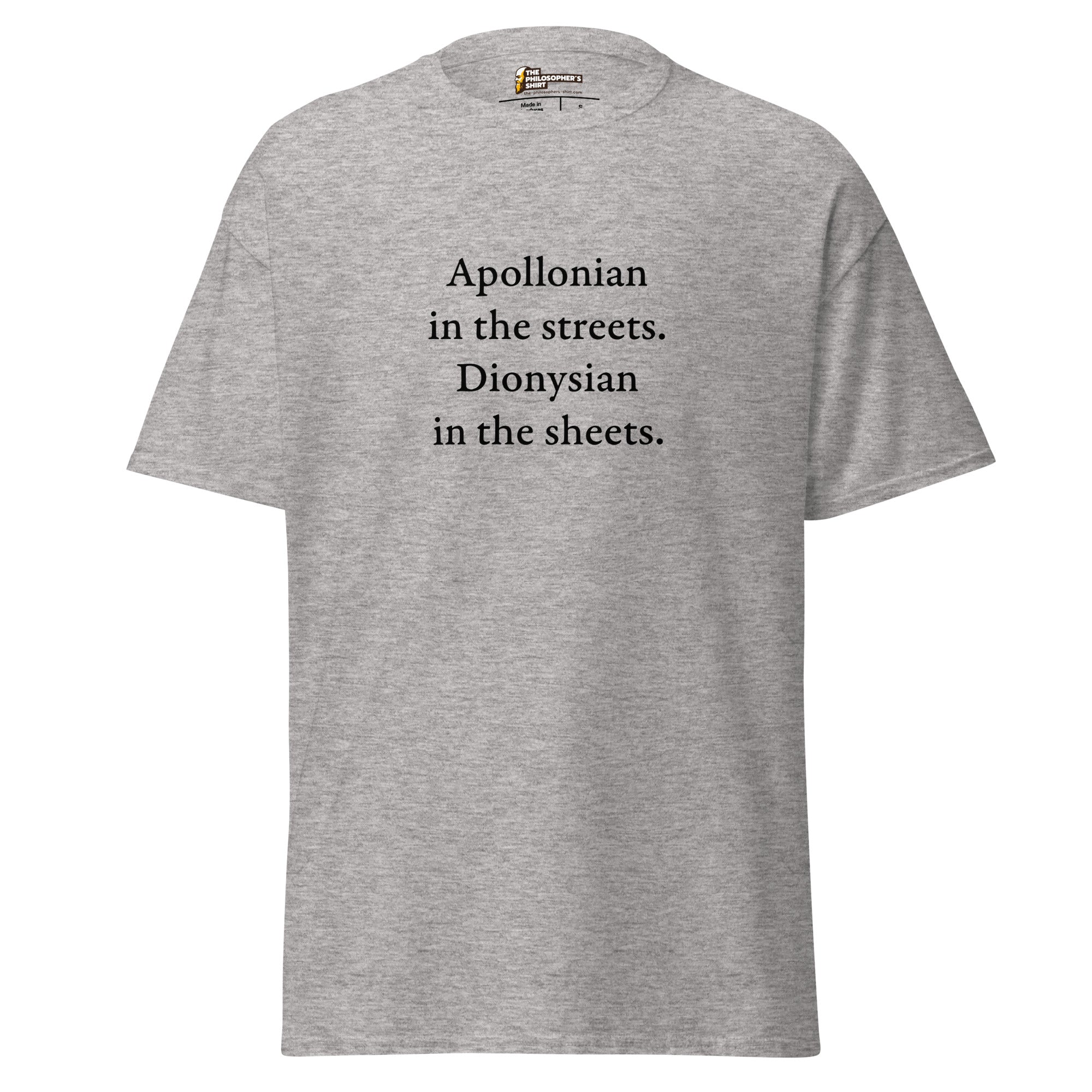
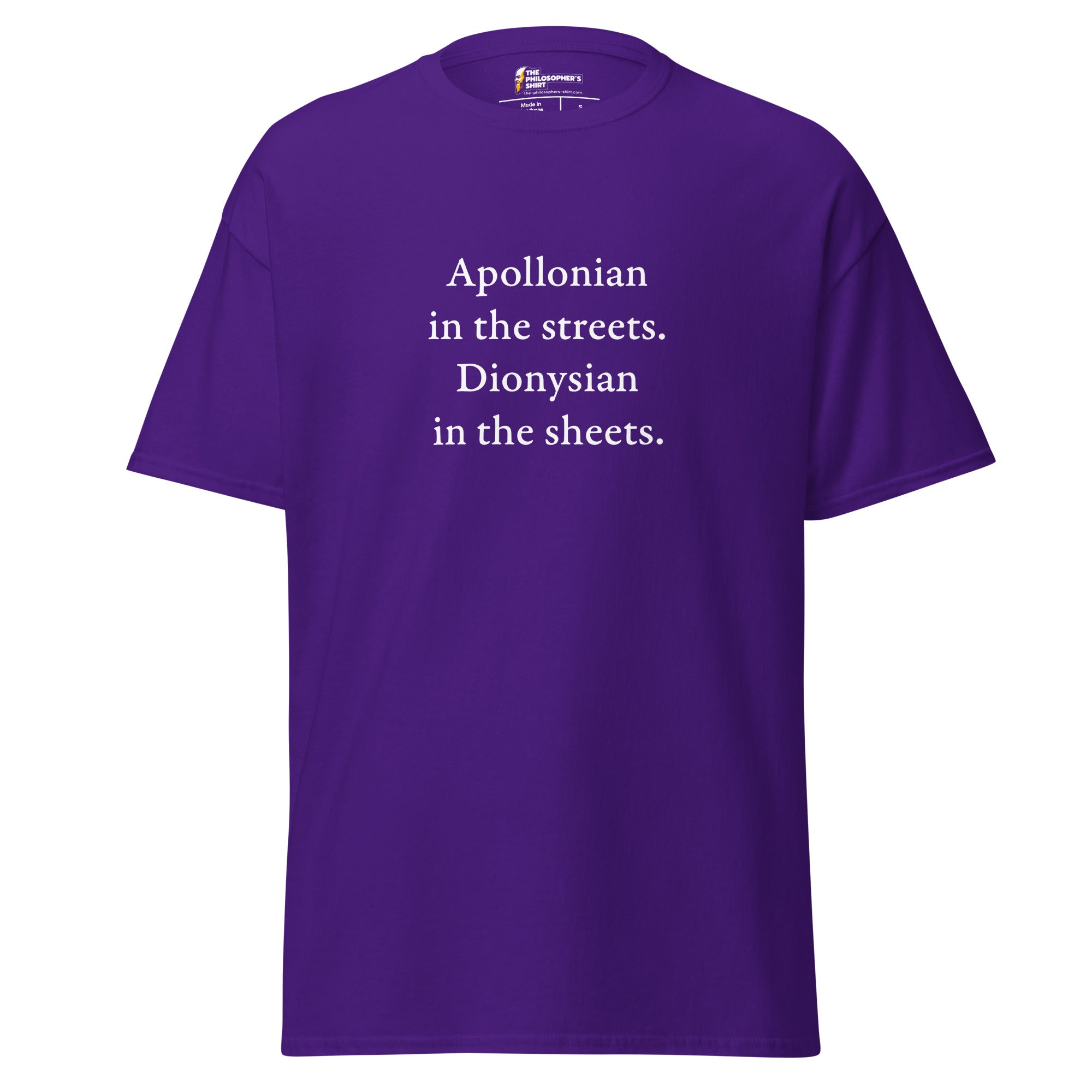
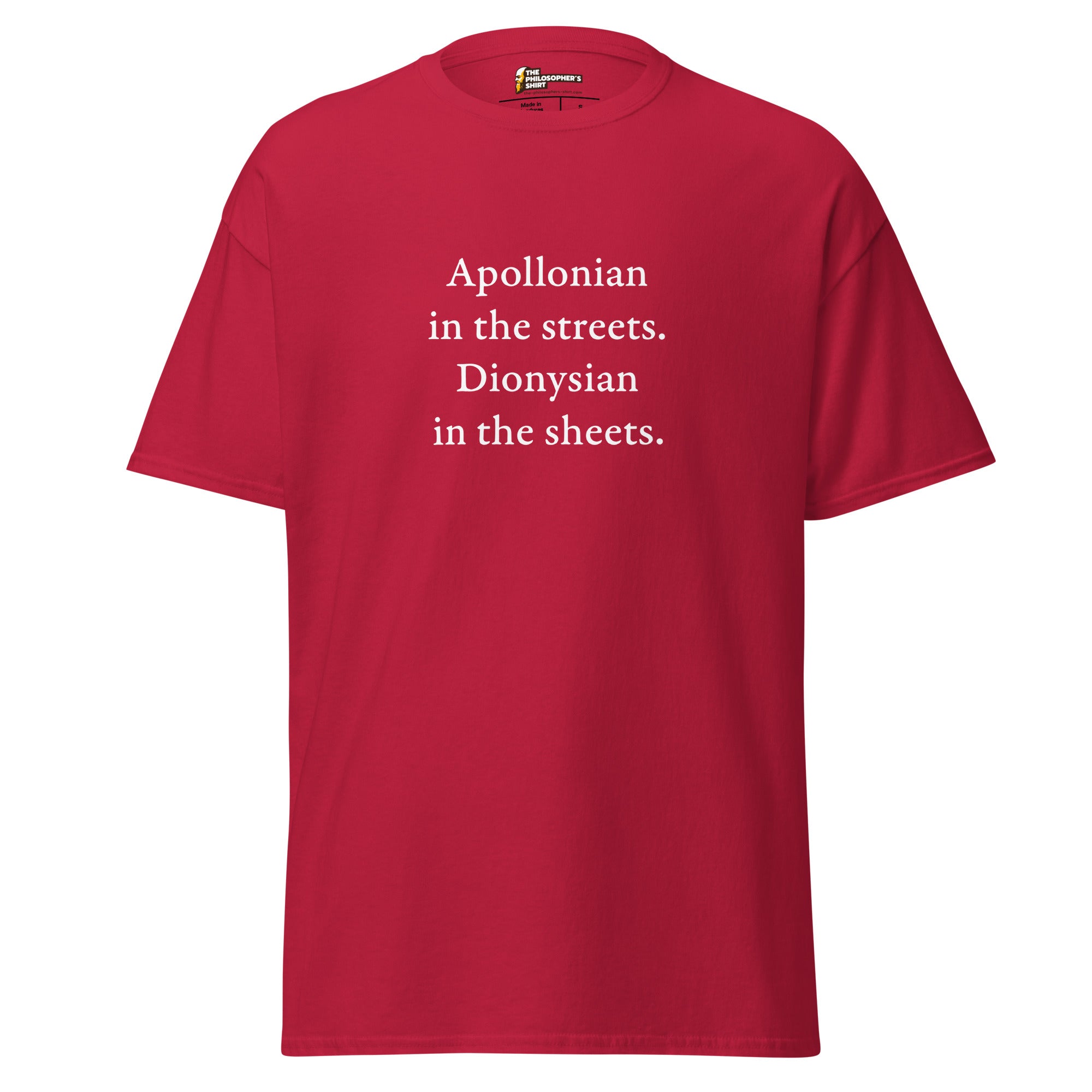
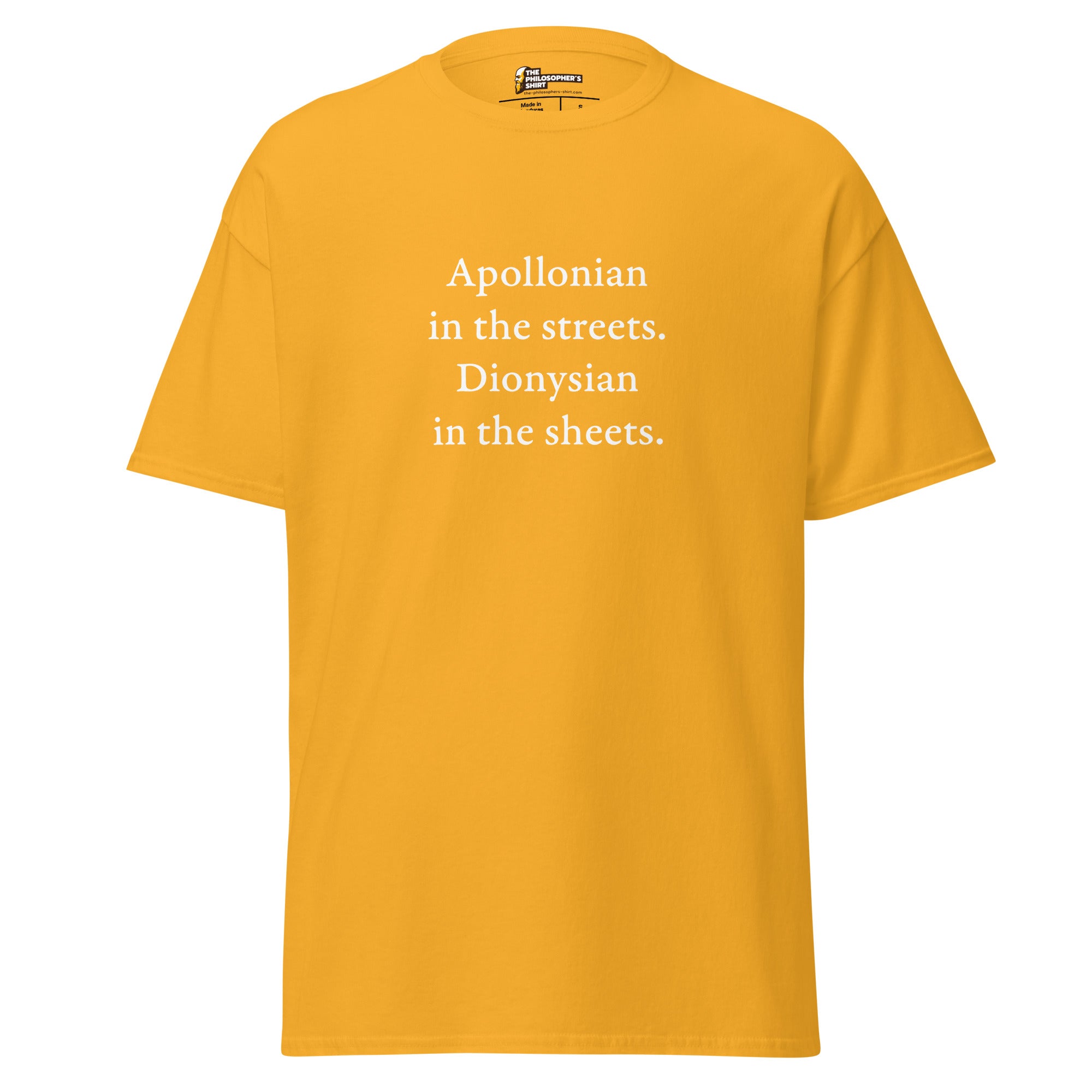
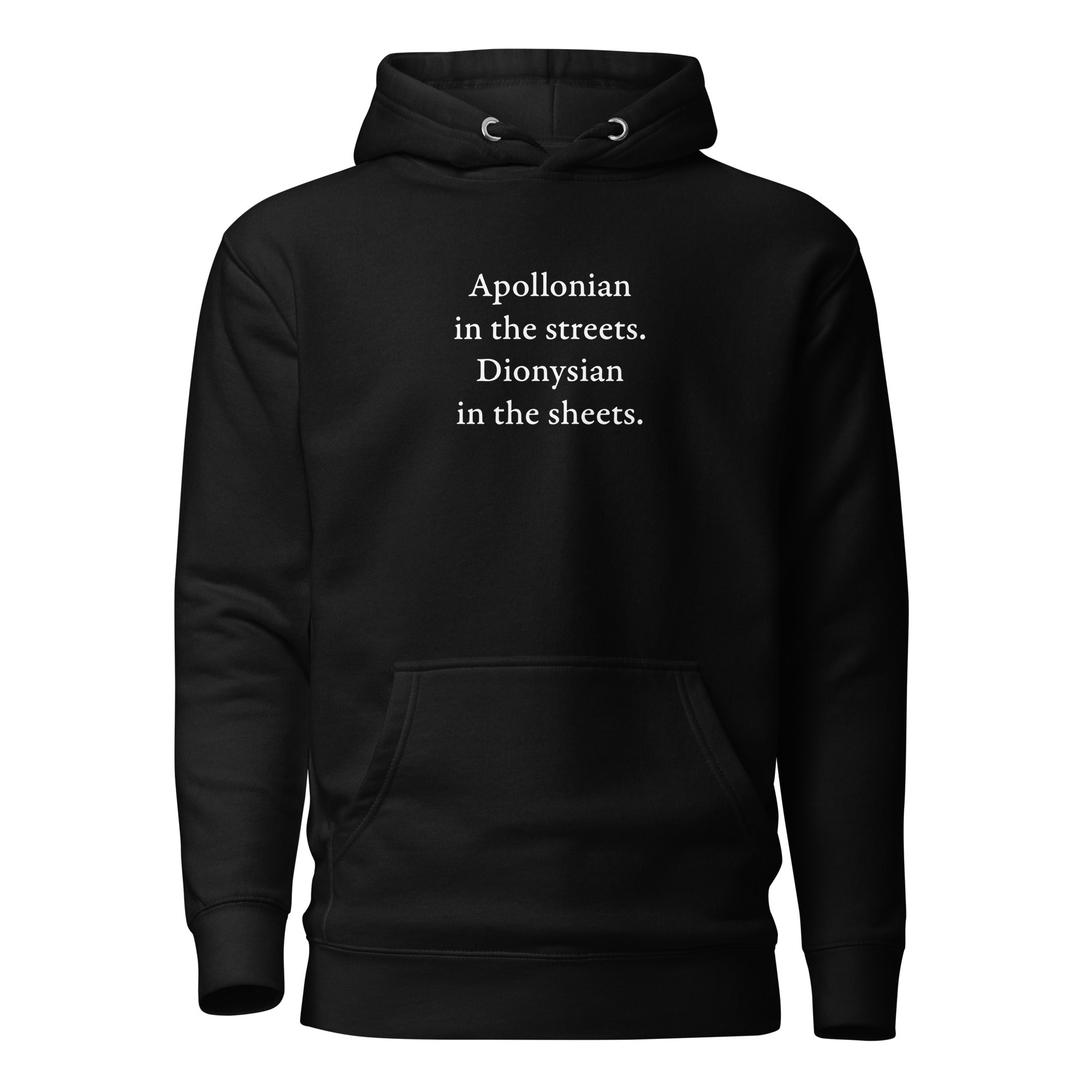
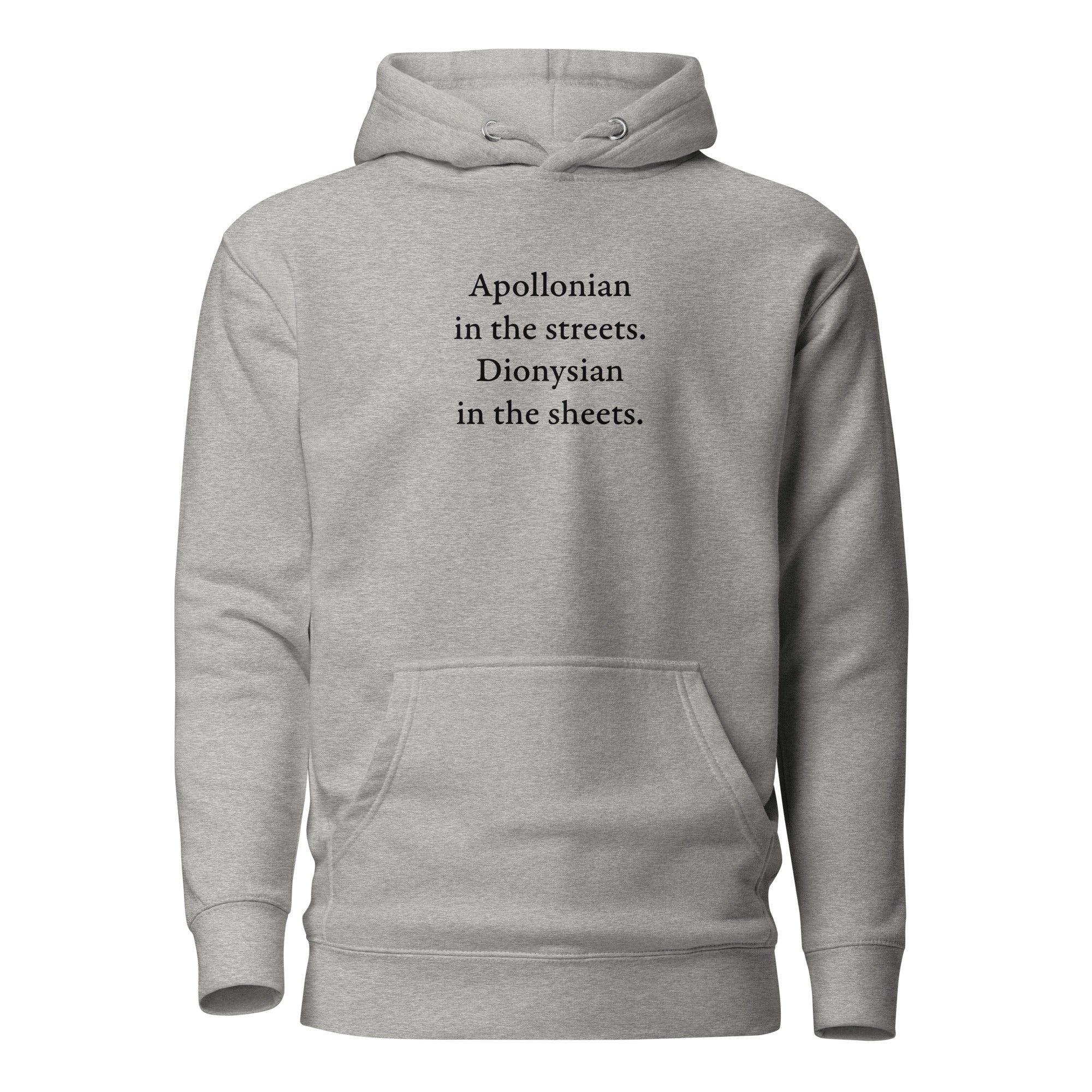
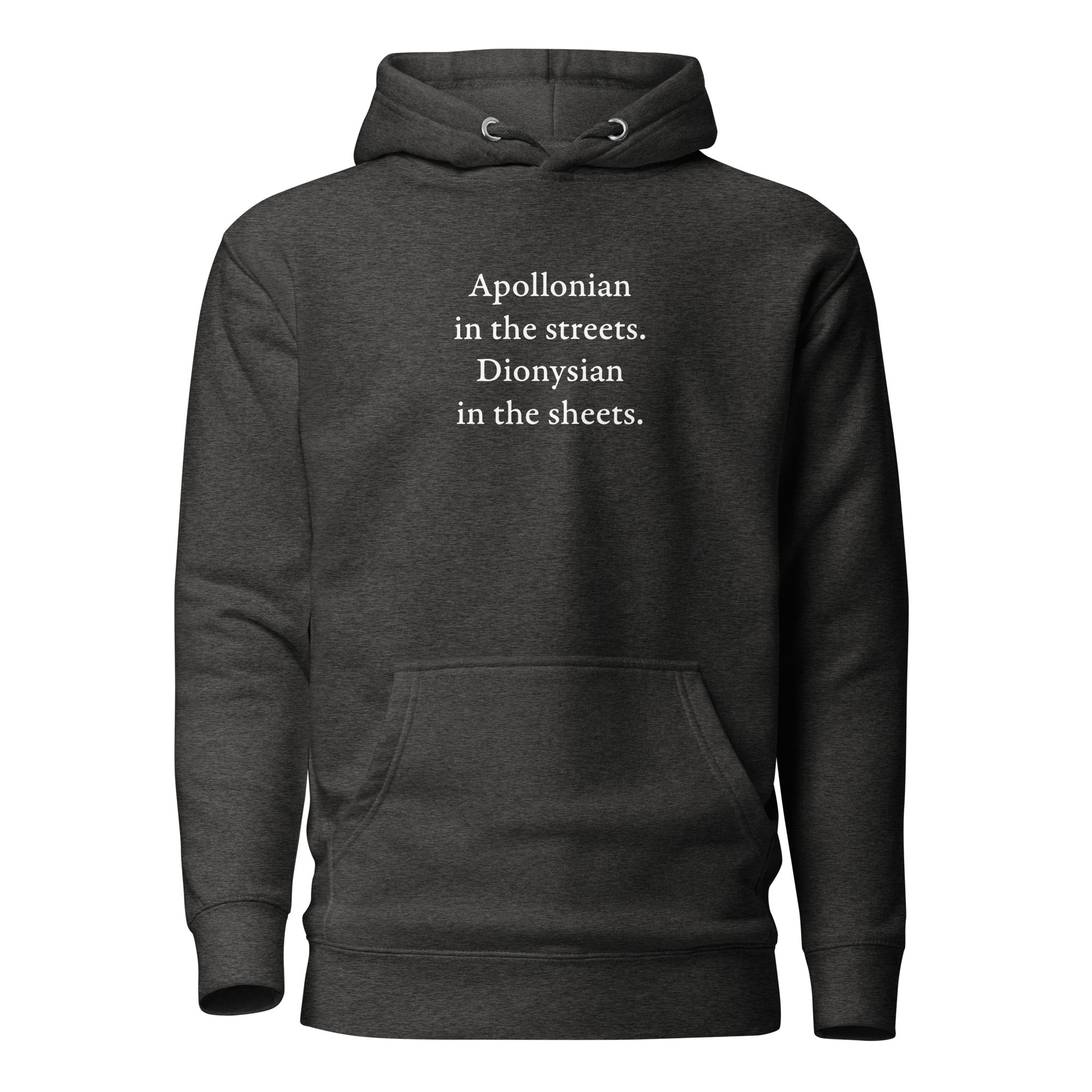
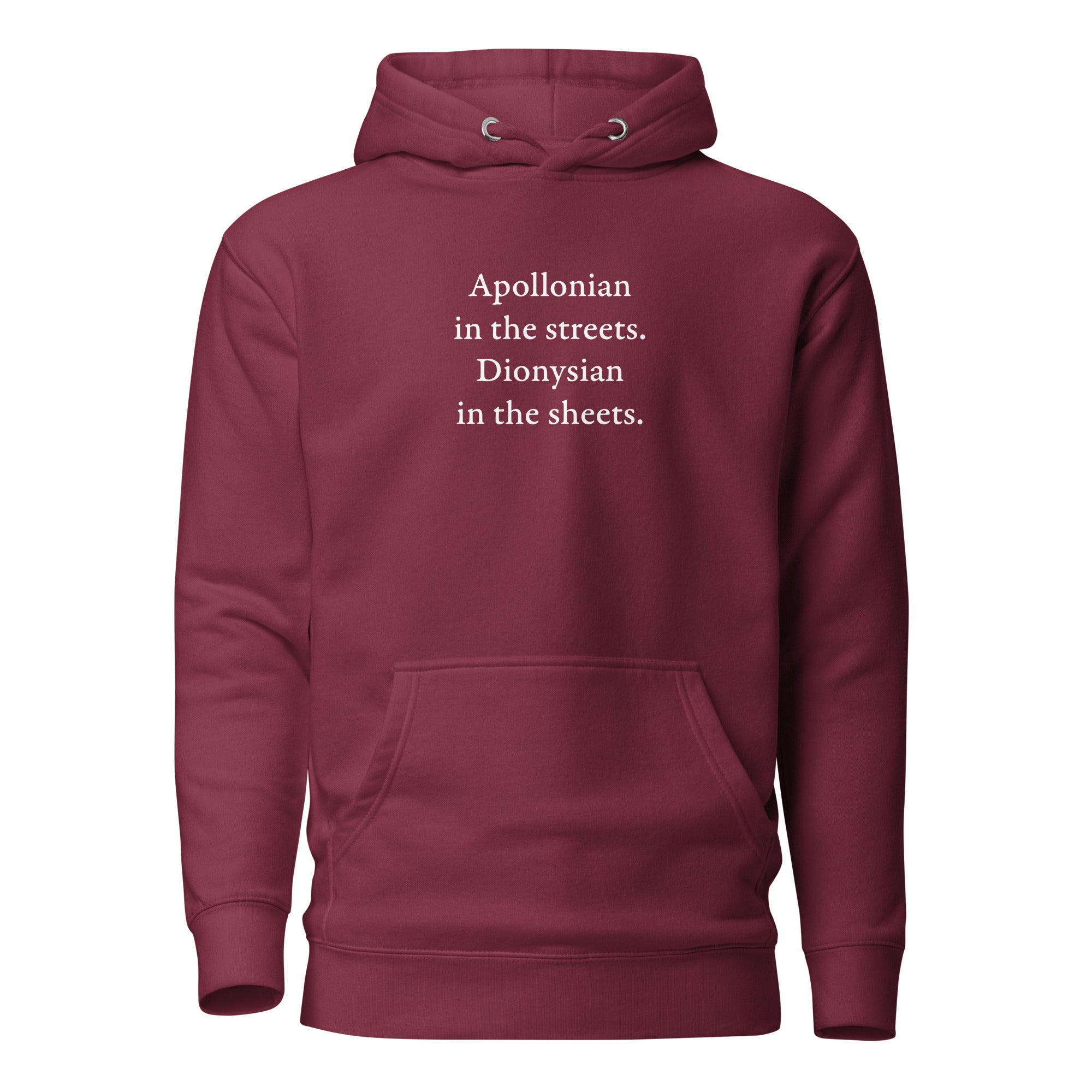
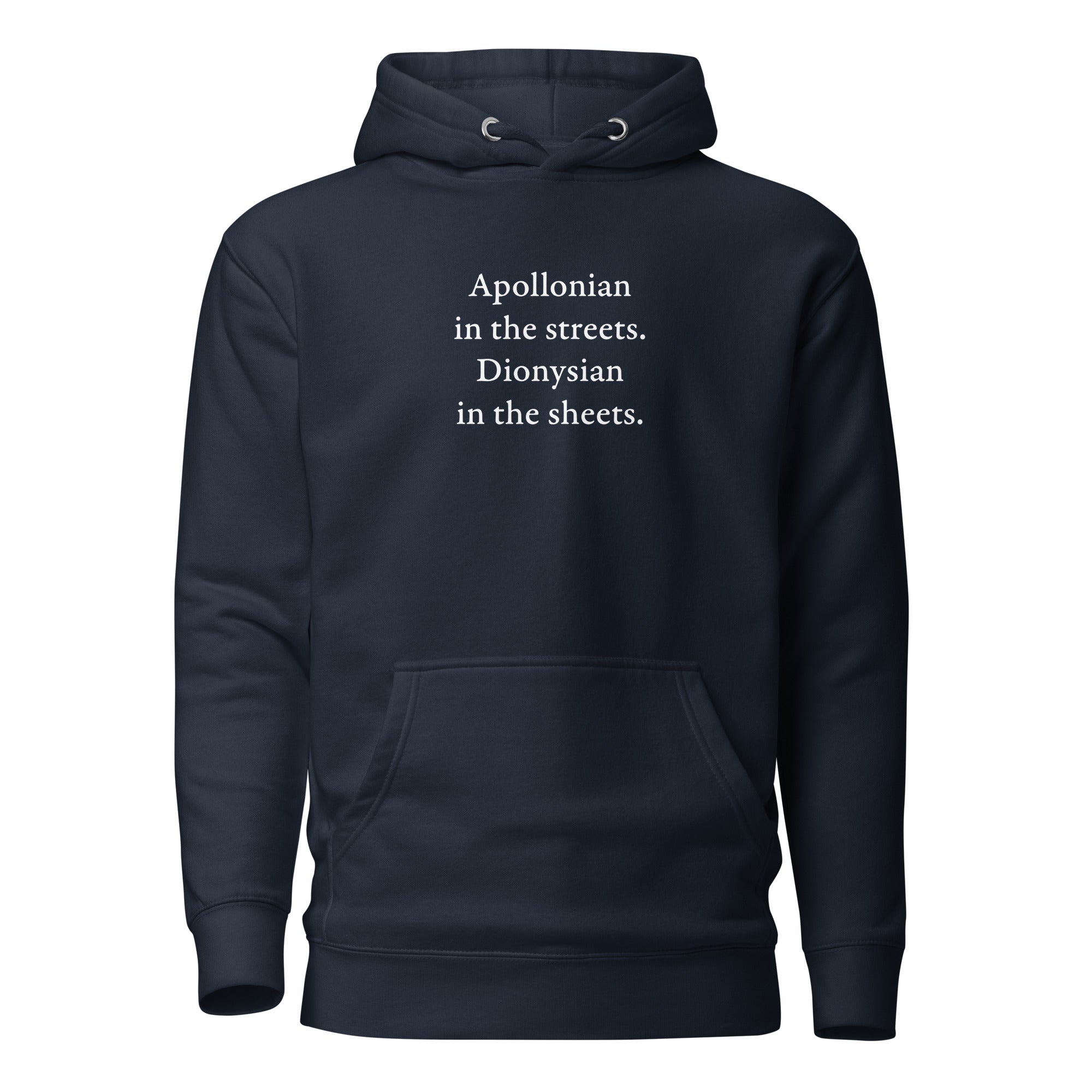
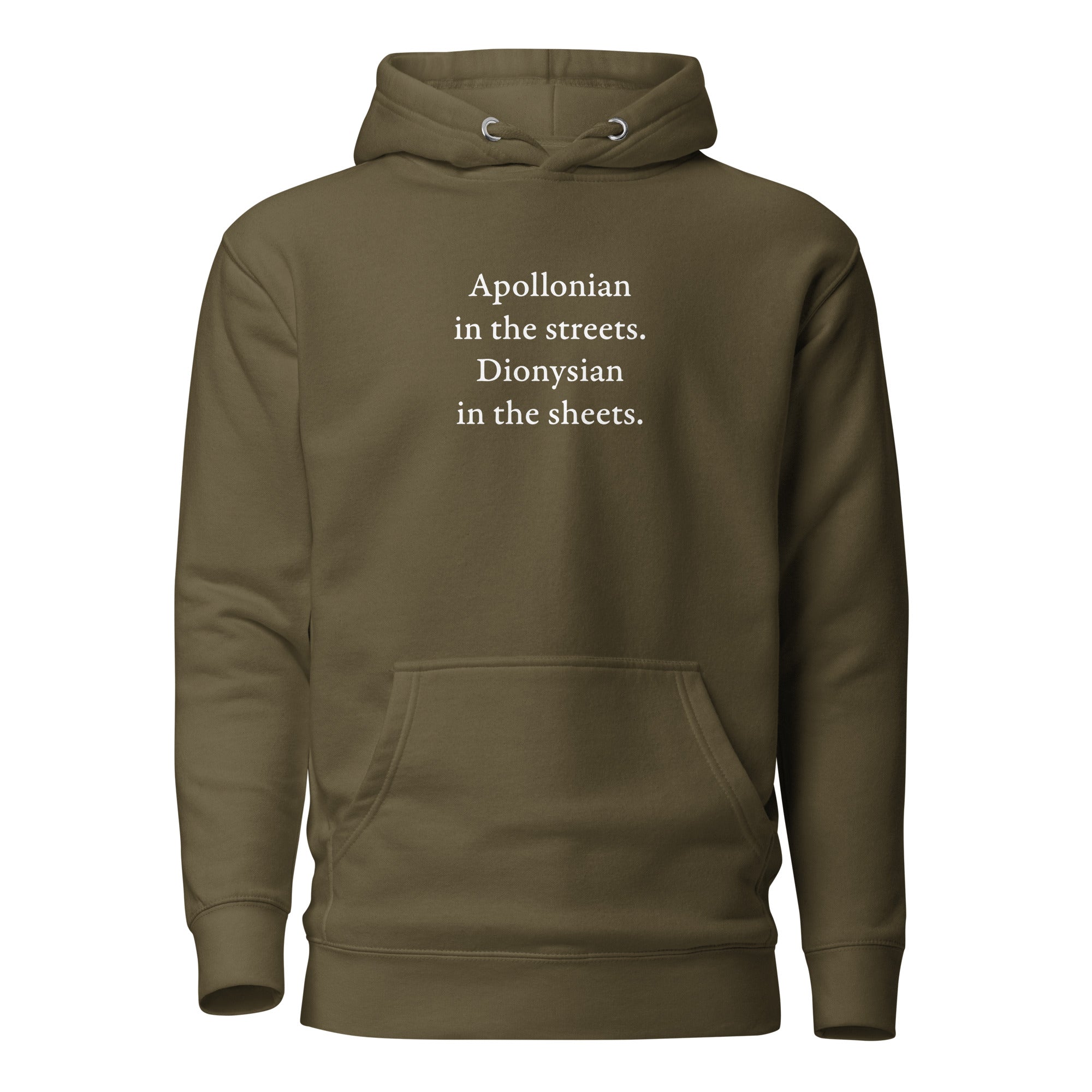
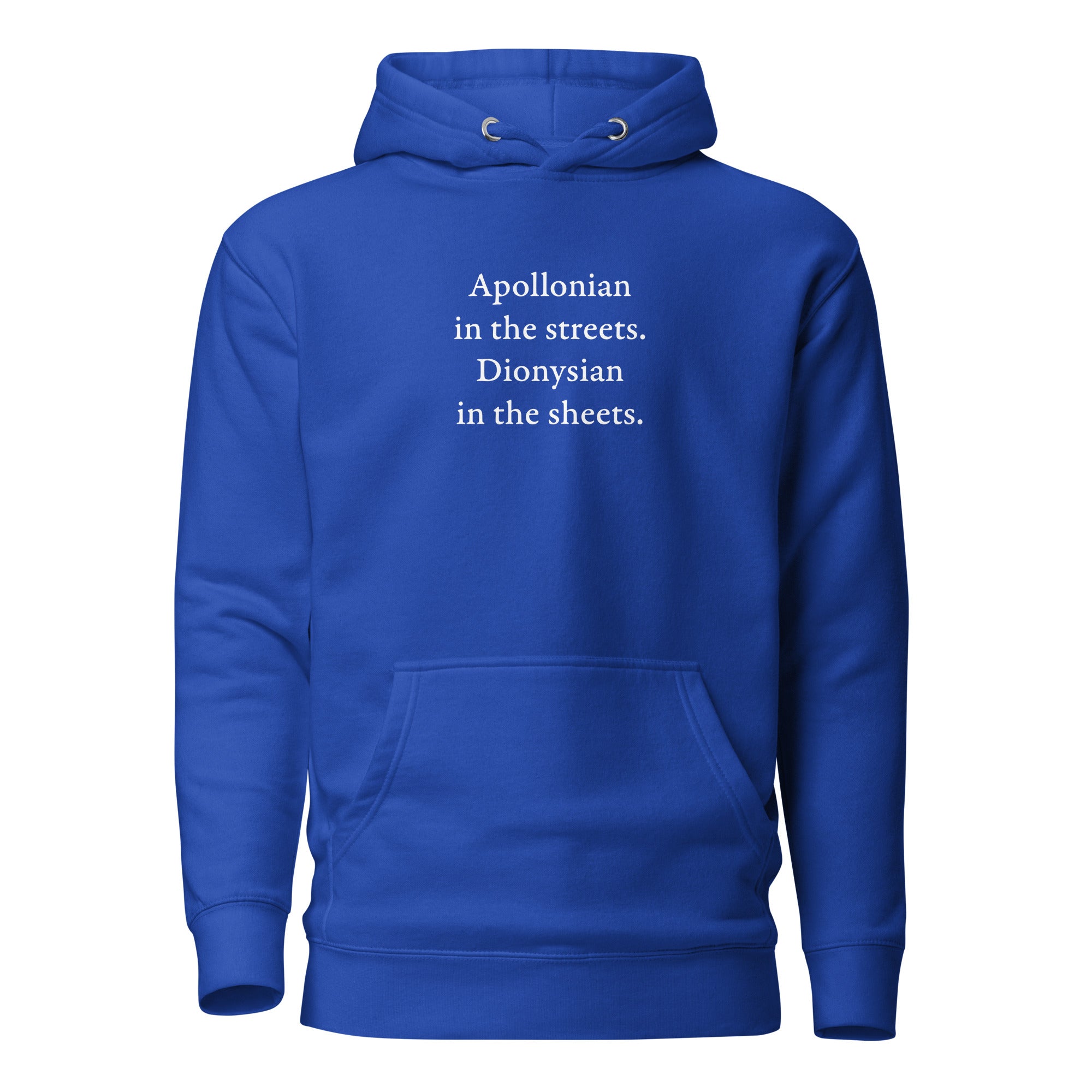
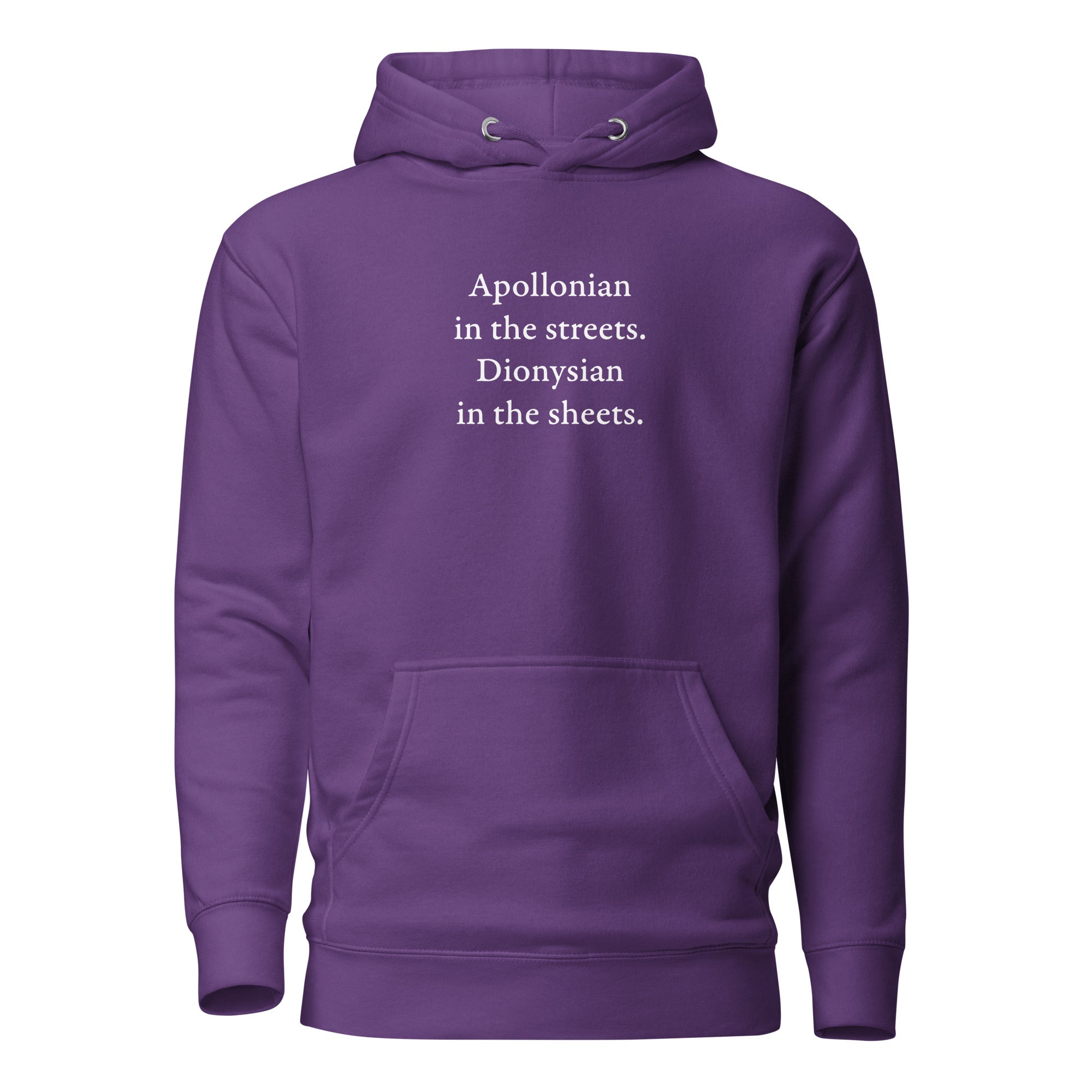
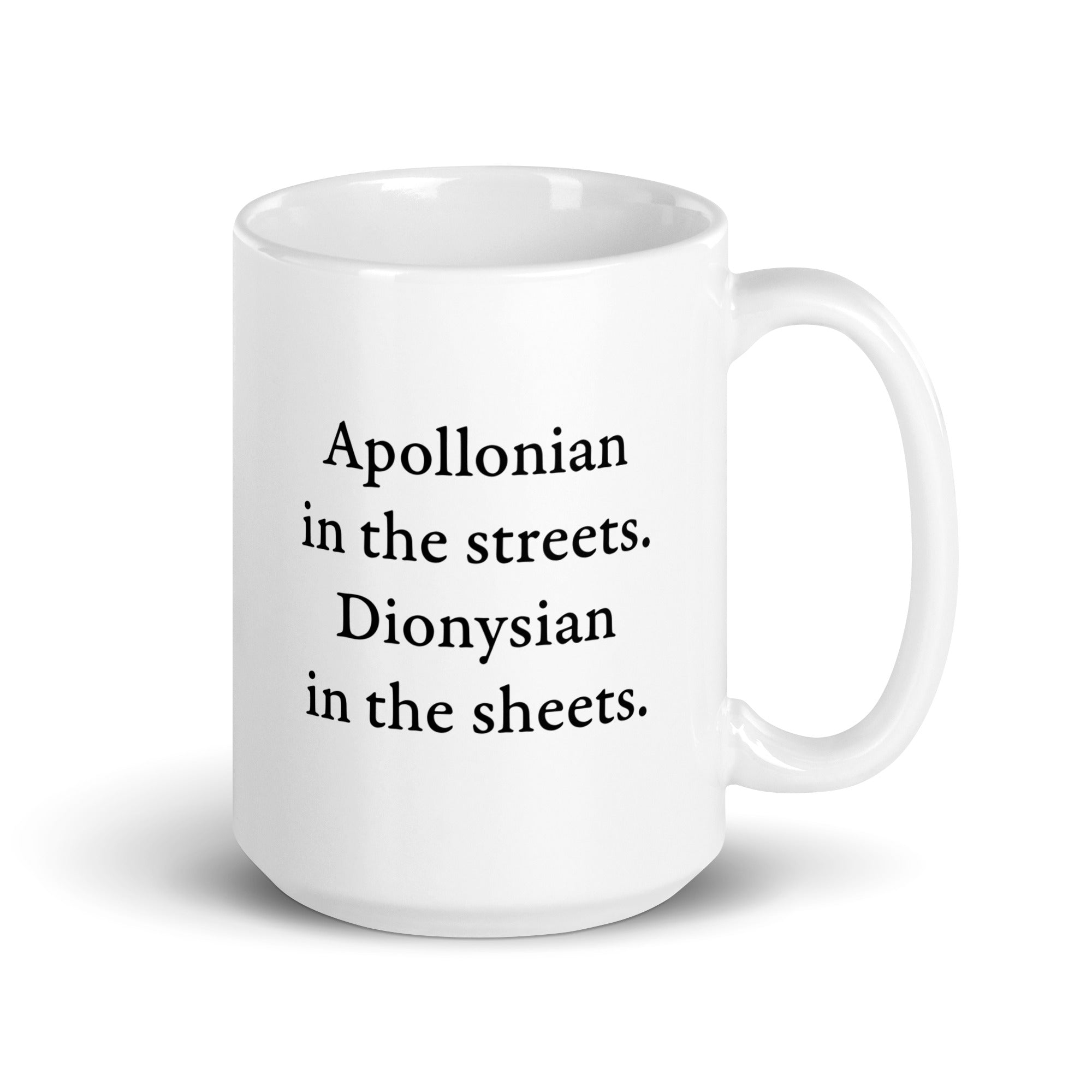
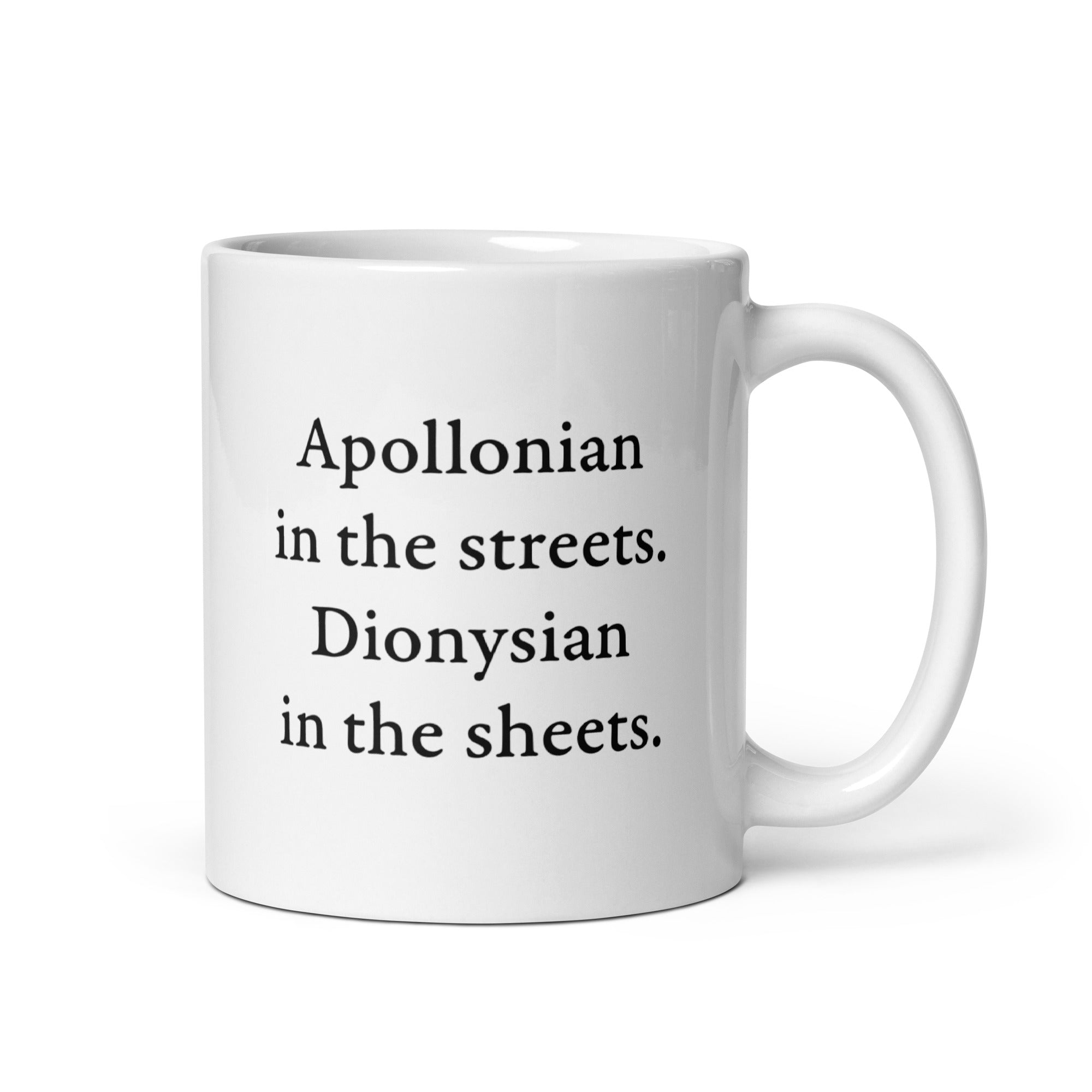
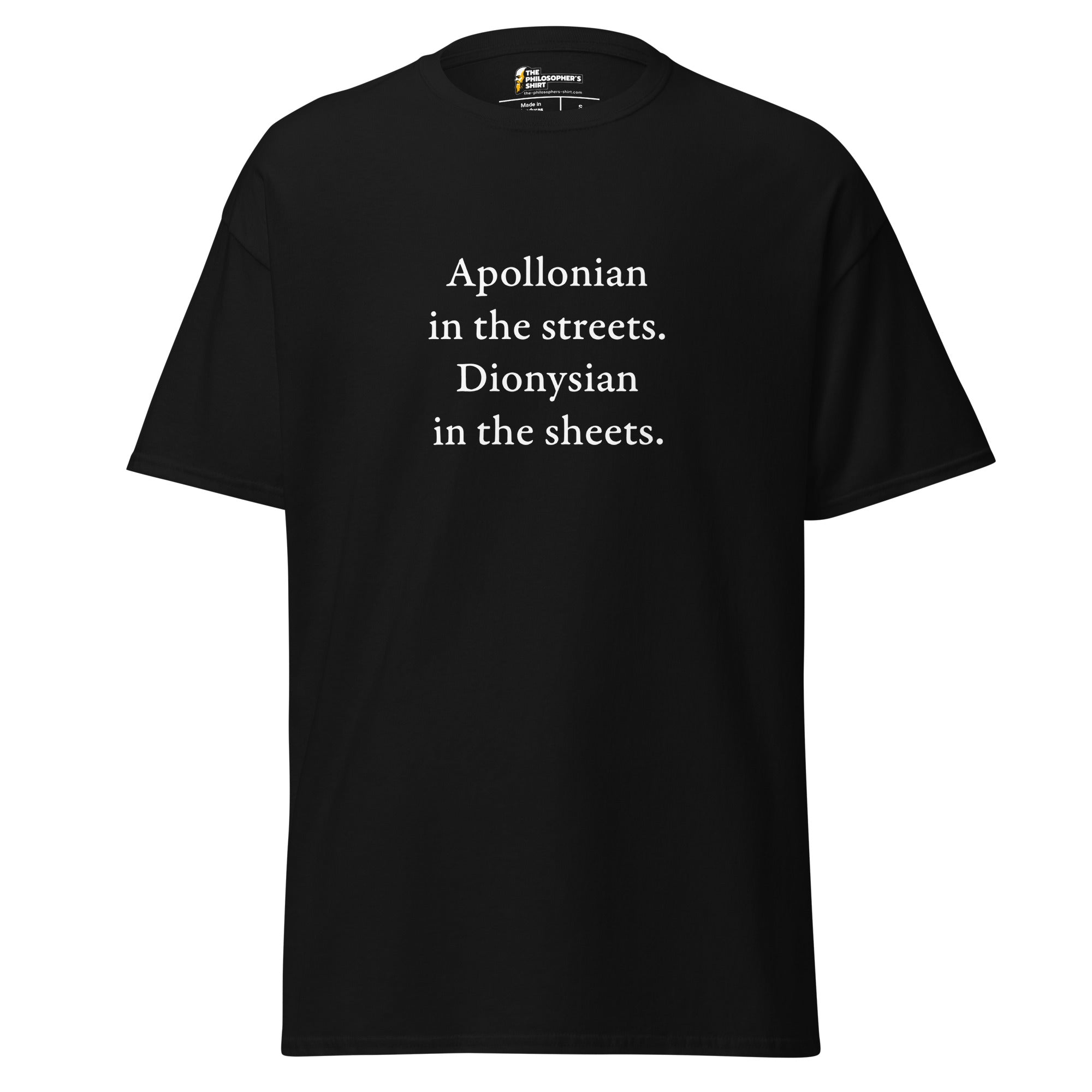
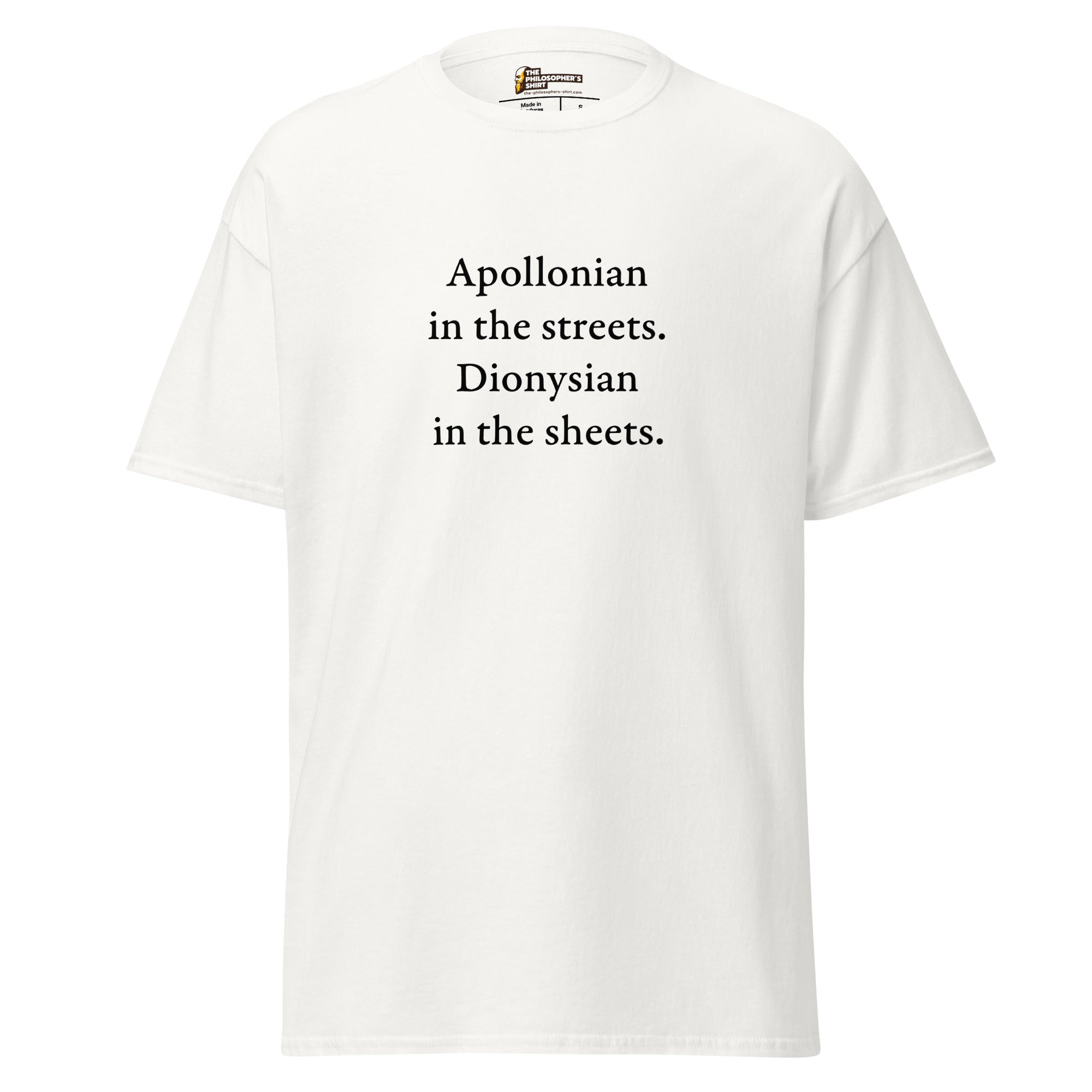
Apollonian in the streets, Dionysian in the sheets

Nietzsche unterteilte die Kunst in seinem ersten Buch in apollinische Ordnung und dionysisches Chaos. Damit wird diese Unterscheidung auf einen Kontext angewendet, den „Die Geburt der Tragödie“ nicht behandelte.

Man muss Nietzsche tatsächlich kennen, damit der Witz rüberkommt – was ihn umso besser macht. Das gesamte Sortiment: T-Shirts, Sweatshirts, Hoodies und Tassen – alles wird erst nach der Bestellung bedruckt. Bestell bitte bei Tageslicht. Alles andere danach.
Questions about this design

What does “Apollonian in the streets, Dionysian in the sheets” mean?
It borrows the popular “X in the streets, Y in the sheets” joke and fills it with Nietzsche. In public you are Apollonian – composed, measured, clear. In private you are Dionysian – ecstatic, unrestrained, beyond self-control. The design sets the line in plain serif lettering, so the joke stays quiet until someone reads it.
What is the difference between Apollonian and Dionysian?
In Nietzsche the Apollonian stands for form, measure, clarity, dream images and the individual as a clearly bounded self. The Dionysian stands for intoxication, music, ecstasy and the dissolving of the self into a greater whole. He saw them not as good versus bad but as two forces that need each other.
Where does Nietzsche write about the Apollonian and the Dionysian?
In his first book, The Birth of Tragedy out of the Spirit of Music (1872). He argues that Greek tragedy grew out of the fusion of both forces, and that Euripides and the rationalism of Socrates later broke that balance apart. He returns to the pair in the preface he added in 1886.
What does Dionysian mean?
Relating to Dionysus, the Greek god of wine, theatre and ecstasy – and, in everyday and philosophical use, wild, frenzied, sensual and unrestrained. Since Nietzsche the word also names the experience of losing oneself in music, intoxication or a crowd, where the boundaries between individuals seem to dissolve.
What does Apollonian mean?
Relating to Apollo, the Greek god of light, music, poetry, prophecy and healing – and, by extension, calm, rational, harmonious and well-ordered. In Nietzsche's sense it also means the power of clear forms and beautiful illusion, like a dream image that gives shape to the world.
Who were Apollo and Dionysus in Greek mythology?
Both were sons of Zeus. Apollo was the god of light, the lyre, poetry, prophecy and medicine, worshipped above all at his oracle in Delphi. Dionysus was the god of wine, fertility, festivity and theatre; the great Athenian tragedies were performed at his festival, the City Dionysia.
Did Nietzsche invent the Apollonian–Dionysian contrast?
No, but he made it famous. Writers and thinkers of German classicism and Romanticism, among them Winckelmann and Hölderlin, had already played Apollo and Dionysus off against each other. Nietzsche turned the pair into a theory of art and culture, and his version is the one everyone quotes today.
Was Nietzsche Apollonian or Dionysian?
In the end he sided with Dionysus. In Twilight of the Idols (1889) he calls himself the last disciple of the philosopher Dionysus, and Ecce Homo closes with “Dionysus versus the Crucified”. For the late Nietzsche, the Dionysian means saying yes to life, including its suffering.
Who else used the idea of Apollonian and Dionysian?
Carl Jung discussed it in Psychological Types (1921), and the anthropologist Ruth Benedict used it in Patterns of Culture (1934) to contrast restrained and ecstatic cultures. Since then the pair has turned up in art history, literary criticism and countless essays on music.
Is this a good gift for Nietzsche fans or philosophy students?
Yes, especially for anyone who has read The Birth of Tragedy or survived an aesthetics seminar. The joke is cheeky but never crude, so it works for partners, friends and classmates alike. The design is available as a t-shirt, sweatshirt, premium hoodie, mug and sticker.