Keine Zollgebühren. Niemals. Wir versenden immer lokal aus der EU, den USA, Kanada oder aus UK + Kostenloser Versand ab 70€ / $80 / £60 
Suche auf unserer Website

Bingen Botanicals

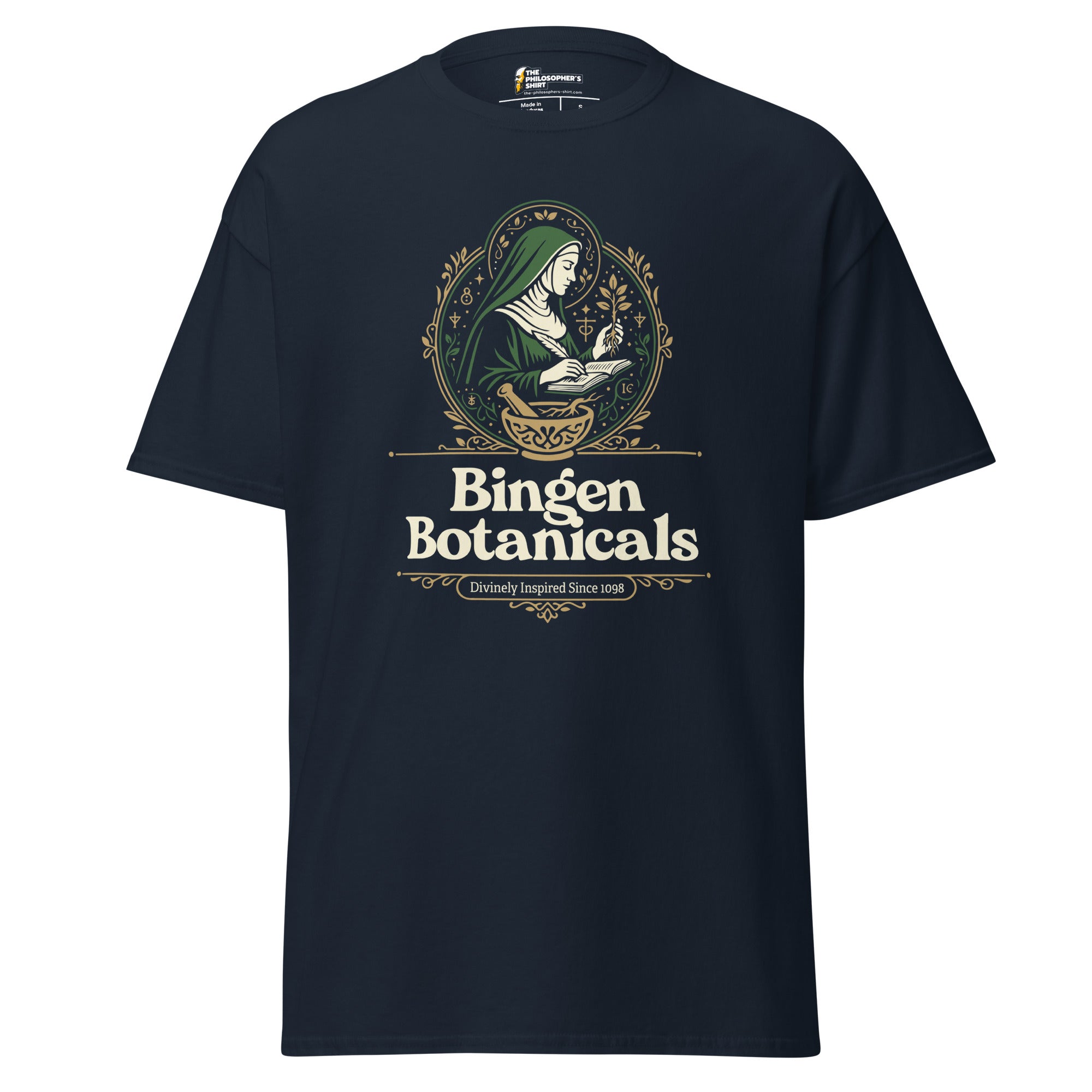
Hildegard of Bingen wrote medicine, music and visionary theology in the twelfth century, and cataloged plants while doing it. Rendered here as a proper botanical study.

Illustrated in the style of an antique herbal rather than a slogan design. The whole range: tees, women's tees, sweatshirts and hoodies, printed to order as you buy them. A medieval abbess who out-published almost everyone around her.

Questions about this design

What does the Bingen Botanicals design show?
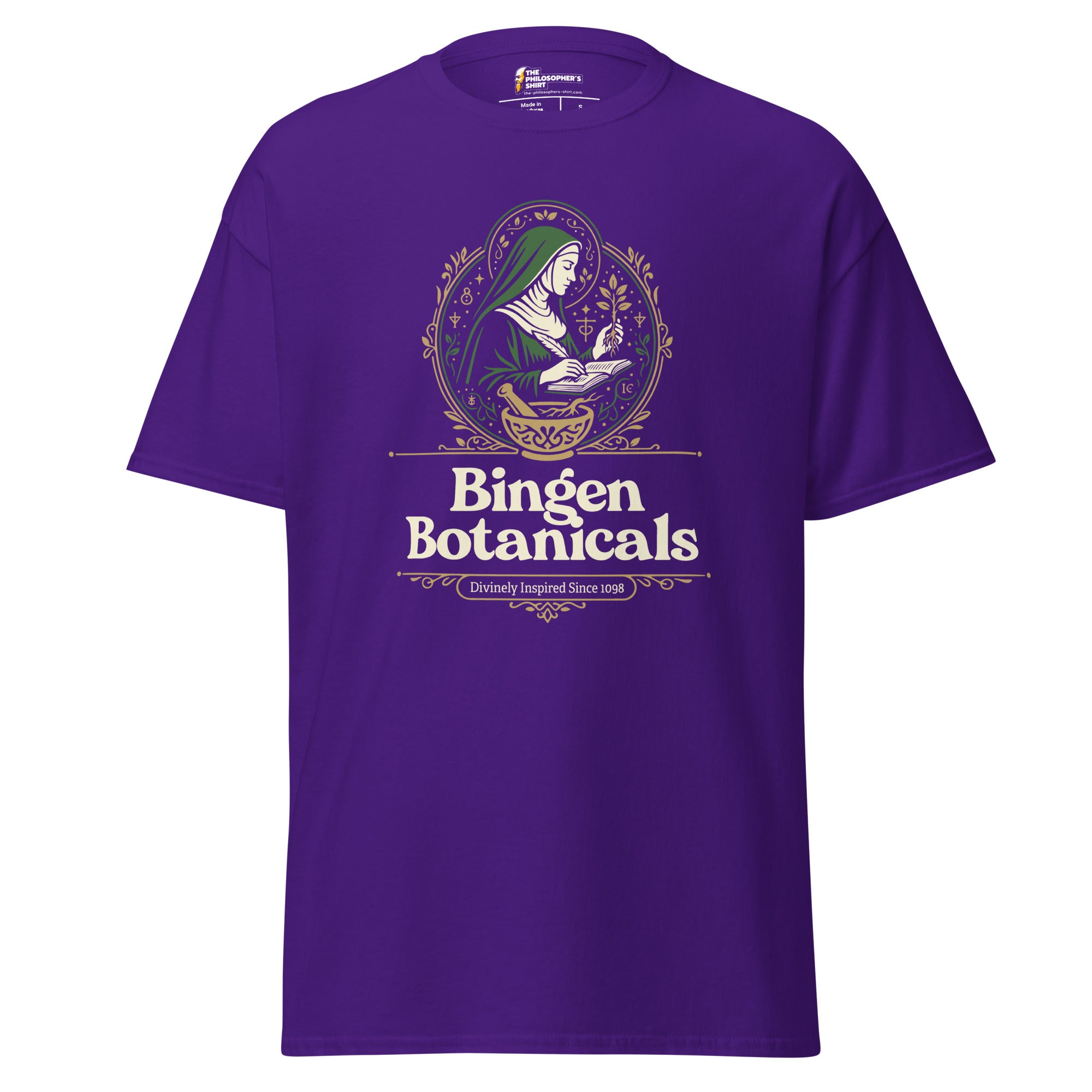
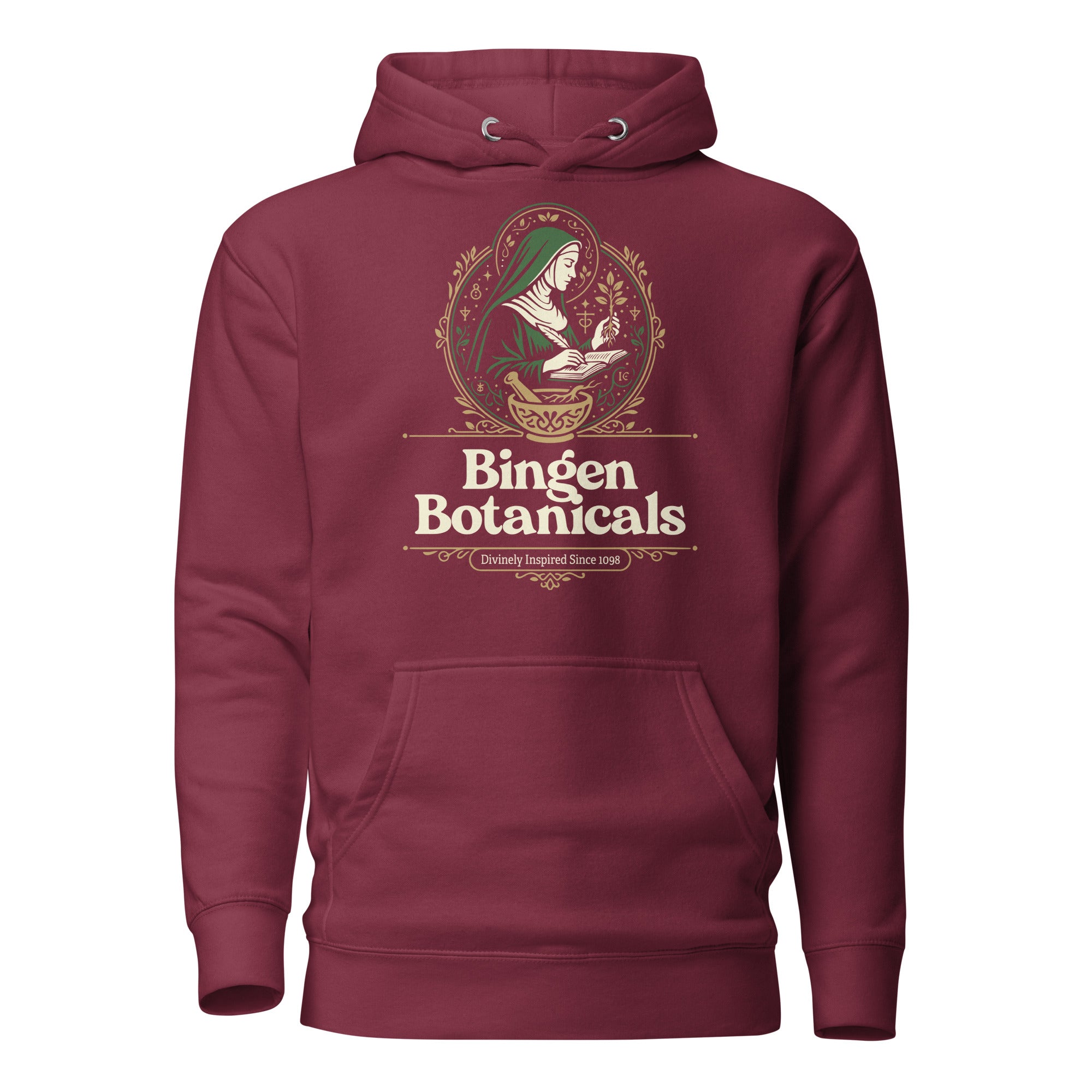
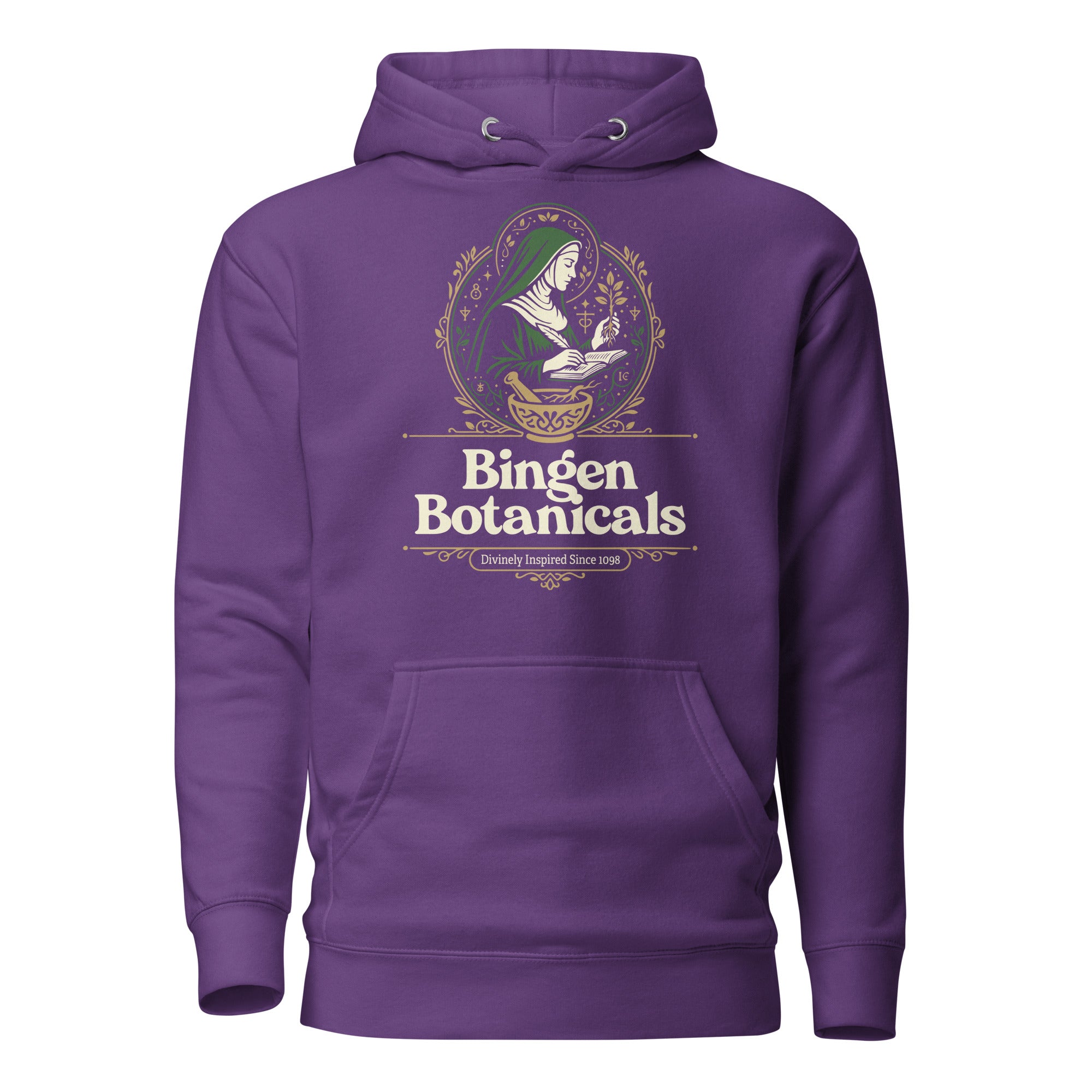
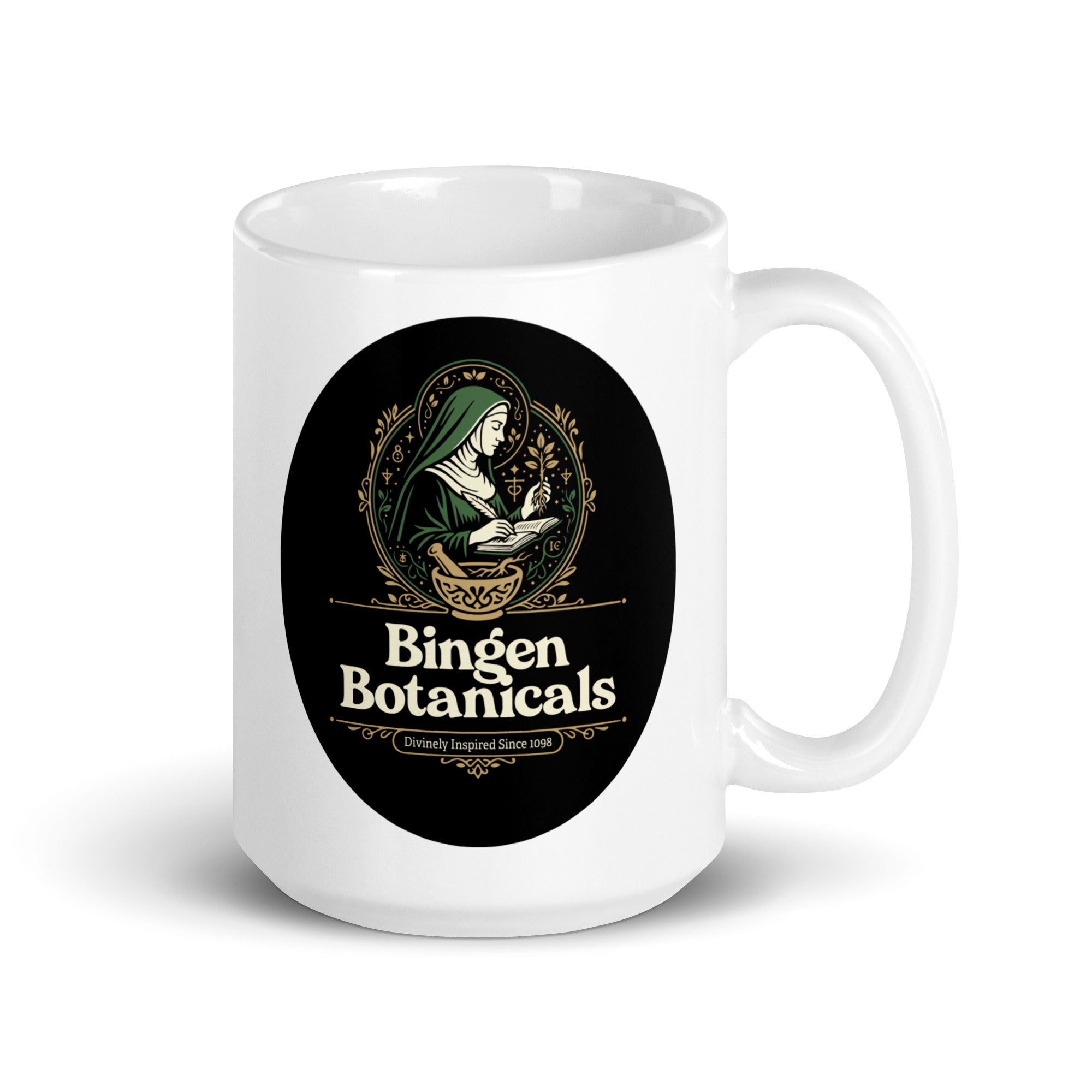
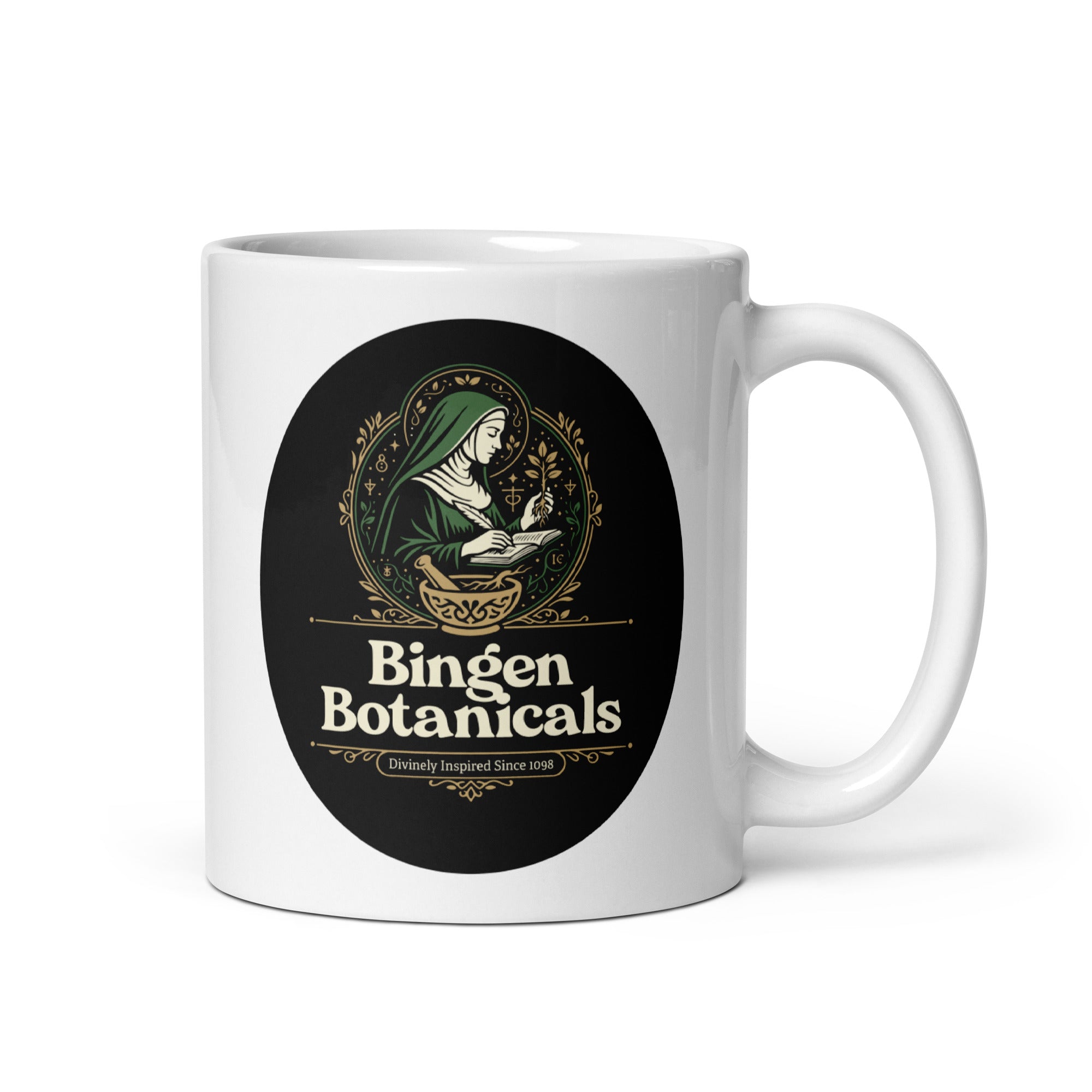
Hildegard of Bingen in a nun's habit, writing in a book beside a sprig of herbs and a mortar and pestle, framed like the label of an old apothecary, with the line Divinely Inspired Since 1098. The joke – the medieval abbess as the founder of a herbal brand, dated to her birth year and her famous visions.
Who was Hildegard of Bingen?
A German Benedictine abbess (c. 1098–1179), visionary, theologian, composer and natural philosopher. Placed in the convent at Disibodenberg as a child, she founded her own convents at Rupertsberg near Bingen in 1150 and at Eibingen in 1165, and corresponded with popes, emperors and Bernard of Clairvaux.
What is Hildegard of Bingen best known for?
For three visionary works – Scivias (1142–1151), the Book of Life's Merits and the Book of Divine Works (c. 1163–1174) – plus writings on nature and medicine, around 70 surviving chants, the musical morality play Ordo Virtutum and an invented language, the Lingua ignota. Few medieval writers covered so much ground.
What is Hildegard's Physica?
Her book of natural history and simple remedies, written around 1151–1158 and also called Liber simplicis medicinae. Its nine books describe plants, elements, trees, stones, fish, birds, animals, reptiles and metals and what each is good for; the first and longest, on plants, has 230 chapters. Its companion on body and illness is Causae et curae.
What does viriditas mean in Hildegard of Bingen?
Literally greenness. For Hildegard viriditas is the living, greening power that God pours into creation – the sap in plants, health and fertility in bodies, vitality in the soul. Sickness and sin dry it out. It ties her medicine, theology and love of plants into one idea, which is why it suits a botanical design.
What is Hildegard medicine?
A modern health movement, popular above all in Germany since the 1970s, that builds diets and remedies – spelt, herbs, spices – on Hildegard's writings. Her texts themselves reflect medieval humoral medicine. They are a fascinating historical source, but not a tested therapy, so read them as history rather than as medical advice.
What music did Hildegard of Bingen write?
Around 70 liturgical songs, gathered as the Symphonia, and the Ordo Virtutum, a sung drama in which the Virtues fight the Devil for a human soul – often called the oldest surviving morality play. Her soaring, wide-ranging melodies are recorded more than those of almost any other medieval composer.
When did Hildegard of Bingen become a saint?
She was venerated as a saint for centuries, but Pope Benedict XVI only formally extended her cult to the whole Church on 10 May 2012, an equivalent canonisation. On 7 October 2012 he named her a Doctor of the Church, the fourth woman to receive that title.
Who is the Bingen Botanicals design a good gift for?
For herbalists and gardeners, medievalists, philosophy and theology students, choir singers, and anyone who likes their women in history clever and unstoppable. The design comes as a T-shirt, women's T-shirt, sweatshirt, premium hoodie, mug and sticker.