Keine Zollgebühren, weil wir aus deiner Region versenden. Versandkostenfrei ab 70 € / CHF 70 / $80 / £60
Unsere Website durchsuchen

Camus - Sisyphus Finally Quit

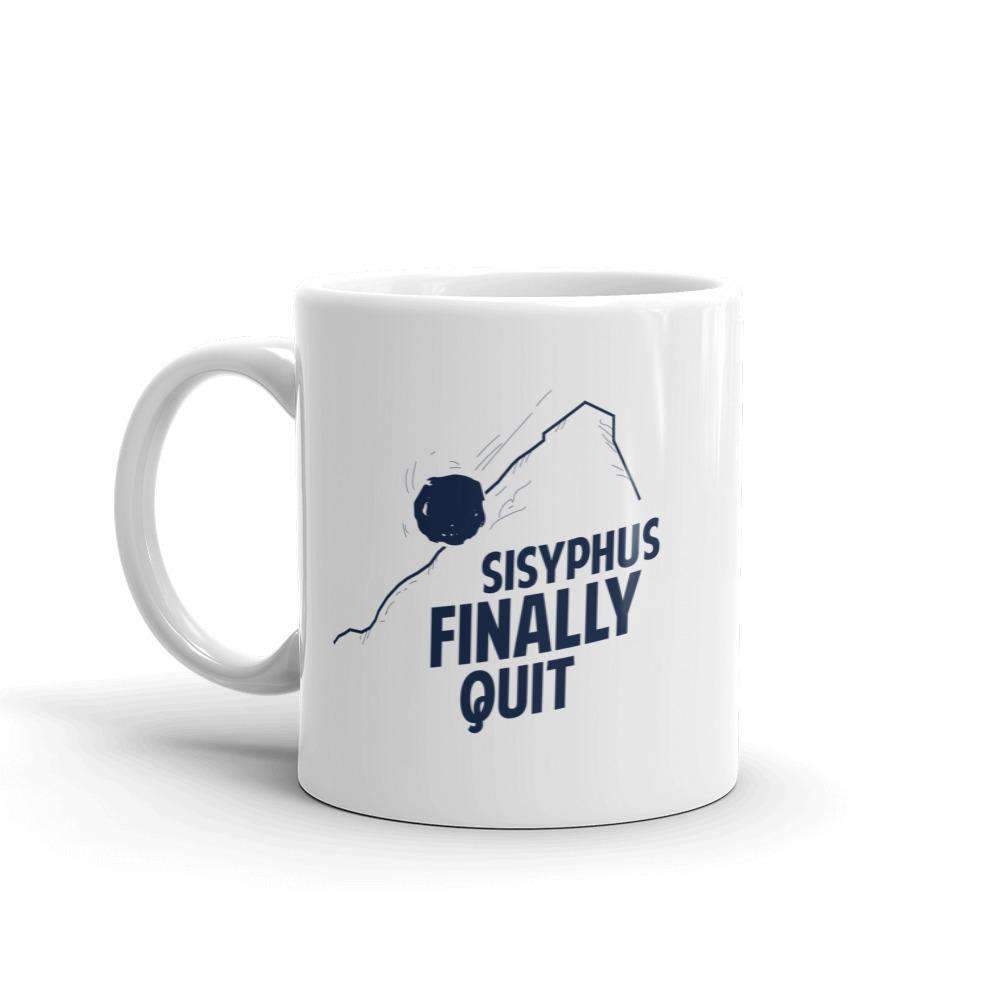
Camus insisted we imagine Sisyphus happy. This is the alternative ending, where he sets the boulder down, looks at the hill, and simply walks off.

Subverts the most quoted line in absurdism instead of repeating it. Everything in one place, across every format we print it on, made to order. An absurdist gift for Camus readers. One must imagine Sisyphus handing in his notice.


Questions about this design

What does the Sisyphus Finally Quit design show?
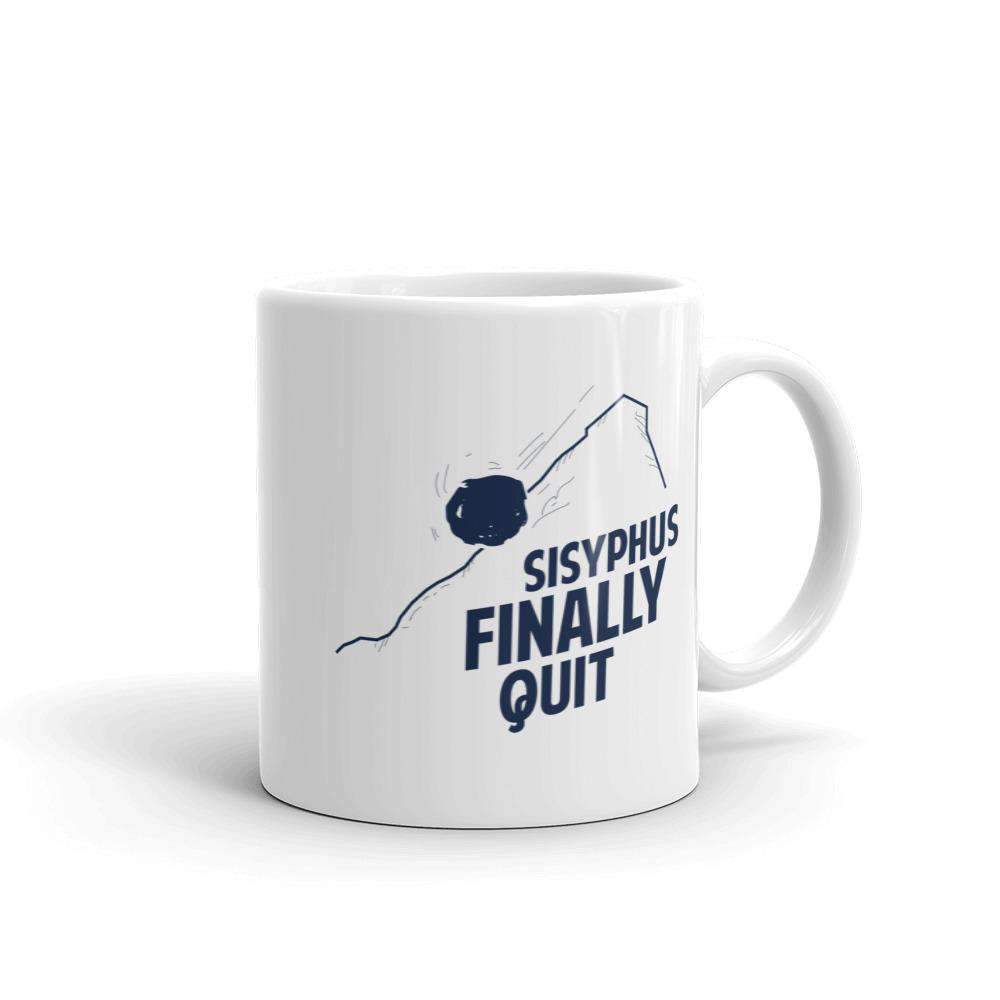
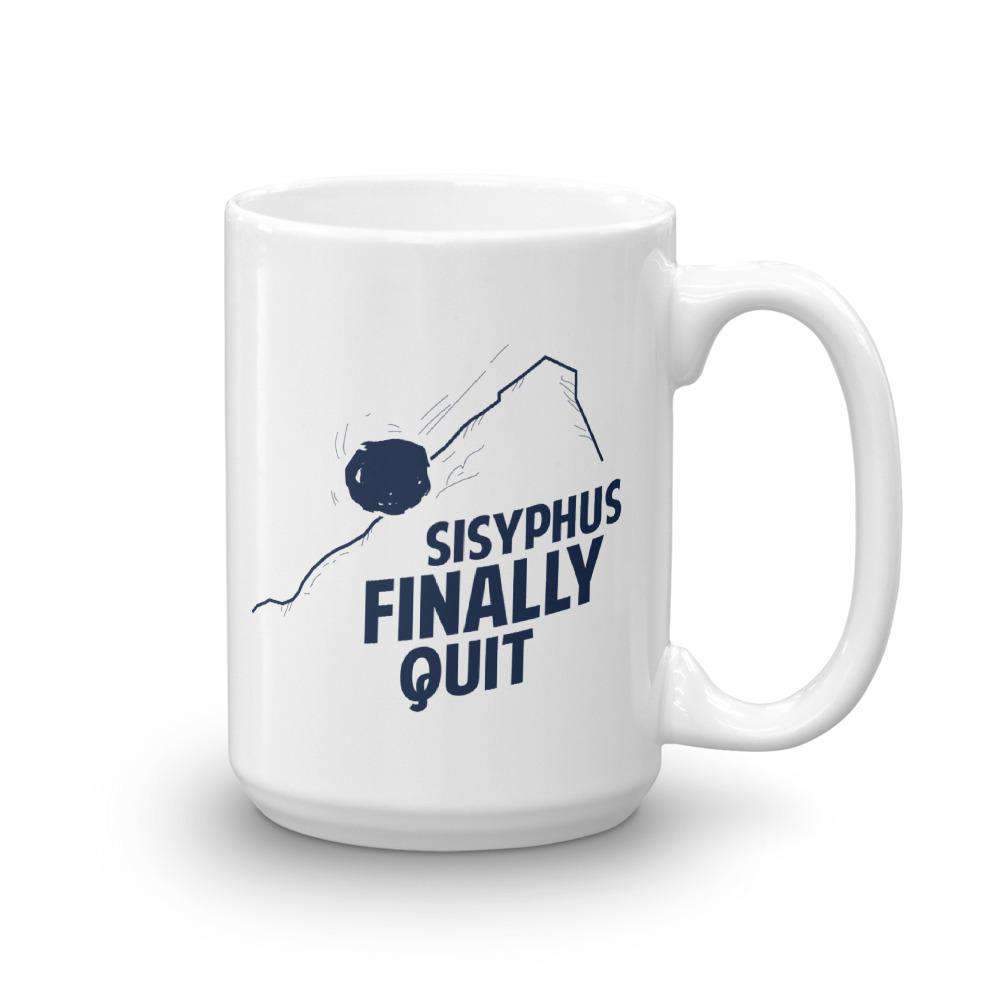
A white line drawing of a steep hill with the boulder rolling back down it, and the words “Sisyphus Finally Quit”. It is the alternative ending to Albert Camus's famous essay – instead of pushing the rock up the mountain for all eternity, Sisyphus sets it down, looks at the hill and walks off. A joke for everyone who has ever felt their job was a boulder.
What does “One must imagine Sisyphus happy” mean?
It is the last line of Albert Camus's essay The Myth of Sisyphus (Le Mythe de Sisyphe, 1942). Camus sees Sisyphus as the absurd hero – he knows his task is pointless, and he keeps going anyway, lucid and without hope of rescue. That lucidity and defiance are his victory over the gods. As Camus puts it, “The struggle itself toward the heights is enough to fill a man's heart.” Meaning is not handed to us; we make it in the pushing.
Who was Sisyphus and why was he punished?
In Greek myth Sisyphus was the cunning king of Ephyra (later Corinth). He cheated death more than once – in one version he put Thanatos, Death himself, in chains, in another he tricked the underworld into letting him return to the living. As punishment the gods made him roll a huge stone up a hill in the underworld, only to see it roll back down every time. Homer already describes him at this task in the Odyssey, Book 11.
What is absurdism?
Absurdism is the philosophy associated with Albert Camus. The absurd is not the world itself but the clash between our longing for meaning and clarity and the silent, indifferent universe that gives no answer. Camus rejects two escapes – giving up on life, and the leap into a consoling faith he calls philosophical suicide. What remains is revolt, freedom and passion – living fully while keeping the contradiction in view.
Was Albert Camus an existentialist?
Camus himself rejected the label and said so in interviews. He is often grouped with Jean-Paul Sartre because both begin from a world without given meaning, but Sartre builds on freedom and the self-creating individual, while Camus insists on the absurd and on limits, and later broke publicly with Sartre after The Rebel (1951). Most philosophers today call Camus an absurdist who shares themes with existentialism.
What is the difference between absurdism and Stoicism?
Both teach calm acceptance of what we cannot change, which is why Sisyphus is quoted by fans of both. But the Stoics believed the cosmos is ordered by reason, the logos, so accepting fate means agreeing with a rational whole. Camus denies any such order – the universe is silent. For the Stoic, acceptance brings harmony; for the absurdist, it is revolt with open eyes, a happiness won in spite of the world, not because of it.
Would Camus approve of Sisyphus quitting?
Probably not, and that is the joke. The Myth of Sisyphus opens by calling the question of whether life is worth living the fundamental question of philosophy, and Camus answers it by refusing every escape. Sisyphus does not win by walking away but by returning to the rock with full awareness. Then again, Camus also prized freedom and revolt, so a Sisyphus who finally says no has at least read the second half of his work.
Which Albert Camus books should I read first?
Start with the novel The Stranger (L'Étranger, 1942), short and unsettling, then the essay The Myth of Sisyphus (1942), which explains the idea of the absurd behind it. The Plague (La Peste, 1947) shows solidarity in the face of catastrophe, and The Rebel (L'Homme révolté, 1951) develops his ethics of revolt. Camus received the Nobel Prize in Literature in 1957.
Is Sisyphus Finally Quit a good gift for a philosophy lover?
Yes, especially for anyone who quotes Camus, has just survived exam season or is about to hand in their notice. The design comes as a classic unisex T-shirt, a sweatshirt, a premium hoodie and a mug, so it works for the office desk as well as the lecture hall. People who know the essay get the joke at once; everyone else gets an opening for a good conversation about the absurd.