Keine Zollgebühren, weil wir aus deiner Region versenden. Versandkostenfrei ab 70 € / CHF 70 / $80 / £60
Unsere Website durchsuchen

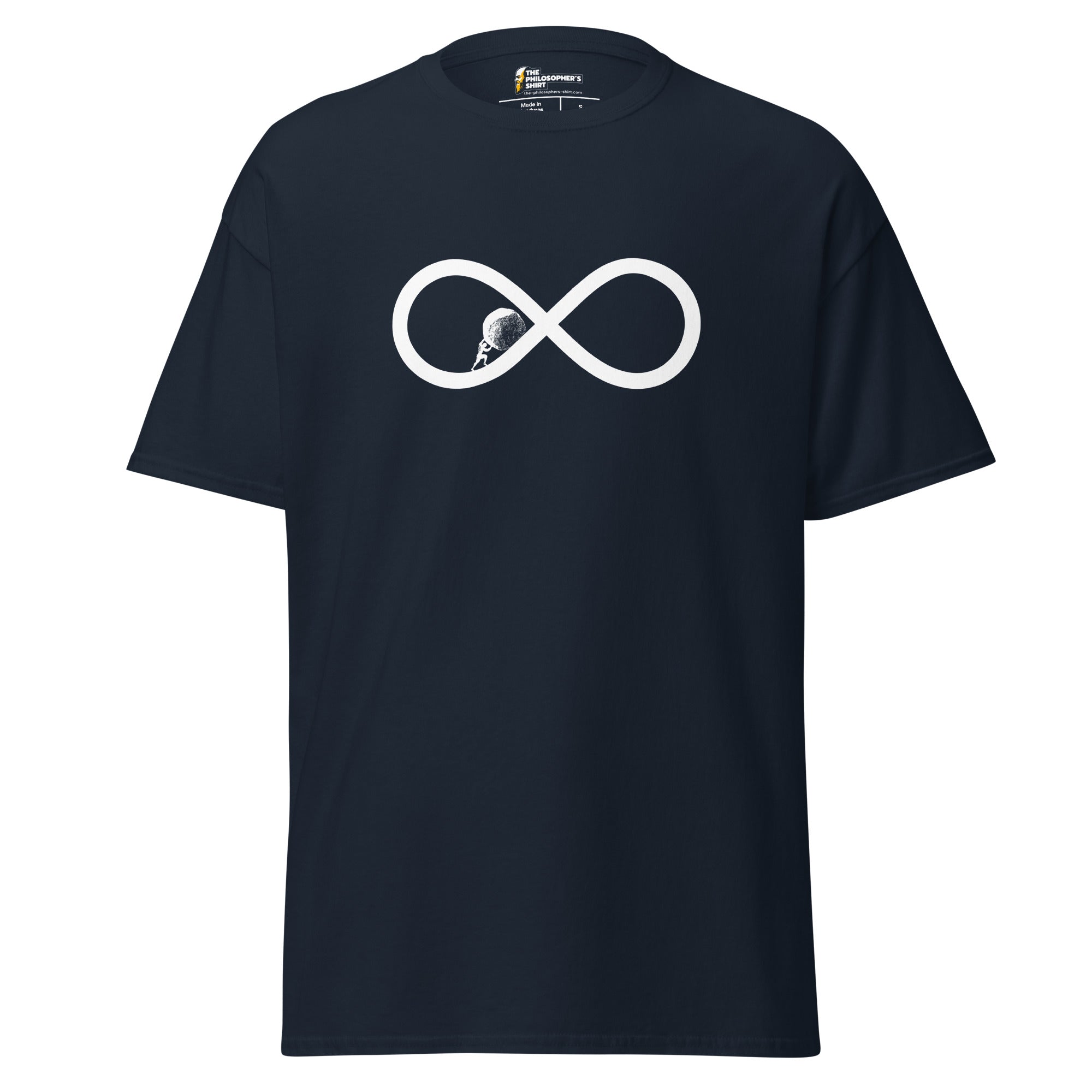
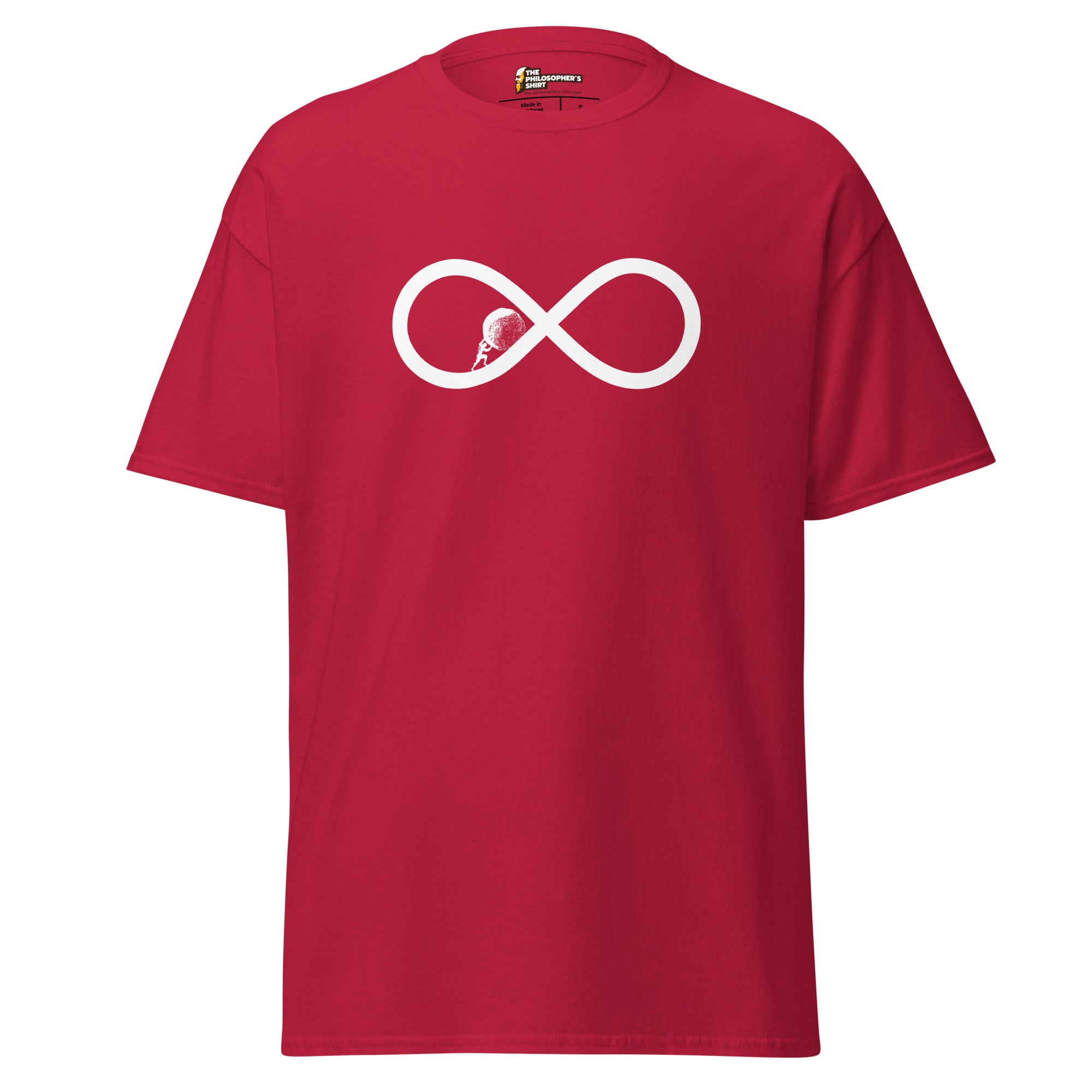
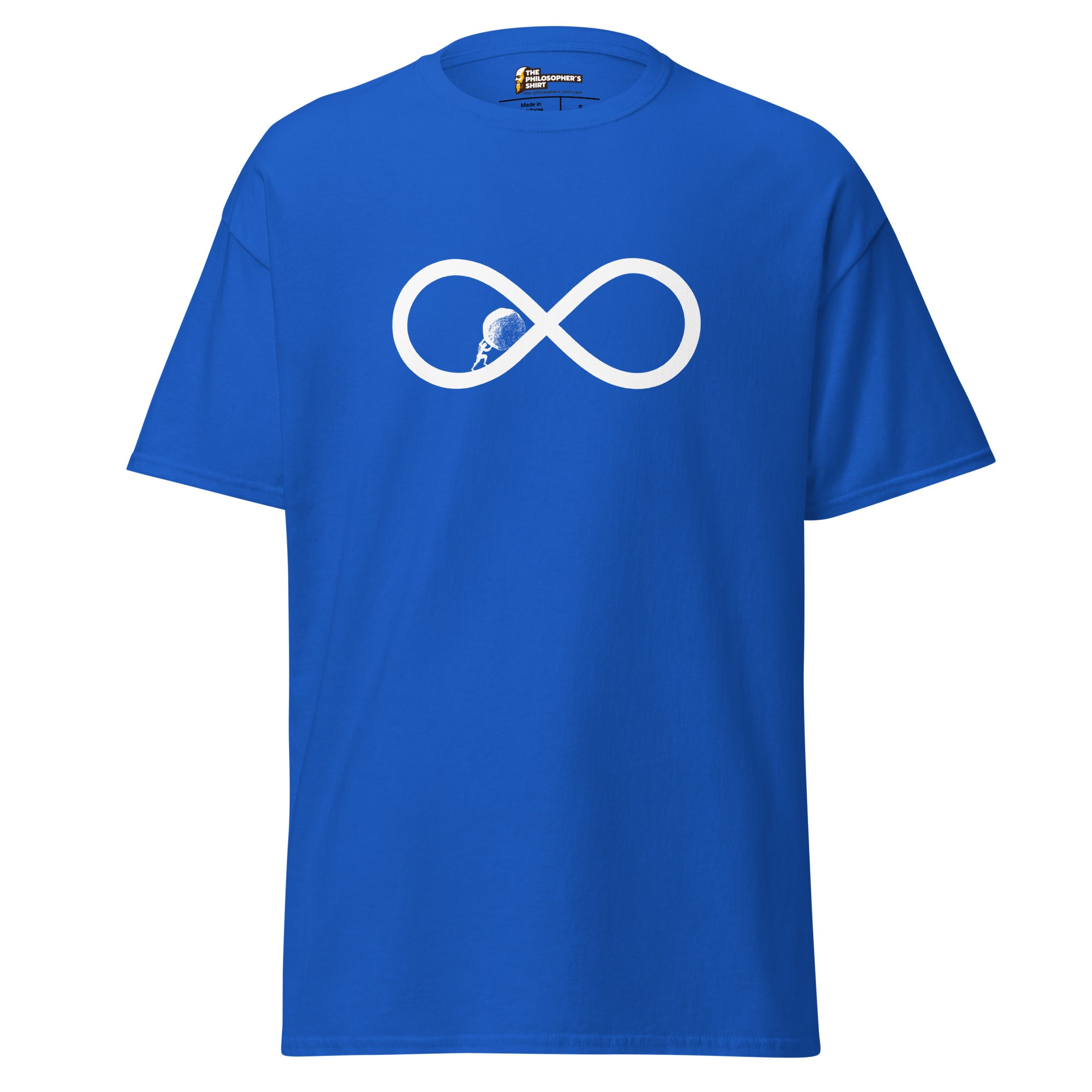
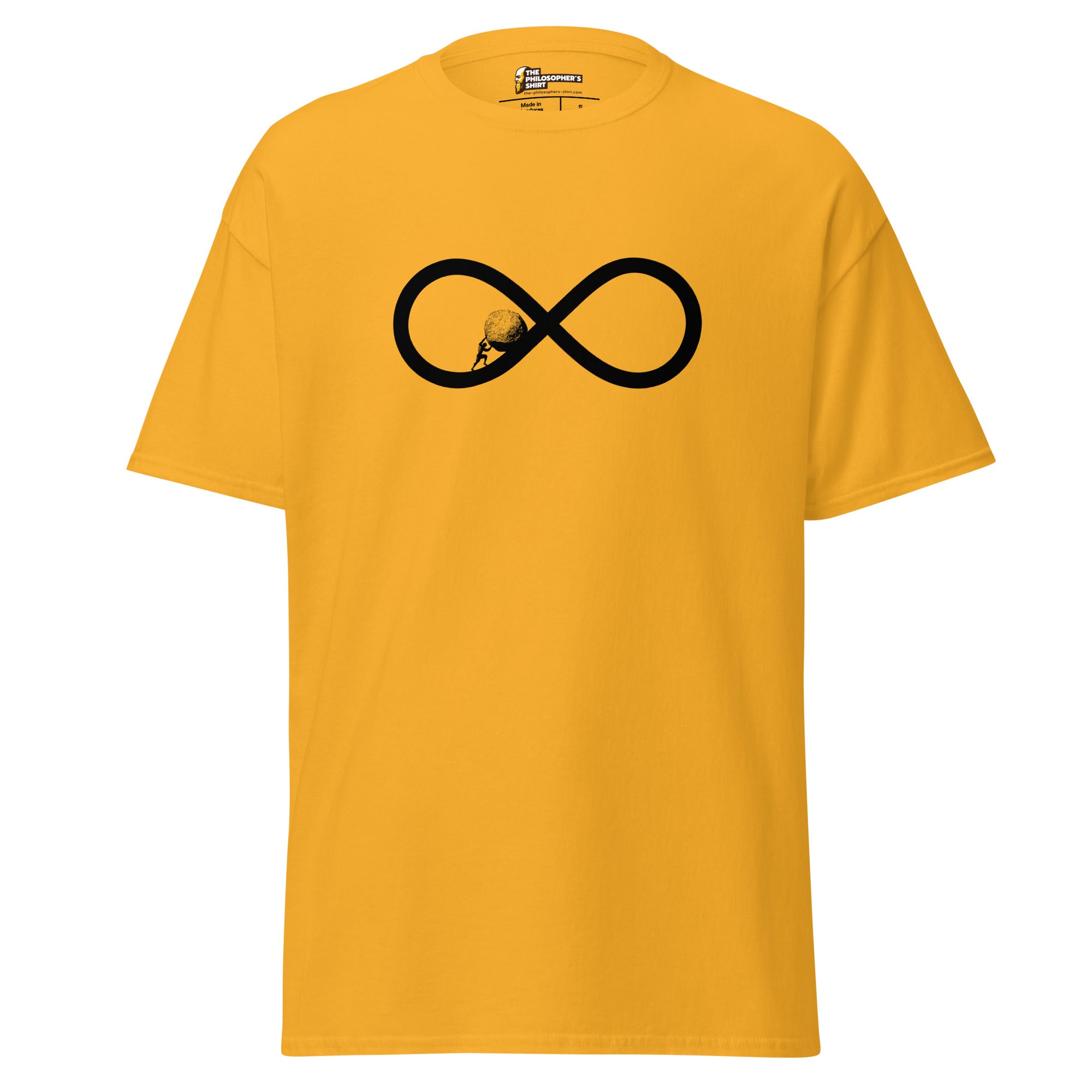
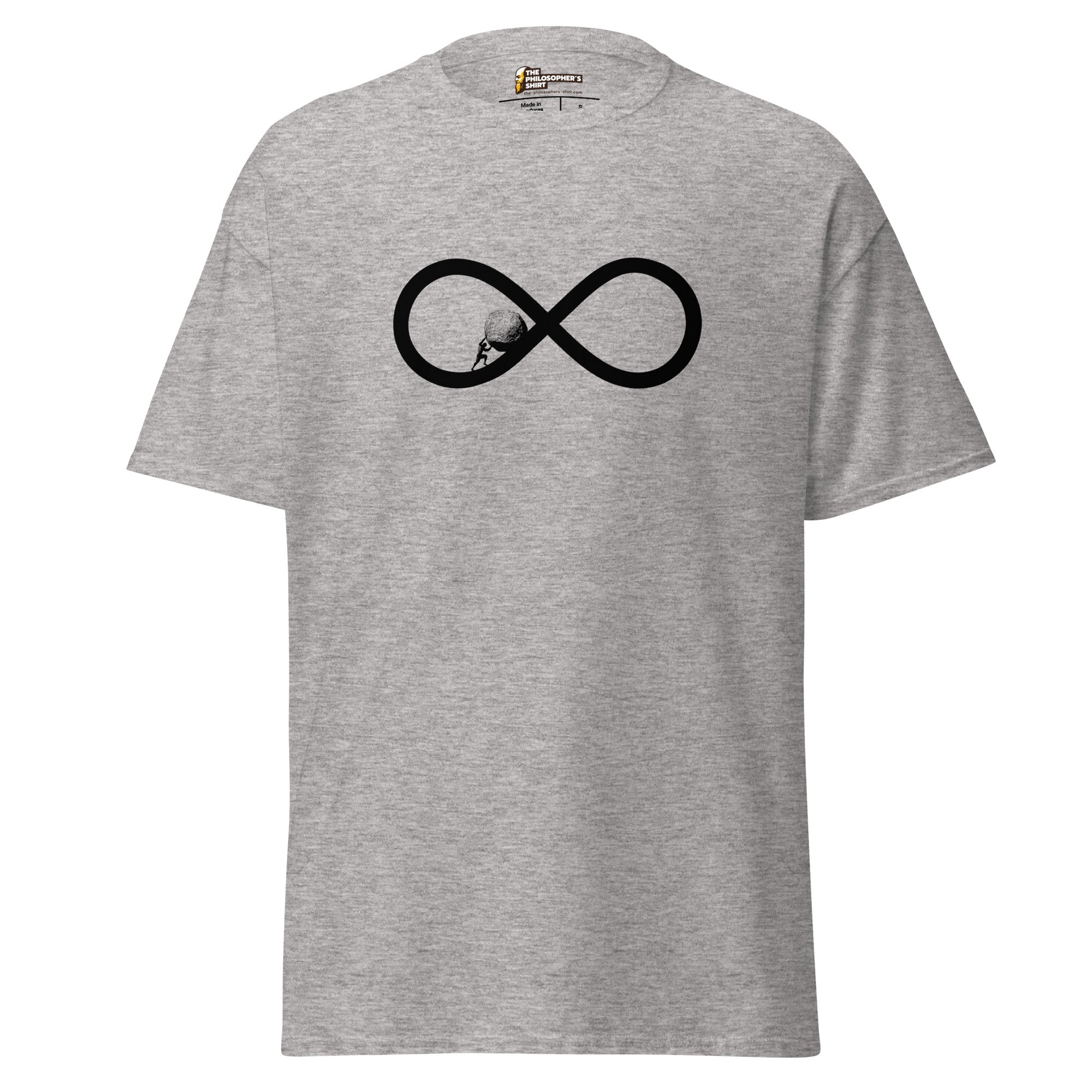
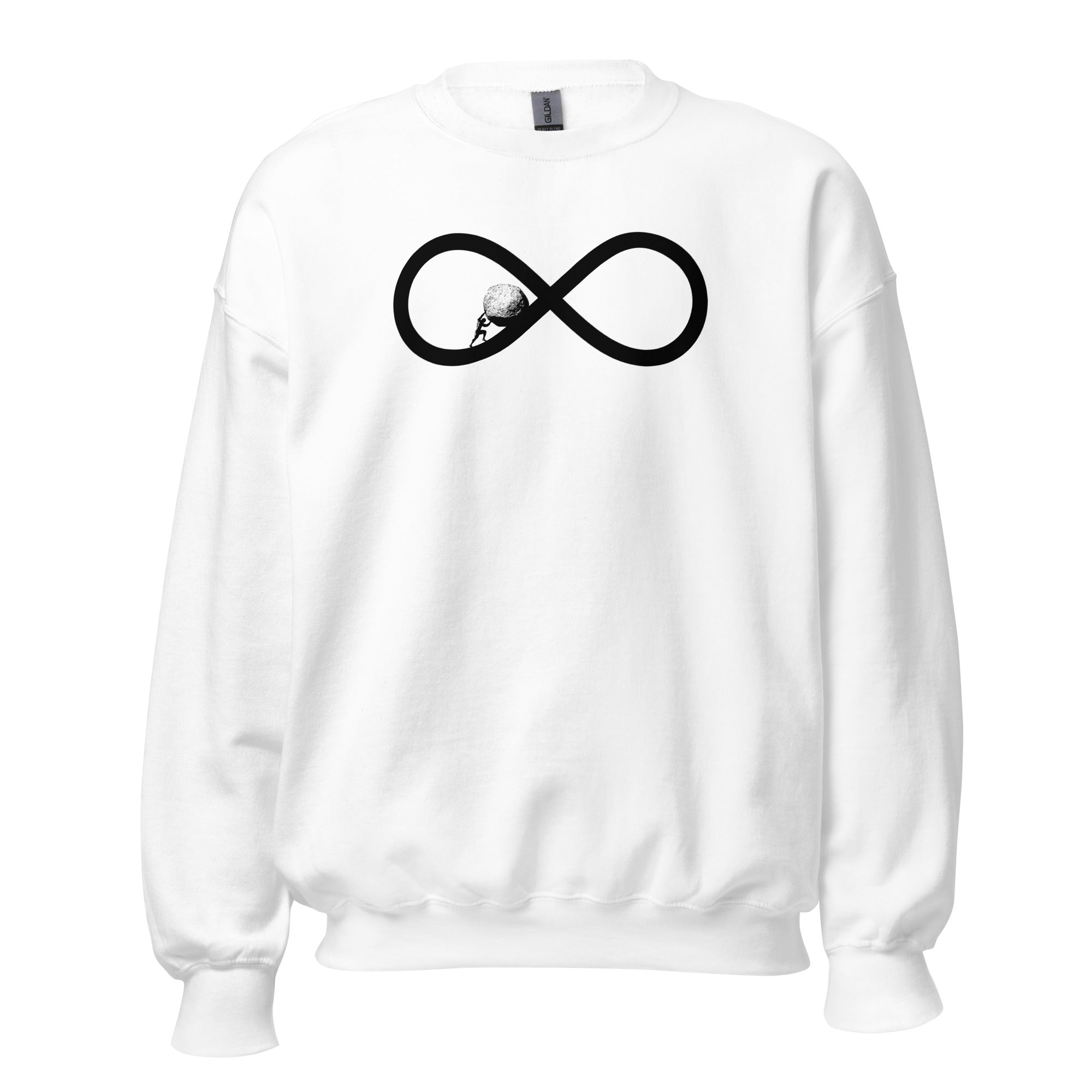
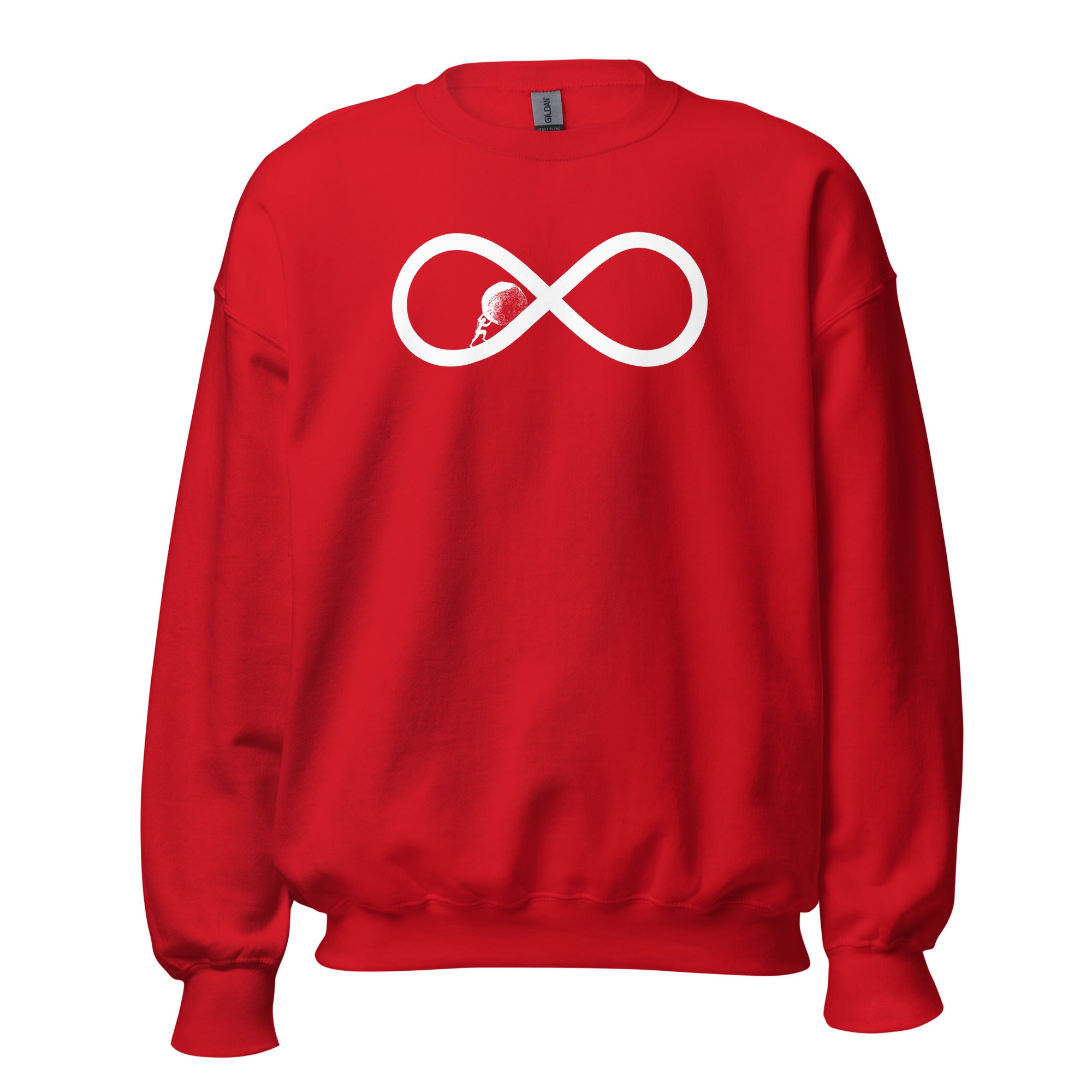
Sisyphus to Infinity

The punishment was never the weight. It was learning the exact number of steps to the top and knowing it changes nothing.

Loops the ascent visually, so the design never resolves either. Every format we print it on, made to order as you buy it, from apparel to accessories. An absurdist gift for Camus readers. One must imagine Sisyphus happy. He has had time to practice.
Questions about this design

What does the Sisyphus To Infinity design show?
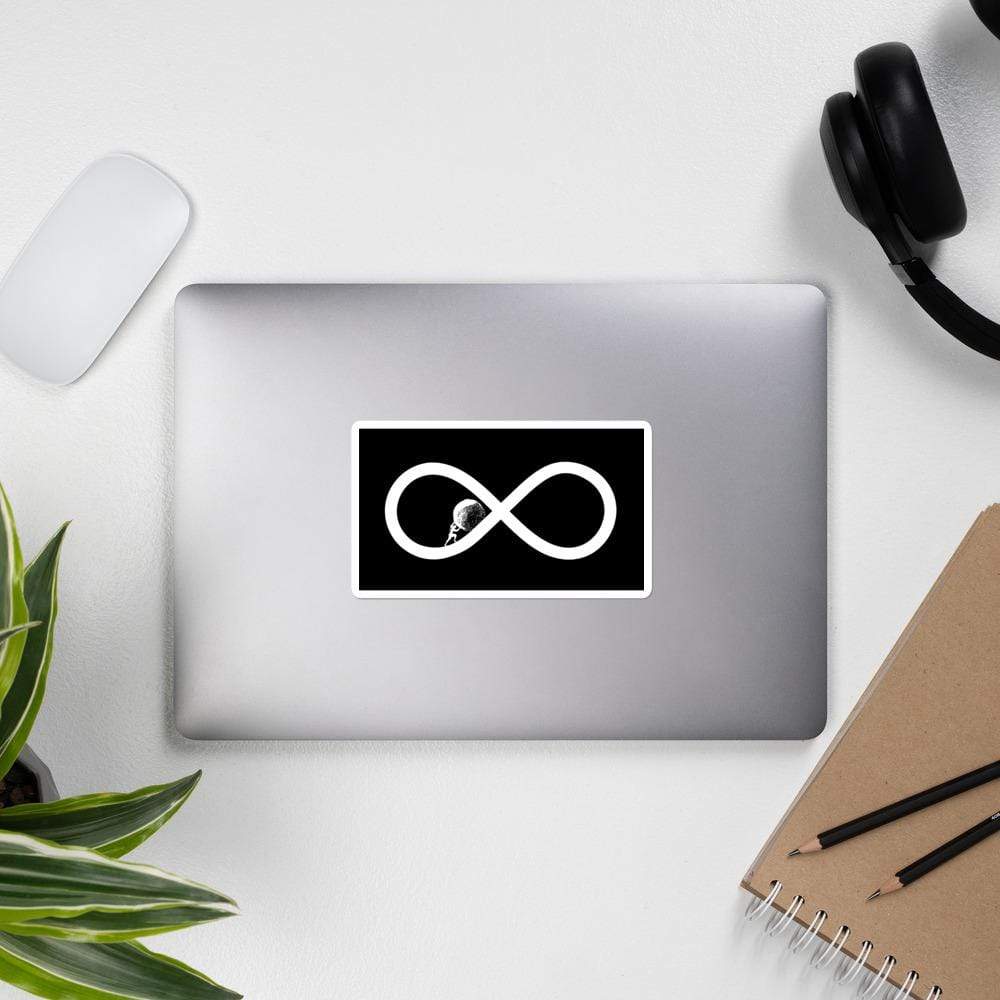
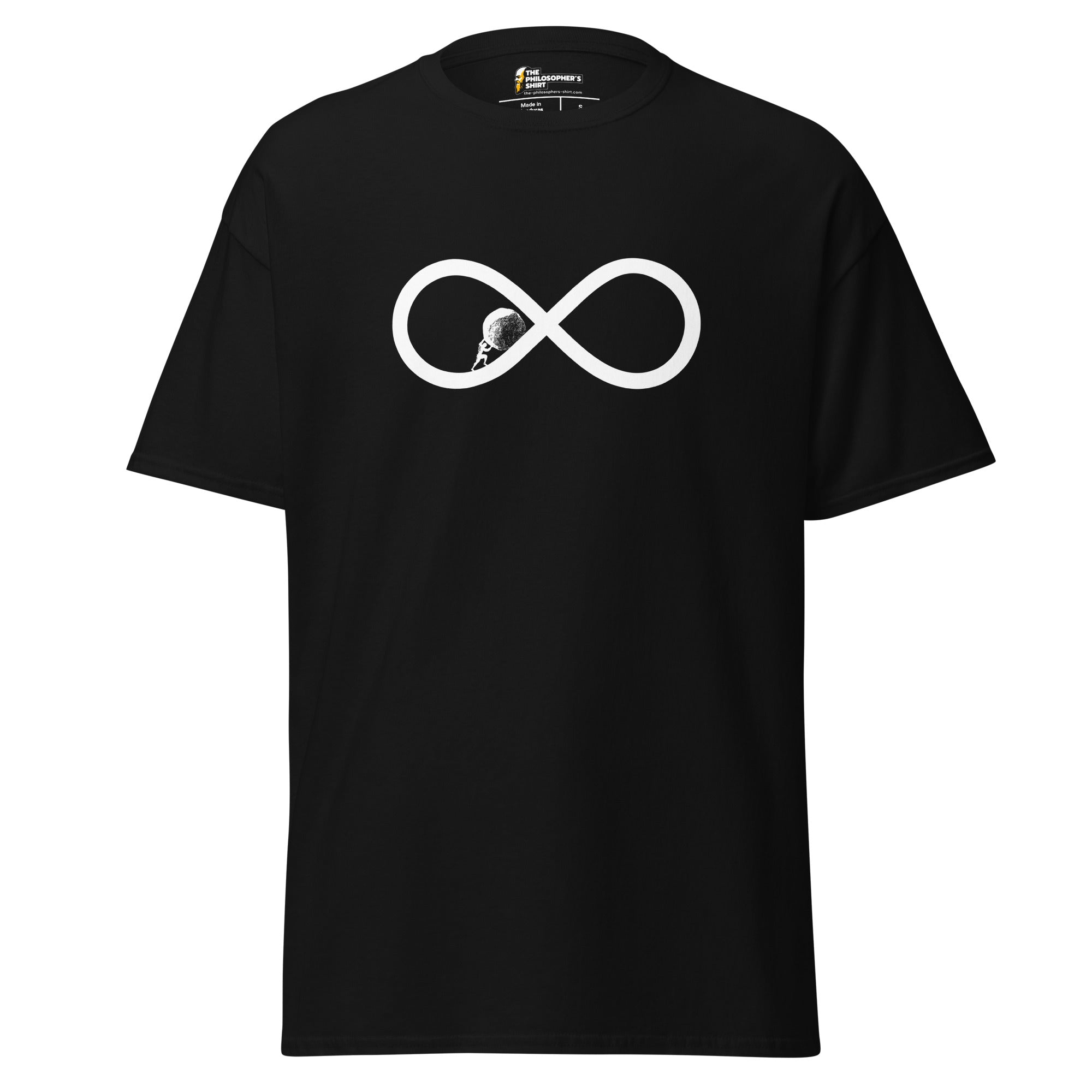
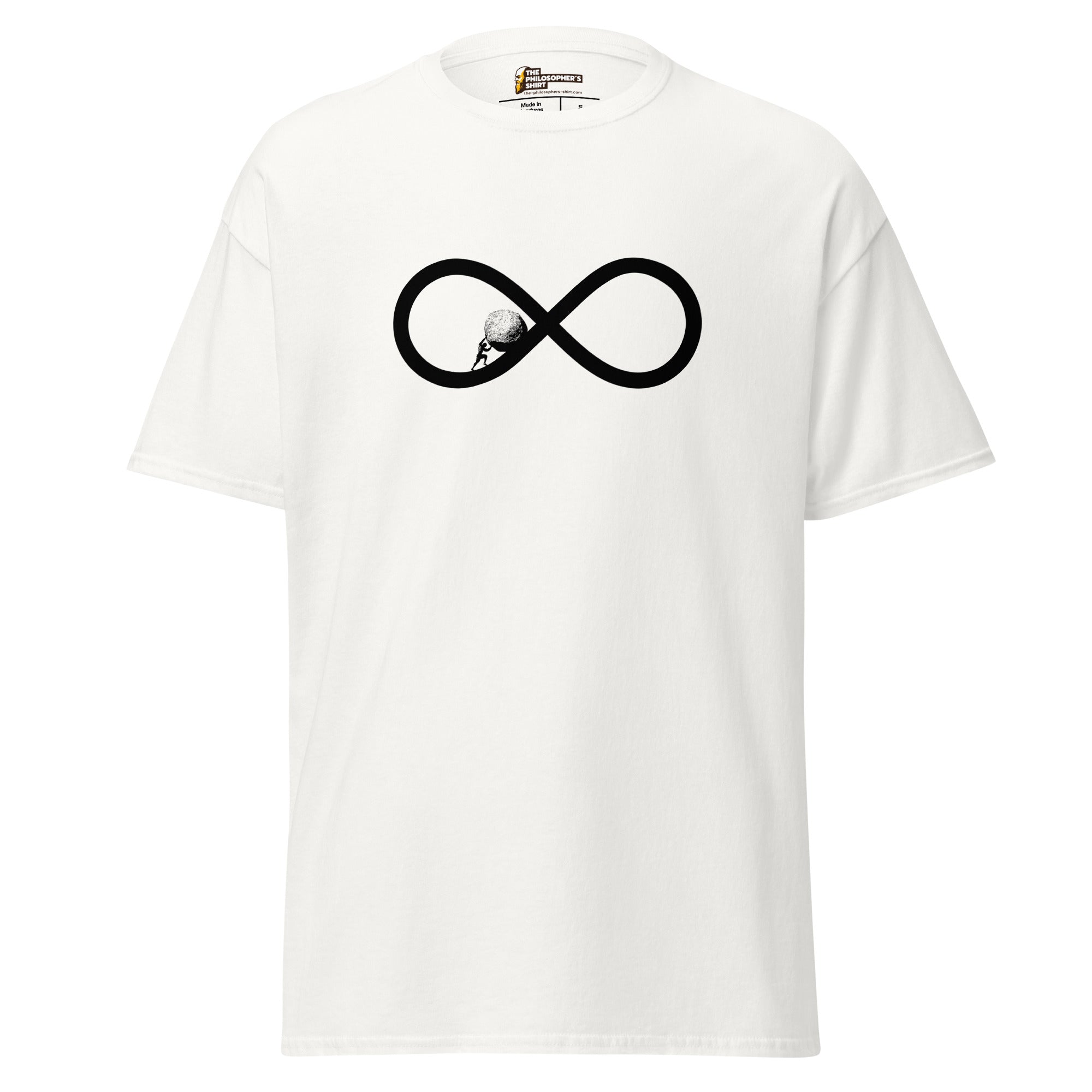
A tiny Sisyphus pushing his boulder along a bold infinity sign. The loop turns the myth into a single image – his task has no top and no end, only the next push. It is the minimalist version of Camus's question whether a life of endless repetition can still be lived with meaning.
What does „One must imagine Sisyphus happy“ mean?
It is the last sentence of Albert Camus's essay The Myth of Sisyphus (1942), in French „Il faut imaginer Sisyphe heureux“. Camus argues that Sisyphus, fully aware that his labour is futile, can still make it his own. The struggle itself toward the heights, he writes, is enough to fill a man's heart. Happiness here means lucid acceptance, not cheerfulness.
Who was Sisyphus and why was he punished?
In Greek myth Sisyphus was the clever king of Corinth who repeatedly outwitted the gods, above all by cheating death – in some versions he chained Thanatos, in others he tricked his way back from the underworld. His punishment was to roll a huge stone up a hill forever, only for it to roll down again each time. Homer describes him in Book 11 of the Odyssey.
What is absurdism?
Absurdism, as Camus developed it, names the conflict between the human demand for meaning and the silence of the universe. The absurd lies neither in us nor in the world but in their confrontation. Camus rejects both suicide and the leap into hope or faith; his answer is revolt, freedom and passion – living fully while knowing there is no final answer.
What is the difference between absurdism and nihilism?
Nihilism concludes that because nothing has inherent meaning, nothing matters. Absurdism accepts the first part but not the conclusion. For Camus the lack of a given meaning is a starting point – we should keep the tension open, refuse despair and live with intensity. That is why Sisyphus is a hero rather than a victim.
Is absurdism the same as stoicism?
No, though they share a calm acceptance of what cannot be changed. The Stoics believed the cosmos is ordered by reason, so accepting fate means agreeing with a rational whole. Camus denies any such order. His acceptance is defiant – Sisyphus pushes on not because the universe wants it, but in spite of its indifference.

Who invented the infinity symbol?
The sign ∞, also called the lemniscate, was introduced by the English mathematician John Wallis in 1655 in his treatise De sectionibus conicis. Its exact origin is uncertain; one suggestion is that Wallis adapted a Roman numeral form for 1000. On this design it becomes the path of a task that never ends.
Which Camus books should I read first?
Start with The Stranger (1942), a short novel, and The Myth of Sisyphus (1942), the essay that sets out his philosophy of the absurd. Then The Plague (1947) shows solidarity against absurd suffering, and The Rebel (1951) turns from the absurd to revolt and its limits. Camus received the Nobel Prize in Literature in 1957.
Is Sisyphus To Infinity a good gift for philosophy lovers?
Yes – for Camus readers, philosophy students and anyone who knows the feeling of a never-ending task, from inboxes to theses. The minimalist design is available as a T-shirt, women's T-shirt, sweatshirt, premium hoodie, mug and sticker.