Keine Zollgebühren, weil wir aus deiner Region versenden. Versandkostenfrei ab 70 € / CHF 70 / $80 / £60
Unsere Website durchsuchen

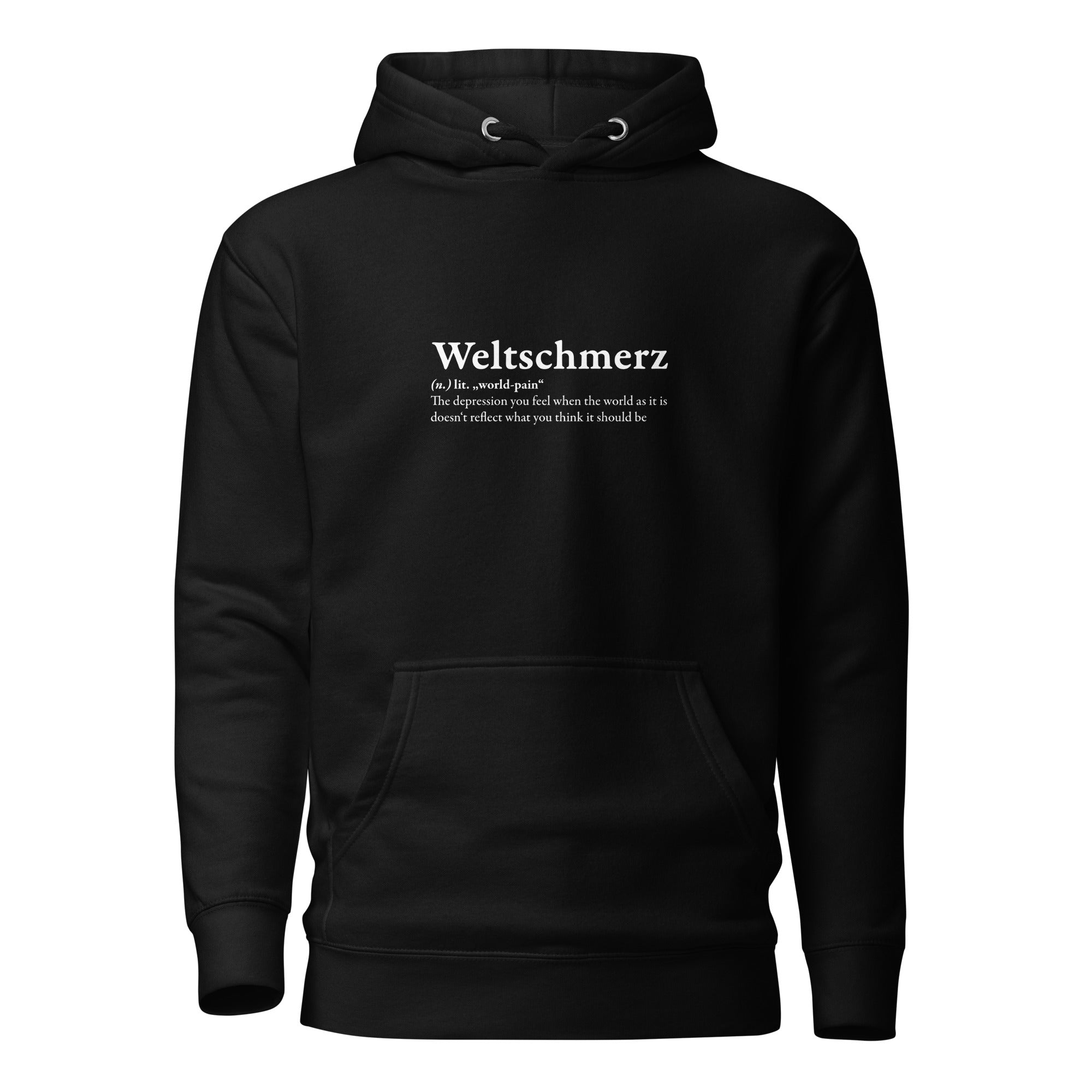
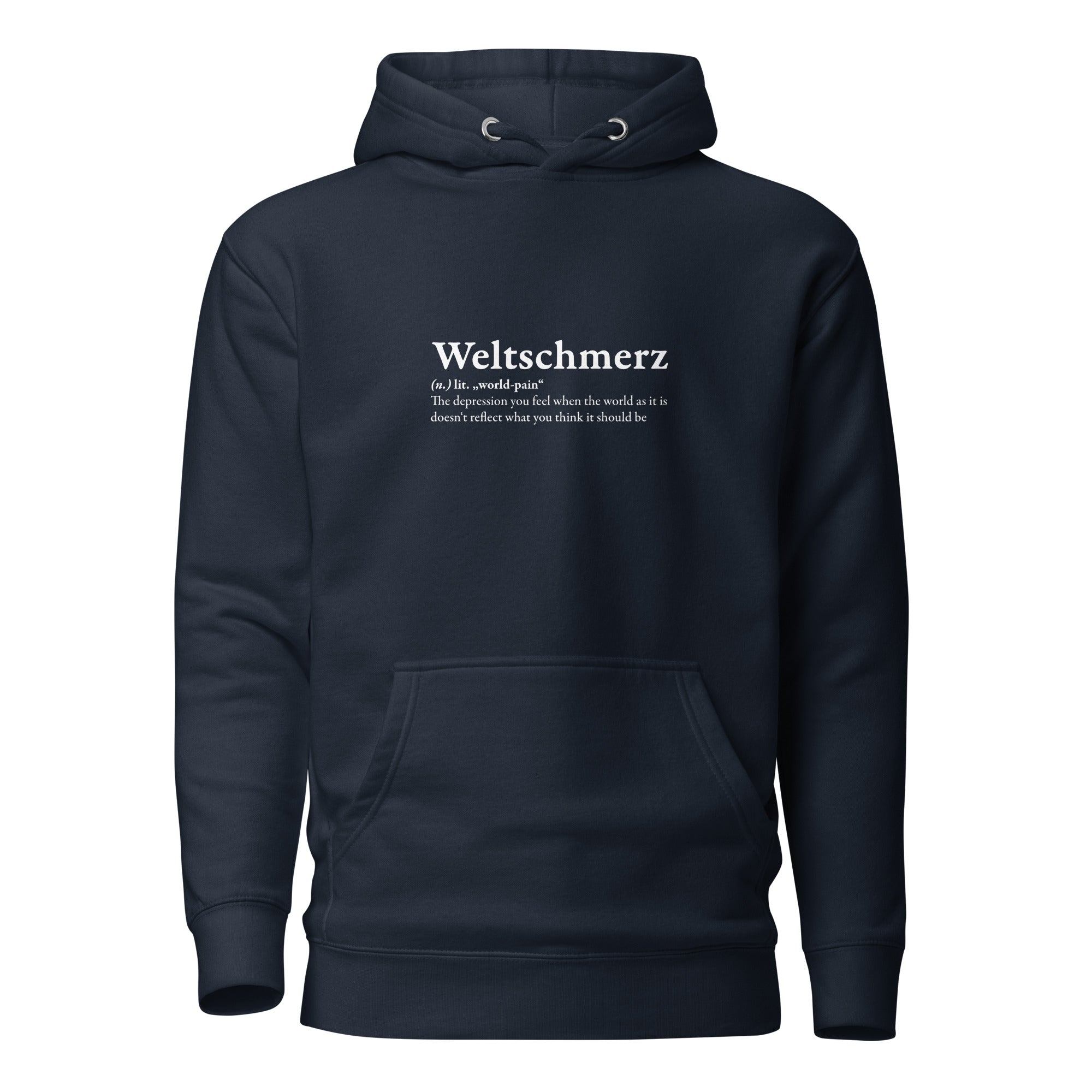
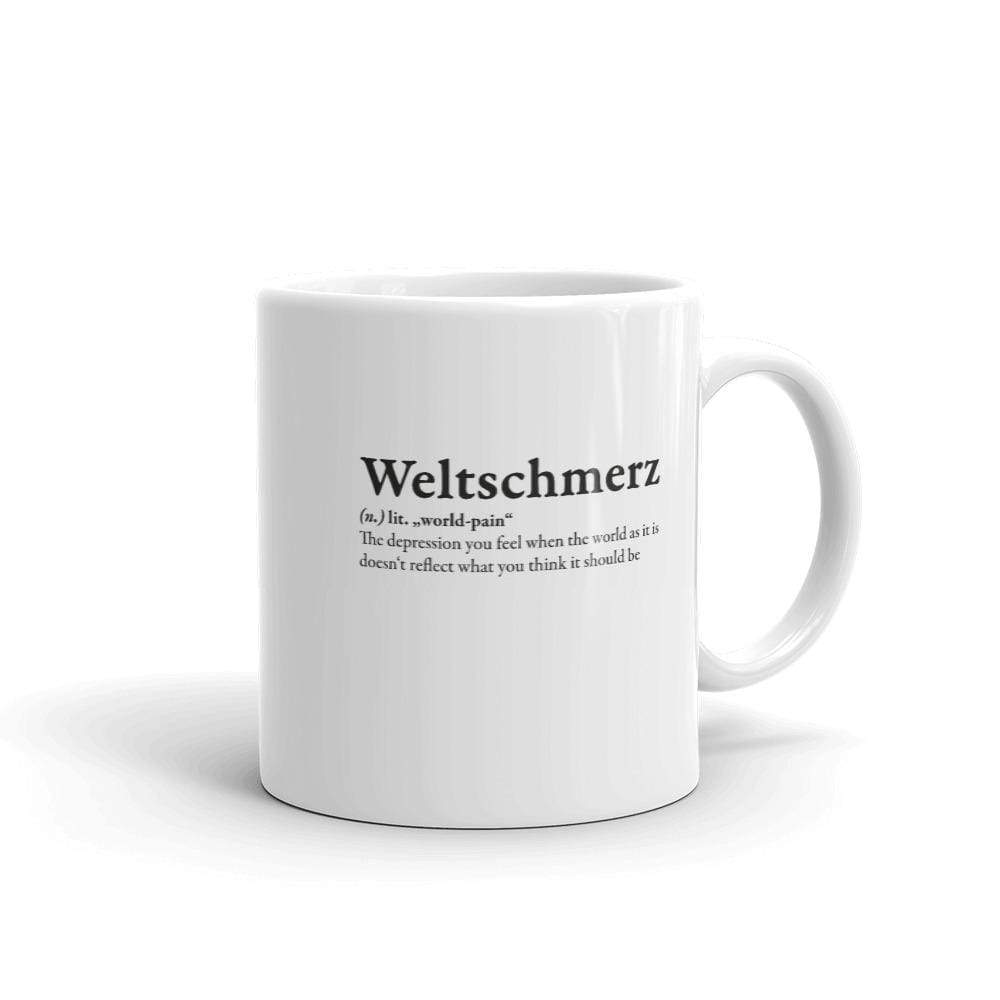
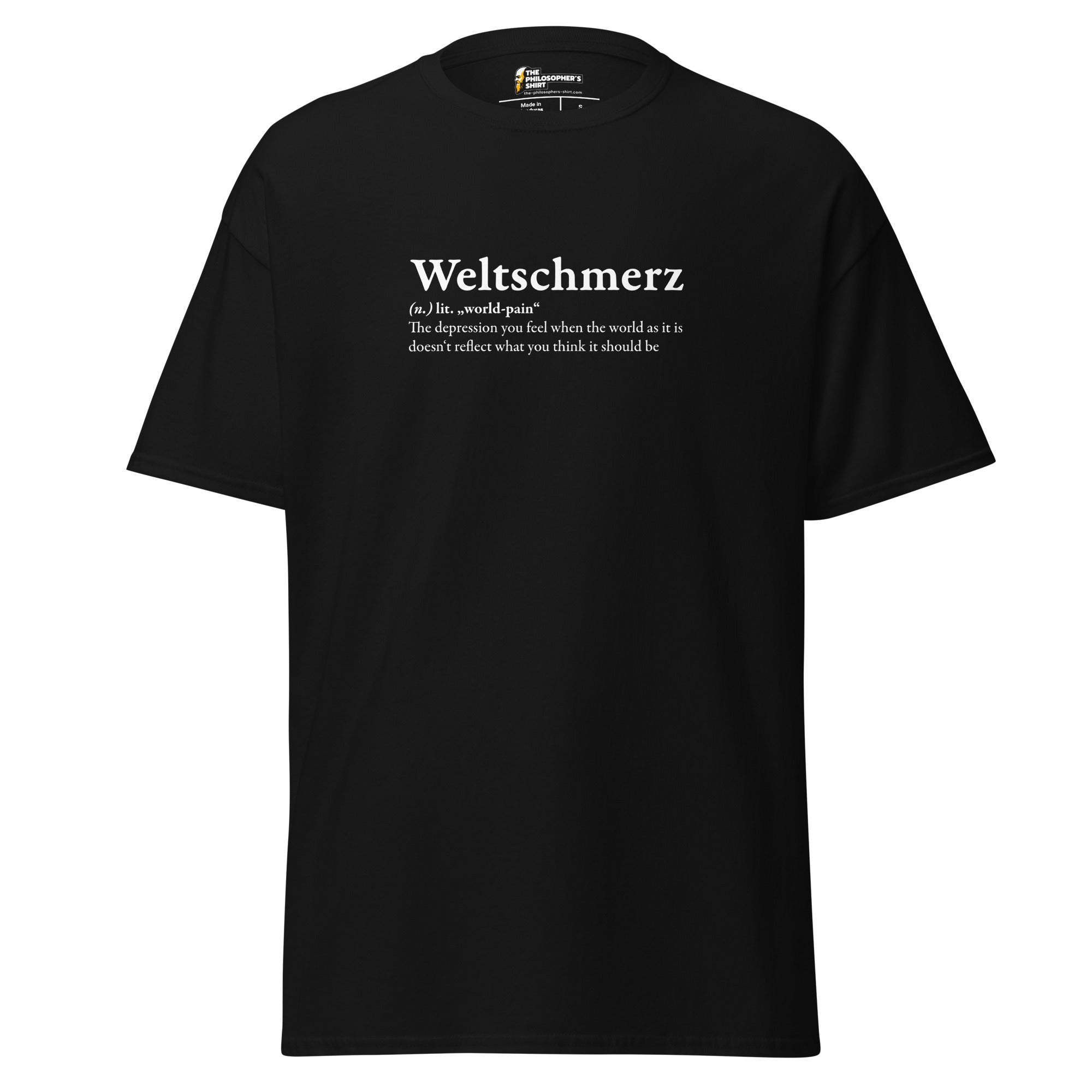
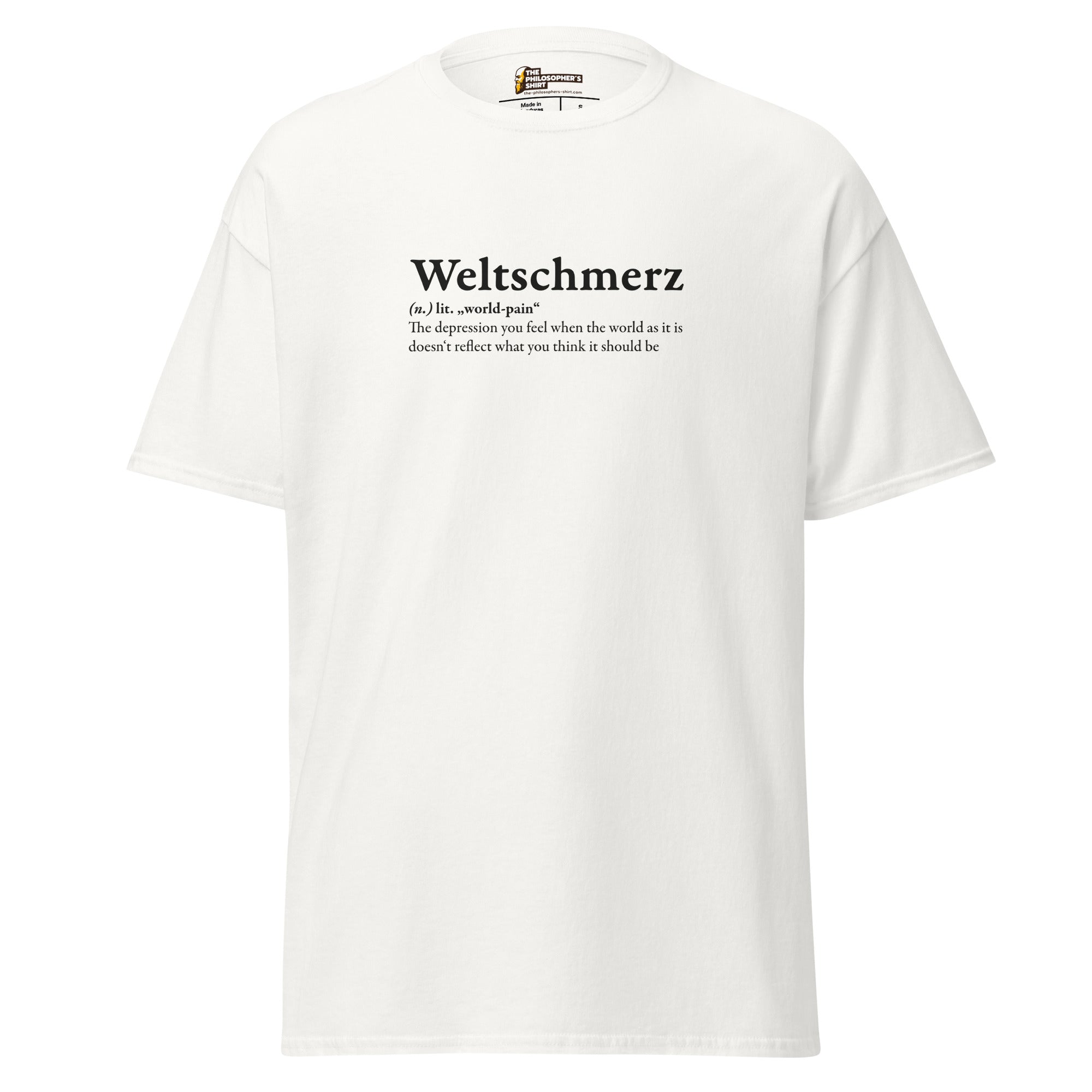
Definition of Weltschmerz

Weltschmerz: die Melancholie, die entsteht, wenn man die Welt, wie sie ist, mit der Welt vergleicht, wie sie eigentlich hätte sein können. Im Englischen gibt es dafür kein Äquivalent, was schon einiges aussagt.

Ein Wort, das mehr leistet als drei englische Sätze. Das ganze Sortiment: T-Shirts, Sweatshirts, Hoodies und Tassen, alles erst nach deiner Bestellung gedruckt. Manche Gefühle werden erst auf Deutsch richtig ernst genommen.
Questions about this design

What does the Definition of Weltschmerz design say?
It sets the German word Weltschmerz in bold type with a dictionary-style entry underneath – (n.) lit. world-pain – the feeling when the world as it is does not reflect what you think it should be. A deadpan definition for anyone who reads the news and sighs.
What does Weltschmerz mean?
Literally world-pain. It is the sadness or weariness that comes from comparing the world as it is with the world as it ought to be. Merriam-Webster defines it as mental depression or apathy caused by that comparison, and the Grimms' German dictionary as deep sadness at the inadequacy of the world.
Who coined the word Weltschmerz?
The German Romantic writer Jean Paul (Johann Paul Friedrich Richter, 1763–1825). It appears in his unfinished novel Selina, published posthumously in 1827. The word spread quickly and became the label for the melancholy mood of a whole generation of Romantic poets.
Is Weltschmerz an English word and how do you pronounce it?
Yes, English borrowed it from German and major dictionaries list it; Merriam-Webster dates its first English use to 1864. It is pronounced VELT-shmerts – the W sounds like a V, and the sch like sh. It is often capitalised, as all German nouns are.
Which writers are known for Weltschmerz?
Lord Byron, Heinrich Heine, Nikolaus Lenau and Giacomo Leopardi are the classic examples, along with Chateaubriand, Musset and Lermontov. A good starting point is Wilhelm Alfred Braun's study Types of Weltschmerz in German Poetry (1905). In philosophy, its close relative is the pessimism of Arthur Schopenhauer.
What is the difference between Weltschmerz, ennui and angst?
Weltschmerz is sorrow about the state of the world. Ennui, from French, is listless boredom and emptiness – Baudelaire made it the arch-vice in the opening poem of Les Fleurs du mal (1857). Angst is dread without a clear object, the anxiety Kierkegaard analysed in The Concept of Anxiety (1844).
Is Weltschmerz the same as depression?
No. Weltschmerz is a mood or outlook, a reaction to the gap between ideals and reality, not a medical diagnosis. It can sit alongside humour, engagement and hope. If low mood lasts for weeks or affects daily life, that is something to talk about with a doctor or therapist rather than to file under poetry.
What other German words have no English equivalent?
Schadenfreude (pleasure at someone else's misfortune), Fernweh (longing for faraway places), Sehnsucht (an aching, open-ended longing), Zeitgeist (the spirit of an age) and Torschlusspanik (fear that time is running out). Like Weltschmerz, several of them were simply borrowed by English.
Who is the Definition of Weltschmerz design a good gift for?
For lovers of untranslatable words, German learners and teachers, literature and philosophy students, and friends who are pleasantly melancholic with a sense of humour about it. The design comes as a sweatshirt, premium hoodie, classic t-shirt, mug and sticker.