Keine Zollgebühren, weil wir aus deiner Region versenden. Versandkostenfrei ab 70 € / CHF 70 / $80 / £60
Unsere Website durchsuchen

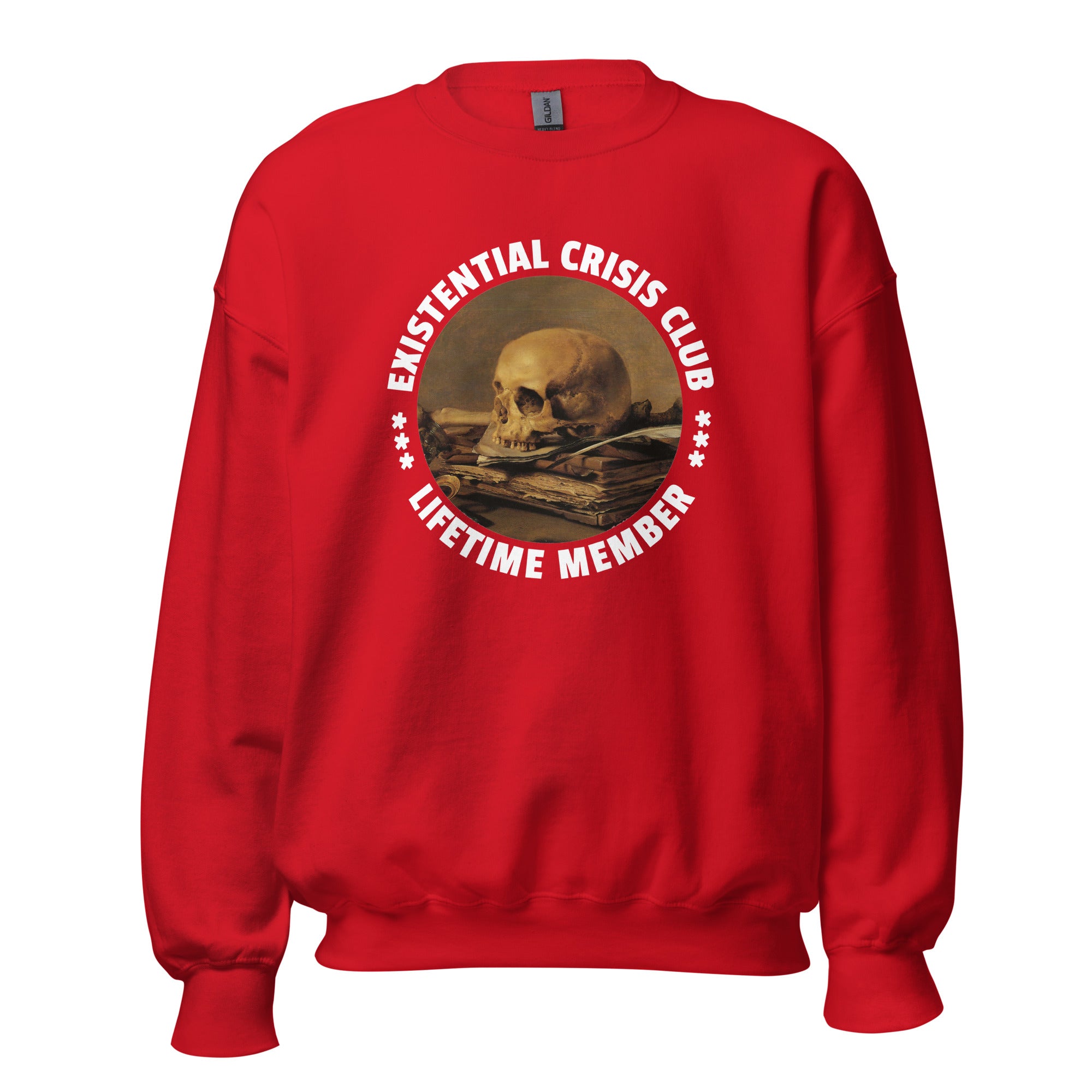
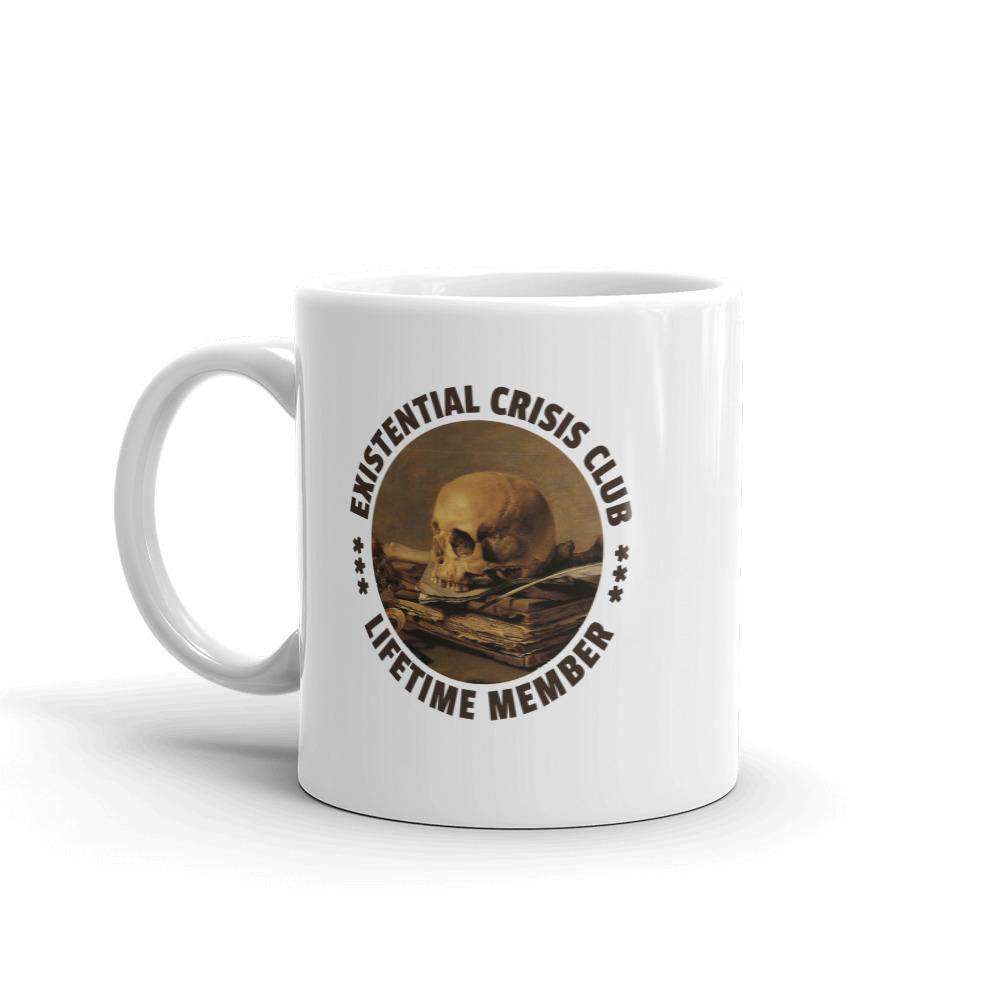
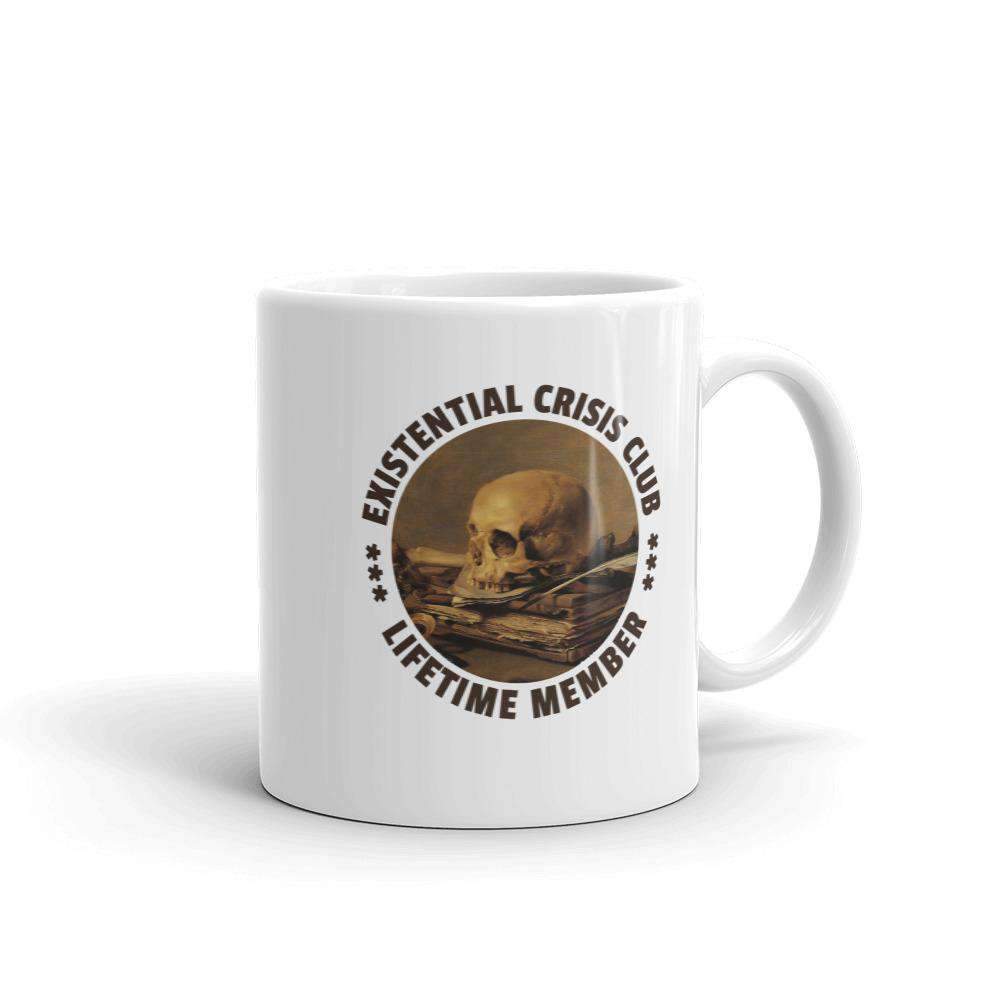
Existential Crisis Club - Lifetime Member

Die Mitgliedschaft ist automatisch, die Beiträge zahlst du in schlaflosen Nächten, und einen Austritt gibt es nicht. Aufgenommen wurdest du, als du zum ersten Mal „Warum?“ gefragt hast.

Wer es versteht, findet dich, und das ist entweder der Sinn der Sache oder das Problem. Das ganze Sortiment in jedem Format, alles erst nach deiner Bestellung gedruckt. Trag den Ausweis. Die Treffen finden ständig statt, und zwar nur in deinem Kopf.

Questions about this design

What does the Existential Crisis Club – Lifetime Member design show?
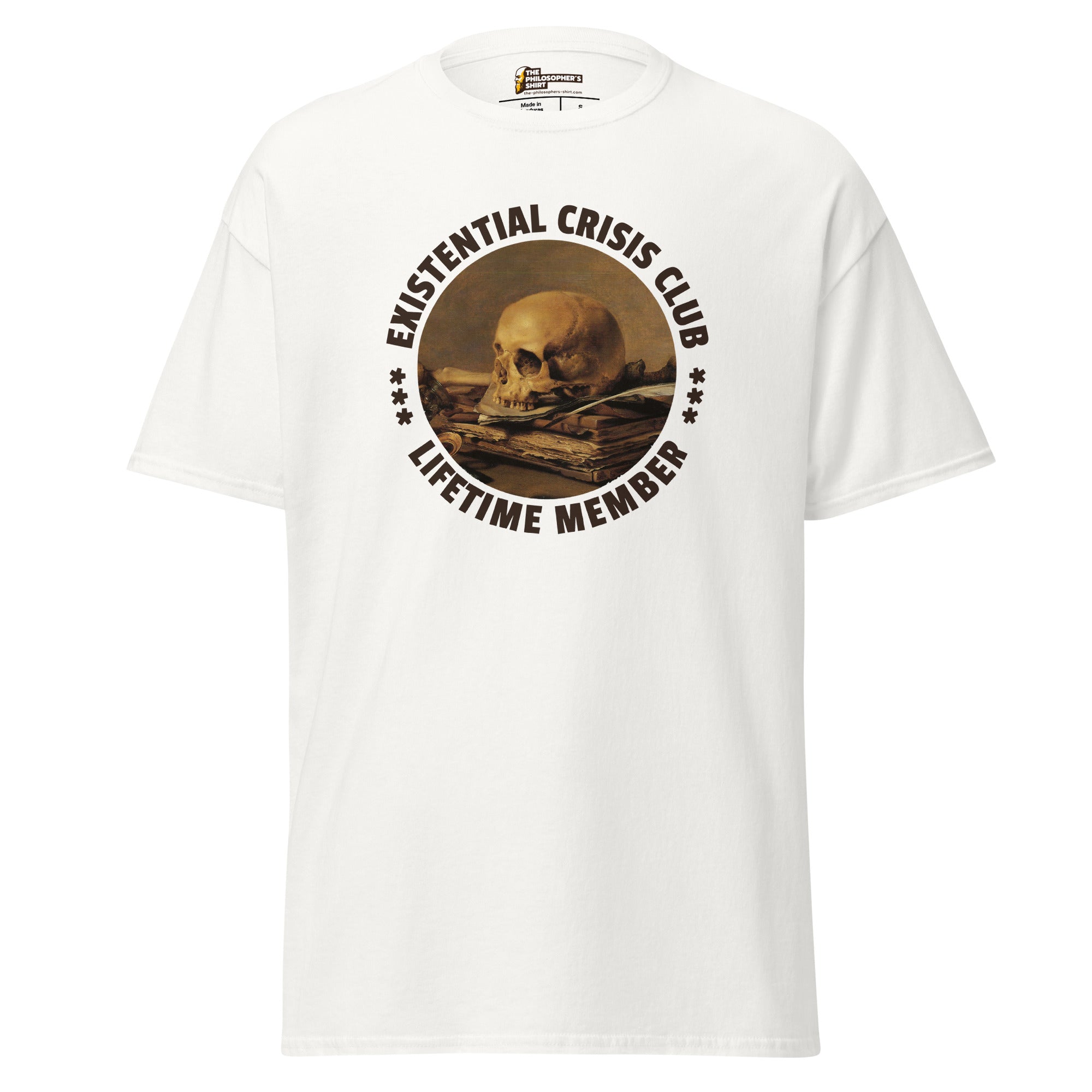
A round club badge with a skull resting on old books beside a writing quill, painted in the warm browns of a 17th-century Dutch still life. Around it runs EXISTENTIAL CRISIS CLUB, below it LIFETIME MEMBER. The joke is a membership nobody applies for and nobody manages to cancel.
What is a vanitas painting and what does memento mori mean?
Vanitas still lifes flourished in the 17th-century Dutch Republic; skulls, hourglasses and snuffed candles remind the viewer that earthly things are fleeting, echoing Ecclesiastes' vanity of vanities. Memento mori is Latin for remember that you must die. Pieter Claesz's Still Life with a Skull and a Writing Quill (1628) is a famous example of the genre.
What is an existential crisis?
A period in which someone seriously questions the meaning, purpose or value of their life, often triggered by loss, a milestone birthday, a career change or a sharp awareness of mortality. The term comes from existential philosophy and psychology; it is not a clinical diagnosis. If the distress lasts or deepens, talking to a professional helps.
What is existentialism?
A 19th- and 20th-century philosophical movement centred on the individual who must make sense of life without ready-made answers. Its key themes are freedom, choice, responsibility, anxiety, authenticity and death. Kierkegaard and Nietzsche are seen as forerunners; Sartre, Beauvoir and Heidegger as central figures, with Camus often grouped alongside them.
What does existence precedes essence mean?
Sartre's formula, from his 1945 Paris lecture Existentialism Is a Humanism. A paper knife is designed for a purpose before it exists; a human being, Sartre argues, first exists and only then defines what they are through their choices. There is no fixed human nature to fall back on – which is why we are fully responsible for what we make of ourselves.
What did Kierkegaard say about despair?
In The Sickness unto Death (1849), published under the pseudonym Anti-Climacus, Kierkegaard calls despair the sickness of the self – a failure to relate rightly to oneself. Its forms range from not knowing one has a self, through not wanting to be oneself, to defiantly wanting to be oneself. He thought it was most common precisely where people feel no despair at all.
What is absurdism?
Albert Camus's view, set out in The Myth of Sisyphus (1942), that the absurd arises from the clash between our need for meaning and a silent, indifferent universe. Camus rejects both suicide and the leap into religious hope. He answers with revolt, freedom and passion – and ends with the line that one must imagine Sisyphus happy.
What is the difference between nihilism and existentialism?
Both start from the idea that life has no meaning given in advance. Nihilism can stop there and conclude that values are baseless. Existentialism treats that emptiness as a starting point – since nothing is given, we are free and responsible to create meaning through our choices and how we live.
Is the Existential Crisis Club – Lifetime Member design a good gift?
Yes, for philosophy students, chronic overthinkers, friends facing a big birthday and anyone whose small talk drifts towards mortality. It comes as a unisex T-shirt, women's T-shirt, sweatshirt, premium hoodie, mug and sticker.