


Philosophical Dictionary
-

We Are the Meme: A Christmas Whammy on the Nature of Love
By C.M. Black
We discuss love, loss, and "Last Christmas" in our newest article, in which we are the meme. Let's talk about classical definitions of love in our first holiday post of the year. -

The Münchhausen Trilemma: Why Proving Everything Is Like Pulling Yourself Out of a Swamp by Your Own Hair
By Markus Uehleke
Explore the Münchhausen trilemma, the fascinating philosophical puzzle that shows why all knowledge faces three unsatisfying options: infinite regress, circular reasoning, or unprovable assumptions. Learn why absolute certainty is elusive and how to think more clearly anyway. -
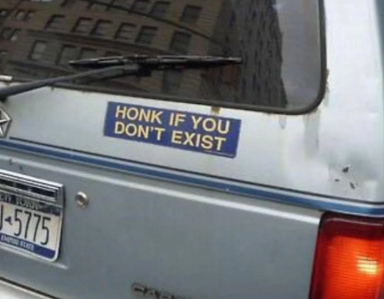
I Think Therefore I Honk: The Cogito Explained
By C.M. Black
Existence is everything and nothing. How do we know we exist? Or even better, how do we know that other people exist? Something so basic as existence should be obvious, but is it really? We don’t tend to wonder if...
-
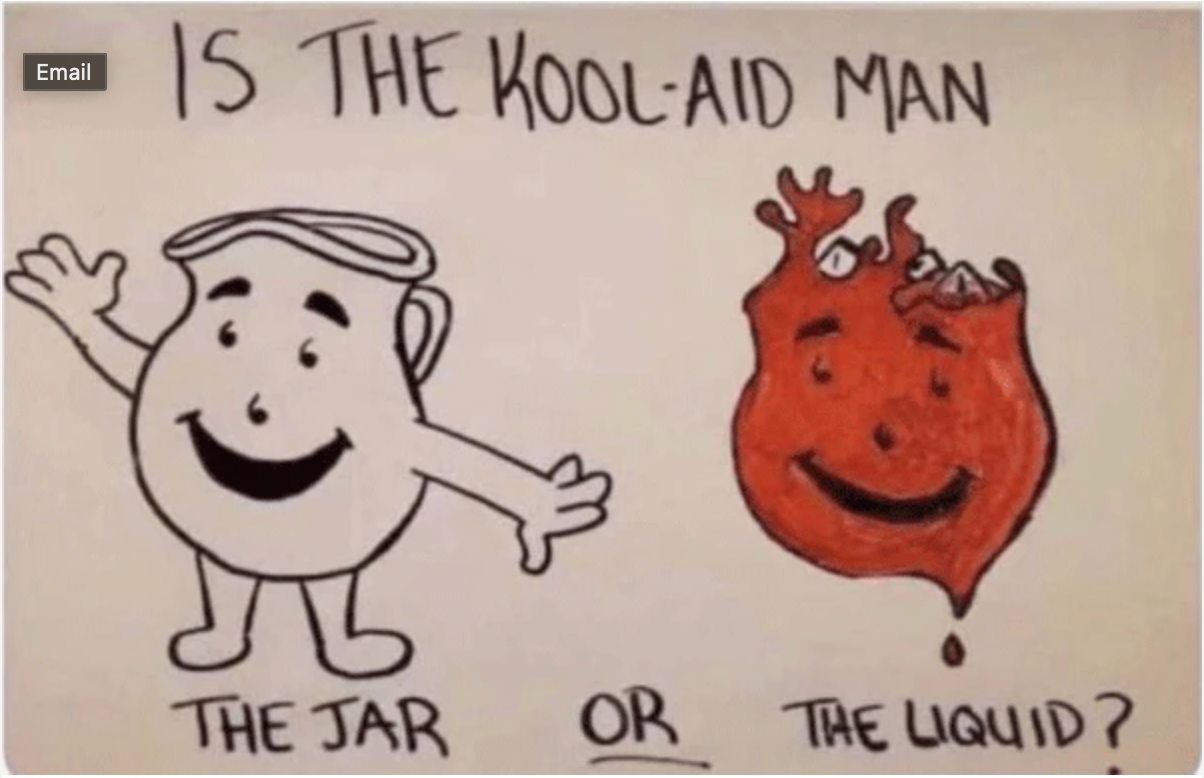
Descartes' Philosophical Revolution on Mind-Body Dualism
By Sarthak Dhole
Join us as we explore Descartes's philosophical revolution which is listed amongst the likes of Newton and Copernicus. Descartes, a Rationalist, sought to rebuild knowledge on the foundation of reason alone, famously using his method of Cartesian Doubt to discard uncertain beliefs making him an extremist Socratic reincarnation. We delve into his Meditations 6, particularly his exploration of the mind-body problem, where he argued for the distinct, yet interacting, substances of mind (res cogitans) and body (res extensa). We also look at criticisms of Descartes’ Dualism by figures like Princess Elizabeth and Gilbert Ryle, who mockingly called it the “Dogma of the Ghost in the Machine.”
-

Agent Smith Meme Explained: “Yet You Participate in the Matrix” and the Philosophy of the Status Quo
By Markus Uehleke
The Agent Smith meme borrows the punchline of a 2016 comic: anyone who criticises a system while living inside it must be a hypocrite. Economists have measured the urge to keep things as they are since 1988, and the theorist whose book appears in the film found it embarrassing. Is the gotcha clever, or loss aversion?


