


Philosophical Dictionary
-
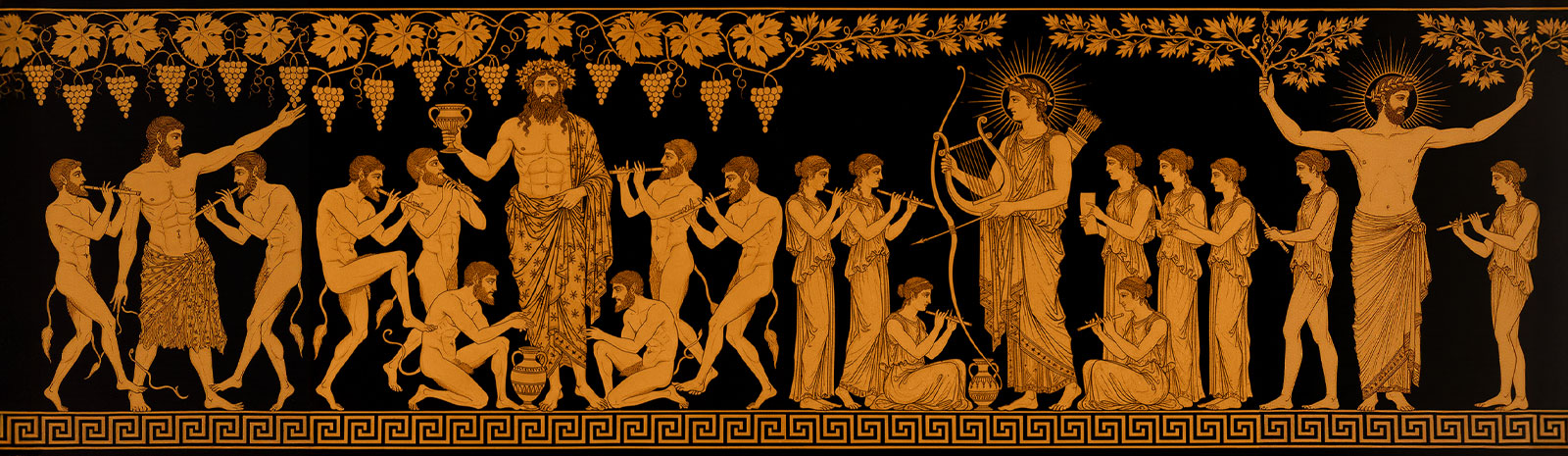
The Birth of Nietzsche from the Spirit of Philosophy
By C.M. Black
In today's article, we discuss Friedrich Nietzsche's ideas on aesthetics in The Birth of Tragedy, making a case for the philosopher's continued relevance. -
Dreams, Mirrors, and Invisible Coffee: Discover the Truth
By C.M. Black
The final par of the "Philosophy Carol" series. Meeting the Ghost of Philosophy in an eternal cafe brings you to an epiphany. -

How Language Shapes Thought: Exploring Wittgenstein's Philosophy and the Sapir-Whorf Hypothesis
By Markus Uehleke
Discover how your language might be shaping—or limiting—your thoughts. Explore Wittgenstein's revolutionary "language games" concept and the truth behind the Sapir-Whorf hypothesis. Learn why linguists believe the words we use influence but don't determine our perception of reality. -

One Must Imagine Sisyphus Happy: What Camus Meant, and Why the Meme Says “Asymptomatic”
By Markus Uehleke
Camus ends a book about suicide with a man pushing a rock forever and calls him happy. The line is an instruction to the reader, not a report on Sisyphus’s mood, and it closes a real argument about the absurd. Two philosophers later pushed back hard. Were they right, or is Sisyphus just asymptomatic? -

Kant's Thing-in-Itself: The Reality Behind the Curtain
By Markus Uehleke
Kant proposed that our perception of the world is shaped by our senses and mental faculties, filtering reality into a comprehensible form. The "Thing-in-Itself," however, represents the elusive reality that lies beyond our perceptual limitations. By grasping this concept, you can challenge the boundaries of your own understanding and explore what lies beneath the surface of appearances. -

Nietzsche’s Übermensch: What the Overman Really Is (and Why It Is Not a Superhero)
By Markus Uehleke
Nietzsche’s Übermensch is quoted everywhere, from gyms to tech conferences, yet he wrote surprisingly little about it, and complained that readers took it for a half-saint, half-genius or the next stage of evolution. What does the overman in Thus Spoke Zarathustra actually stand for, and who is the last man the crowd prefers?


