No tariffs. Ever. We ship locally from the US, Canada, the UK, or the EU + Free shipping over $80 / 70€ / £60 (equivalent in all other currencies).
Search our site

Paycheck to Paycheck

Not a lifestyle, not a phase, not a budgeting failure — a structural arrangement that a great many people are living inside right now.

No joke attached, which is what gives it weight. Available across tees, sweatshirts, hoodies and mugs, printed to order. An anti-capitalist gift for workers. Named plainly, because the euphemisms have not helped.

Questions about this design

What does the Paycheck to Paycheck design show?
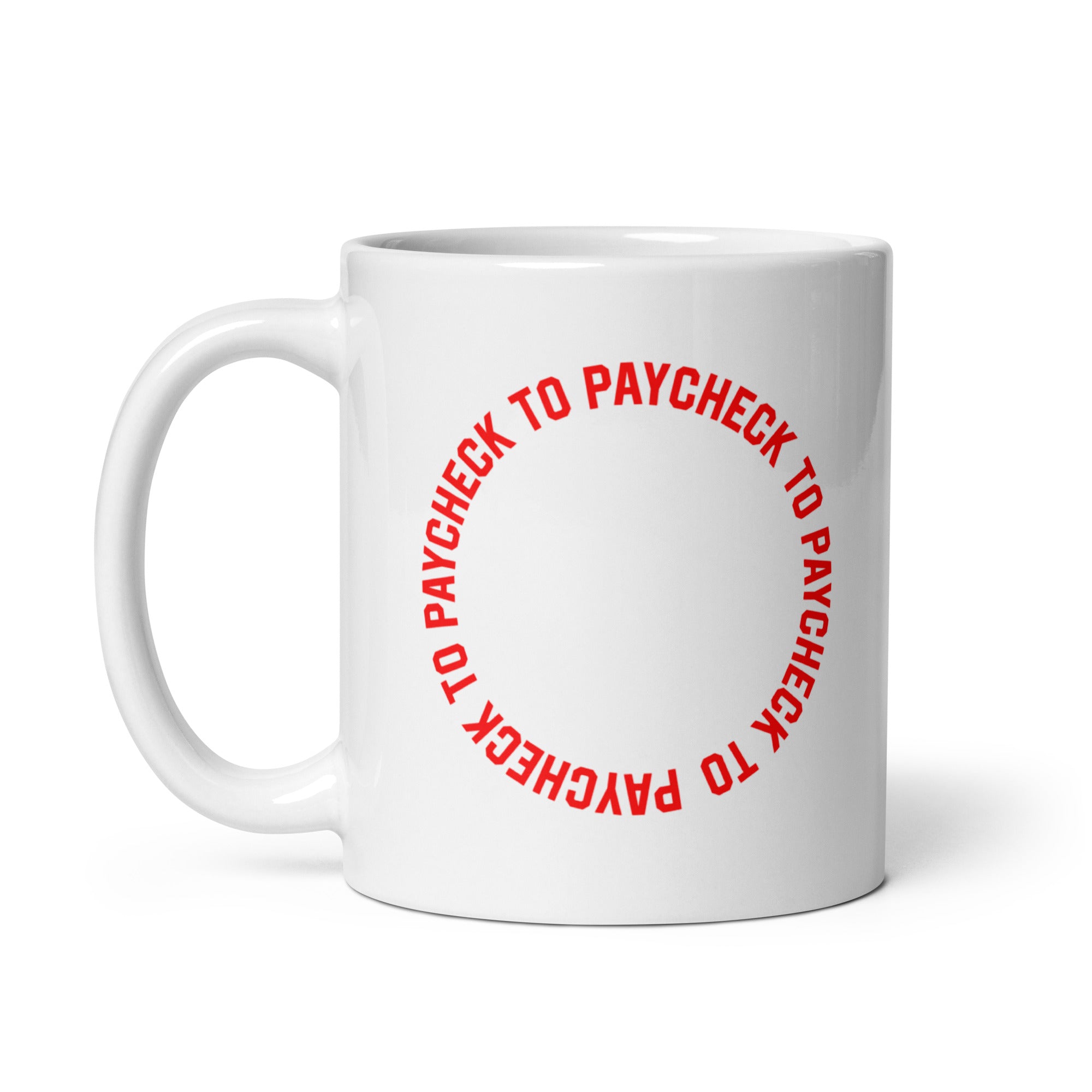
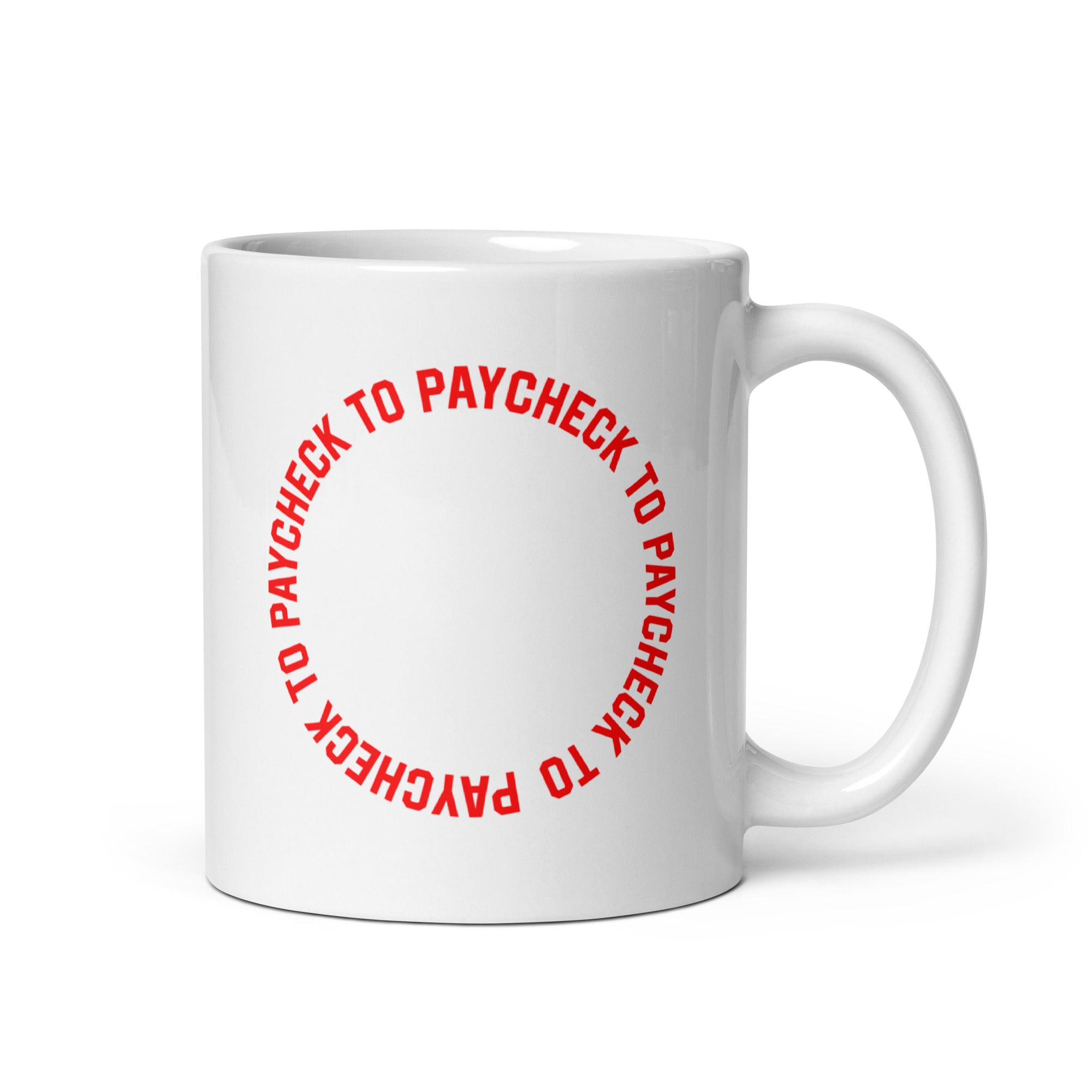
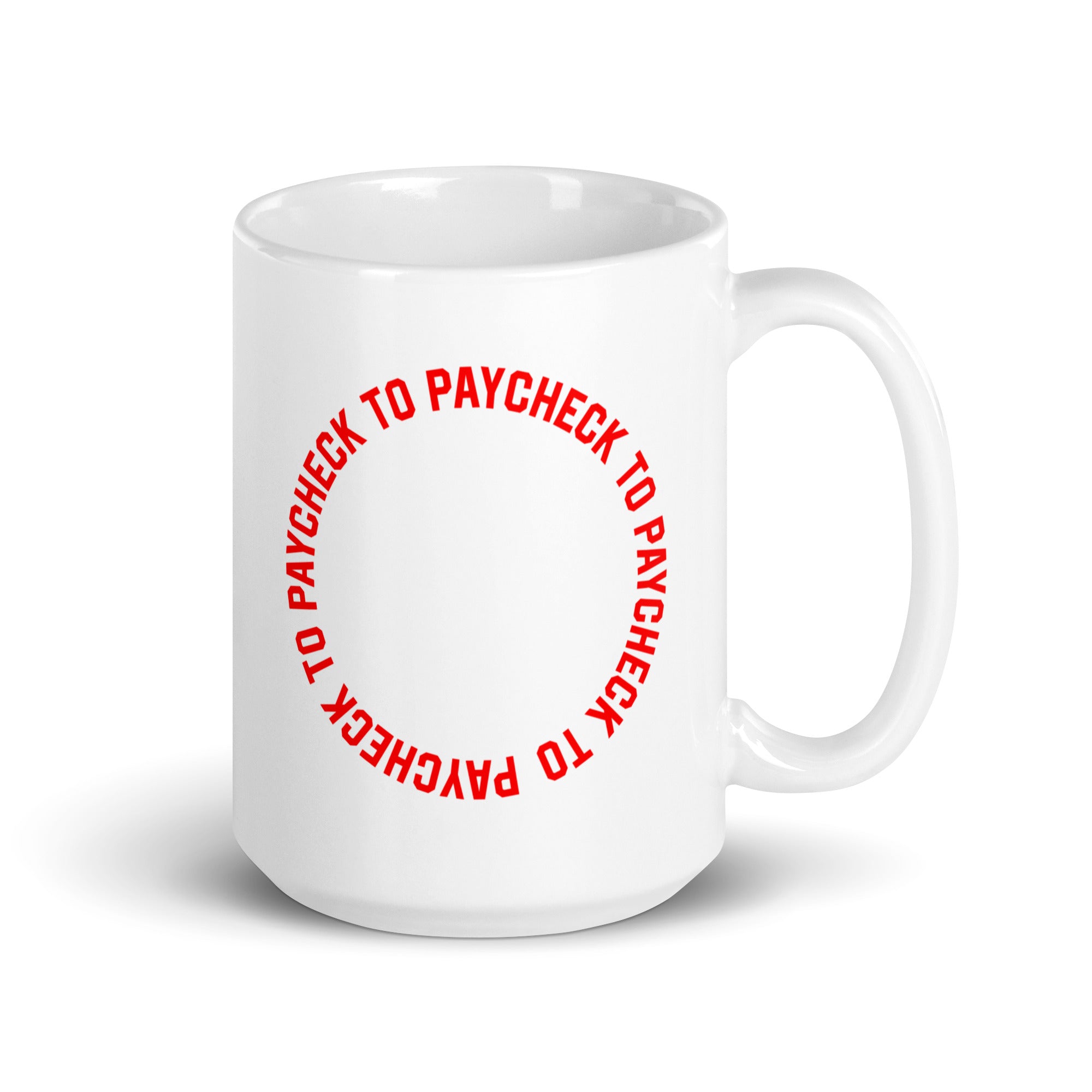
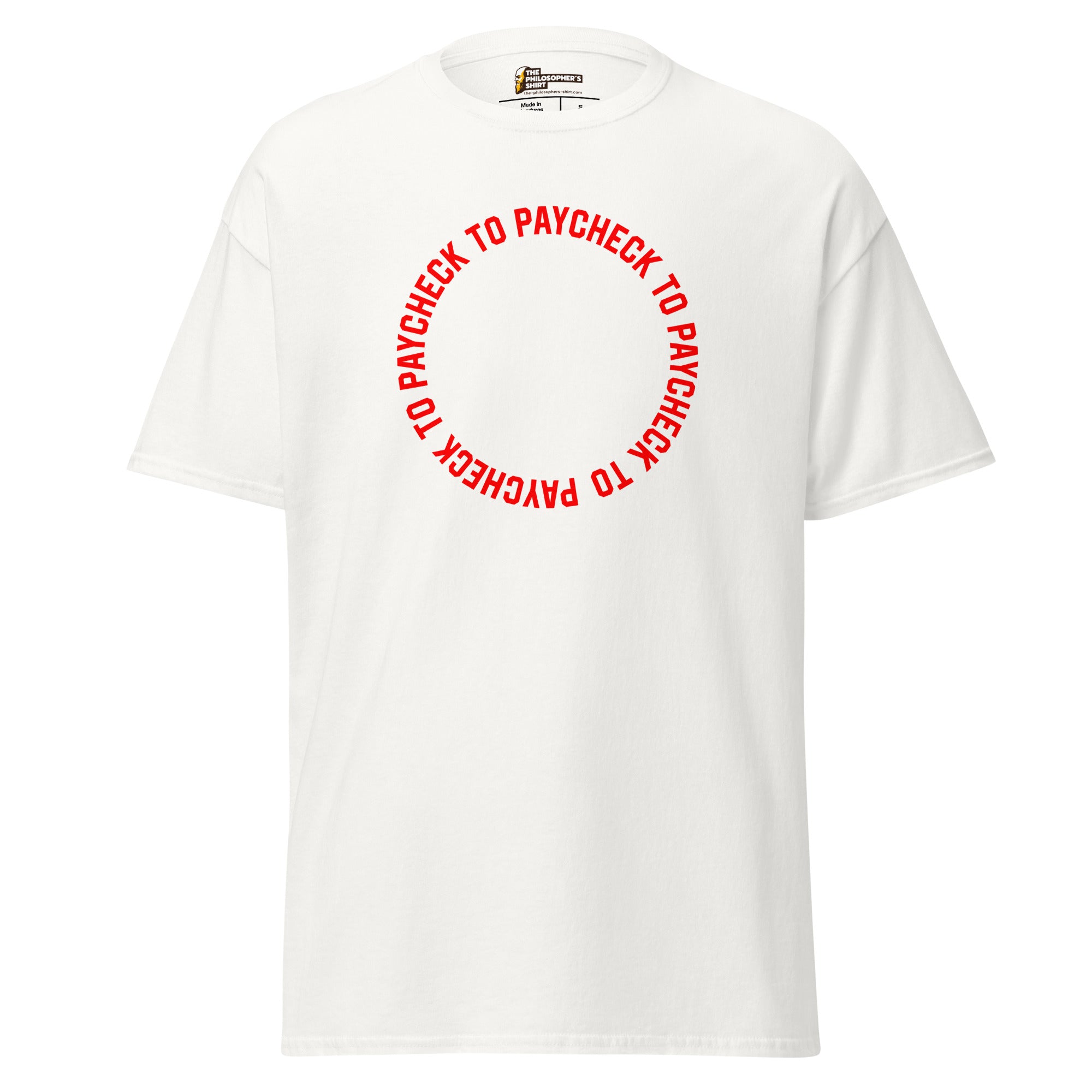
The words Paycheck to Paycheck to Paycheck, set in a closed circle with no beginning and no end. There is no punchline – the loop is the point. It names plainly an arrangement many people live inside, where each wage is spent before the next one arrives, and turns it into a small emblem of solidarity rather than private shame.
What does living paycheck to paycheck mean?
Living paycheck to paycheck means your income is used up by regular expenses before the next payday, leaving little or no savings. Any unexpected cost – a repair, an illness, a gap between jobs – becomes a crisis. It is not limited to low earners; rising rents, debt and stagnant wages can put people on many income levels in the same loop.
What did Marx mean by wage labour?
In Wage Labour and Capital (1849) Marx argues that workers who own no means of production must sell their labour power to live, and the wage is the price of that commodity. Because the wage tends to cover what workers need to reproduce themselves, it is spent as fast as it arrives – so the worker returns to the labour market again and again, while profit accumulates on the other side.
What is alienation according to Marx?
In the Economic and Philosophic Manuscripts of 1844 Marx describes four kinds of alienation under capitalism – from the product of one’s work, which belongs to someone else; from the activity of working, which becomes a mere means to survive; from one’s species-being, the human capacity for free creative activity; and from other people. Work, he says, is then something you only do in order to live, not part of living.
What is the myth of Sisyphus about?
In Greek myth Sisyphus is condemned to roll a boulder up a hill for ever, only to watch it roll back down each time. In The Myth of Sisyphus (1942) Albert Camus makes him the hero of the absurd and sees the modern worker in him, doing the same tasks every day. His conclusion is famous – one must imagine Sisyphus happy, because his struggle itself, consciously embraced, is enough.
What is the precariat?
The precariat is a term popularised by economist Guy Standing in The Precariat – The New Dangerous Class (2011) for people living with insecure work – short contracts, gig jobs, unstable hours – and without the protections of a stable career. The word blends precarious and proletariat. Precarity describes the wider condition of not being able to plan beyond the next pay period.
What is the iron law of wages?
The iron law of wages is the claim that real wages always tend towards the minimum needed to keep workers alive. The phrase was coined by the German socialist Ferdinand Lassalle in 1863, building on ideas from Ricardo and Malthus. Marx rejected it in his Critique of the Gotha Programme (1875), arguing that wages depend on class struggle and the organisation of labour, not on a natural law.
Who is the Paycheck to Paycheck design for?
For anyone who knows the loop from the inside, for trade unionists and organisers, and for students of economics, sociology or philosophy who like their clothing to say something plainly. It is a quiet statement rather than a joke. The design comes as a classic T-shirt, sweatshirt, premium hoodie, mug and sticker.