No tariffs. Ever. We ship locally from the US, Canada, the UK, or the EU + Free shipping over $80 / 70€ / £60 (equivalent in all other currencies).
Search our site

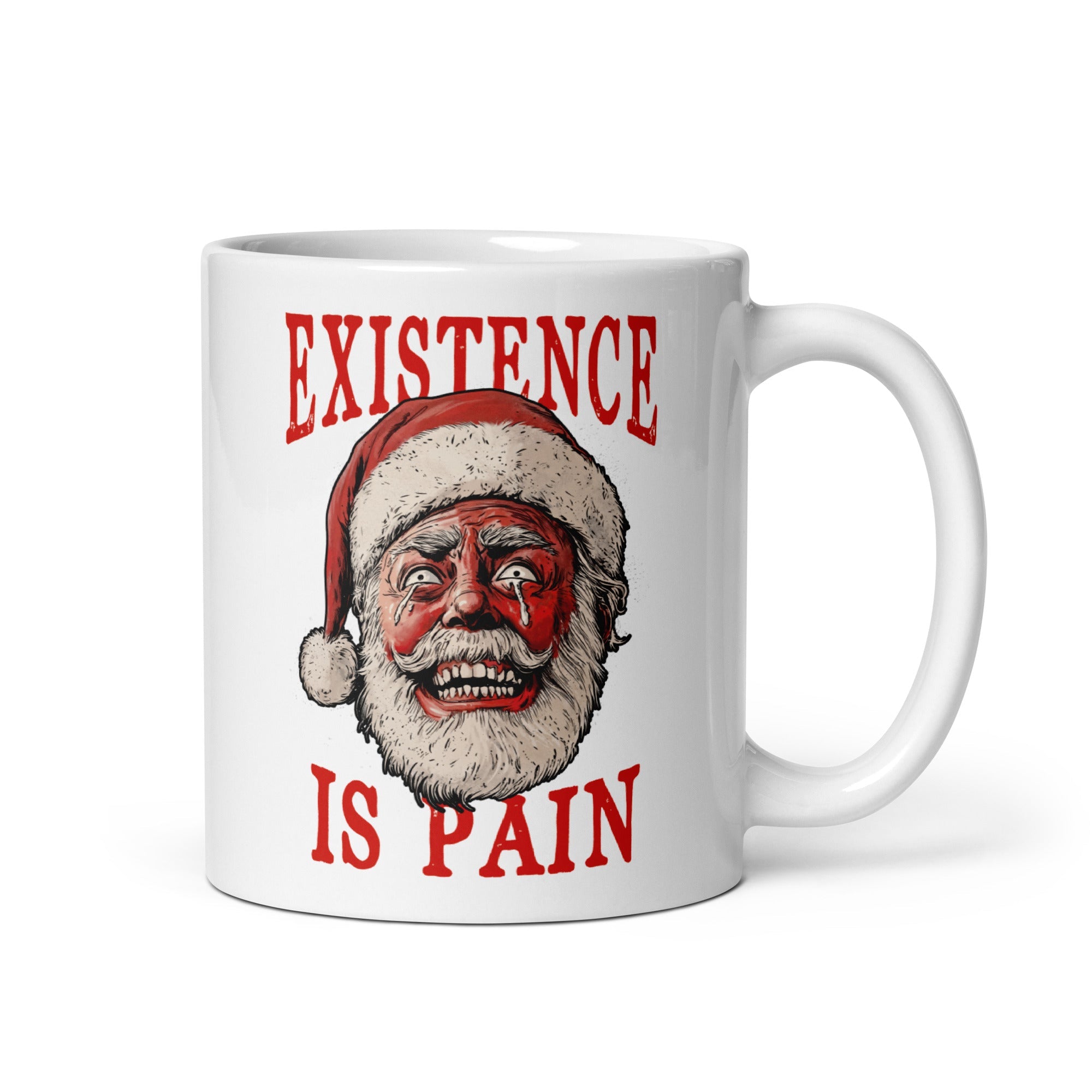
Anonymous Santa - Existence is Pain

One night, every chimney, no union representation. It would be surprising if he had reached any other conclusion by now.

The exact tonal collision that makes people laugh at office parties. Every format we print it on, made to order as you buy it, from apparel to accessories. A Christmas gift for nihilists. Ho ho ho. Existence remains pain.


Questions about this design

What does the Anonymous Santa – Existence is Pain design show?
A weeping, grimacing Santa Claus in his red hat, framed by the words Existence Is Pain. The joke is the collision of the most cheerful figure of the year with the bleakest sentence of the pessimist tradition – one night, every chimney on earth, and still no answers. Festive gloom for people who read Schopenhauer between the cookies.
Who said existence is pain?
As a four-word slogan, Existence is pain is a modern internet catchphrase, not a quotation from any philosopher. The idea behind it is old, though. The Buddha’s First Noble Truth names dukkha – suffering or unsatisfactoriness – as a mark of conditioned existence, and Arthur Schopenhauer built a whole metaphysics on the claim that life is essentially striving and therefore suffering.
What did Schopenhauer say about suffering?
In The World as Will and Representation (1818) Schopenhauer argues that everything is driven by a blind, insatiable will. We desire, and unfulfilled desire is pain; once a desire is satisfied, boredom sets in. Hence his famous image that life swings like a pendulum to and fro between pain and boredom. Relief, for him, comes through art, compassion and the ascetic denial of the will.
Is life suffering according to Buddhism?
The First Noble Truth says that dukkha marks conditioned existence – birth, ageing, illness, death, separation from what we love. Dukkha is often translated as suffering, but many scholars prefer unsatisfactoriness, because even pleasant things are impermanent. Crucially, Buddhism does not stop there; the Third and Fourth Noble Truths teach that suffering can end, by following the Eightfold Path.
Was Schopenhauer influenced by Buddhism?
Yes. His main work already drew on the Upanishads, which he read in a Latin translation, and he later studied Buddhist texts as they reached Europe, calling Buddhism the religion closest to his own philosophy. He was among the first major Western philosophers to take Indian thought seriously – and he named each of his poodles Atma, after the Sanskrit word for the self or world-soul.
What is philosophical pessimism?
Philosophical pessimism is the view that life contains more suffering than good, or that existence has no positive value overall. Its classic voice is Arthur Schopenhauer; later figures include Philipp Mainländer, Eduard von Hartmann and, in the twentieth century, Emil Cioran. Pessimism is not nihilism – pessimists usually take value seriously and conclude that the balance is negative.
What does Weltschmerz mean?
Weltschmerz, German for world-pain, is the melancholy of realising that the world will never be what it ought to be. The word was coined by the novelist Jean Paul in Selina (1827) and became a defining mood of Romanticism. It is roughly the expression the Existence is Pain Santa is wearing.
What is a good Christmas gift for a pessimist or a philosophy lover who dislikes Christmas?
Something that lets them join the party without pretending. The Existence is Pain Santa comes as a sweatshirt, a mug and a sticker, so it works as a dark-humoured office party jumper, a Secret Santa present or a stocking filler for anyone who quotes Schopenhauer before the first mulled wine.