


Philosophical Dictionary
-

Ugly, Yet So Beautiful: Aesthetics and the Christmas Sweater
By C.M. Black
We discuss the philosophical study of aesthetics and its relation to the infamous ugly Christmas sweater. Who determines what is beautiful and what is ugly? And how do we do so? -

What Is Existentialism? Sartre, Kierkegaard, Camus and Why Your Existential Crisis Is Normal
By Markus Uehleke
Existentialism says you show up first and figure out what you are for later. No manual, no factory settings, and no one to blame for your choices. Here is what Sartre, Kierkegaard, Beauvoir, Heidegger and Camus actually meant, why an existential crisis is part of the deal, where the whole thing started (with an apricot cocktail), and how existentialism differs from nihilism and absurdism. -

Schopenhauer: Man can do what he wants, but man can't want what he wants.
By Markus Uehleke
It sounds like a riddle: you can do what you want, but you can’t want what you want. Schopenhauer meant the idea literally, and Einstein found it consoling. We trace the line to the 1839 essay behind it, unpack his theory of will, motive and character, and ask: if you never chose your wants, who is to blame? -

On Truth and Lies in a Nonmoral Sense: Nietzsche, Perspectivism and the Ethics Meme
By Markus Uehleke
Is the dog a good boy? Depends on your ethical theory, says the meme. Nietzsche went further in 1873: truth itself is a mobile army of metaphors, and being truthful means lying by convention. He never published the essay, and his famous “no facts” line sits in a notebook. So did he hand us post-truth? -

From the Academy to the Street: Where Can We Find Philosophy?
By C.M. Black
In this article, we will discuss the definition of philosophy, its professional practice, and whether we can find philosophy outside of our favorite big names and modern academia. -
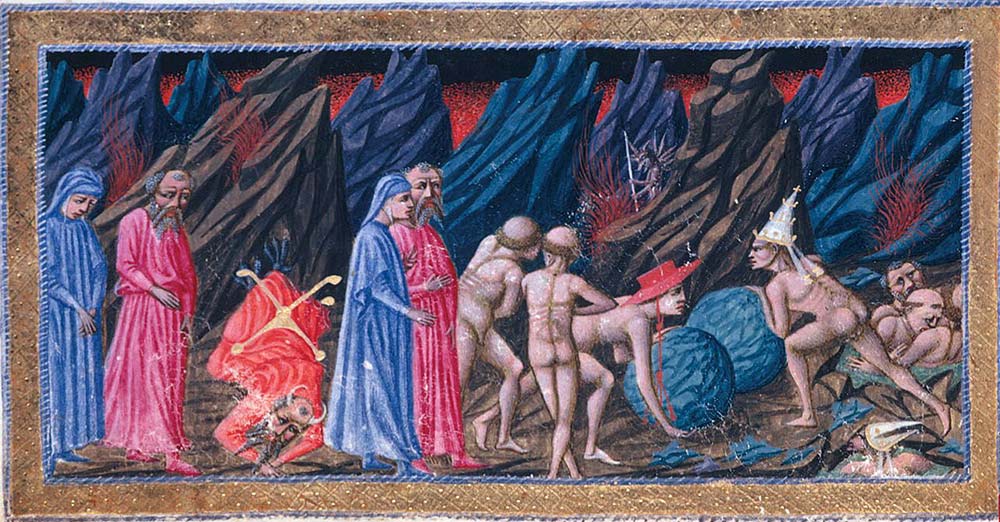
Epicurus Unchained: A Defense Against Dante's Condemnation
By Klaus Koppe
Explore how Dante condemned Epicurus to hell for his materialist philosophy and how this suppression might have delayed scientific progress. This witty essay contrasts Epicurean atomism with Platonic dualism and traces how Christian dogma replaced ancient philosophical pluralism.


