Sin aranceles: enviamos desde tu región. Envío gratis a partir de 70 € / $80 / £60
Buscar en nuestro sitio

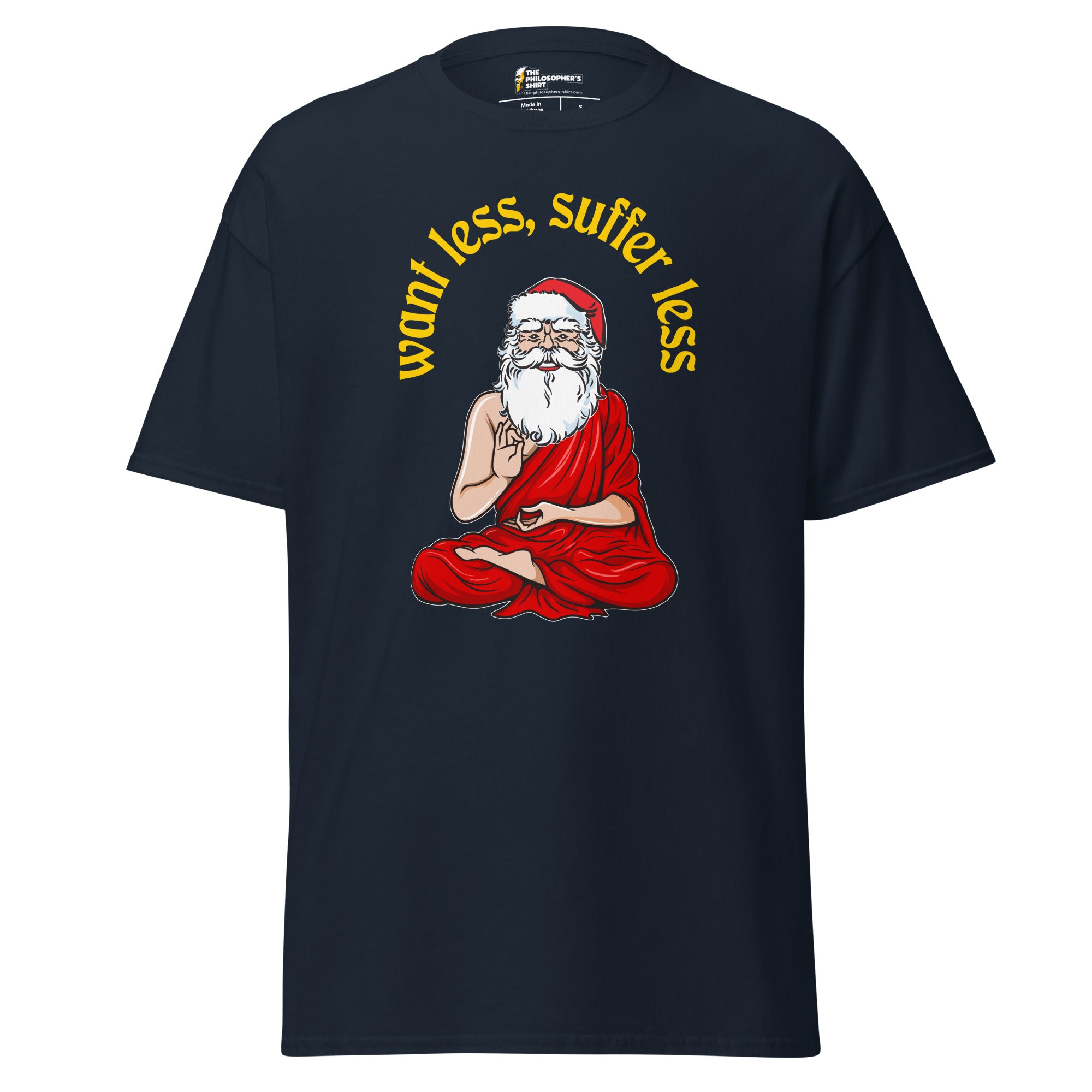
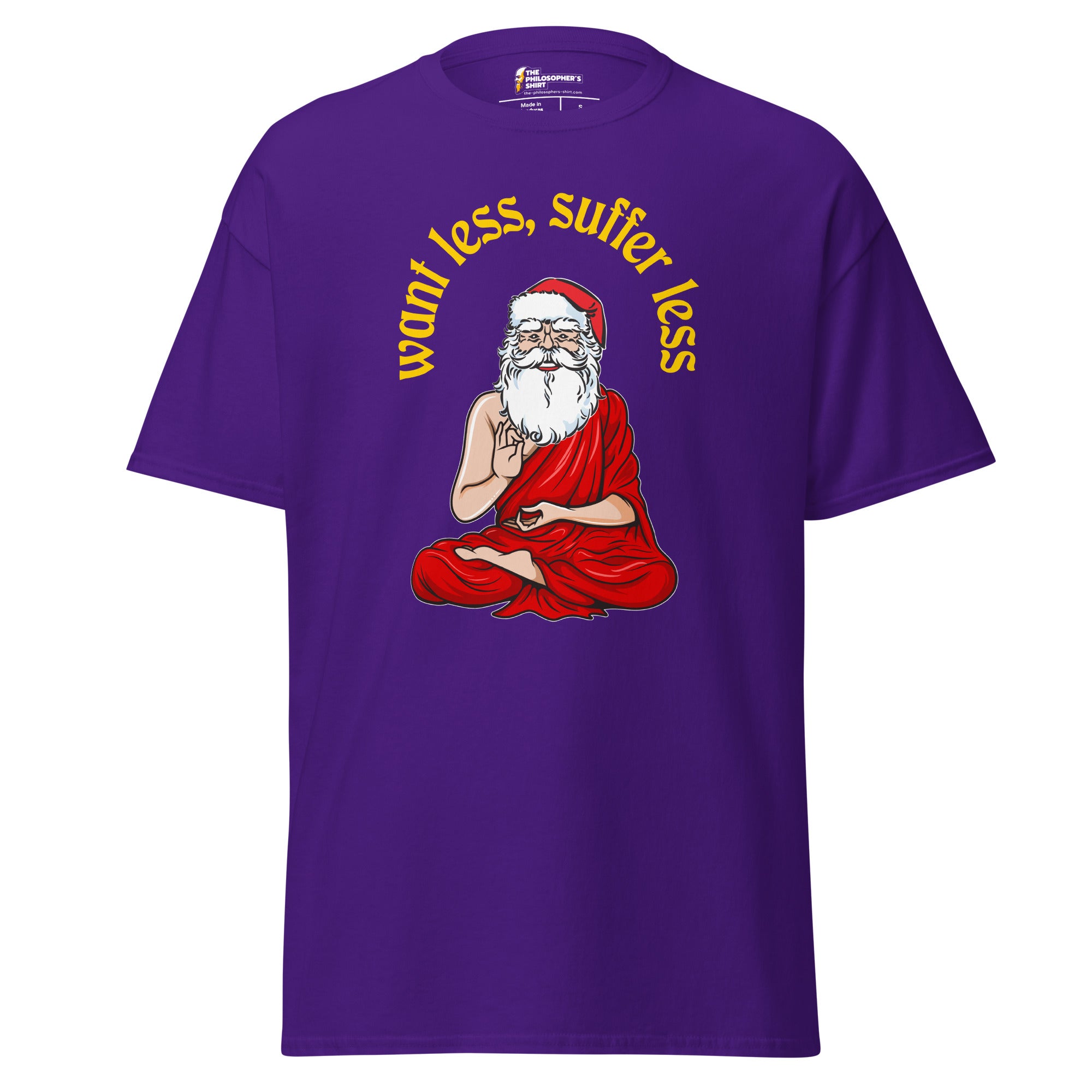
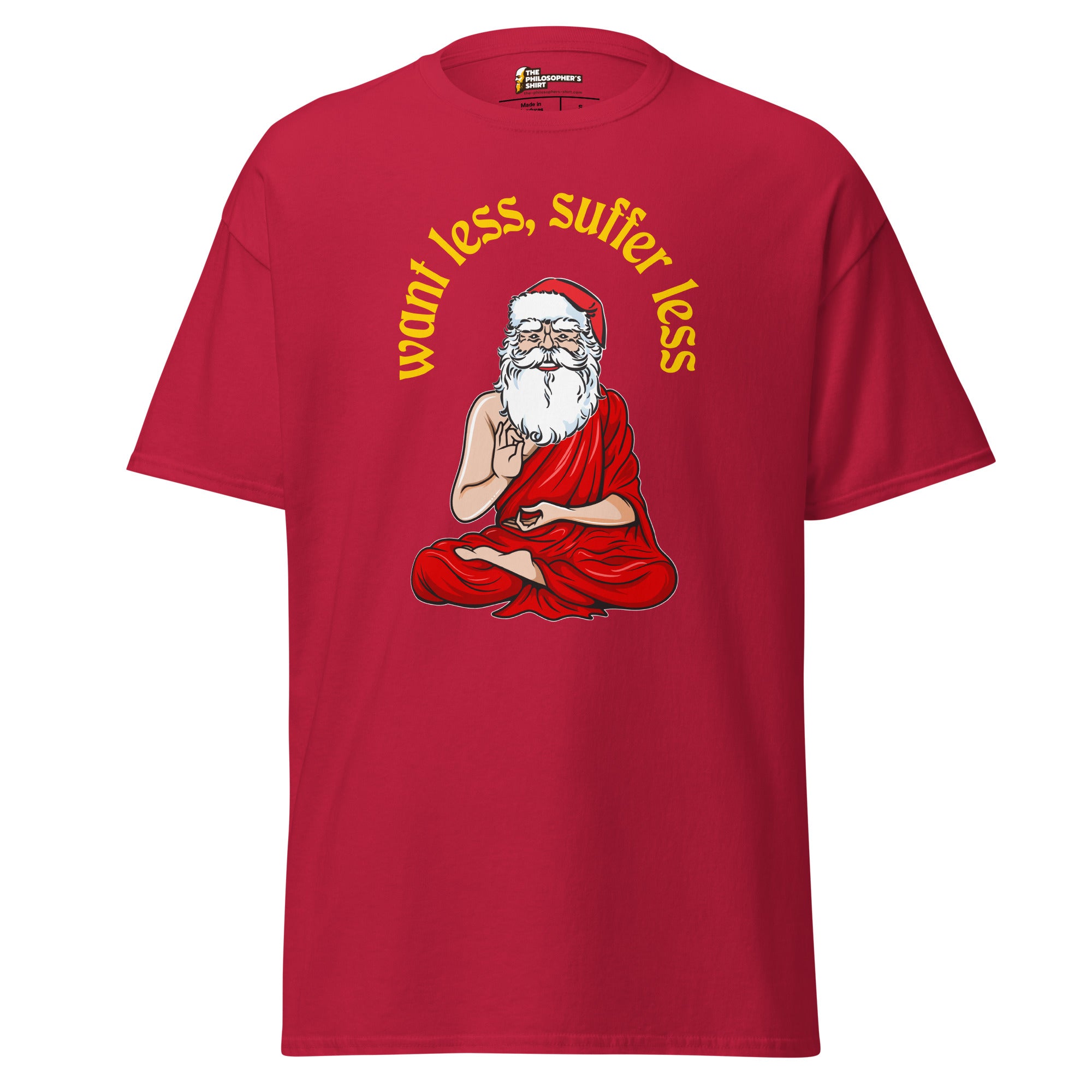
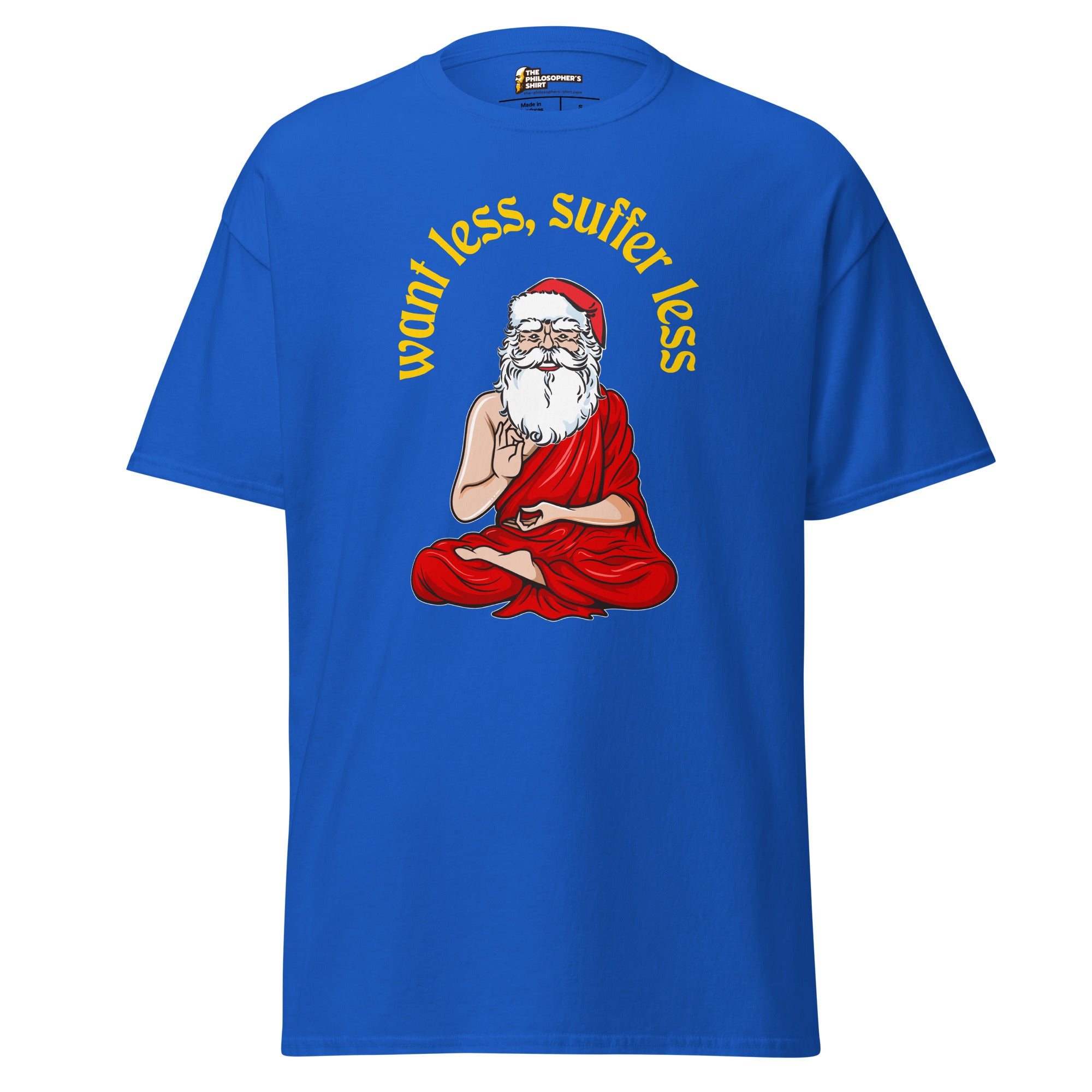
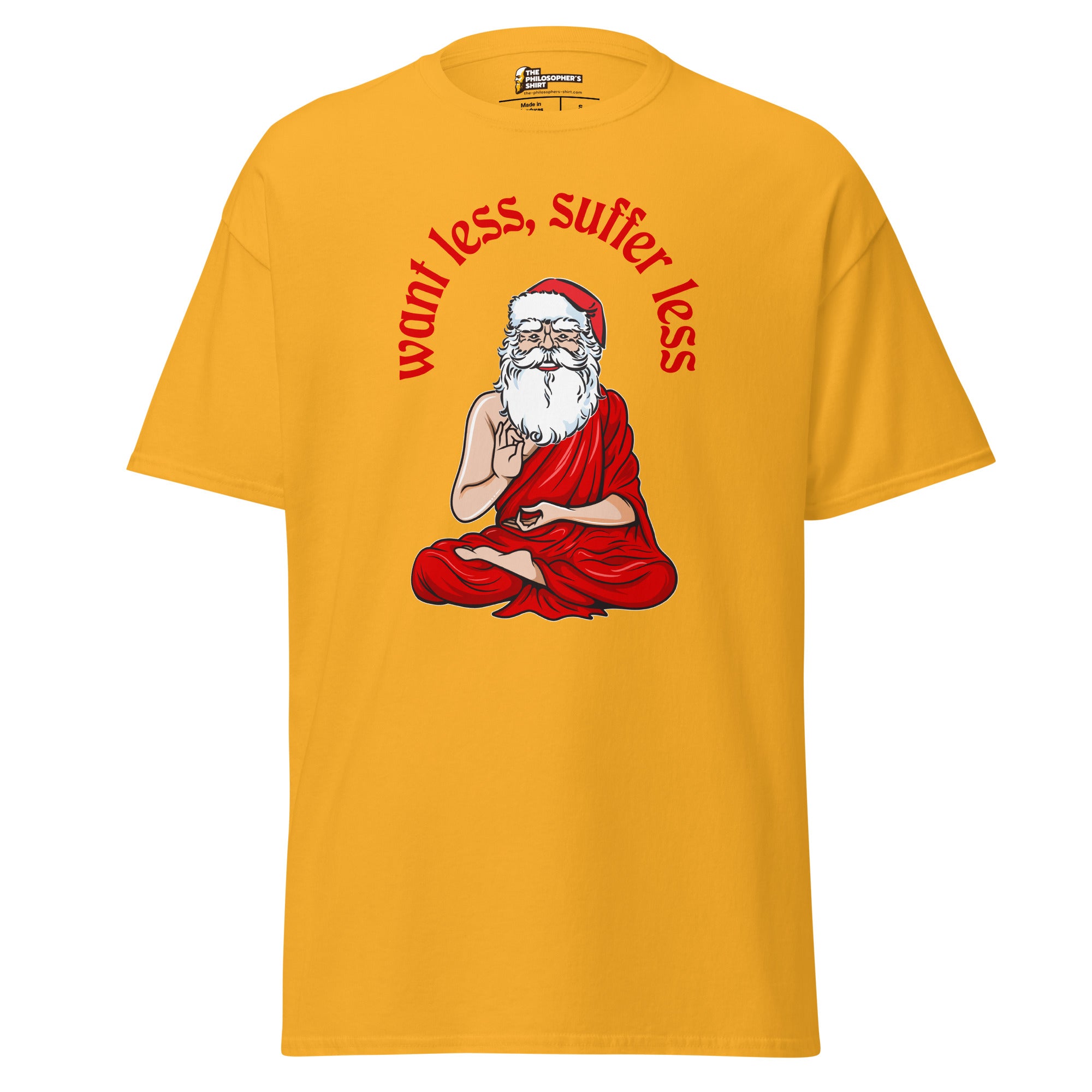
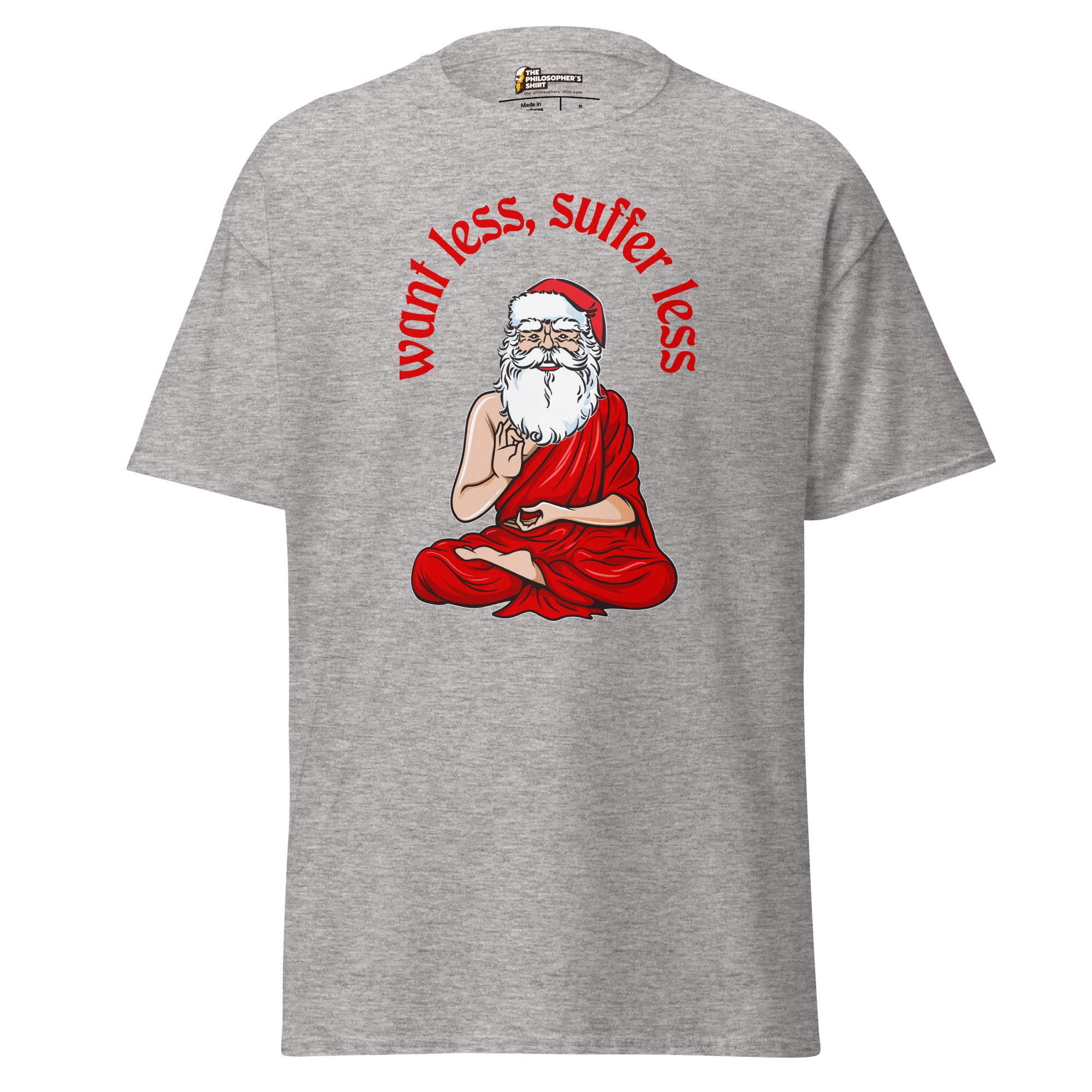
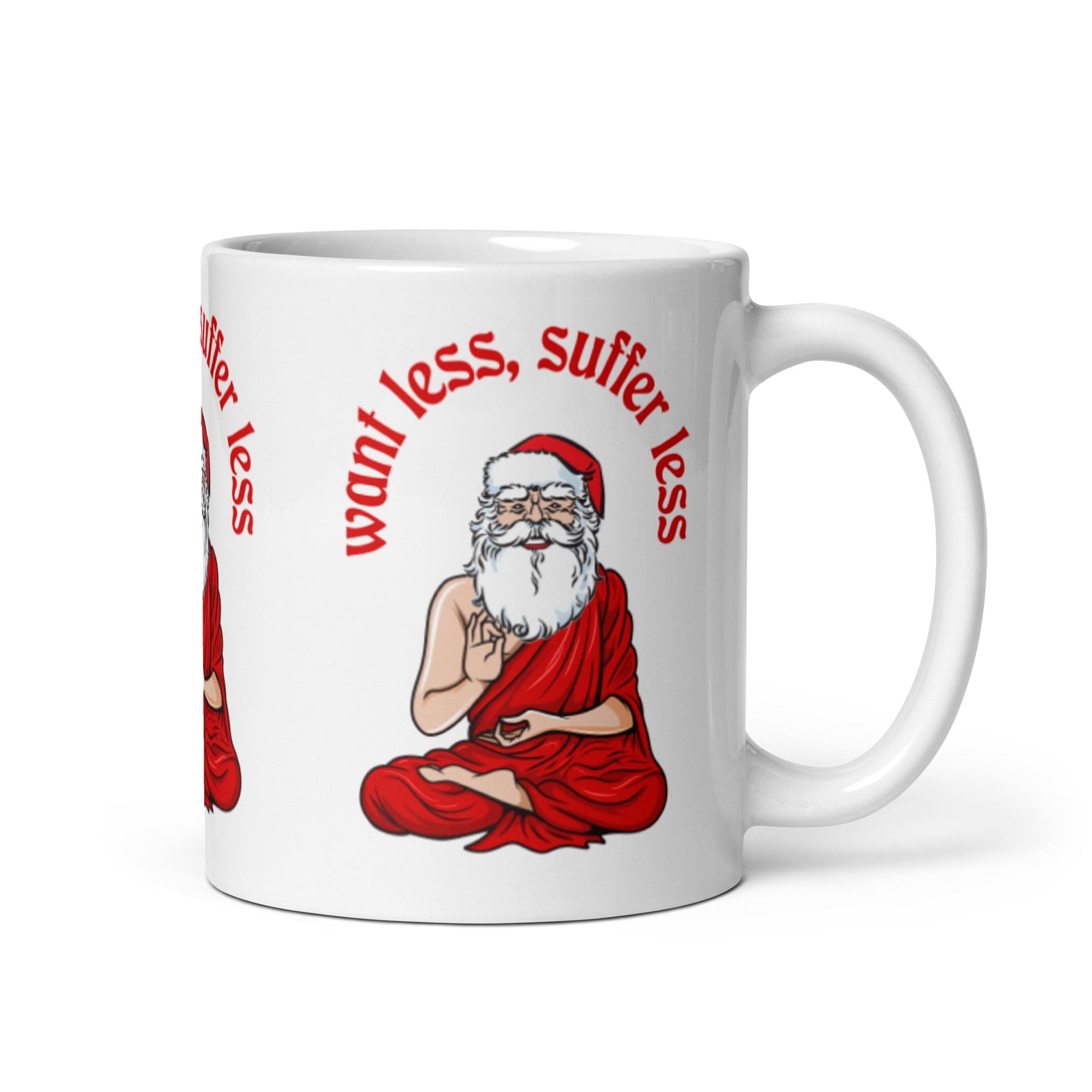
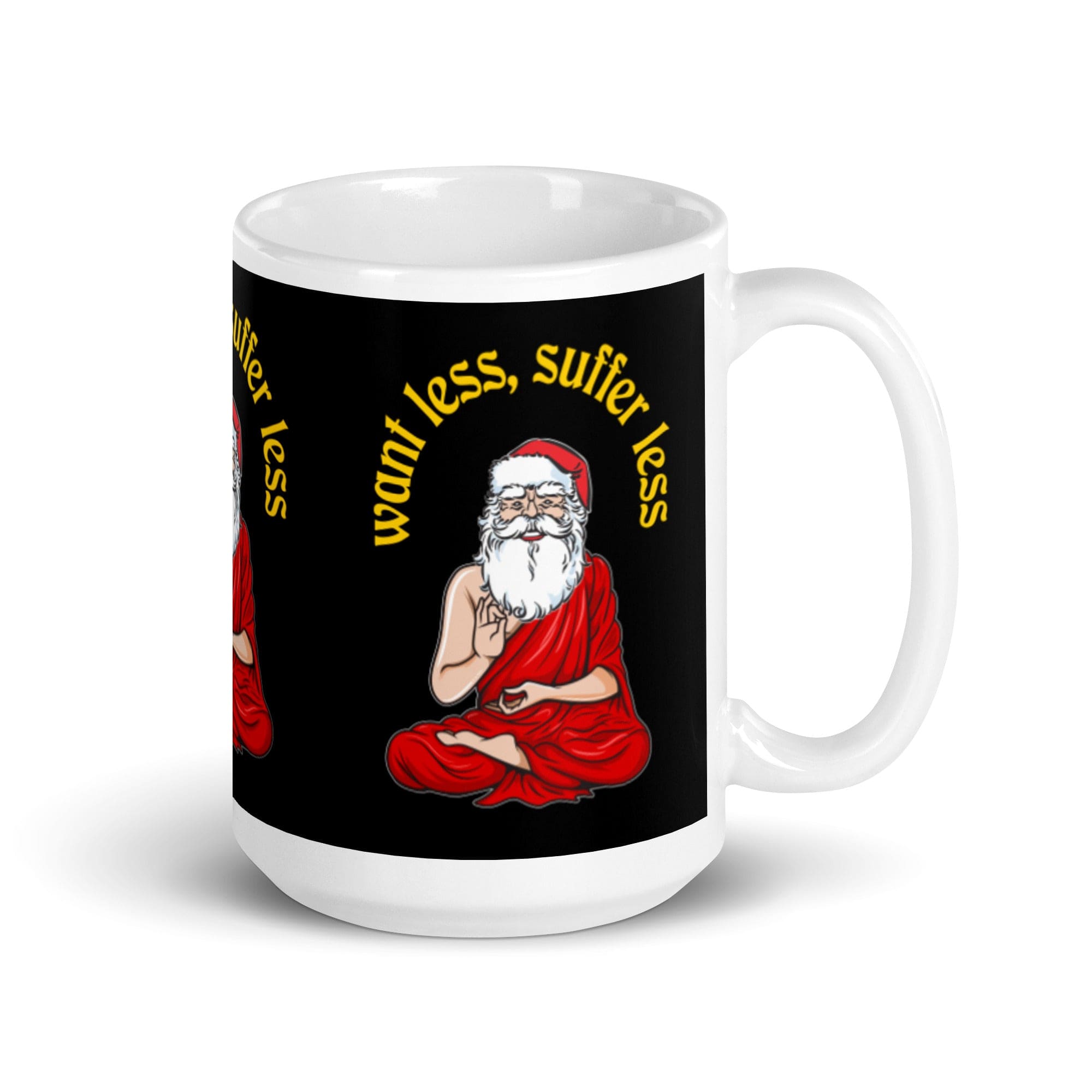
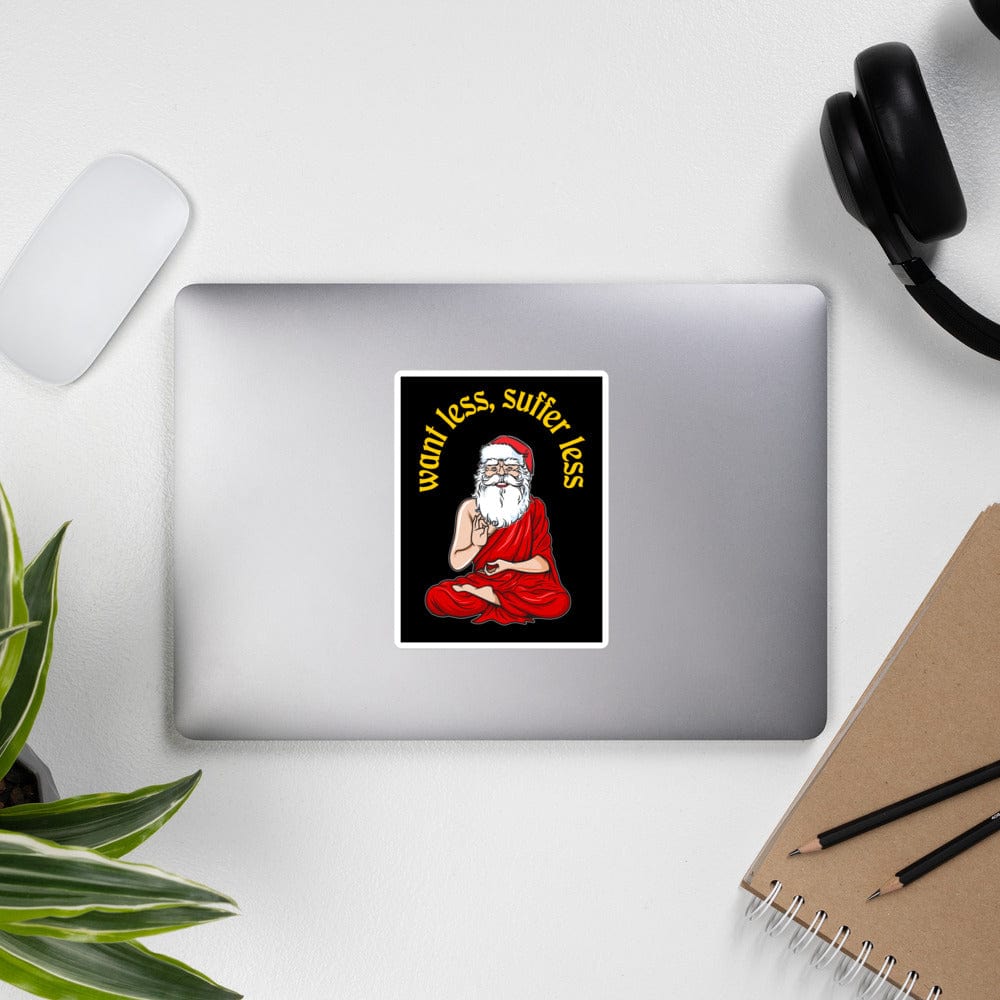
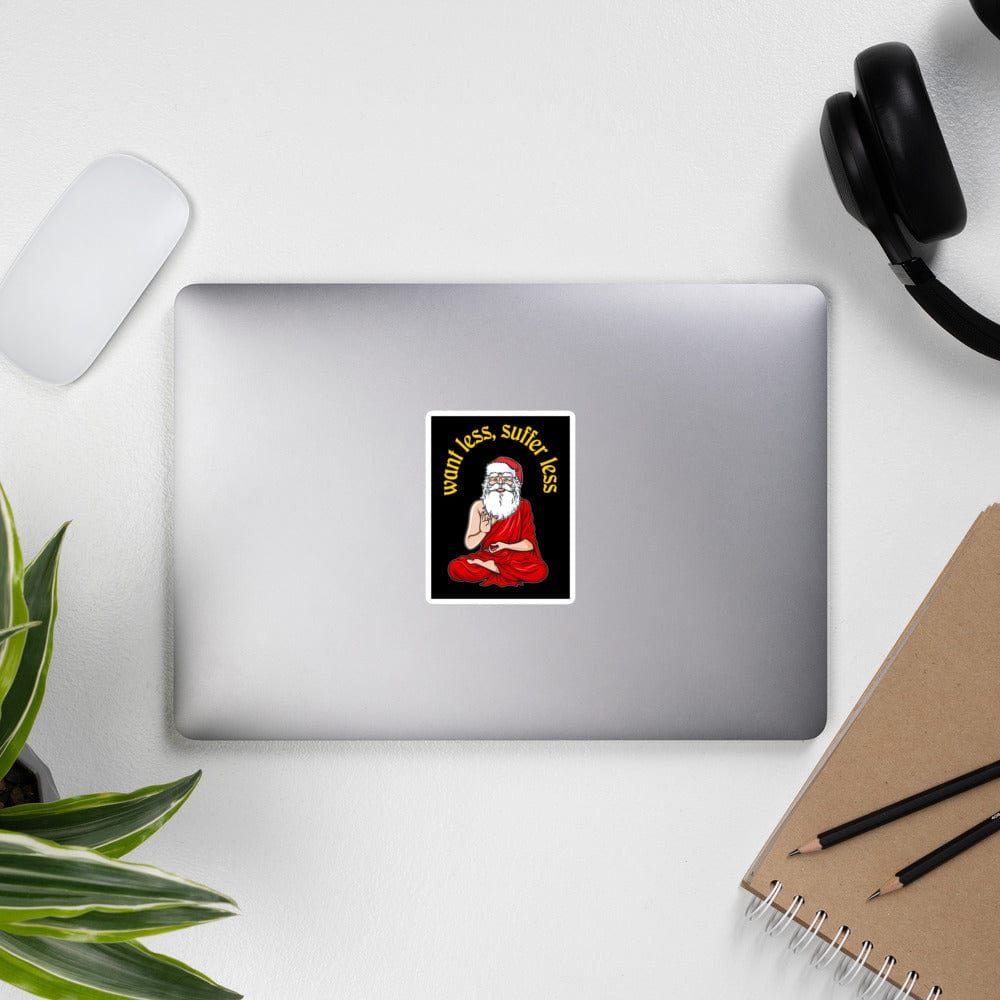
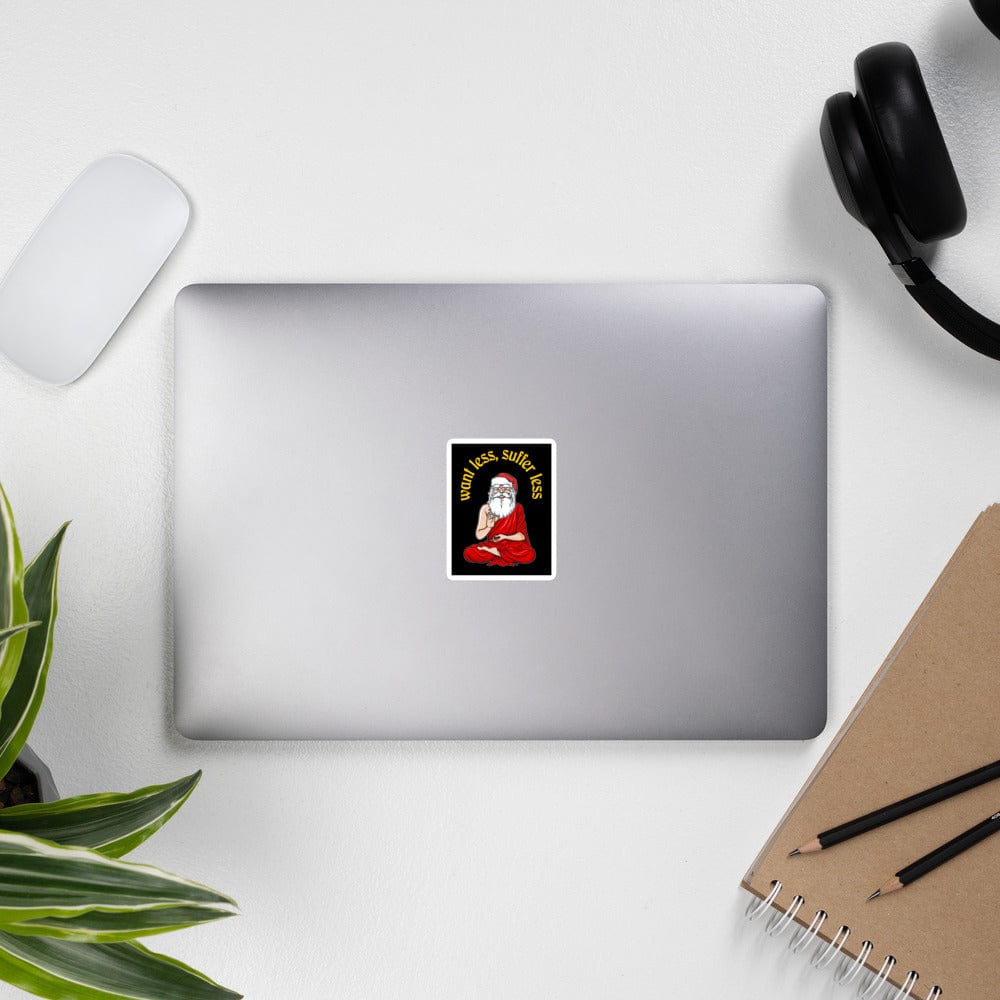
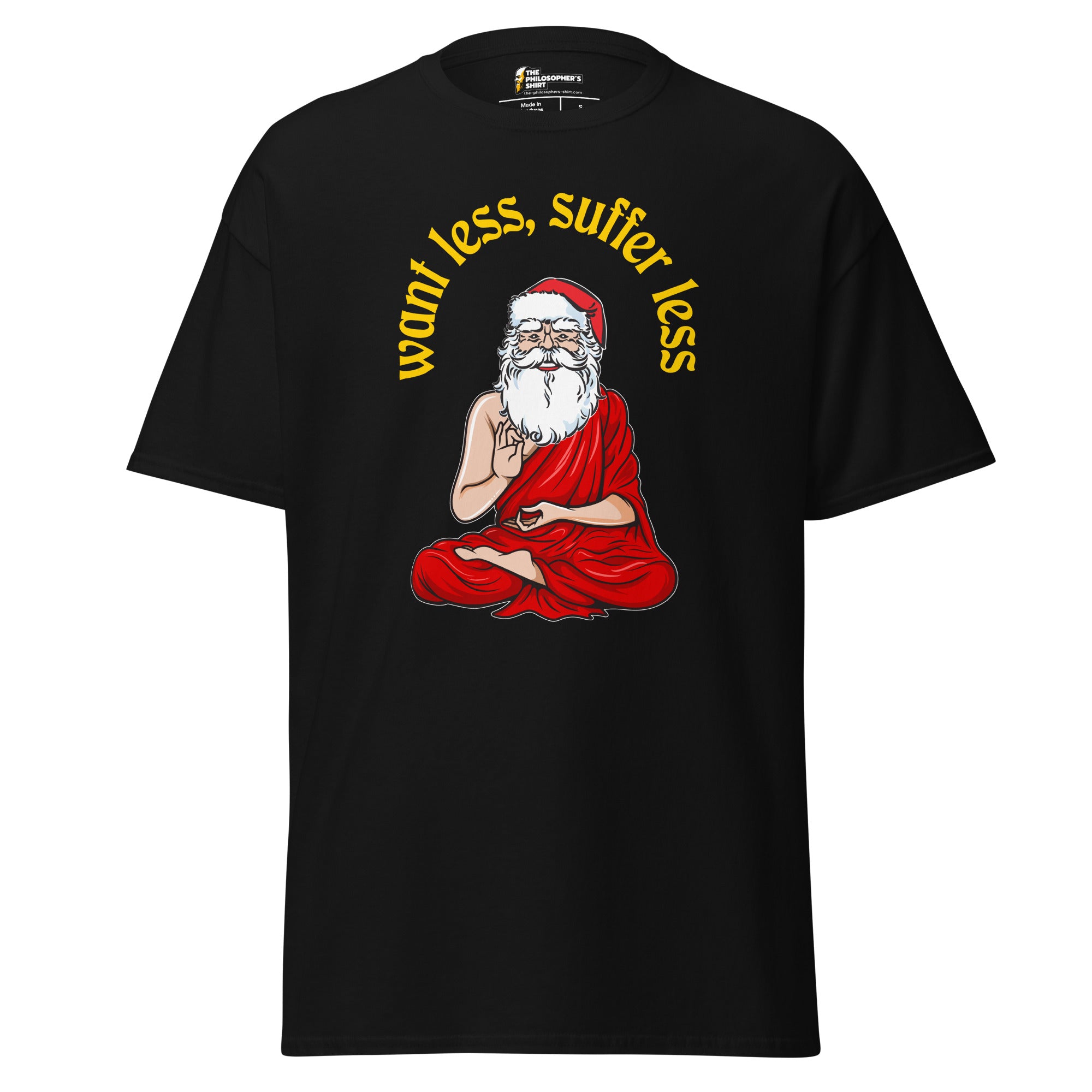
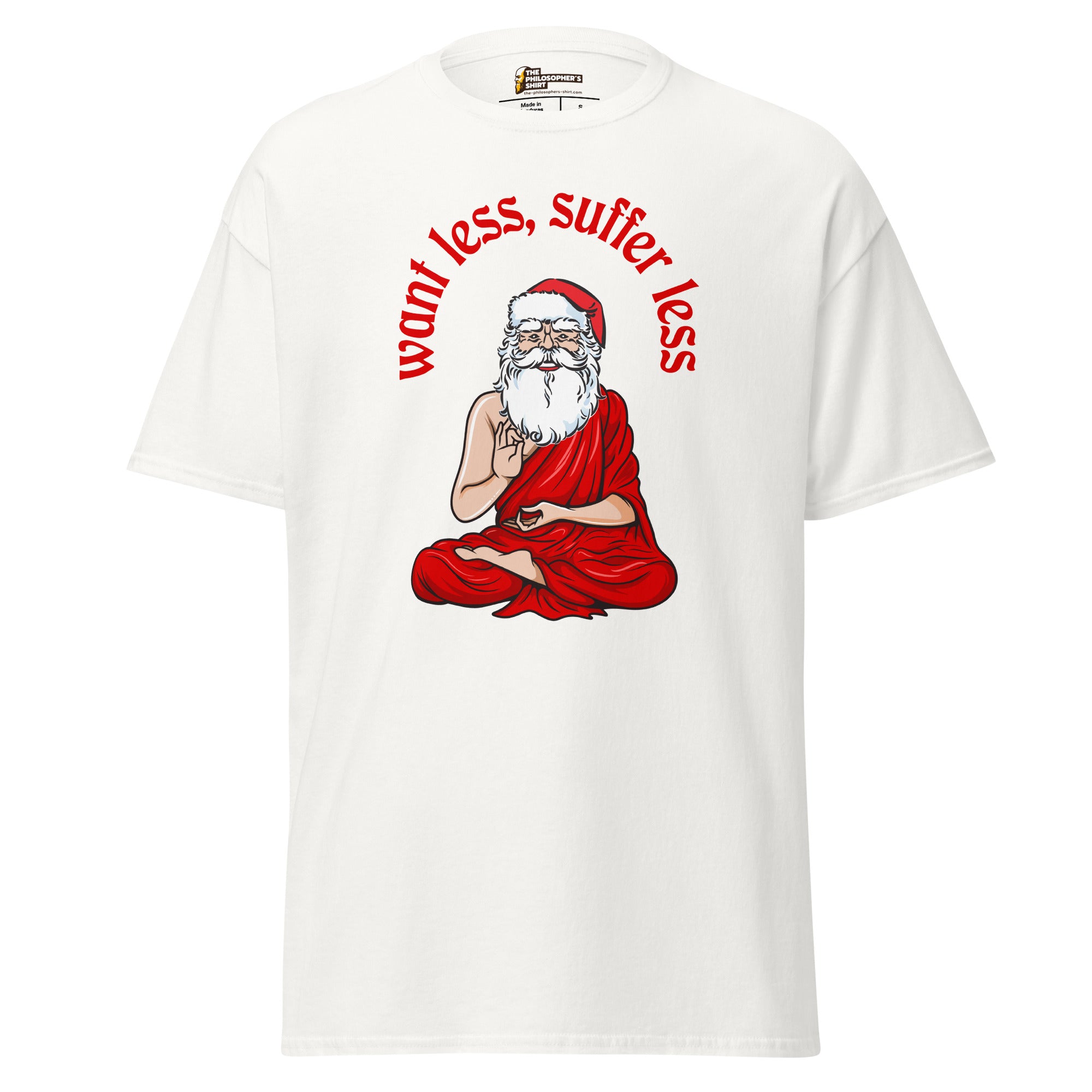
Buddha Claus - Want less, suffer less

Christmas runs entirely on wanting. The Buddha spent forty-five years explaining that wanting is precisely where the suffering comes from.

Critiques the season without being sour about it. Every format we print it on, made to order as you buy it, from apparel to accessories. A Christmas gift for minimalists. Want less this December. Suffer measurably less in January.
Questions about this design

What does the Buddha Claus – Want less, suffer less design show?
Santa Claus as the Buddha – sitting cross-legged in a red monk’s robe, with white beard and Santa hat, one hand raised in the teaching gesture – under the words want less, suffer less. The joke is the collision of the most acquisitive season of the year with a teacher who located the origin of suffering in craving. An anti-consumerist Christmas card you can wear.
Did the Buddha say desire is the root of all suffering?
Not in those words. In his first sermon, the Dhammacakkappavattana Sutta, the Buddha names taṇhā – literally thirst, usually translated craving – as the origin of suffering, in three forms – craving for sensual pleasure, for existence and for non-existence. Not every desire is the problem; the wish to practise and become free is encouraged. Want less, suffer less is a fair one-line summary of the Second Noble Truth.
What are the Four Noble Truths?
The core of the Buddha’s teaching, set out in his first sermon in the Deer Park near Varanasi (Sarnath). First, life involves suffering (dukkha). Second, suffering arises from craving (taṇhā). Third, suffering ceases when craving ceases (nirvana). Fourth, the way to that cessation is the Noble Eightfold Path.
What does dukkha mean?
Dukkha is a Pali word usually translated as suffering, but it is broader – unsatisfactoriness, stress, the sense that nothing we cling to can fully satisfy or last. It covers obvious pain, the distress of change (the present that bores you by 27 December) and the deeper unease of conditioned existence itself.
What is the Noble Eightfold Path?
The Fourth Noble Truth – the practical way to end suffering. Its eight factors are right view, right intention, right speech, right action, right livelihood, right effort, right mindfulness and right concentration, traditionally grouped into wisdom, ethical conduct and meditation. It is also called the Middle Way between indulgence and harsh asceticism.
Who was the Buddha?
Siddhartha Gautama, an Indian teacher who lived around the 5th century BCE; his exact dates are debated. Born a prince in Lumbini, in today’s Nepal, he left home to seek an end to suffering, attained awakening at about 35 under the Bodhi tree at Bodh Gaya, taught for some 45 years and died at about 80 in Kushinagar. Buddha is a title meaning the awakened one.
What is Bodhi Day?
The day on which many Mahayana Buddhists, especially in Japanese Zen, where it is called Rōhatsu, commemorate the Buddha’s awakening under the Bodhi tree – traditionally on 8 December. Theravada Buddhists celebrate his birth, awakening and death together at Vesak in spring. So December already has a Buddhist holiday, which makes Buddha Claus less far-fetched than it looks.
Who was the real Santa Claus?
Saint Nicholas, a 4th-century bishop of Myra in Lycia, in today’s Turkey, remembered in legend for secret gift-giving. Dutch settlers brought Sinterklaas to New York, and the poem A Visit from St. Nicholas (1823) and 19th-century illustrations shaped the jolly figure with sleigh and reindeer we know today.
Is Buddha Claus a good Christmas gift for someone who wants nothing?
That is exactly who it is for – minimalists, meditators, yoga and philosophy people, and anyone tired of the shopping frenzy. It also works as a gentler alternative to an ugly Christmas sweater at office parties. The design is available as a sweatshirt, unisex T-shirt, mug and sticker.