Sin aranceles: enviamos desde tu región. Envío gratis a partir de 70 € / $80 / £60
Buscar en nuestro sitio

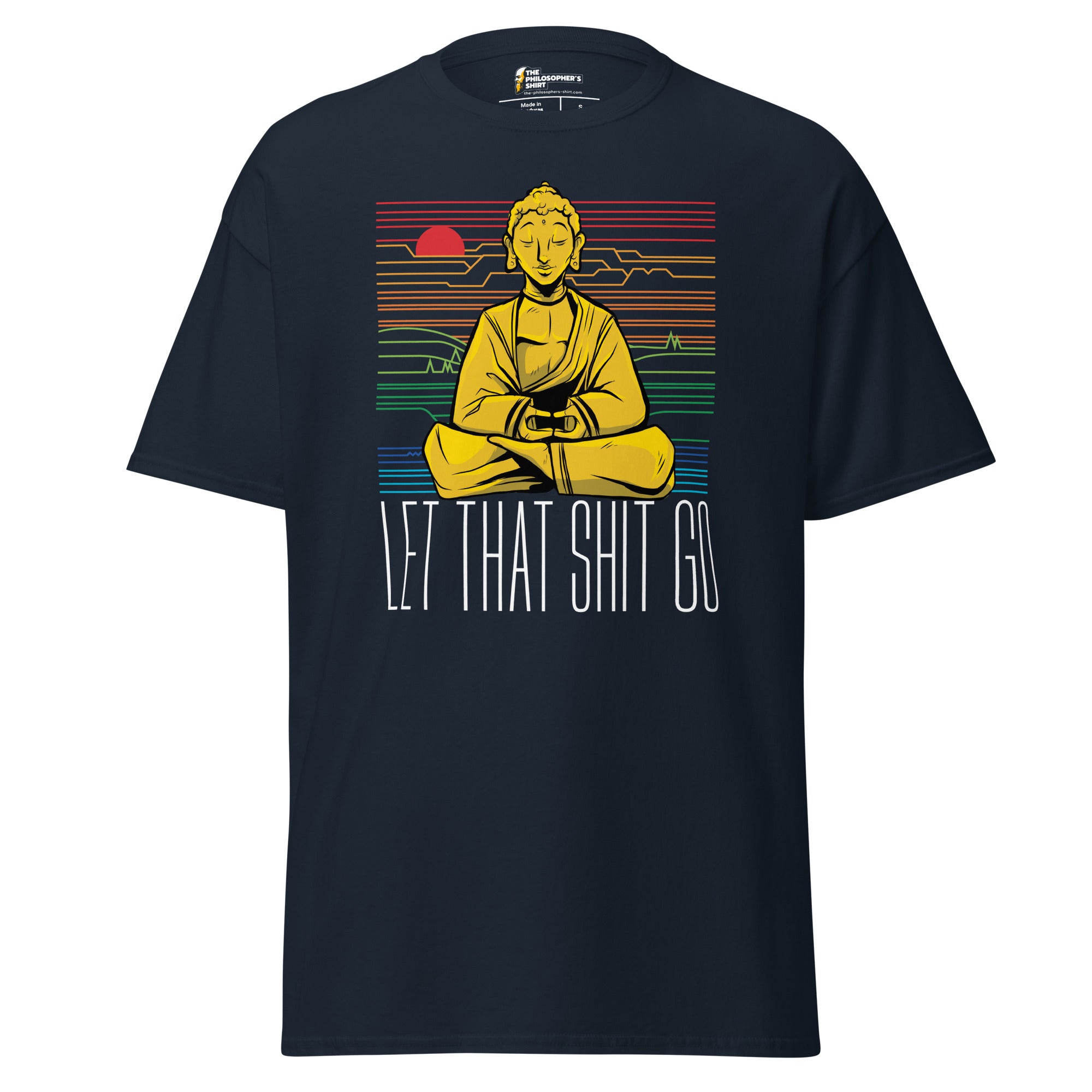
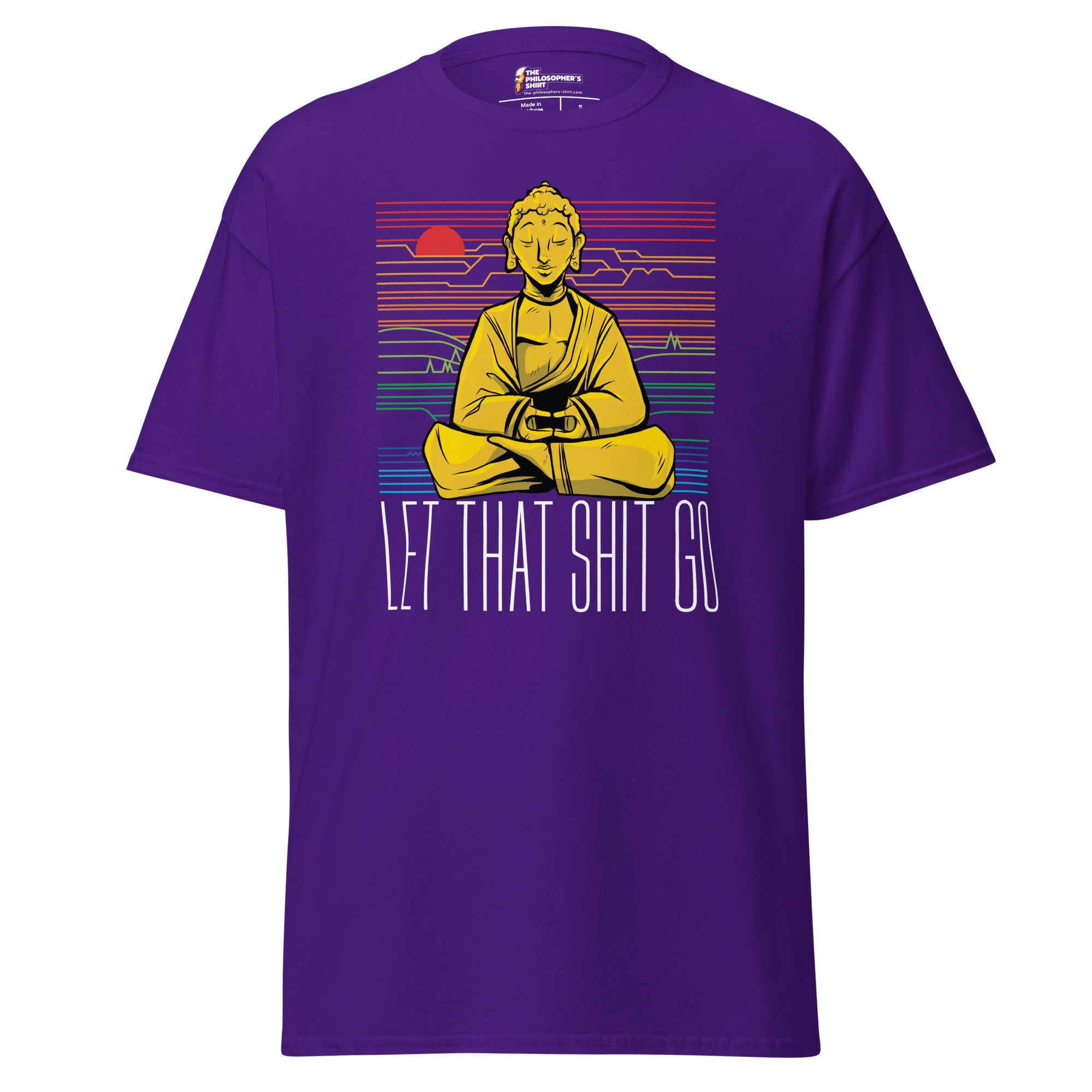
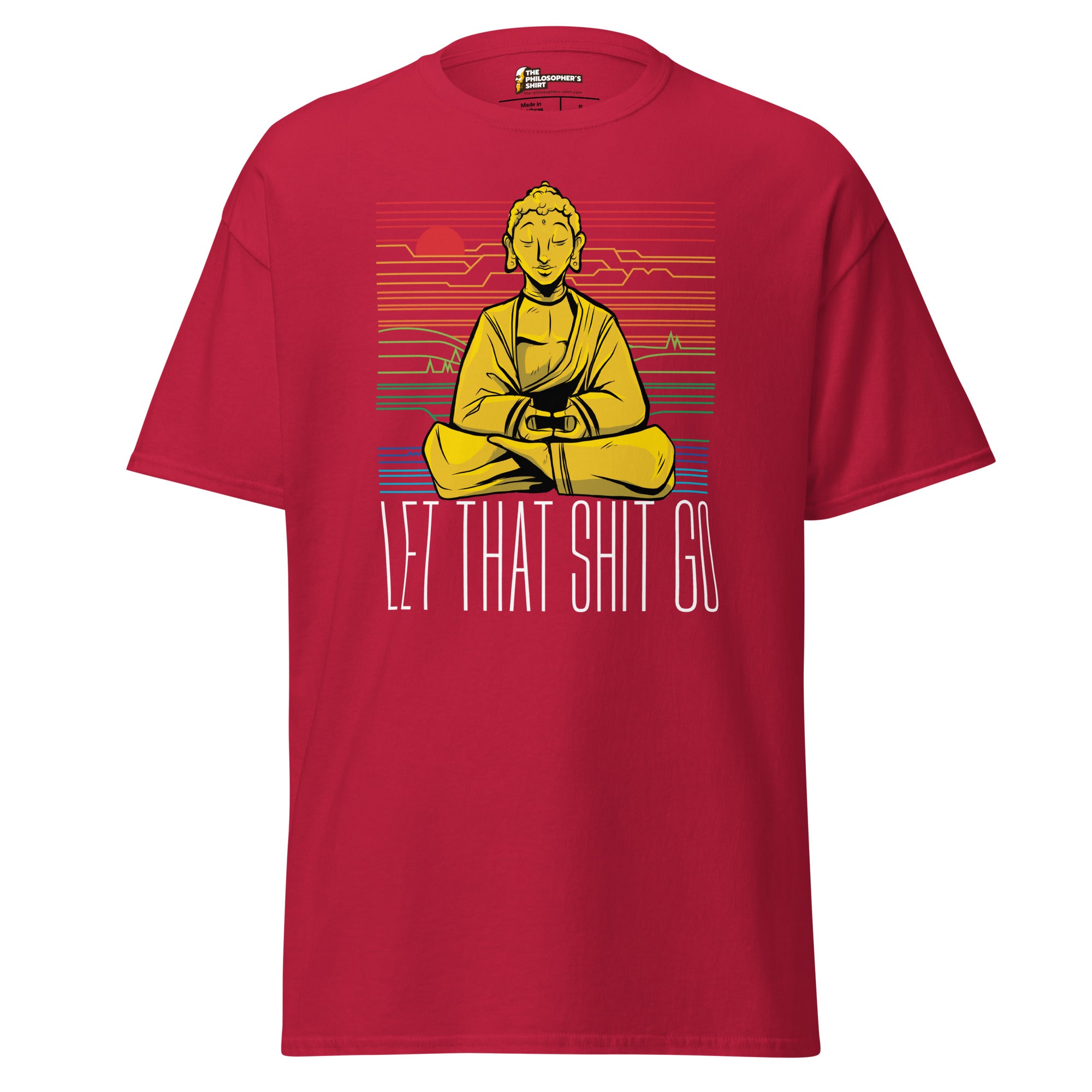
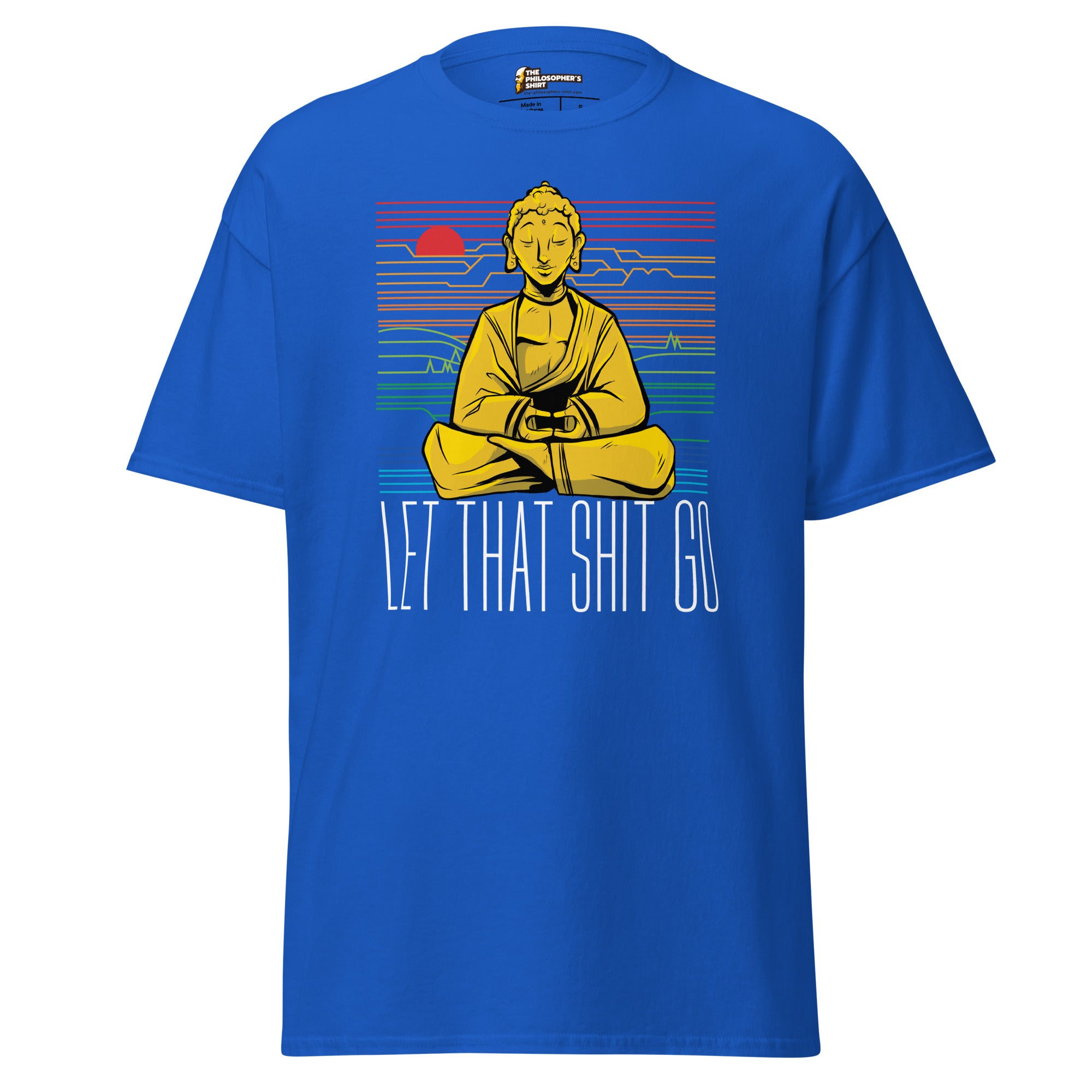
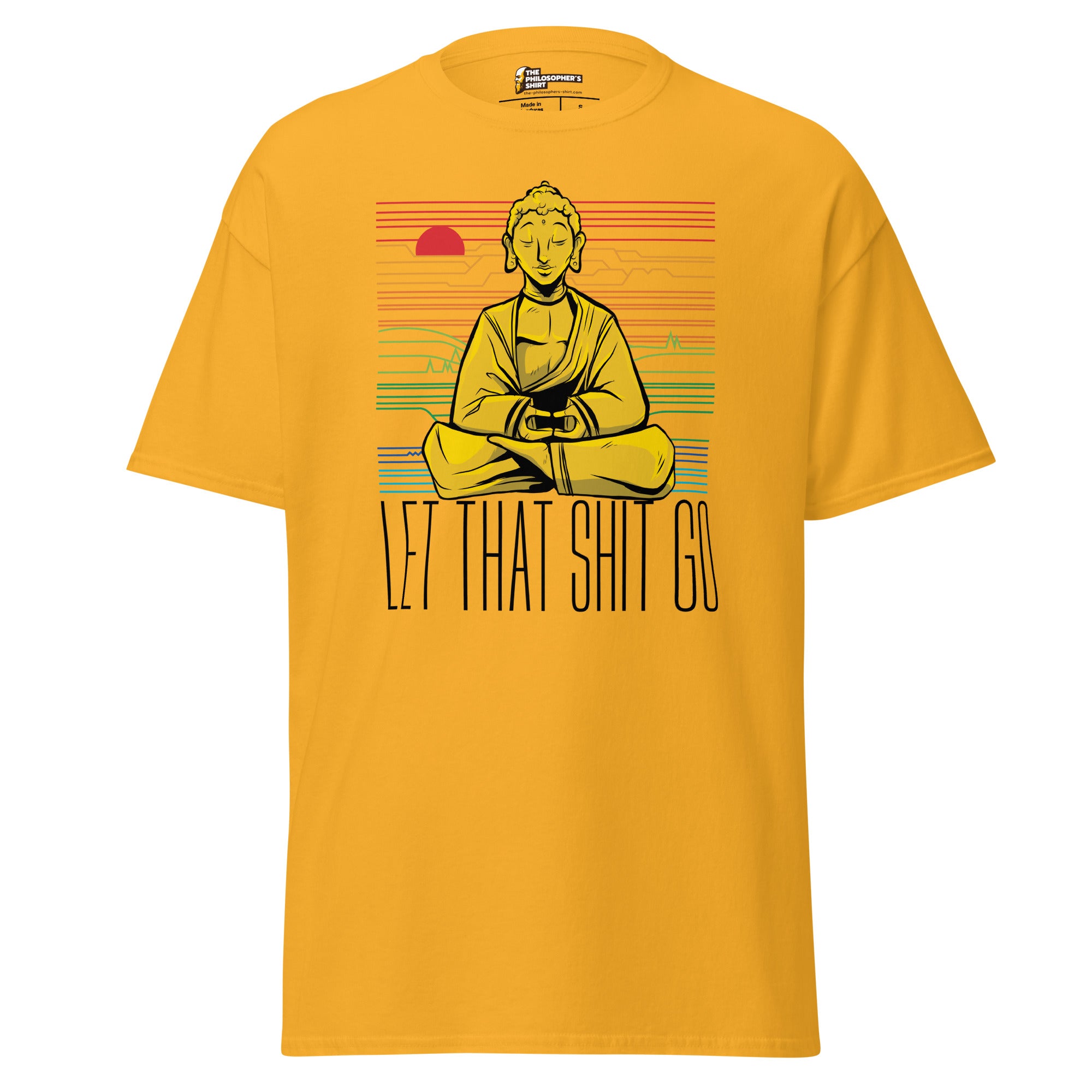
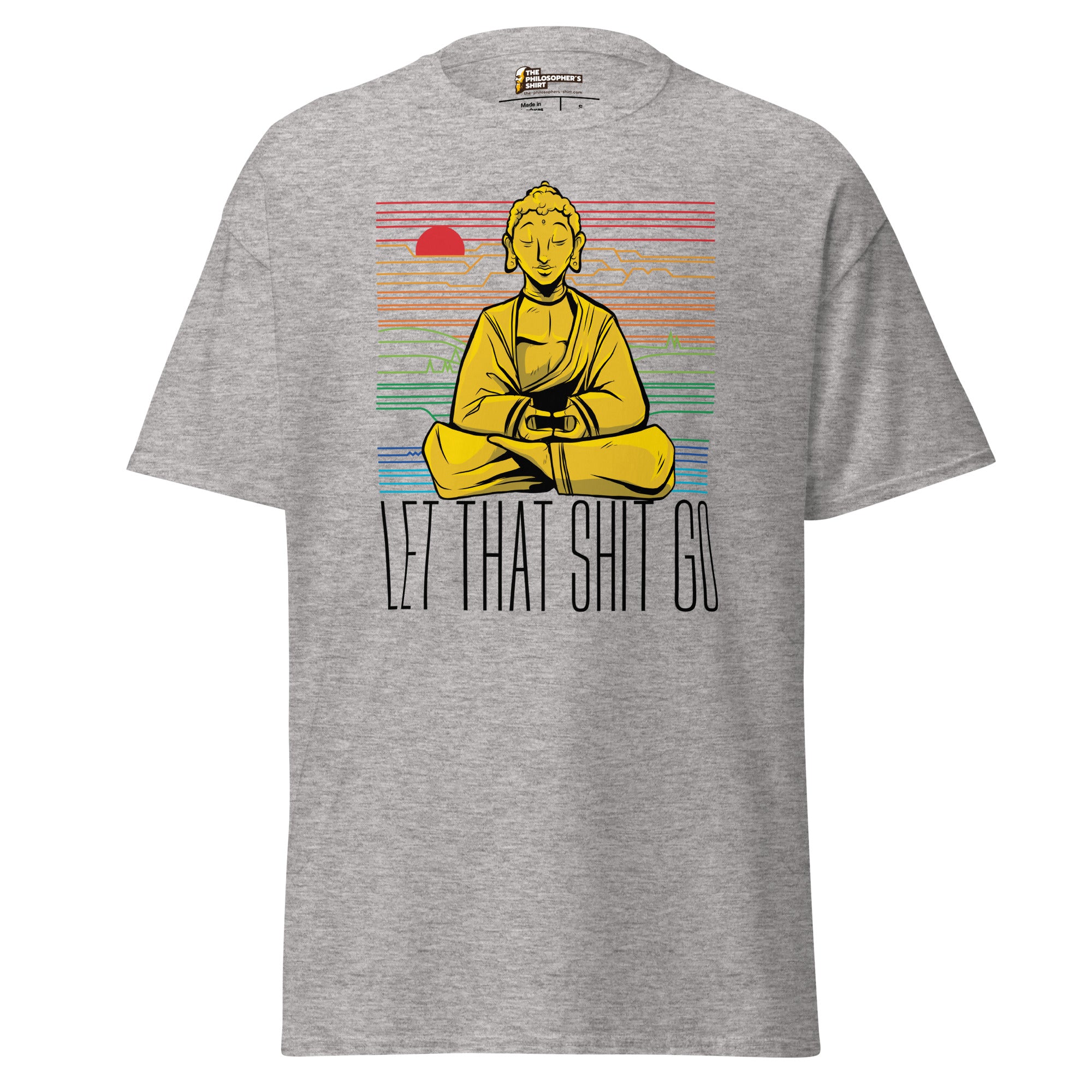
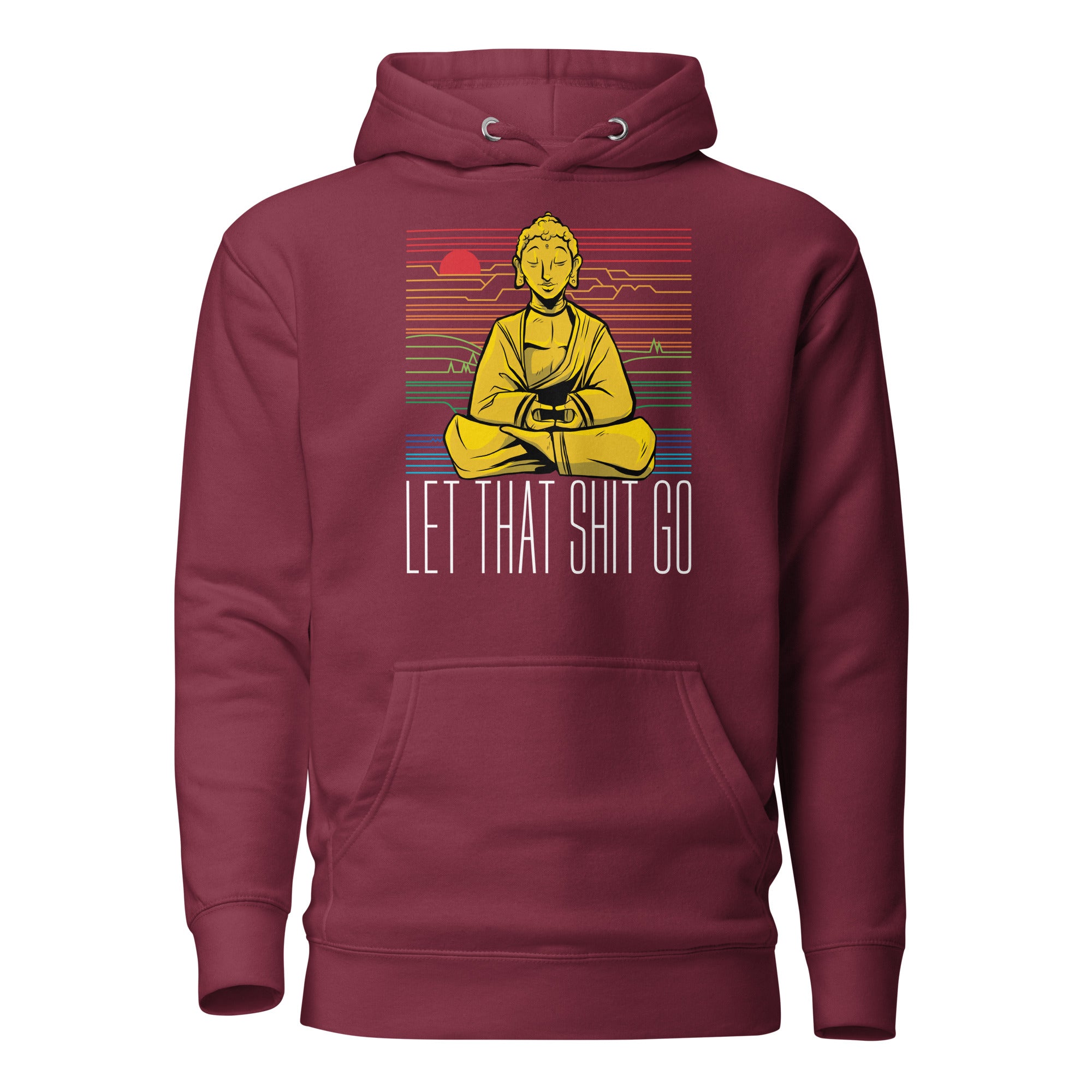
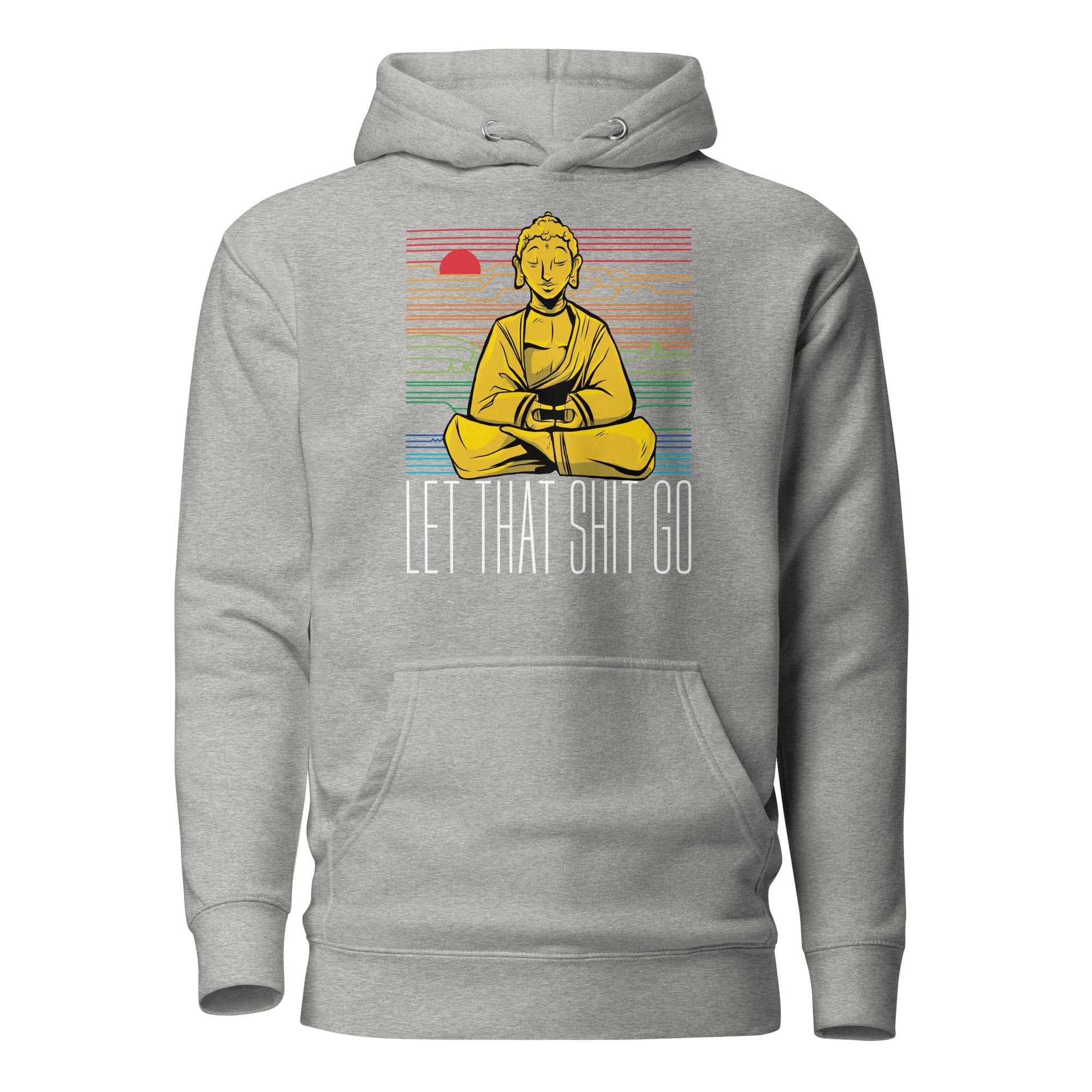
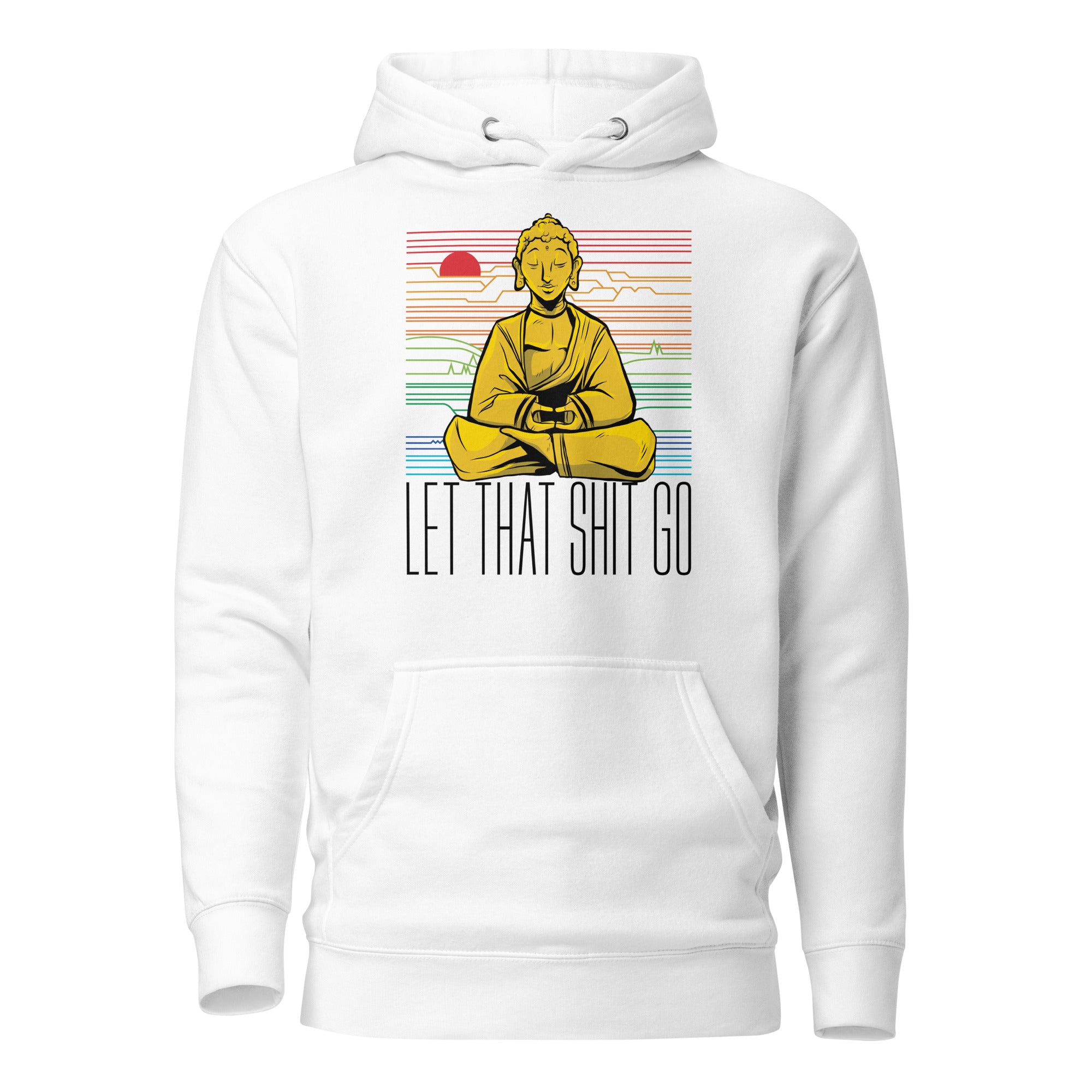
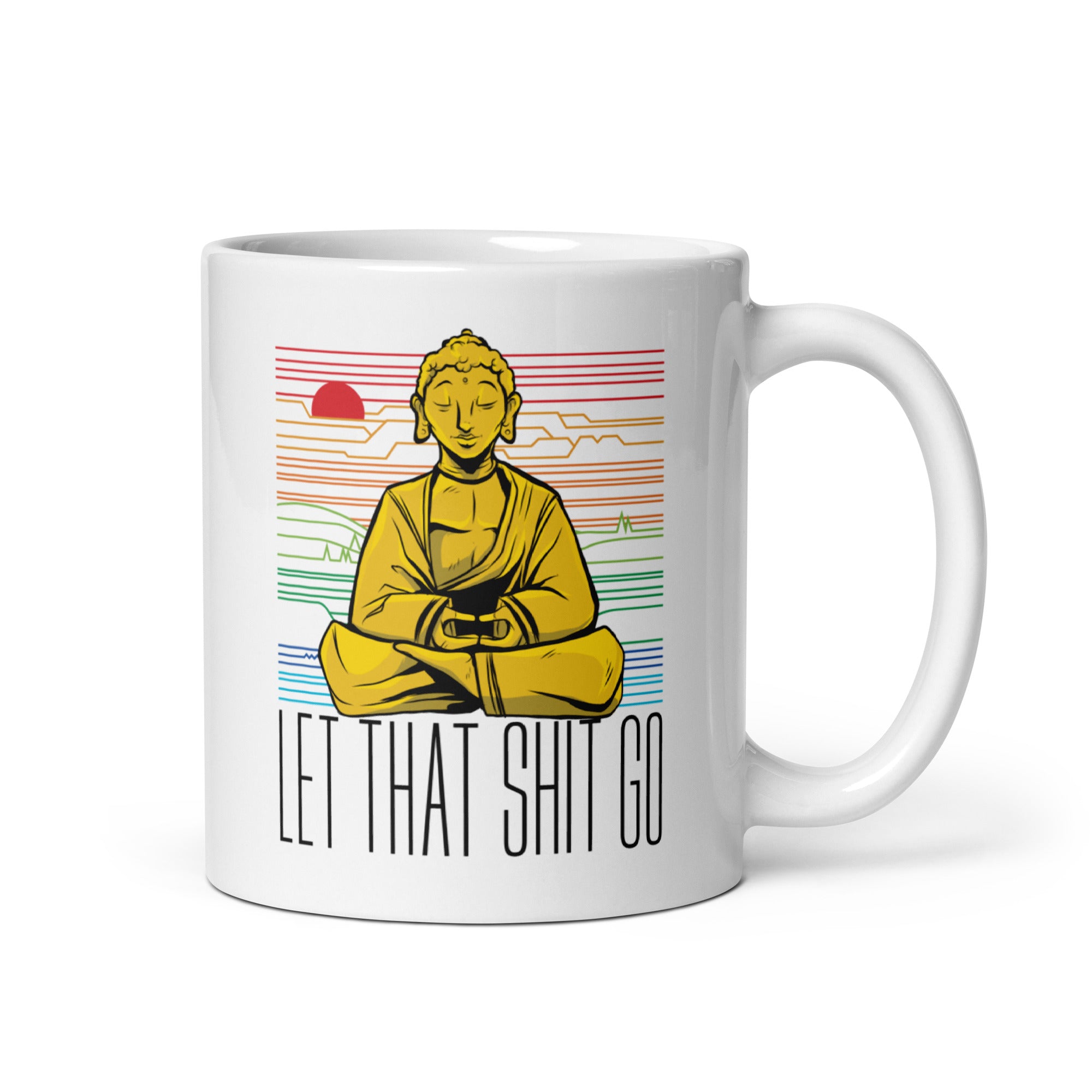
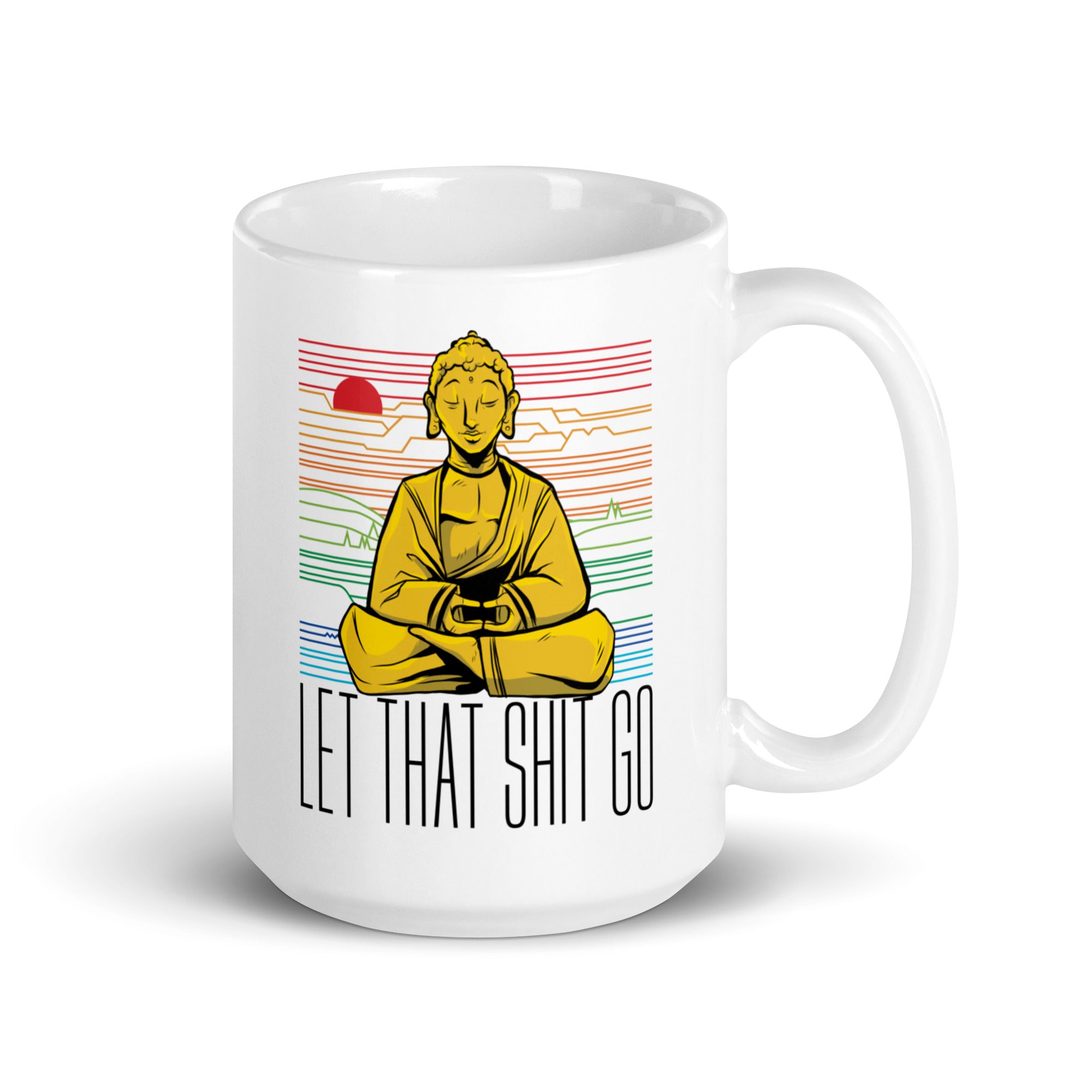
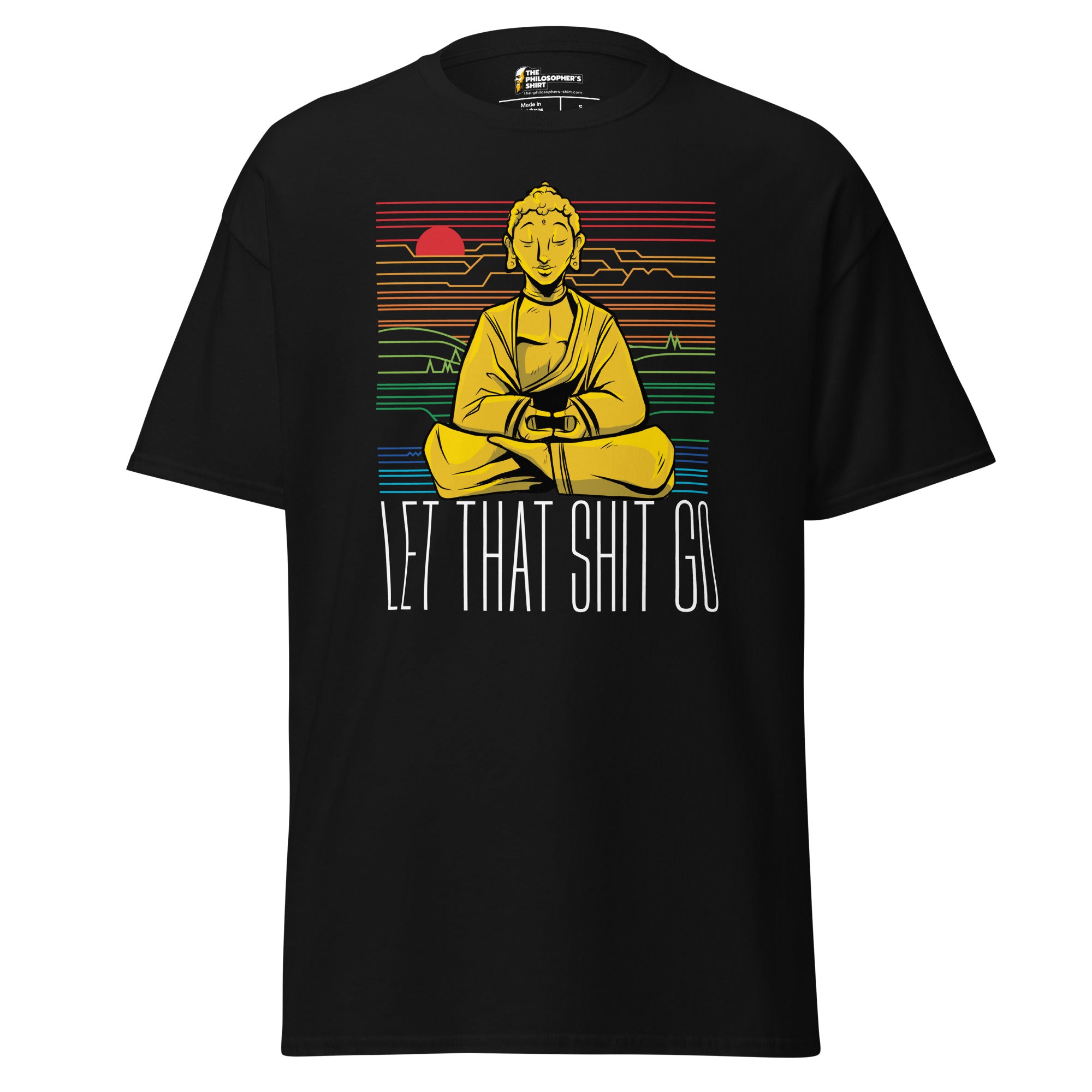
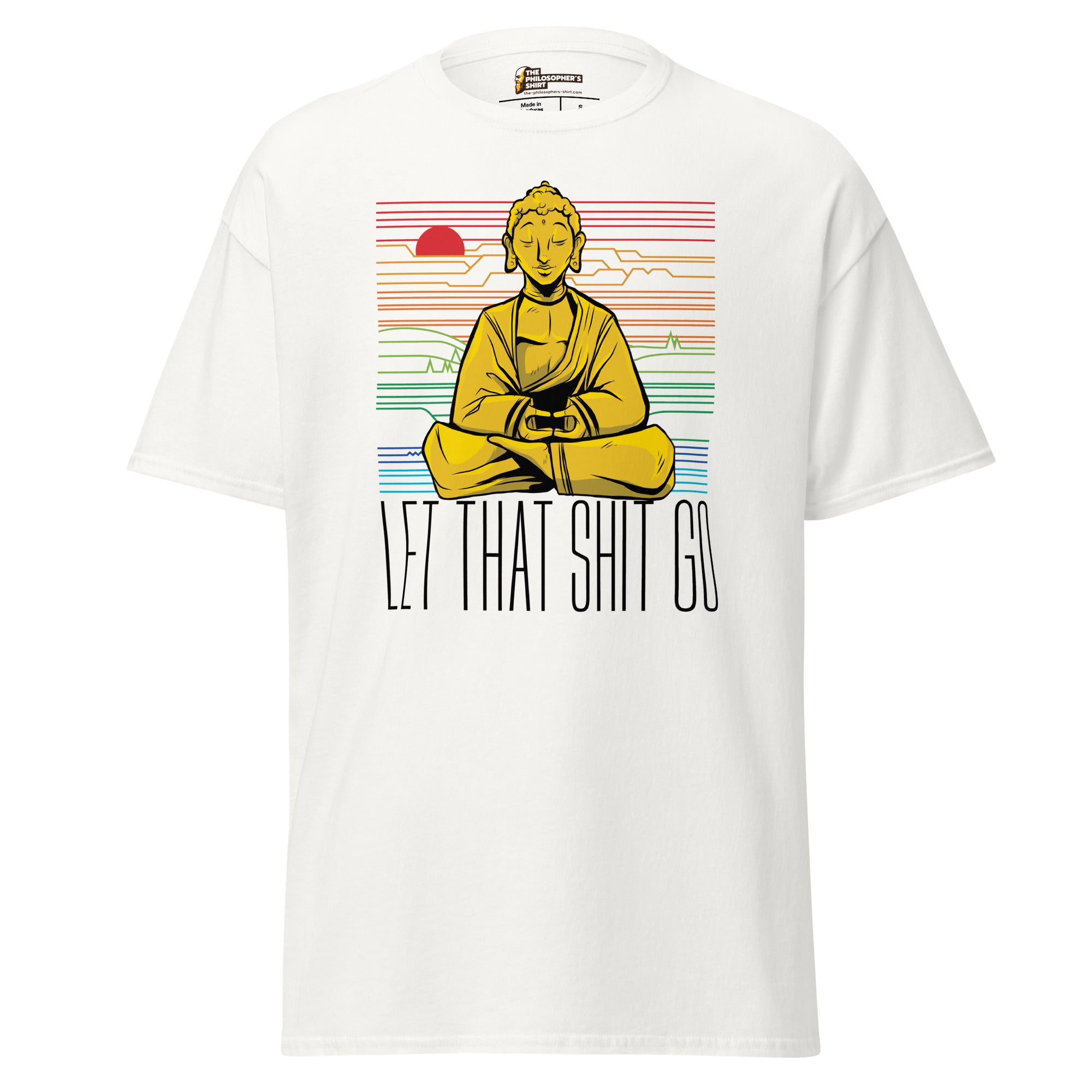
Buddha - Let that shit go

El apego es la raíz del sufrimiento. Por fin alguien lo ha traducido a un lenguaje que quizá te anime a actuar antes de comer.

Lo suficientemente descarado como para ser memorable, lo suficientemente sabio como para resultar realmente útil. Toda la gama, desde ropa hasta complementos, todo impreso bajo pedido. Un regalo budista para los aficionados al yoga y la meditación. Deja de aferrarte. Eso nunca fue tuyo.
Questions about this design

What does the Buddha – Let that shit go design show?
A golden Buddha seated in meditation, hands resting in his lap, in front of a sunset drawn in thin rainbow-coloured lines over a mountain horizon. Below, in tall white capitals – LET THAT SHIT GO. The joke is the clash of register; the serene figure and the blunt modern phrase make the same point about letting go.
Did Buddha really say “Let that shit go”?
No. The phrase is a modern slogan and appears nowhere in the early Buddhist texts. It is, however, a crude but fair paraphrase of a real theme of the Buddha's teaching – that suffering is fed by craving and clinging, and eased by releasing them.
Did Buddha say attachment is the root of all suffering?
Not in those words. In his first sermon, the Dhammacakkappavattana Sutta, the Buddha names craving (taṇhā) as the origin of suffering – craving for sense pleasures, for existence and for non-existence. Clinging (upādāna) is a related link in his chain of dependent origination. The popular line about attachment is a modern summary.
What are the Four Noble Truths?
The core of the Buddha's first sermon at the Deer Park near Sarnath. First, life involves suffering or unsatisfactoriness (dukkha). Second, it arises from craving. Third, it can end – this ending is nirvana. Fourth, the way to that end is the Noble Eightfold Path of right view, intention, speech, action, livelihood, effort, mindfulness and concentration.
What does non-attachment mean in Buddhism?
Not indifference and not ceasing to care. It means not clinging to things, people, opinions or a fixed self as if they were permanent, because everything conditioned is impermanent (anicca). Non-attachment sits comfortably with loving-kindness and compassion; what it releases is the grip, not the love.
What is the Buddha's parable of the raft?
In the Alagaddūpama Sutta (Majjhima Nikāya 22), a man builds a raft to cross a dangerous river. Once across, it would be foolish to carry the raft on his head. The Buddha says his teaching is like that raft – for crossing over, not for holding on to. Even good ideas are to be let go once they have done their work.
Who was the Buddha?
Siddhārtha Gautama, born in Lumbini in today's Nepal, probably in the 5th century BCE (exact dates are debated). He left a privileged life, attained awakening under the bodhi tree at Bodh Gaya, taught for about 45 years and died at Kushinagar around the age of 80. Buddha is a title meaning the awakened one.
Is it disrespectful to wear a Buddha shirt?
Views differ. Many people wear Buddha imagery with affection, but in some Buddhist countries, Sri Lanka above all, images of the Buddha on clothing or skin are seen as disrespectful and tourists have been detained over them. Wear this design with that in mind and leave it at home when travelling there.
Is the Buddha – Let that shit go design a good gift?
Yes, for people who meditate or practise yoga, chronic overthinkers and anyone who needs a gentle, unprintable reminder to unclench. It comes as a unisex T-shirt, women's T-shirt, sweatshirt, premium hoodie, mug and sticker.