Sin aranceles: enviamos desde tu región. Envío gratis a partir de 70 € / $80 / £60
Buscar en nuestro sitio

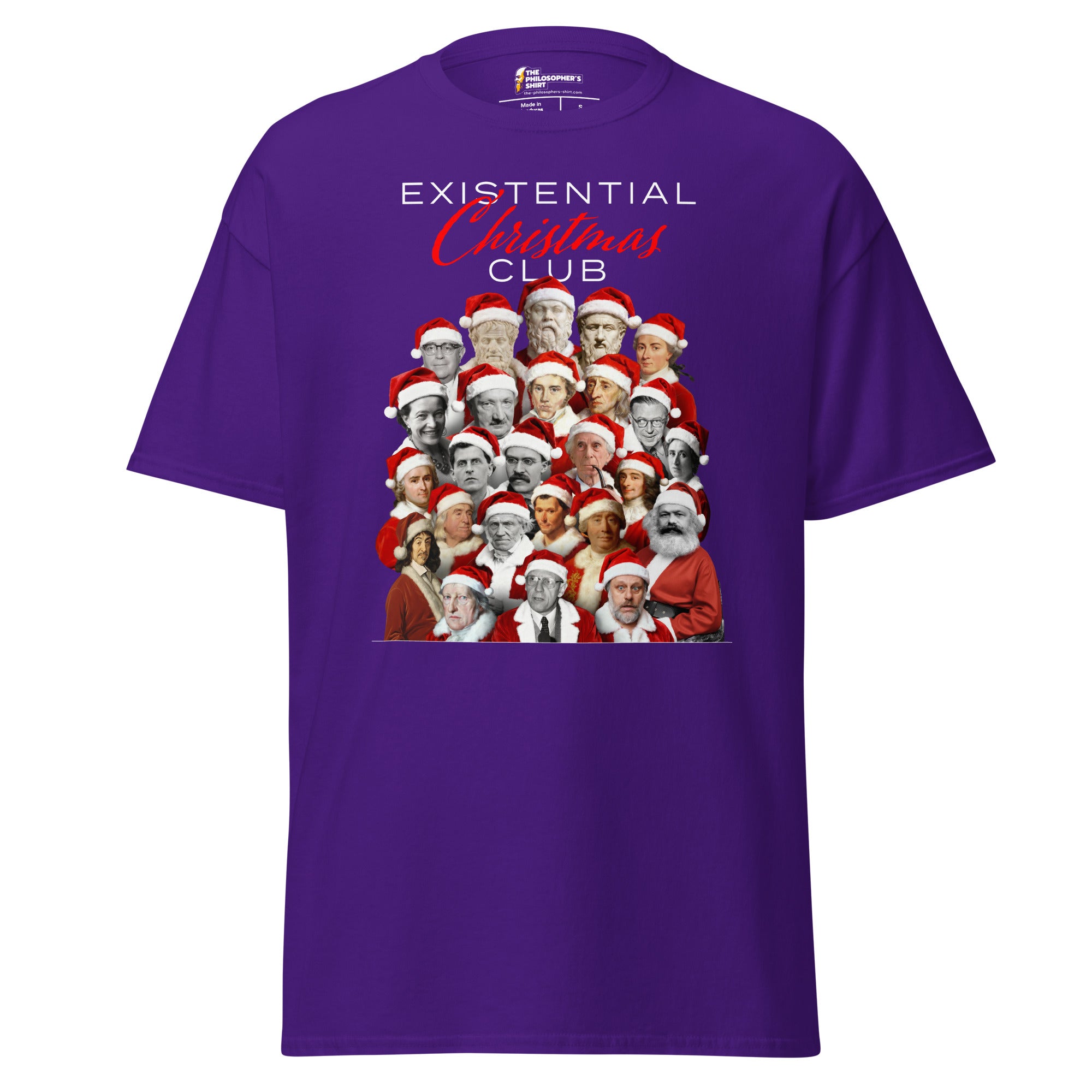
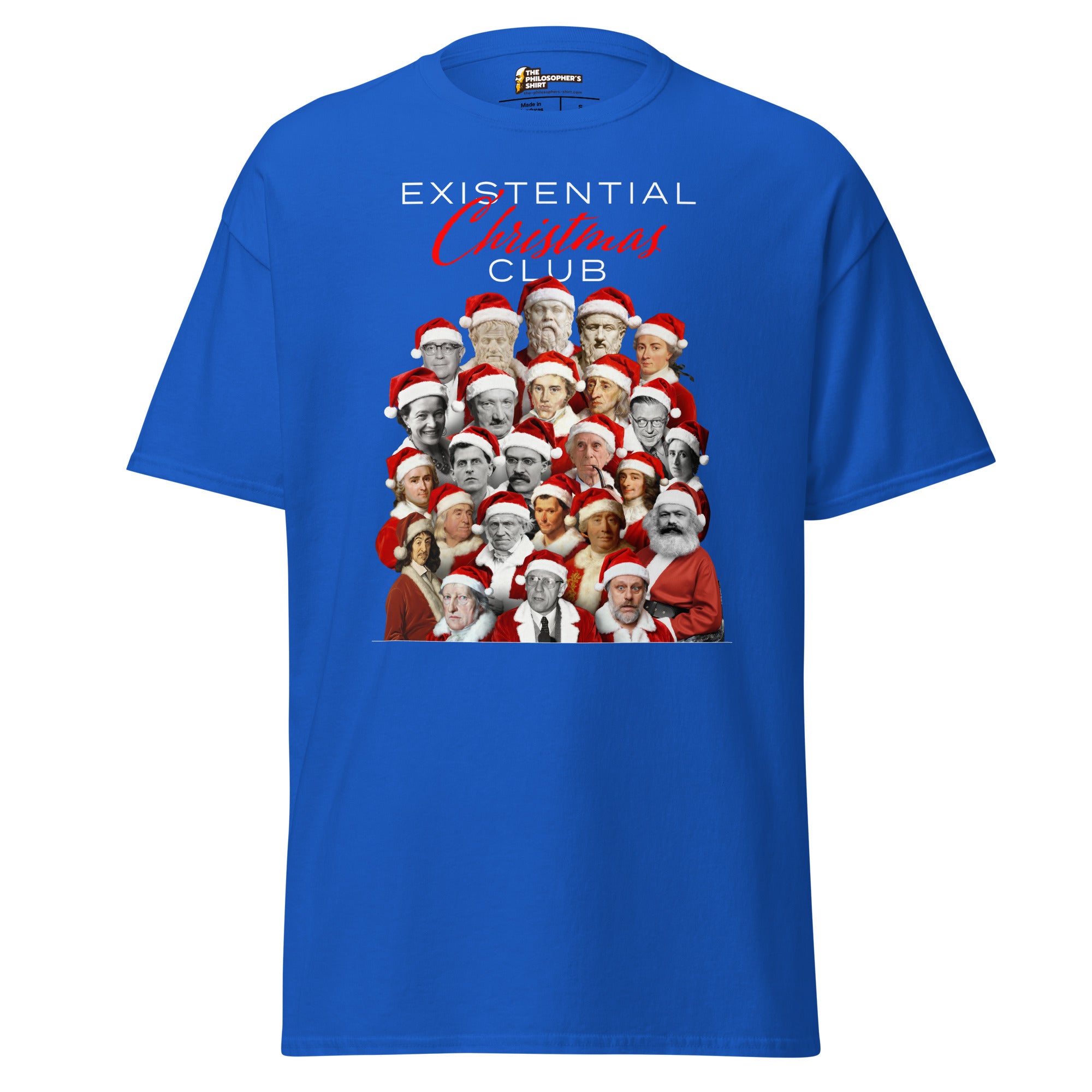
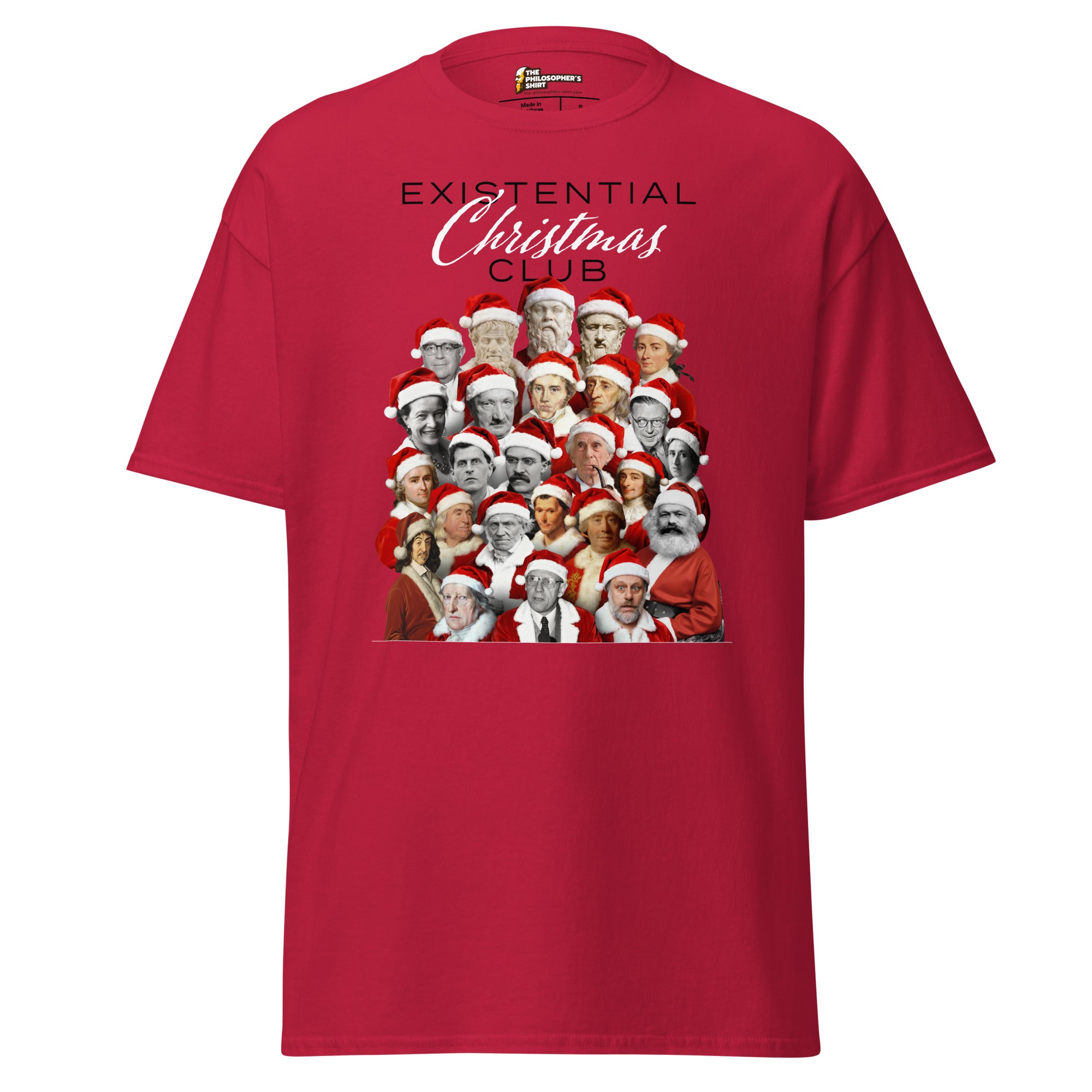
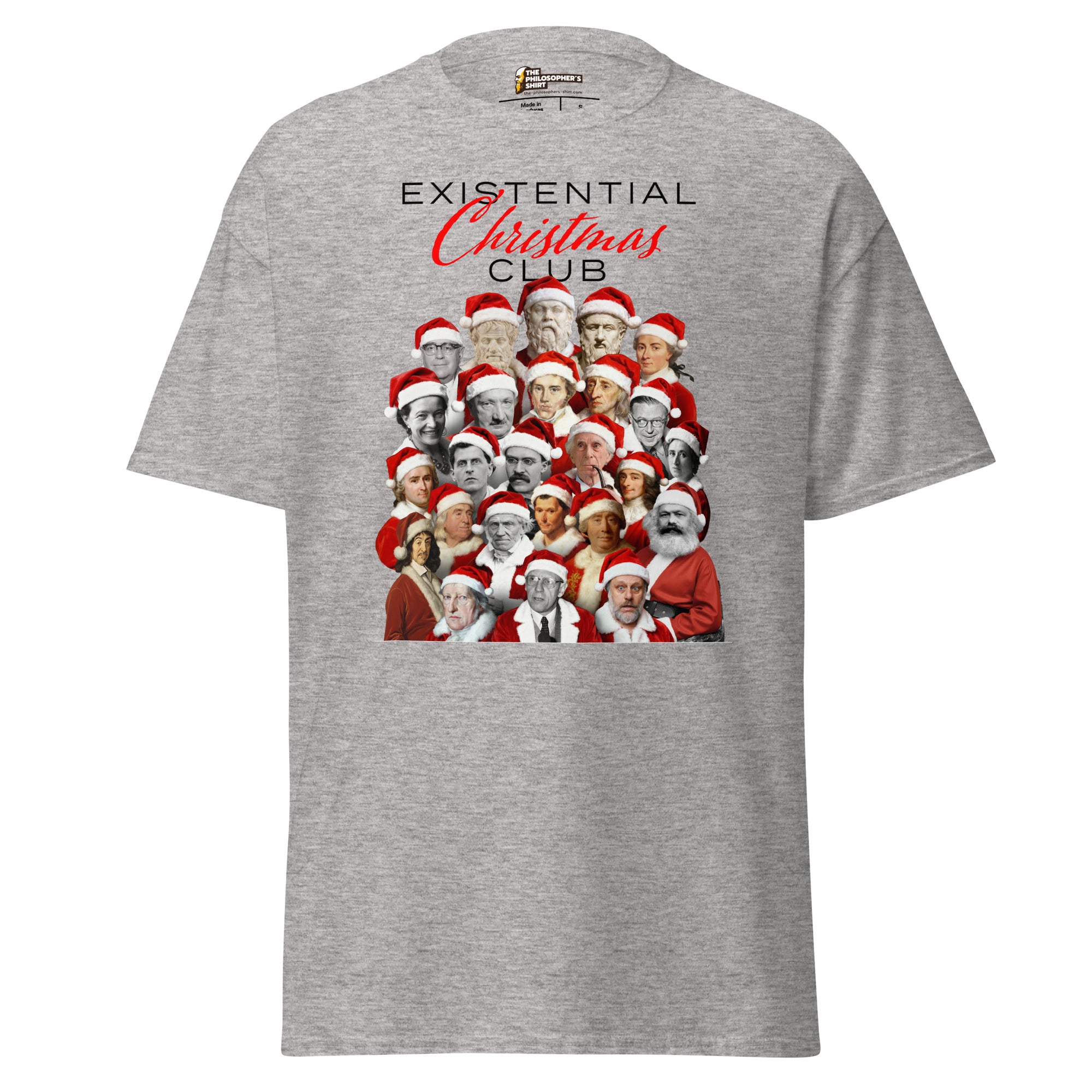
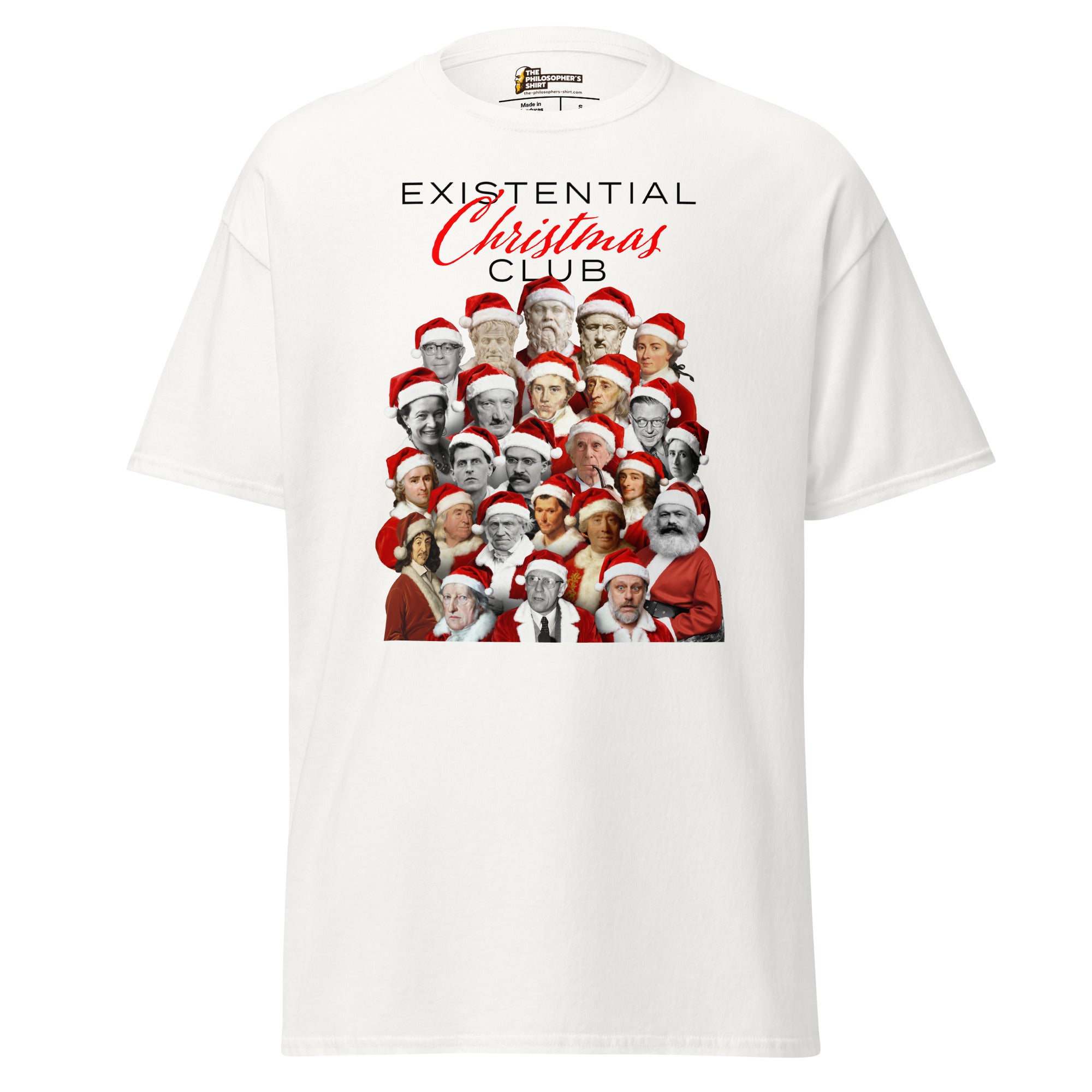
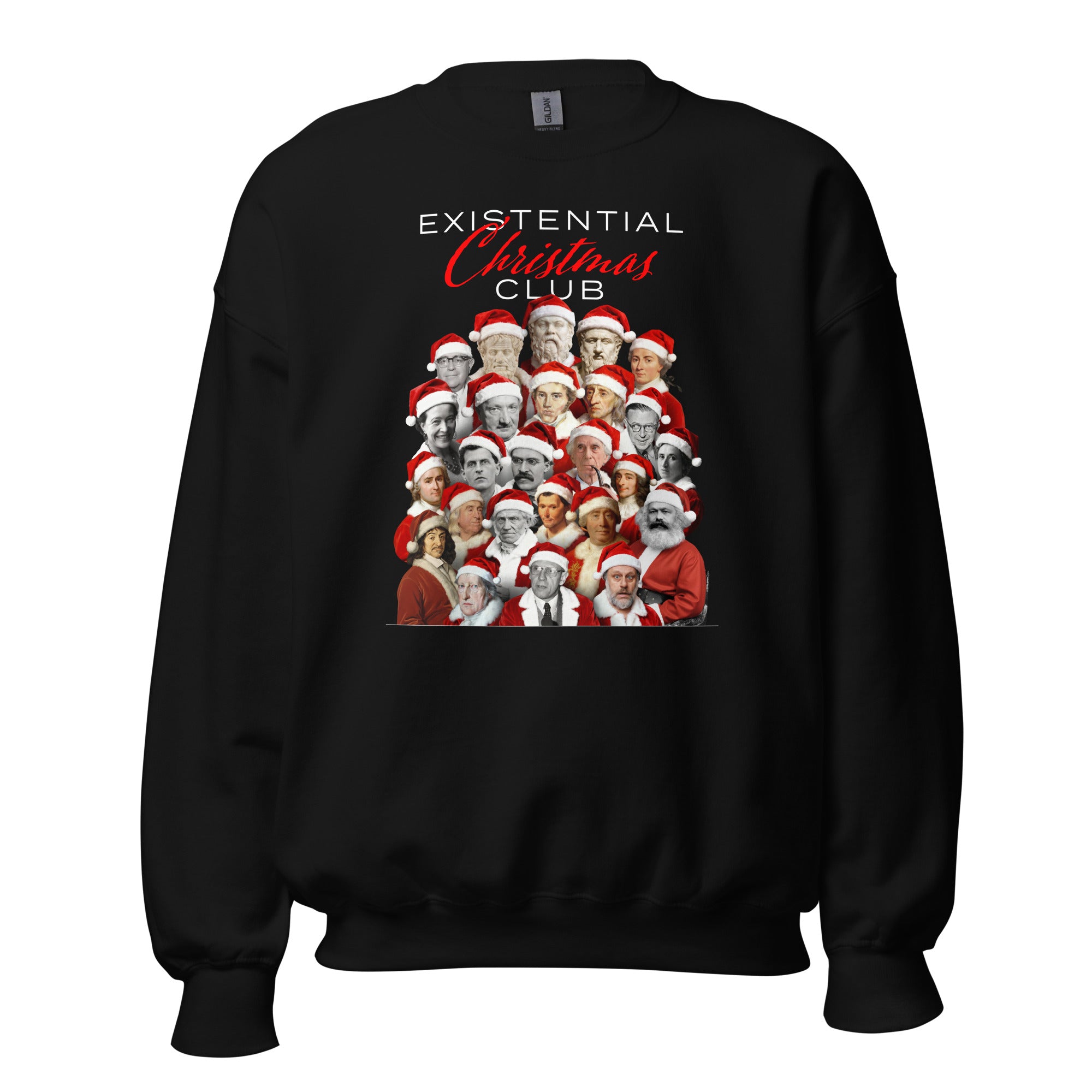
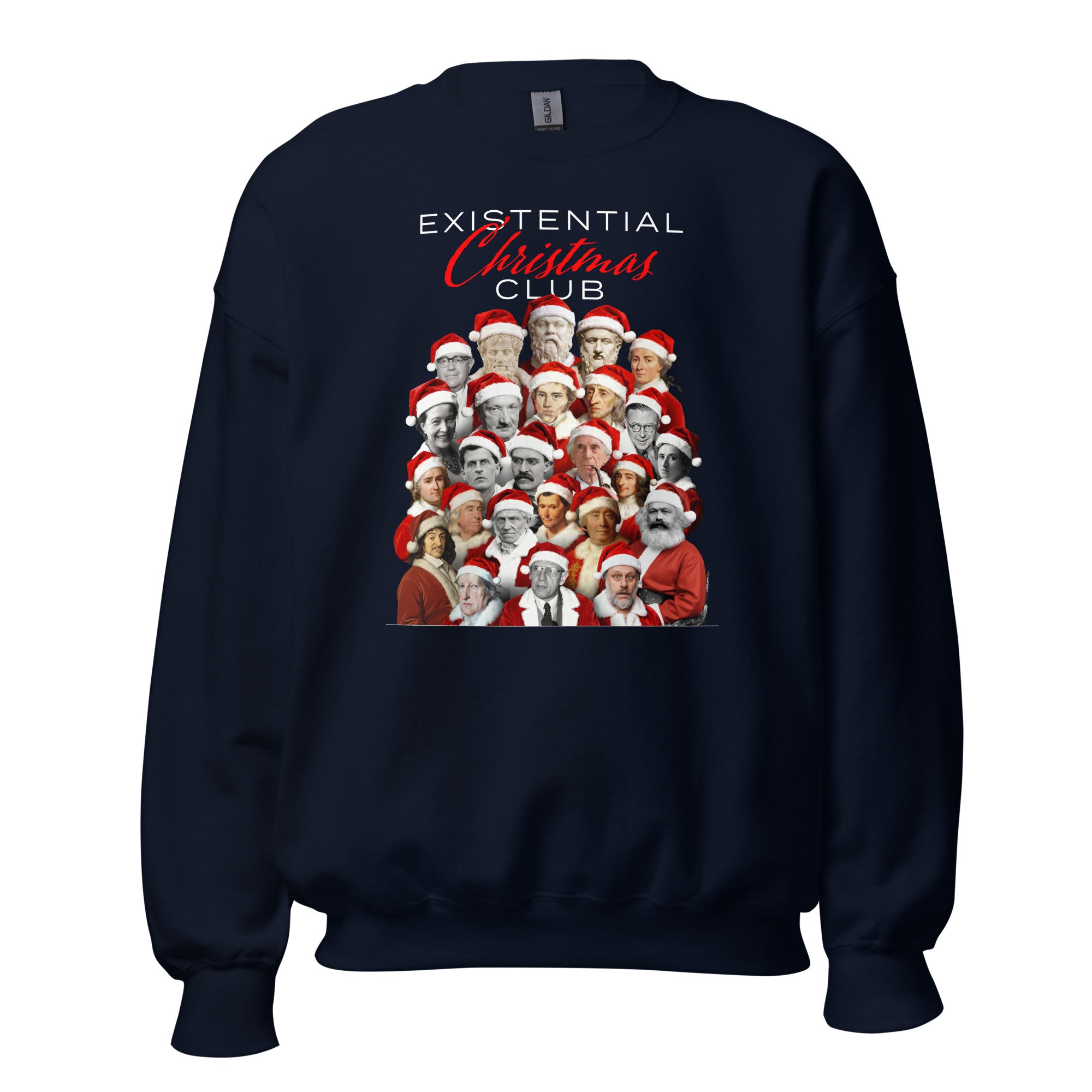
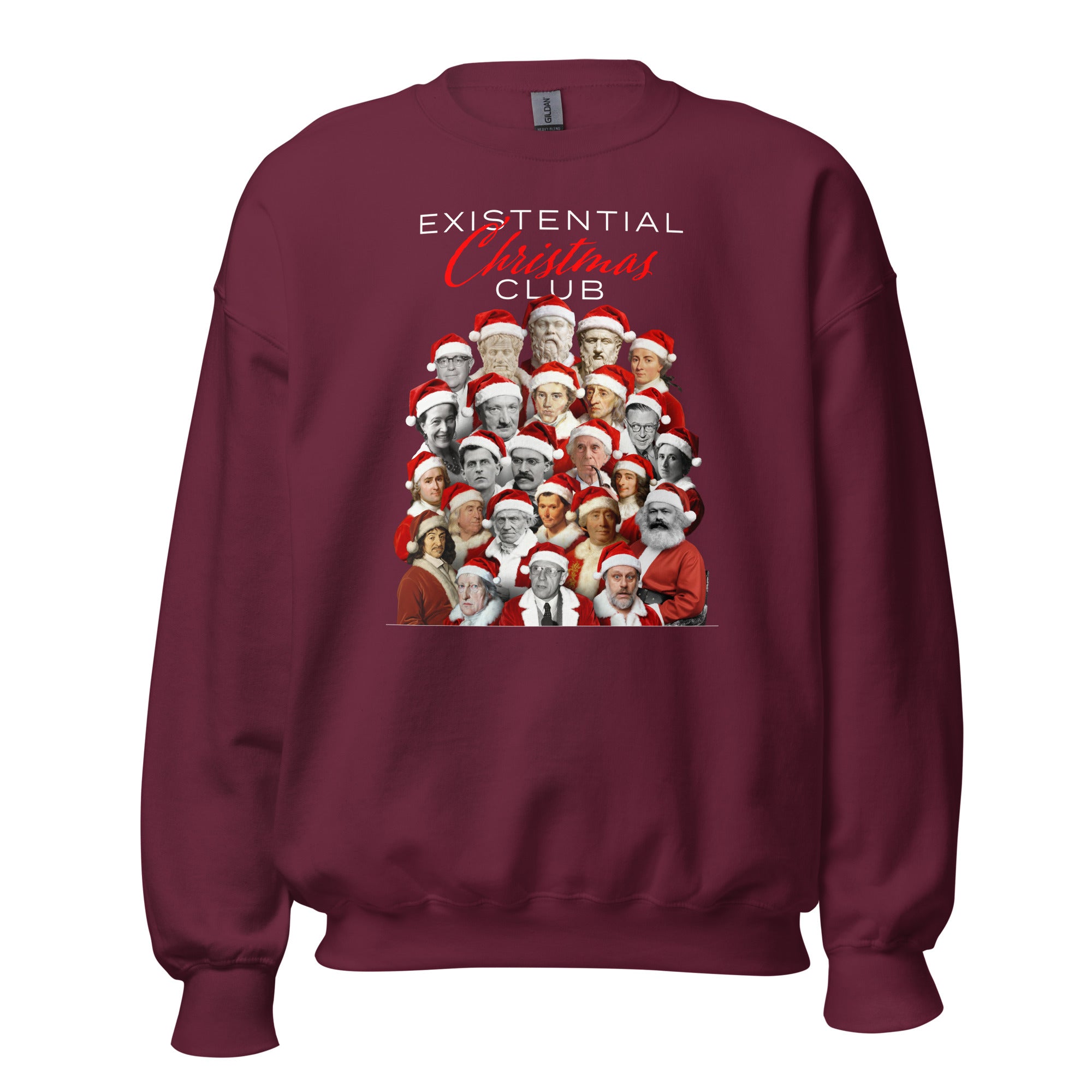
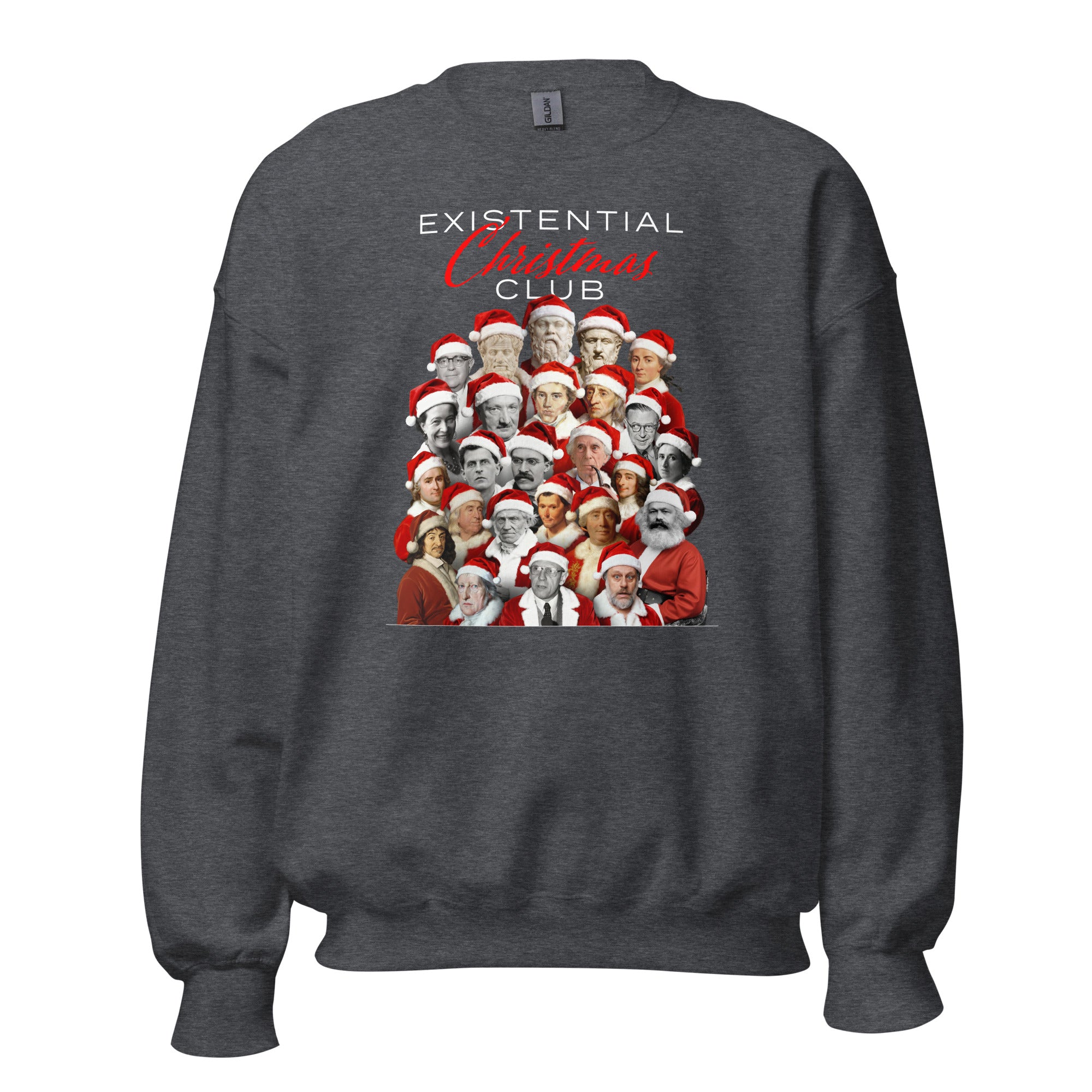
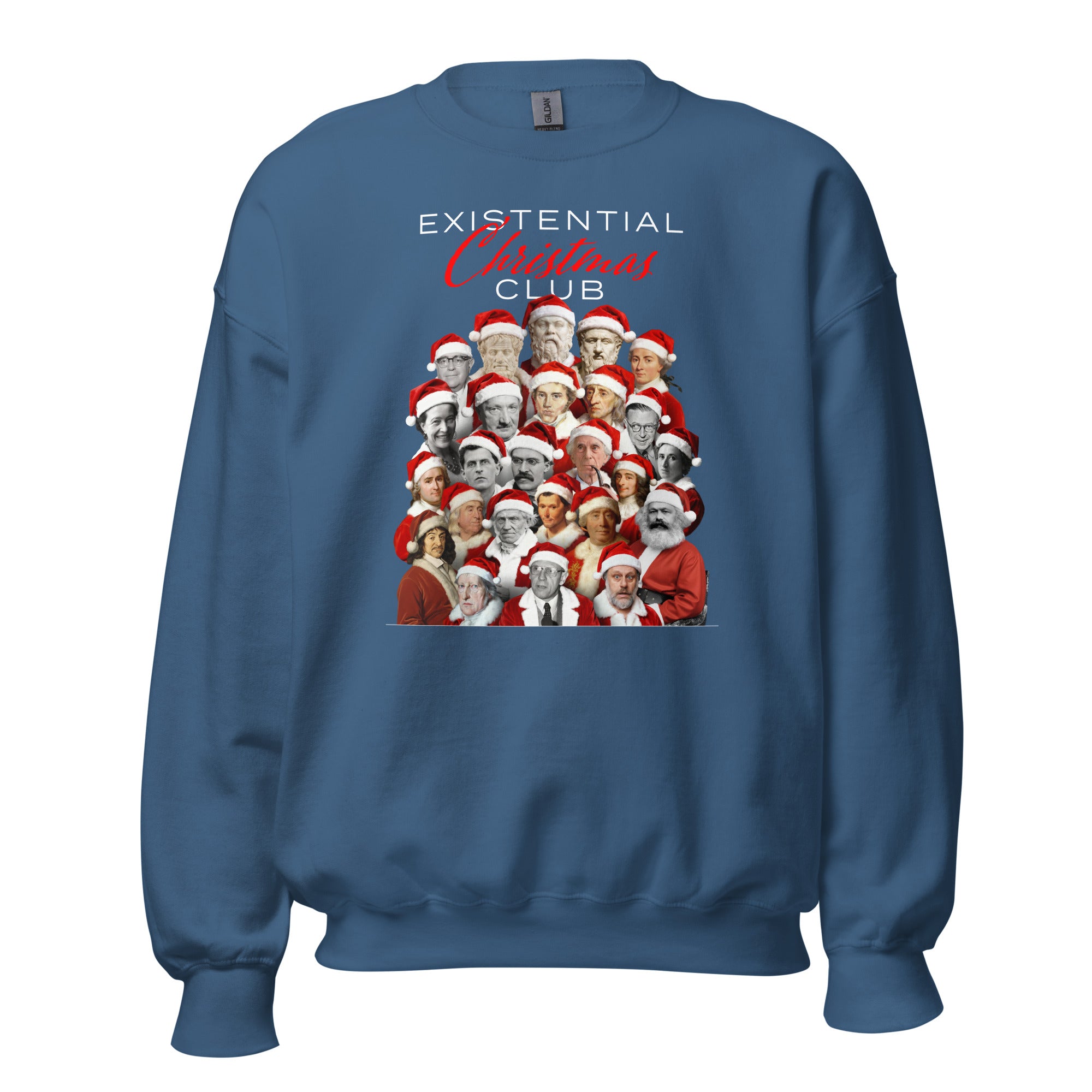
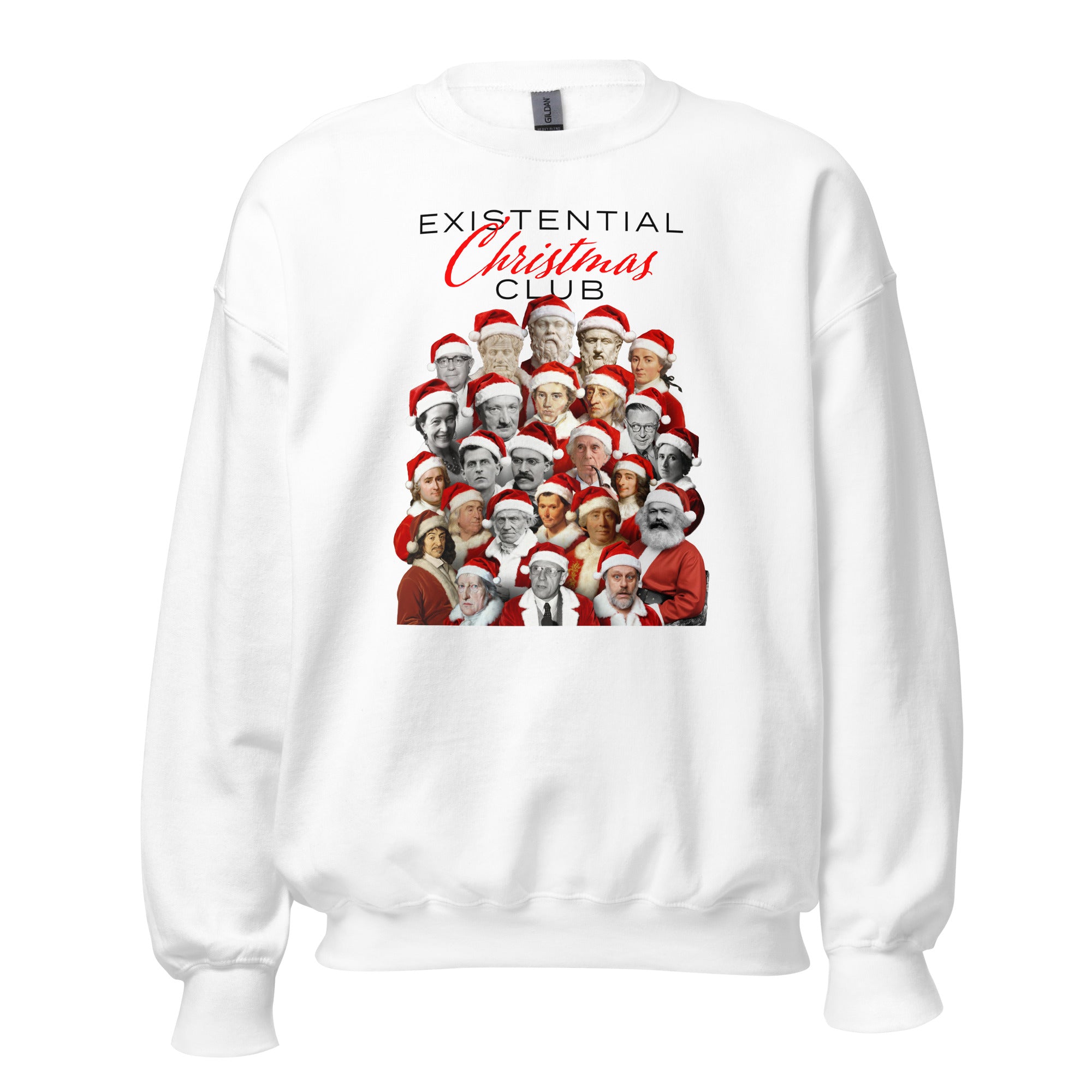
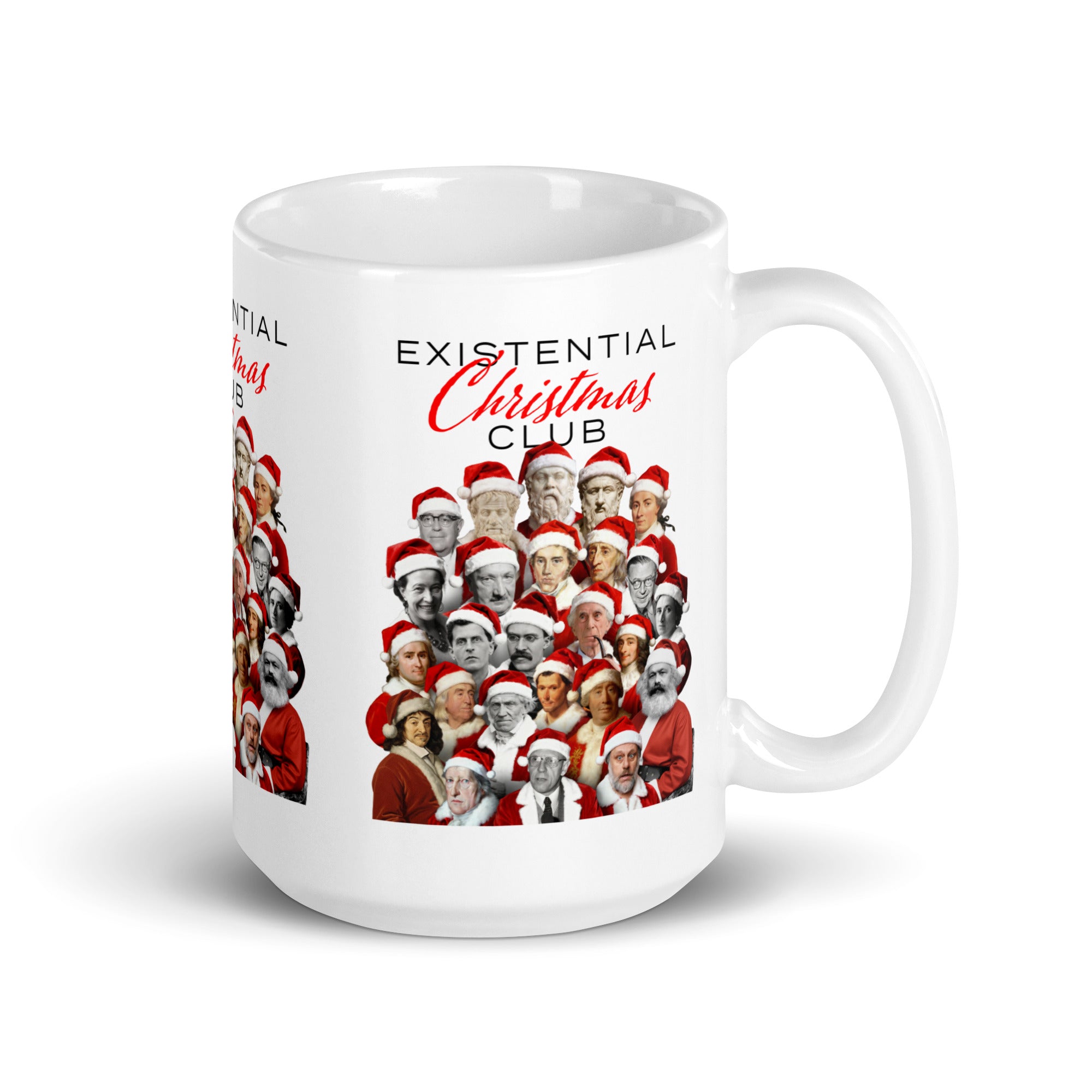
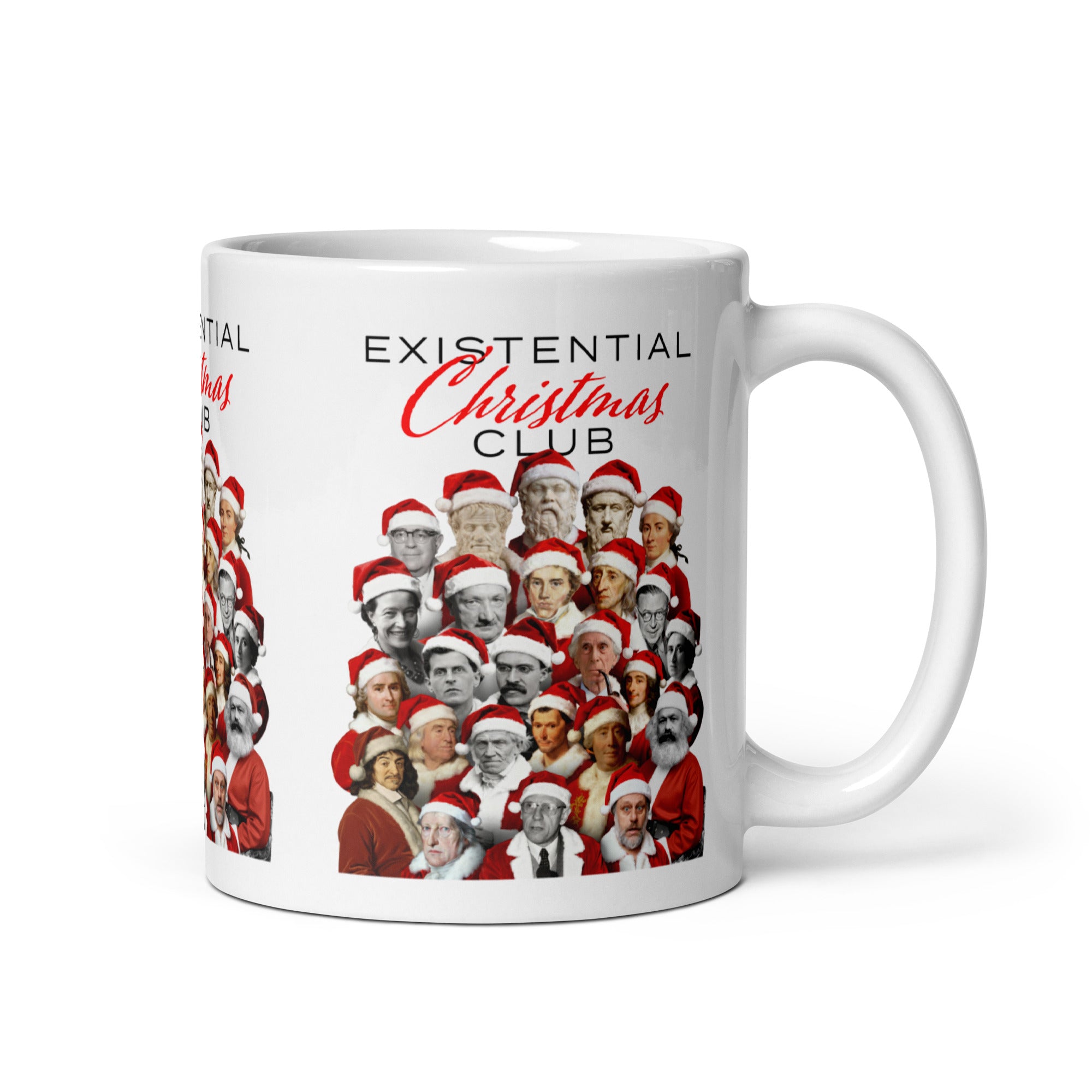
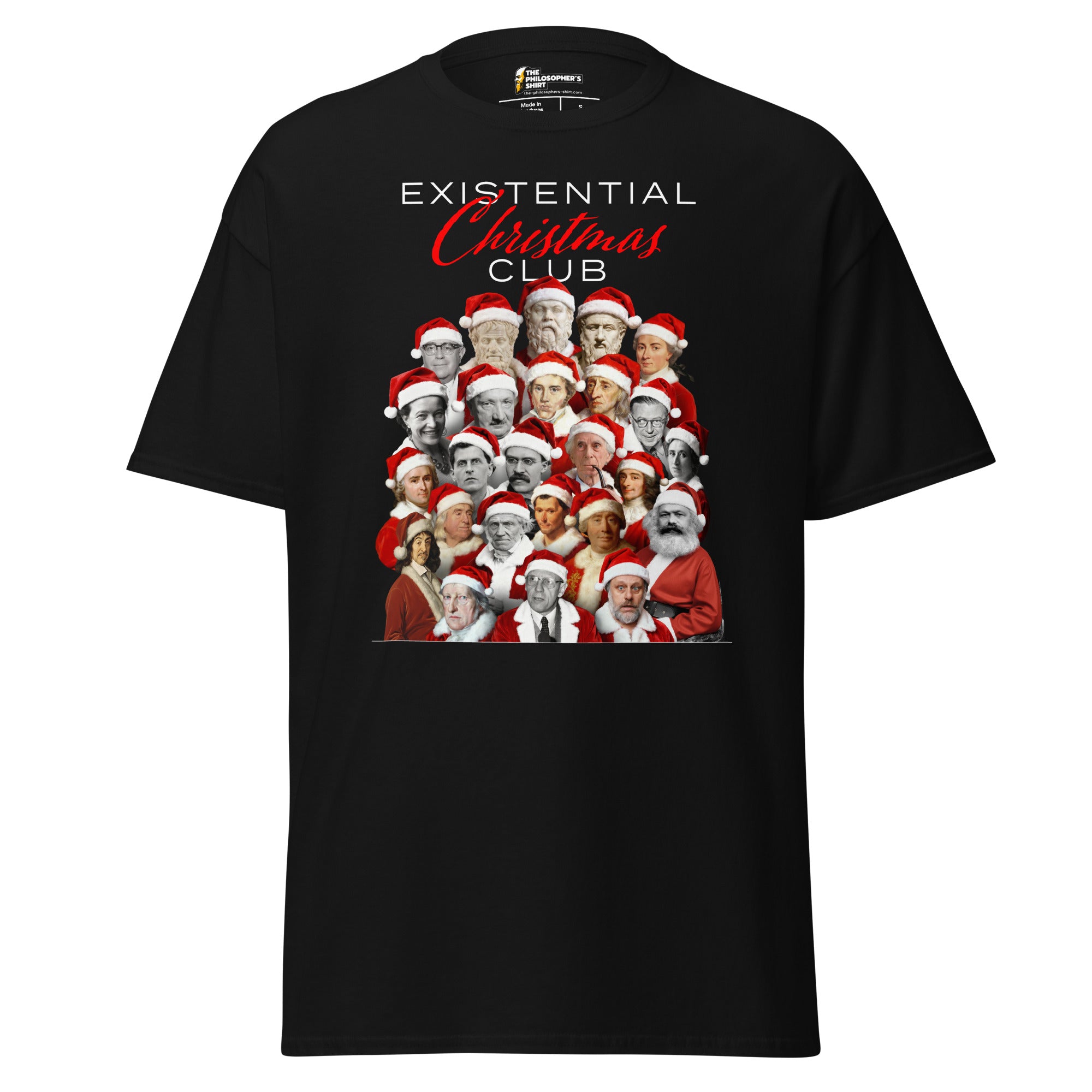
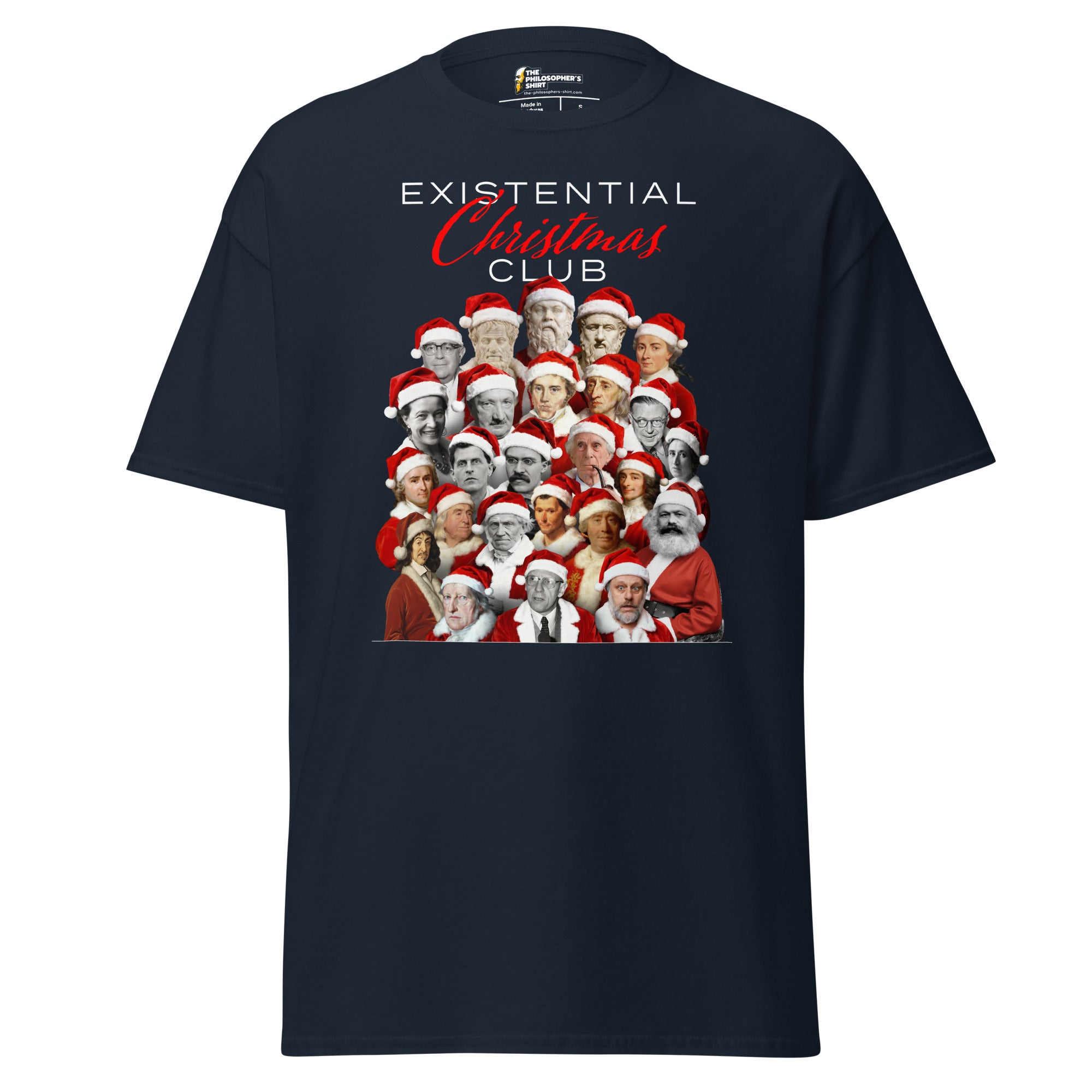
Existential Christmas Club

The holidays supply everything existential dread needs: enforced reflection, family comparison, and a calendar year visibly running out.

Aimed precisely at the quiet days after Christmas, when the questions arrive. The whole range: tees, sweatshirts, hoodies and mugs, printed to order as you buy them. A Christmas gift for overthinkers. Same club. Colder weather. Considerably more wine.
Questions about this design

What does the Existential Christmas Club design show?
Around thirty great philosophers – from ancient Greek busts to Karl Marx – stacked into one group portrait, every one of them in a Santa hat, under the words Existential Christmas Club. It is the family photo for anyone whose holidays come with big questions – a club of people who thought hard about death, freedom and meaning and still turned up for dinner.
What is an existential crisis?
A period in which a person seriously doubts whether their life has meaning, purpose or value, often triggered by loss, change or milestones such as the end of a year. The term comes from existentialist philosophy, which treats such moments as an honest encounter with freedom, mortality and the absence of ready-made answers.
What is existentialism?
A 19th- and 20th-century philosophical movement that starts from the concrete individual – who exists, chooses and must die – rather than from abstract systems. Its themes are freedom, responsibility, anxiety, authenticity and the search for meaning in a world that does not hand it to us. Jean-Paul Sartre summed it up as existence precedes essence.
Who are the most important existentialist philosophers?
Søren Kierkegaard and Friedrich Nietzsche are its 19th-century forerunners; Karl Jaspers and Martin Heidegger shaped it in Germany; Jean-Paul Sartre and Simone de Beauvoir made it famous in post-war Paris. Albert Camus is often included, though he, like Heidegger, rejected the label. Dostoevsky and Kafka are its literary relatives.
What does existence precedes essence mean?
Sartre’s formula, from his 1945 lecture Existentialism Is a Humanism. A paper knife is designed for a purpose before it exists; humans are not. We first exist, find ourselves in the world, and only then define ourselves through our choices. There is no fixed human nature to hide behind – we are condemned to be free and responsible for what we make of ourselves.
What did Kierkegaard say about despair?
In The Sickness unto Death (1849), written under the pseudonym Anti-Climacus, Kierkegaard describes despair as a sickness of the self – either not willing to be oneself or defiantly willing to be a self of one’s own making. He insists that a person can be in despair without knowing it. For him the cure is faith, a self resting transparently in God.
What is existential anxiety or angst?
For Kierkegaard, in The Concept of Anxiety (1844), anxiety is the dizziness of freedom – the vertigo we feel facing open possibilities. Unlike fear, it has no definite object. Heidegger, in Being and Time (1927), made Angst the mood that reveals our finite existence, and Sartre linked it to the weight of having to choose for ourselves.
Is existentialism pessimistic?
Its critics said so, and Sartre answered them in Existentialism Is a Humanism – the doctrine is one of action and responsibility, he argued, not despair, because it holds that a person’s destiny lies in their own hands. It starts from bleak facts – death, absurdity, no given meaning – but concludes that we are free to make something of them.
Is Existential Christmas Club a good gift for philosophy students or teachers?
Yes – it is made for philosophy students, teachers, book clubs and every overthinker who spends the days between Christmas and New Year pondering the meaning of it all. It also works as a quieter ugly Christmas sweater for the office party. Available as a sweatshirt, premium hoodie, T-shirt, mug and sticker.