Sin aranceles: enviamos desde tu región. Envío gratis a partir de 70 € / $80 / £60
Buscar en nuestro sitio

Marx - This Is Not Santa

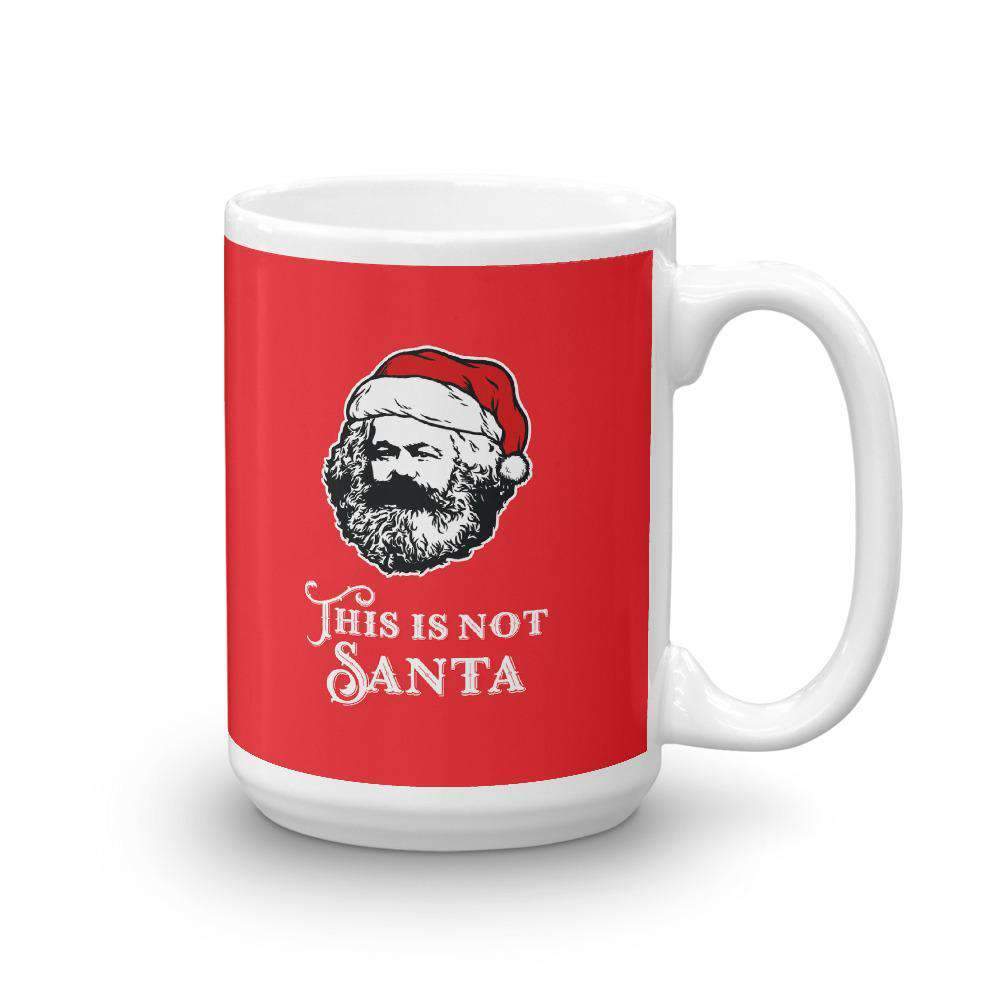
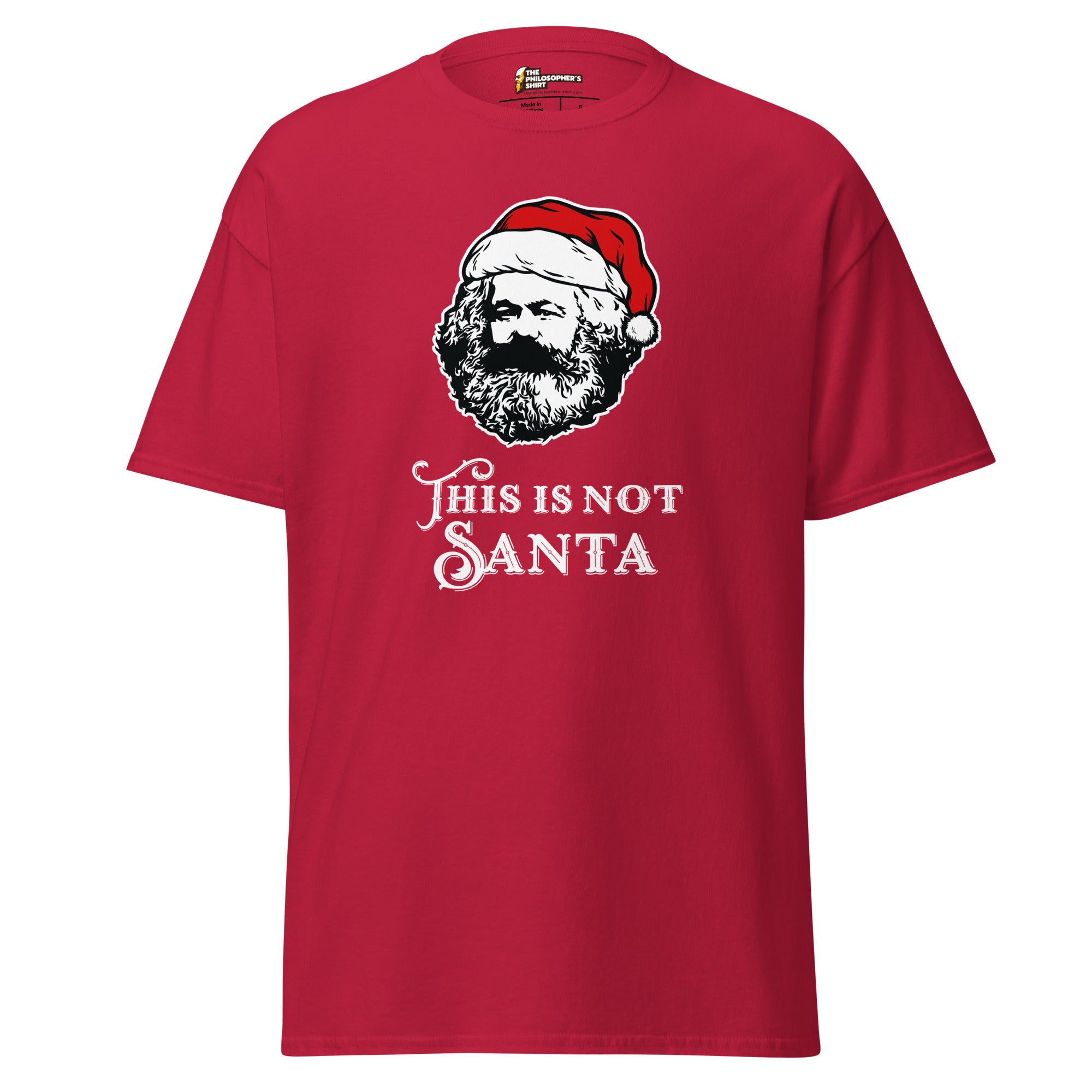
Yes, he is bearded. Yes, he wears red. No, he is not bringing presents — he is bringing a critique of the gift economy.

Confuses relatives for a full three seconds before the penny drops. Available across tees, sweatshirts, hoodies and mugs, printed to order. A Christmas gift for leftists. He does not come down chimneys. He seizes the factory that made them.

Questions about this design

What does the Marx This Is Not Santa design show?
Karl Marx with his famous white beard, wearing a red Santa hat, above the words This Is Not Santa. The joke is the resemblance – bearded, white-haired, associated with red – and the contrast; one man brings presents to everyone, the other wrote the most influential critique of the economy that produces them.
Why does Karl Marx look like Santa Claus?
Mostly the full white beard and hair of his later portraits, taken in London in the 1870s and 1880s. The modern image of Santa as a jolly, white-bearded man in red took shape in illustrations of the same century. Add the colour red, long since linked to the socialist movement, and the two figures became one of the internet’s favourite visual jokes.
Did Karl Marx celebrate Christmas?
Yes, in a bourgeois Victorian way. Letters from Jenny Marx thank Friedrich Engels for Christmas hampers with wine and champagne, and one from 1859 laments that the children had no Christmas tree that year. Eduard Bernstein recalled that Engels kept Christmas after the English fashion, with mistletoe, turkey and flaming plum pudding.
What did Marx mean by religion is the opium of the people?
The line comes from the introduction to his Contribution to the Critique of Hegel’s Philosophy of Right, published in 1844. Marx calls religion the sigh of the oppressed creature and the heart of a heartless world before calling it the opium of the people. It was less a sneer than a diagnosis – religion soothes real suffering, so the task is to change the conditions that require it.
What is commodity fetishism?
Marx’s term, from the first chapter of Capital, Volume I (1867), for the way relations between people appear as relations between things. When we buy a gift, we see a price tag rather than the labour and social relations that produced it; the commodity seems to have value by itself. The idea remains central to critiques of consumer culture, Christmas shopping included.
What is the difference between use value and exchange value?
Use value is what a thing is good for – a sweater keeps you warm. Exchange value is what it can be traded for on the market. Marx, building on Adam Smith and David Ricardo, argued in Capital that under capitalism goods are produced for their exchange value, and that this value ultimately derives from the socially necessary labour time needed to make them.
What should I read first by Karl Marx?
Start with The Communist Manifesto (1848), written with Friedrich Engels – short, vivid and the best entry point. Next, Wage Labour and Capital (1849) explains his economics simply. Capital, Volume I (1867) is the main work; many readers begin with its famous chapter on the working day before tackling the opening on commodities.
Is this a good Christmas gift for leftists or history buffs?
Yes. It is a favourite Christmas gift for socialists, trade unionists, sociology and politics students and history teachers – and it works at family gatherings, where some relatives see Santa and others spend a few seconds working out who it actually is. Political enough to make a point, friendly enough for the dinner table.
Which products are available with this design?
Marx This Is Not Santa comes as a unisex classic T-shirt, a sweatshirt, a premium hoodie, a mug and a sticker – the sweatshirt being the natural choice for festive season gatherings.