Sin aranceles: enviamos desde tu región. Envío gratis a partir de 70 € / $80 / £60
Buscar en nuestro sitio

Thesis & Antithesis & Synthesis

El esquema que se atribuye a Hegel y que él, en realidad, casi nunca formuló así. Aun así explica la mayoría de las discusiones, gran parte de la historia y cualquier trabajo en grupo.

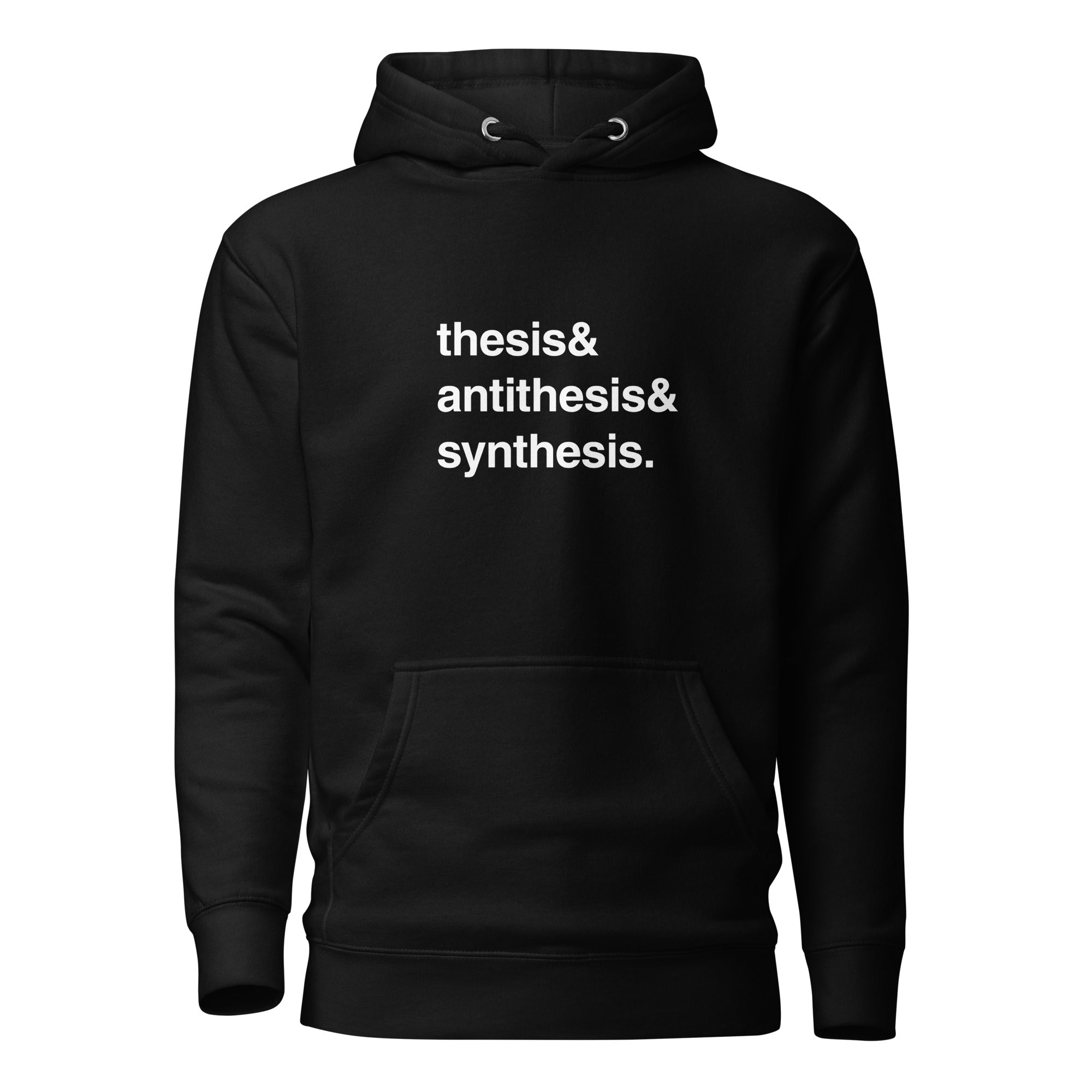
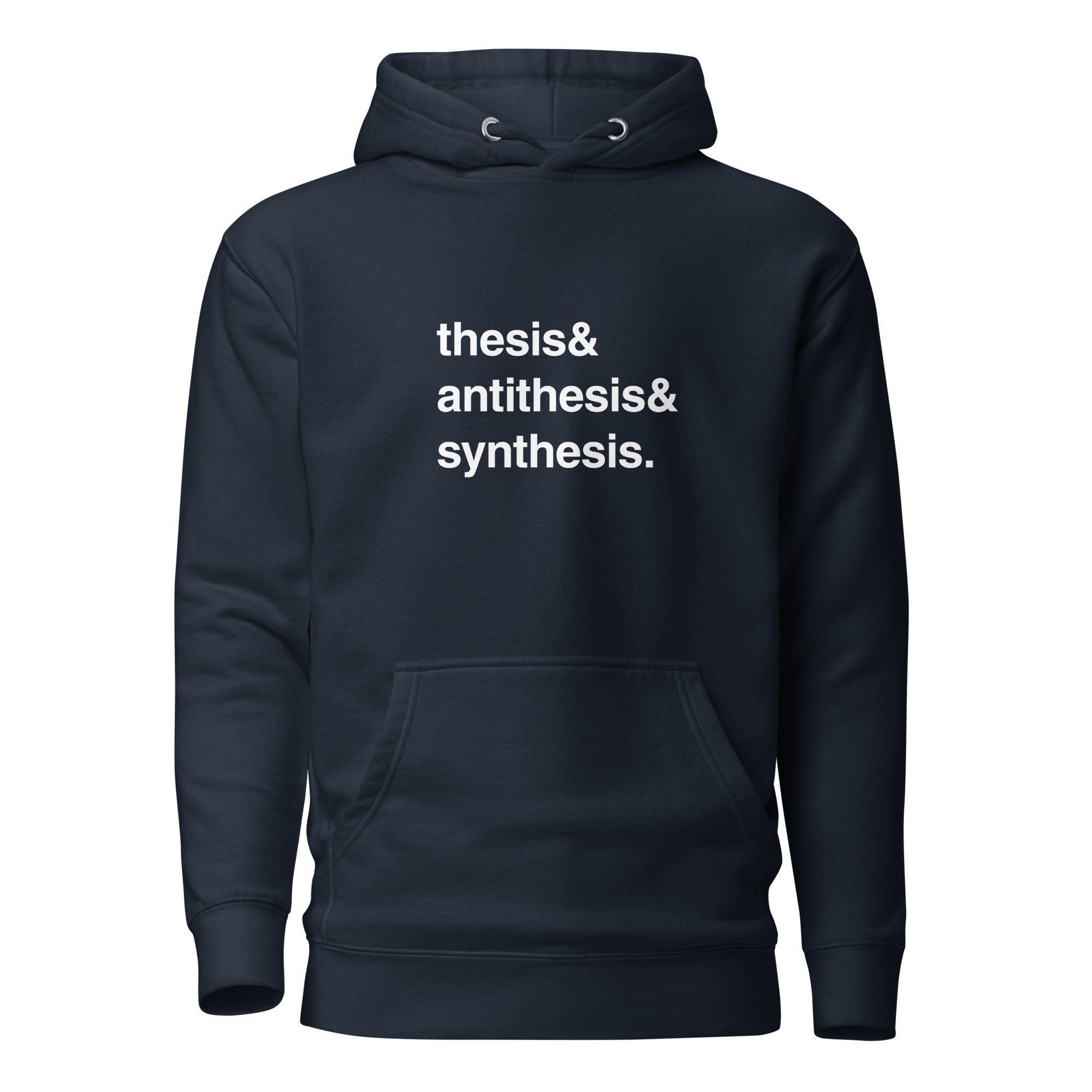
Un diseño en tres pasos que de verdad ayuda a recordar la secuencia. Disponible en camiseta, camiseta de mujer, sudadera y sudadera con capucha, impresas bajo pedido. Un regalo de filosofía alemana para lectores de Hegel. La contradicción no es un fallo. Es el motor.

Questions about this design

What does the Thesis & Antithesis & Synthesis design show?
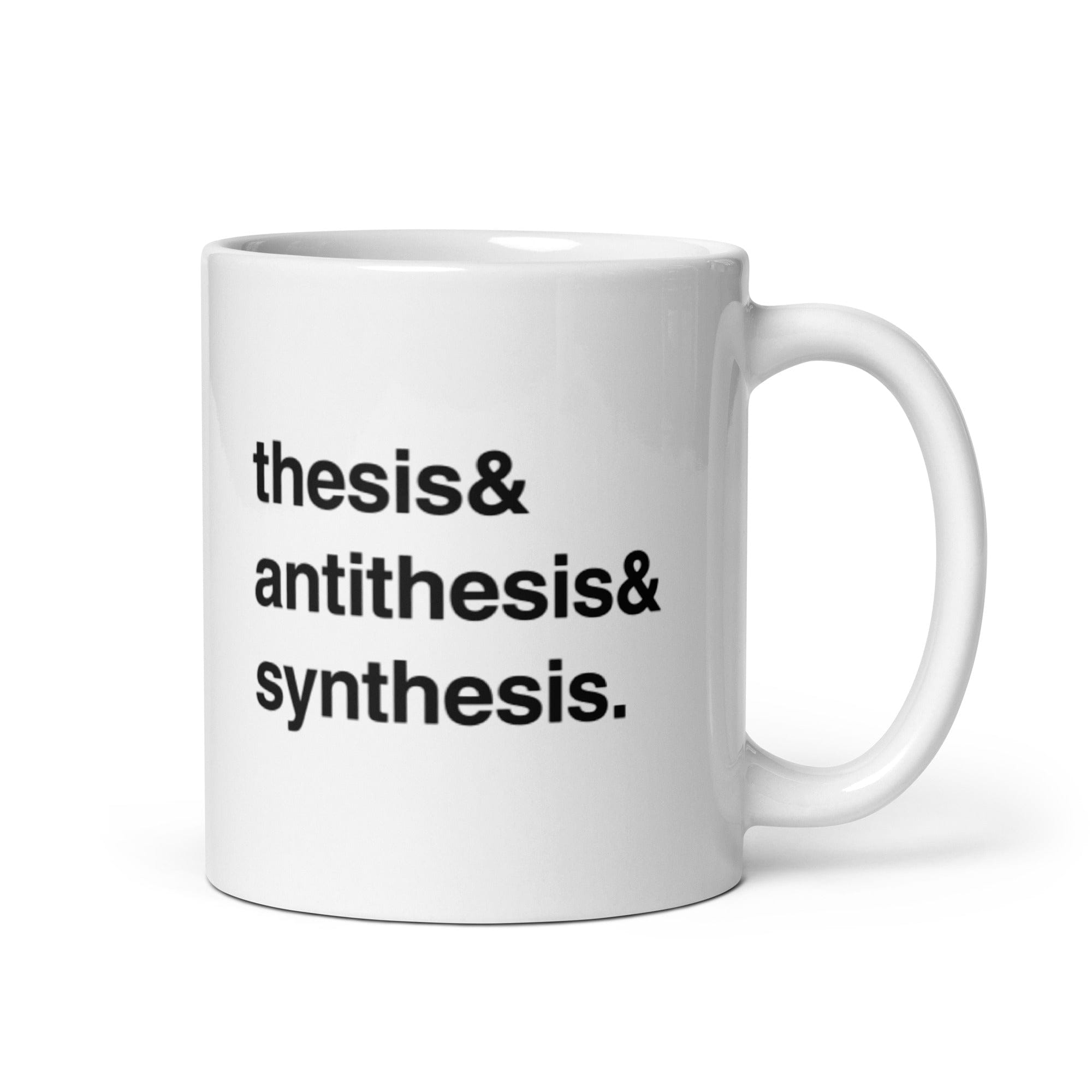
Three words in clean white lowercase type, stacked like a list – thesis& antithesis& synthesis. – with the ampersands and the full stop doing the philosophical work. It is the famous three-step model of dialectical thinking, reduced to its typographic bones and readable from across a seminar room.
What is thesis, antithesis, synthesis?
A three-step model of how ideas develop. A thesis is a starting claim, an antithesis contradicts it, and the synthesis resolves the conflict on a higher level, keeping what was true in both. The synthesis then becomes a new thesis, so the process continues.
Did Hegel actually use thesis, antithesis, synthesis?
Hardly. The triad was used by Fichte, and the formula was popularised as a summary of Hegel by Heinrich Moritz Chalybäus in 1837. Hegel himself rarely used these terms and criticised the mechanical application of triadic formulas as a lifeless schema in the preface to the Phenomenology of Spirit (1807).
What is the Hegelian dialectic?
Hegel's view that thought and reality develop through contradiction. Every concept, taken on its own, proves one-sided and turns into its opposite; working through that tension produces a richer, more concrete concept. Scholars often summarise his steps as abstract, negative and concrete rather than thesis, antithesis and synthesis.
What does Aufhebung or sublation mean in Hegel?
Aufhebung is Hegel's key term for what happens when a contradiction is overcome. The German verb aufheben means at once to cancel, to preserve and to lift up – the earlier stage is negated as final truth, yet kept and raised into the higher stage. English translators usually render it as sublation.
How did Marx change Hegel's dialectic?
In the afterword to the second German edition of Capital (1873), Marx wrote that with Hegel the dialectic is standing on its head and must be turned right side up. For Hegel ideas drive history; for Marx material and economic conditions do – which is why his approach is called historical materialism.
What does dialectic mean?
From the Greek dialektikē, the art of conversation. For Socrates and Plato it meant reaching truth through question and answer, testing claims against objections. Later thinkers, above all Hegel and Marx, used the word for any process that moves forward through contradiction.
Where should I start reading Hegel?
Not with the Phenomenology of Spirit (1807), famous for its difficulty. Many teachers suggest the introduction to his Lectures on the Philosophy of History, published as Reason in History, or a good introductory companion, before tackling the Phenomenology's preface and introduction.
Is the Thesis & Antithesis & Synthesis design a good gift for philosophy students?
Yes – it suits philosophy and politics students, debate club members, teachers who explain dialectics every year and anyone who resolves arguments by finding a third way. It comes as a unisex T-shirt, women's T-shirt, sweatshirt, premium hoodie, mug and sticker.