Pas de frais de douane : nous expédions depuis ta région. Livraison offerte dès 70 € / $80 / £60
Rechercher sur notre site

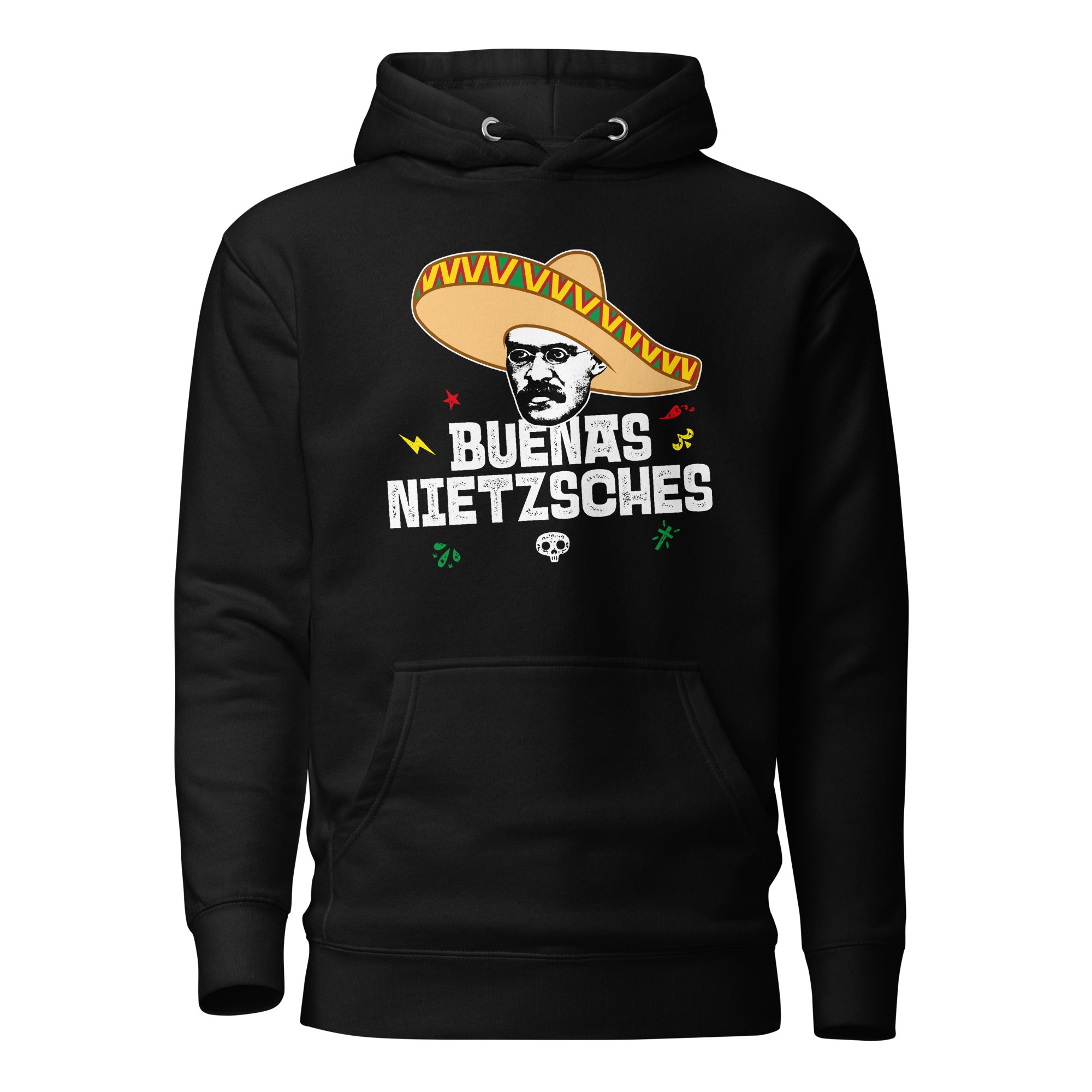
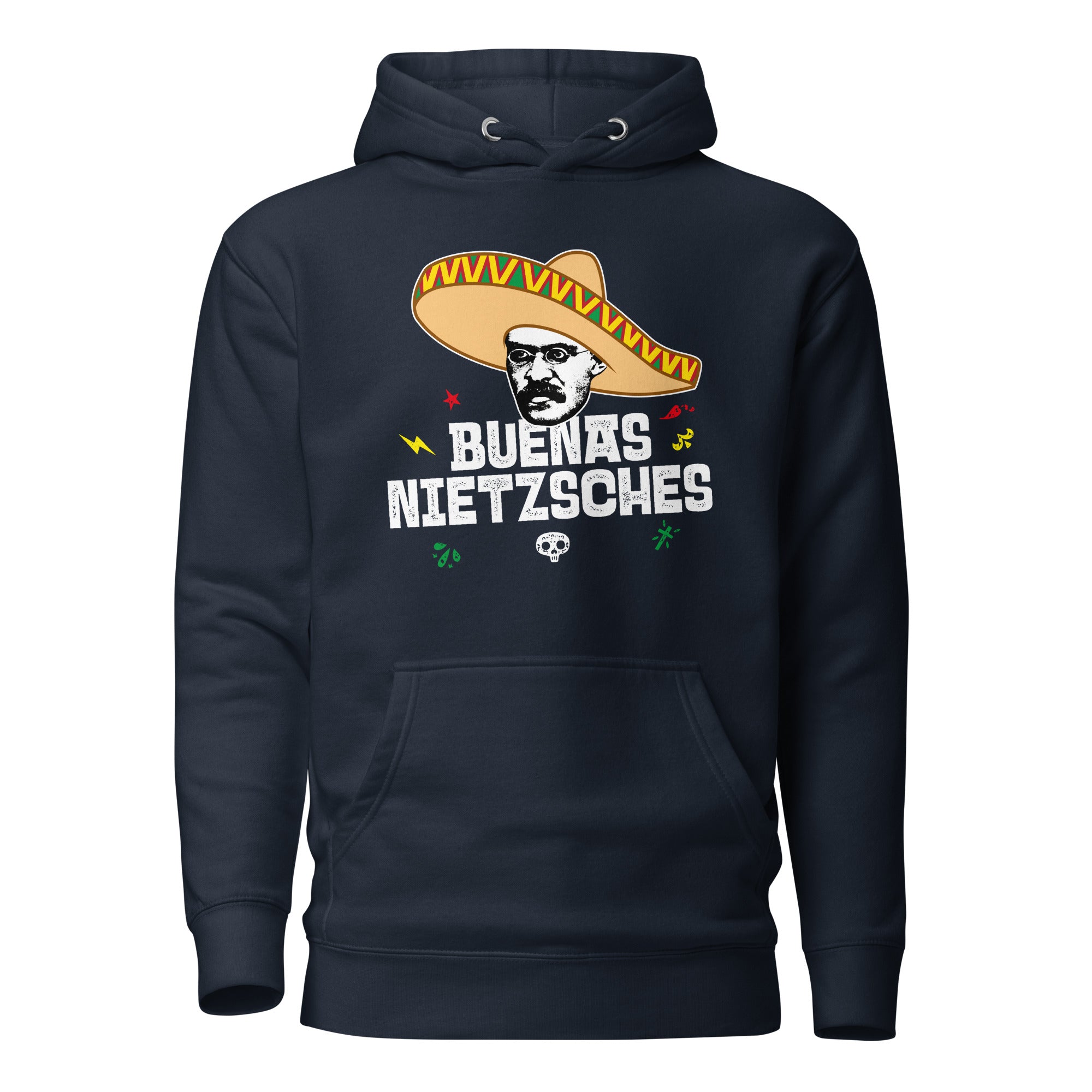
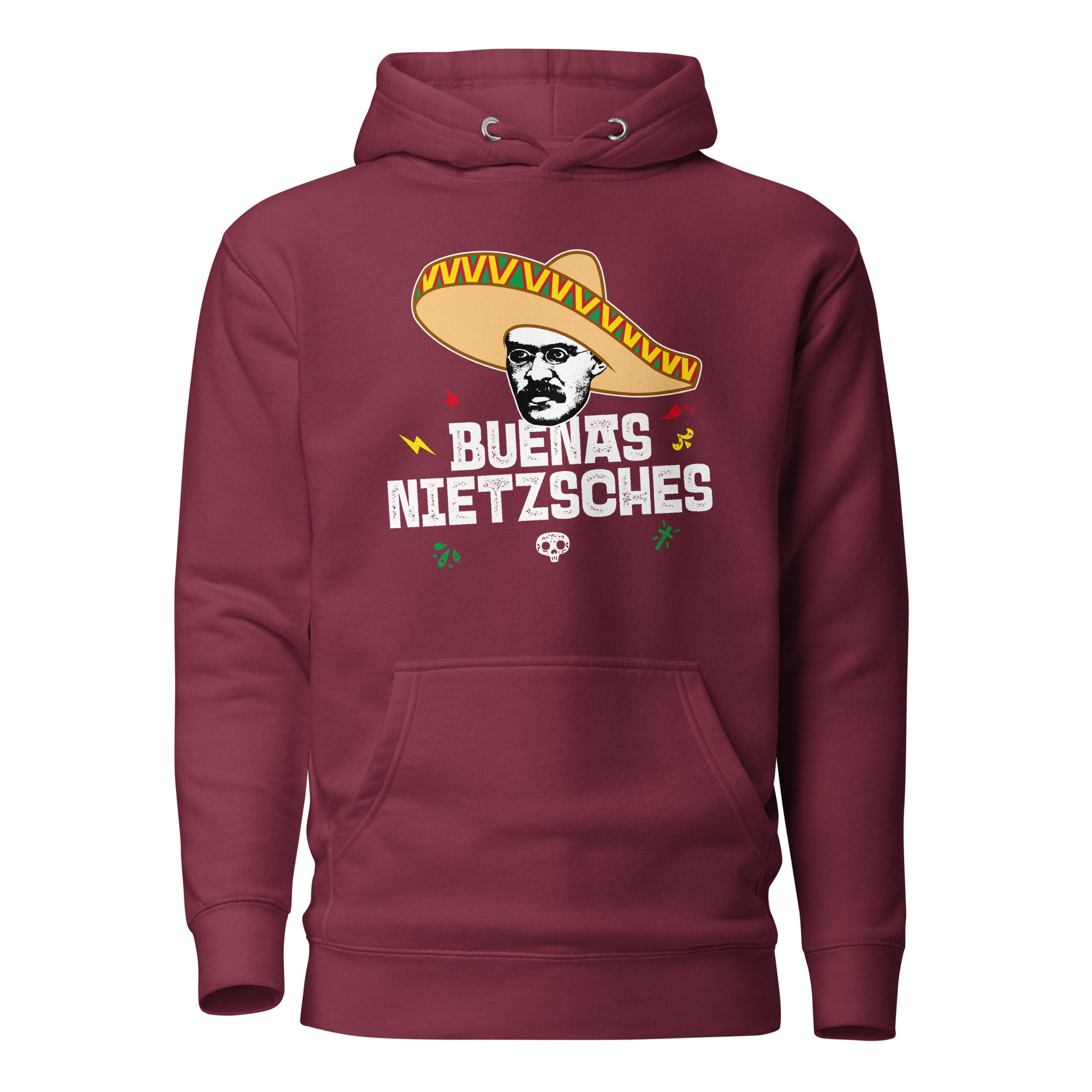
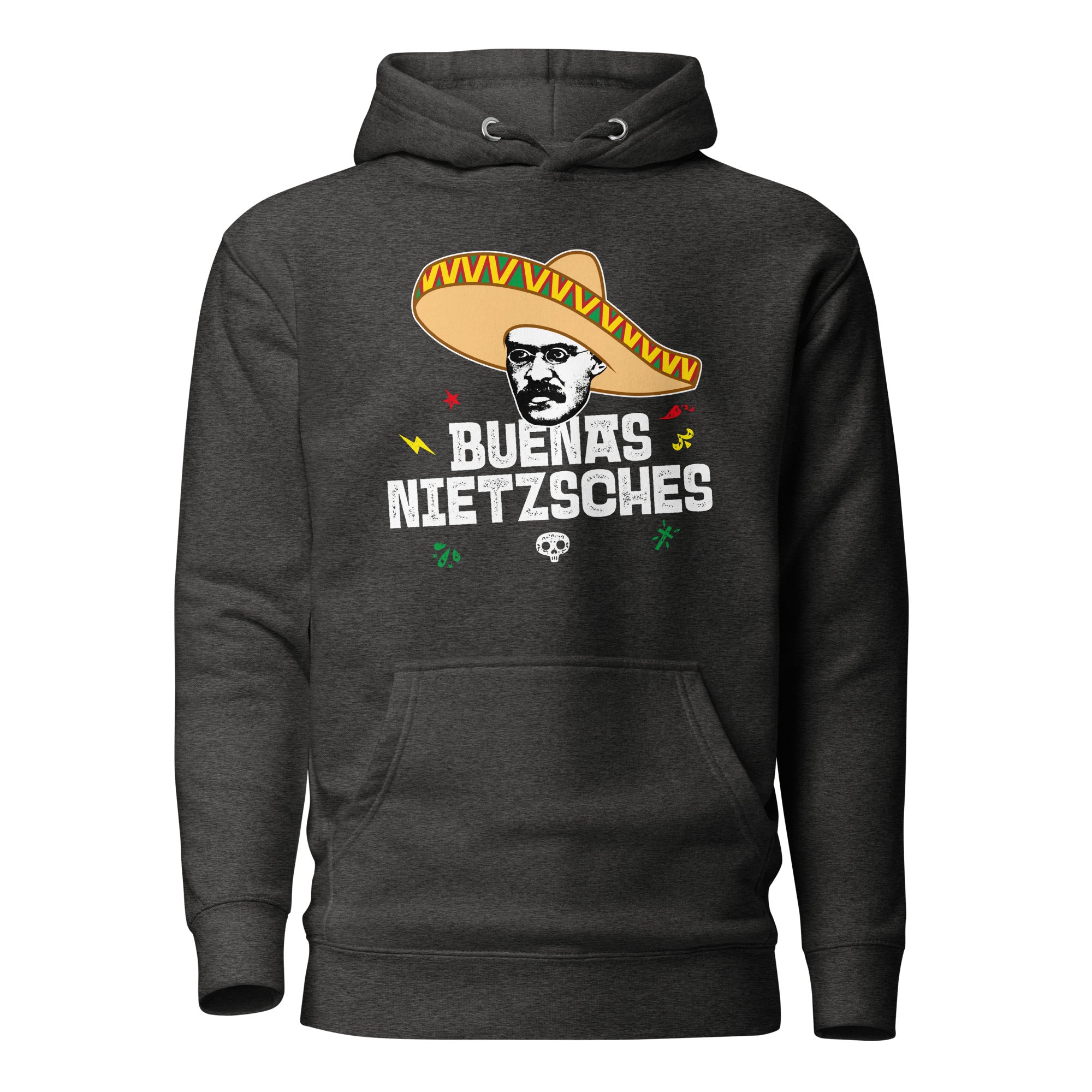
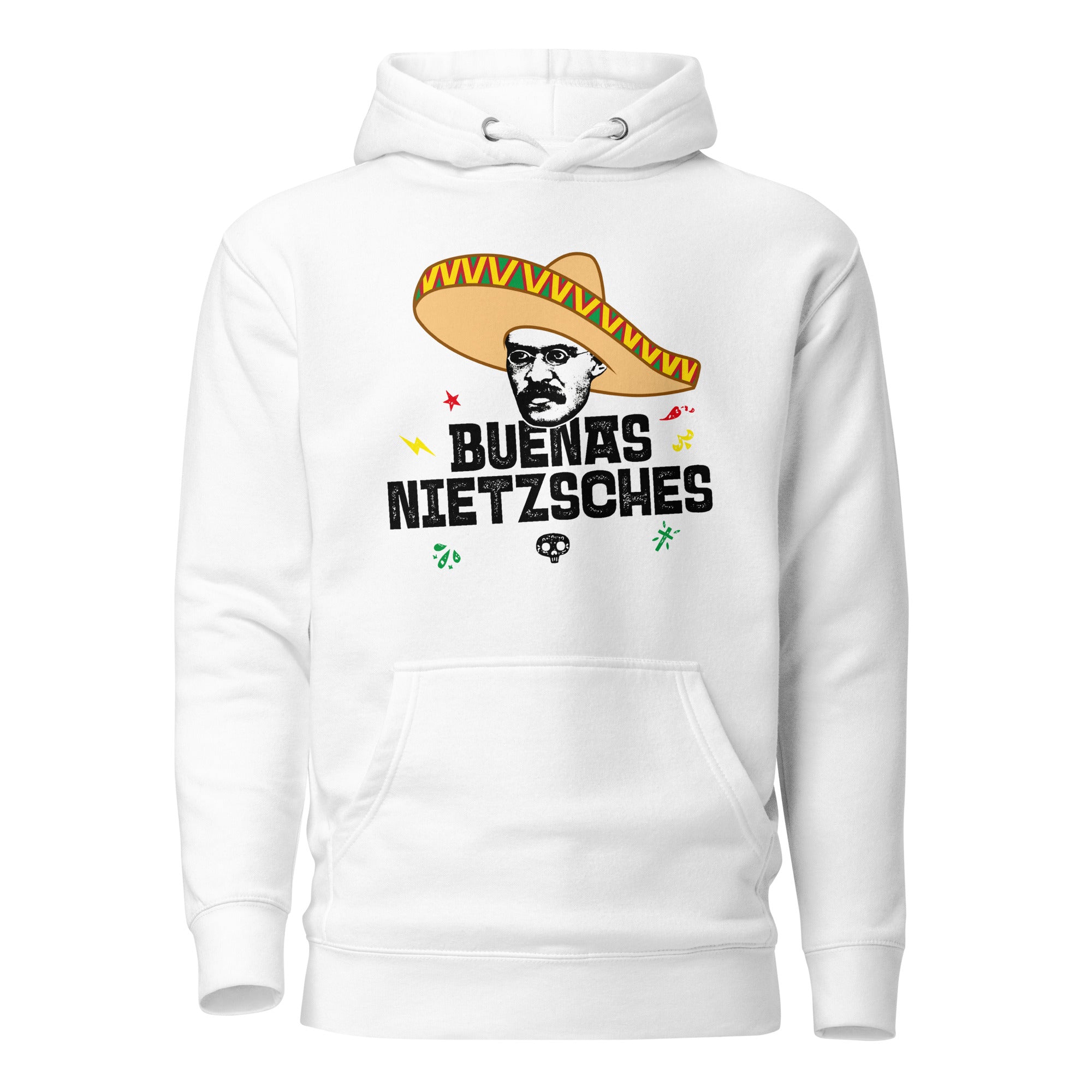
Buenas Nietzsches

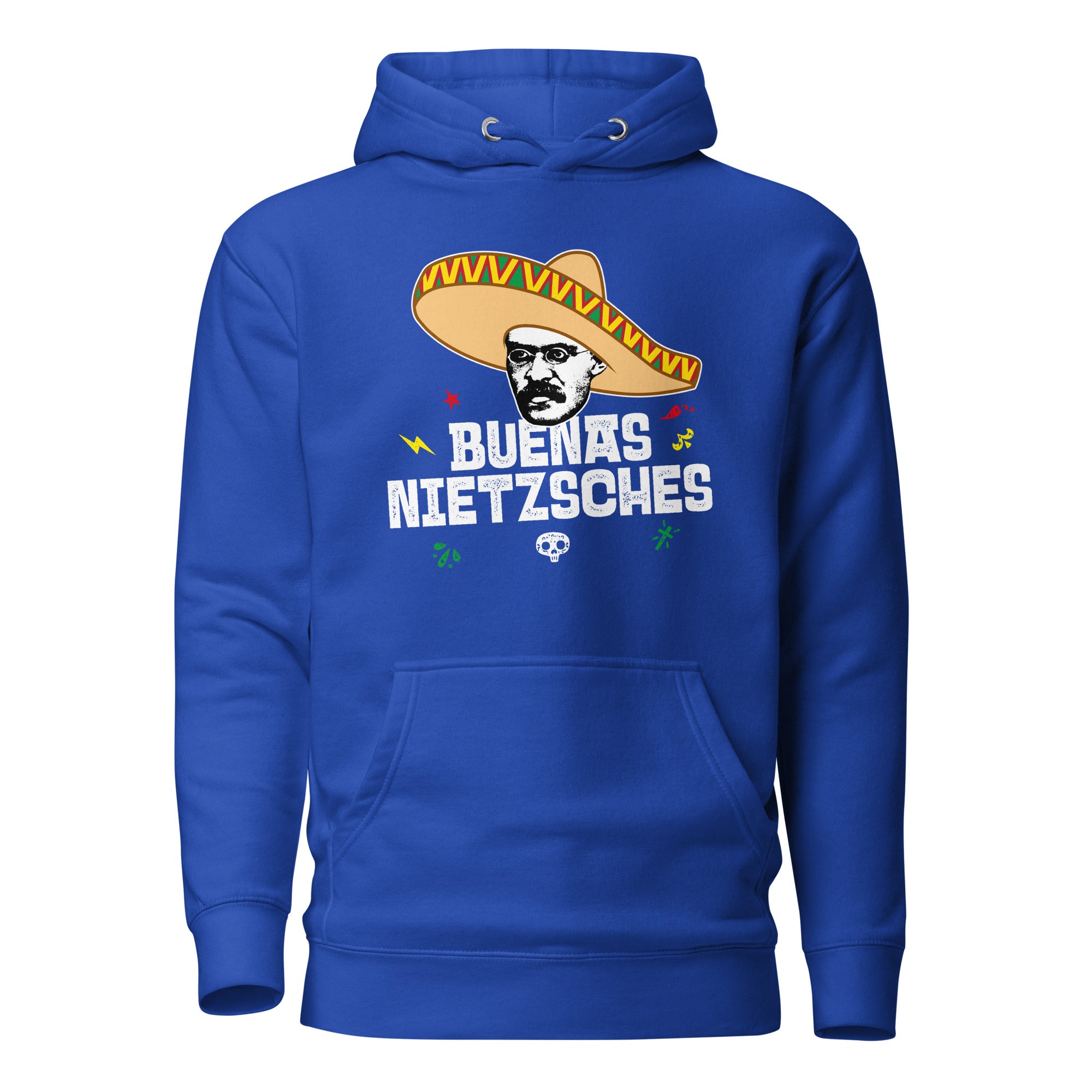
Buenas noches, but with the mustache. A bilingual pun so cheap it becomes admirable, and it lands in two languages at once.

Works in Spanish, works in German, works in any philosophy department bar. The full range, in every format we make it in, all printed to order as you buy it. A funny philosophy gift for Nietzsche readers. Sleep well. The eternal recurrence starts again in the morning.

Questions about this design

What does the Buenas Nietzsches design show?
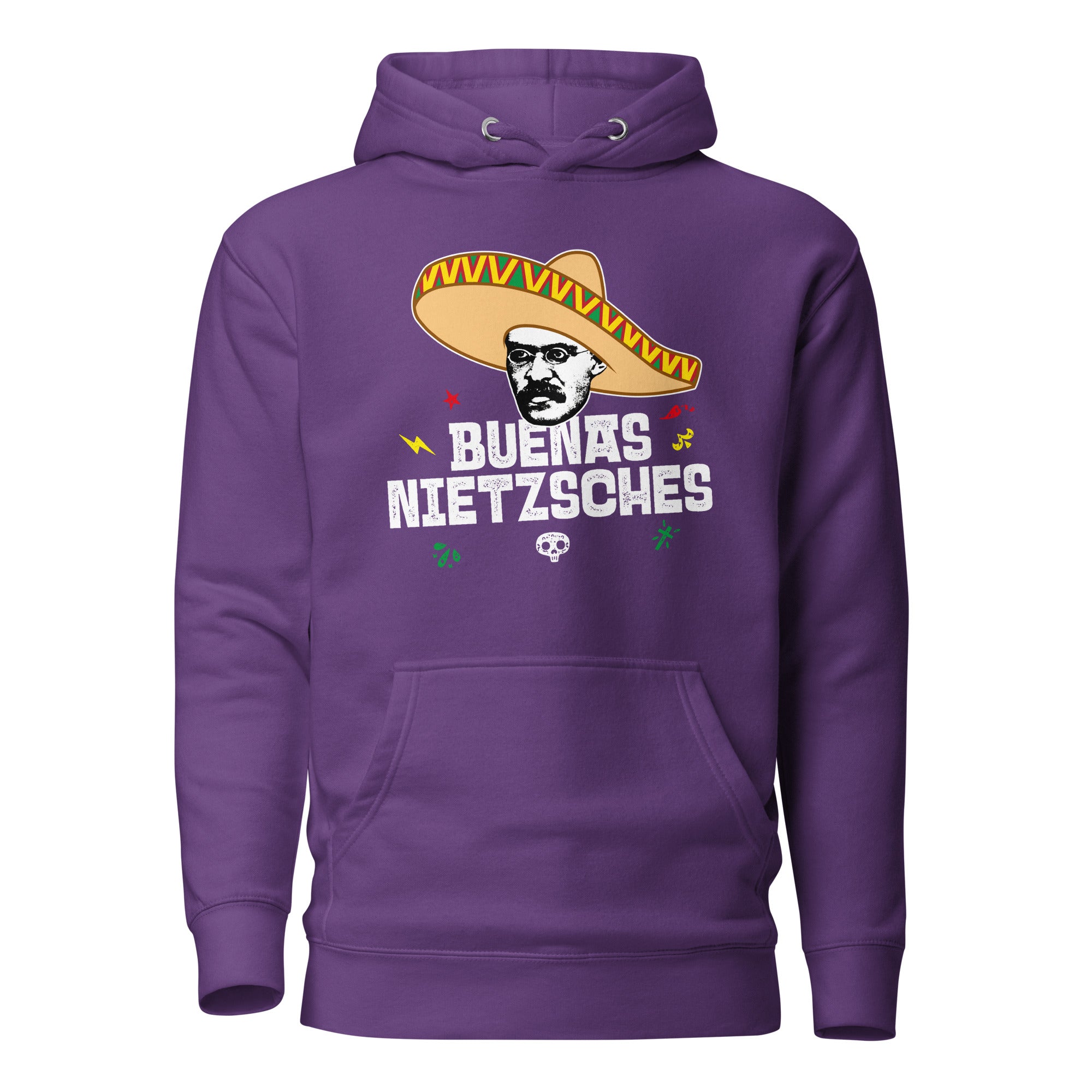
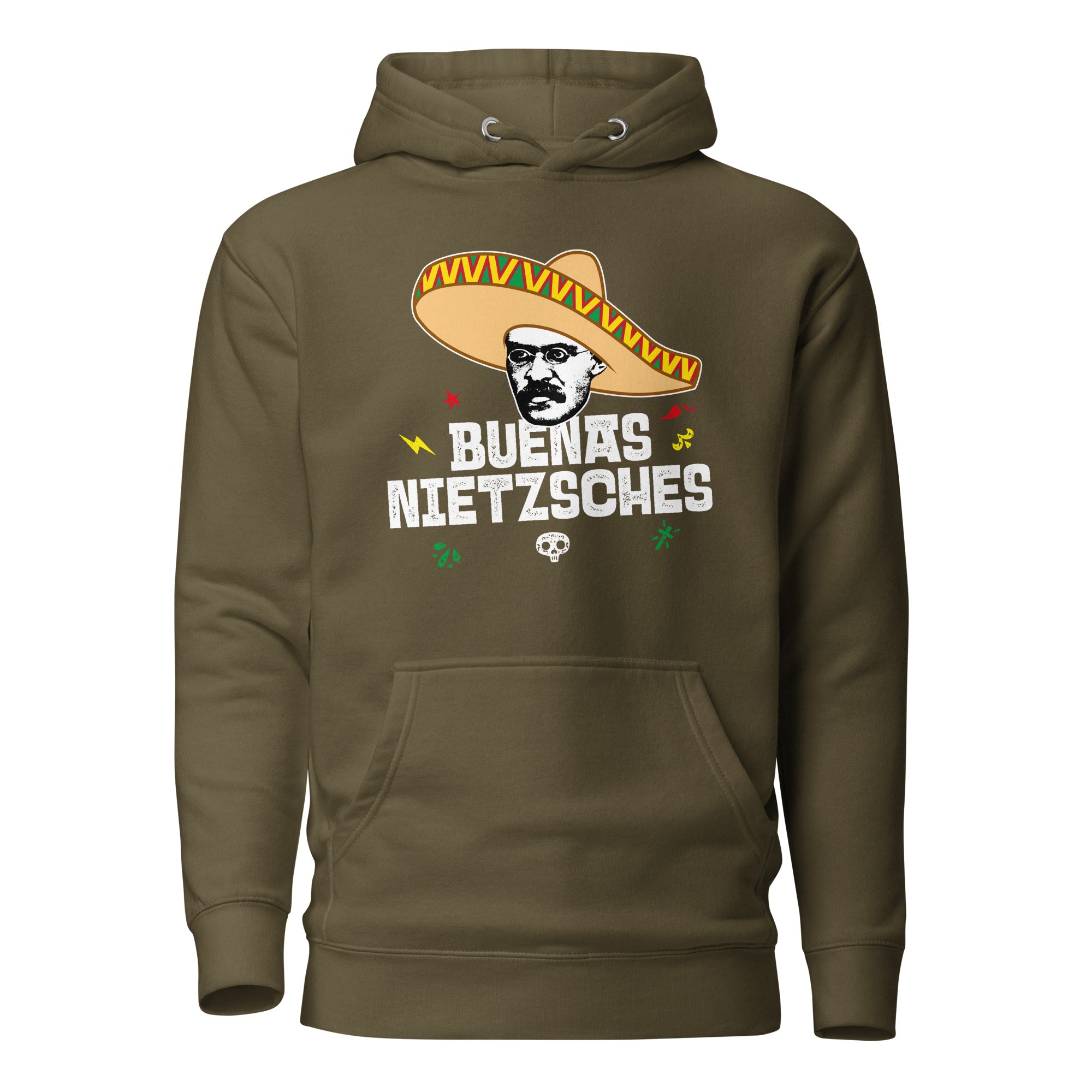
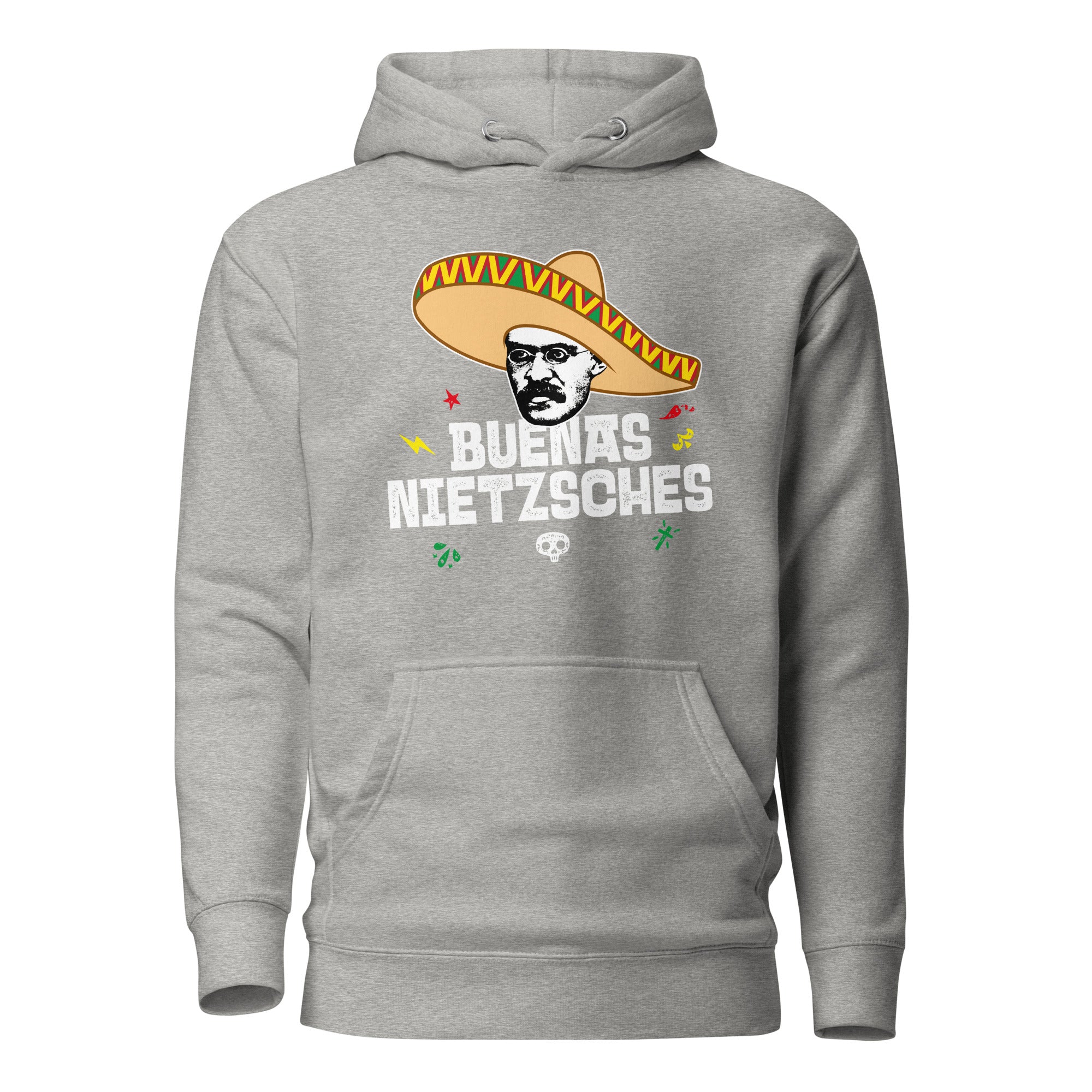
Friedrich Nietzsche, recognisable by his famously enormous moustache, wearing a colourful sombrero, surrounded by little chillies and stars and the bold lettering Buenas Nietzsches. It turns the most serious philosopher of the nineteenth century into a cheerful good-night greeting.
What does Buenas Nietzsches mean?
It is a pun on the Spanish greeting buenas noches – good evening or good night. Said quickly, Nietzsche sounds close enough to noches to make the joke work, so the phrase becomes a philosopher's way of wishing someone a good night, perhaps after one too many pages of Zarathustra.
How do you pronounce Nietzsche?
In German it is roughly NEE-cheh – a long ee, then the tzsch cluster sounds like the ch in church, followed by a short, soft e. The z and s are not pronounced separately. A common mistake is NEE-chee with a long final ee, or sounding out the z.
Who was Friedrich Nietzsche?
A German philosopher (1844–1900), born in Röcken in Saxony. At 24 he became professor of classical philology at Basel, left in 1879 because of ill health and wrote his major works as a wandering author. He collapsed in Turin in January 1889 and died in Weimar in 1900. Key ideas – the death of God, will to power, eternal recurrence, the Übermensch, perspectivism.
What did Nietzsche mean by God is dead?
The line appears in The Gay Science (1882), most famously in the parable of the madman (section 125), and again in Thus Spoke Zarathustra. It is not a triumphant atheist slogan but a diagnosis – belief in the Christian God had lost its cultural authority, and the morality built on it would lose its foundation too, opening the door to nihilism unless new values were created.
What is Nietzsche's Übermensch?
The Übermensch – overman or superman – is introduced in Thus Spoke Zarathustra (1883–1885) as a goal for humanity after the death of God – a person who creates their own values and affirms life instead of looking to the beyond. It is not a racial or biological idea; its later Nazi misuse was helped by his sister Elisabeth Förster-Nietzsche, who controlled and edited his literary estate.
What is Nietzsche's master and slave morality?
In Beyond Good and Evil (1886, section 260) and the first essay of On the Genealogy of Morality (1887), Nietzsche contrasts two value systems. Master morality calls good what is noble, strong and self-affirming, and bad what is lowly. Slave morality, born of ressentiment, calls the powerful evil and recasts humility, pity and meekness as good.
Which Nietzsche book should I read first?
Many scholars suggest Beyond Good and Evil (1886) or On the Genealogy of Morality (1887), which argue most directly; Twilight of the Idols (1888) is a short, punchy overview. Thus Spoke Zarathustra is his most famous book, but its poetic, prophetic style makes it a harder place to start.
Did Nietzsche say what doesn't kill me makes me stronger?
Yes. It is in Twilight of the Idols (1888), in the section Maxims and Arrows, number 8 – From life's school of war – what does not kill me makes me stronger. Nietzsche wrote it in the first person, about himself, not as a general promise that every hardship is good for you.
Who is the Buenas Nietzsches design a good gift for?
For Nietzsche readers with a soft spot for puns, philosophy students, Spanish learners and anyone who likes to end the day with a little existential cheer. The design is available as a sweatshirt, premium hoodie, classic t-shirt, women's t-shirt, mug and sticker.