Pas de frais de douane : nous expédions depuis ta région. Livraison offerte dès 70 € / $80 / £60
Rechercher sur notre site

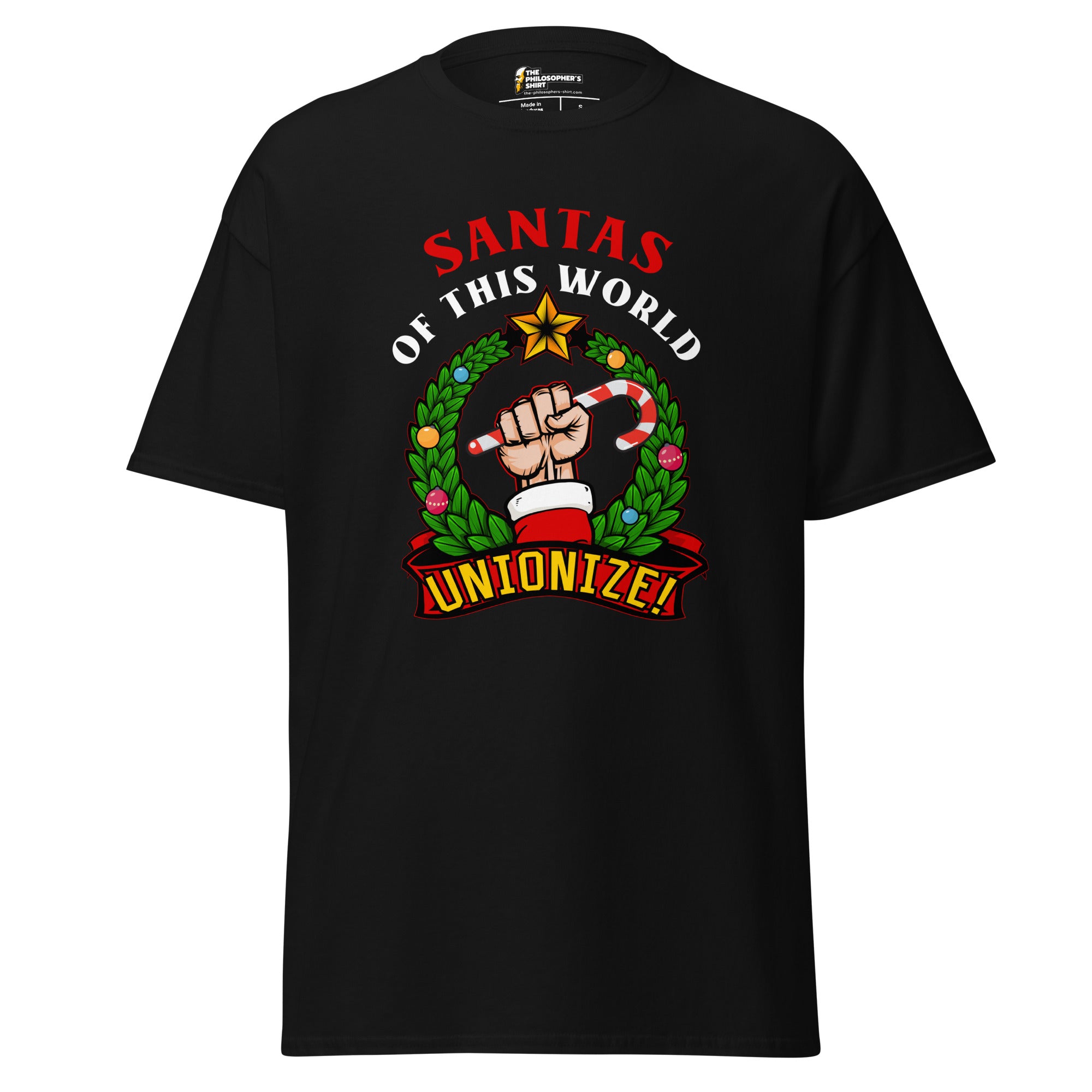
Santas of this world, Unionize!

One night, a billion deliveries, unpaid overtime and no rest breaks. If any workforce ever had grounds for collective action, it is this one.

A favorite among organizers, posties and anyone who has worked a December shift. The whole range: tees, sweatshirts, hoodies and mugs, printed to order as you buy them. Santas of this world, you have nothing to lose but your sleigh.
Questions about this design

What does Santas of this world, Unionize! mean?
It imagines Santa Claus as the most overworked employee on earth – one night, billions of deliveries, no breaks and no overtime pay – and hands him the closing call of the Communist Manifesto. If any workforce had grounds for collective action, it is this one. It is a warm-hearted joke about labour, solidarity and Christmas stress.
What does the Santas of this world, Unionize! design show?
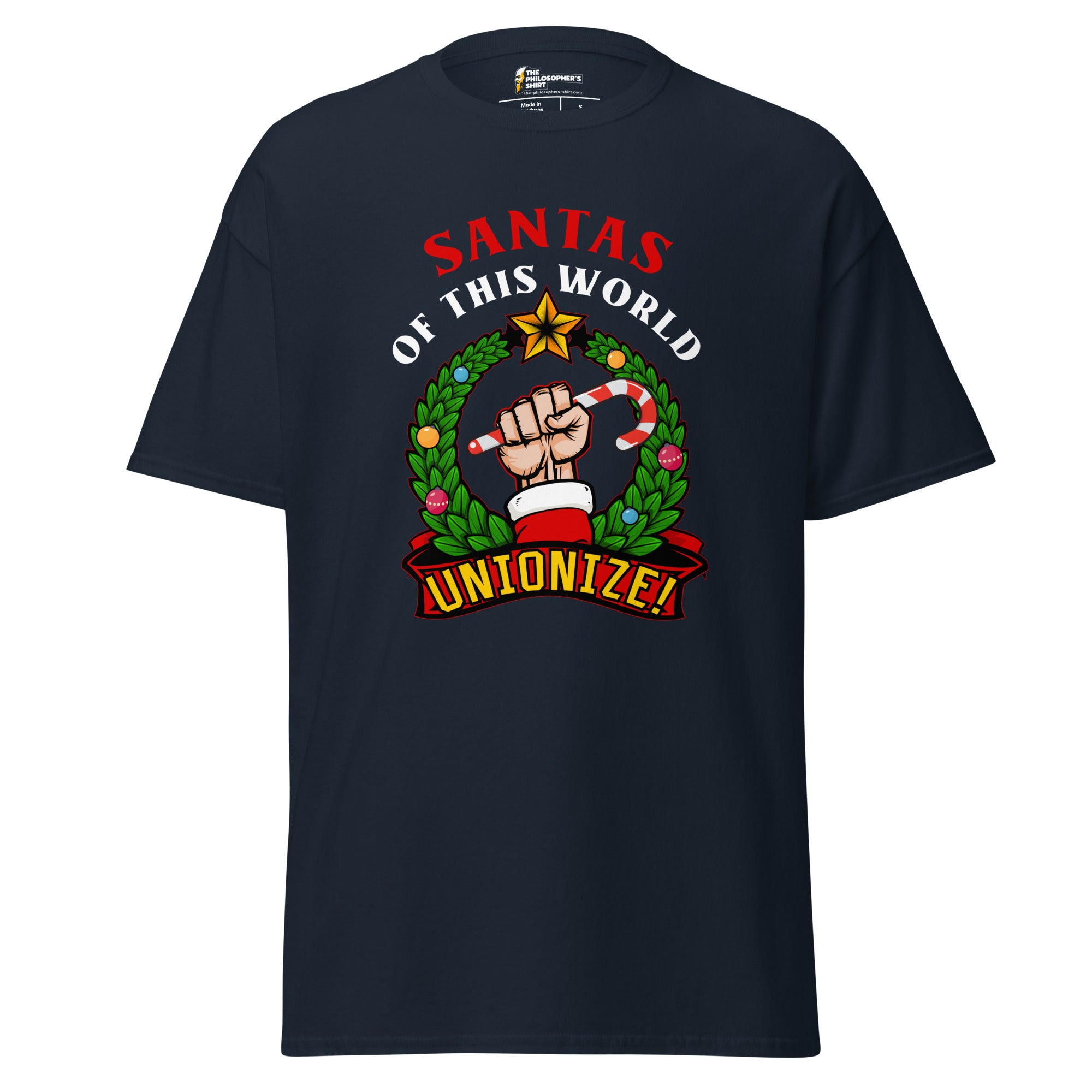
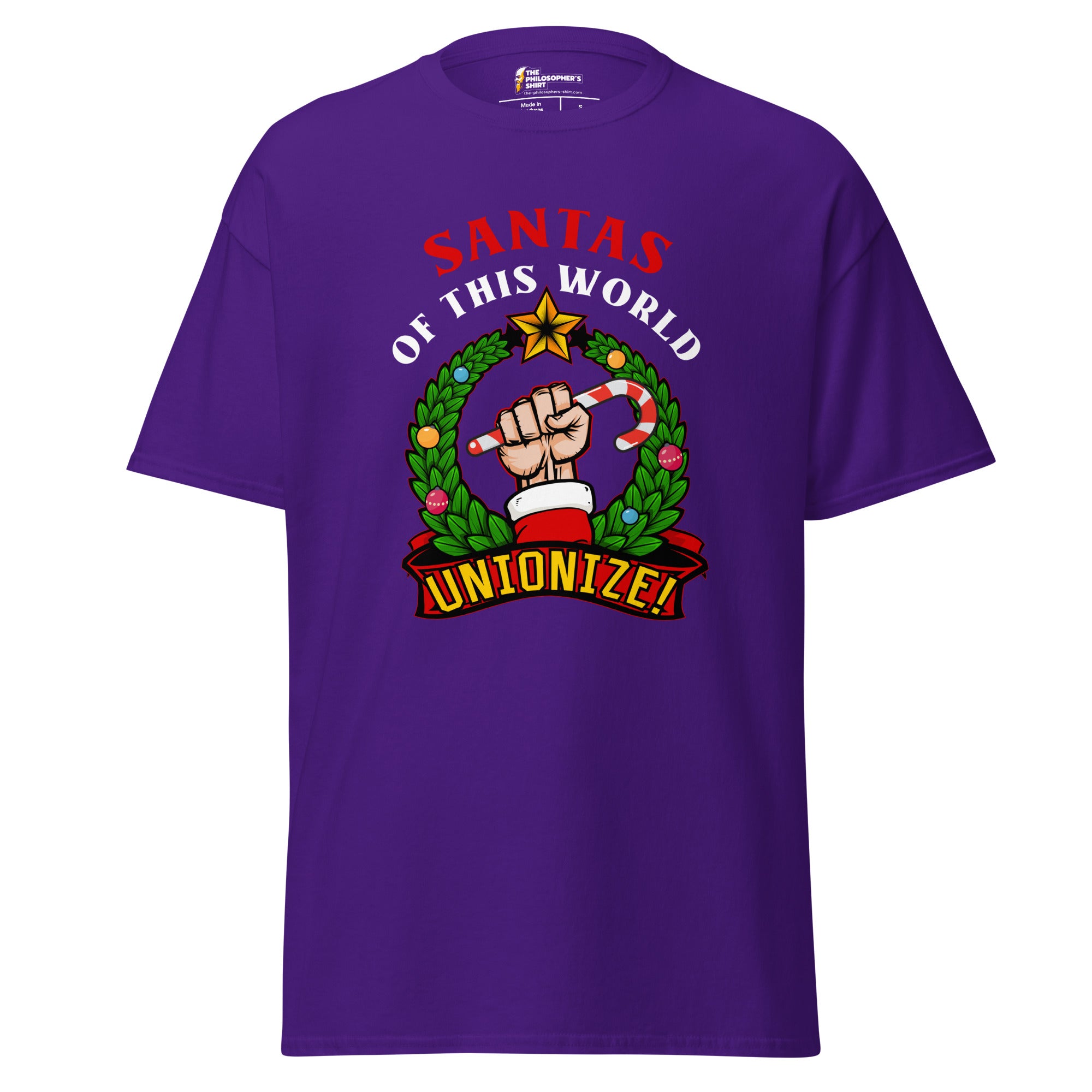
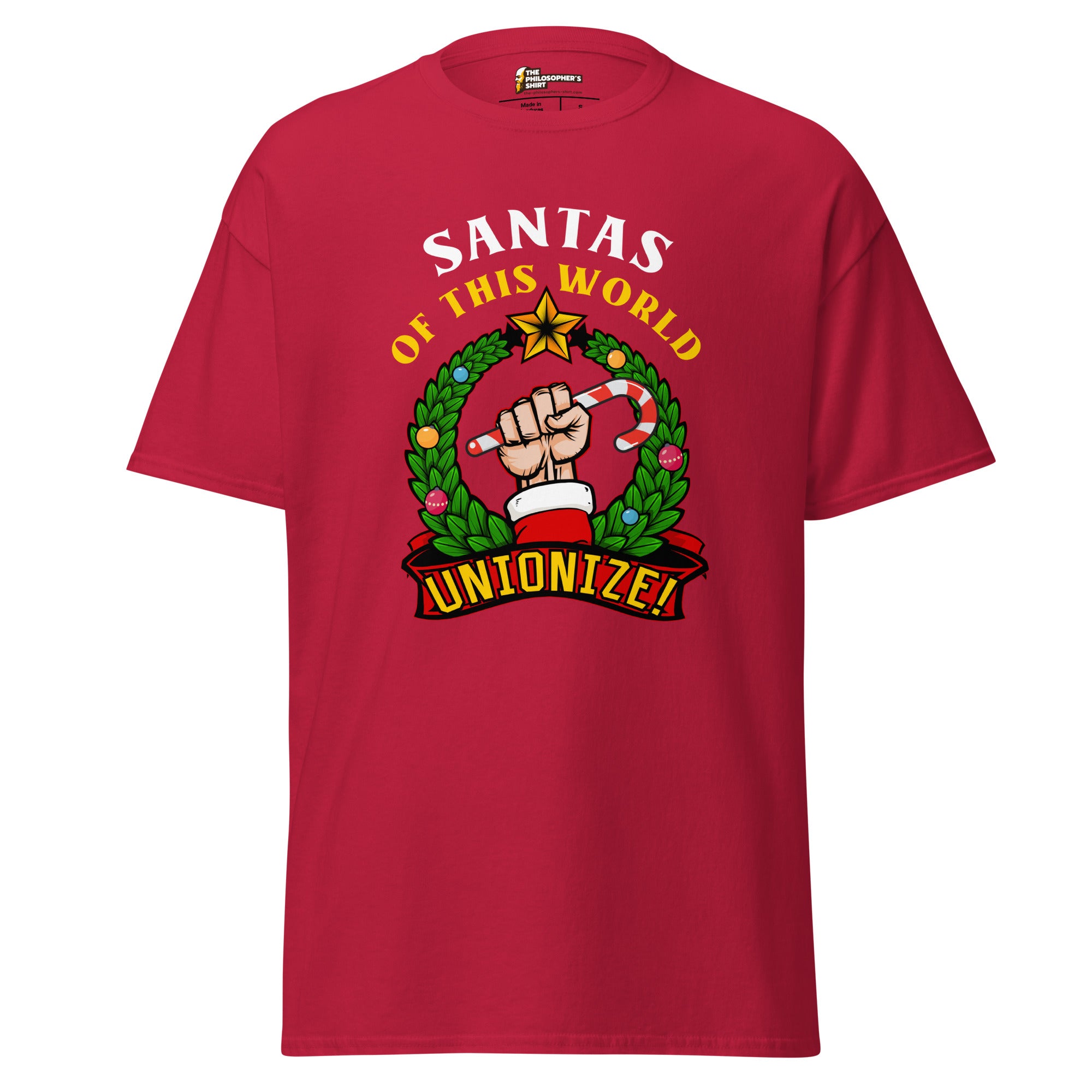
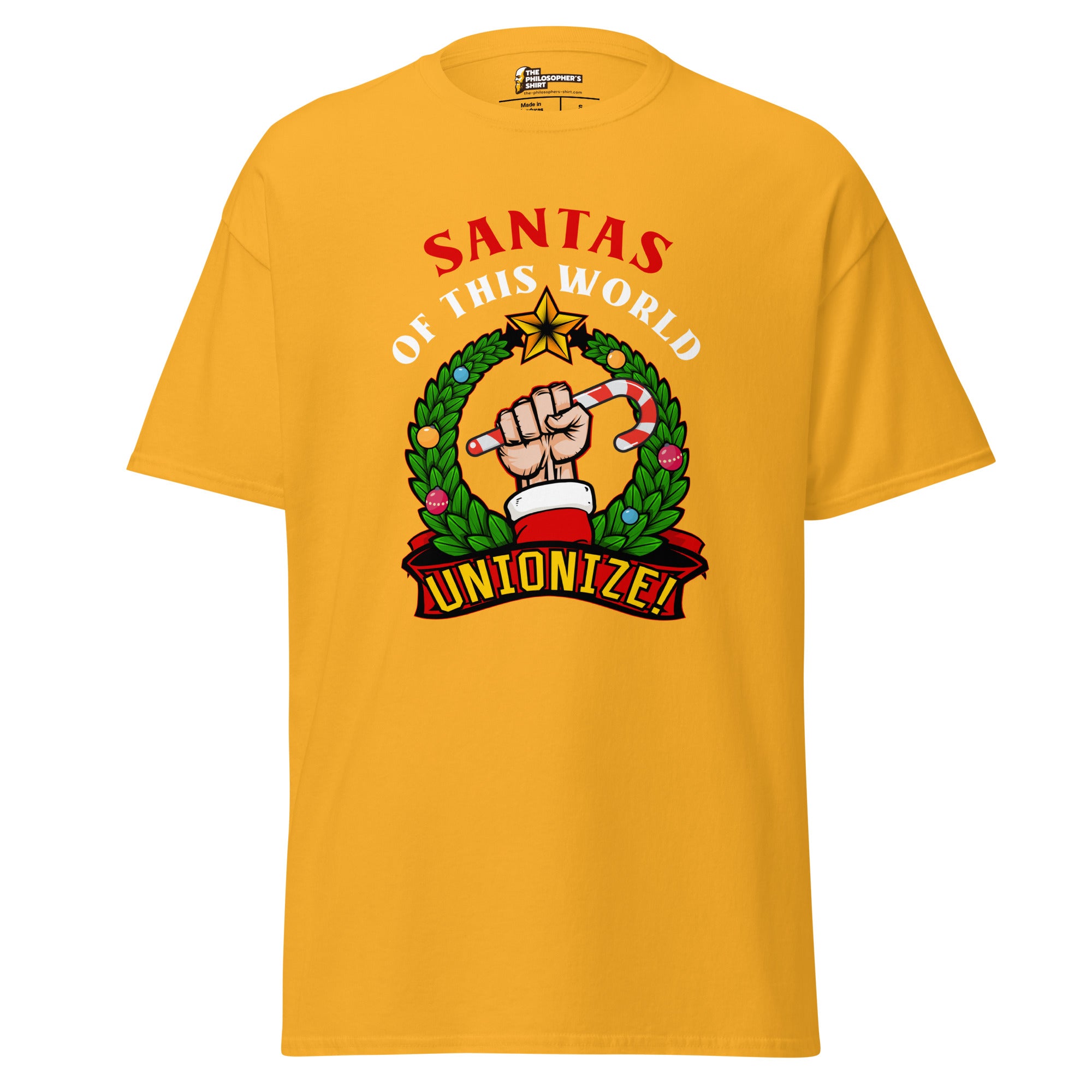
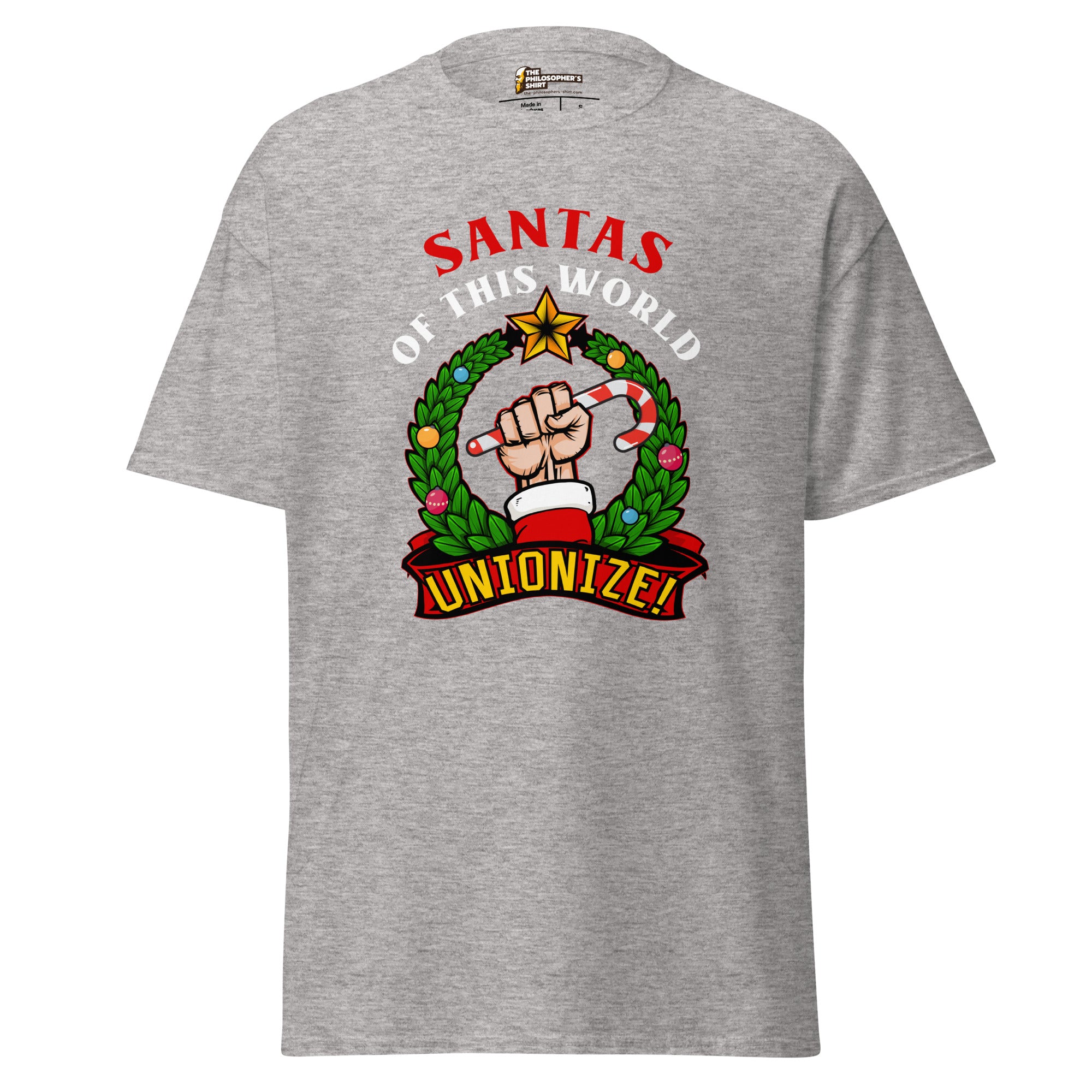
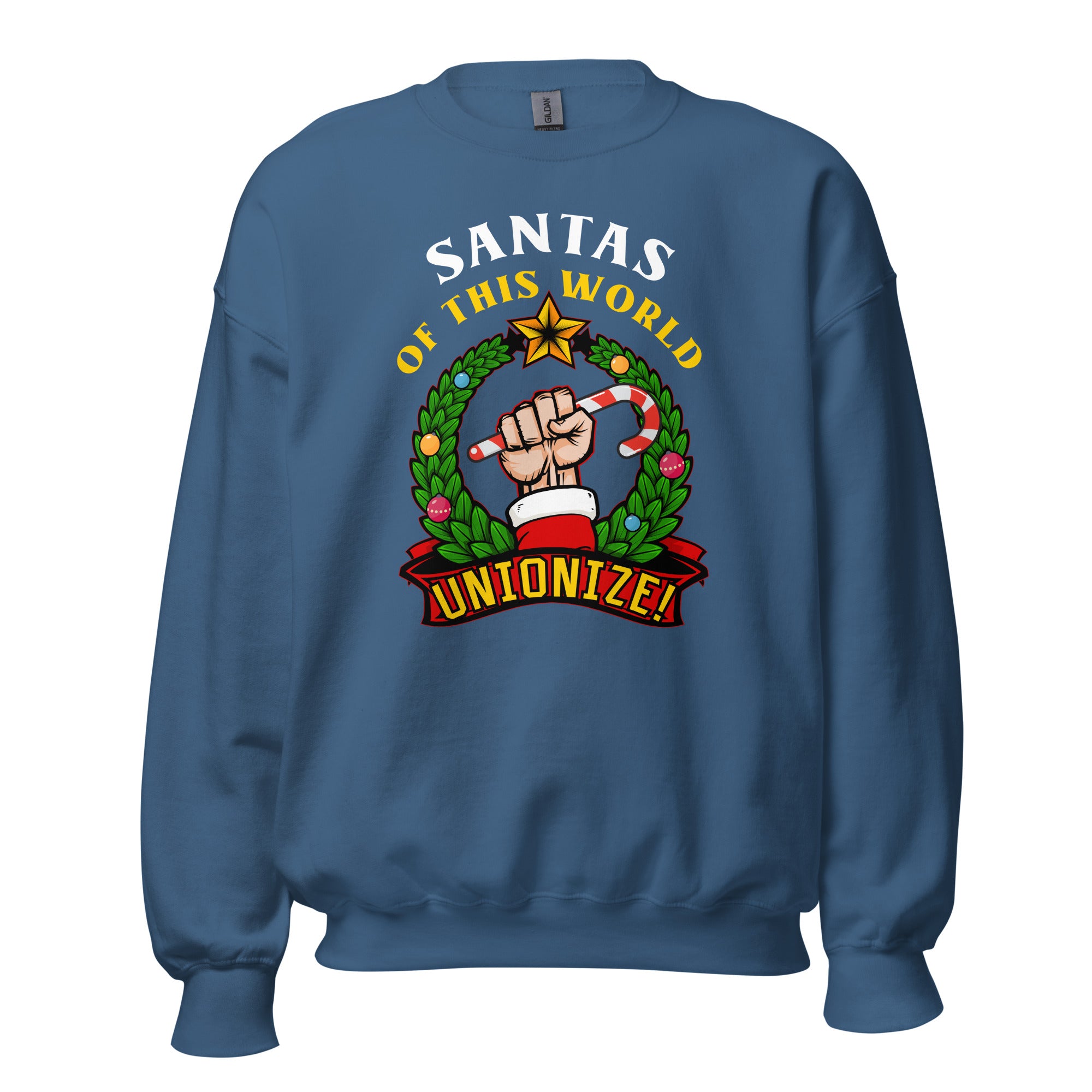
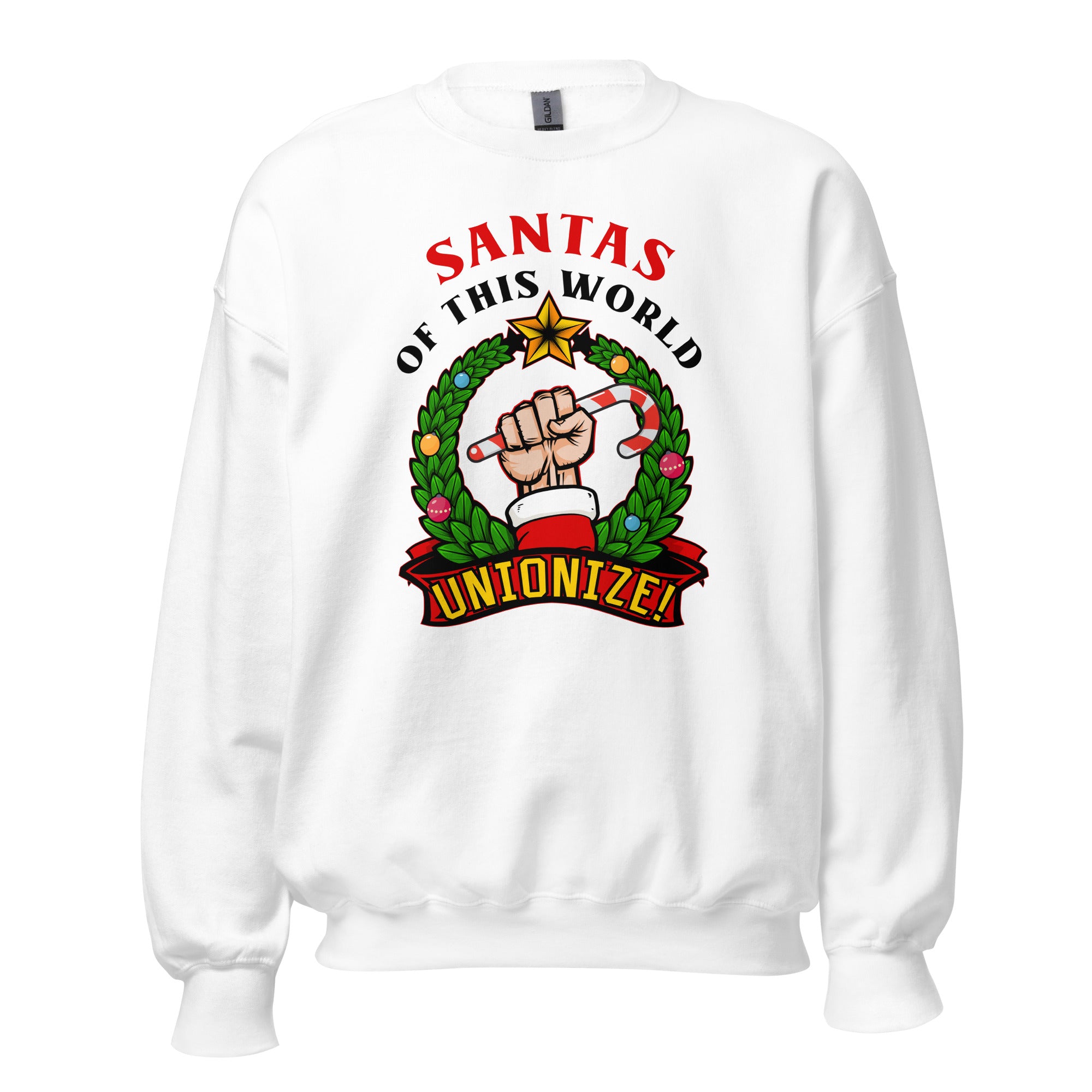
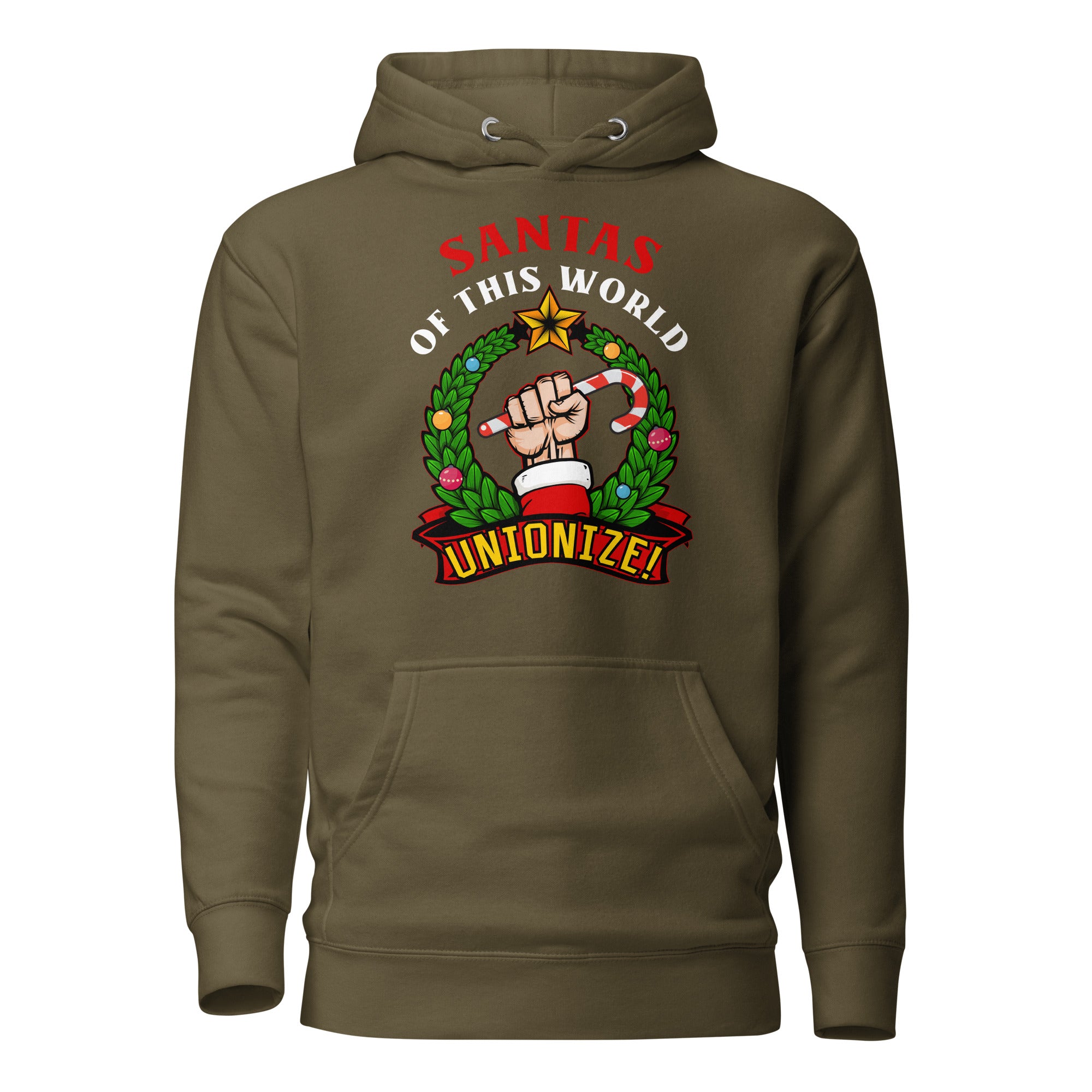
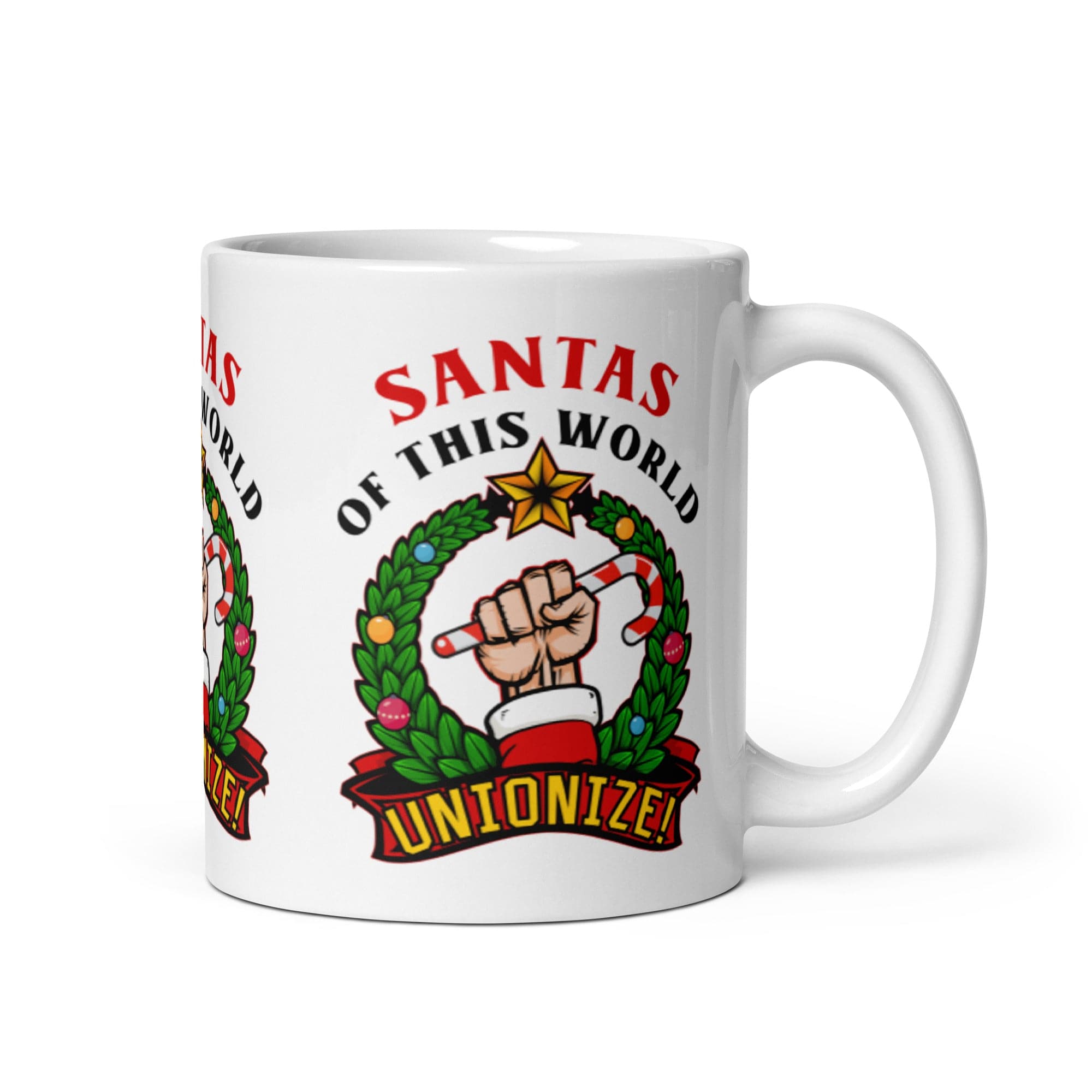
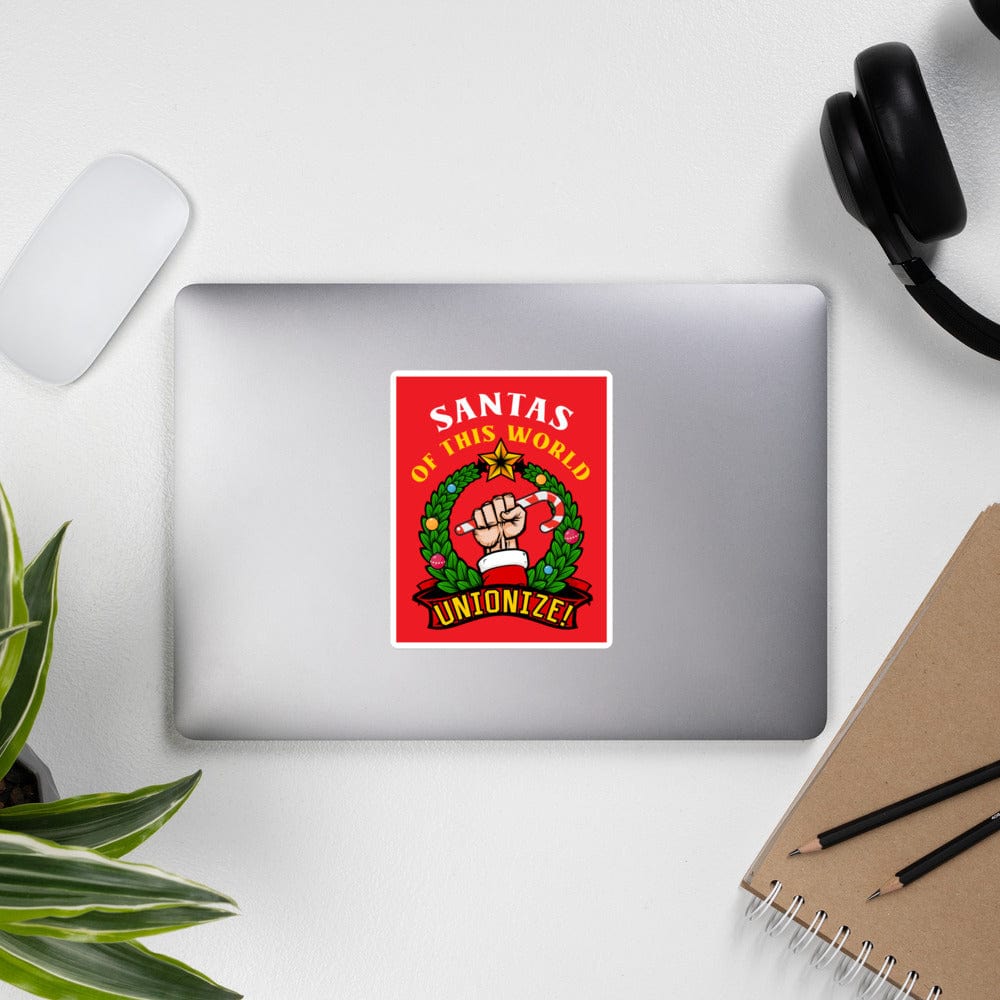
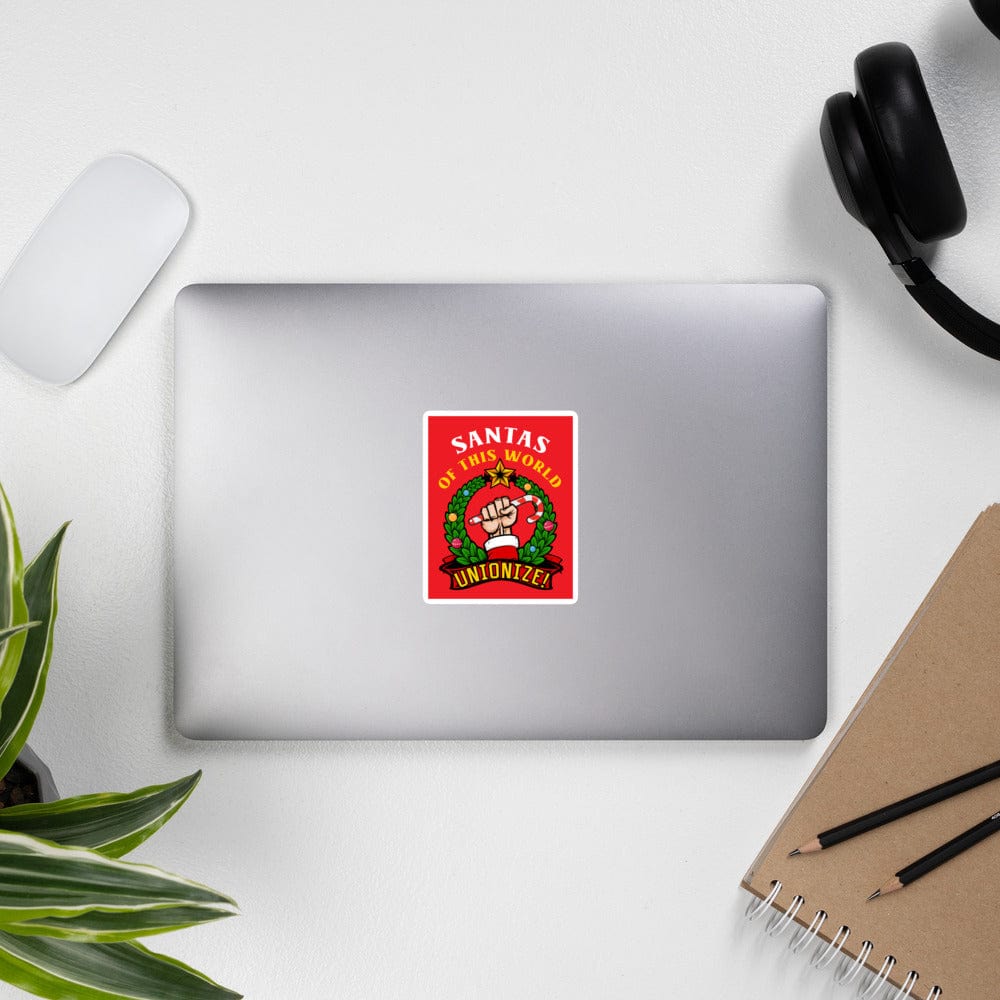
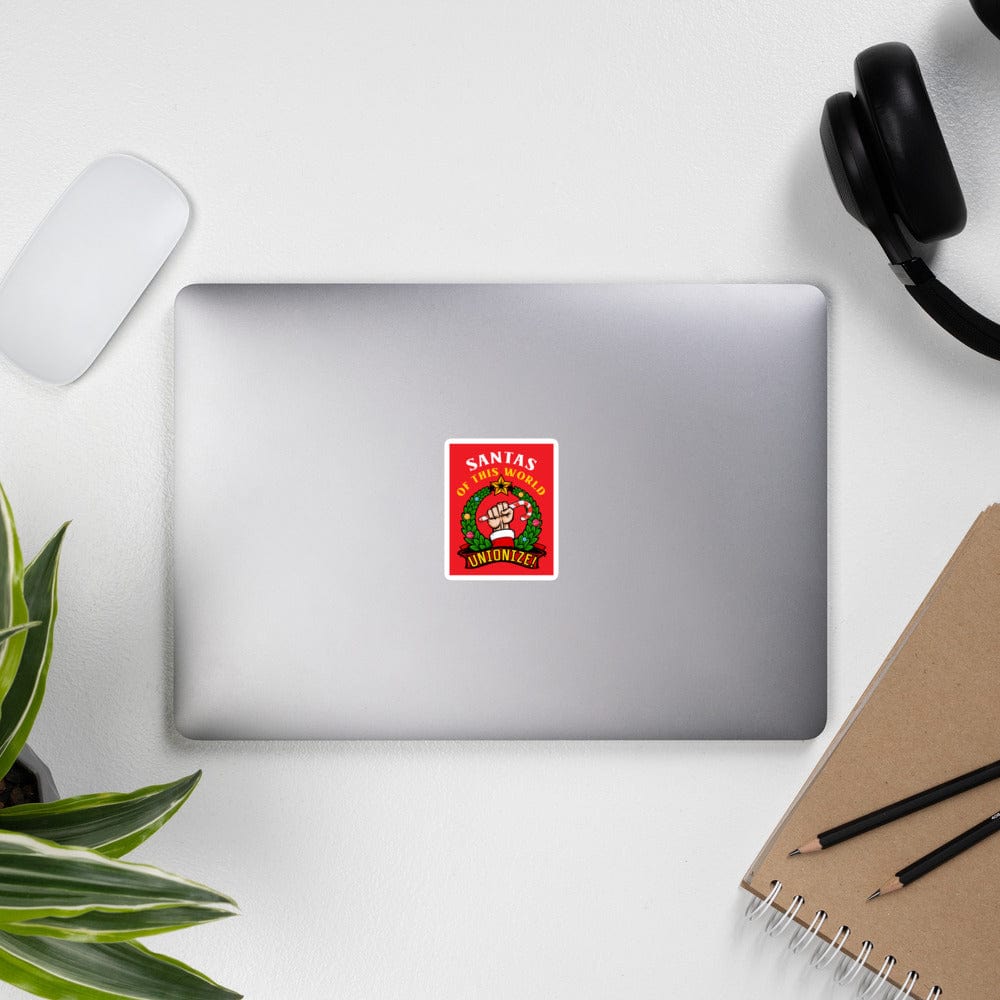
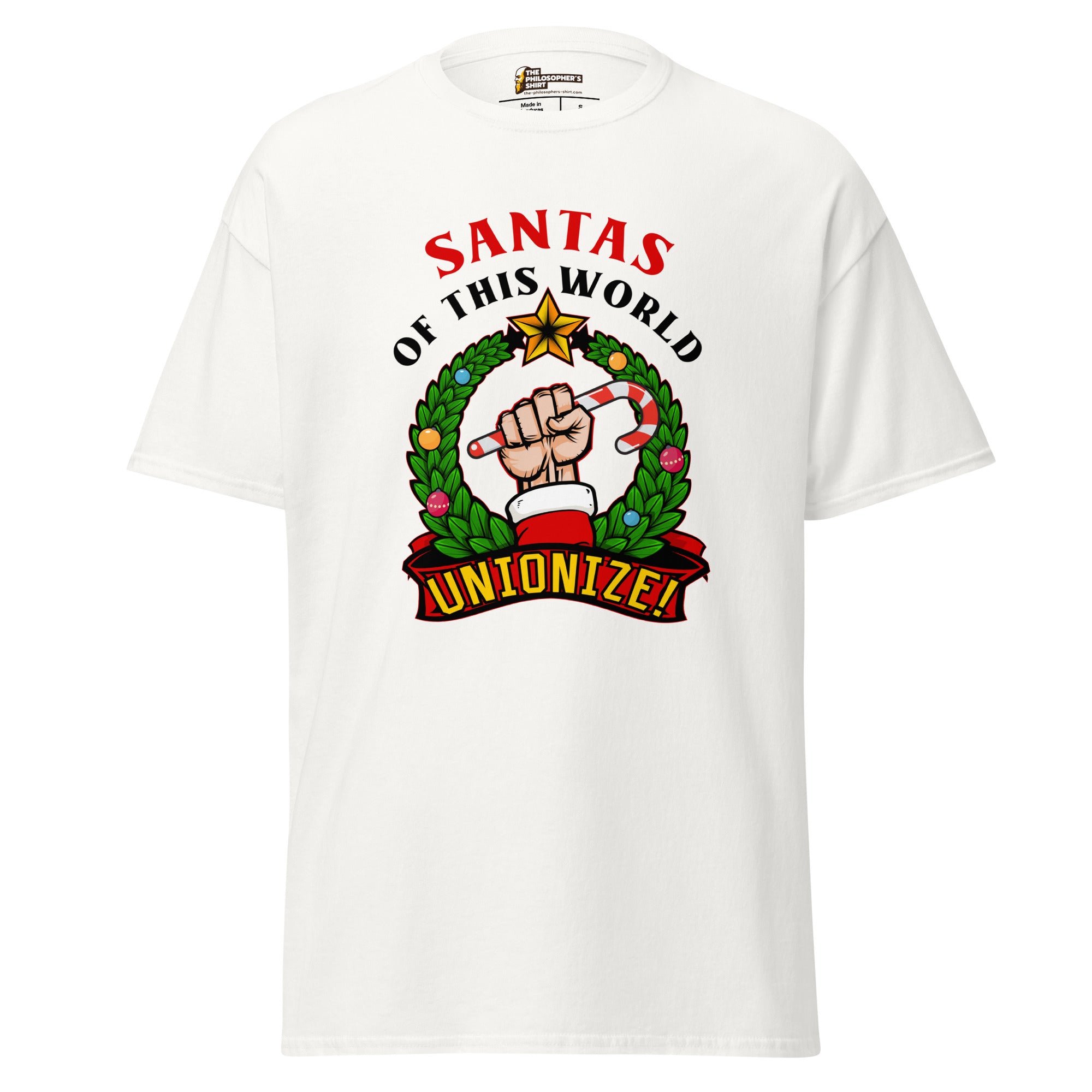
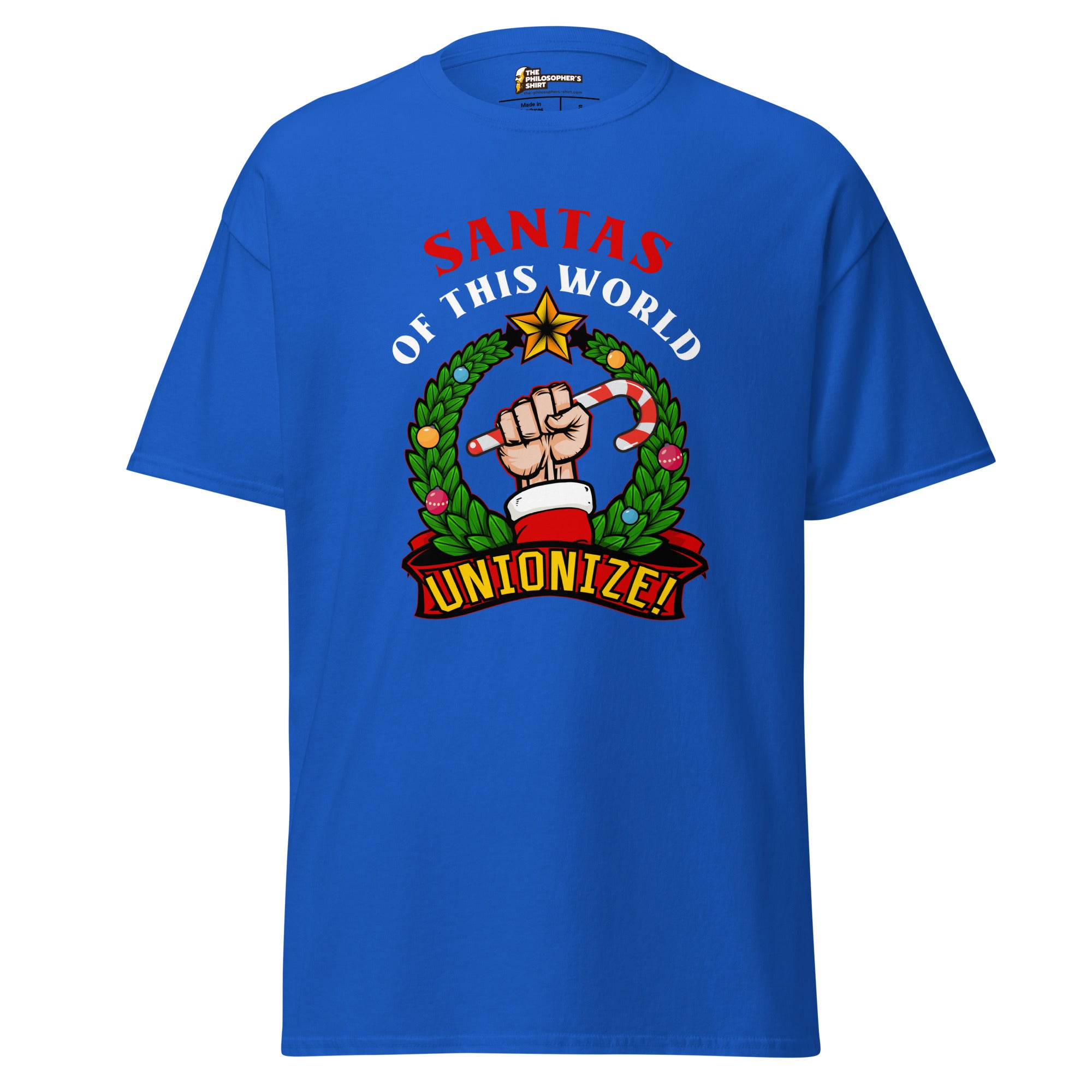
A raised fist in a red, fur-trimmed Santa sleeve grips a candy cane like a banner pole, framed by a laurel wreath hung with Christmas baubles and topped by a gold star. Around it runs the slogan Santas of this world, Unionize! in festive red, white and gold lettering.
Where does Workers of the world, unite come from?
From the last line of the Communist Manifesto by Karl Marx and Friedrich Engels, published in London in February 1848. The German original reads Proletarier aller Länder, vereinigt euch. The authorised English translation of 1888 by Samuel Moore renders it Working men of all countries, unite; Workers of the world, unite is the later popular version.
What does nothing to lose but their chains mean?
It comes from the Manifesto’s final paragraph – the proletarians have nothing to lose but their chains; they have a world to win. Marx and Engels argued that people who own nothing but their labour risk little by organising and gain everything if they succeed. It is the line our product text winks at with nothing to lose but your sleigh.
What did Marx think about trade unions?
He saw them as vital centres of resistance against capital. In Value, Price and Profit, a talk given to the International Workingmen’s Association in 1865, he praised their daily struggle over wages and hours but warned they fail if they only fight effects; instead of a fair day’s wage for a fair day’s work, he said, they should demand the abolition of the wages system.
What does the raised fist symbol mean?
Solidarity, unity and resistance. A clenched fist raised in the air has been used by labour movements since the early 20th century, became a salute of anti-fascists in the 1920s and 1930s, and was later taken up by the civil rights, Black Power and feminist movements. On this design Santa raises it on behalf of everyone who works through December.
Who was the real Saint Nicholas behind Santa Claus?
Nicholas of Myra, a Christian bishop in Lycia, in today’s Turkey, who lived in the 4th century. Legends credit him with secretly giving gold to save three poor girls from destitution, which made him the patron of gift-giving; his feast day is 6 December. Dutch Sinterklaas traditions and 19th-century American poems and illustrations turned him into today’s Santa Claus.
Is this a good ugly Christmas sweater for socialists and Marx fans?
Yes. The sweatshirt reads as festive from across the room, and the joke works for union members, leftists and anyone who has worked the Christmas rush. For a group look, combine it with our other Marx Christmas designs – Merry Christmarx, Marx – This Is Not Santa, I’m Dreaming of a Red Christmas and All I want for Christmas is the means of production.
Who is Santas of this world, Unionize! a good gift for?
Union members, shop stewards, postal and retail workers, nurses on holiday shifts, sociology and politics students and anyone who quotes Marx at the Christmas table. It is available as a unisex T-shirt, sweatshirt, premium hoodie, mug and sticker, which also makes it an easy Secret Santa choice.