Niente dazi: spediamo dalla tua regione. Spedizione gratuita da 70 € / $80 / £60
Cerca nel nostro sito

Epicurus Gardening Club

Epicurus really did teach from a garden, and really did think friendship and plain food beat luxury. History then turned his name into a menu adjective.

Works as literally as it does philosophically, which is rare. The whole range here, from apparel through to accessories, all printed to order. A Greek philosophy gift for gardeners. Grow something. Eat simply. Fear death less.

Questions about this design

What does the Epicurus Gardening Club design show?
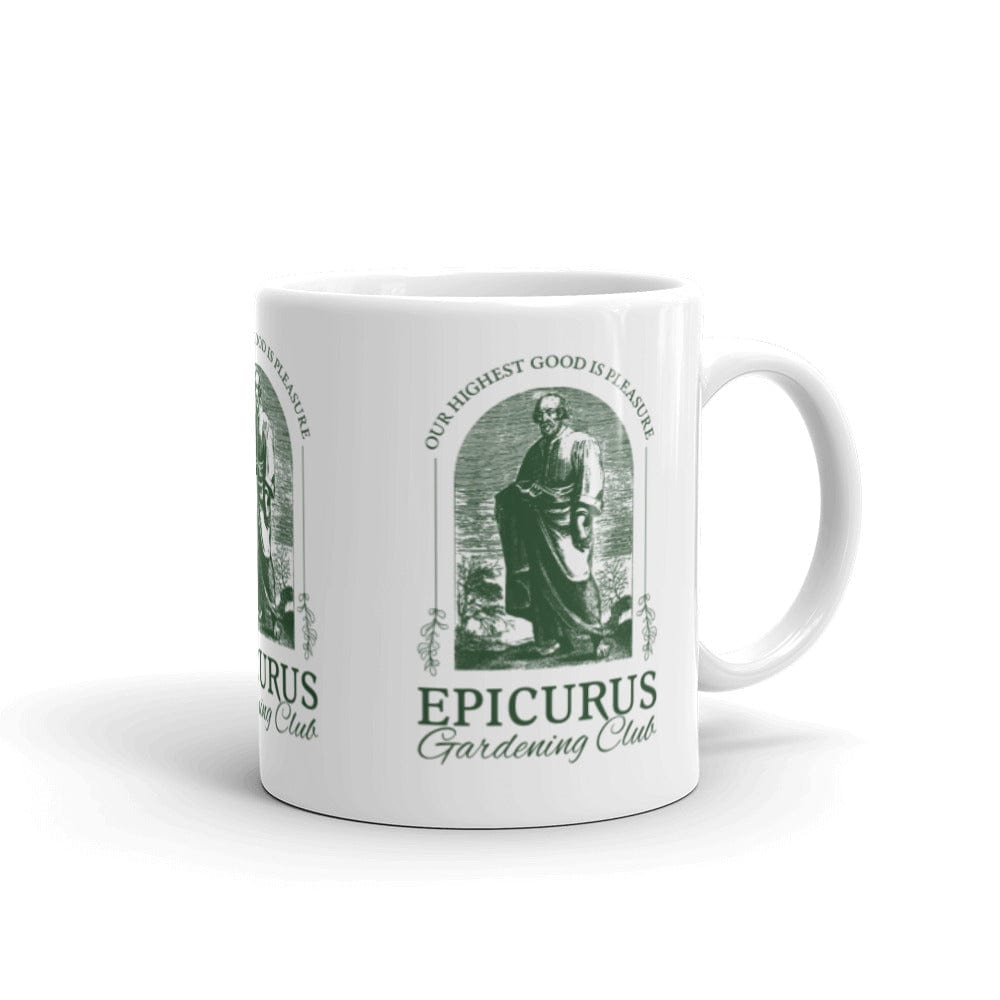
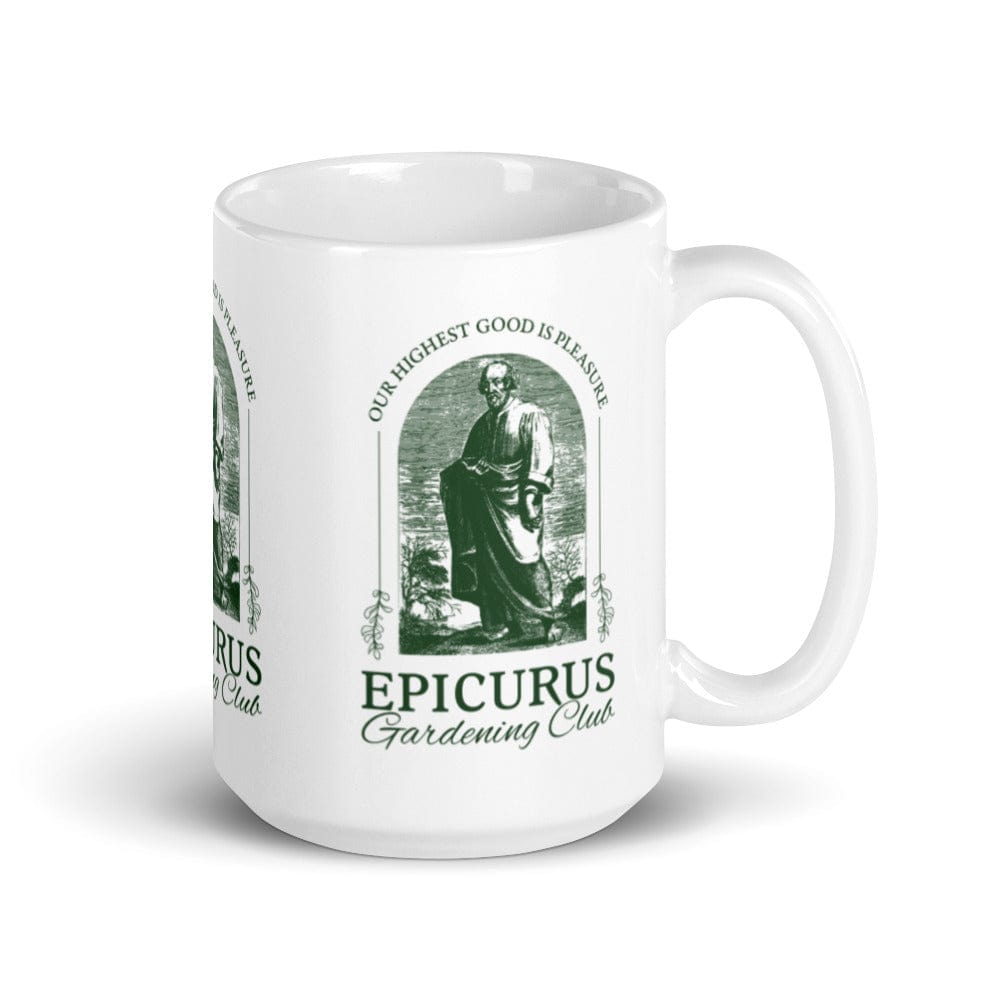
An engraved-style figure of Epicurus in an arch, framed by the words Our highest good is pleasure and the name Epicurus Gardening Club. It is a club badge for the philosopher who taught in a garden – and a quiet correction of his reputation, since his idea of pleasure was friendship, simple food and peace of mind rather than luxury.
Where does the motto Our highest good is pleasure come from?
According to Seneca, in Letter 21 of his Letters to Lucilius, the gate of Epicurus’ garden bore an inscription inviting the stranger to stay, because here the highest good is pleasure. Seneca, a Stoic, adds that the host would serve barley porridge and water – pleasure in the Epicurean sense meant satisfying natural needs, not feasting.
What was the Garden of Epicurus?
The school Epicurus founded around 306 BC on a property just outside the city walls of Athens, which is why his followers were called those from the Garden. Unusually for its time, it welcomed women such as Leontion and Themista. Members lived simply and valued friendship above almost everything; the school lasted for centuries.
Was Epicurus a hedonist?
Yes, but not in the modern sense. For Epicurus pleasure is the goal of life, yet the highest pleasure is the absence of pain in the body (aponia) and of trouble in the mind (ataraxia). In the Letter to Menoeceus he rejects drinking bouts and luxury in favour of sober reasoning. That the word epicurean now means fond of fine food is one of history’s ironies.
What did Epicurus say about death?
Death is nothing to us – the second of his Principal Doctrines and a theme of the Letter to Menoeceus. His reasoning is that good and bad exist only in sensation, and death is the end of sensation; so while we exist death is not present, and when death is present we no longer exist. Fear of death, he argued, is the main obstacle to a calm life.
What is the tetrapharmakos?
The four-part cure, a summary of Epicurean ethics preserved by the later Epicurean Philodemus – do not fear god, do not worry about death, what is good is easy to get, what is terrible is easy to endure. It condenses the first four Principal Doctrines of Epicurus into a formula that could be memorised and repeated in moments of anxiety.
Did Epicurus come up with the problem of evil?
Probably not. The famous trilemma – if God is willing but unable to prevent evil he is not omnipotent, if able but unwilling he is not good – is attributed to Epicurus only by the Christian writer Lactantius in On the Wrath of God, and appears in no surviving text by Epicurus. David Hume revived the attribution in his Dialogues Concerning Natural Religion (1779).
What should I read by Epicurus first?
Start with the Letter to Menoeceus, a short summary of his ethics, then the Principal Doctrines and the Vatican Sayings. Most of what survives was preserved by Diogenes Laertius in Book 10 of his Lives of the Eminent Philosophers. For his physics and worldview, the Roman poet Lucretius’ On the Nature of Things is the richest source.
Is this a good gift for gardeners and philosophy lovers?
Yes. It works for people who love their garden, for philosophy and classics students and for anyone whose idea of a good life is friends, a simple meal and no stress. Non-philosophers read it as a gardening club, those in the know as a declaration of Epicurean principles.
Which products are available with this design?
Epicurus Gardening Club comes as a unisex classic T-shirt, a women’s T-shirt, a sweatshirt, a premium hoodie, a mug and a sticker – the mug being well suited to the Epicurean ideal of simple pleasures.