Niente dazi: spediamo dalla tua regione. Spedizione gratuita da 70 € / $80 / £60
Cerca nel nostro sito

Sartre - Absolute Freedom Seagull

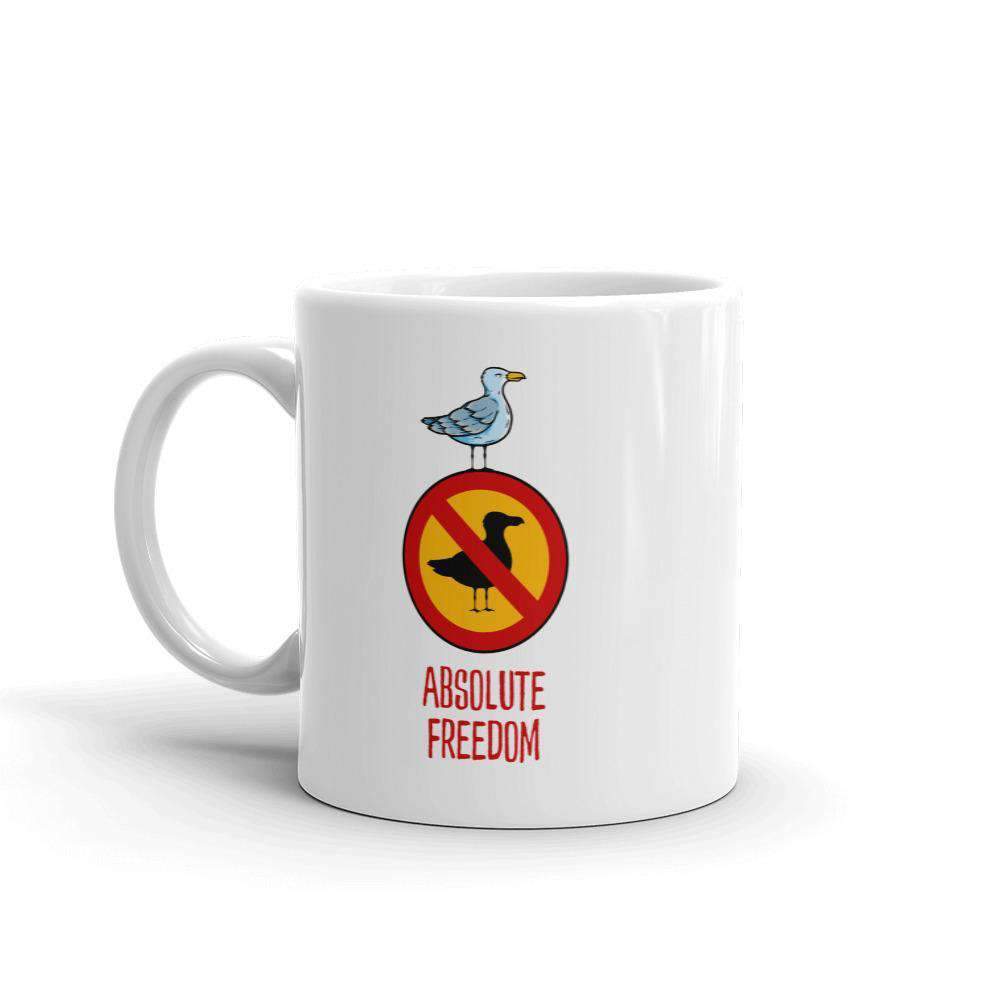
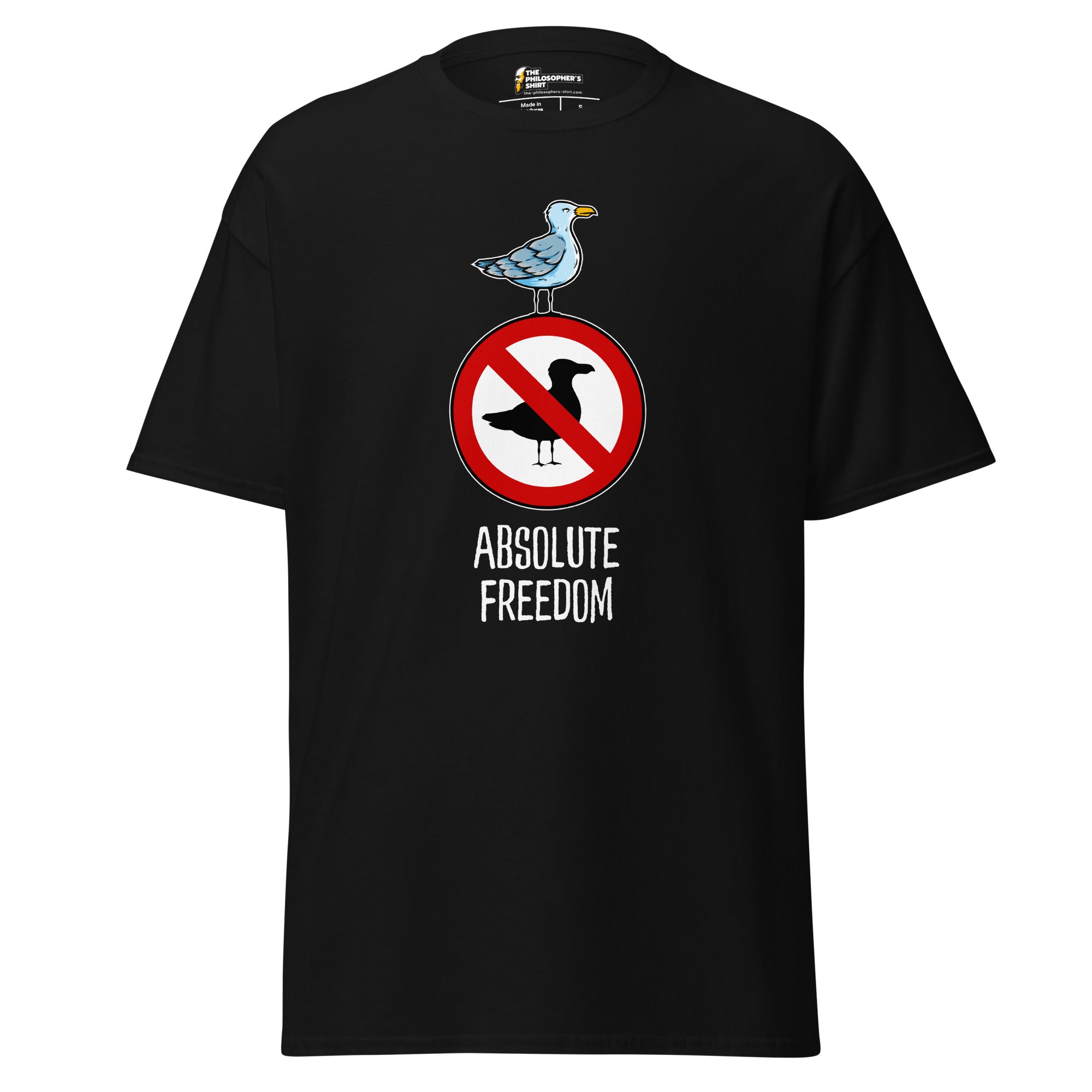
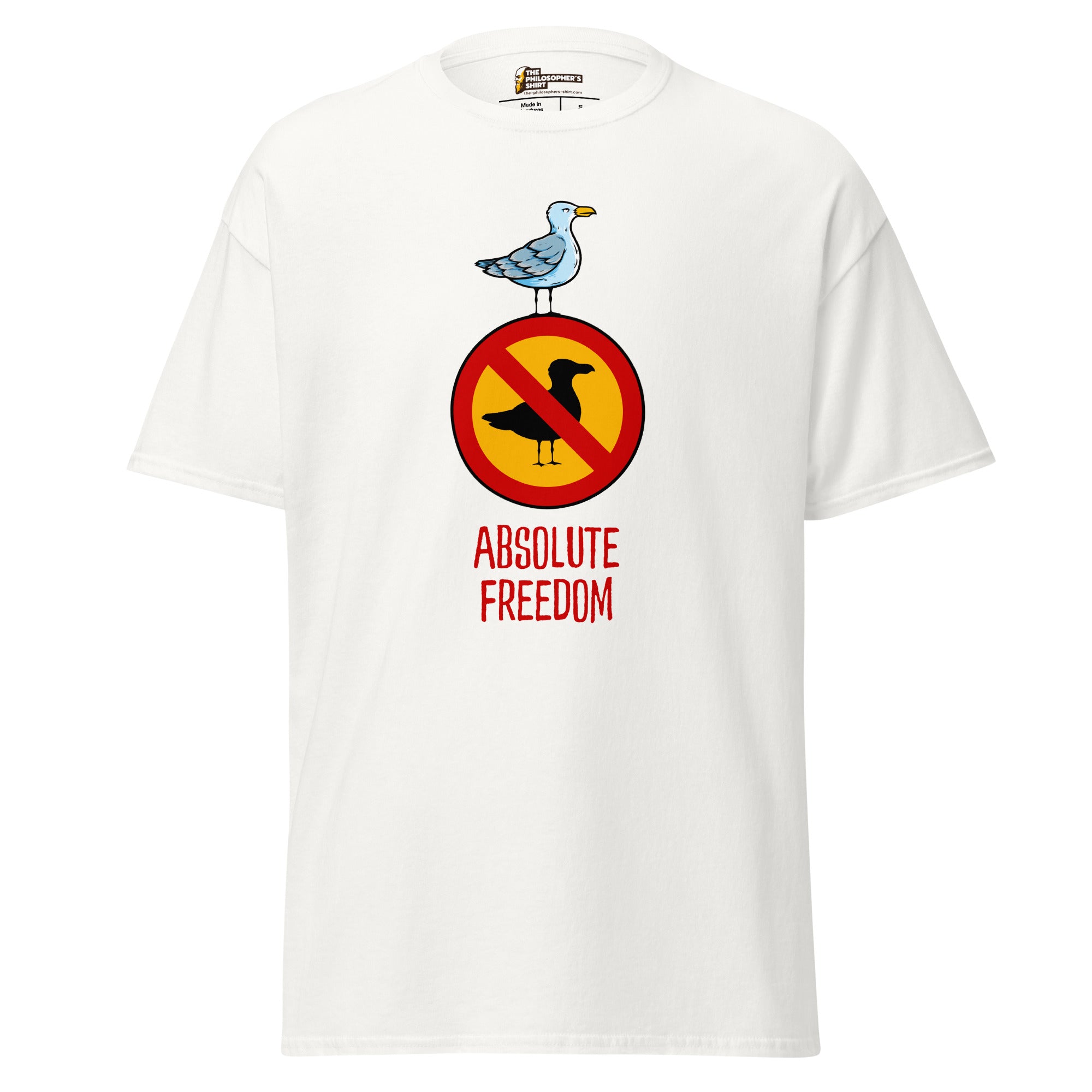
Sartre said we are condemned to be free — no excuses, no blueprint, no one to blame. The seagull has no such problem and rubs it in daily.

Makes radical freedom look almost cheerful, which is the joke. The full range, in every format we make it in, all printed to order as you buy it. An existentialist gift for Sartre readers. No essence, no instructions, no way out but choosing.
Questions about this design

What does the Sartre Absolute Freedom Seagull design show?
A seagull standing calmly on top of a round no-seagulls sign, above the words Absolute Freedom. The bird ignores the rule printed beneath its feet – a cheerful picture of Sartre's claim that no sign, law or custom can take the choice away from us. We are always free to obey or to stand on the sign.
What is absolute freedom in philosophy?
For Jean-Paul Sartre, human freedom is total – we are always choosing, and even not choosing is a choice for which we are responsible. Our situation limits what we can do, but not that we must decide how to meet it. Hegel used the phrase differently, in the chapter Absolute Freedom and Terror of the Phenomenology of Spirit (1807), as a warning about the French Revolution.
What does Sartre mean by man is condemned to be free?
In Existentialism Is a Humanism (lecture 1945, published 1946) Sartre says we are condemned because we did not create ourselves, yet free because once thrown into the world we are responsible for everything we do. There is no human nature or God to hand us our values, so we cannot shift the burden of choice onto anything else.
What does existence precedes essence mean?
It is Sartre's formula for existentialism. A paper knife is designed for a purpose before it exists; a human being, Sartre argues, first exists and only then defines what he or she is through actions. There is no fixed human essence given in advance – you are what you make of yourself.
What is bad faith in Sartre?
Bad faith (mauvaise foi) is lying to yourself about your own freedom – pretending you have no choice, or that you simply are a fixed role. In Being and Nothingness (1943) Sartre's example is a café waiter whose movements are a little too perfect, as if he were nothing but a waiter. The seagull on this design is the opposite – no bad faith at all.
What does Hell is other people mean?
The line comes from Sartre's play No Exit (Huis clos, 1944), in which three dead people are locked in a room forever. It does not mean other people are awful. Sartre explained that we see ourselves through others' judgements, so when our relations with them are distorted, being looked at can become a kind of hell.
Why did Sartre refuse the Nobel Prize?
He declined the Nobel Prize in Literature in 1964, saying a writer should refuse to let himself be turned into an institution. He had consistently turned down official honours, wanting his words to carry weight on their own rather than with a prize attached – an exercise of the freedom he wrote about.
Which Sartre book should I read first?
Start with Existentialism Is a Humanism, a short public lecture from 1945. Then read the novel Nausea (1938) and the play No Exit (1944) to see the ideas in action. Being and Nothingness (1943) is the major work, but long and technical – best approached with a guide or alongside Simone de Beauvoir's The Ethics of Ambiguity (1947).
Who is the Sartre Absolute Freedom Seagull design a good gift for?
For philosophy students, existentialists, café thinkers, seaside lovers and anyone who has ever been told they cannot do something and quietly done it anyway. The design comes as a T-shirt, women's T-shirt, sweatshirt, premium hoodie, mug and sticker.