


Philosophical Dictionary
-

Parmenides of Elea: Presocratic Philosopher and Poet
By C.M. Black
The last post in our Presocratics series, let's take a look at the oneness of poet and philosopher Parmenides of Elea, examining his ideas on human knowledge and how the universe works. -

Plato's Cave Allegory: One Prisoner Is Dragged Out. Then He Goes Back.
By Markus Uehleke
Plato's Cave usually stops at 'enlightenment.' The real ending, from Republic Book VII, has a prisoner going blind twice and one exact line about killing anyone who tries to free the others. Here's what the Cave actually says about truth, education, and who gets punished for ending an illusion. -

Cartesian Doubt Explained: How Descartes' Radical Skepticism Changed Philosophy Forever
By Markus Uehleke
Discover Descartes' method of doubt: the radical skepticism that challenged dogmatism and changed philosophy forever. Learn how questioning everything led to "I think, therefore I am" and why this 17th-century method remains essential for critical thinking in our age of misinformation and fake news. -
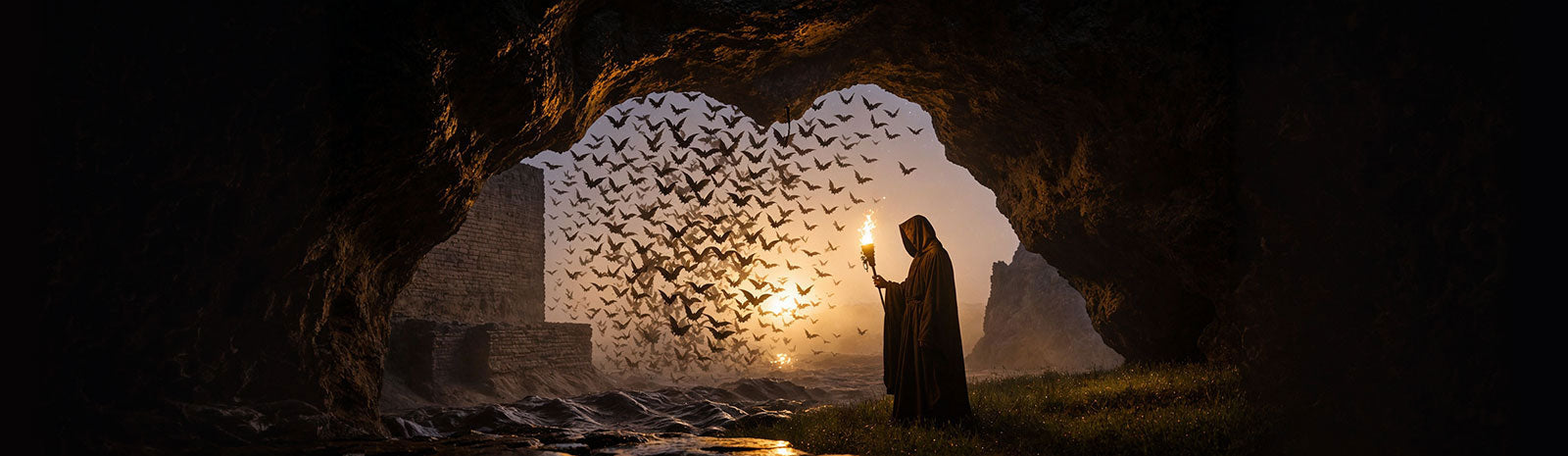
Release the Bats!: Thomas Nagel's Subjectivity of Experience
By C.M. Black
We discuss Thomas Nagel's ideas on the limitations of human knowledge and how much we can know about subjectivity of experience outside our own. Can we know what it is like to be a bat? -
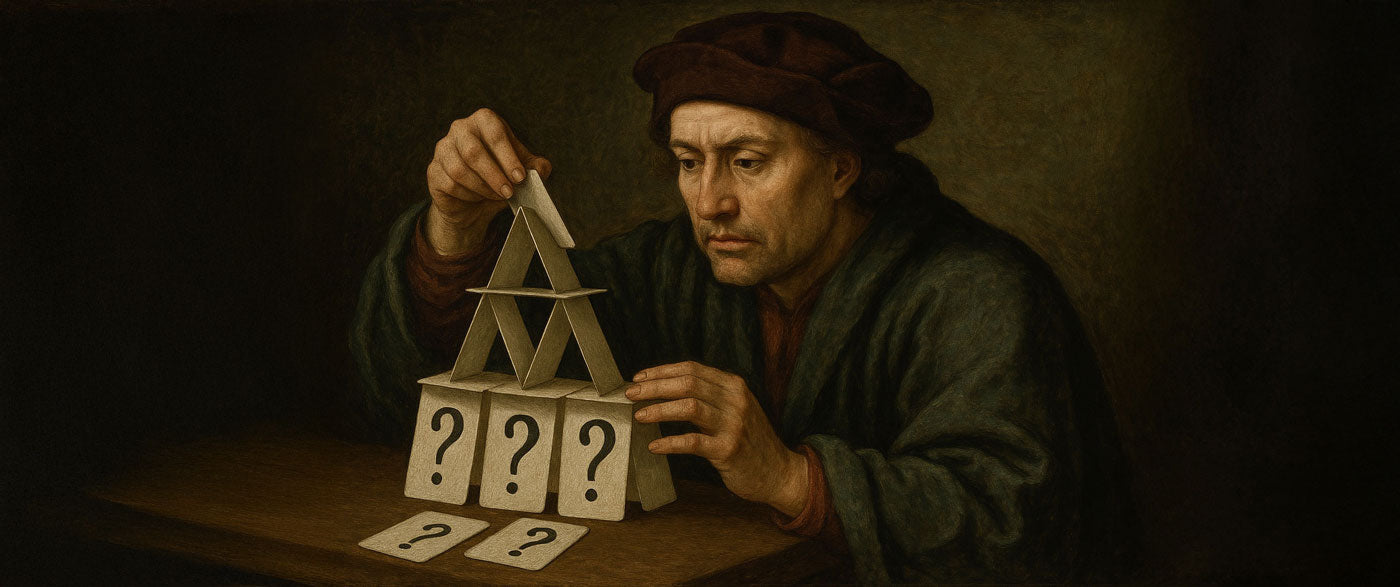
The Münchhausen Trilemma: Why Proving Everything Is Like Pulling Yourself Out of a Swamp by Your Own Hair
By Markus Uehleke
Explore the Münchhausen trilemma, the fascinating philosophical puzzle that shows why all knowledge faces three unsatisfying options: infinite regress, circular reasoning, or unprovable assumptions. Learn why absolute certainty is elusive and how to think more clearly anyway. -
Plot Twist: Your Reality Might Be Personalized (And Why That's Terrifying)
By Markus Uehleke
Ever noticed how your online world seems perfectly tailored to your tastes? While this personalization can be convenient, it also raises some unsettling questions.


