No tariffs. Ever. We ship locally from the US, Canada, the UK, or the EU + Free shipping over $80 / 70€ / £60 (equivalent in all other currencies).
Search our site

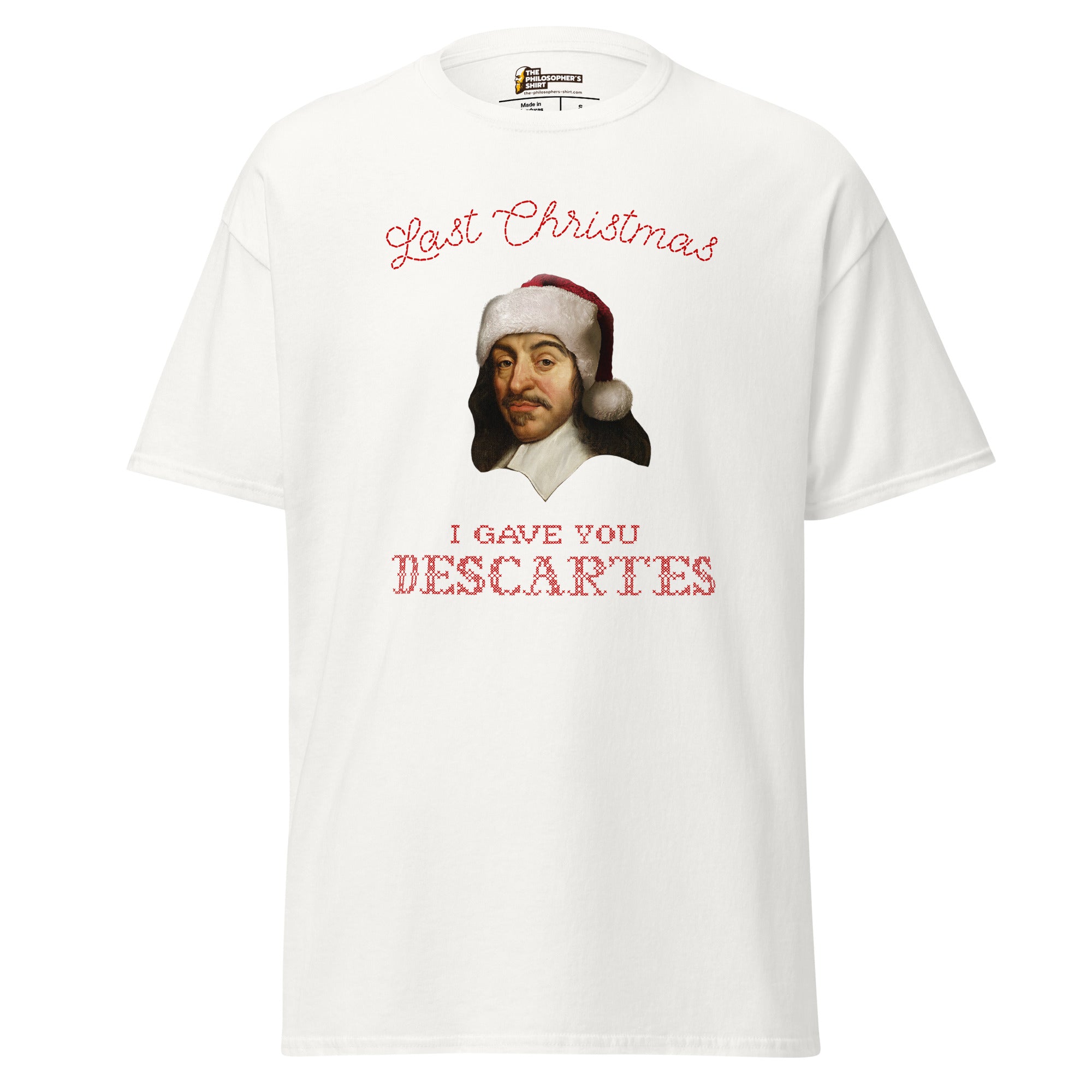
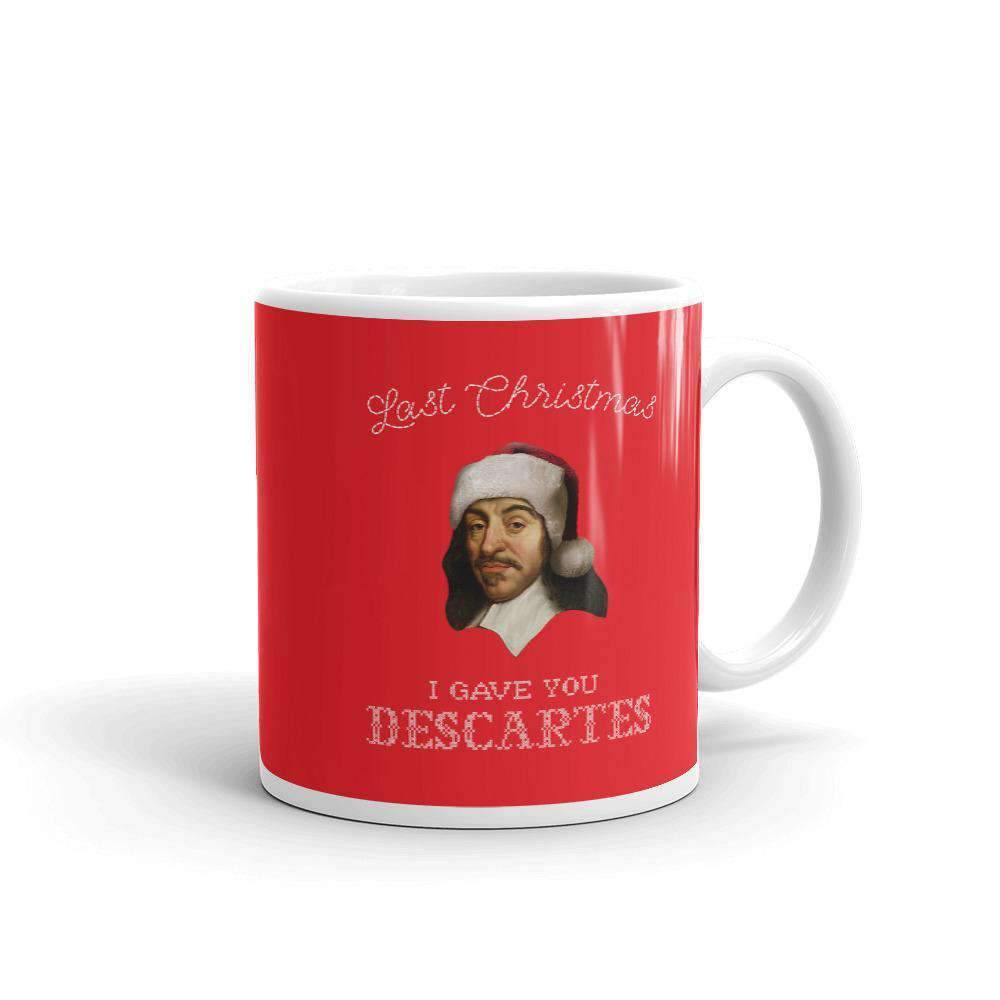
Last Christmas i gave you Descartes

Last Christmas I gave you Descartes, but the very next day you doubted its existence. This year, to save me from tears, something less epistemically fragile.

Nobody reads this silently, and nobody forgives you for it. Every format we print it on, made to order as you buy it, from apparel to accessories. A Christmas gift for philosophy students. Cogito, ergo I am regifting.


Questions about this design

What does the Last Christmas I Gave You Descartes sweater show?
A classic portrait of the French philosopher René Descartes wearing a Santa hat, framed by the words Last Christmas I Gave You Descartes in festive cross-stitch lettering. On a red sweatshirt it reads as an ugly Christmas sweater from across the room and as a philosophy joke up close.
What is the joke, and how do you pronounce Descartes?
Descartes is pronounced day-KART, so it rhymes with heart. The design swaps the heart in the opening line of a famous 1980s Christmas pop song for the father of modern philosophy – a gift that, true to his method, you might doubt was ever given.
What does “I think, therefore I am” mean?
It is Descartes' first certainty. Even if he doubts everything, the act of doubting is a form of thinking, and thinking requires a thinker. So the one thing he cannot doubt is that he exists as a thinking thing. In Latin – cogito, ergo sum.
Where did Descartes first write “I think, therefore I am”?
In French, as “je pense, donc je suis”, in the Discourse on the Method (1637). The Latin “cogito, ergo sum” appears in the Principles of Philosophy (1644). In the Meditations on First Philosophy (1641) the same insight is phrased “I am, I exist”.
What is Cartesian doubt?
Descartes' method of doubting every belief that could possibly be false, in order to find something absolutely certain on which to rebuild knowledge. It is methodical, not real, scepticism – a deliberate stress test that ends with the cogito, and from there Descartes tries to prove God and the external world.
Why did Descartes doubt everything, and what is the evil demon?
Because many of his beliefs had turned out false, he wanted foundations beyond doubt. In the First Meditation he notes that the senses deceive and that dreams can feel real, then imagines an evil demon of utmost power and cunning who deceives him about everything – only the cogito survives.
What is Cartesian mind-body dualism?
Descartes' view that mind and body are two distinct substances. The mind is a thinking, non-extended thing; the body is an extended, non-thinking thing. How the two interact – he suggested the pineal gland – became the mind-body problem that philosophy still debates.
Who was René Descartes?
A French philosopher and mathematician (1596–1650), often called the father of modern philosophy. He spent much of his career in the Dutch Republic, developed the coordinate system of analytic geometry that bears his name, and died in Stockholm while teaching Queen Christina of Sweden.
Which Descartes book should I read first?
The Meditations on First Philosophy (1641) – six short meditations that take you from radical doubt through the cogito to God and the material world. The Discourse on the Method (1637) is an even shorter, more autobiographical alternative.
Is this a good ugly Christmas sweater for philosophy lovers?
Yes – it is made for philosophy students, teachers and anyone who enjoys a Christmas pun with an epistemology lesson attached, at office parties or Secret Santa. The design is available as a sweatshirt, premium hoodie, T-shirt and mug.