No tariffs. Ever. We ship locally from the US, Canada, the UK, or the EU + Free shipping over $80 / 70€ / £60 (equivalent in all other currencies).
Search our site

Rabbit-Duck

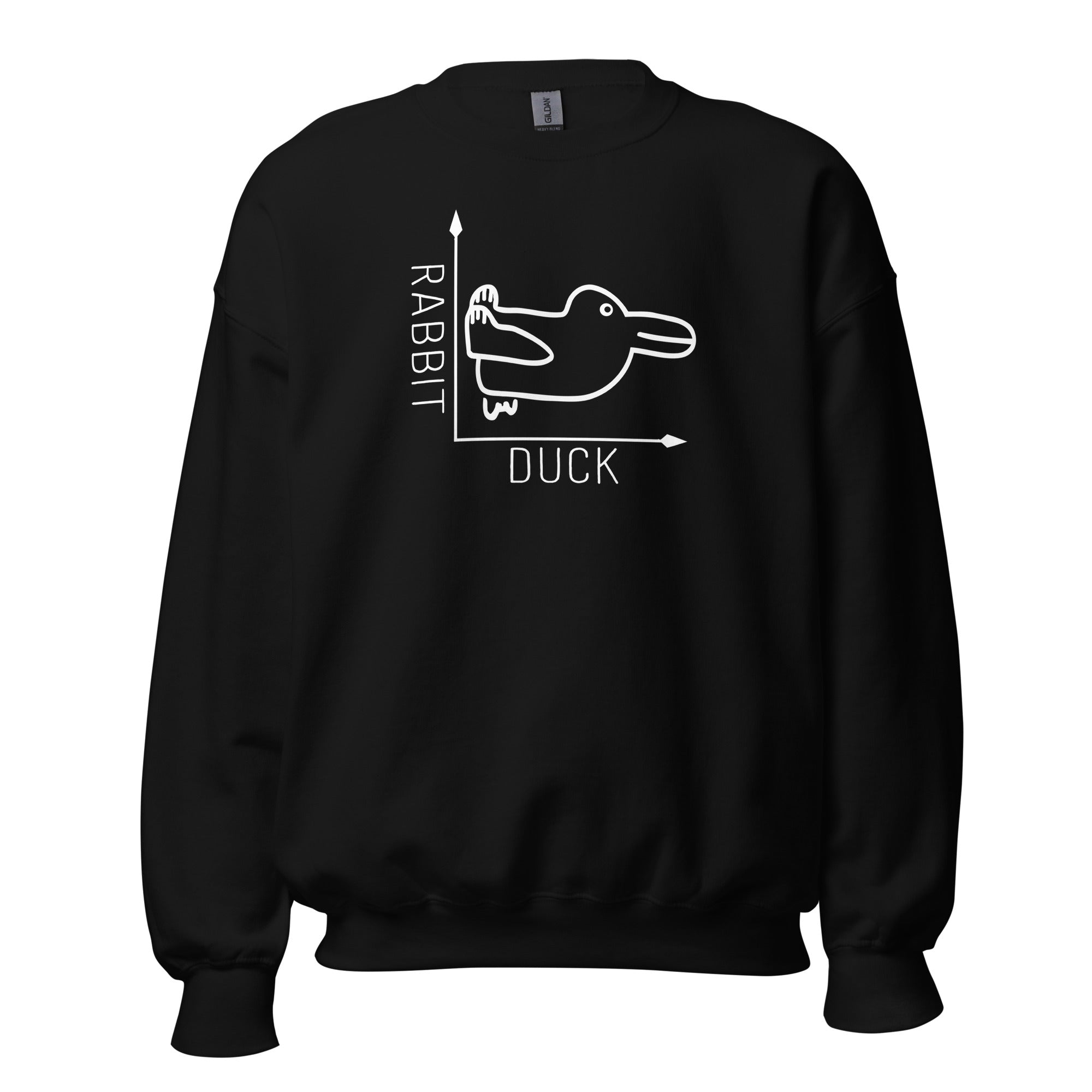
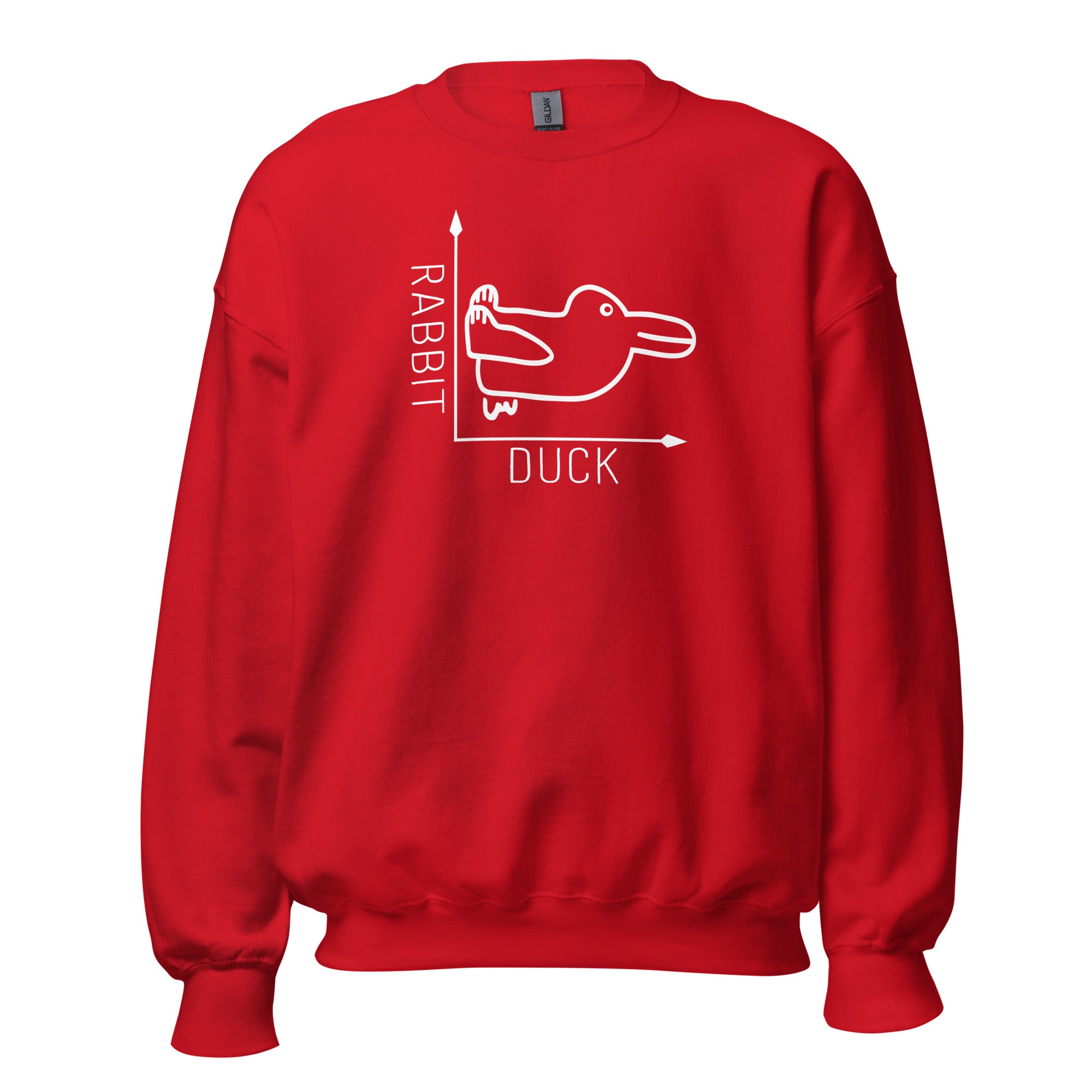
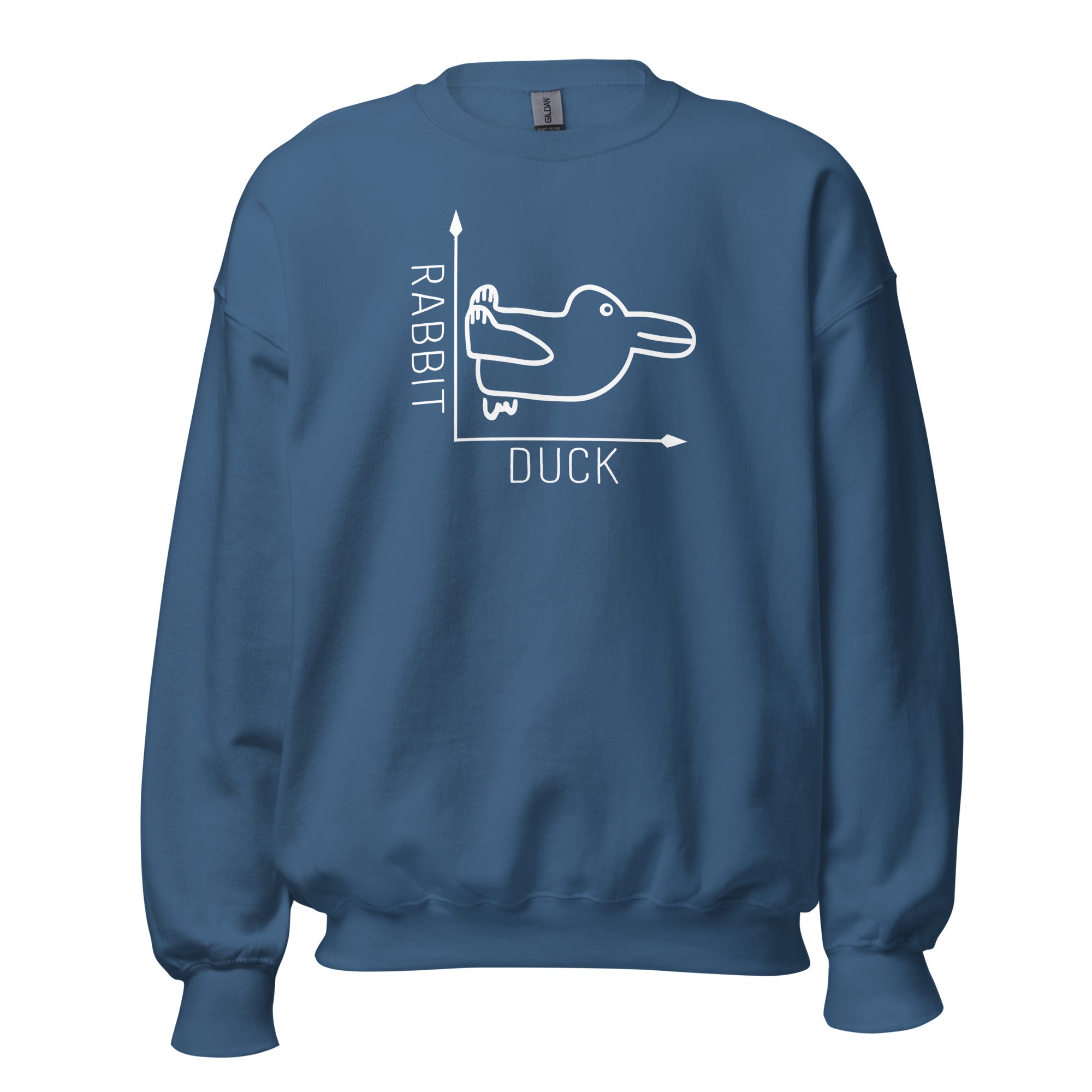
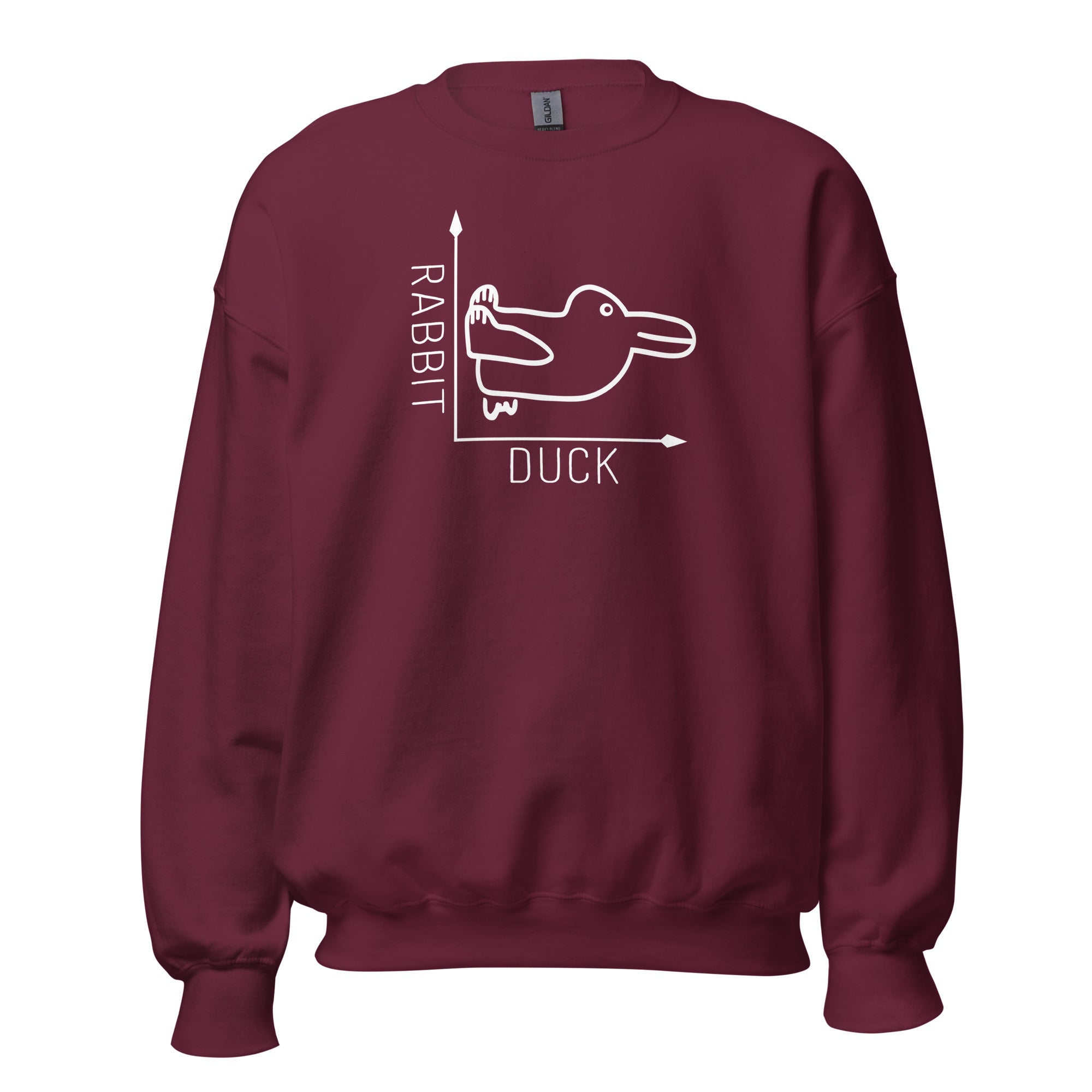
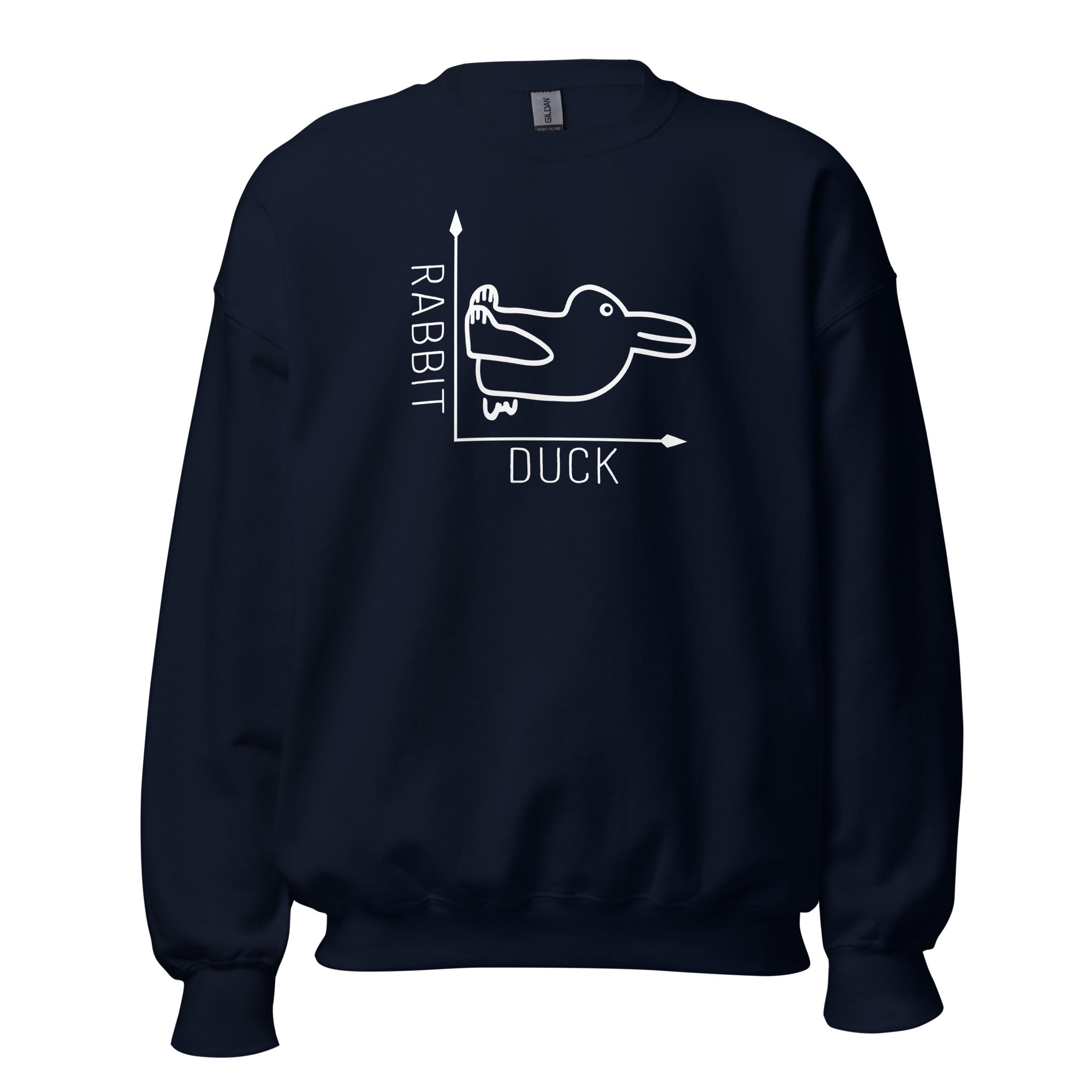
Wittgenstein used this drawing to show that seeing is never innocent. This edition has picked a side, and the side is duck.

Watch people flip between the two animals in real time and argue about it. The whole range here, from apparel through to accessories, all printed to order. A philosophy-of-mind gift for psychology students. It was always a duck. Everything else is interpretation.

Questions about this design

What does the Rabbit-Duck Illusion design show?
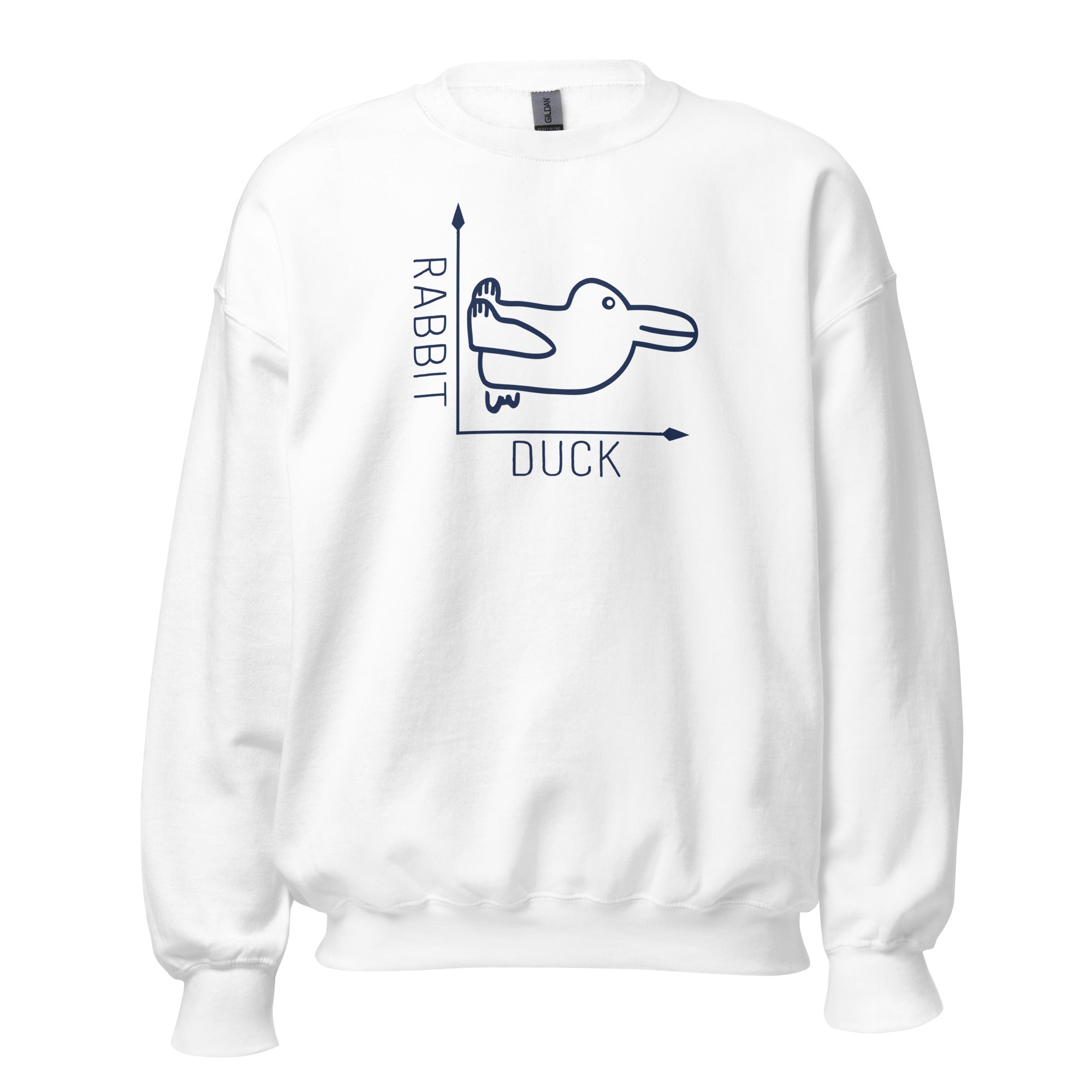
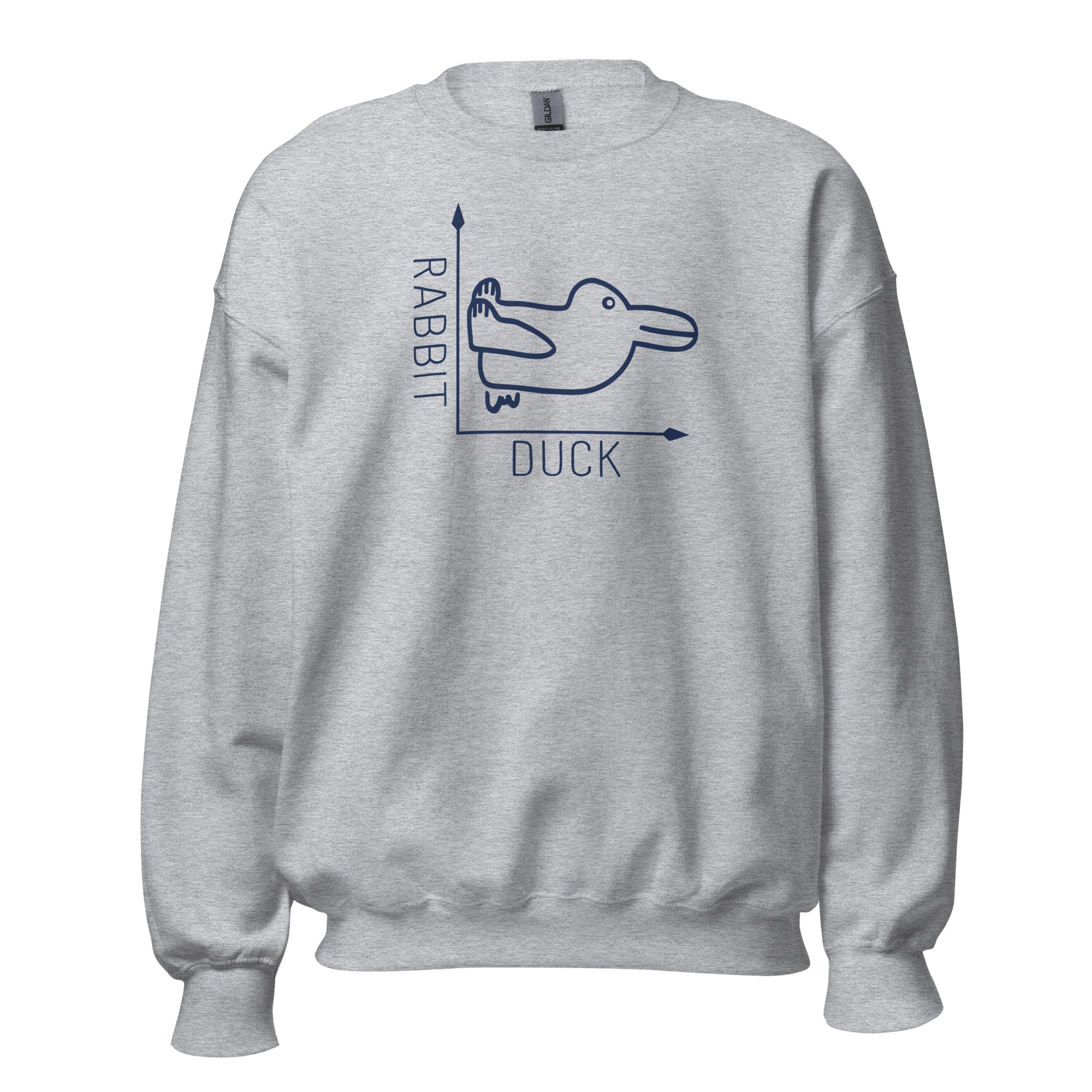
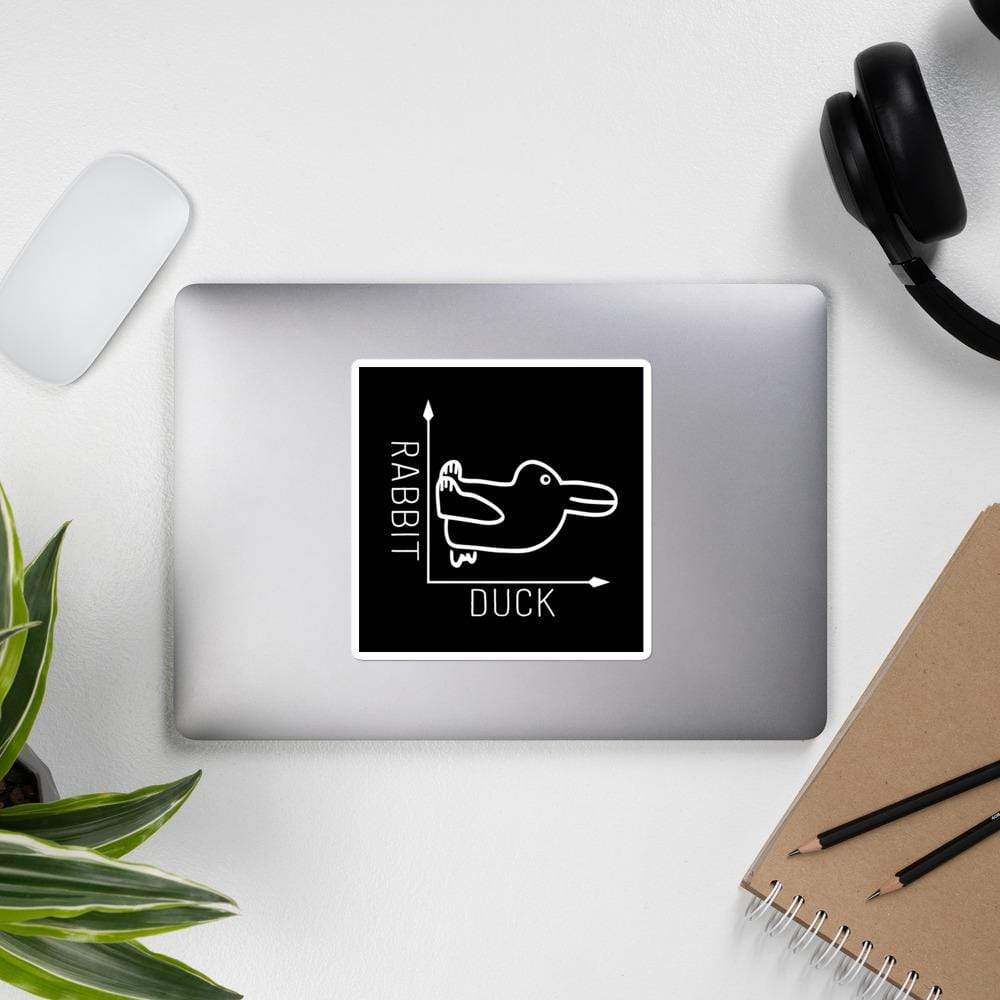
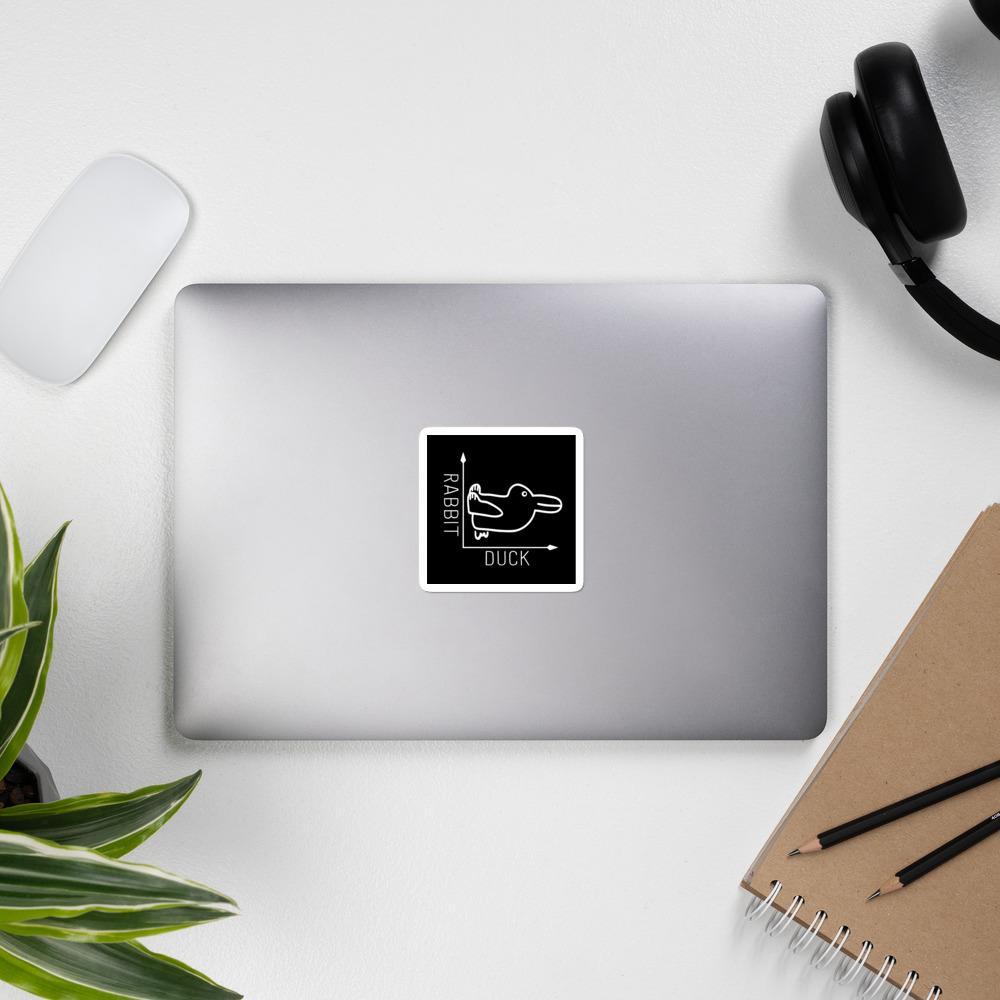
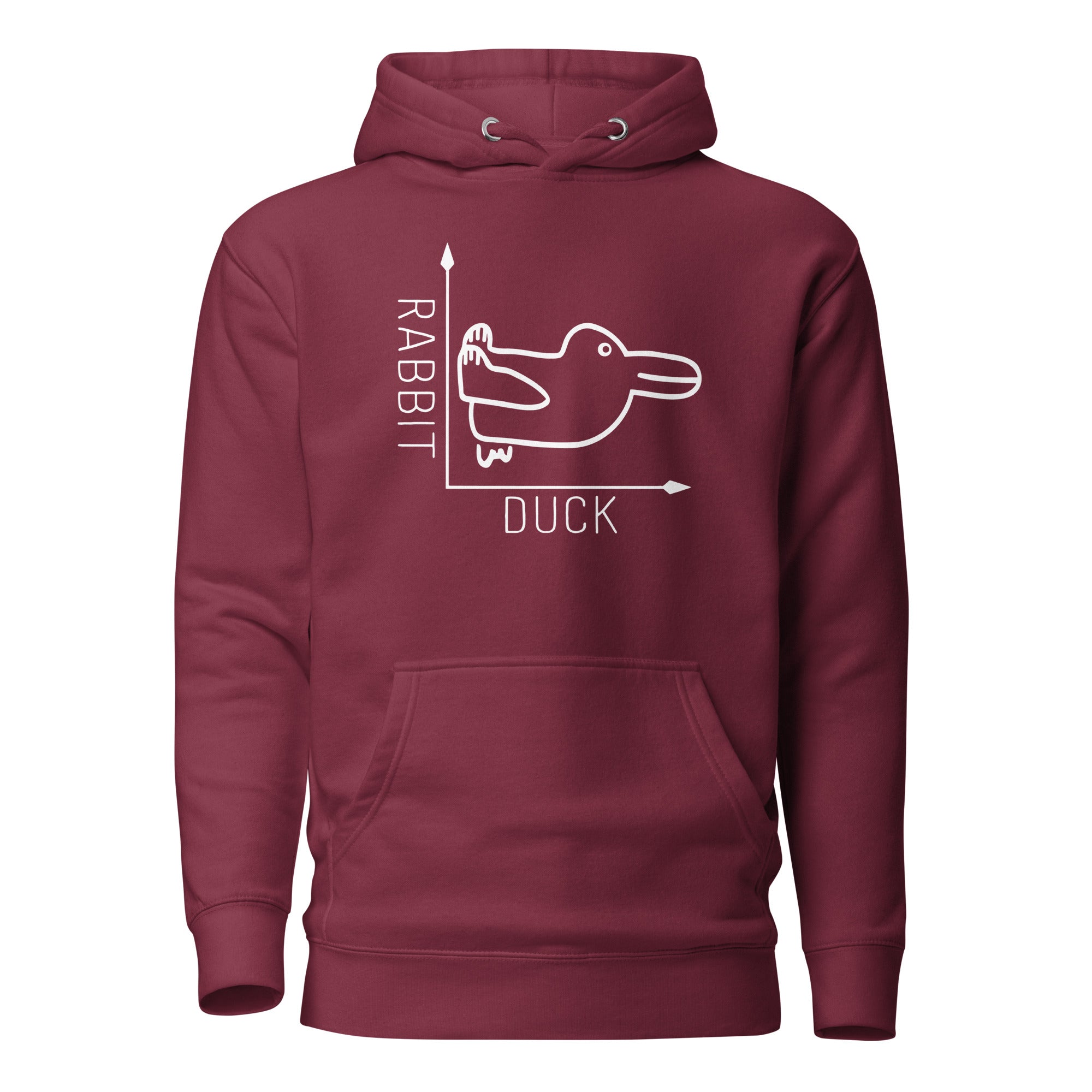
A clean white line drawing of the famous rabbit-duck figure, plotted on a graph whose axes are labelled Rabbit and Duck. The ambiguous head sits neatly between the two readings, as if someone had tried to measure exactly how much rabbit and how much duck it contains. It is a quiet joke about perception, data and interpretation that psychology and philosophy people spot at once.
What is the rabbit-duck illusion and where does it come from?
It is an ambiguous drawing that can be seen either as a rabbit facing right or a duck facing left – the ears double as a beak. The earliest known version appeared unsigned in the German satirical weekly Fliegende Blätter on 23 October 1892, captioned “Which animals are most like each other?”. The psychologist Joseph Jastrow made it famous in 1899, and Wittgenstein brought it into philosophy.
What does it mean if you see the duck or the rabbit first?
Nothing reliable about your personality. Which animal you see first depends on context and expectation – one Swiss study (Brugger and Brugger, 1993) found that more people saw a rabbit at Easter and a bird in October. A 2011 study by Richard Wiseman and colleagues found that people who switched easily between the two views listed more creative uses for everyday objects. The real point is that you can learn to see both.
Why did Wittgenstein use the duck-rabbit?
In Part II of the Philosophical Investigations (published 1953) Wittgenstein uses the figure, which he took from Jastrow, to explore seeing-as. When the picture flips from duck to rabbit, nothing on the paper changes, yet what you see does. He called this the dawning of an aspect and used it to question the idea that seeing is a simple, passive recording, separate from interpretation.
What is aspect blindness?
Aspect blindness is Wittgenstein’s term for someone who could see the lines of the drawing perfectly well but never experience the switch – who could never see it as a duck and then as a rabbit. He uses this thought experiment to ask what we would lose without that capacity, and links it to understanding the meaning of words, music and pictures, where we also hear or see something as something.
How did Thomas Kuhn use the duck-rabbit?
In The Structure of Scientific Revolutions (1962) Kuhn compares a scientific revolution to a gestalt switch – what were ducks in the scientist’s world before the revolution are rabbits afterwards. The same data are suddenly seen through a different paradigm. Kuhn also noted the limits of the analogy; unlike the viewer of the drawing, a scientist cannot simply switch back and forth at will.
What does theory-laden observation mean?
It is the idea that what scientists observe is shaped by the theories and concepts they already hold. Norwood Russell Hanson developed it in Patterns of Discovery (1958), building on Wittgenstein’s duck-rabbit; two astronomers watching the same sunrise, one believing the sun moves and one that the earth turns, arguably do not see the same thing. The idea became central to post-war philosophy of science.
Which Wittgenstein book should I read first?
Start with secondary help and then the Philosophical Investigations (1953), where the duck-rabbit appears; its short numbered remarks can be read in small doses. The earlier Tractatus Logico-Philosophicus (1921) is famous for lines such as 5.6, the limits of my language mean the limits of my world, but it is dense. Reading both shows how radically Wittgenstein revised his own philosophy.
Who is the Rabbit-Duck Illusion design a good gift for?
For psychology, philosophy and cognitive science students, teachers of perception or philosophy of science, and anyone who enjoys a design that starts a conversation. It comes printed on a classic T-shirt, women’s T-shirt, sweatshirt, premium hoodie, mug and sticker, and as an embroidered T-shirt, sweatshirt, hoodie and cap.