No tariffs. Ever. We ship locally from the US, Canada, the UK, or the EU + Free shipping over $80 / 70€ / £60 (equivalent in all other currencies).
Search our site

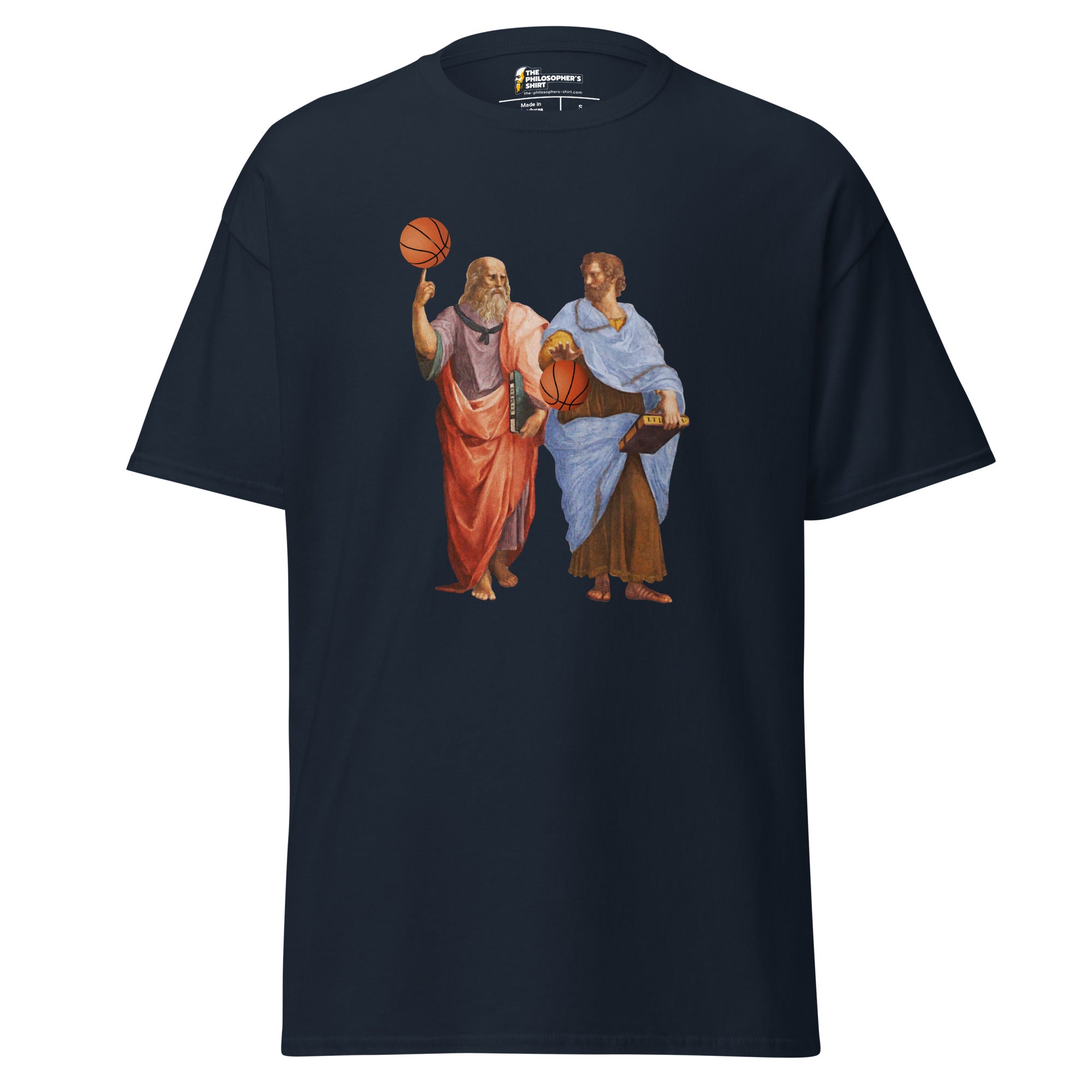
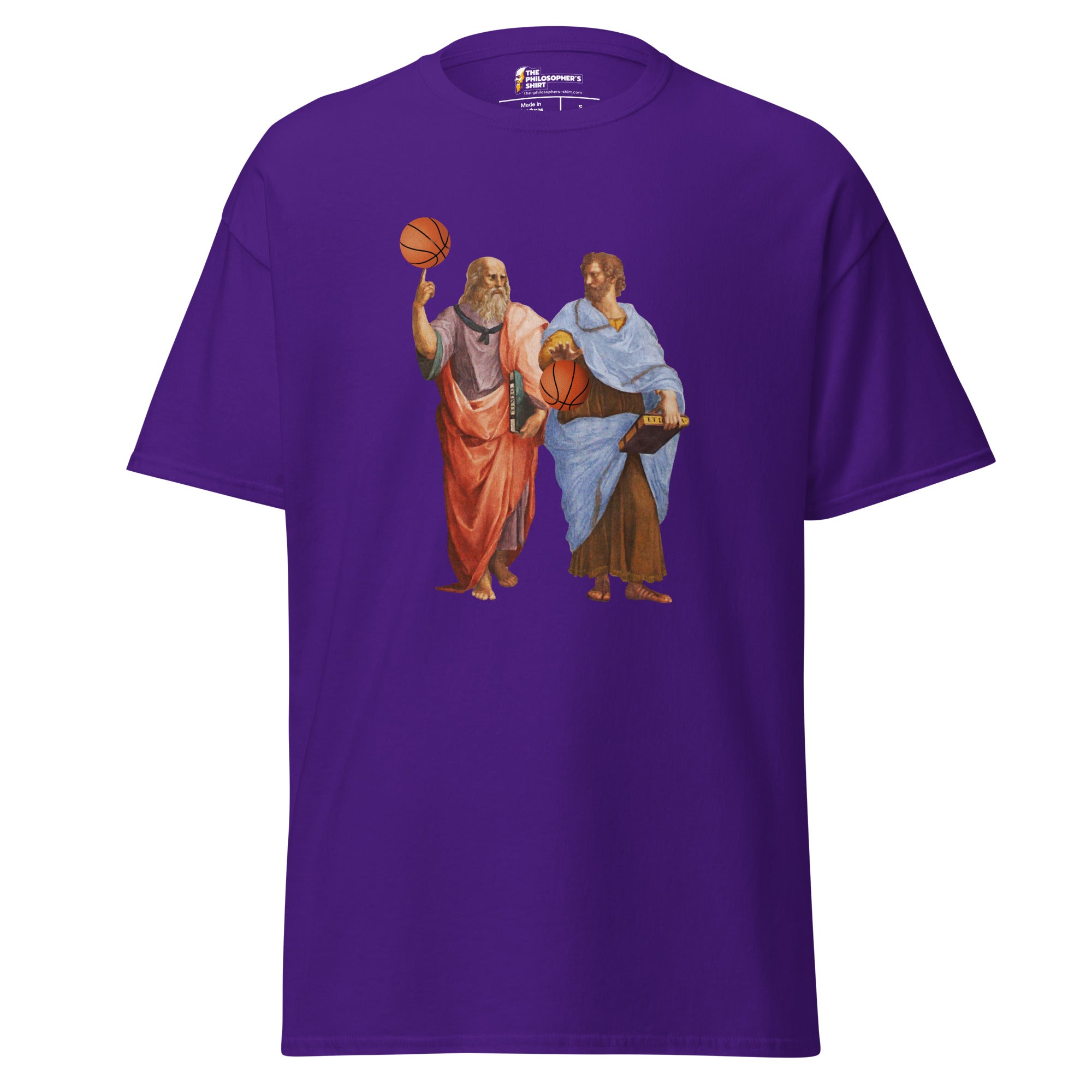
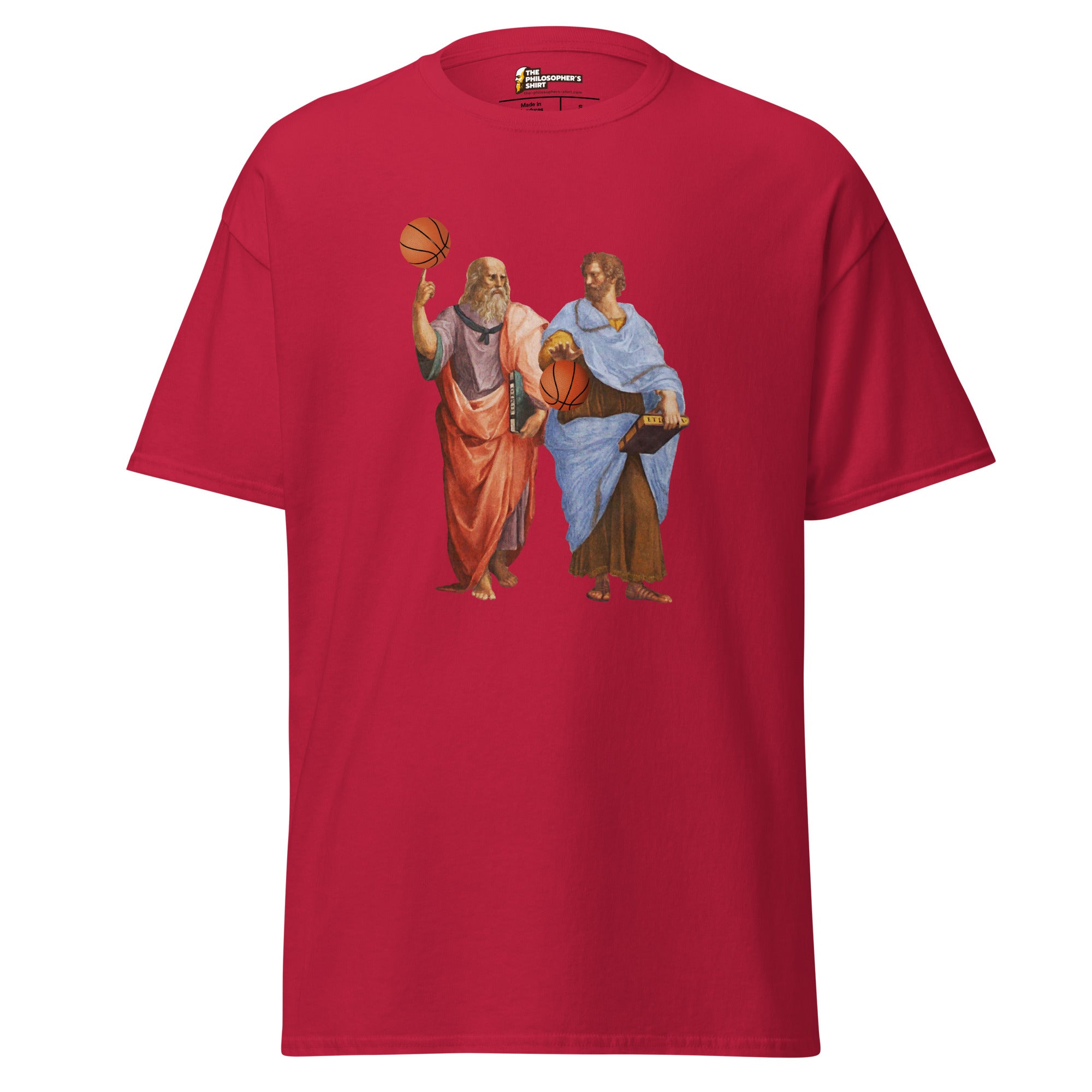
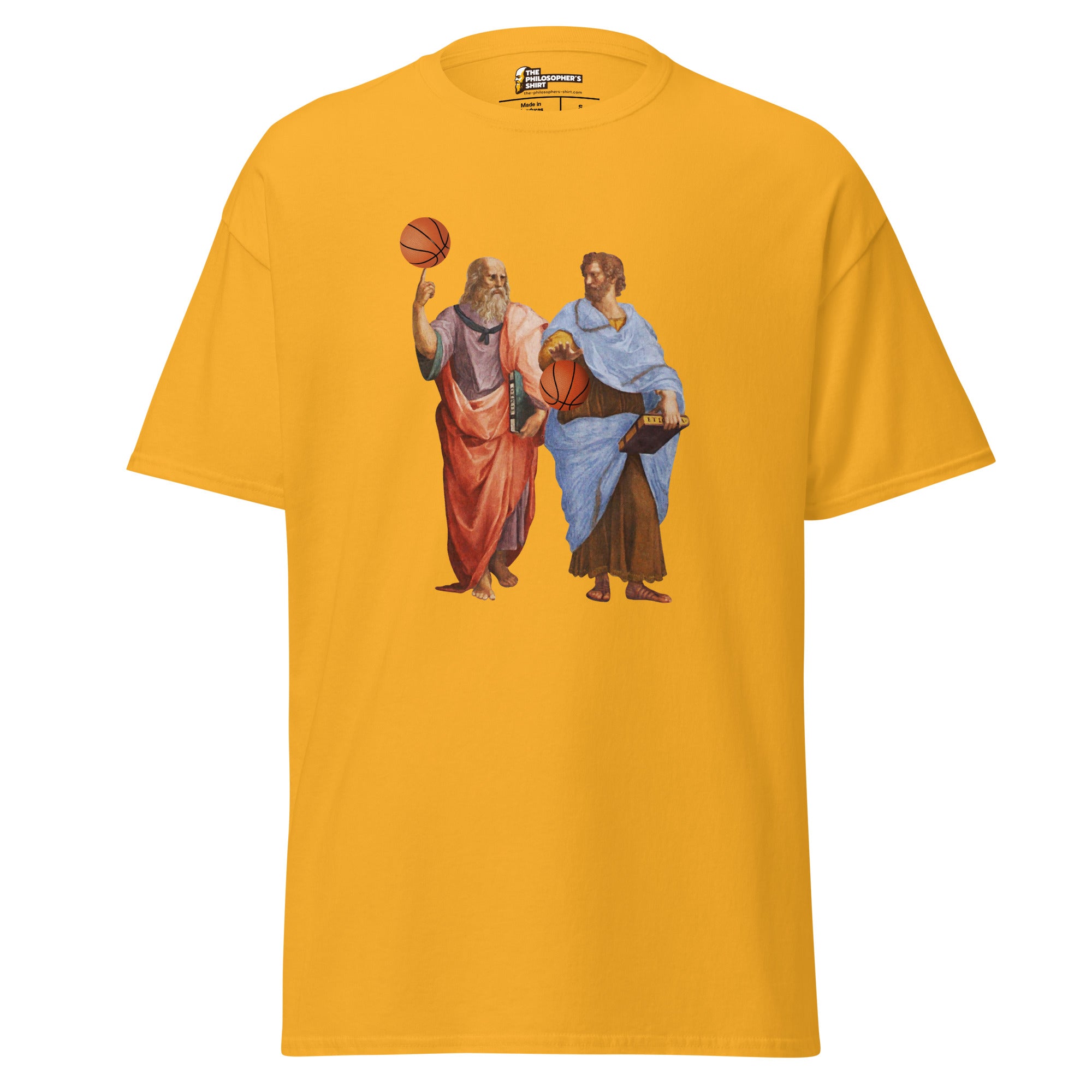
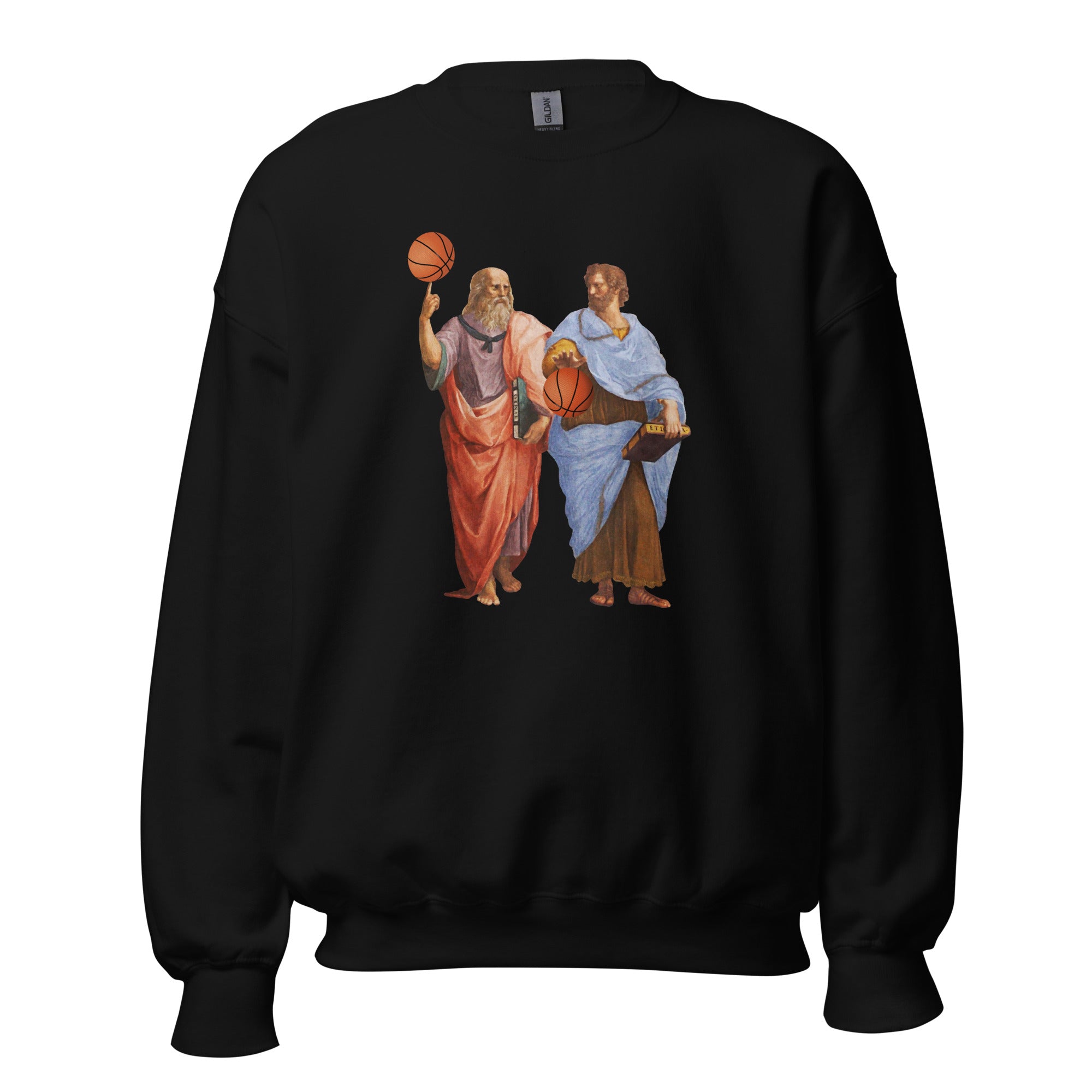
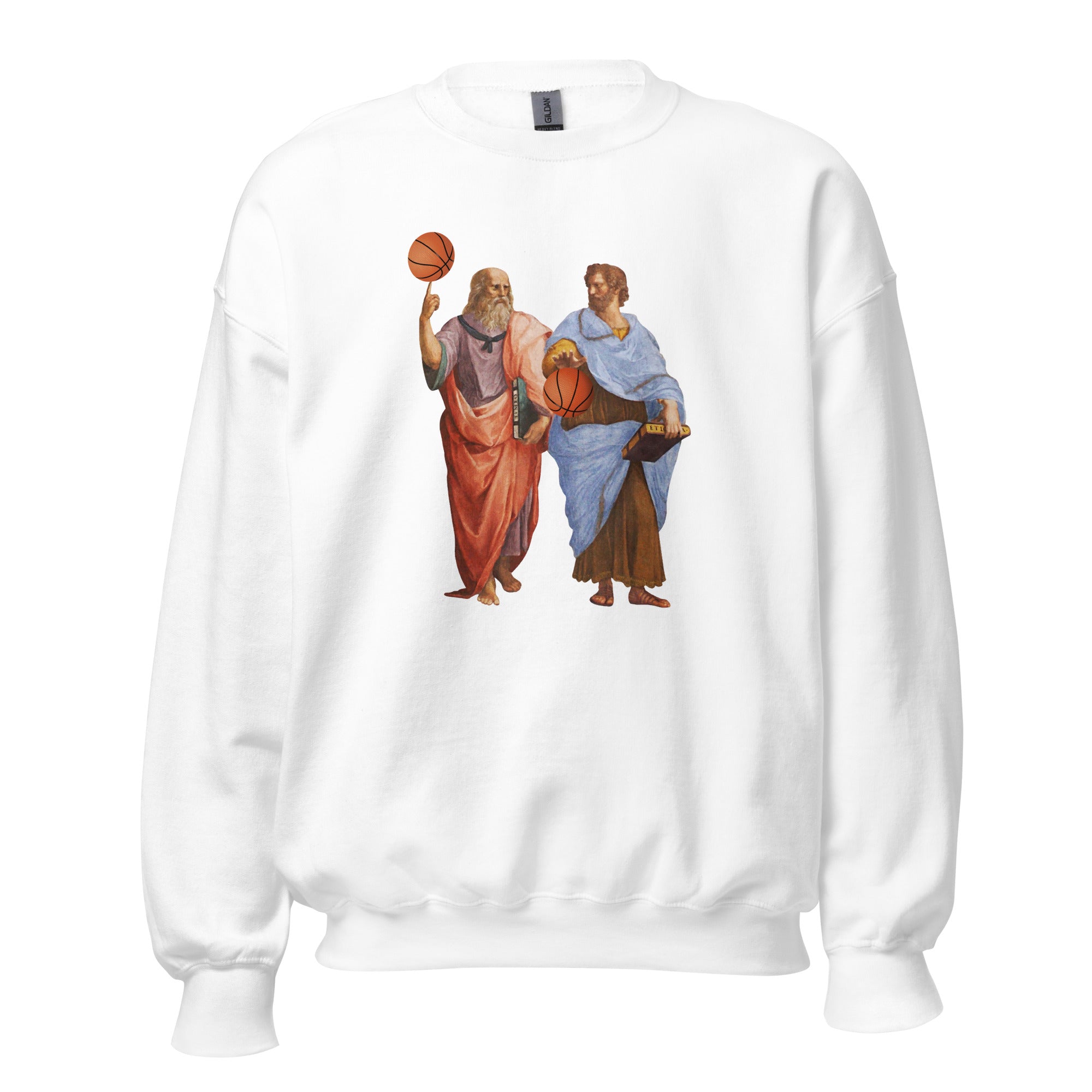
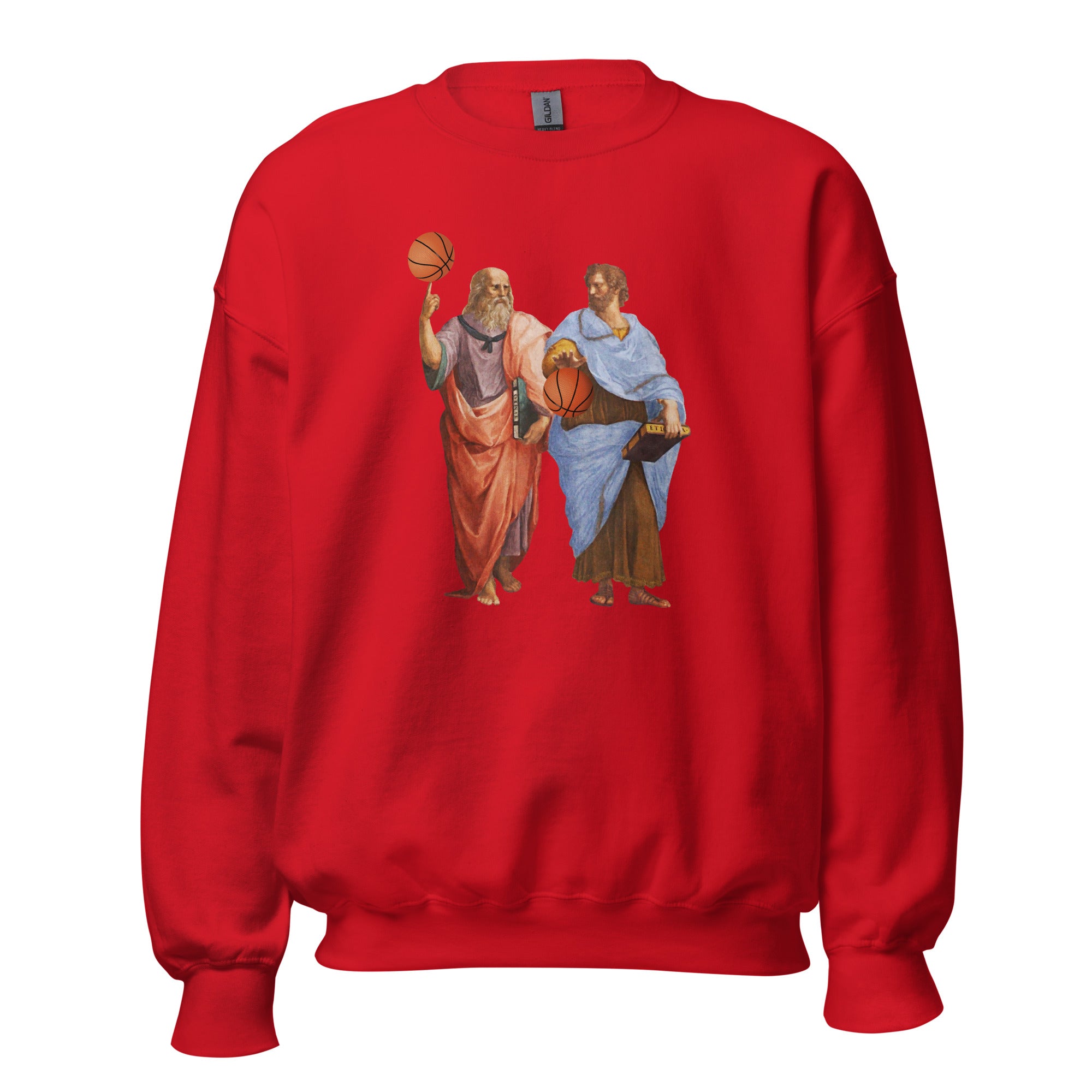
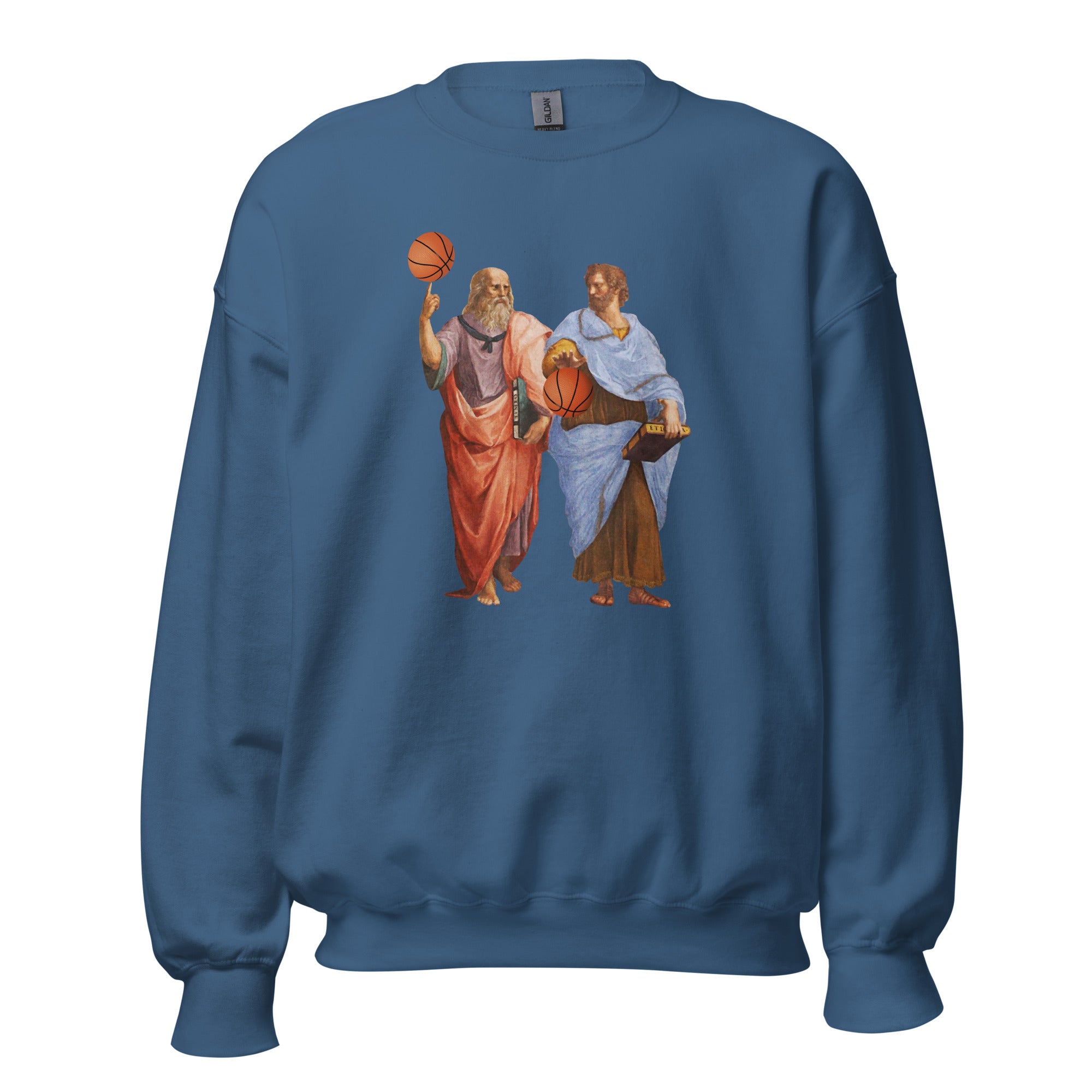
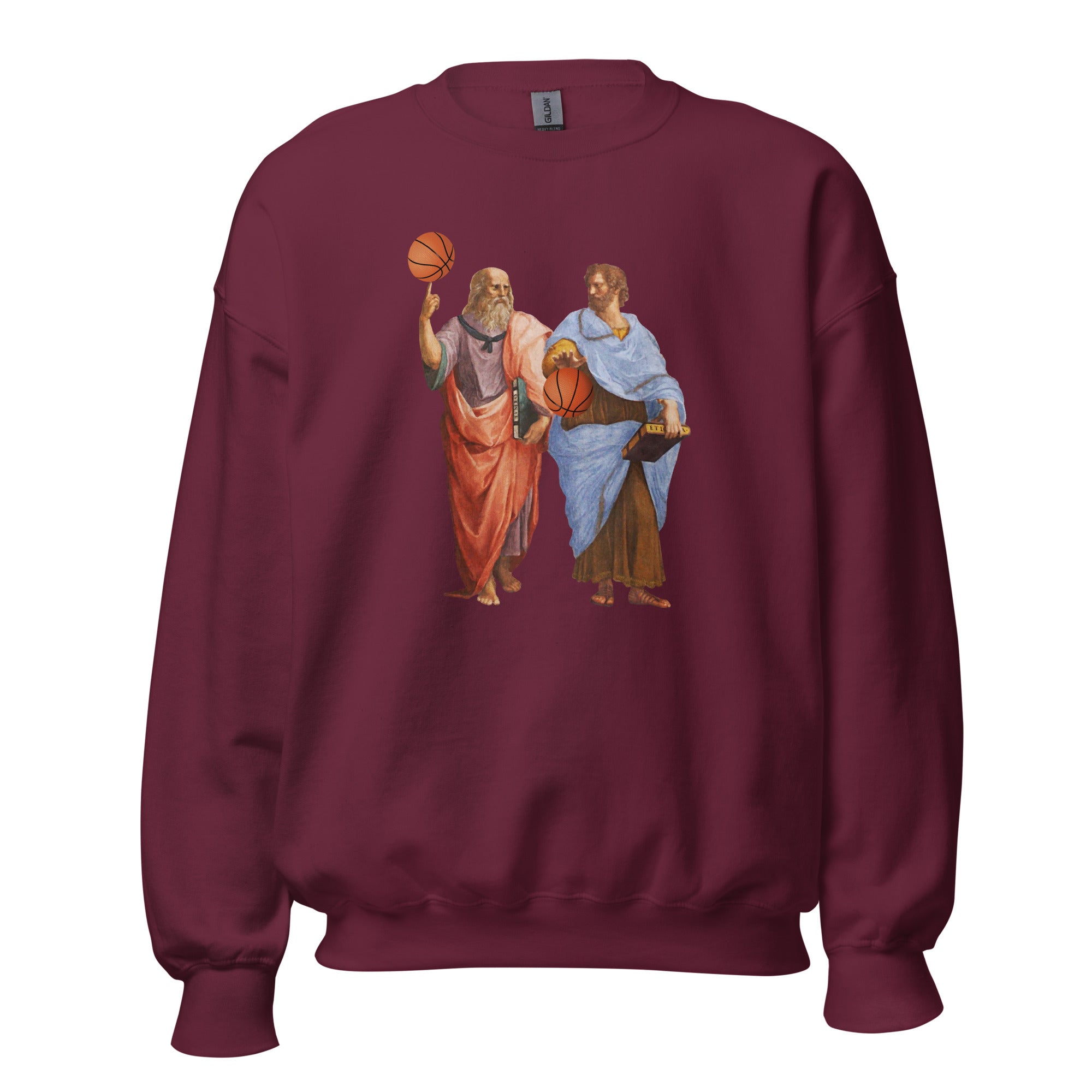
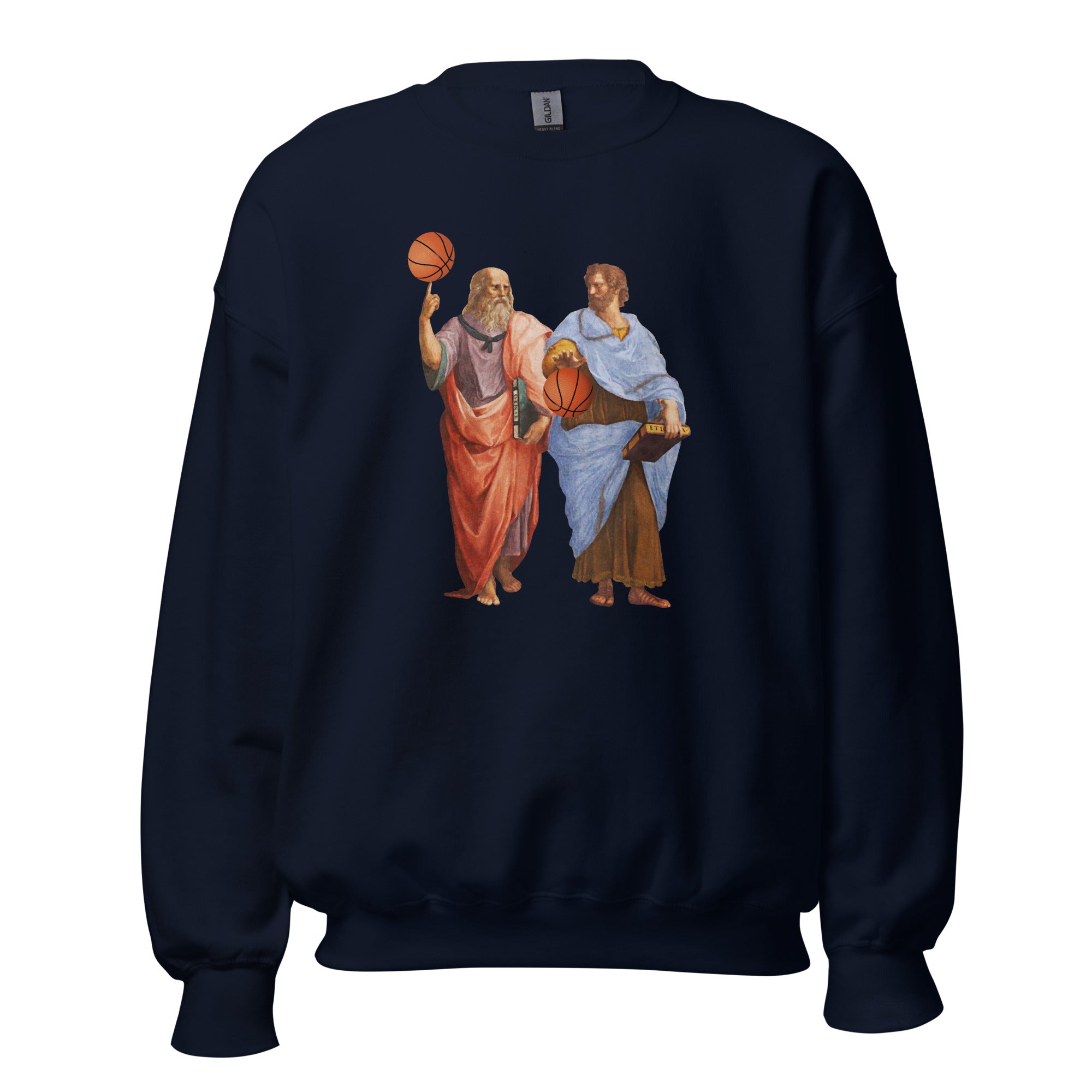
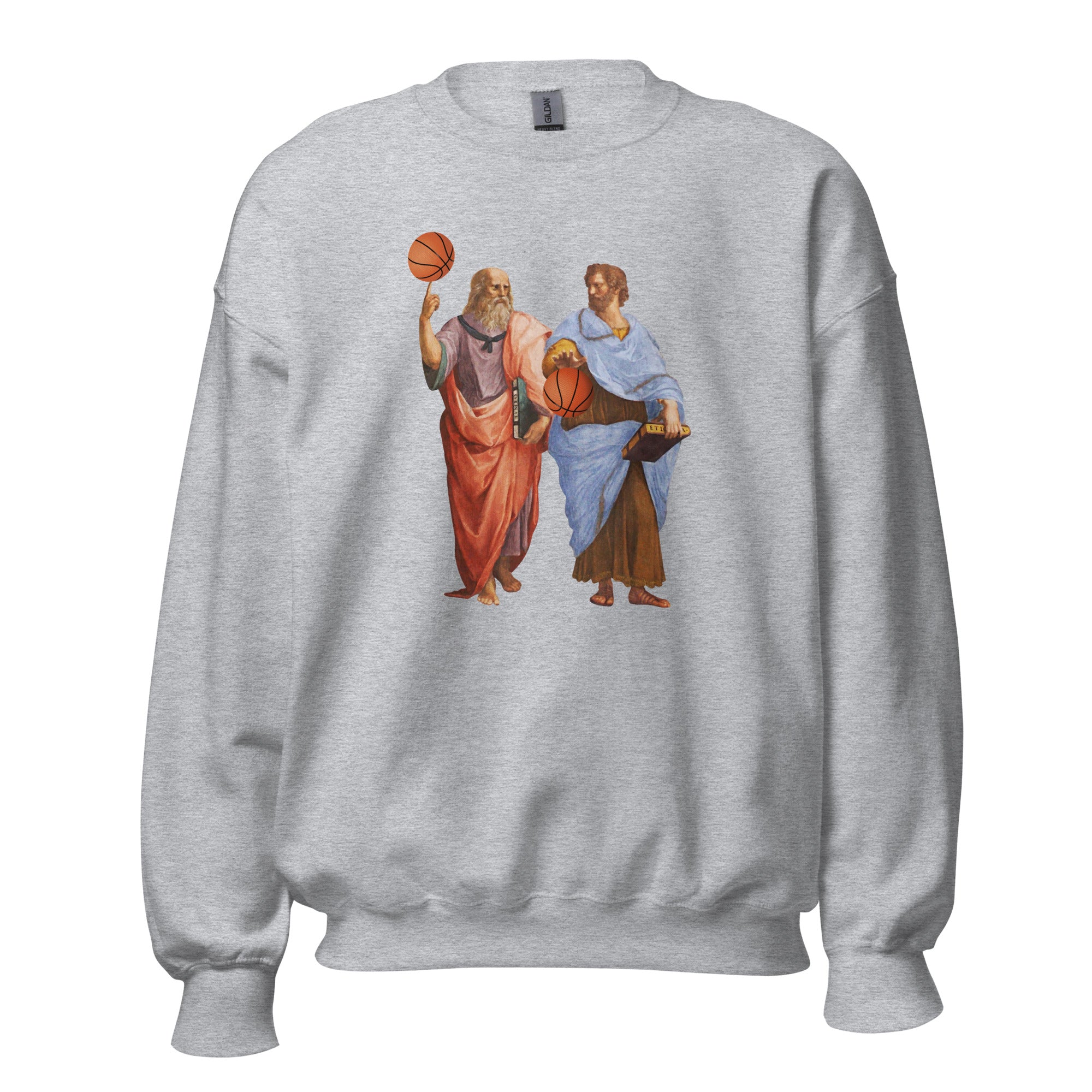
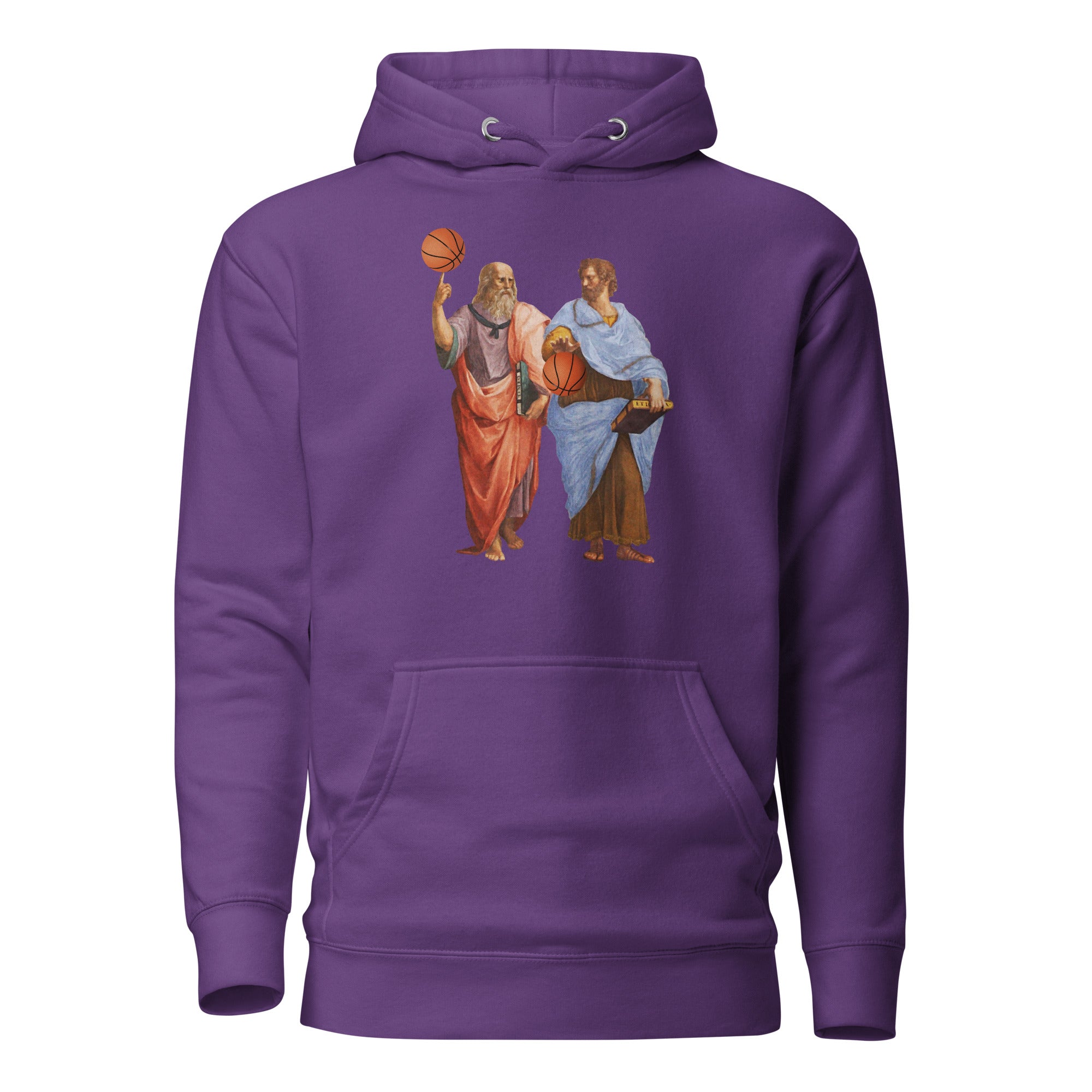
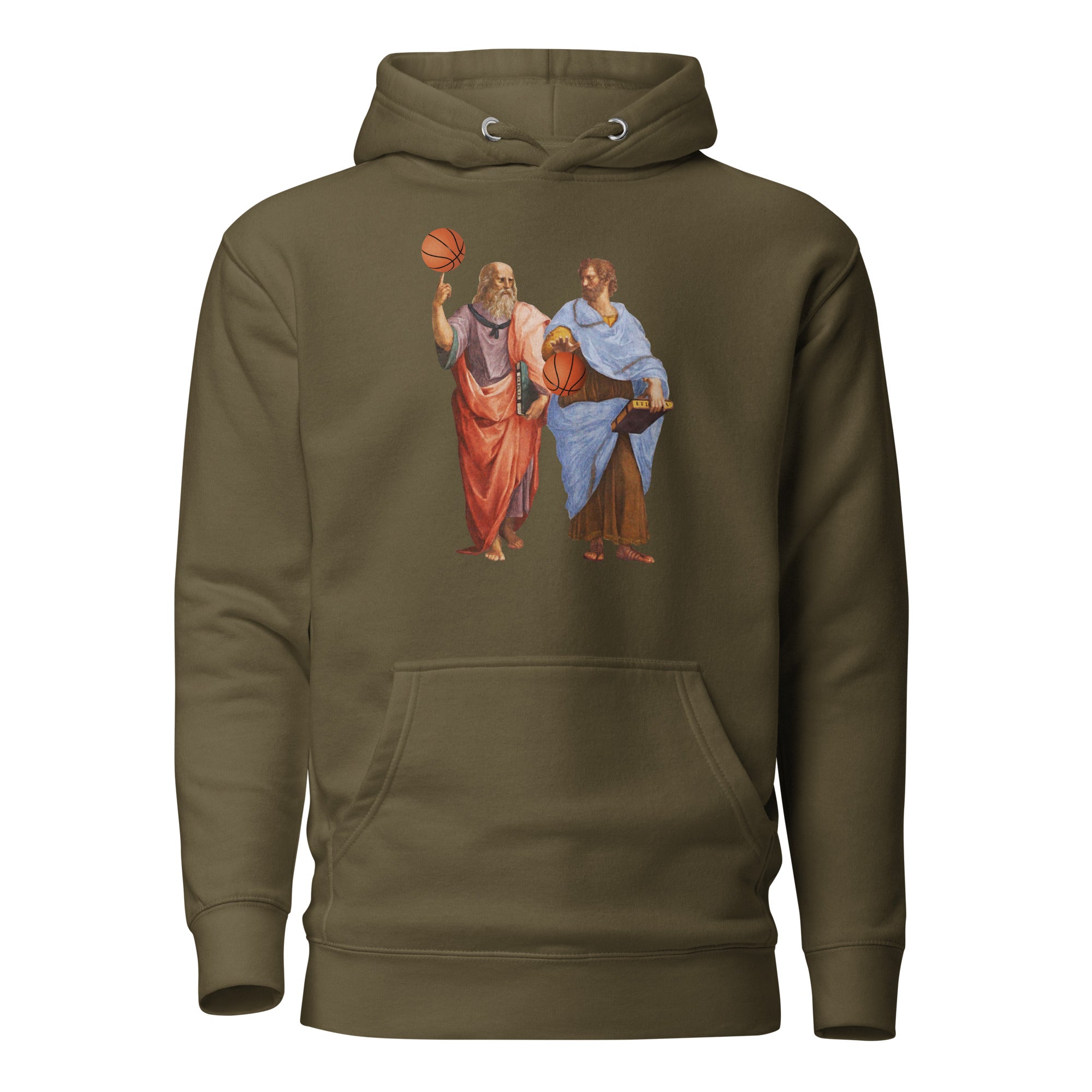
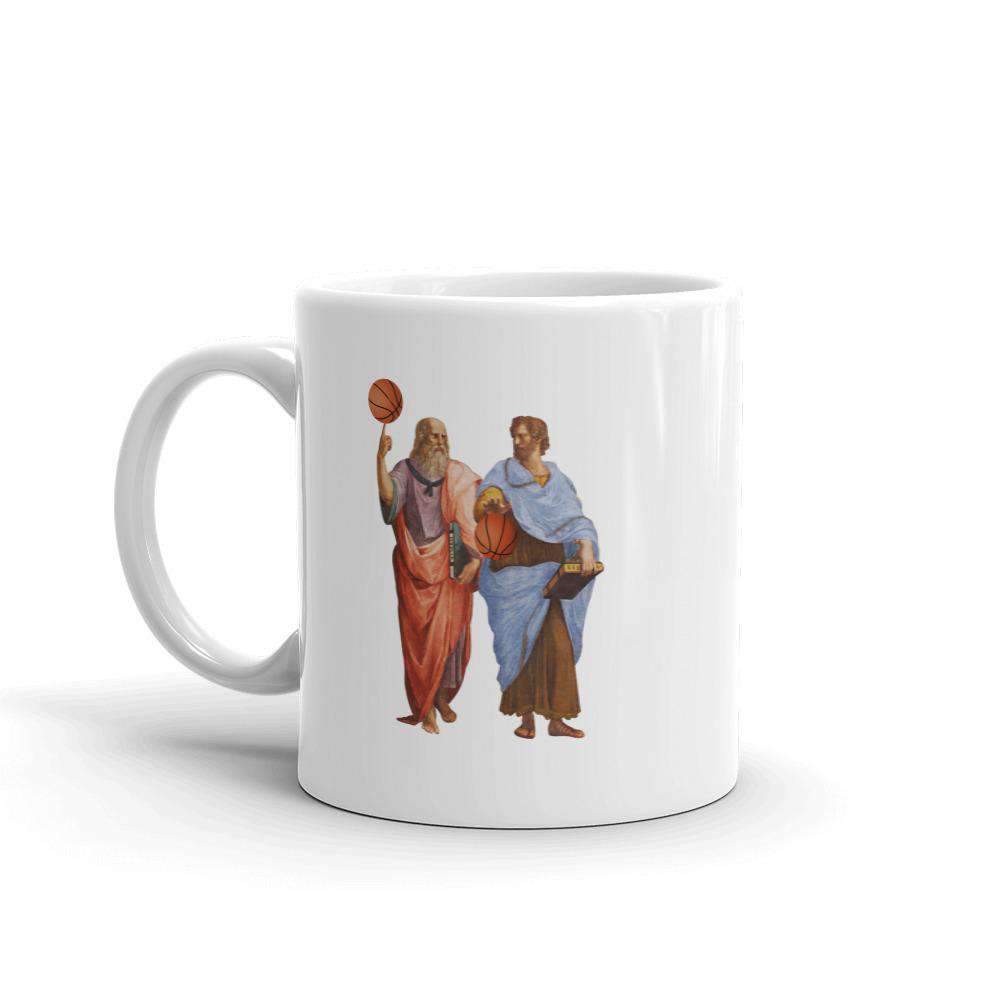
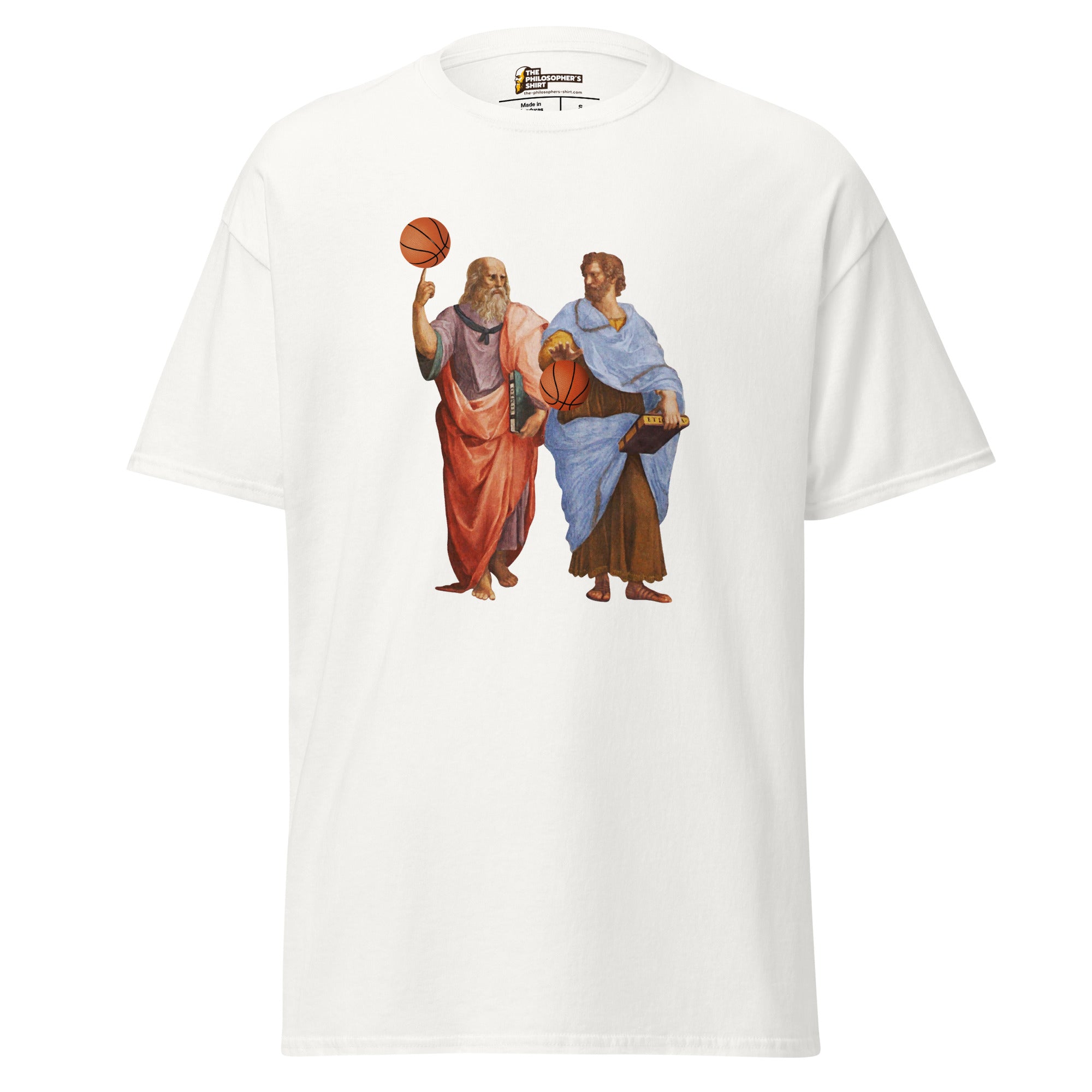
Aristotle and Plato with Basketballs

Two thousand years of metaphysical rivalry, reduced to a pickup game. Plato points up, Aristotle points down, and somebody still has to call the foul.

Reads as sport from across the room and as philosophy up close. Everything in one place, across every format we print it on, made to order. The forms are undefeated, but Aristotle has the better jump shot.

Questions about this design

What does the Aristotle and Plato with Basketballs design show?
The two central figures of Raphael's fresco The School of Athens – Plato and Aristotle – reimagined as players in a pickup game. Plato spins a basketball on the finger he famously points to the sky, while Aristotle holds his ball under the palm he keeps turned toward the earth. The joke works because the gestures already looked like ball handling; the idea behind them is a debate that is 2,400 years old.
Who are the two figures in the middle of The School of Athens?
Plato on the left, older and grey-bearded in red and violet, and Aristotle on the right, younger, in blue and brown. Raphael painted the fresco around 1509–1511 in the Stanza della Segnatura of the Vatican Palace. Plato carries his dialogue Timaeus, Aristotle his Ethics. Plato's face is often said to be modelled on Leonardo da Vinci, though no document from Raphael confirms it.
Why does Plato point up and Aristotle point down in The School of Athens?
The gestures summarise their philosophies. Plato points upward to the realm of eternal, perfect Forms, which he held to be more real than the changing world of the senses. Aristotle holds his hand flat over the ground – knowledge begins with observing the concrete things around us, and form exists in things themselves, not in a separate heaven.
What is Plato's theory of Forms?
Plato argued that behind every changing, imperfect thing we perceive stands an unchanging, perfect Form – Beauty itself, Justice itself, the Circle itself. Individual things merely participate in these Forms, and real knowledge is knowledge of the Forms, reached by reason rather than the senses. He develops the idea in dialogues such as the Phaedo and the Republic, where the allegory of the cave illustrates it.
Why did Aristotle reject Plato's theory of Forms?
In the Metaphysics Aristotle argues that separate Forms explain nothing – they duplicate the world without telling us how things change or come to be. For him form and matter are united in each individual thing, and universals exist only in particulars. The later Latin saying Amicus Plato, sed magis amica veritas – Plato is a friend, but truth a greater one – paraphrases a passage of his Nicomachean Ethics.
Was Aristotle a student of Plato?
Yes. Aristotle came to Athens at about seventeen and studied and taught at Plato's Academy for roughly twenty years, from 367 BC until Plato's death in 347 BC. He later tutored the young Alexander the Great and in 335 BC founded his own school, the Lyceum. Plato in turn had been a follower of Socrates, so the three form the founding line of Western philosophy.
What is the main difference between Plato and Aristotle?
Plato was a rationalist – the truest reality is the world of Forms, grasped by reason. Aristotle was more empirical – reality is the world of individual things, known through observation, classification and logic. In politics Plato designed an ideal state ruled by philosopher-kings in the Republic, while Aristotle collected and compared real constitutions in his Politics.
Which books by Plato and Aristotle should I read first?
For Plato, start with the Apology, Crito and Phaedo, which tell the trial and death of Socrates, then move on to the Republic. For Aristotle, the Nicomachean Ethics is the most accessible entry point – happiness, virtue, friendship – followed by the Politics. For both, a modern translation with notes makes a real difference.
Is this a good gift for philosophy students or basketball fans?
It is made for exactly that overlap – philosophy and classics students, teachers, art-history lovers and anyone who plays pickup on weekends. The design comes as a classic and a women's T-shirt, sweatshirt, premium hoodie, mug and sticker, so it works as a small token or a whole outfit.