No tariffs. Ever. We ship locally from the US, Canada, the UK, or the EU + Free shipping over $80 / 70€ / £60 (equivalent in all other currencies).
Search our site

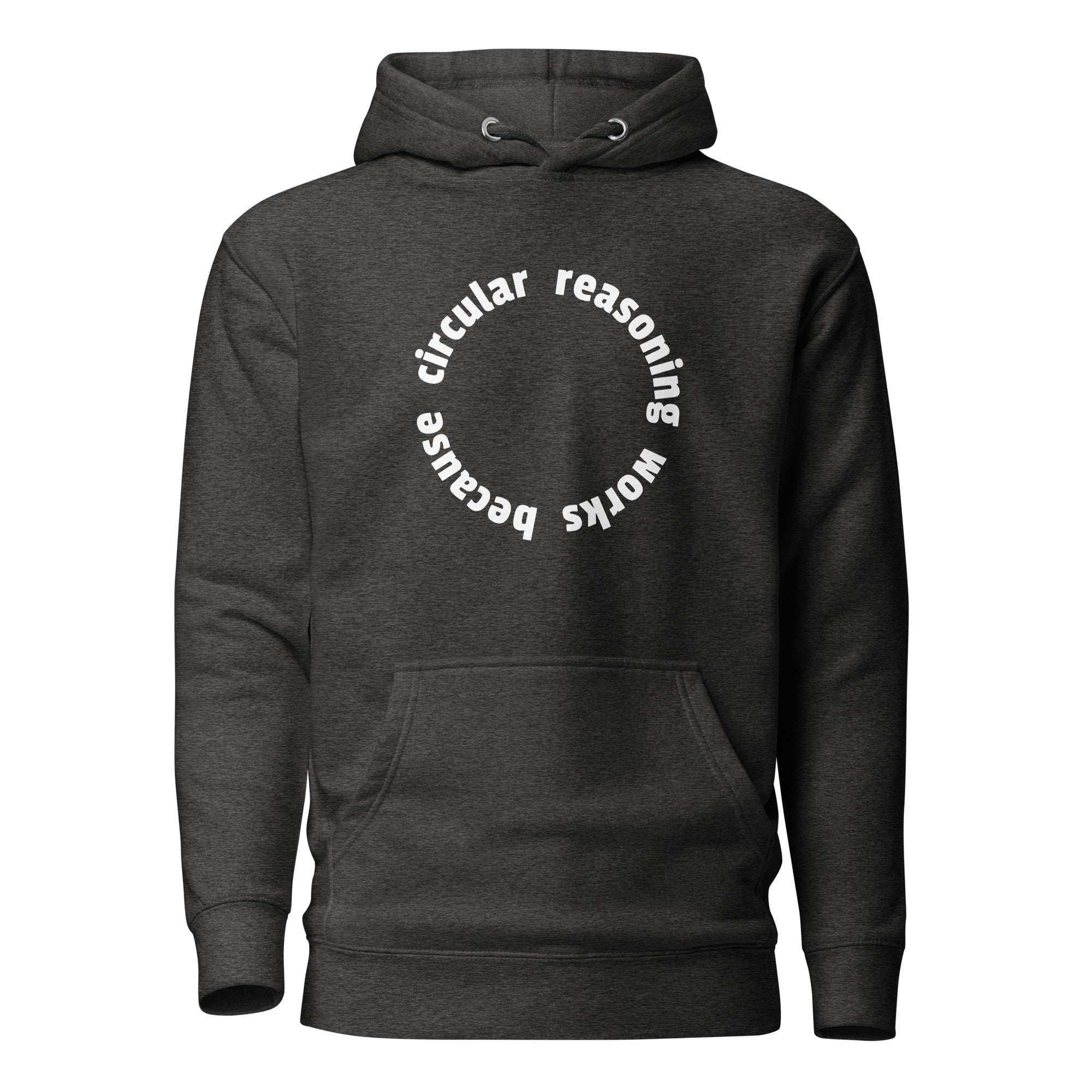
Circular reasoning works

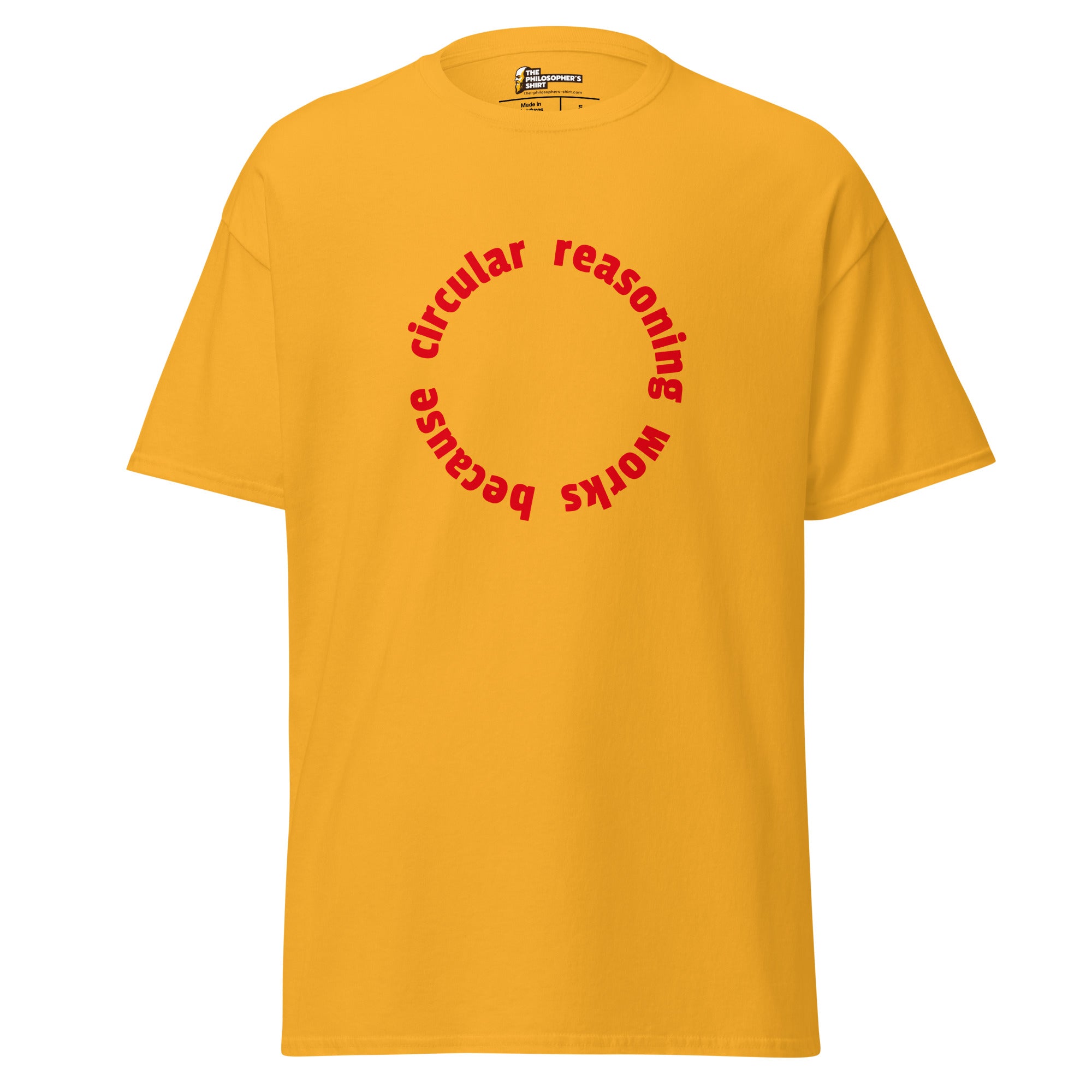
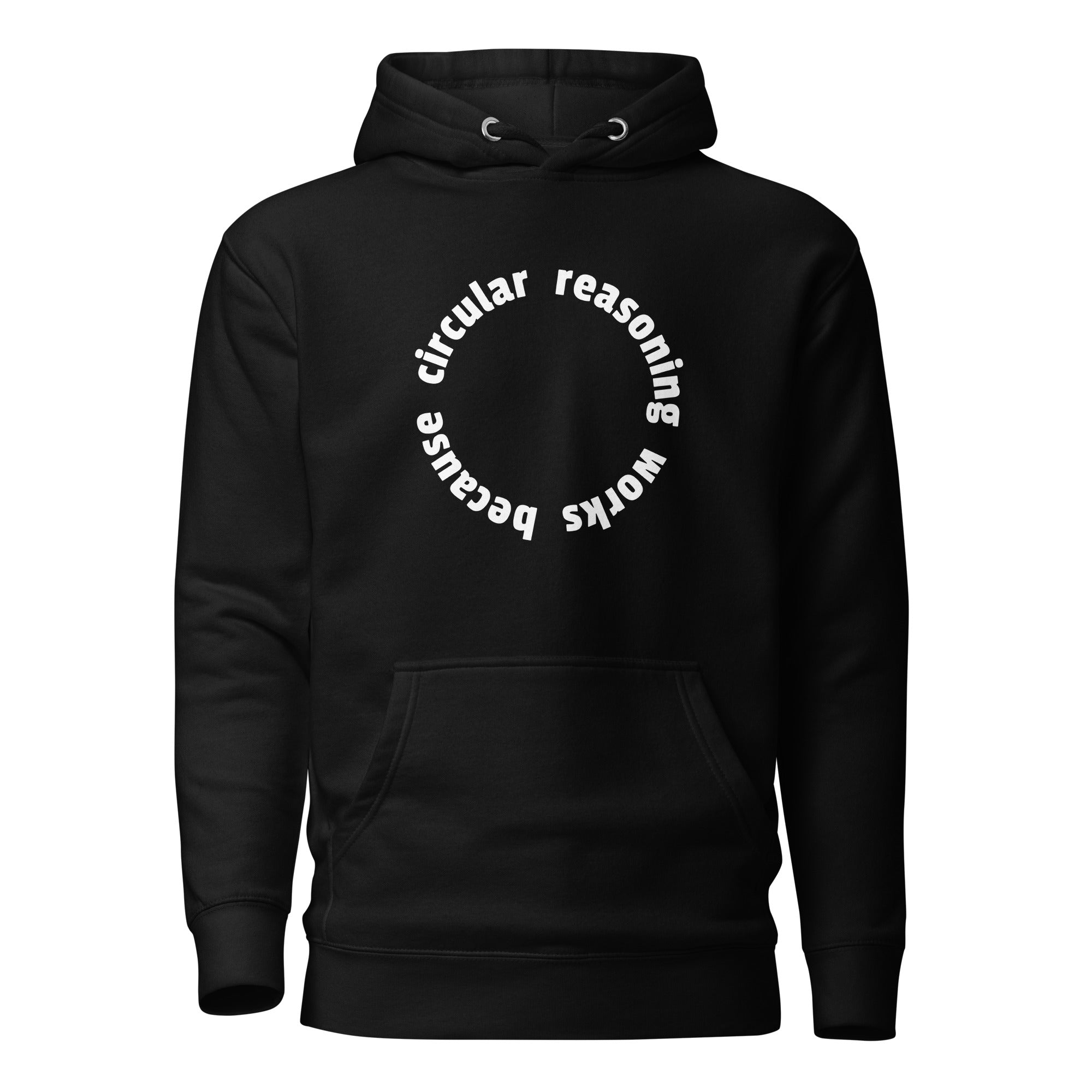
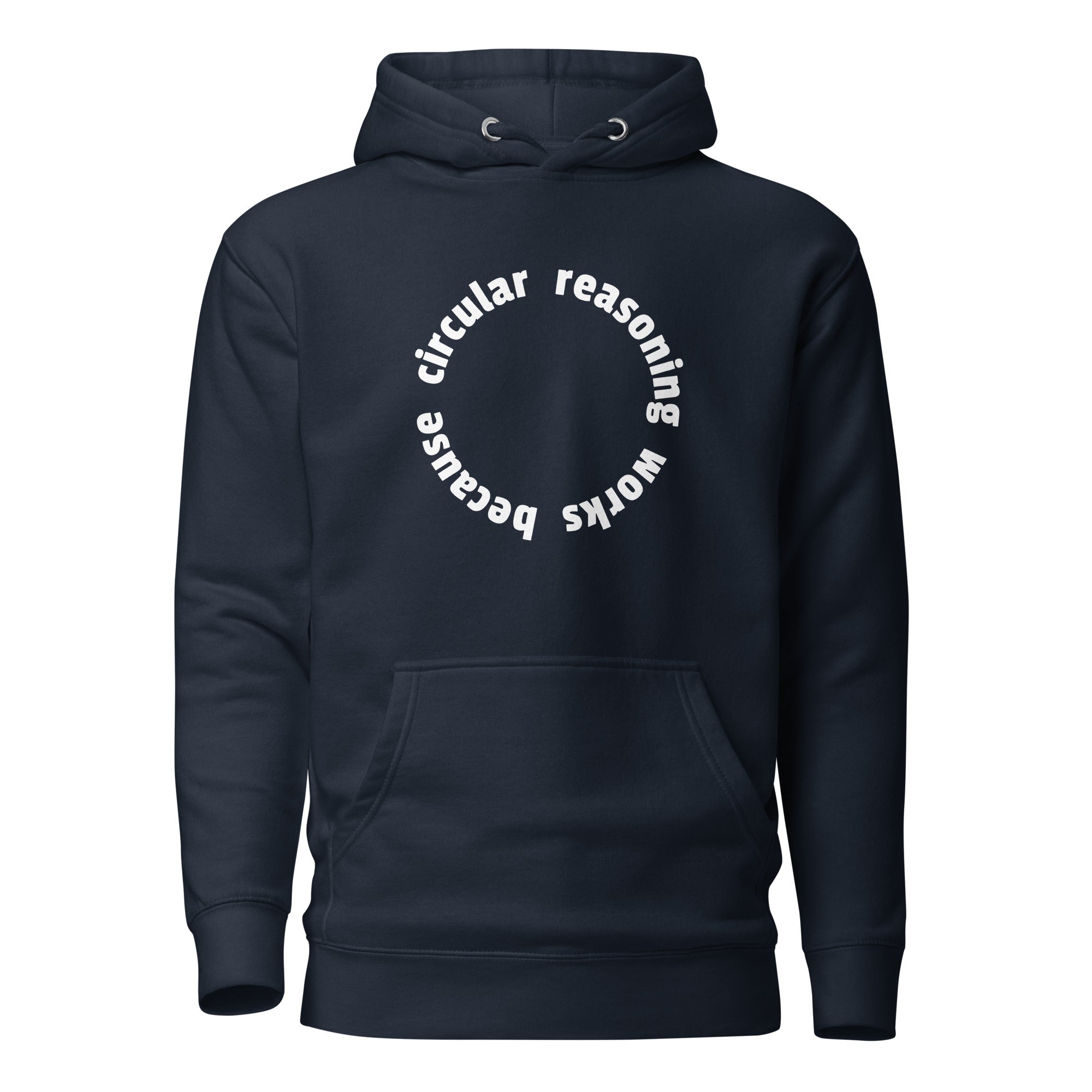
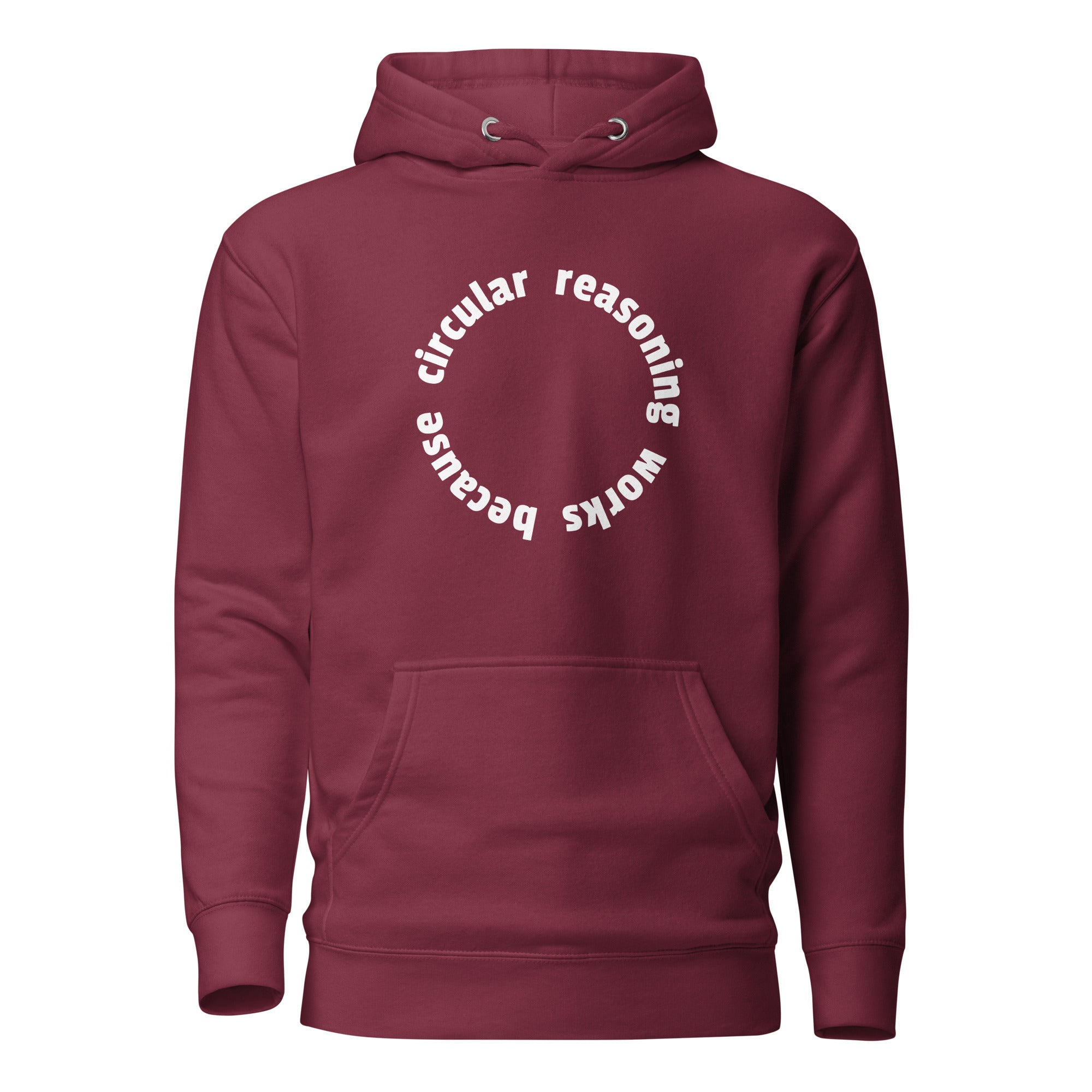
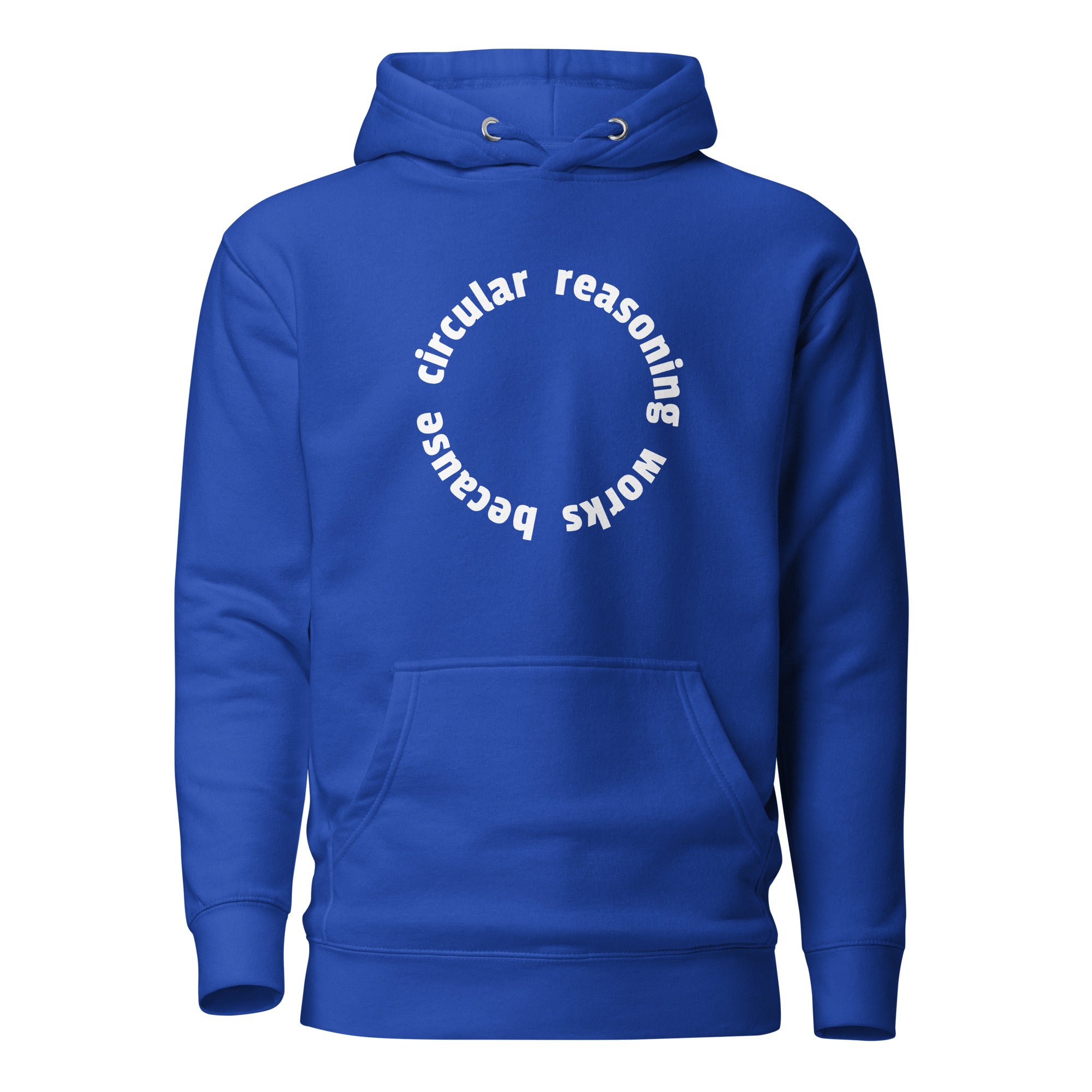
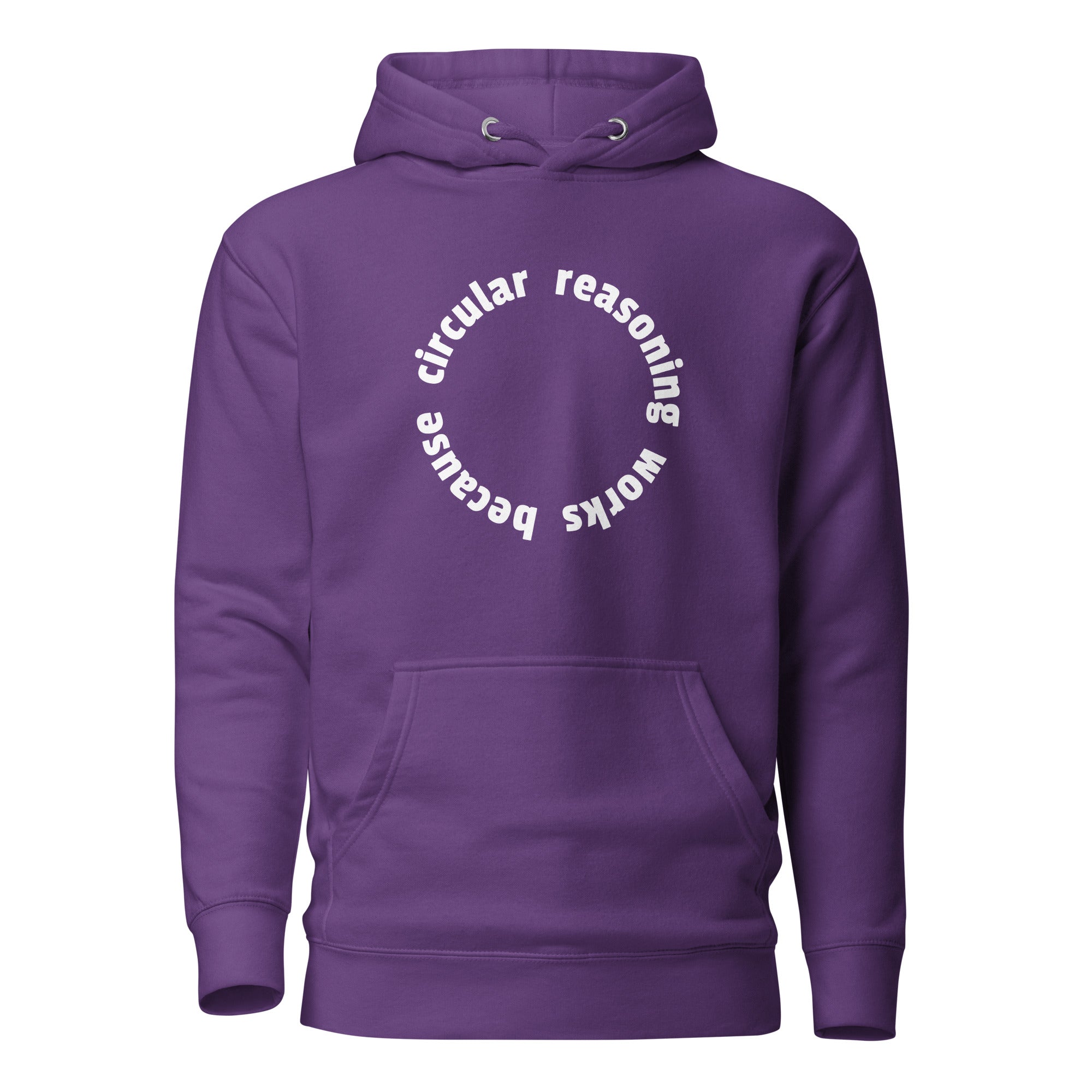
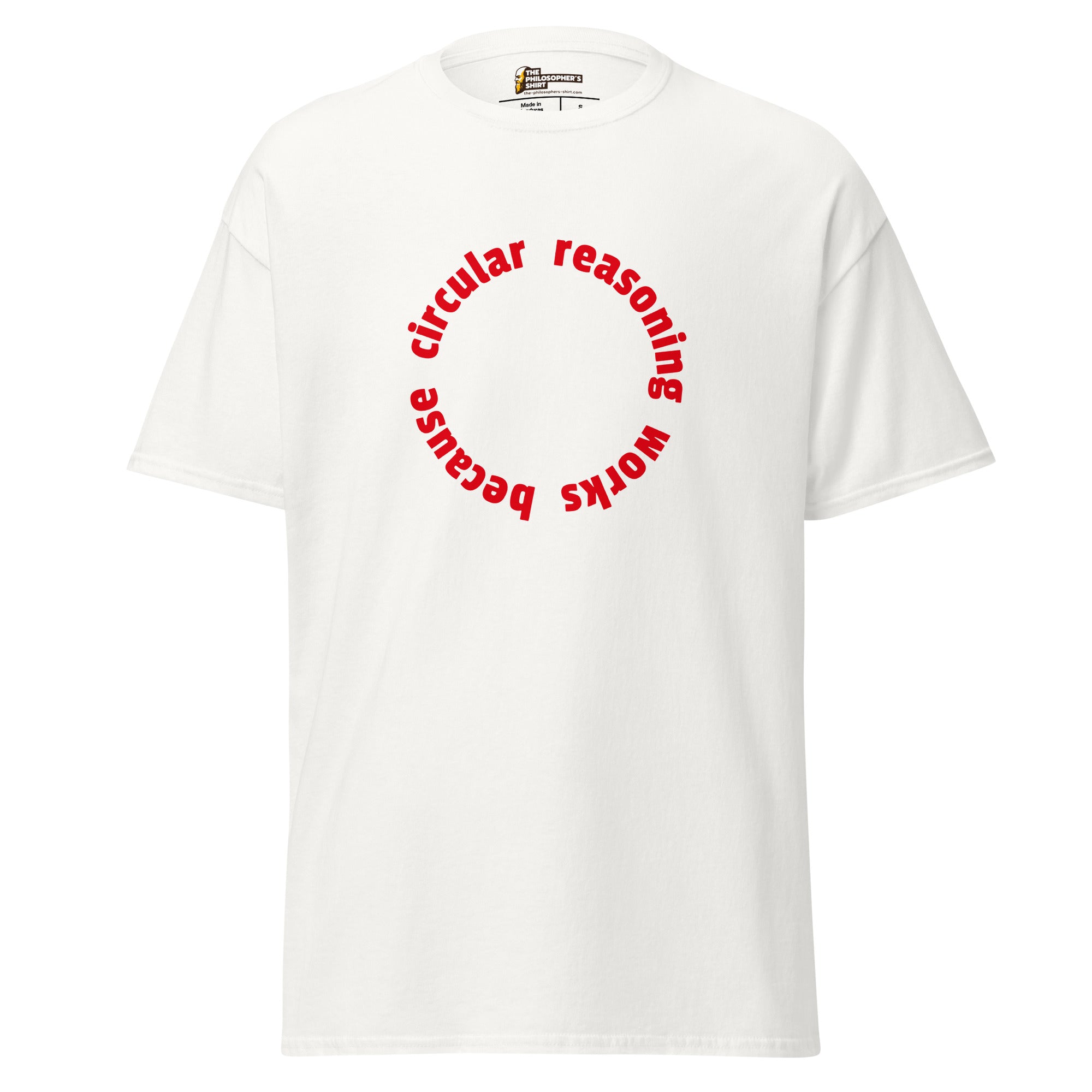
Circular reasoning works because circular reasoning works. The design loops the sentence into a ring so the fallacy demonstrates itself.

The layout is the argument, which is why logicians keep buying it. Everything in one place, across every format we print it on, made to order. Sound? No. Persuasive in the small hours? Absolutely.

Questions about this design

What does the Circular reasoning works design say?
The words circular reasoning works because circular reasoning works run around a closed ring, so the sentence never ends and the claim proves itself by assuming itself. The layout is the joke – the fallacy demonstrates itself, which is why logic teachers and debaters tend to grin at it.
What is circular reasoning?
Circular reasoning is an argument whose conclusion is already assumed in its premises, so the premises give no independent support for it. Latin names are circulus in probando and petitio principii. Its skeleton is simply A, therefore A – usually disguised by different wording or by several steps that quietly loop back.
What is an example of circular reasoning?
I can trust my memory, because I remember that it has always been reliable. Smoking is unhealthy because it is bad for your health. He must be telling the truth, because he would not lie. In each case the reason given is the conclusion again in other words, so anyone who doubted the conclusion has been given nothing new.
Is a circular argument logically valid?
Strangely, yes. An argument of the form A, therefore A is deductively valid – if the premise is true, the conclusion cannot be false. The problem is not validity but persuasion; it gives no reason to believe the conclusion to anyone who did not already accept it. That is why logicians class it as an informal fallacy rather than a formal one.
What does begging the question actually mean?
It translates the Latin petitio principii, itself from Aristotle’s Greek for asking for the initial point. Aristotle discusses it in Prior Analytics II.16 and Topics VIII – assuming the very thing you set out to prove. Using begging the question to mean raises the question is a later everyday drift that logicians still grumble about.
What is the difference between circular reasoning and begging the question?
They are often used interchangeably. Strictly, begging the question is the broader fault of assuming the conclusion in a premise, often in disguised form. Circular reasoning is the special case where the chain of justification visibly loops back on itself – A because B, B because C, C because A.
What is the Münchhausen trilemma?
Named by the German philosopher Hans Albert in Treatise on Critical Reason (1968), it says every attempt to justify a belief ends in one of three ways – an infinite regress, circular reasoning, or a dogmatic stop. The name recalls the Baron who claimed to pull himself out of a swamp by his own hair. An ancient version appears in the modes of Agrippa reported by Sextus Empiricus.
Is circular reasoning always a fallacy?
Not everyone thinks so. Coherentists argue that beliefs are justified by fitting together in a large web of mutual support rather than resting on a single foundation, and that a wide enough circle is not vicious. Critics reply that a perfectly coherent fairy tale would then count as justified too. The small circle on this design, at least, is vicious.
Is Circular reasoning works a good gift for logic or philosophy students?
Yes – it suits logic and philosophy students, debaters, lawyers, maths teachers and anyone who has marked a paper that proved its thesis by assuming it. The design comes as a Unisex Classic T-Shirt (also with a back print), Women’s T-Shirt, Sweatshirt, Premium Hoodie, Mug and Sticker.