No tariffs. Ever. We ship locally from the US, Canada, the UK, or the EU + Free shipping over $80 / 70€ / £60 (equivalent in all other currencies).
Search our site

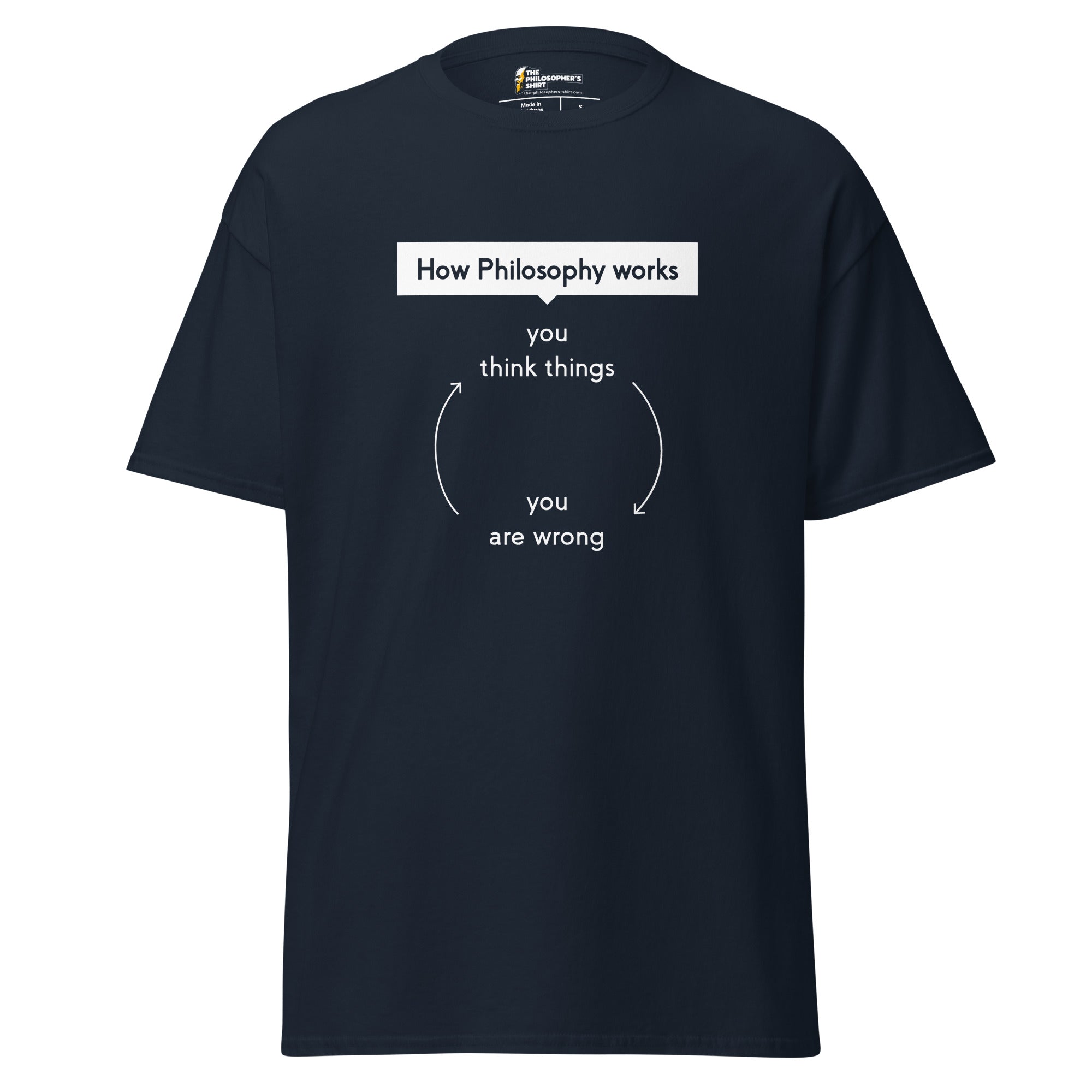
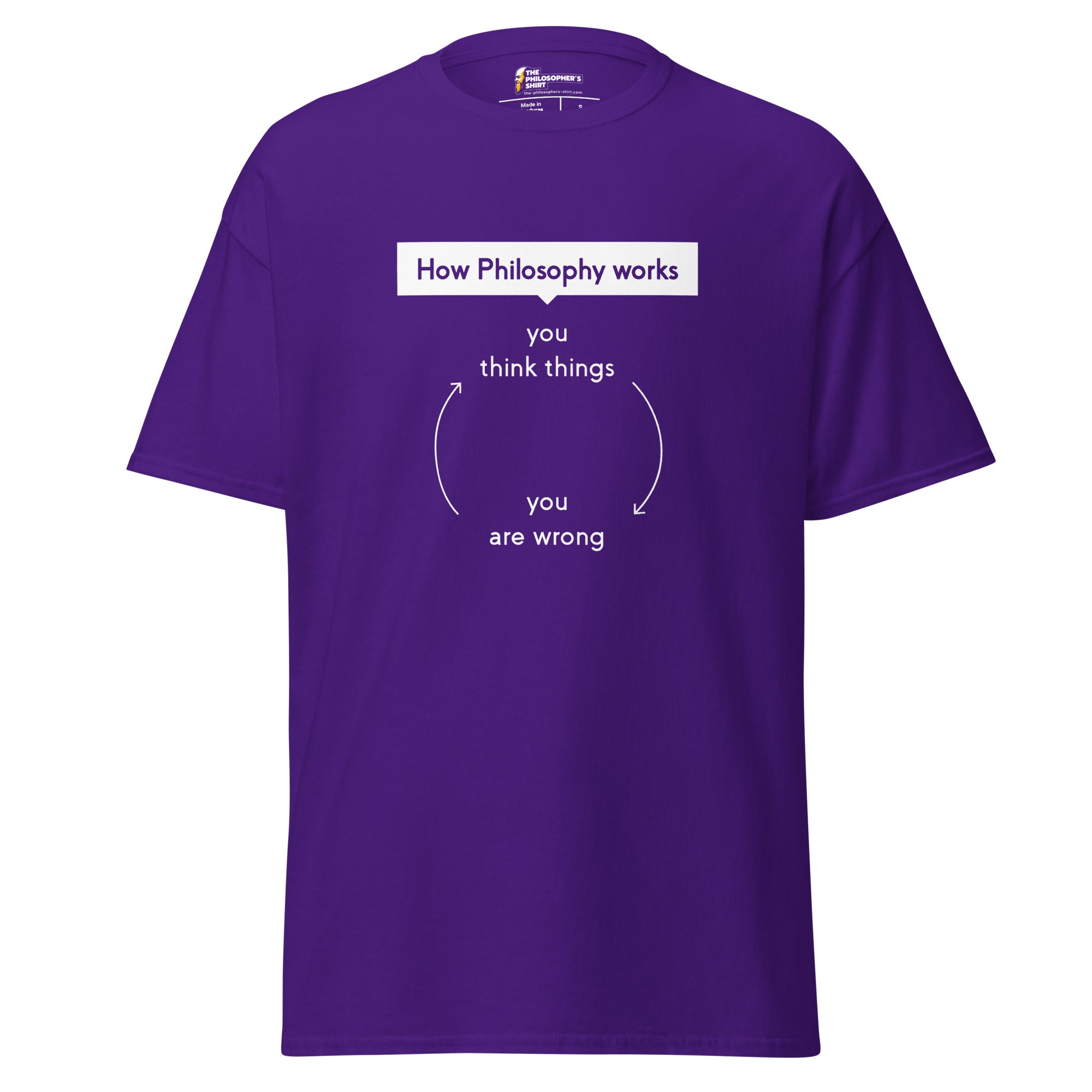
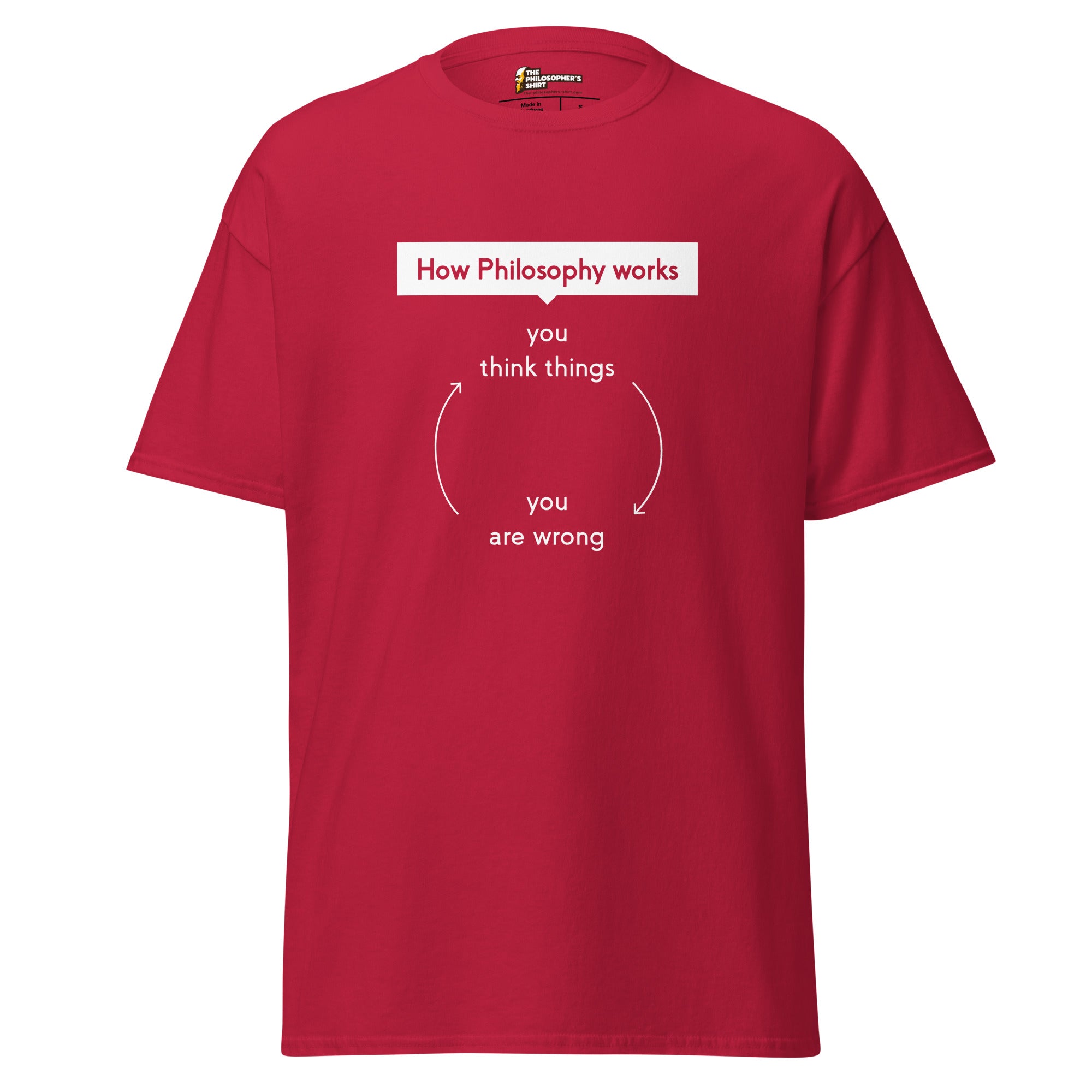
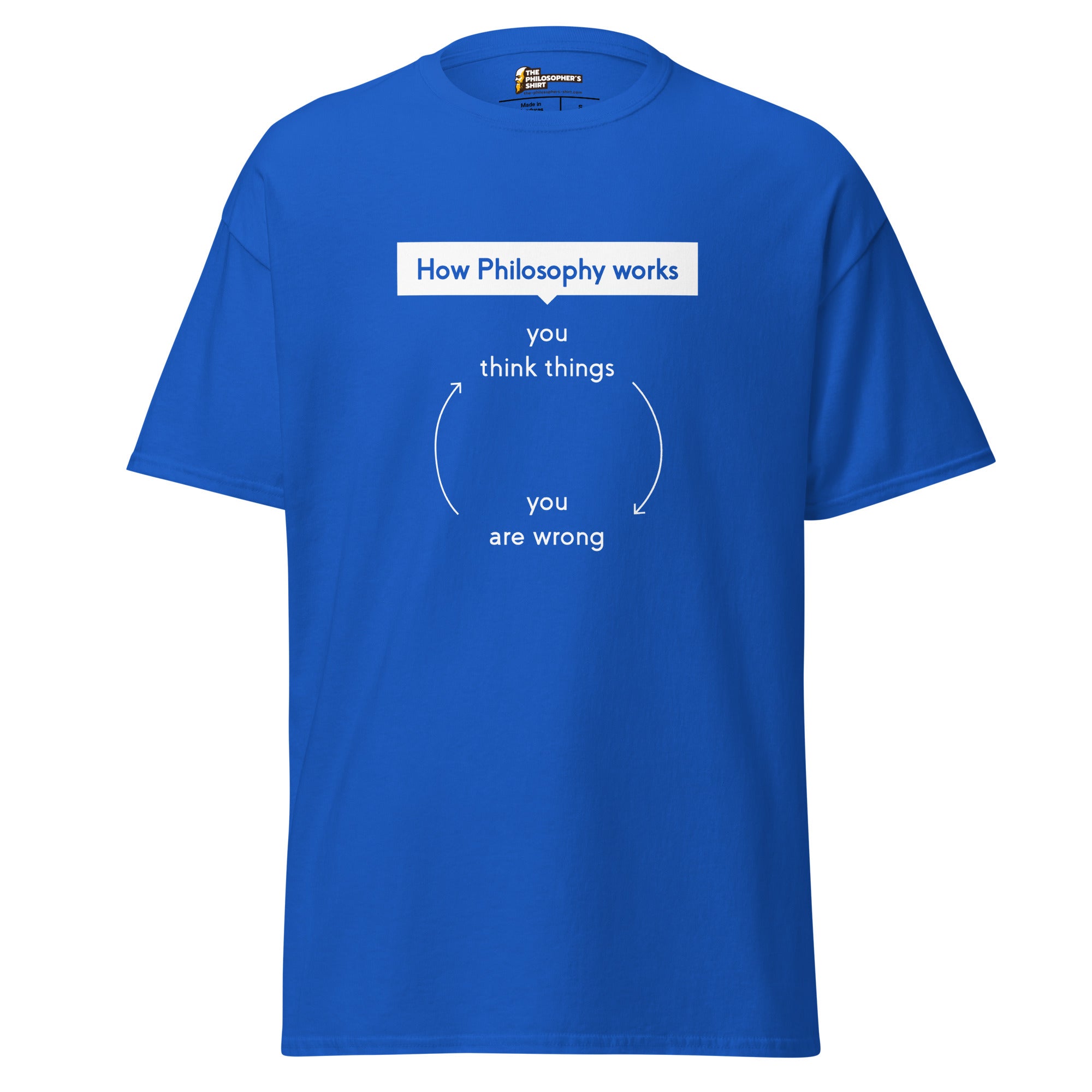
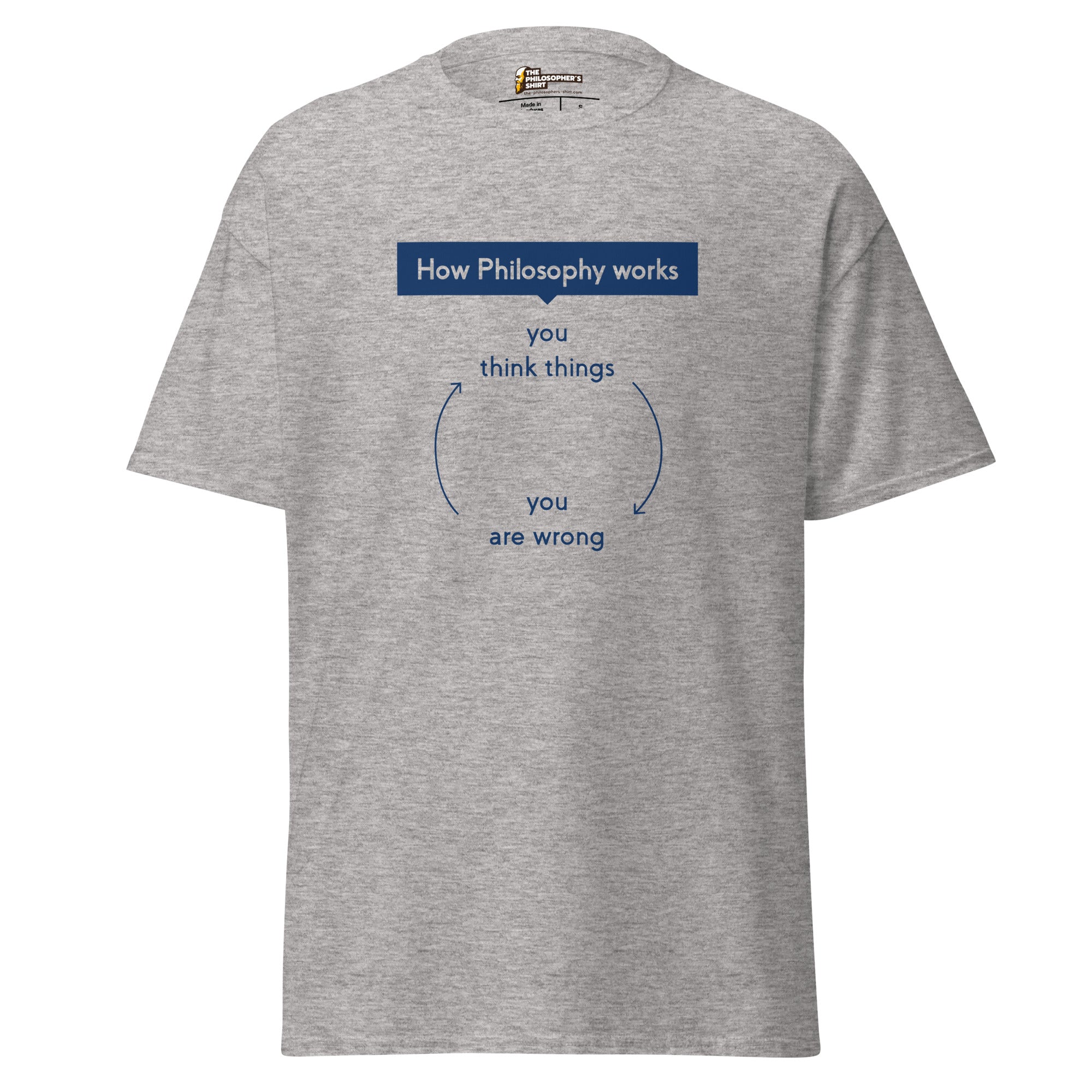
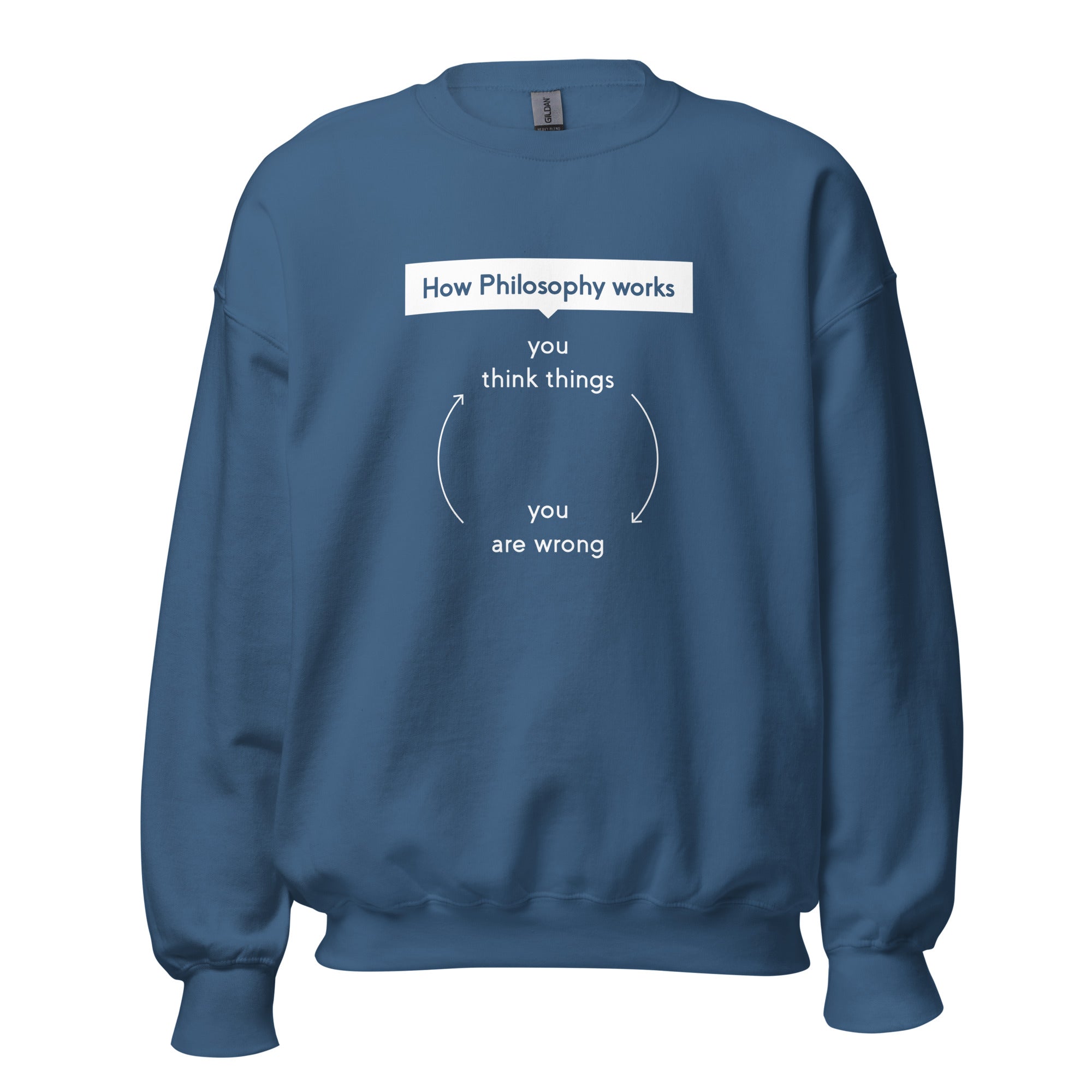
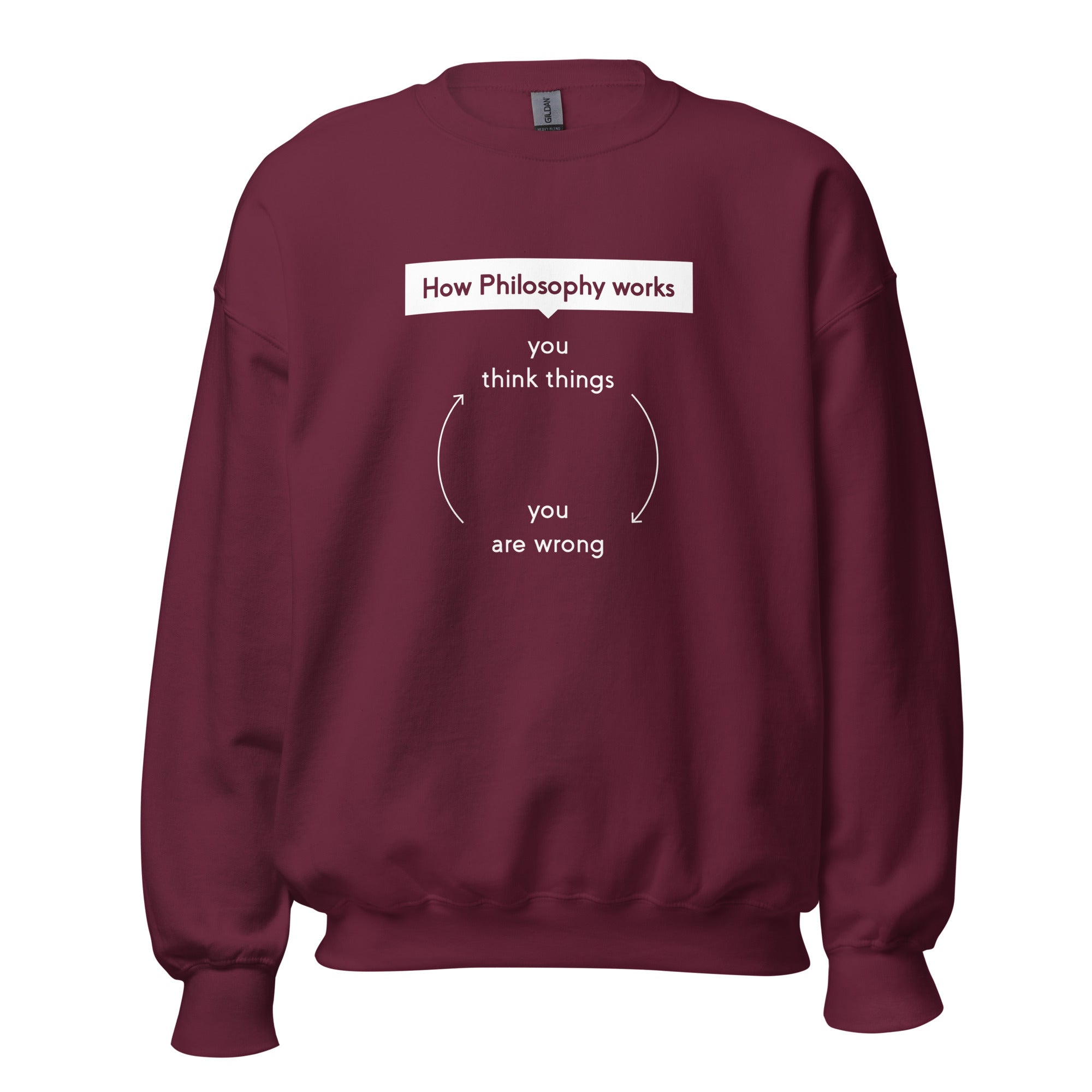
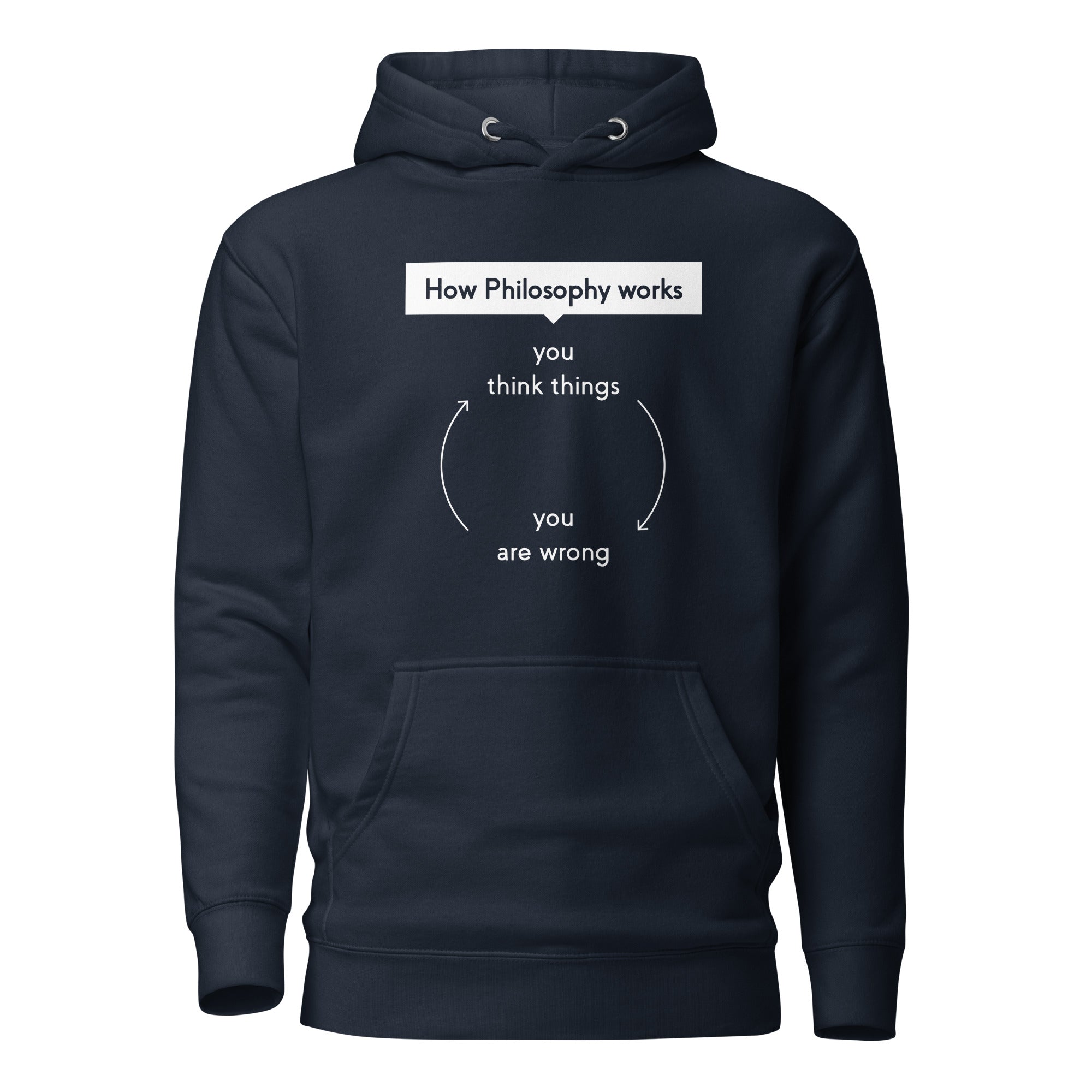
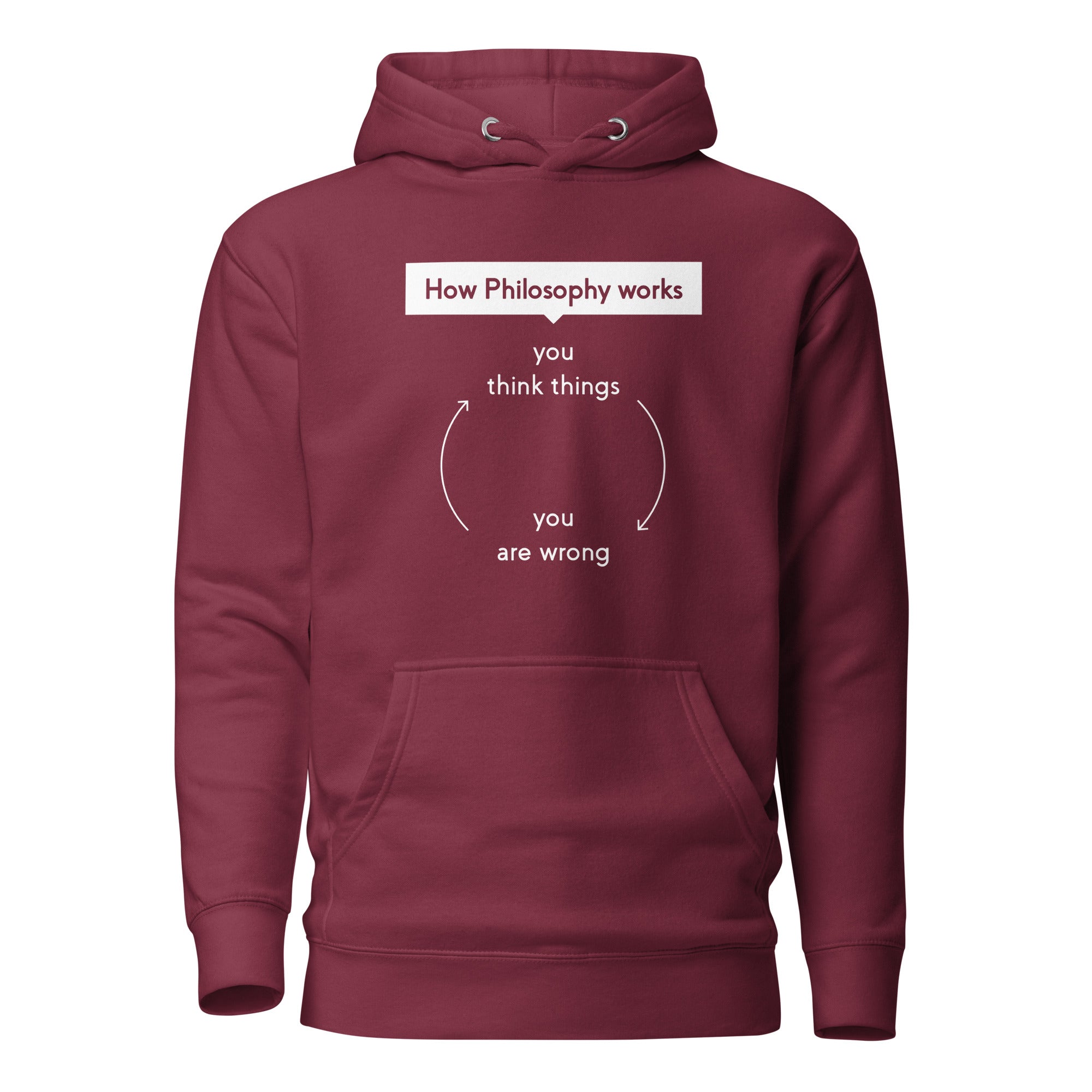
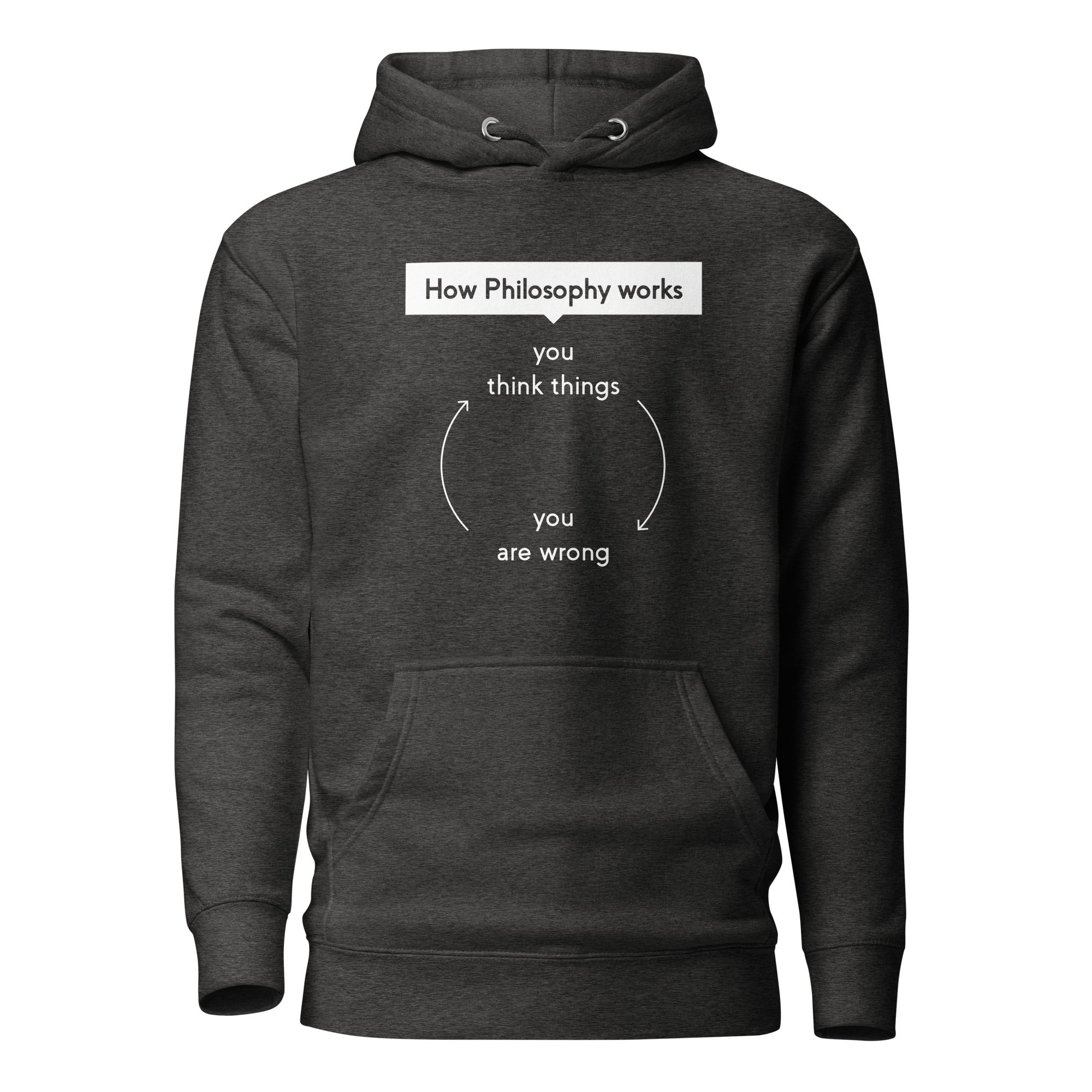
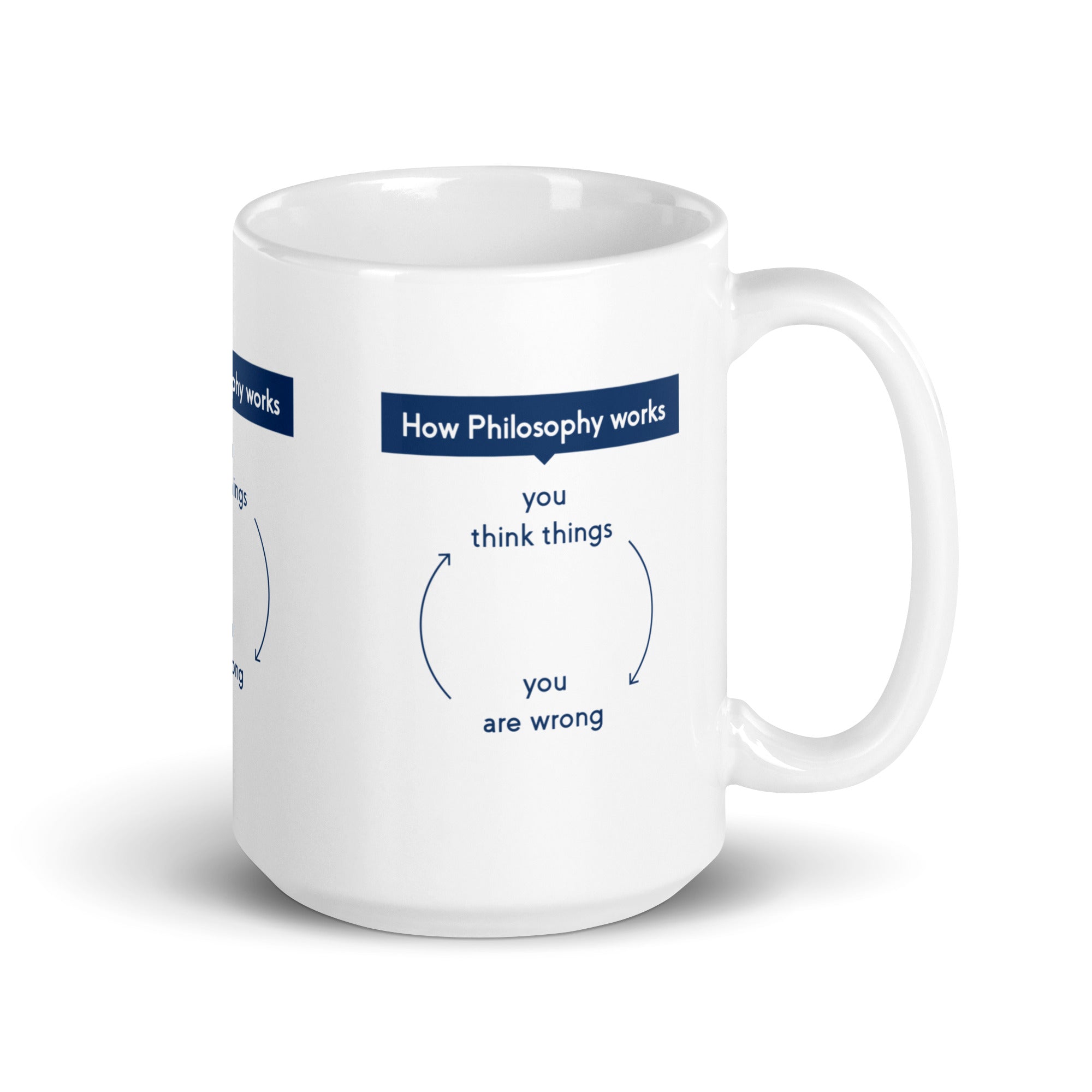
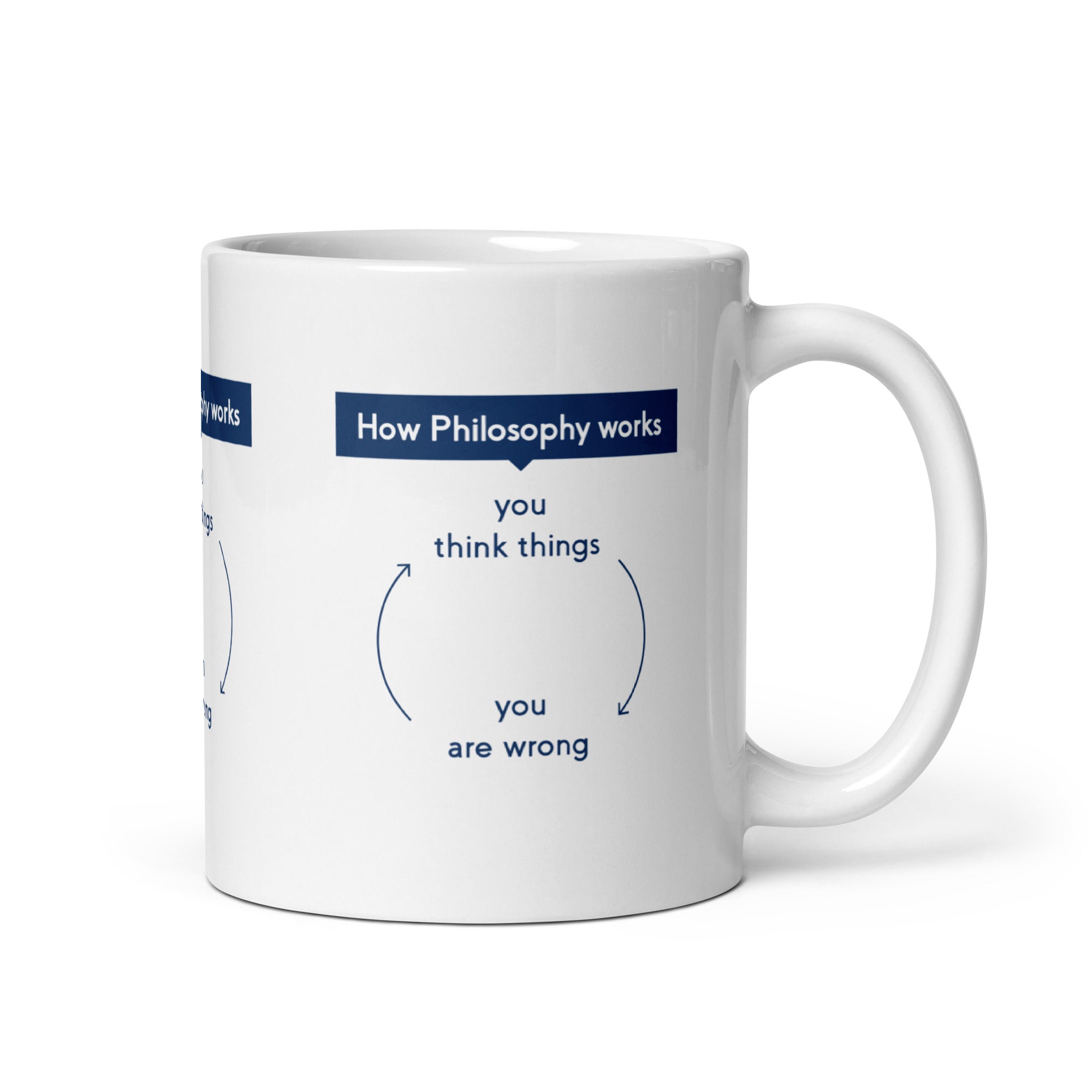
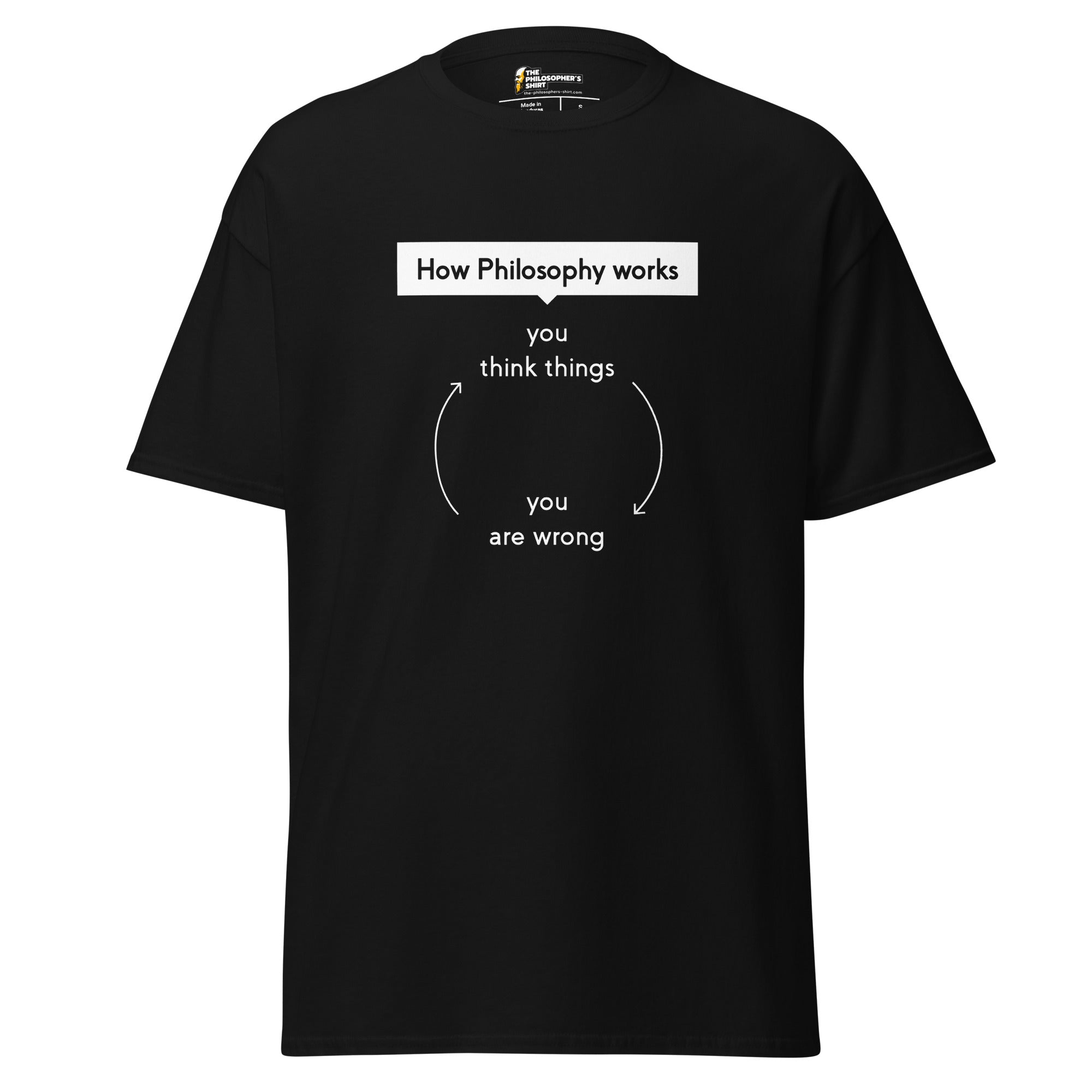
How Philosophy works

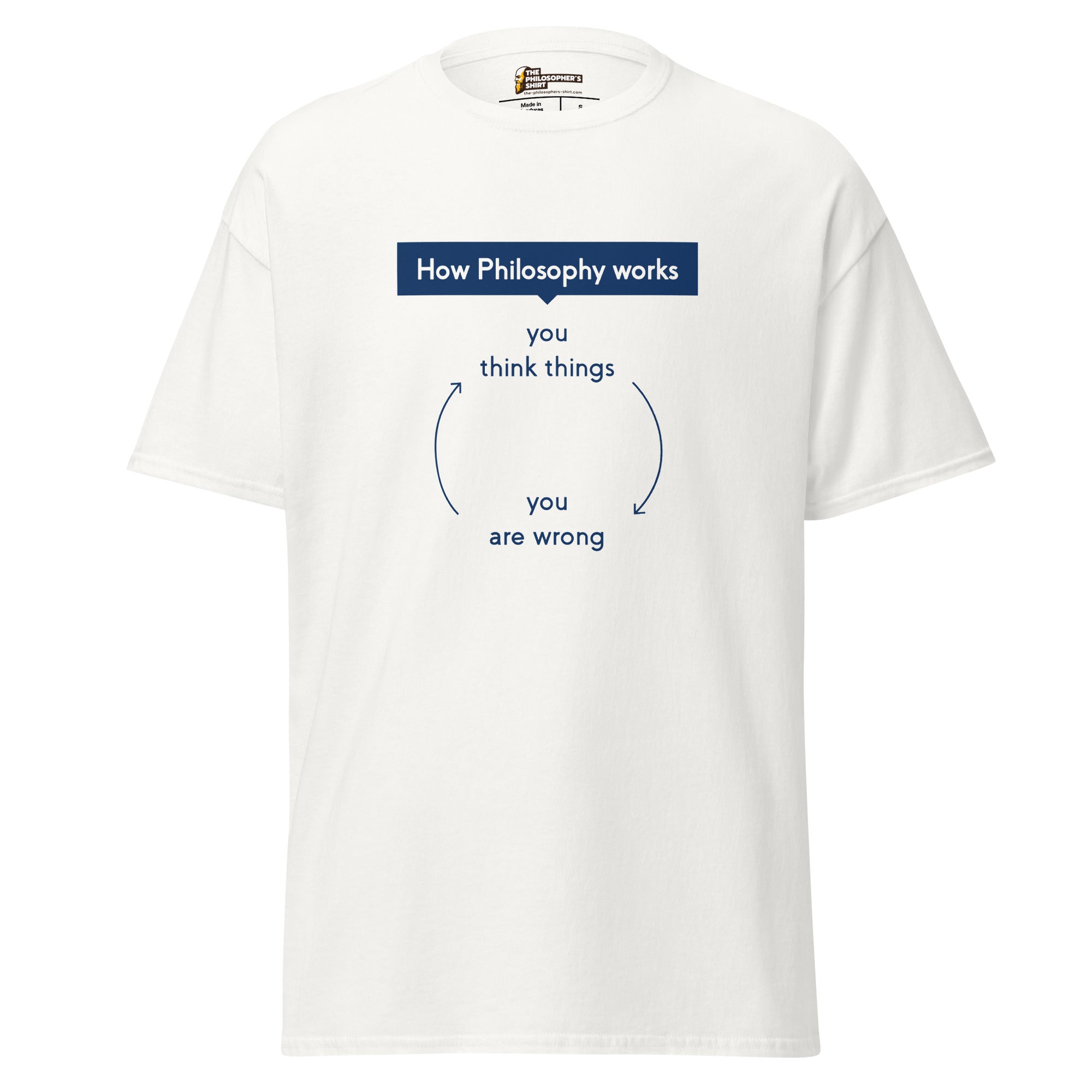
Every philosophical enquiry follows roughly the same route: question, distinction, counterexample, further distinction, and eventually a new question. Here it is, mapped.

Anyone who has written a philosophy essay recognizes the flowchart immediately. Available across tees, sweatshirts, hoodies and mugs, printed to order. Progress is a circle with better vocabulary each time round.
Questions about this design

What does the How Philosophy works design show?
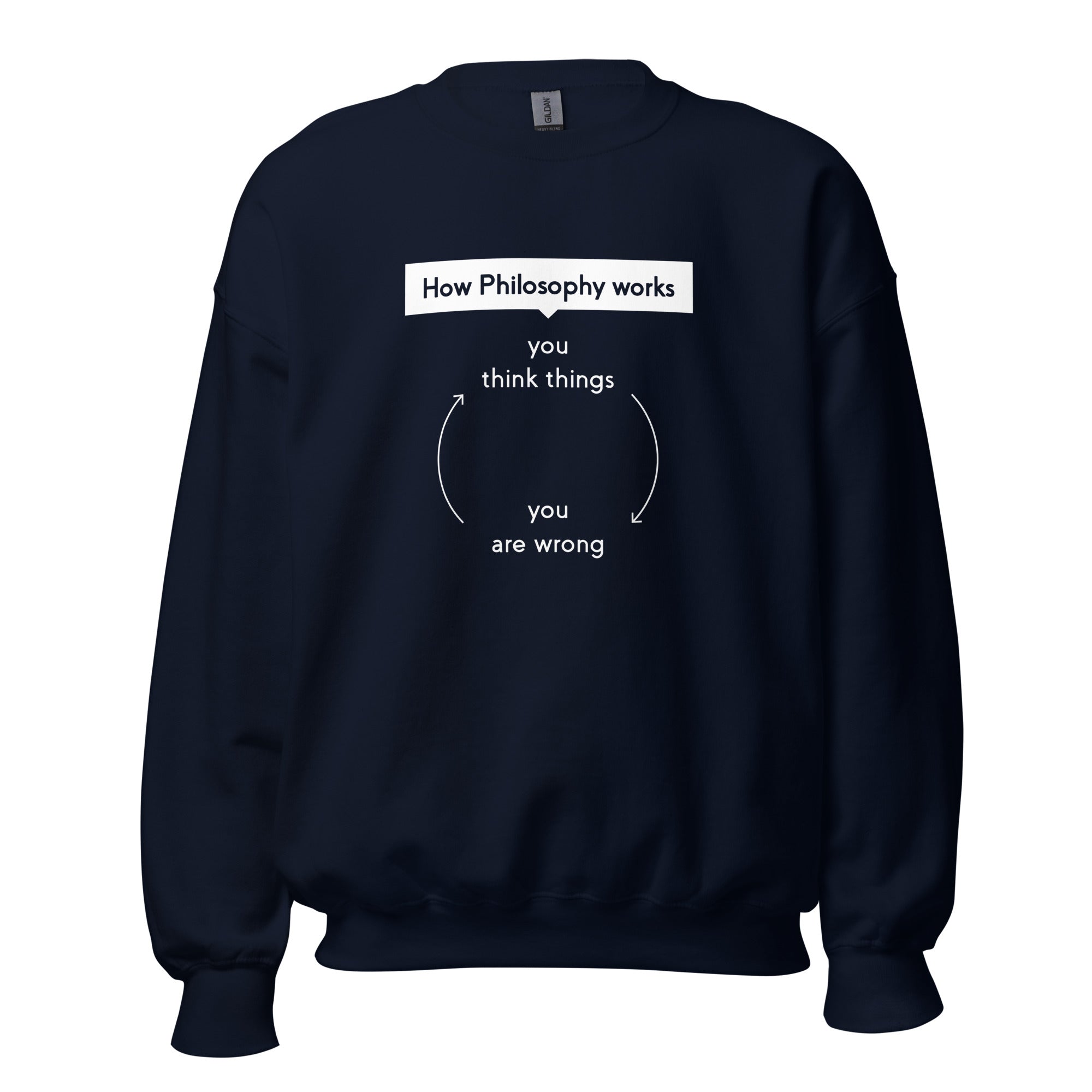
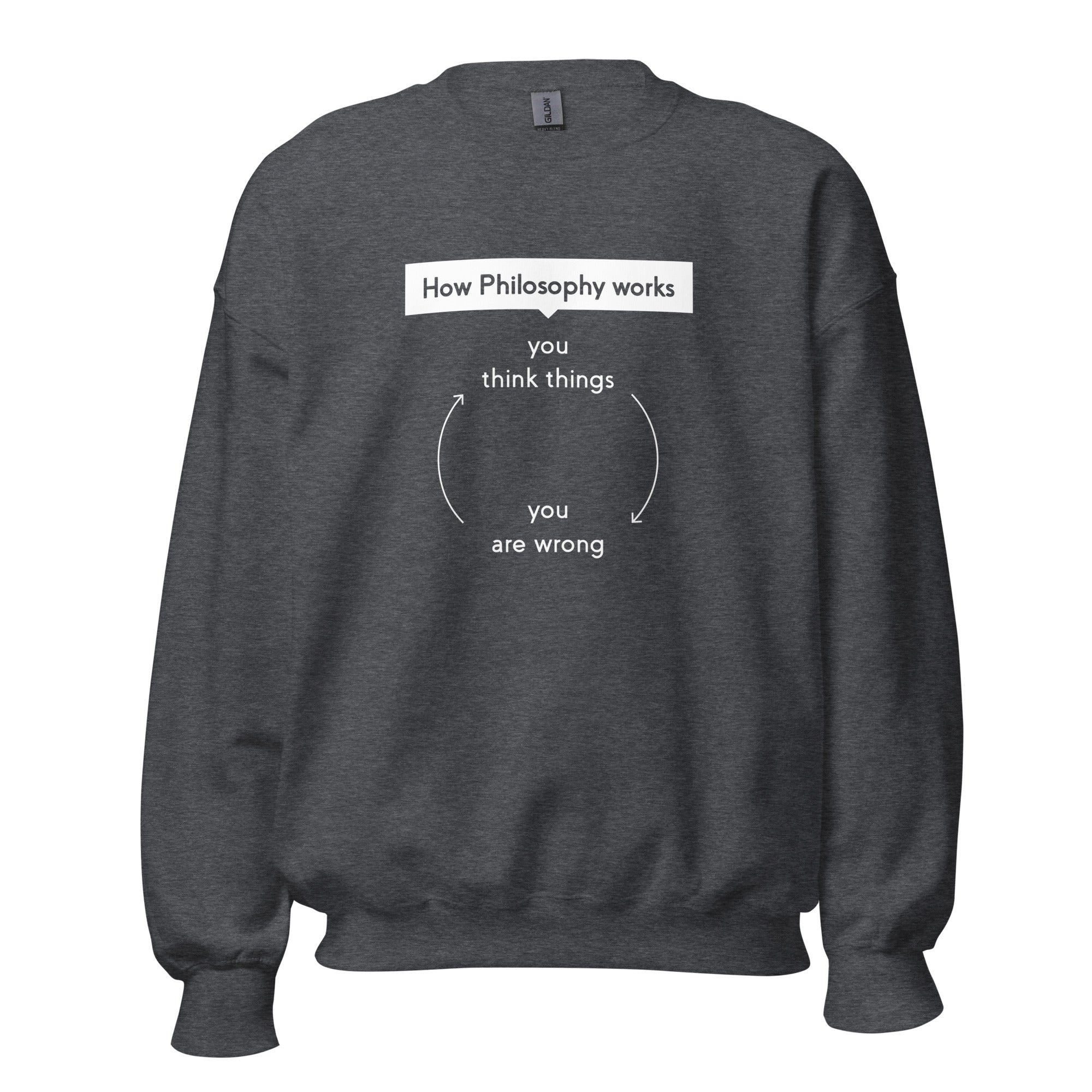
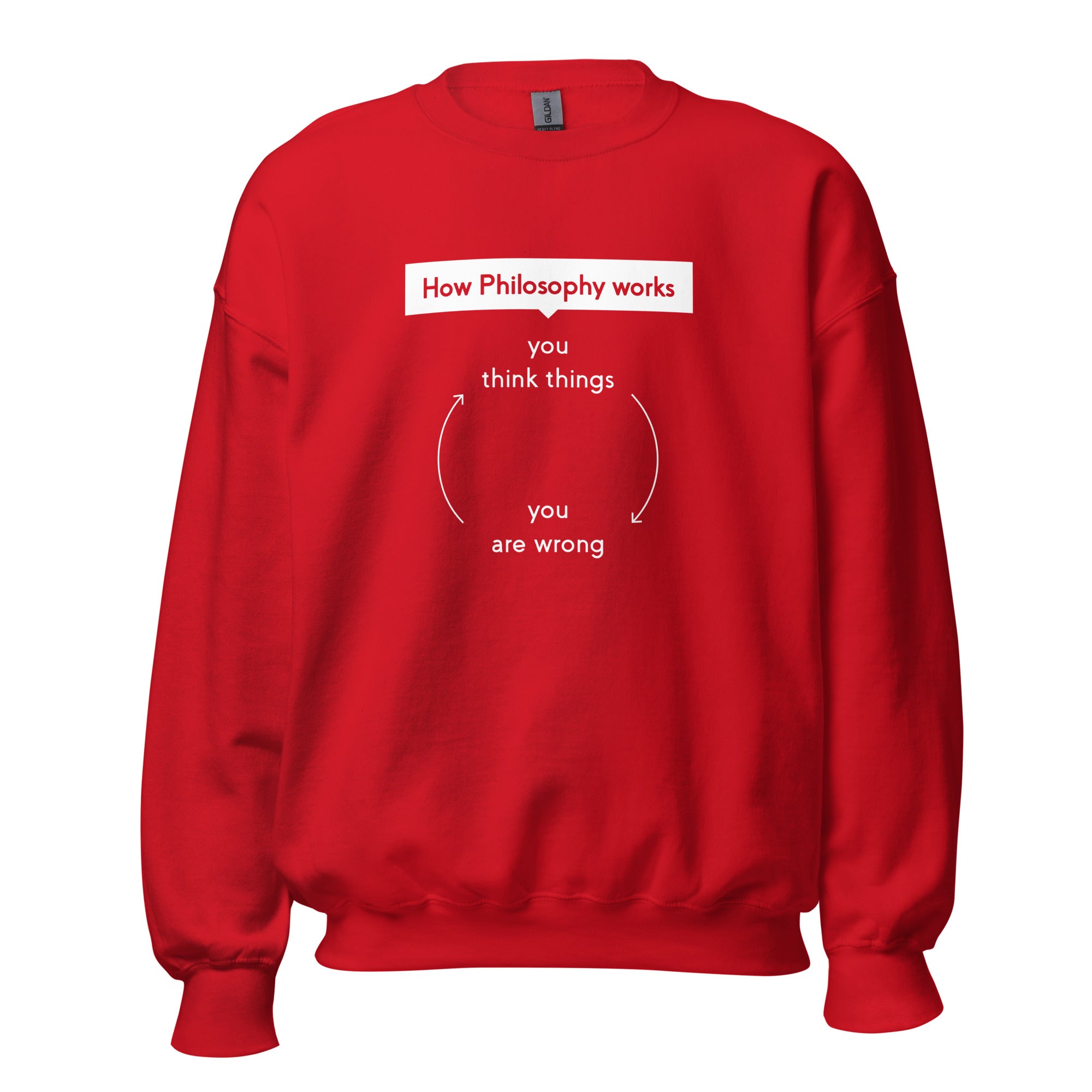
A minimalist cycle diagram titled How Philosophy works with just two steps – you think things, you are wrong – joined by arrows that lead straight back to the start. It is a joke, but an honest one, since philosophy really does advance by proposing ideas and finding out where they fail.
What is philosophy?
The word comes from the Greek philosophia, love of wisdom. Philosophy is the careful, reasoned study of basic questions that the special sciences do not settle on their own – what exists, what we can know, how we ought to live, what makes an argument valid, what a mind is. Its main branches are metaphysics, epistemology, ethics, logic and aesthetics.
Did Socrates really say I know that I know nothing?
Not in those words. The phrase is a later paraphrase. In Plato's Apology (21d) Socrates says he is wiser than a man reputed to be wise only because that man thinks he knows something when he does not, whereas Socrates, not knowing, does not think he knows. The point is awareness of one's ignorance, not a claim to know nothing at all.
What is the Socratic method?
A way of testing ideas by questioning. Socrates asks someone to define a concept such as courage or piety, then draws out consequences until the definition contradicts other things the person believes. The Greek name is elenchus, and the dialogues often end in aporia, a state of puzzlement – the cycle of the design in its original form.
What is fallibilism?
The view that any of our beliefs, even well-justified ones, could turn out to be false. The term was coined by Charles Sanders Peirce in the late 19th century. Fallibilism is not scepticism – it does not say we know nothing, only that knowledge stays open to correction, which is why being wrong is part of the method rather than its failure.
What is falsifiability in Karl Popper's philosophy?
Popper argued that a theory is scientific only if some possible observation could prove it false. Science advances by bold conjectures and attempted refutations, not by piling up confirmations. He set this out in Logik der Forschung (1934; English The Logic of Scientific Discovery, 1959) and Conjectures and Refutations (1963).
Is thesis, antithesis, synthesis really Hegel's dialectic?
Mostly not. The triad was used by Fichte and popularised as a summary of Hegel by Heinrich Moritz Chalybäus in the 1830s. Hegel himself almost never used the terms and criticised such formulas in the preface to the Phenomenology of Spirit (1807). His dialectic describes how a concept's own contradictions push it towards a richer one.
Does philosophy ever make progress?
It is a live debate. David Chalmers' paper Why Isn't There More Progress in Philosophy? (2015) notes that philosophers rarely converge on answers the way scientists do. Others reply that philosophy progresses by clarifying questions, ruling out bad answers and spinning off new fields – physics, psychology, logic and parts of computer science all began there.
Who is the How Philosophy works design a good gift for?
For philosophy students in the middle of their first essay crisis, PhD candidates, teachers and lecturers, and anyone who has changed their mind in a seminar and survived. It is a funny philosophy gift that insiders recognise at once. The design comes as a sweatshirt, premium hoodie, classic t-shirt, mug and sticker.