No tariffs. Ever. We ship locally from the US, Canada, the UK, or the EU + Free shipping over $80 / 70€ / £60 (equivalent in all other currencies).
Search our site

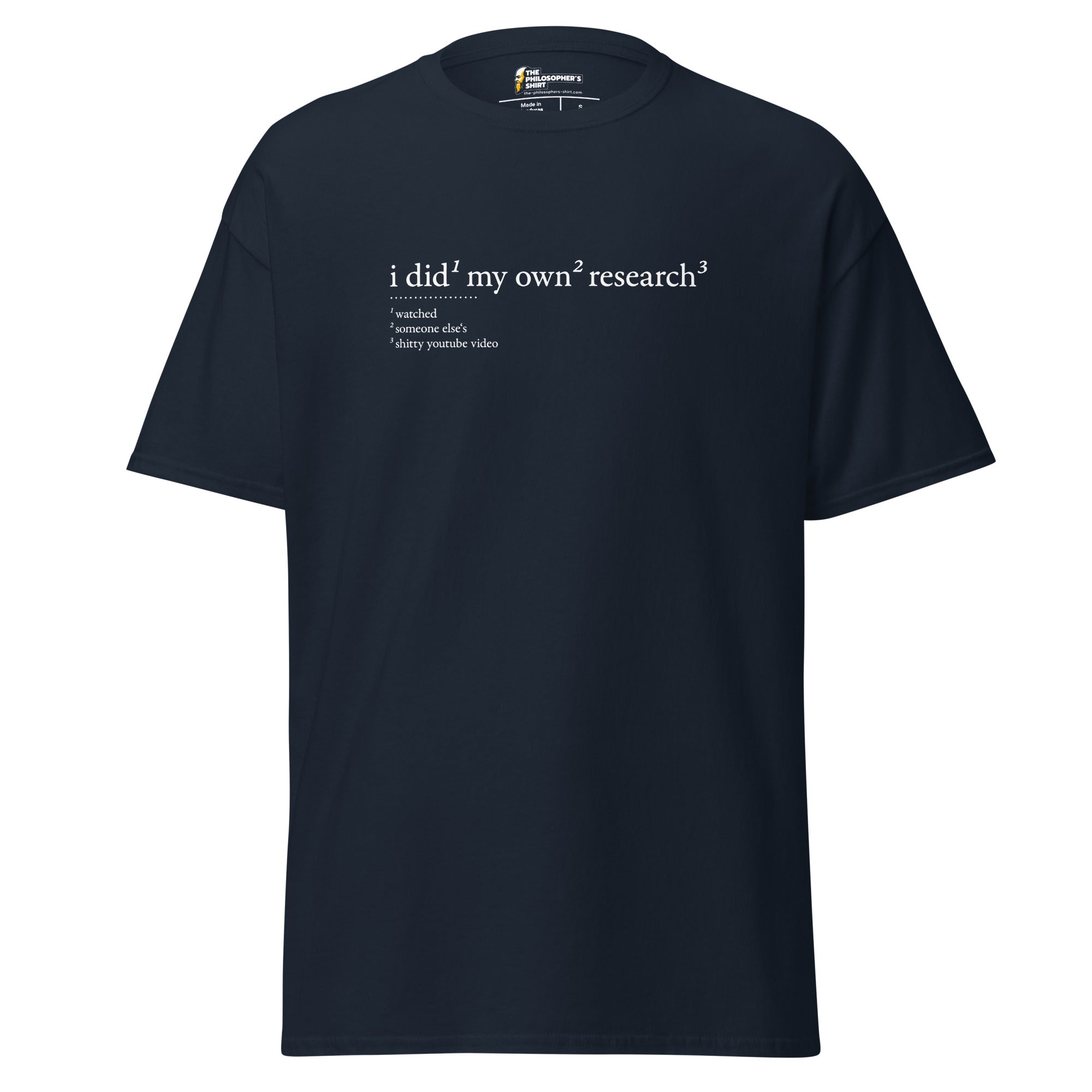
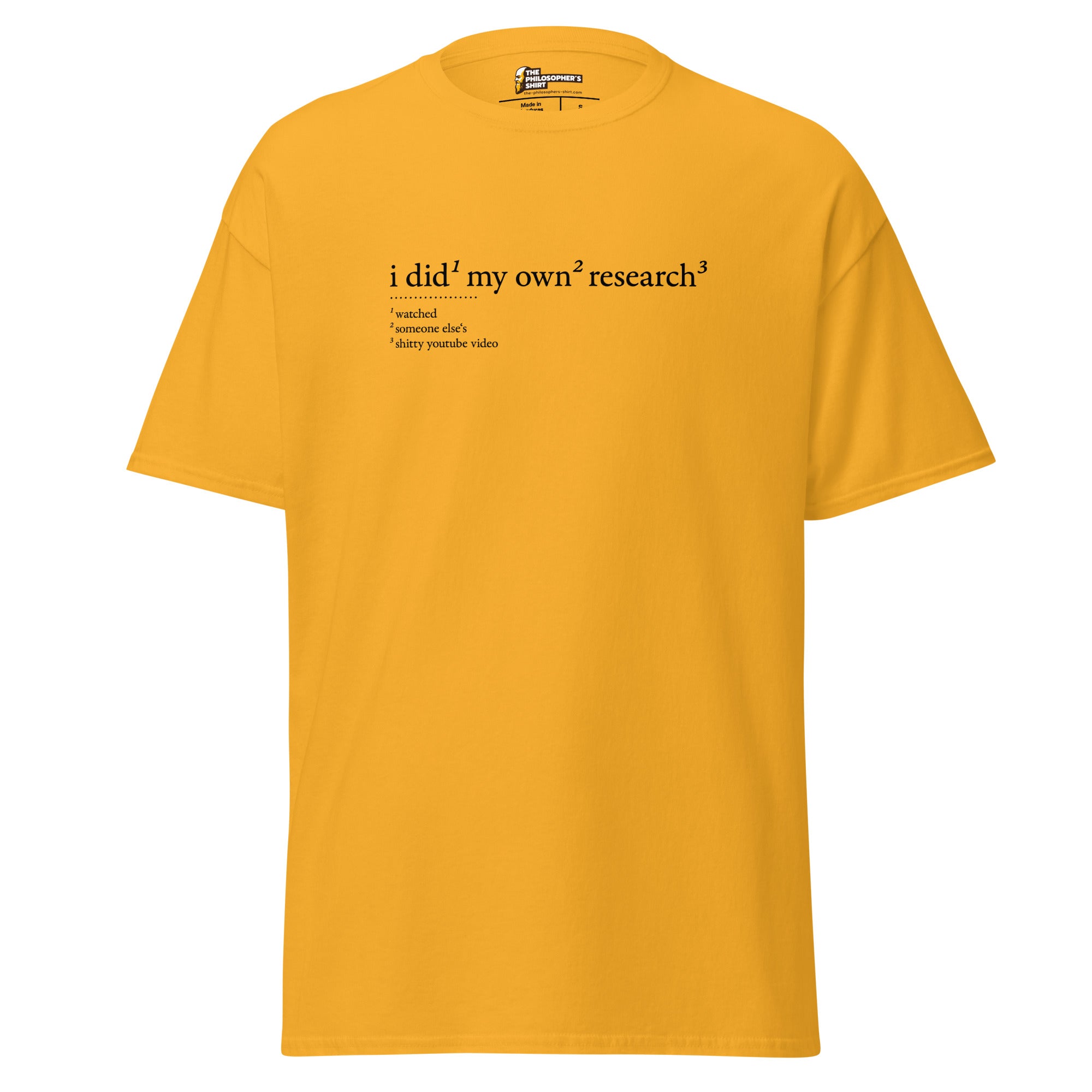
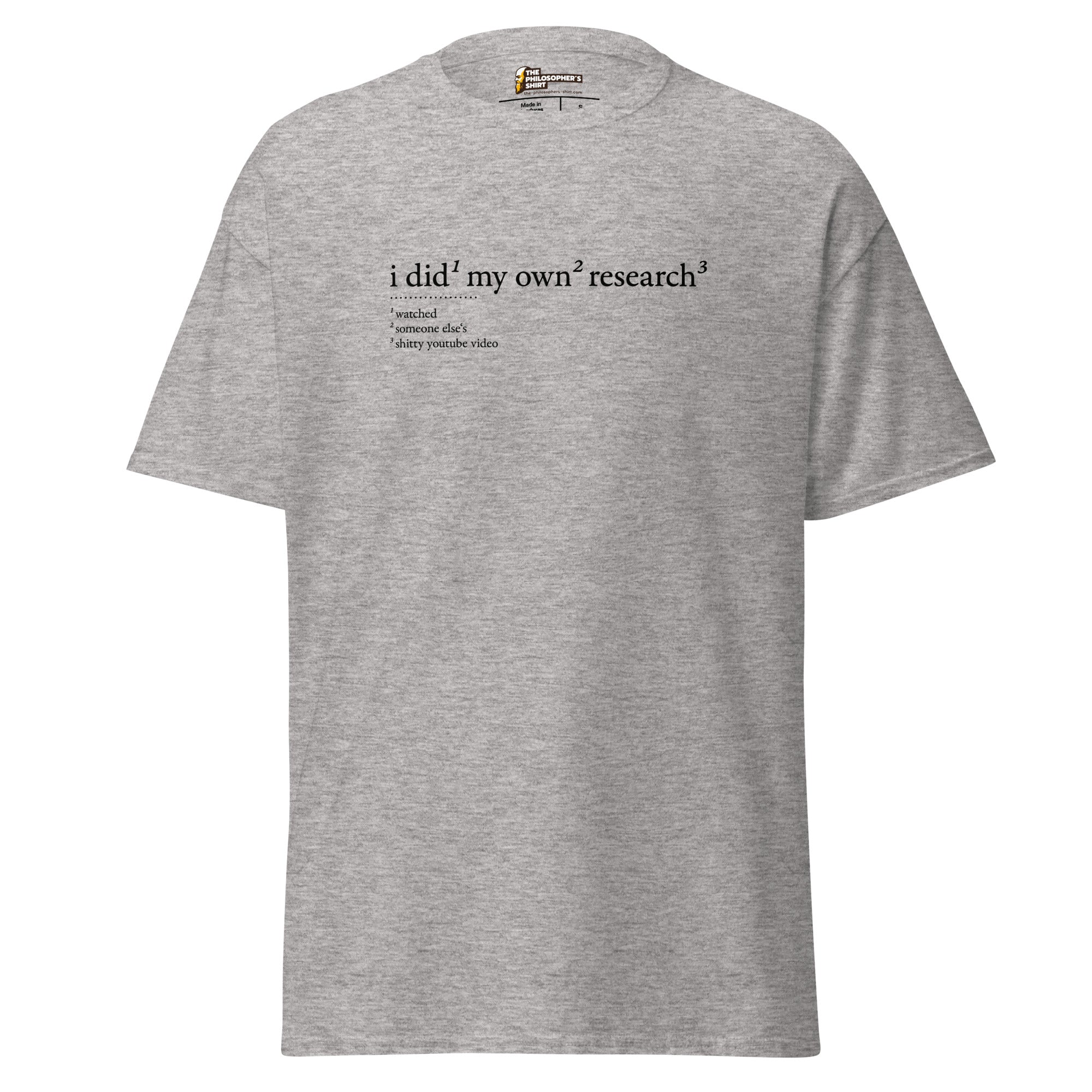
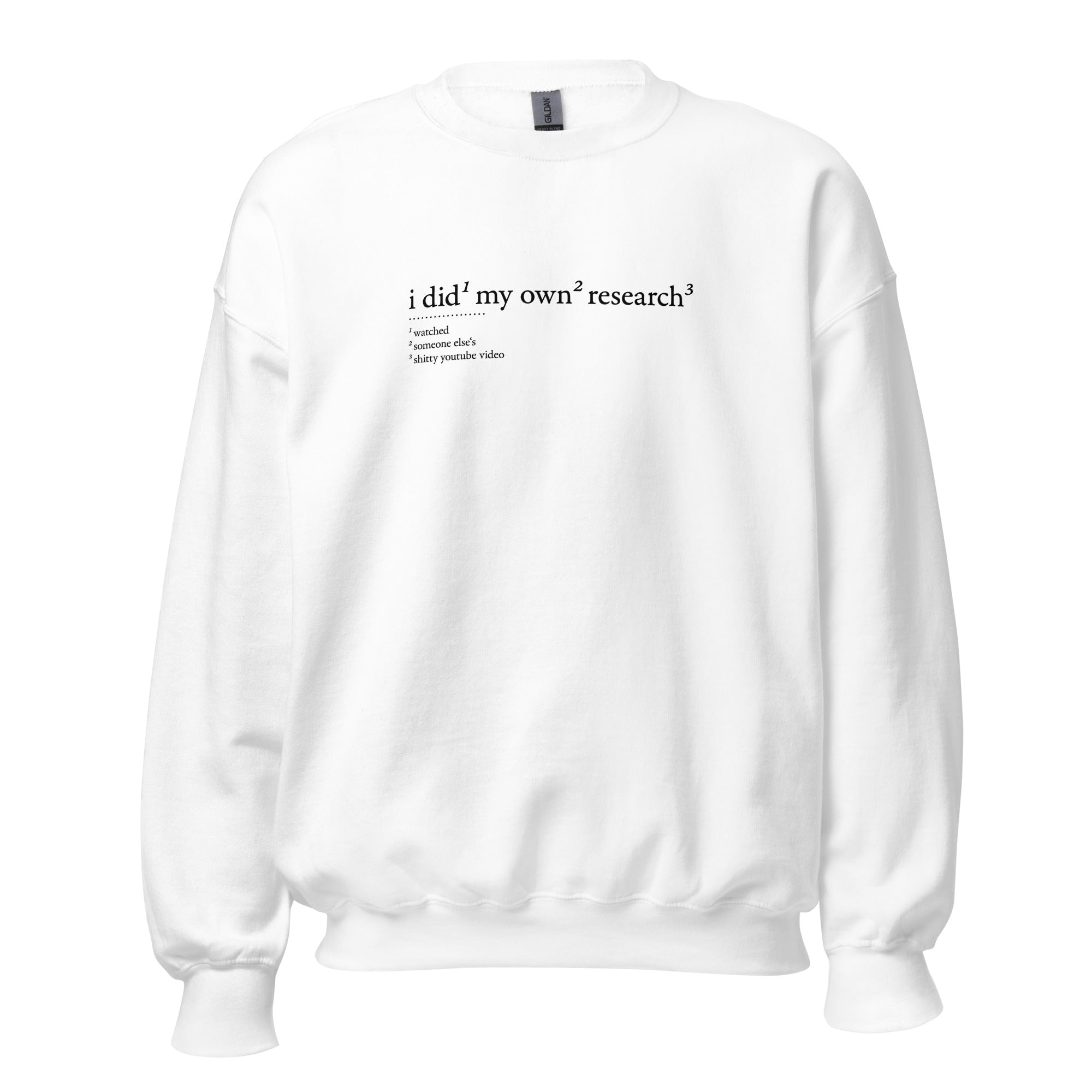
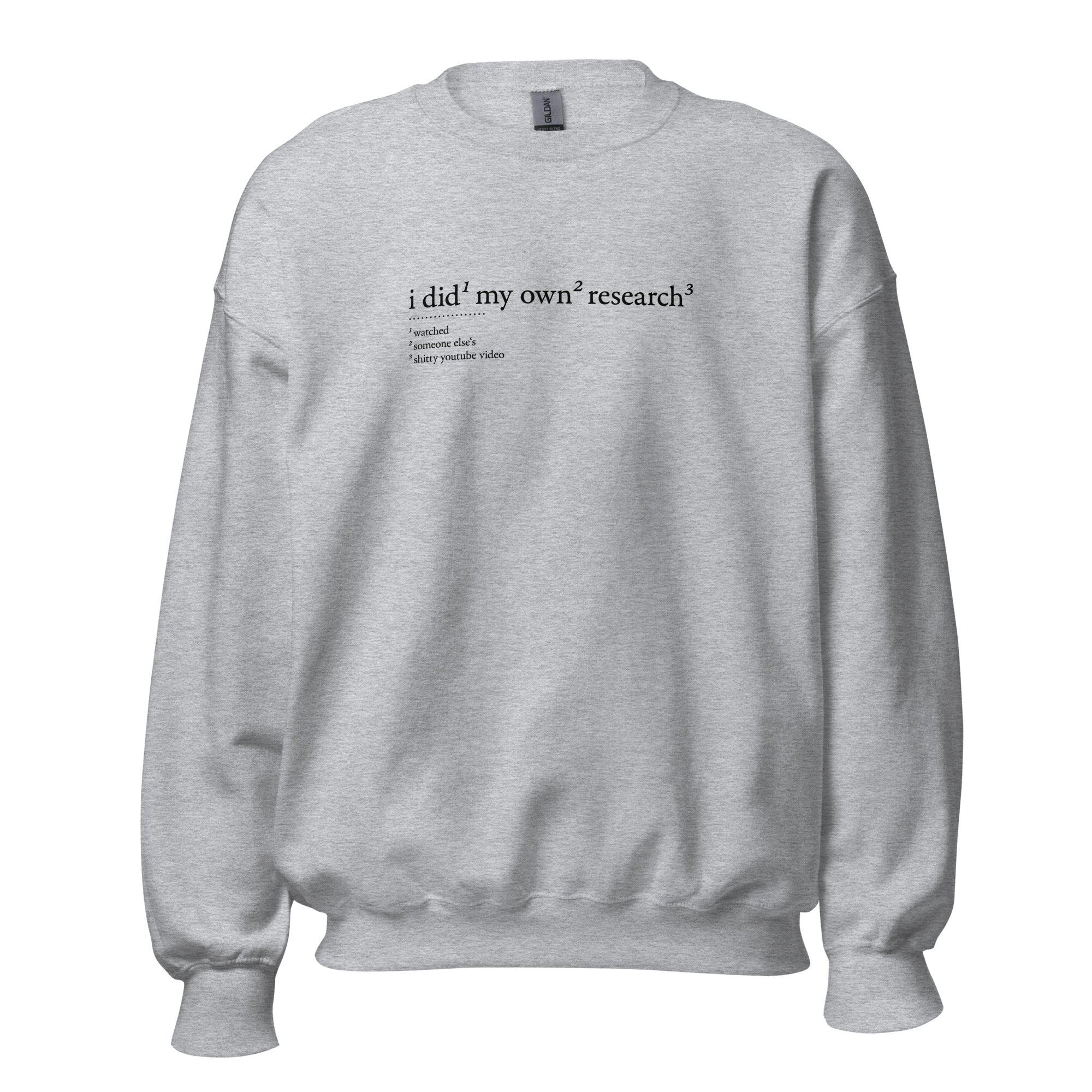
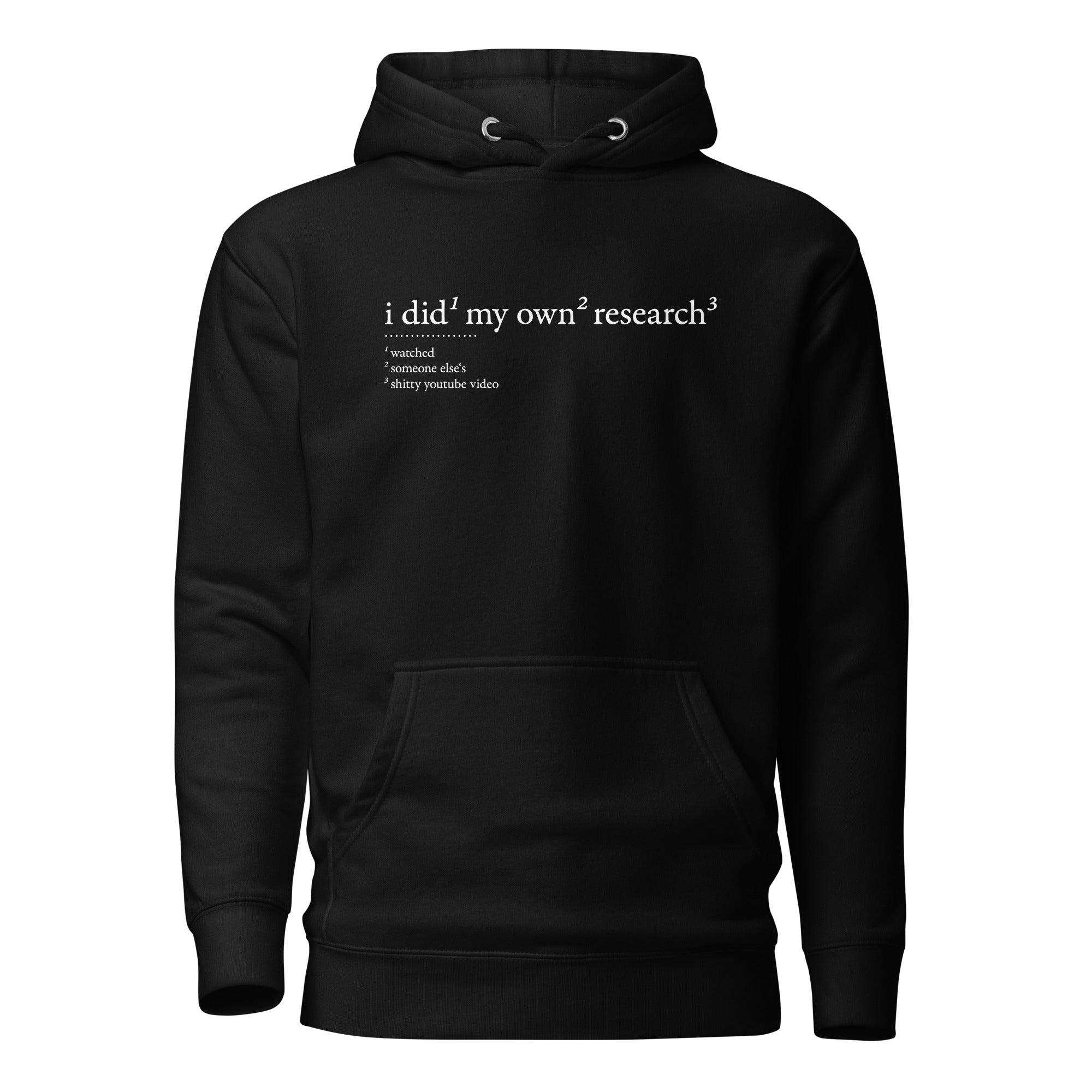
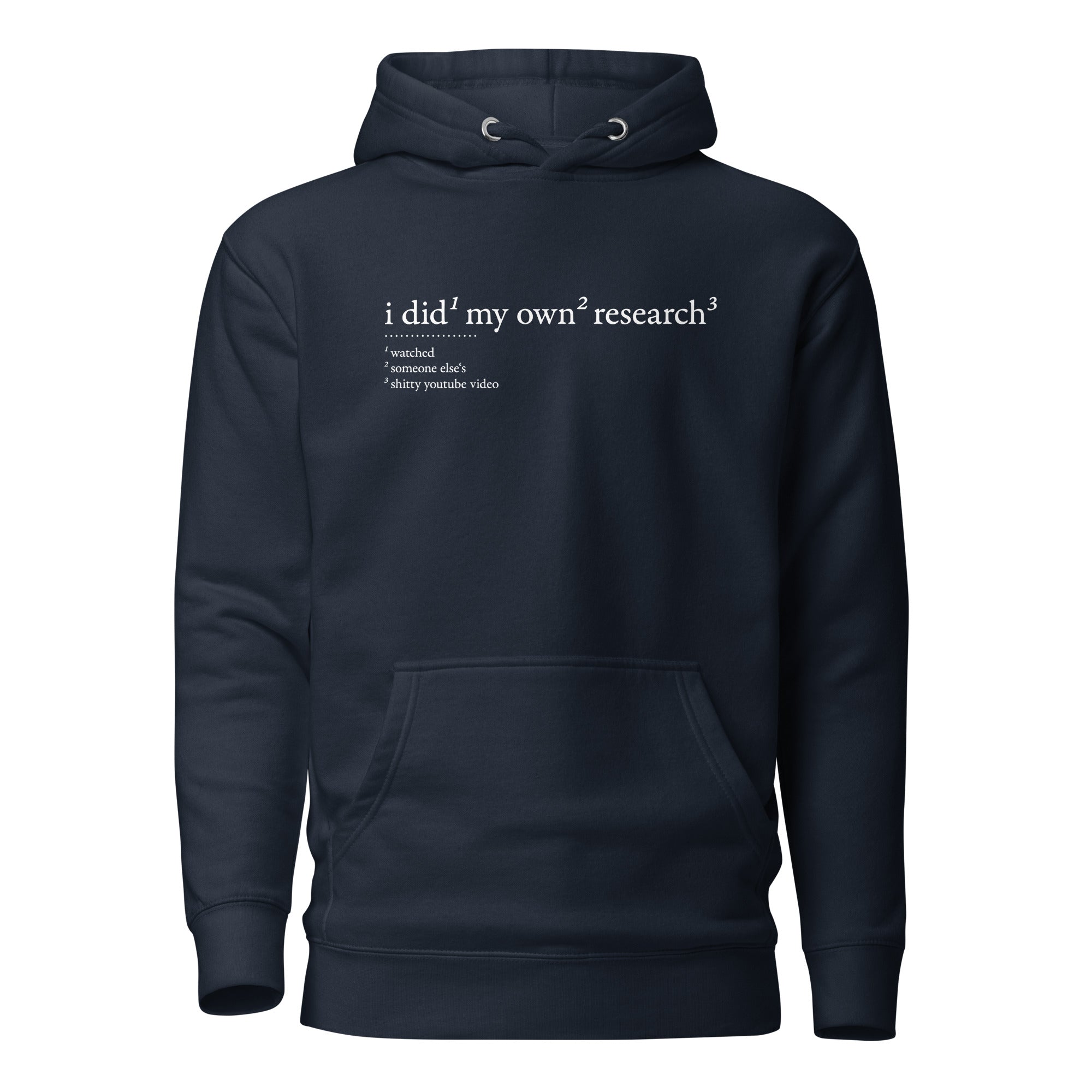
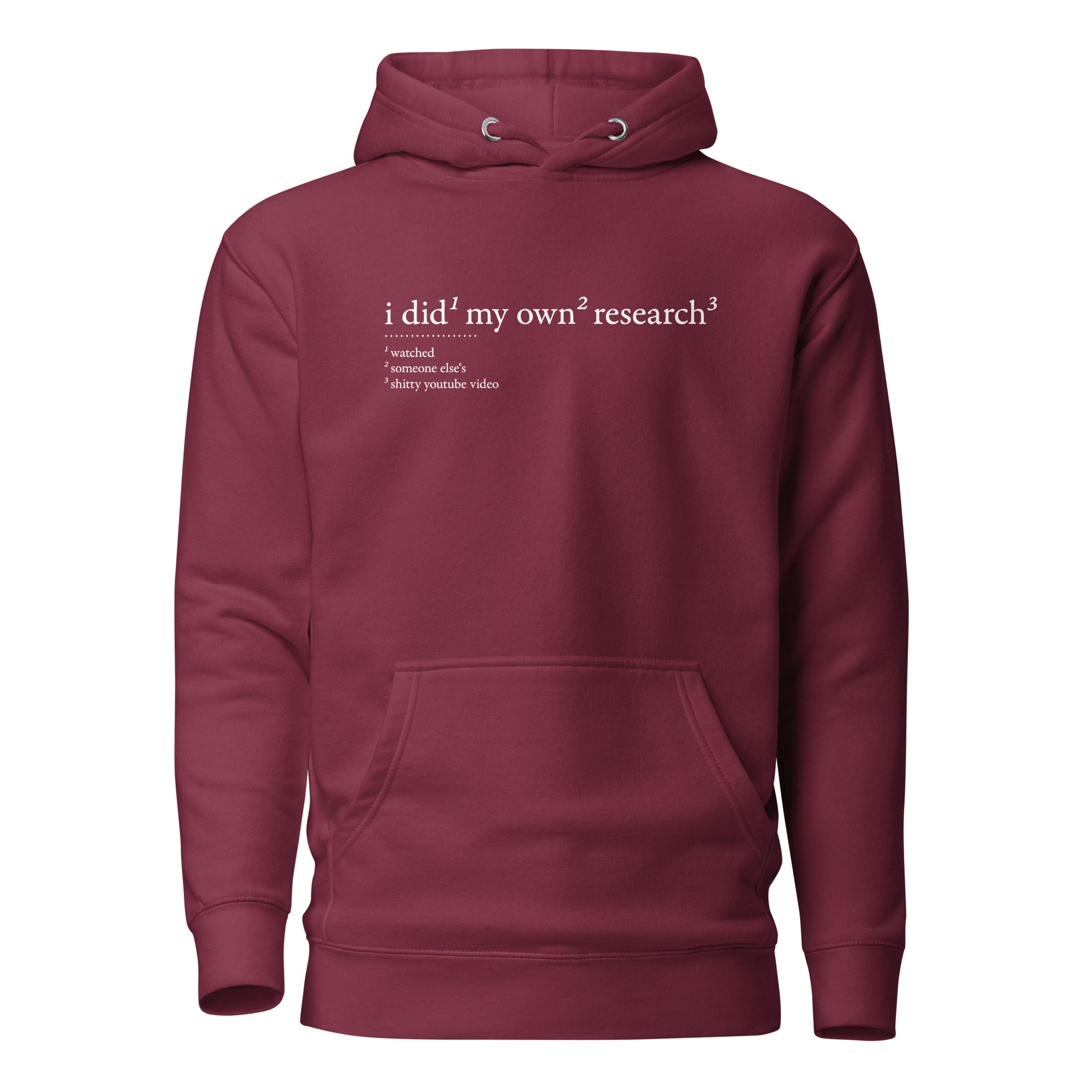
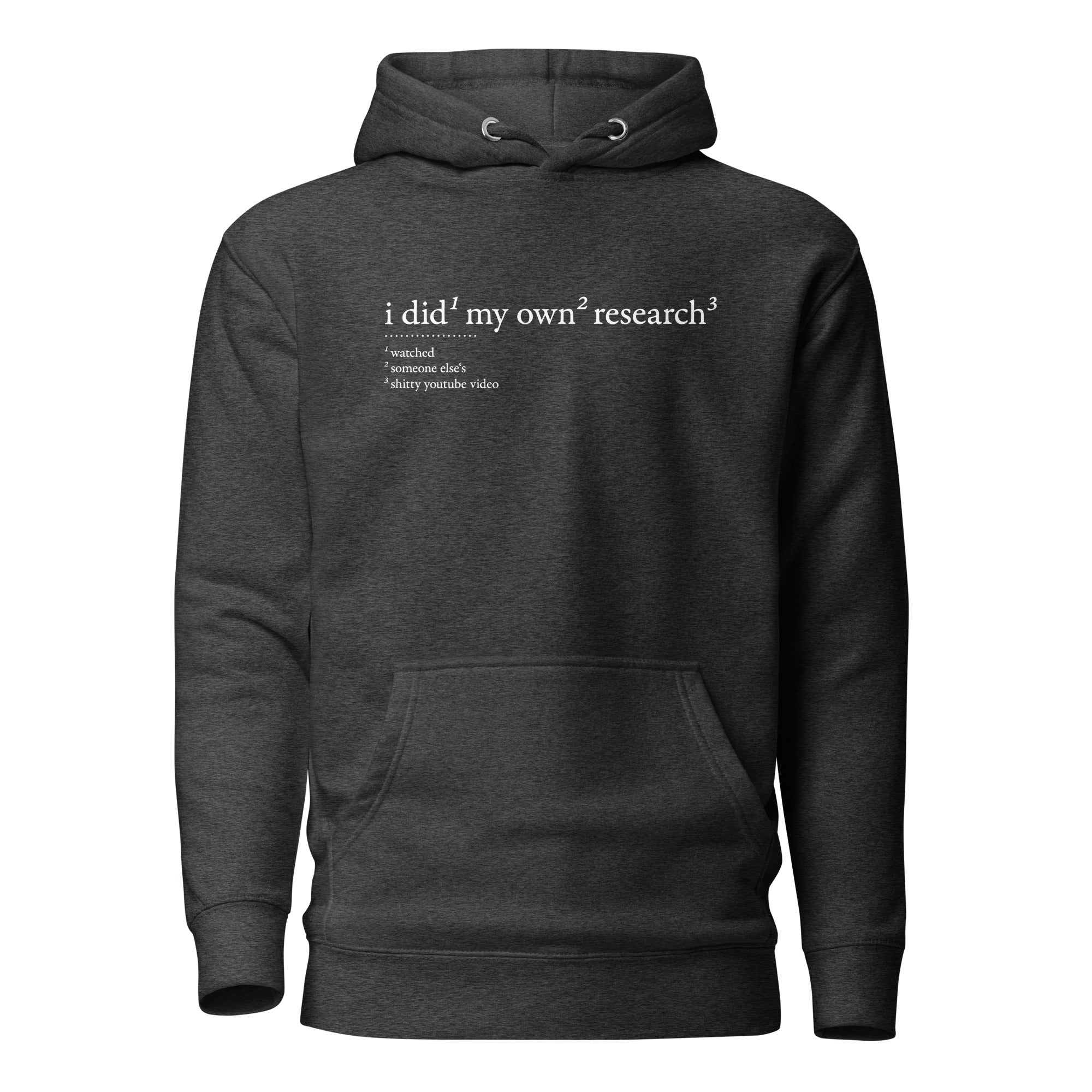
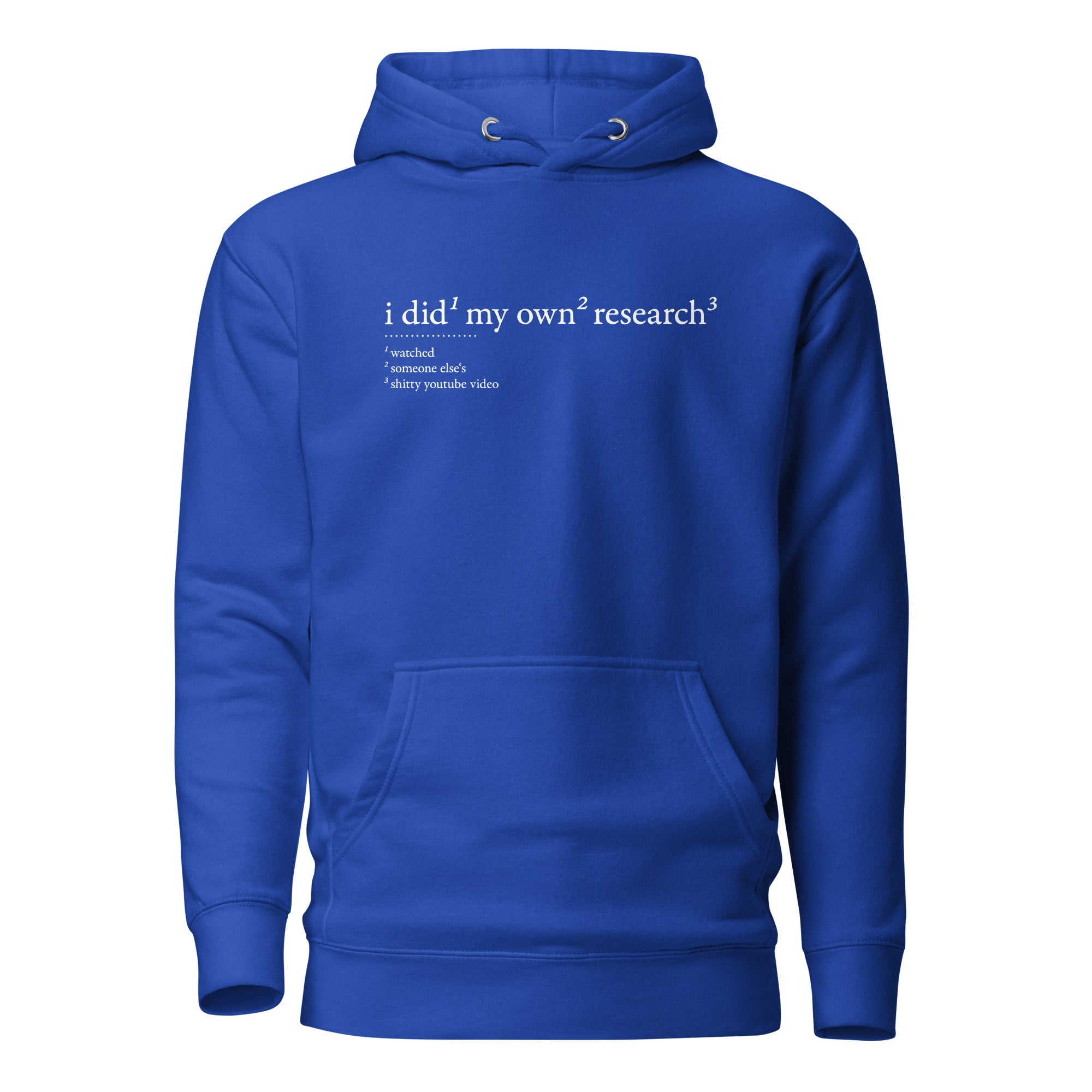
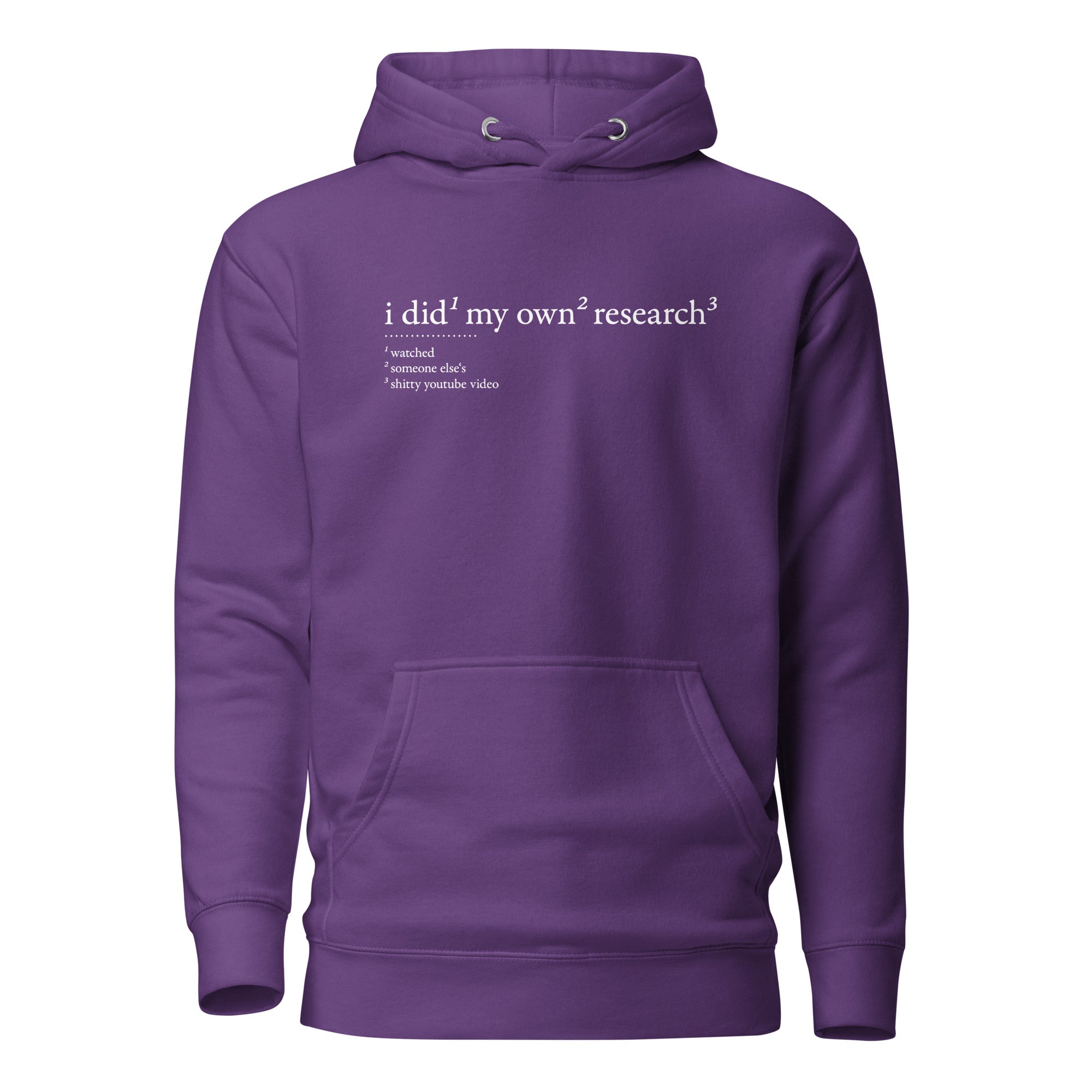
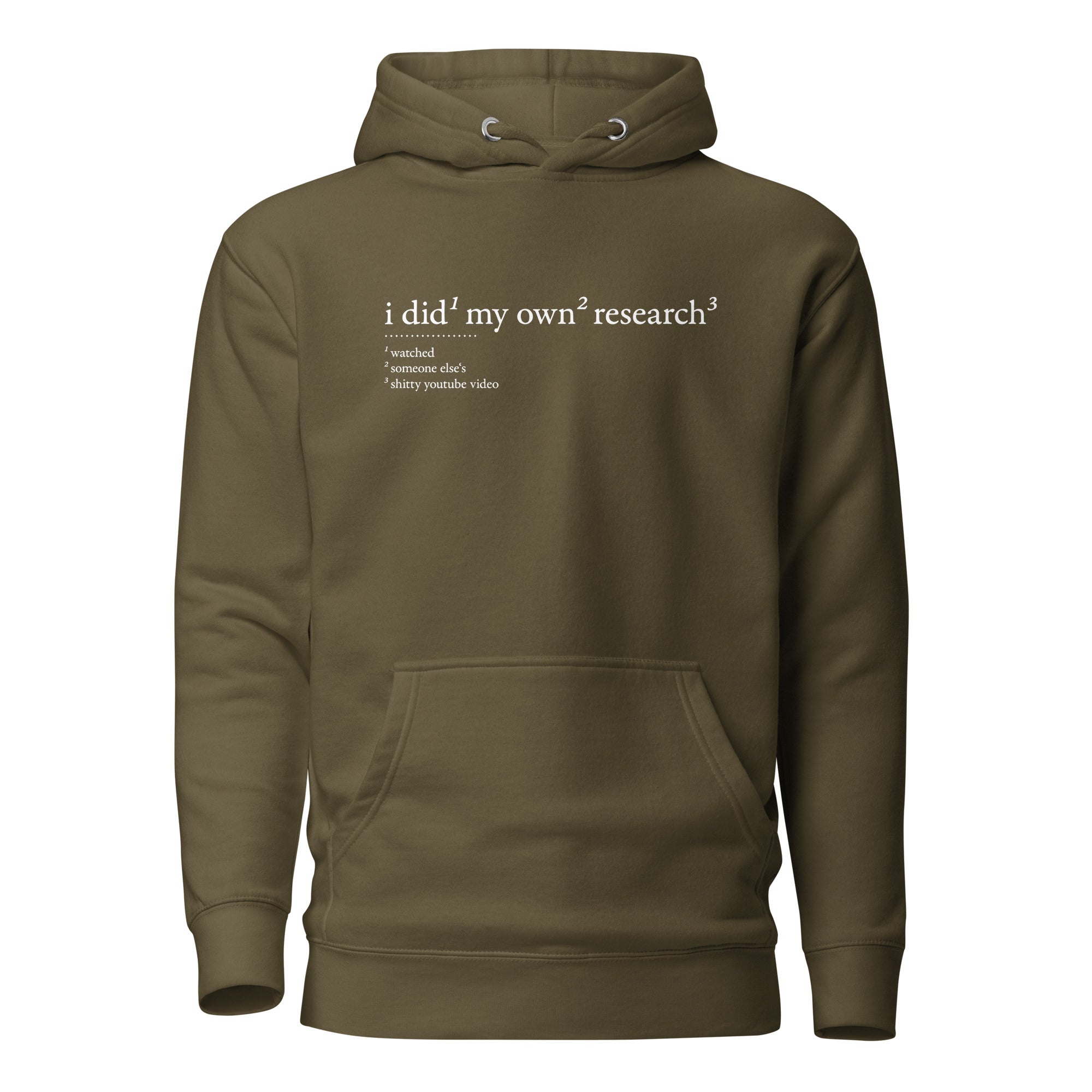
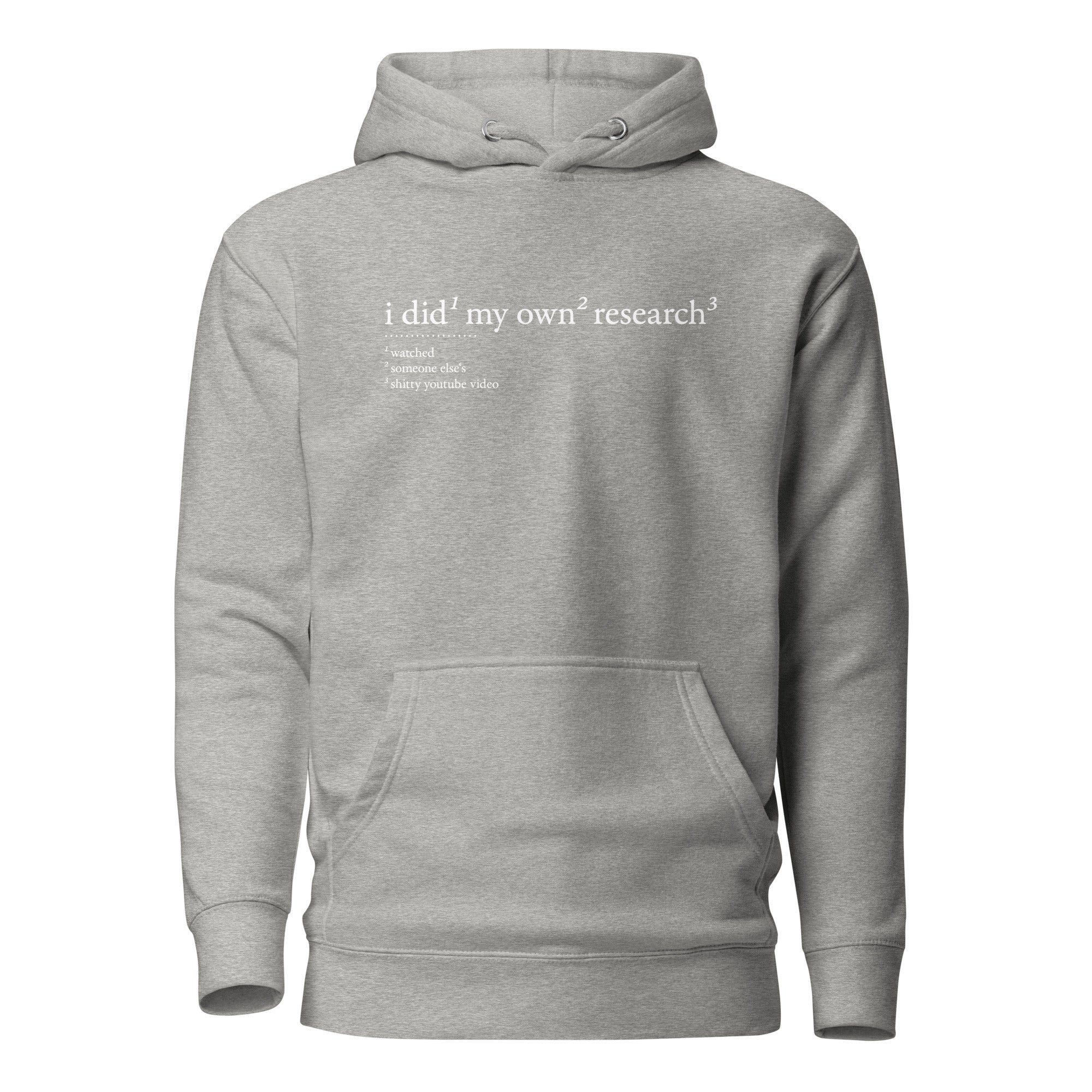
I did my own research

Six words that have done extraordinary damage to public reasoning. Worn here with the irony dial turned all the way up.

Works as a sincere epistemology flex or as pure mockery, depending on the room. Everything in one place: tees, sweatshirts, hoodies and mugs, made to order. An epistemology gift for skeptics. Research is a method, not a personality.
Questions about this design

What does the I did my own research design say?
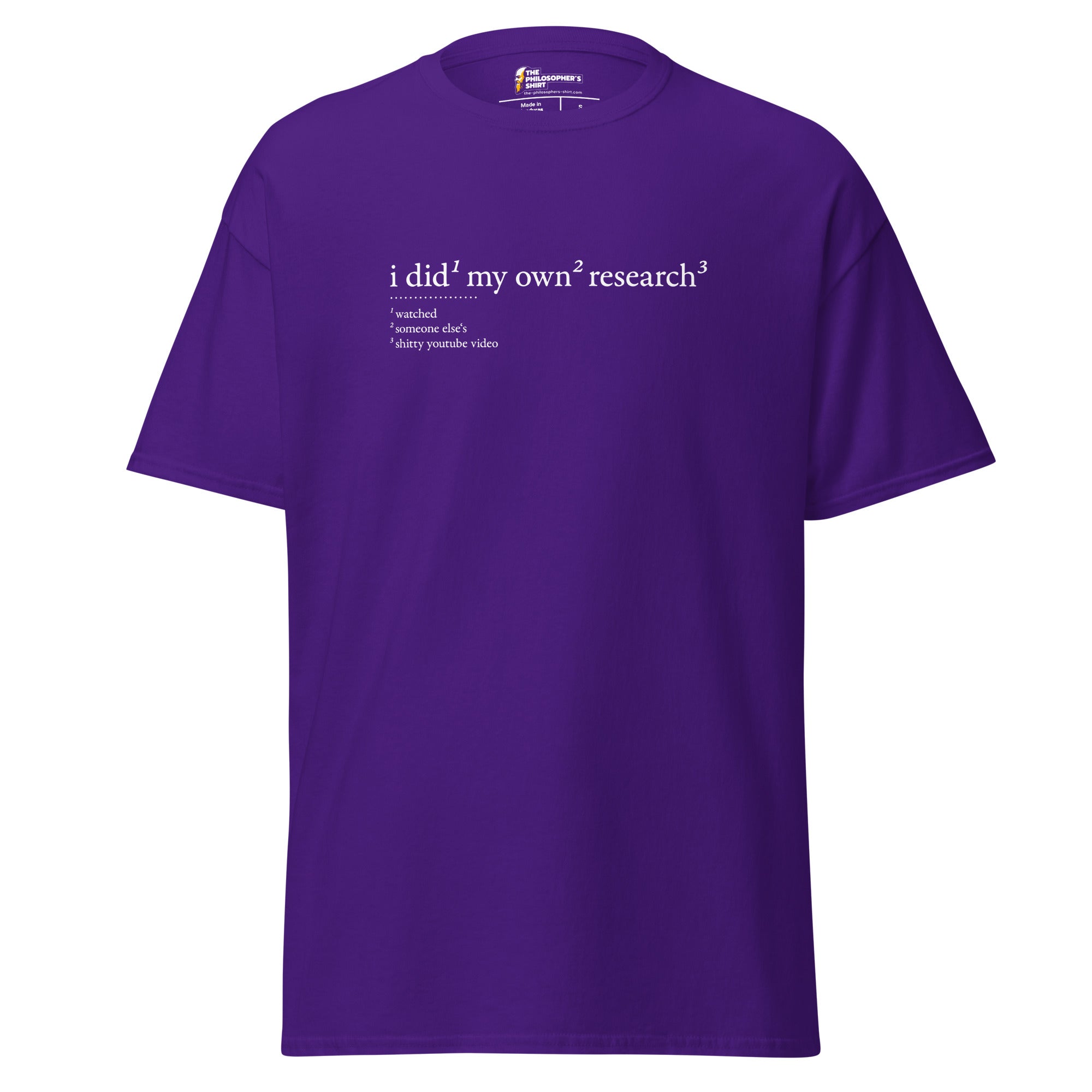
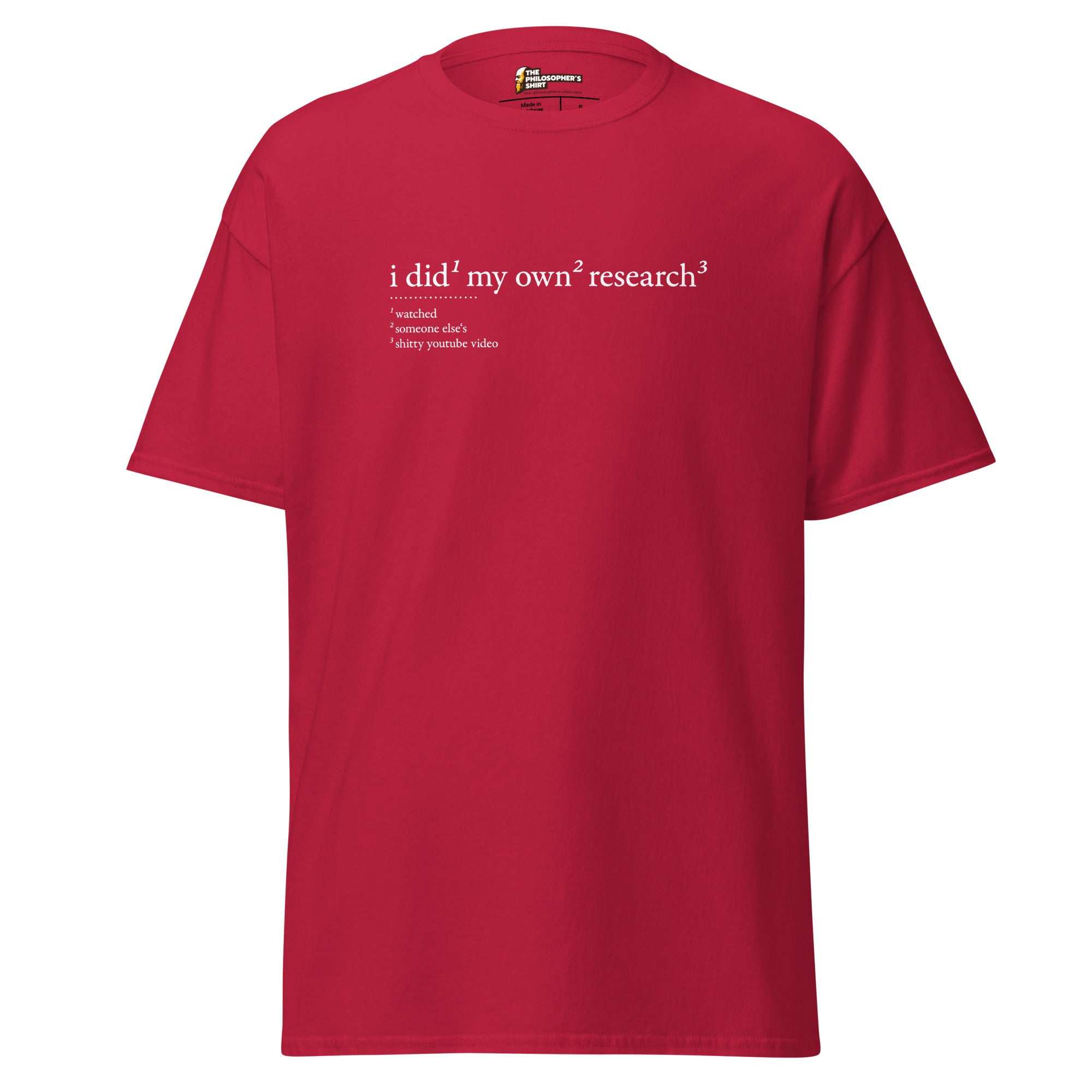
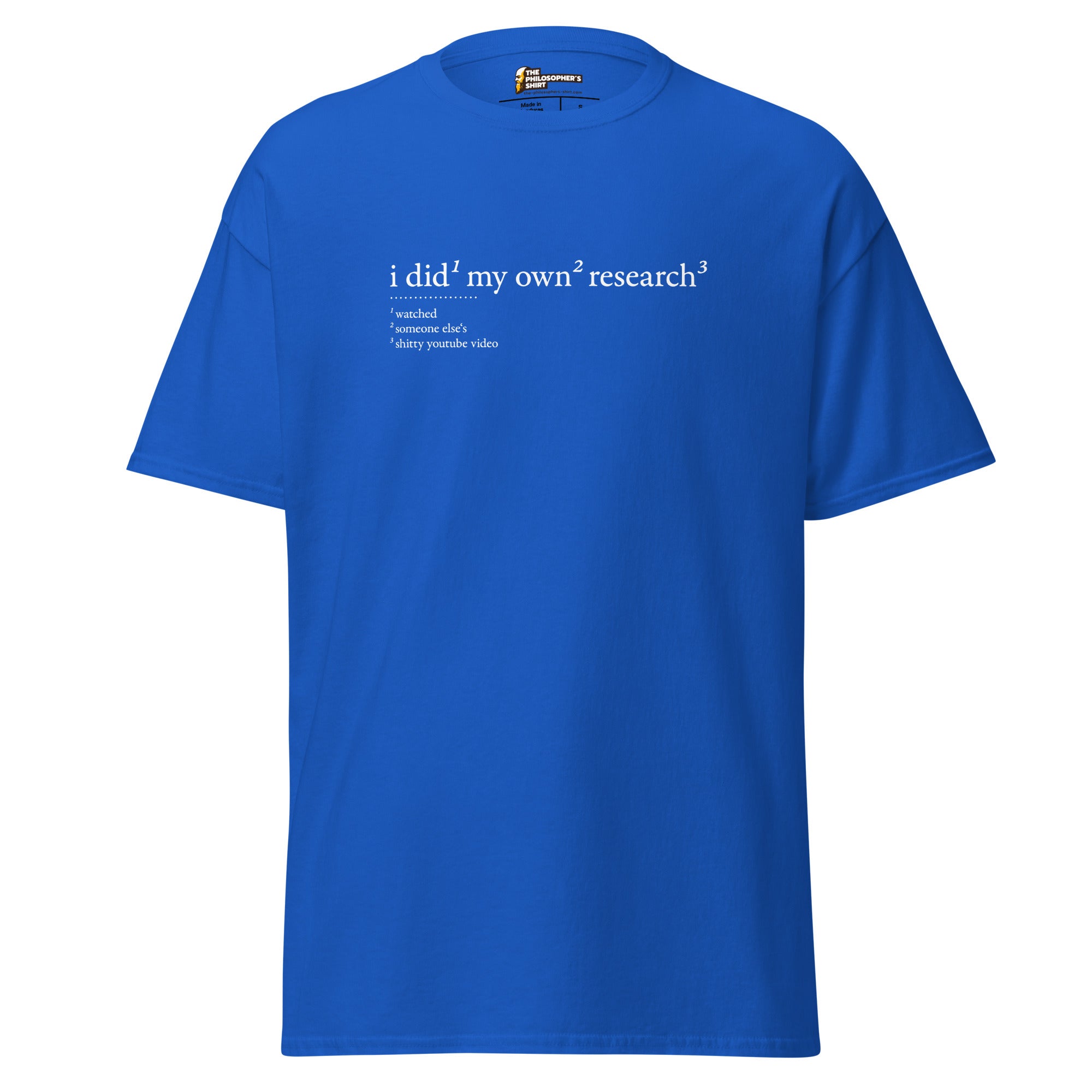
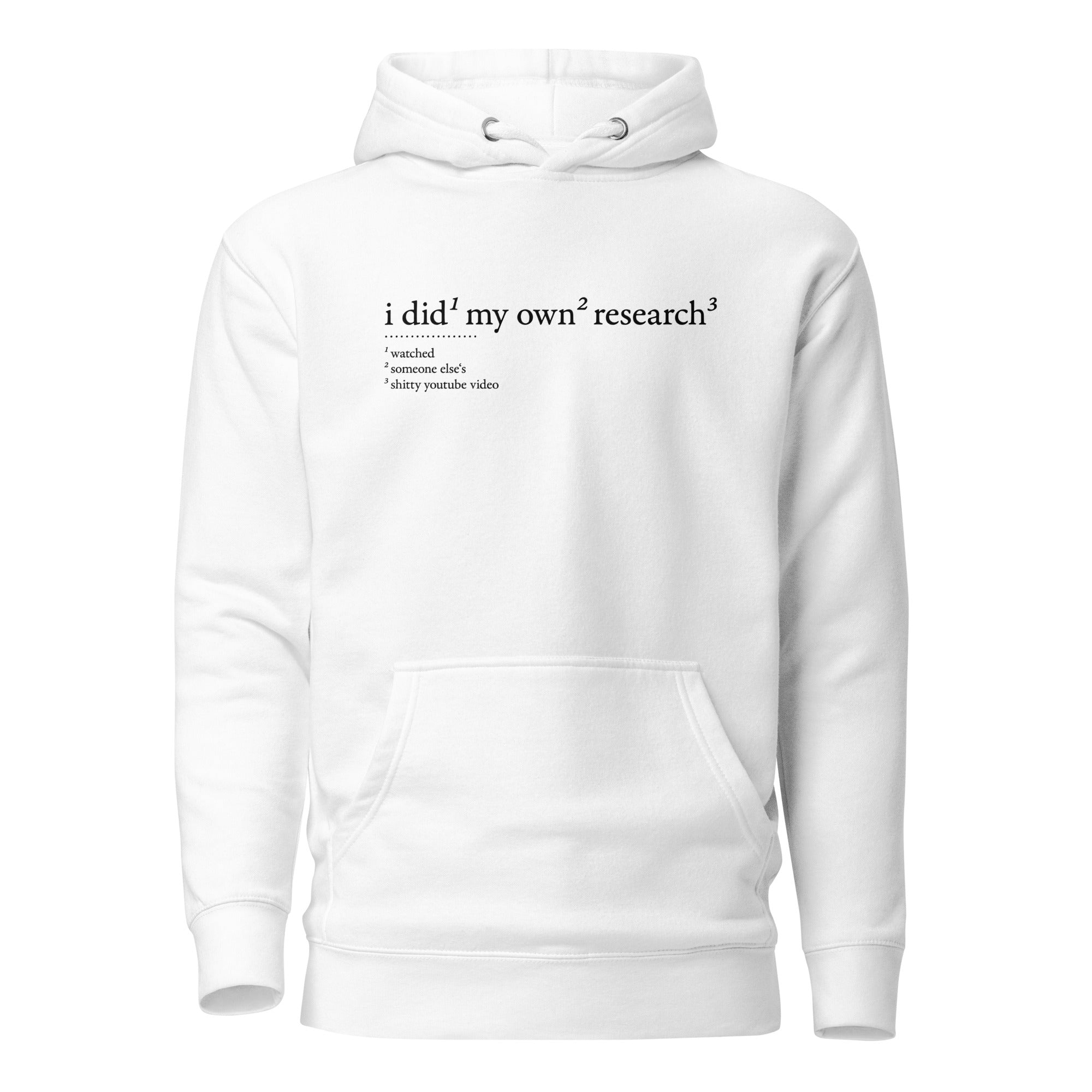
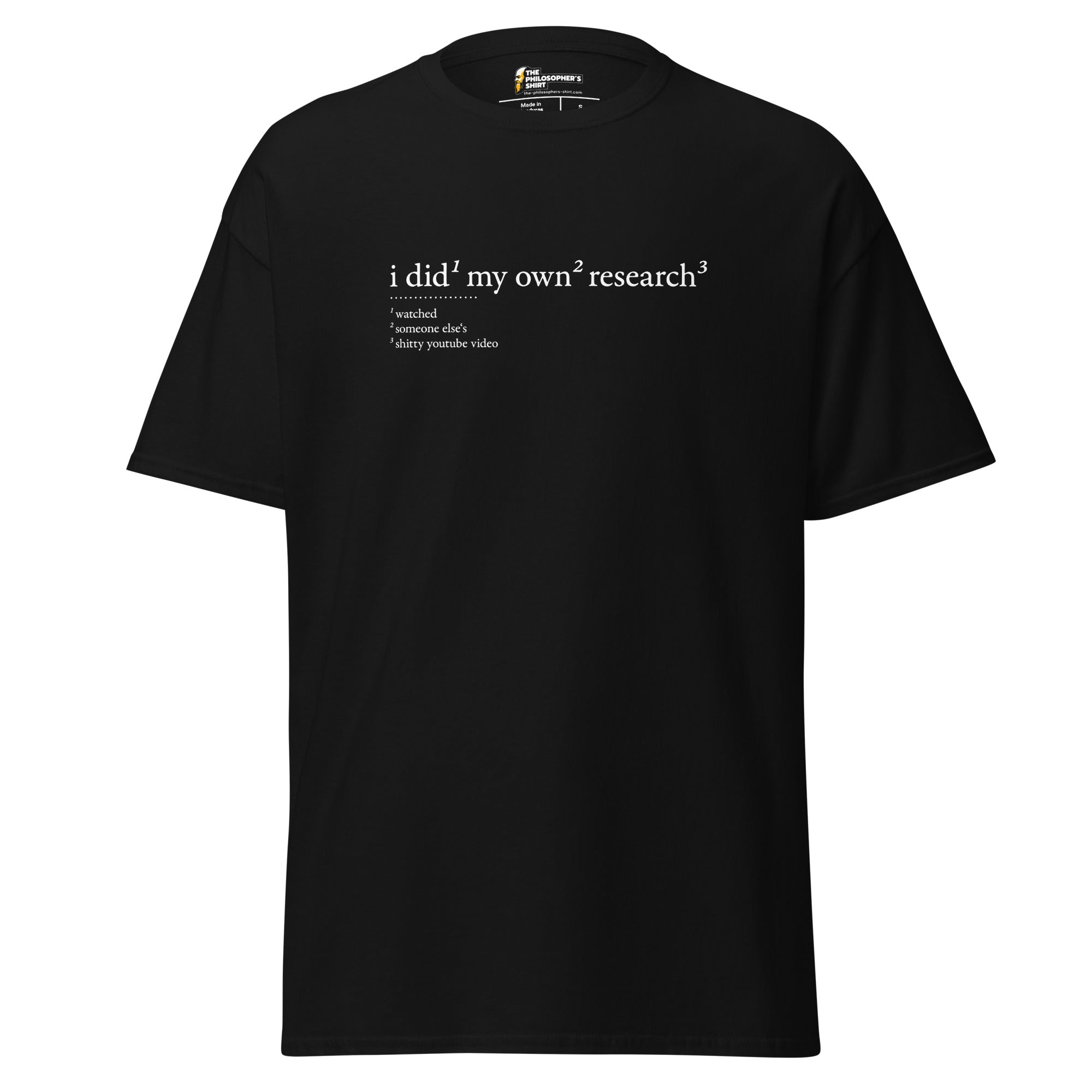
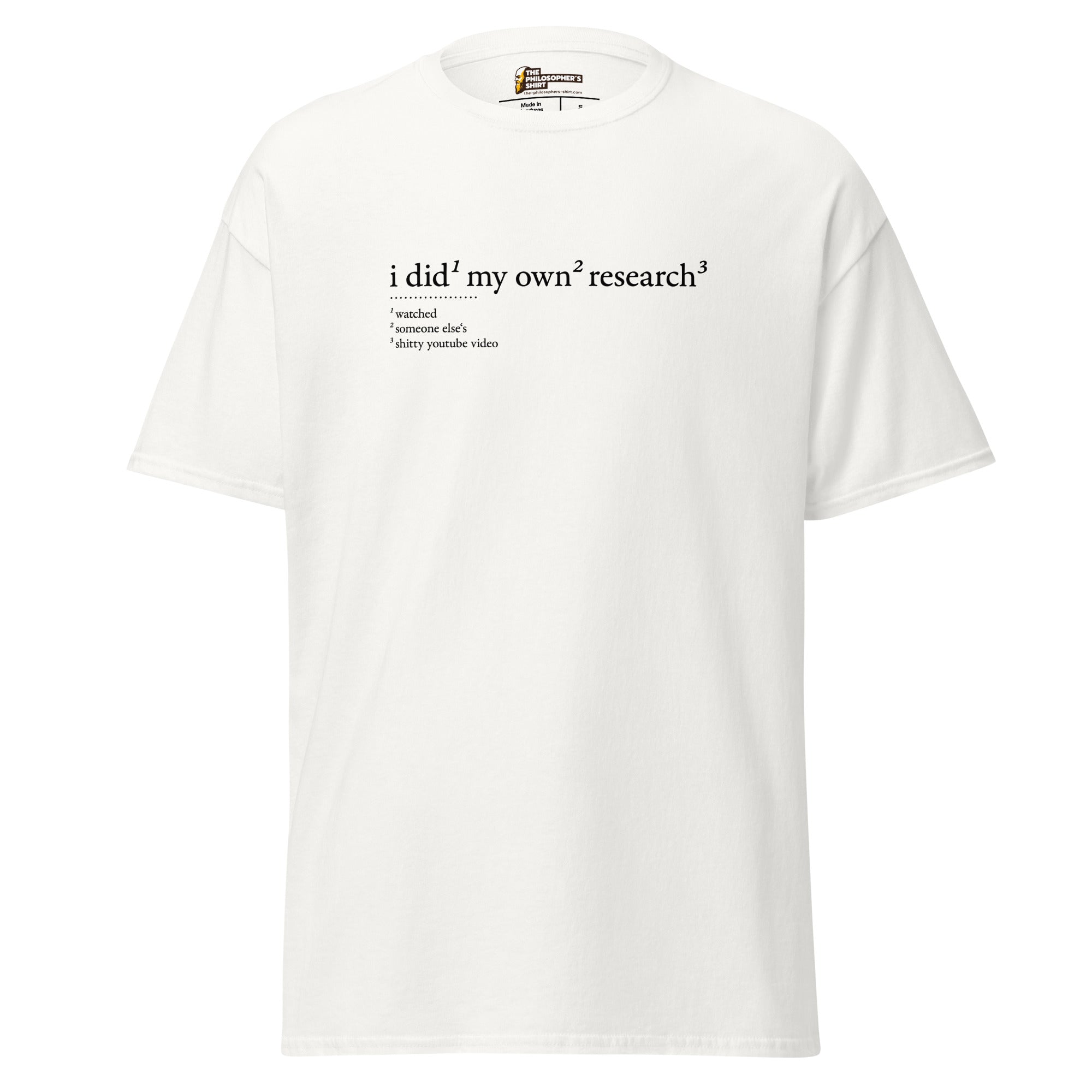
In a clean serif type it reads i did my own research, with three small superscript numbers. The footnotes underneath explain what each word really meant – did means watched, my own means someone else’s, and research turns out to be a low-quality video online. It is a dry academic joke about confusing scrolling with scholarship.
What does do your own research mean, and why is it criticised?
The phrase urges people to check claims for themselves instead of trusting authorities. In principle that is a good epistemic virtue. In practice it often means searching until you find sources that confirm what you already believe. Philosophers such as Nathan Ballantyne and colleagues (2022) argue that laypeople usually lack the training to evaluate specialist evidence, so doing your own research well mostly means learning whom to trust and why.
What is the Dunning-Kruger effect?
It is the finding, published by Justin Kruger and David Dunning in 1999, that people with little skill in an area tend to overestimate their competence, partly because the knowledge needed to perform well is the same knowledge needed to recognise poor performance. Some researchers argue that part of the effect is a statistical artifact, but the core lesson about overconfidence is widely accepted.
What is confirmation bias?
Confirmation bias is the tendency to seek out, notice and remember information that supports what we already believe, and to play down evidence against it. Peter Wason’s 2-4-6 experiment (1960) is a classic demonstration – participants tested only examples that fitted their own hypothesis instead of trying to falsify it. Search engines and recommendation feeds can make the effect stronger.
What does sapere aude mean?
Sapere aude is Latin for dare to know or dare to be wise. The phrase comes from the Roman poet Horace (Epistles I.2), but it became famous through Immanuel Kant, who made it the motto of the Enlightenment in his 1784 essay Answering the Question – What Is Enlightenment? Kant meant having the courage to use your own understanding without another’s guidance – which is real reasoning, not just watching someone else’s.
Is an appeal to authority always a fallacy?
No. The fallacy, which John Locke named argumentum ad verecundiam in his Essay Concerning Human Understanding (1690), occurs when someone cites an authority who is not an expert on the question, or treats authority as proof beyond doubt. Relying on genuine experts in their own field, where there is broad consensus, is usually reasonable – most of what anyone knows rests on trustworthy testimony.
What was Descartes’ method of doubt?
In his Meditations on First Philosophy (1641) René Descartes resolved to doubt everything that could possibly be doubted – the senses, the outside world, even mathematics – to find a foundation that is absolutely certain. He found it in the cogito, I think, therefore I am. It is philosophy’s most famous case of truly doing your own research, and it took him years, not an afternoon.
Did Socrates really say I know that I know nothing?
Not in those exact words. In Plato’s Apology (21d) Socrates says that, unlike a supposedly wise politician, he does not think he knows what he does not know. The snappy formula I know that I know nothing is a later paraphrase. The point – real wisdom starts with knowing the limits of your knowledge – is the exact opposite of the attitude the design mocks.
Who is the I did my own research design a good gift for?
For academics, librarians, science teachers, fact-checkers, philosophy and psychology students and anyone who has ever argued with a relative over dinner. It is available as a unisex classic T-shirt, sweatshirt, premium hoodie, mug and sticker – the mug works especially well in a staff room.