No tariffs. Ever. We ship locally from the US, Canada, the UK, or the EU + Free shipping over $80 / 70€ / £60 (equivalent in all other currencies).
Search our site

Nietzsche - I Gazed Into The Abyss

“He who fights with monsters should look to it that he himself does not become a monster. And if you gaze long into an abyss, the abyss gazes also into you.”

One of the most quoted lines in philosophy, given room to actually breathe. Every format we print it on, made to order as you buy it, from apparel to accessories. The abyss has been gazing back for a while now. Dress accordingly.
Questions about this design

What does the Nietzsche I Gazed Into The Abyss design show?
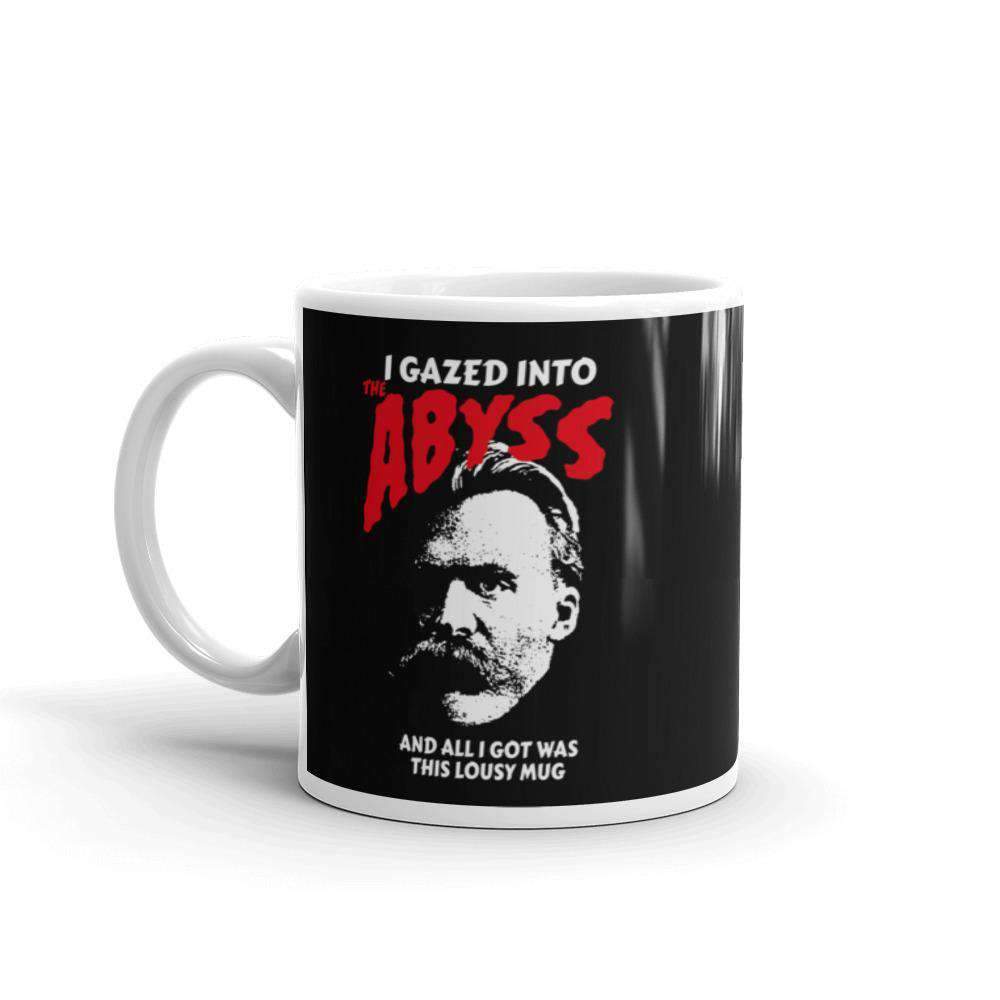
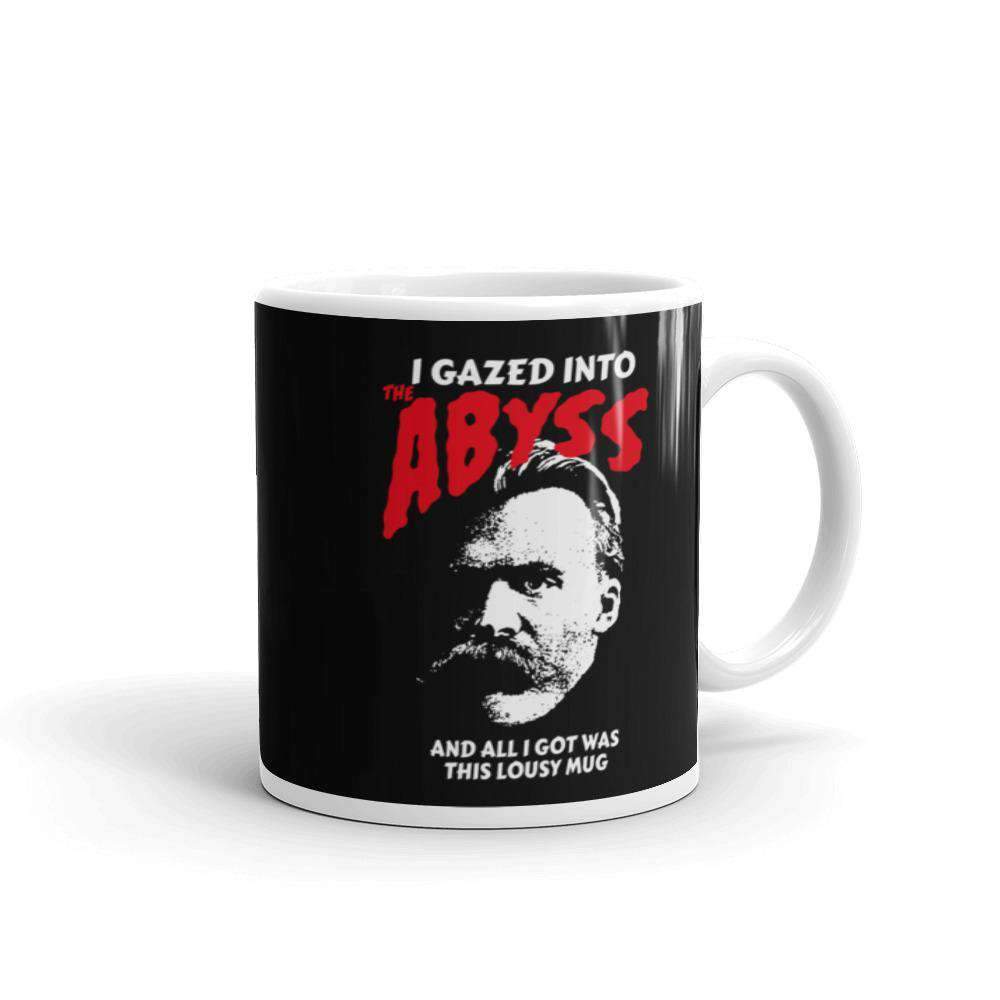
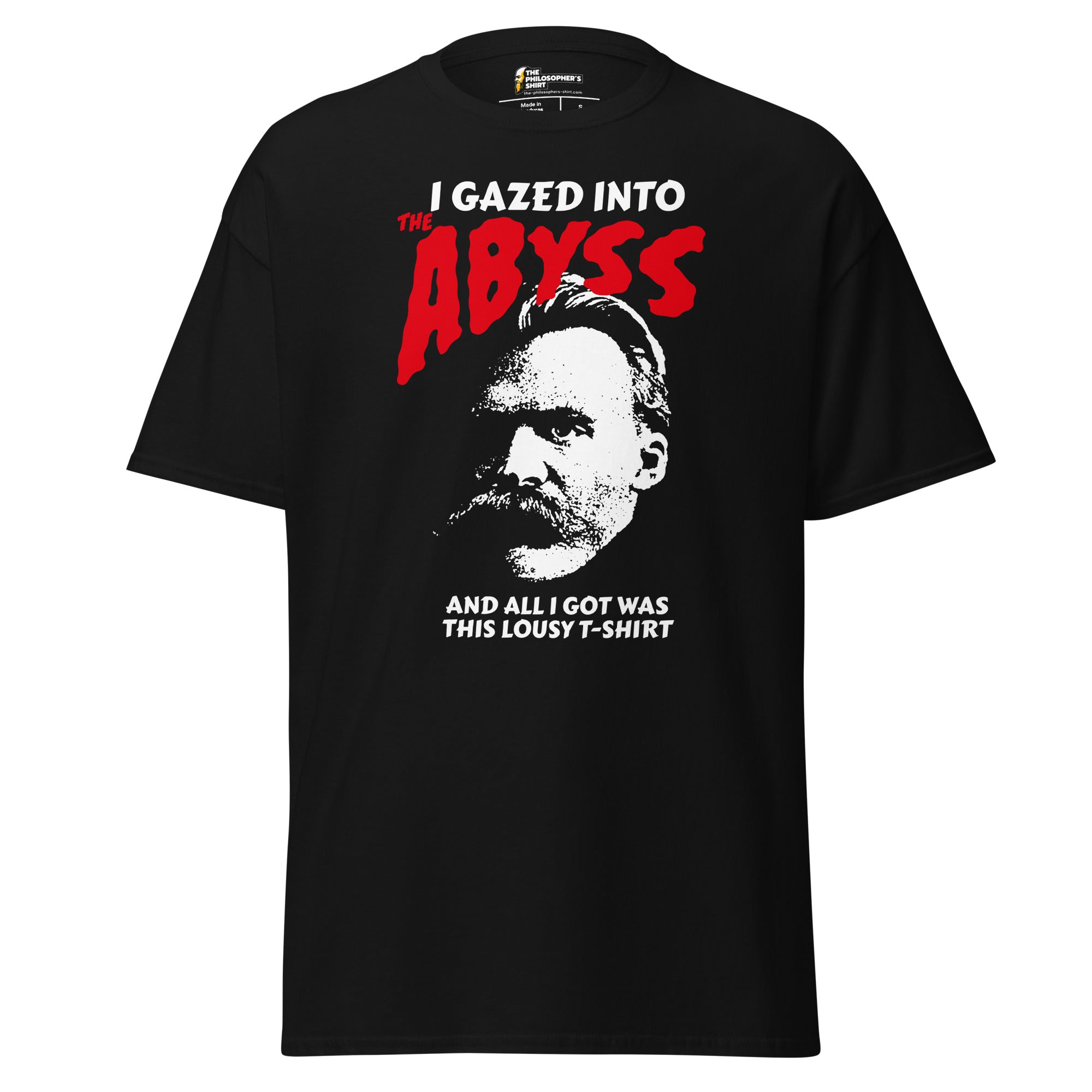
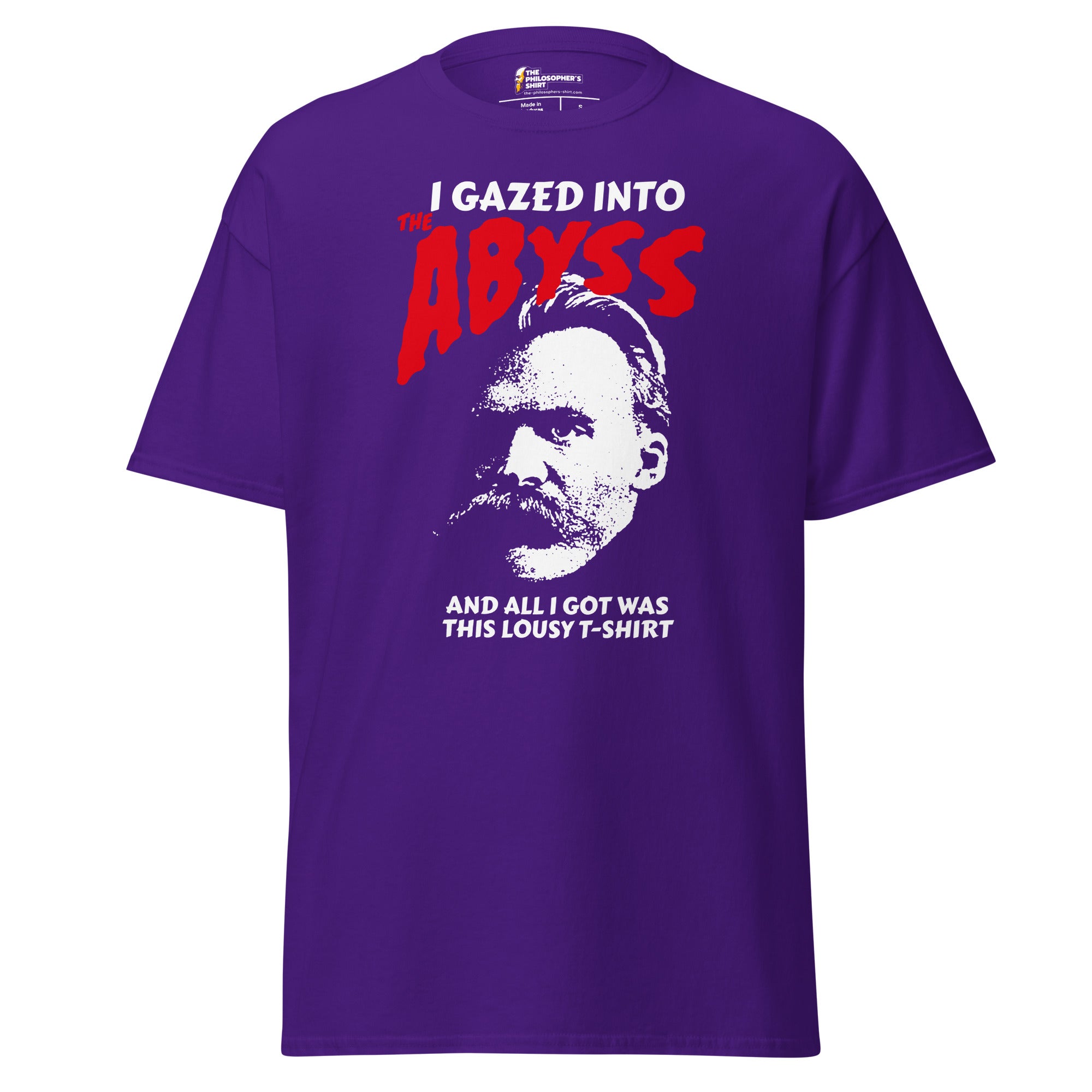
A stark black-and-white portrait of Friedrich Nietzsche, moustache and all, under the words I gazed into the abyss in blood-red horror lettering – followed by the old souvenir punchline, and all I got was this lousy… It turns one of philosophy's darkest lines into a holiday-gift joke, which Nietzsche, who valued laughter, might have appreciated.
What exactly did Nietzsche say about the abyss?
In Beyond Good and Evil (1886), aphorism 146, Nietzsche writes – He who fights with monsters should look to it that he himself does not become a monster. And if you gaze long into an abyss, the abyss also gazes into you. The line is often shortened or misquoted as stare into the abyss, but the original is a two-part warning, and the monster half matters as much as the abyss.
What does if you gaze long into an abyss, the abyss gazes also into you mean?
Nietzsche leaves it open, as aphorisms do, but the usual reading follows from the first sentence – whoever spends a long time confronting something dark, whether evil, cruelty or meaninglessness, is changed by it. The observer is not neutral; what we fight and study shapes us. It is a warning to crusaders, investigators and philosophers of nihilism alike, not an invitation to despair.
What is the original German of Nietzsche's abyss quote?
Wer mit Ungeheuern kämpft, mag zusehn, dass er nicht dabei zum Ungeheuer wird. Und wenn du lange in einen Abgrund blickst, blickt der Abgrund auch in dich hinein. It stands in the fourth part of Jenseits von Gut und Böse, a section of short sayings and interludes. Abgrund means abyss or chasm; blicken is simply to look or gaze.
What is Beyond Good and Evil about?
Published in 1886 with the subtitle Prelude to a Philosophy of the Future, it attacks the hidden prejudices of philosophers – their faith in opposites like good and evil, truth and falsehood – and asks what drives our values. It introduces the will to power, contrasts master and slave morality and calls for free spirits who can create new values. Nietzsche paid for its printing himself.
What did Nietzsche mean by God is dead?
The phrase appears in The Gay Science (1882), most famously in section 125, where a madman announces – God is dead, and we have killed him. It is not a claim about a god dying but a diagnosis of European culture – belief in God has lost its power, and the morality and meaning built on it will collapse. Nietzsche's worry was the nihilism that follows, not a celebration of it.
Which Nietzsche book should I read first?
Many readers start with Beyond Good and Evil and then On the Genealogy of Morality (1887), which is his most argument-driven book. Twilight of the Idols (1889) is a short, punchy overview. Thus Spoke Zarathustra is the most famous but, being poetic and allusive, works better once you know his ideas. Choose a modern translation with notes.
Who was Friedrich Nietzsche?
A German philosopher and classical philologist (1844–1900) who became a professor at Basel at just 24, left in 1879 because of ill health and wrote his major works as a wandering independent scholar. He suffered a mental collapse in Turin in January 1889 and never recovered. His sister later edited his papers in a nationalist and antisemitic direction that he himself had explicitly rejected.
Is the Nietzsche I Gazed Into The Abyss design a good gift?
Yes – for philosophy students, Nietzsche readers, lovers of dark humour and anyone who has stared at a thesis deadline too long. It works as an icebreaker because people recognise the quote even if they have never opened the book. It comes as a sweatshirt, premium hoodie, classic and women's T-shirt, mug and sticker.