No tariffs. Ever. We ship locally from the US, Canada, the UK, or the EU + Free shipping over $80 / 70€ / £60 (equivalent in all other currencies).
Search our site

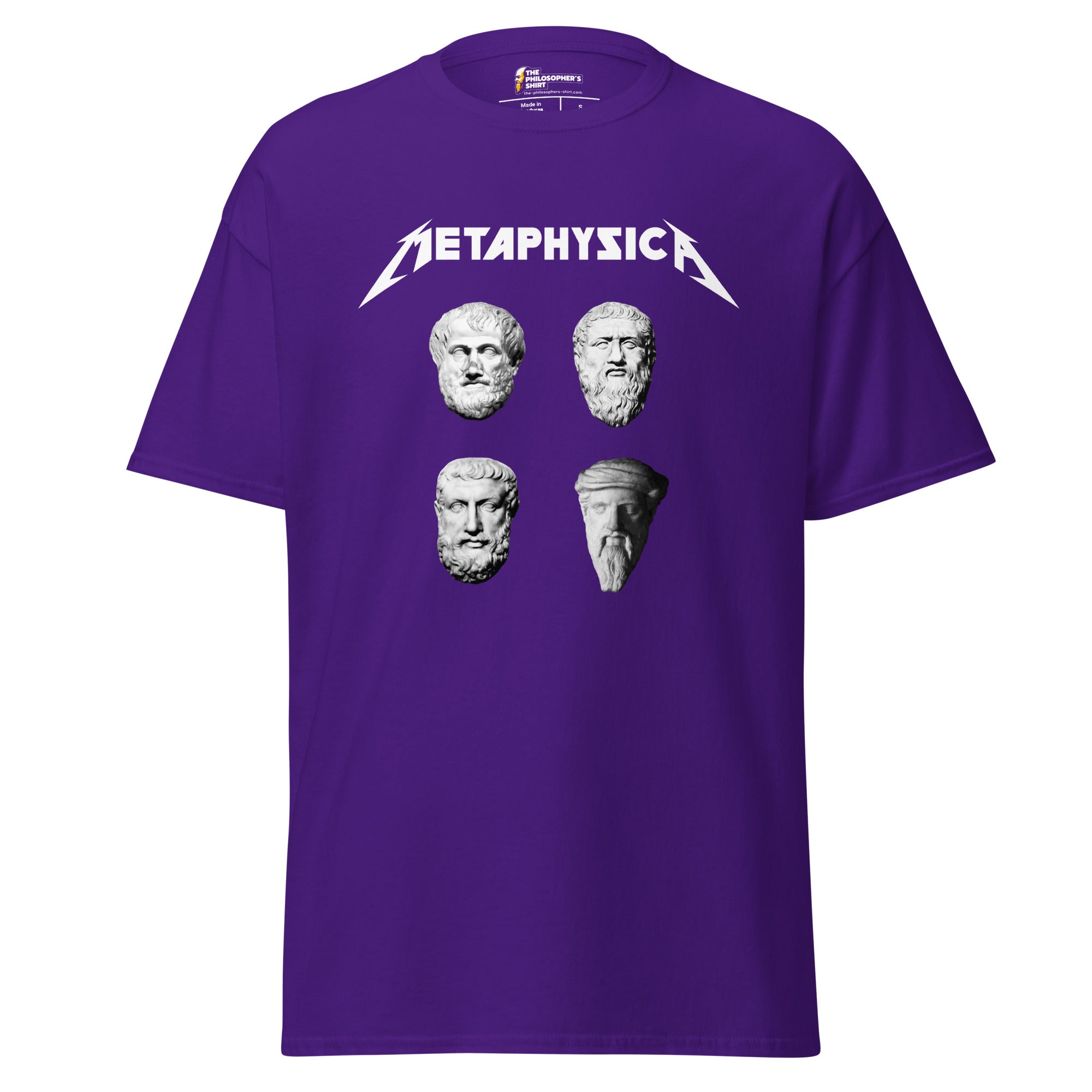
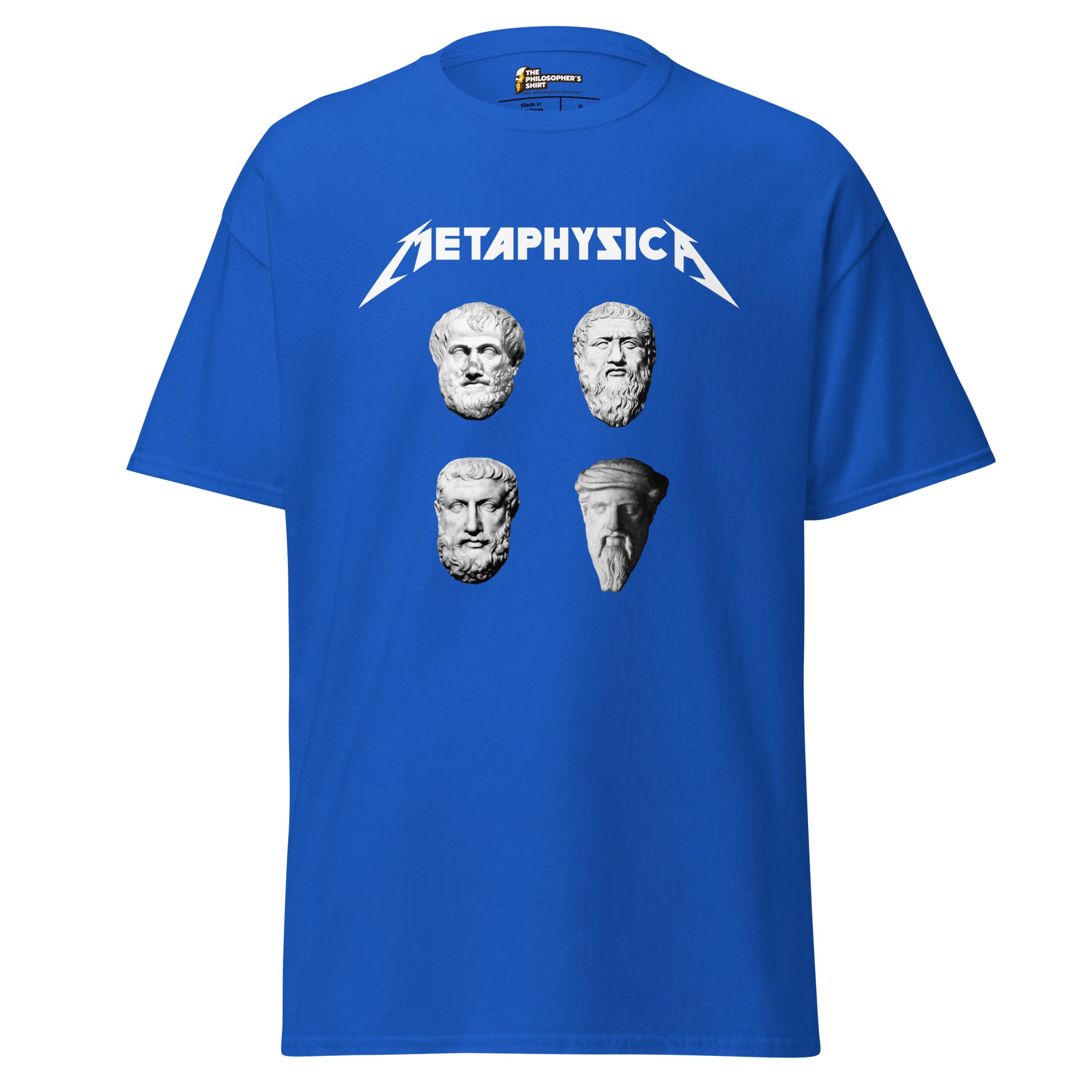
Metaphysica - the four wise men

The founding roster of Western thought, arranged like a band that never toured. Between them they set the questions everyone else is still answering.

No punchline — just the people who built the discipline, treated properly. Everything in one place, across every format we print it on, made to order. Four men, one argument, twenty-five centuries of unfinished business.

Questions about this design

What does the Metaphysica – The Four Wise Men design show?
The word Metaphysica in jagged heavy-metal lettering above four marble busts of ancient Greek philosophers, among them Plato and Aristotle. The joke treats the founders of Western philosophy like a legendary four-piece band, and metaphysics as the heaviest genre there is – questions about being, reality and existence itself.
What is metaphysics?
The branch of philosophy that asks what reality fundamentally is. Typical questions – what exists, what is a thing or substance, what are causation, time and space, how mind relates to body, whether we have free will and why there is something rather than nothing. It is one of the oldest fields of philosophy.
Why is it called metaphysics?
Because of a library label. Editors of Aristotle’s works, traditionally Andronicus of Rhodes in the 1st century BC, placed his writings on first principles after the Physics – ta meta ta physika, the books after the physics. Aristotle himself spoke of first philosophy or wisdom; the reading beyond physics came later.
What is Aristotle’s Metaphysics about?
A collection of 14 books on being as being – what it means for anything to exist at all. It covers substance, form and matter, the four causes, potentiality and actuality, and in Book XII the unmoved mover. It opens with the famous sentence “All men by nature desire to know”.
Who is the father of metaphysics?
Aristotle is usually named, since he wrote the first systematic treatise on the subject. Parmenides of Elea, who around 475 BC argued in his poem On Nature that being is one and unchanging, is often called the first metaphysician, and Plato’s theory of forms is the other great starting point.
What is Plato’s theory of forms?
Plato held that beyond the changing world of the senses there are eternal, perfect forms or ideas – the Beautiful, the Just, the Good – of which visible things are only imperfect copies. True knowledge is knowledge of the forms. He develops it in dialogues such as the Phaedo and the Republic, with the allegory of the cave.
What is the difference between Plato and Aristotle?
Plato placed true reality in a separate realm of forms; his student Aristotle located form within things themselves and trusted observation of the natural world. Raphael’s fresco The School of Athens (1509–1511) captures it – Plato points to the sky, Aristotle holds his hand level over the earth.
What is the difference between materialism and idealism?
Two classic metaphysical answers to what reality is made of. Materialism says everything is ultimately matter and the mind arises from it; idealism says reality is fundamentally mental or ideal, as in Berkeley or Hegel. Dualism, as in Descartes, holds that mind and matter are both real and distinct.
Who is the Metaphysica design a good gift for?
For philosophy students and teachers, classics fans and anyone who likes both ancient thought and loud guitars. It comes on a t-shirt, a back-print t-shirt, a women’s t-shirt, a sweatshirt, a premium hoodie, a mug and a sticker.