No tariffs. Ever. We ship locally from the US, Canada, the UK, or the EU + Free shipping over $80 / 70€ / £60 (equivalent in all other currencies).
Search our site

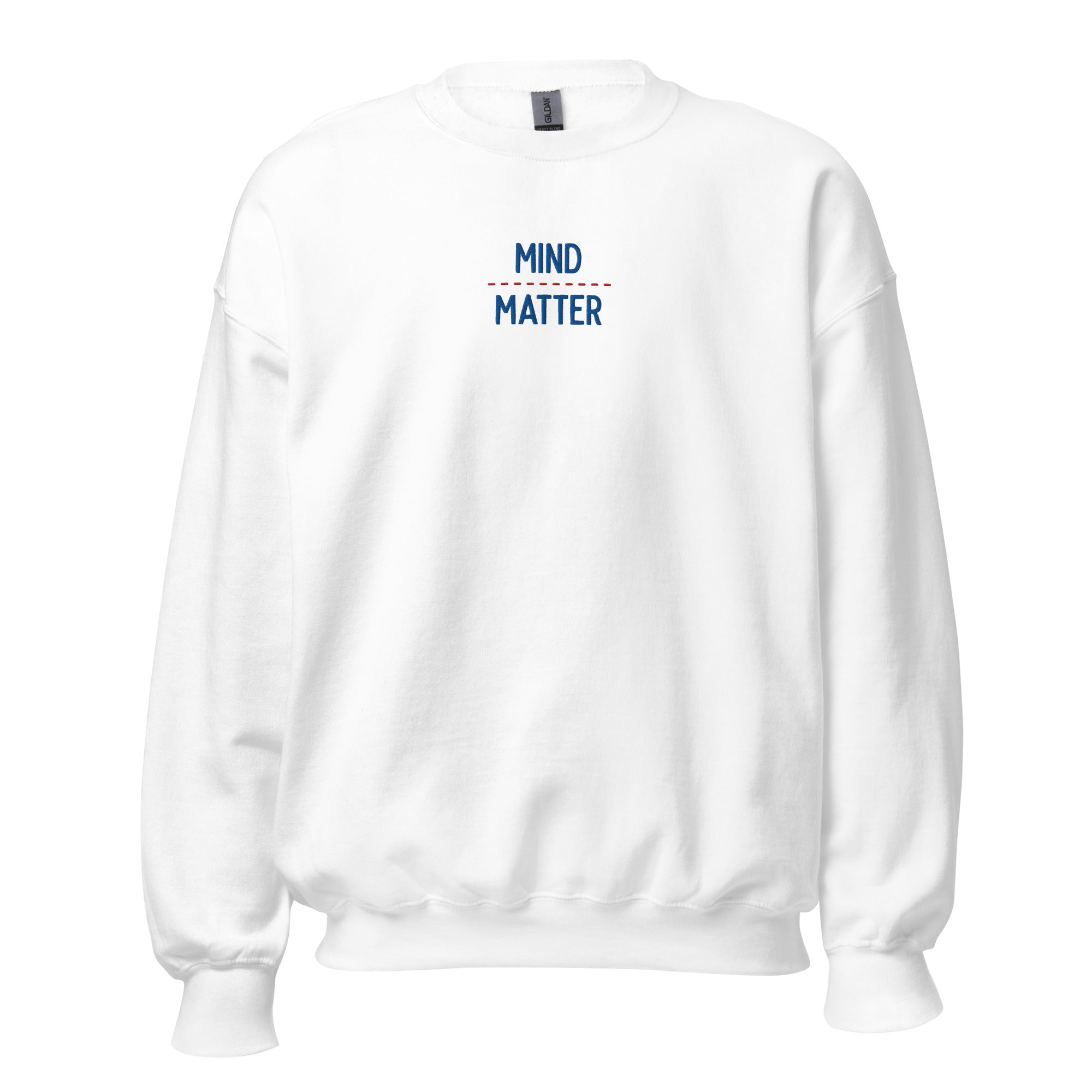
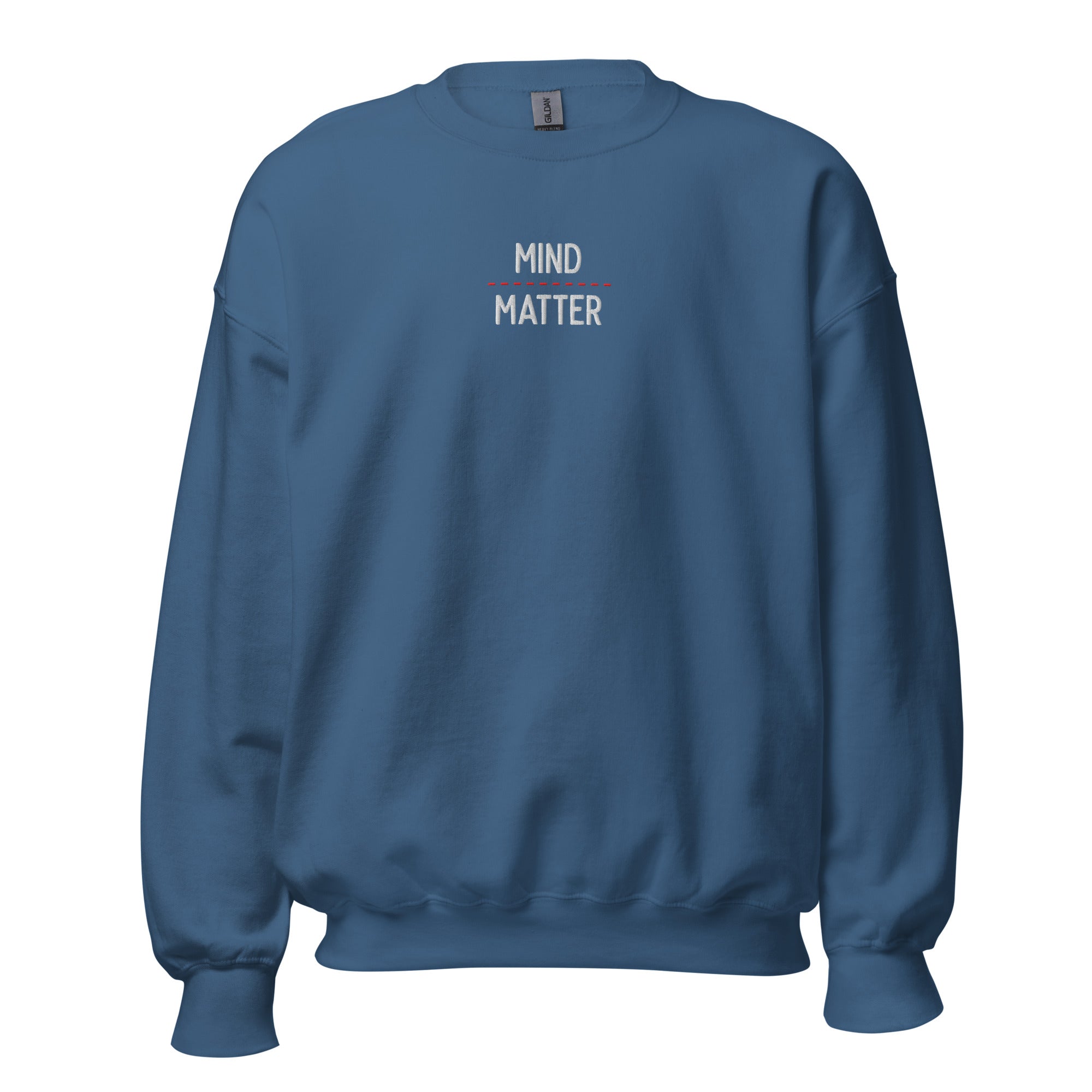
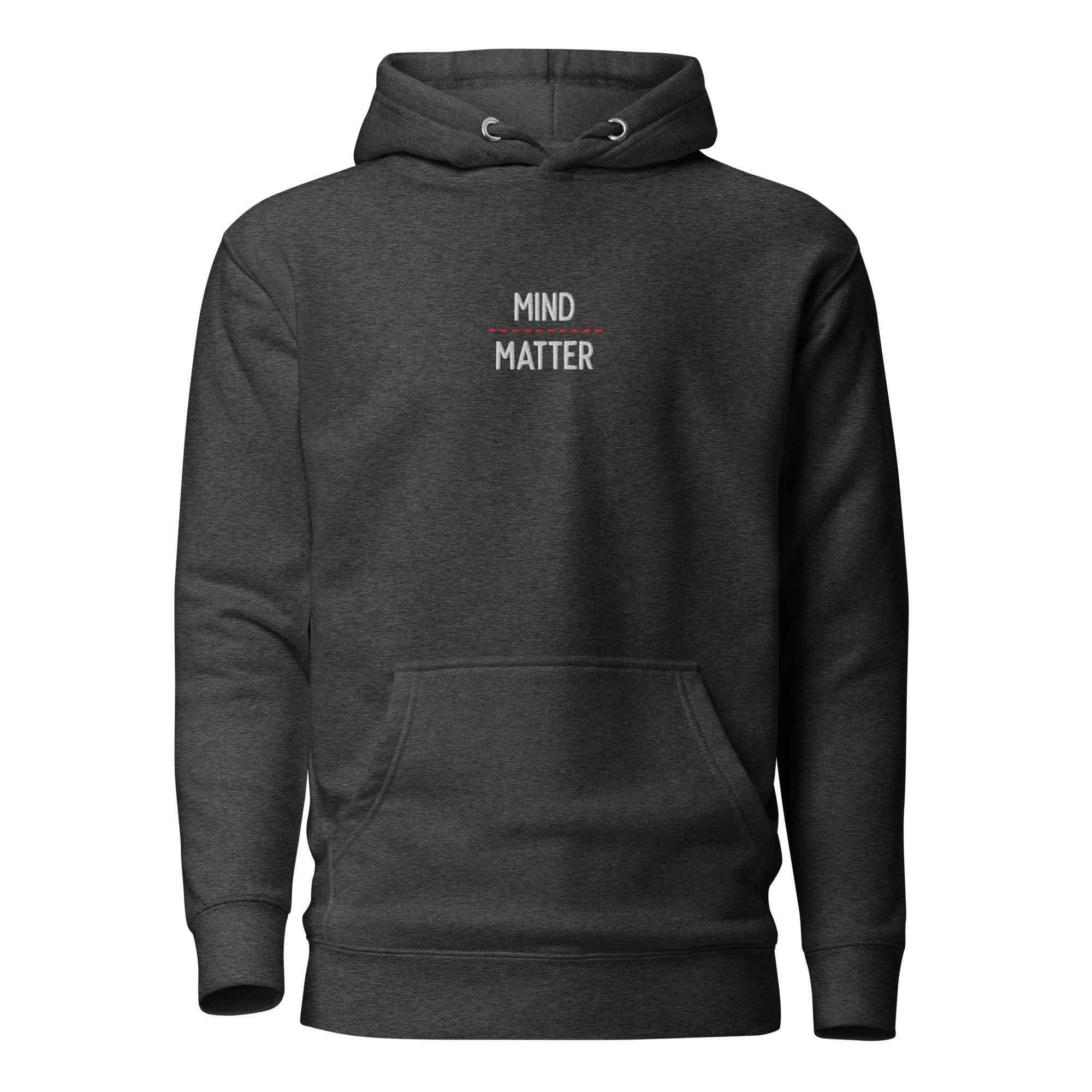
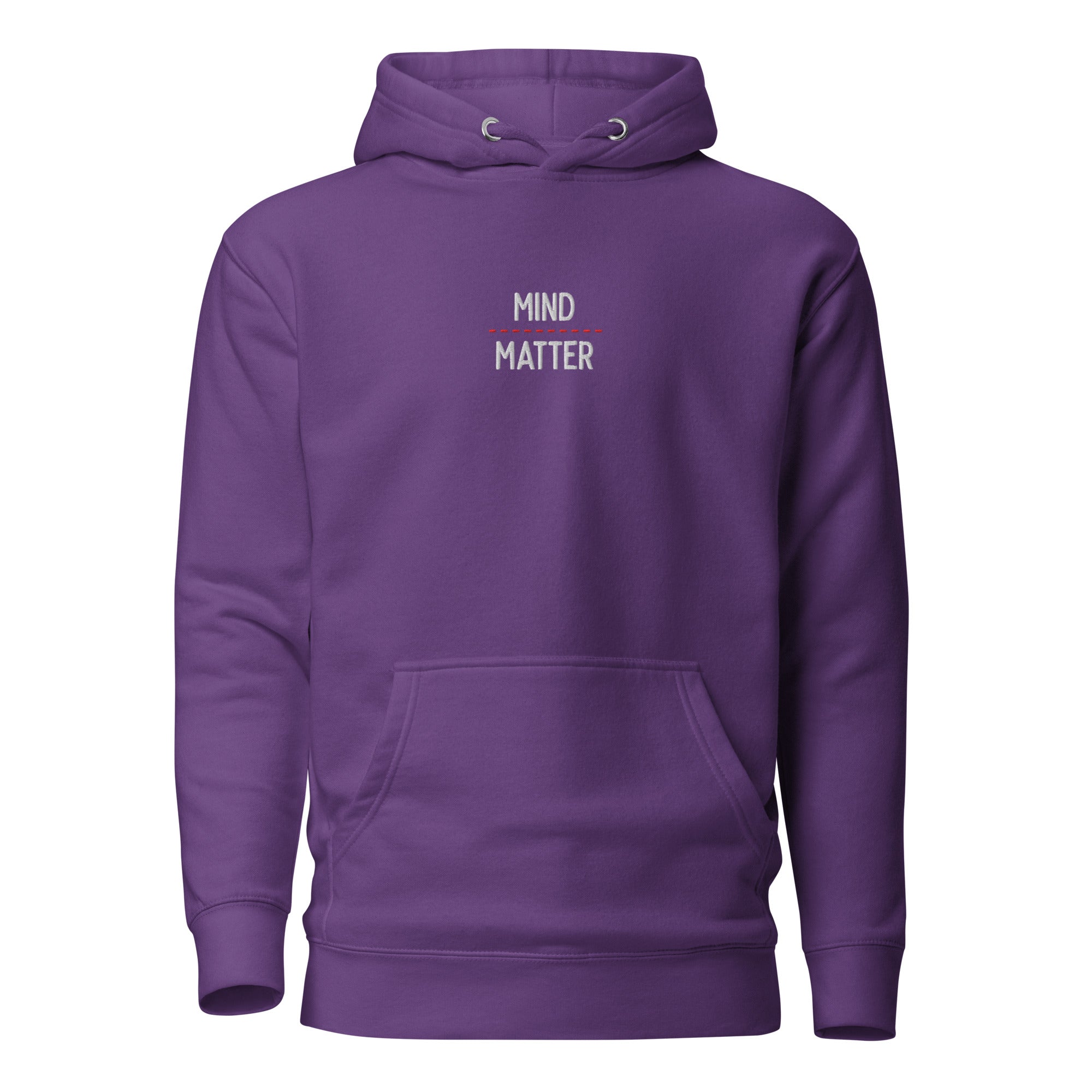
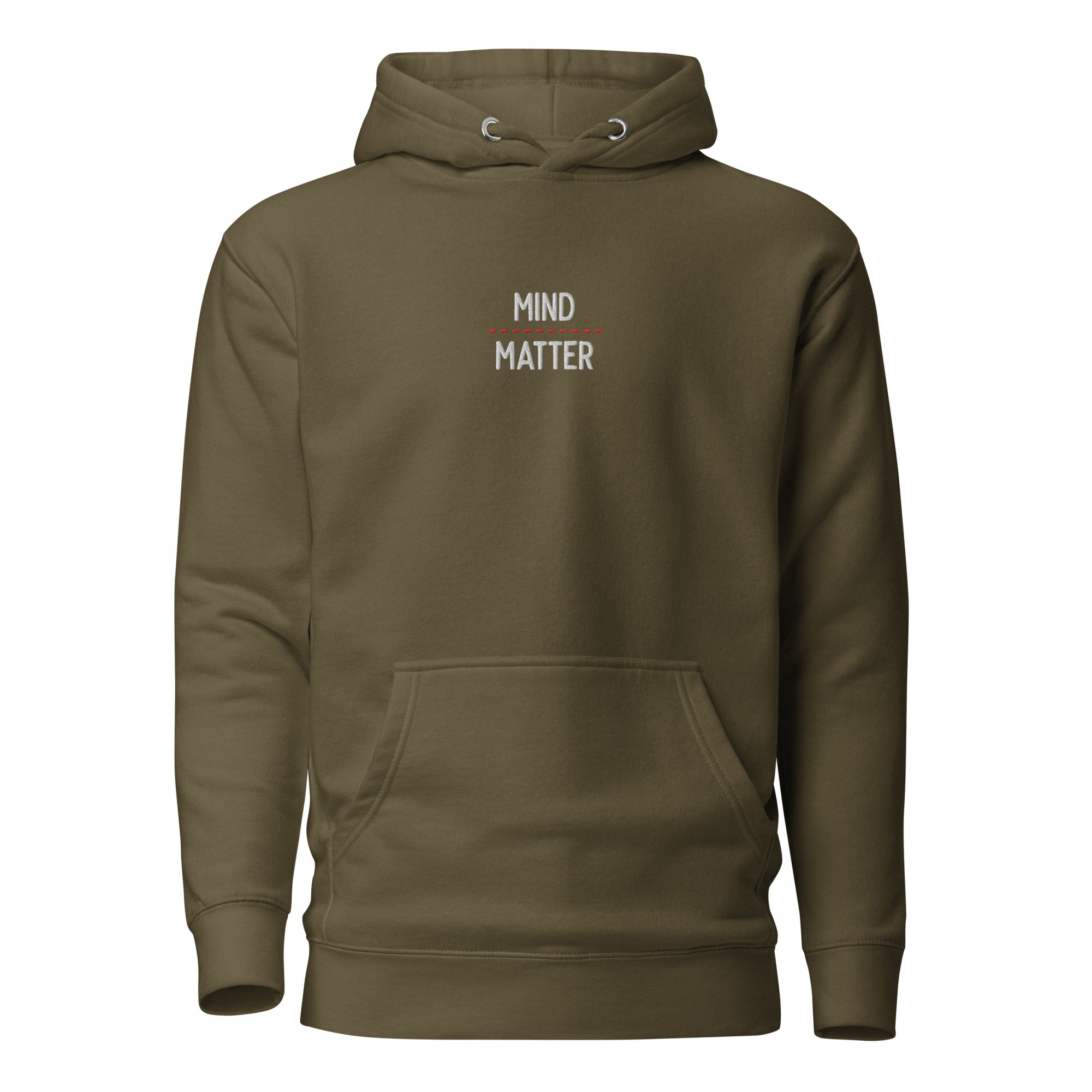
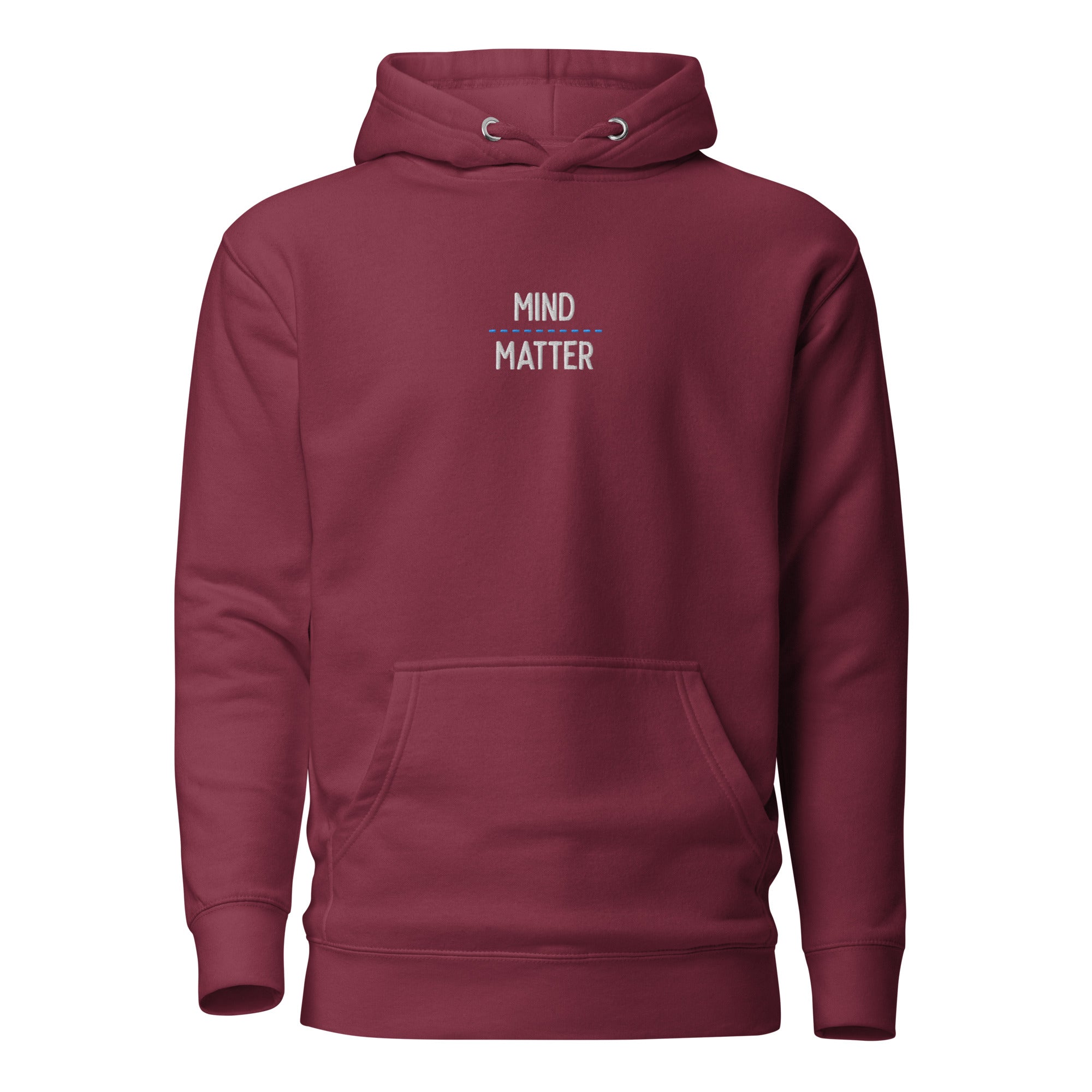
Mind Over Matter - Embroidered

Three words carrying the entire mind-body problem. Descartes spent a career on it, dualists and materialists are still fighting, and here it is in thread.

Minimal enough for daily wear, loaded enough to justify the question. Every format we print it on, made to order as you buy it, from apparel to accessories. Whether it is true remains open. Wearing it does not.

Questions about this design

What does the Mind over matter design show?
The words MIND and MATTER stacked like a fraction, separated by a red dashed line – mind, quite literally, over matter. The embroidered design turns the everyday saying into its philosophical origin – the old question of how thinking relates to the physical world, which Descartes made famous and which is still open.
What does mind over matter mean?
In everyday use, that willpower and attitude can overcome physical difficulties such as pain, fatigue or fear – pushing through the last kilometre of a run, for example. In philosophy and parapsychology it can also mean the stronger claim that the mind directly controls physical things, which is far more controversial.
Where does the phrase mind over matter come from?
The English phrase is usually traced to the geologist Charles Lyell, who wrote in The Geological Evidences of the Antiquity of Man (1863) of the ever-increasing dominion of mind over matter, meaning the evolution of intelligence. The idea is much older – Virgil's Aeneid (Book 6, line 727) has mens agitat molem, the mind moves the mass.
What is the mind-body problem?
The question of how mental states – thoughts, feelings, consciousness – relate to the physical body and brain. Are they the same thing described twice, two different substances, or is one produced by the other? It became central with Descartes in the 17th century and remains one of the main open problems in philosophy of mind.
What is Cartesian dualism?
René Descartes' view, set out in his Meditations (1641), that mind and body are two distinct substances – thinking, non-spatial mind and extended, unthinking matter. The hard part is explaining how they interact; Descartes pointed to the pineal gland in The Passions of the Soul (1649), and Princess Elisabeth of Bohemia pressed him on this in letters from 1643.
Who said I think, therefore I am?
René Descartes. He first wrote it in French, je pense, donc je suis, in the Discourse on the Method (1637); the Latin cogito, ergo sum appears in his Principles of Philosophy (1644). Even if he doubts everything else, the fact that he is doubting proves that he, as a thinking thing, exists.
What is the difference between materialism and idealism?
Materialism holds that everything that exists is ultimately matter, so the mind depends on, or is, the physical brain. Idealism holds the reverse – reality is fundamentally mental. George Berkeley's version, in A Treatise Concerning the Principles of Human Knowledge (1710), sums it up as esse est percipi, to be is to be perceived.
Is mind over matter real?
In the modest sense, partly yes – expectations, attention and motivation measurably change how we experience pain and effort, as placebo research shows. In the strong sense of moving objects by thought, no – a 1988 review by the US National Research Council found no scientific justification for such claims.
Who is the Mind over matter design a good gift for?
For philosophy and psychology students, athletes and runners who live by the saying, and anyone who likes a minimal design with a double meaning. It comes as an embroidered classic T-shirt, embroidered sweatshirt, embroidered premium hoodie and cap.