No tariffs. Ever. We ship locally from the US, Canada, the UK, or the EU + Free shipping over $80 / 70€ / £60 (equivalent in all other currencies).
Search our site

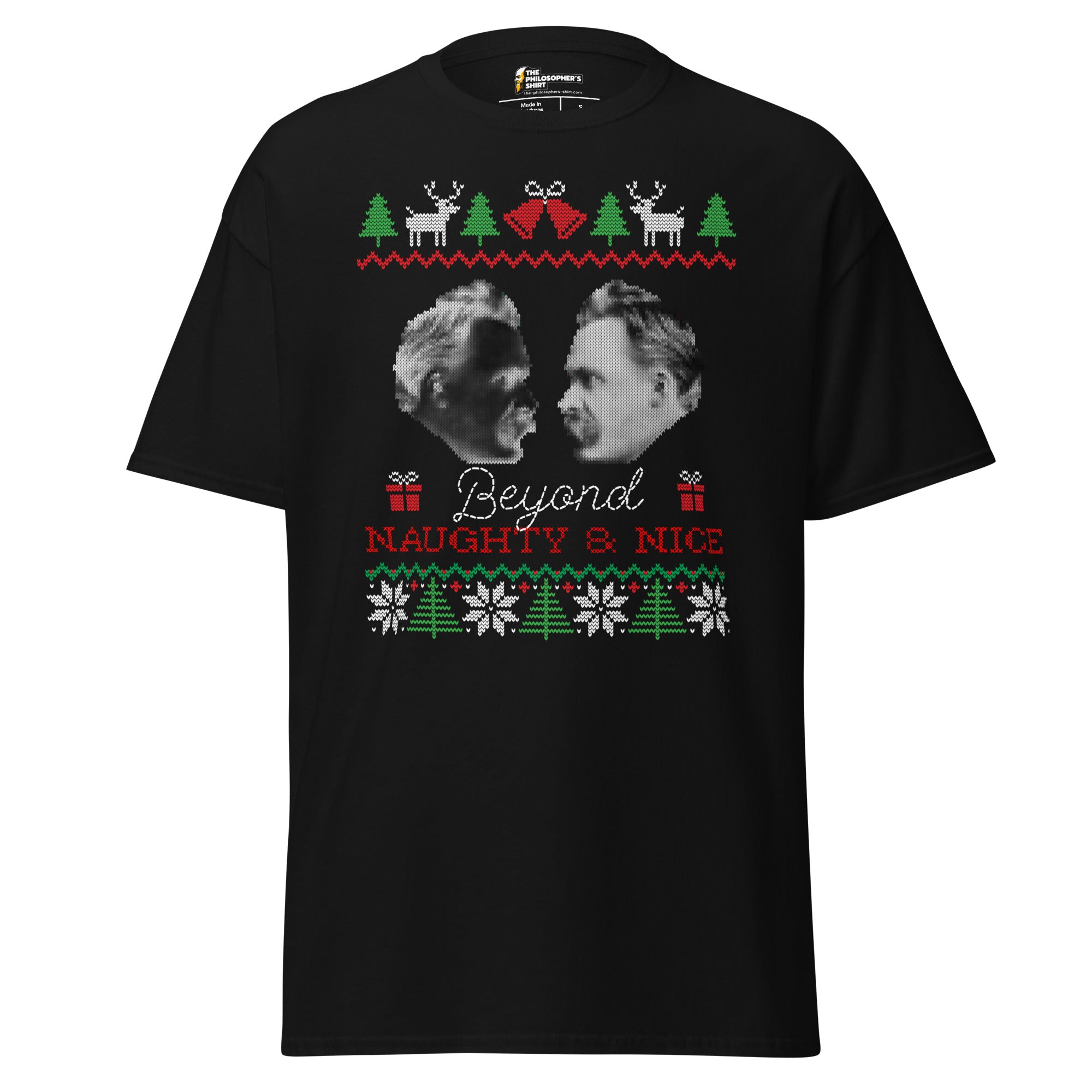
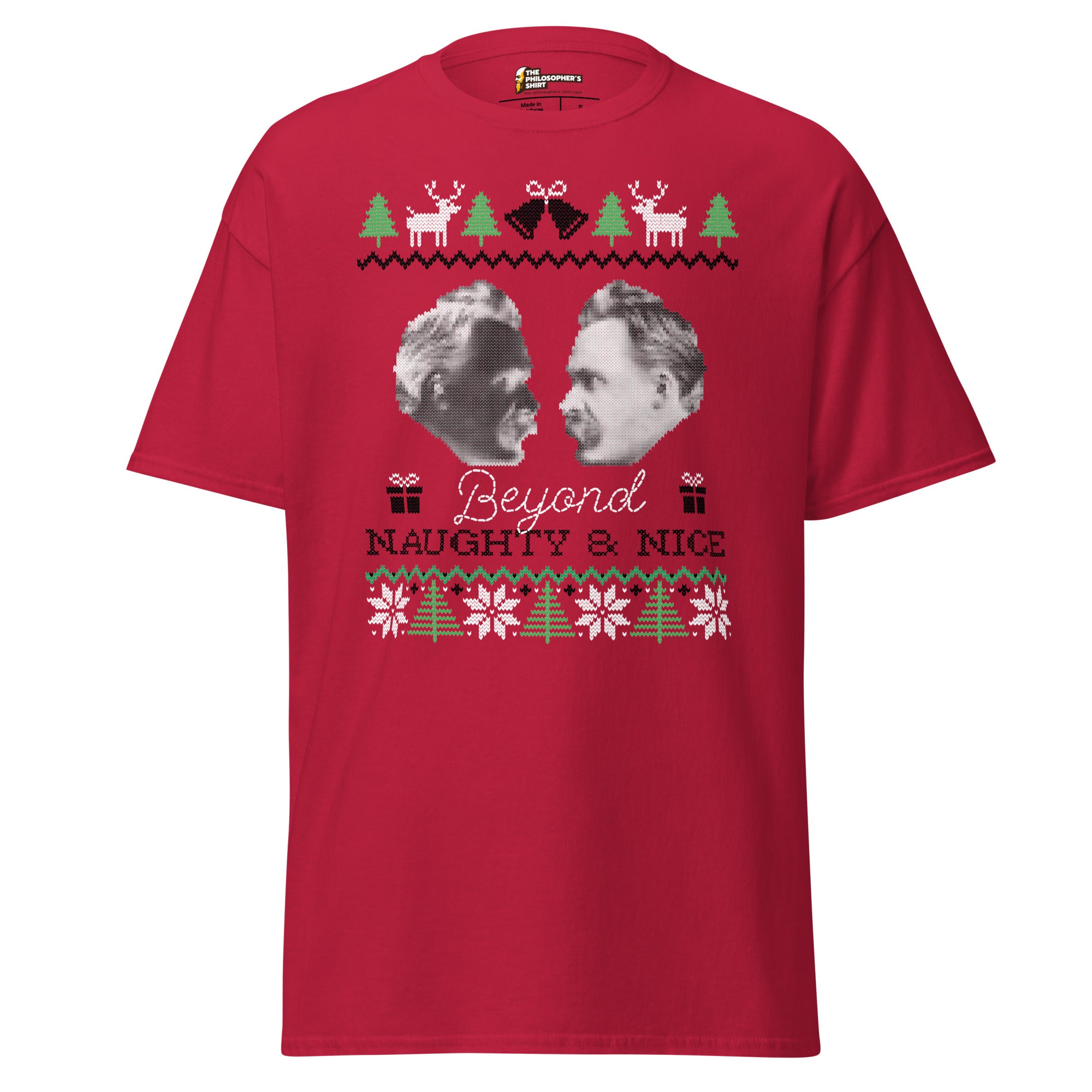
Nietzsche - Beyond naughty and nice

Santa runs a strict moral binary. Nietzsche spent a whole book explaining why that binary is a historical accident, not a fact about the universe.

Rewrites his most famous title into festive form without breaking either. The whole range: tees, sweatshirts, hoodies and mugs, printed to order as you buy them. The list is a construct. Enjoy your coal regardless.
Questions about this design

What does “Beyond Naughty & Nice” mean?
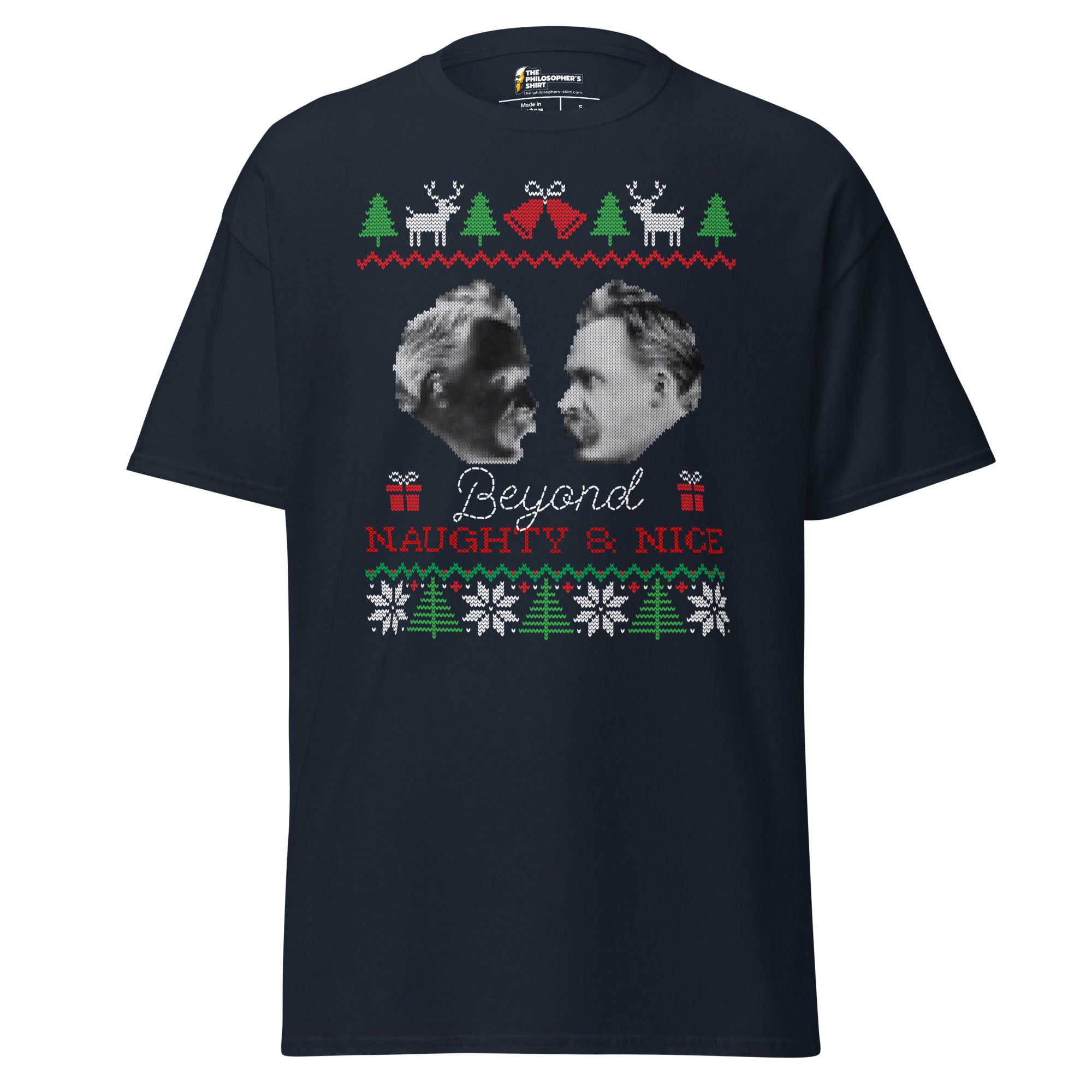
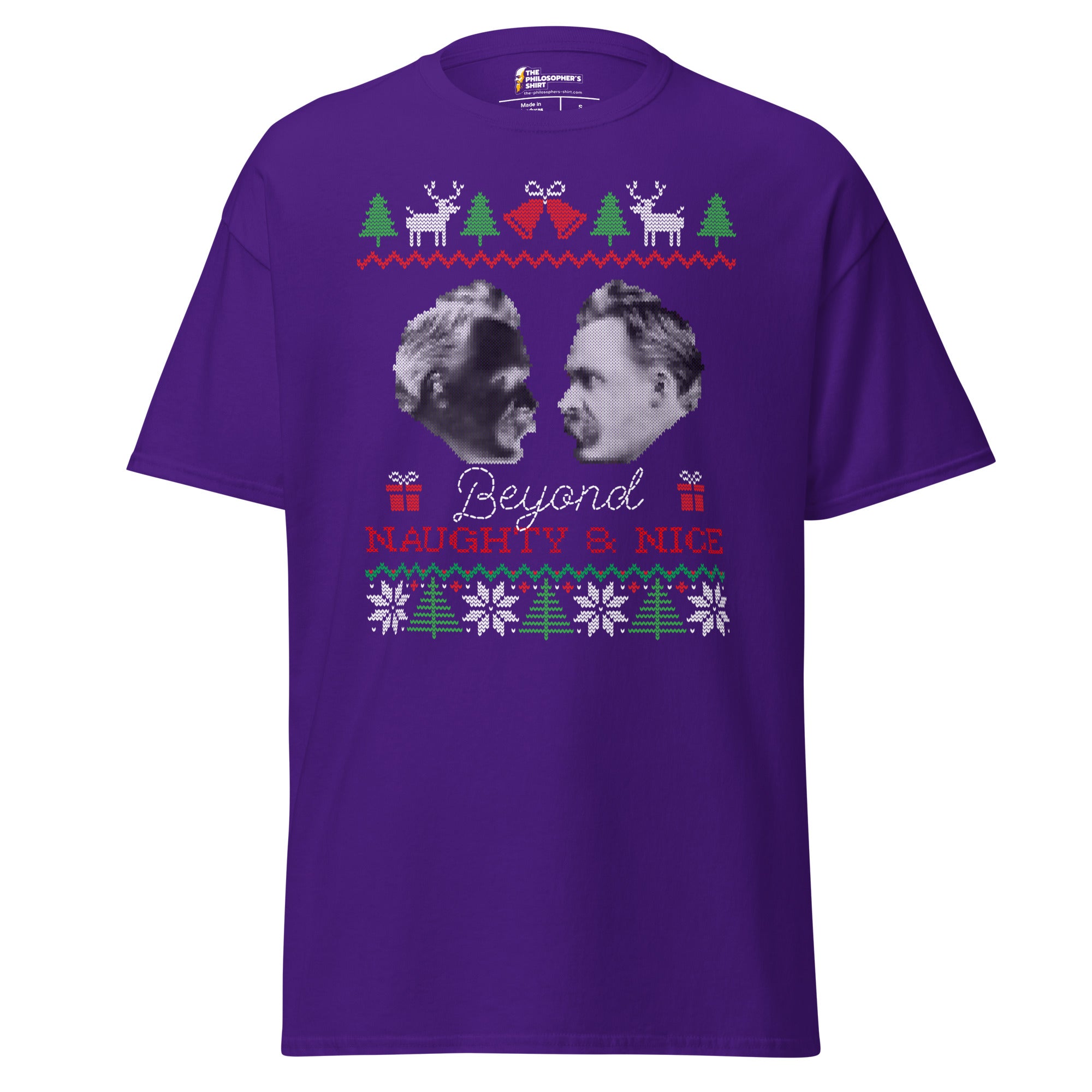
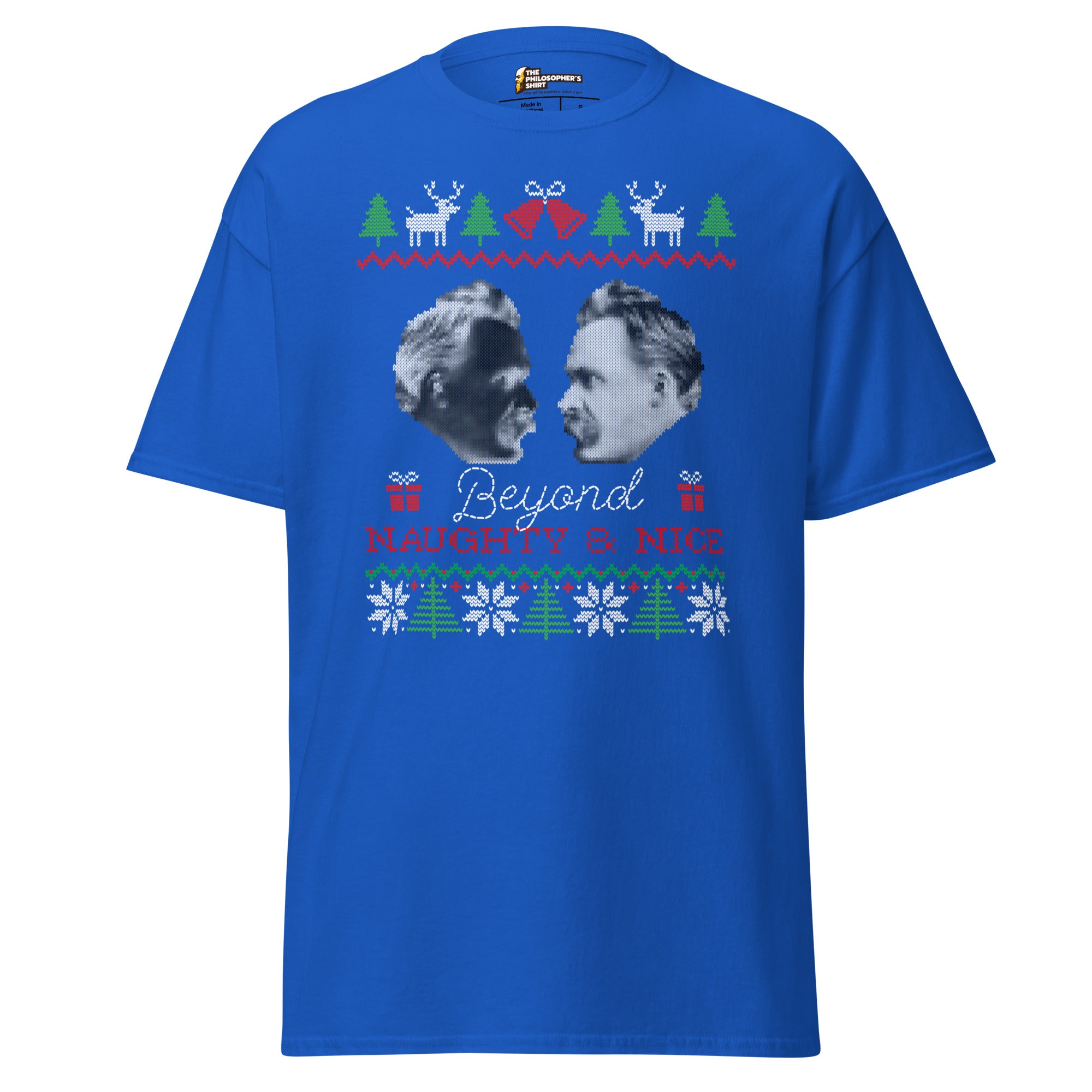
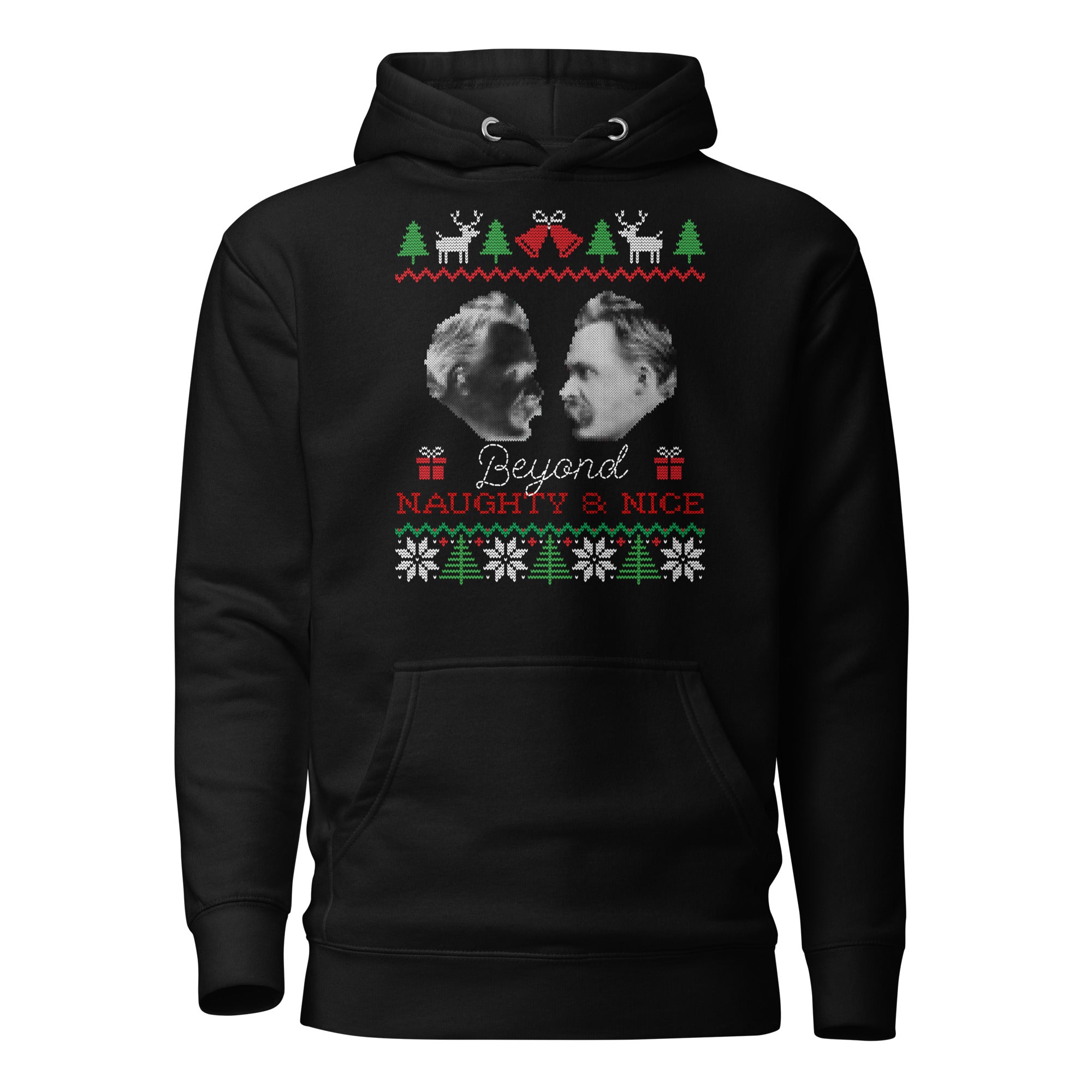
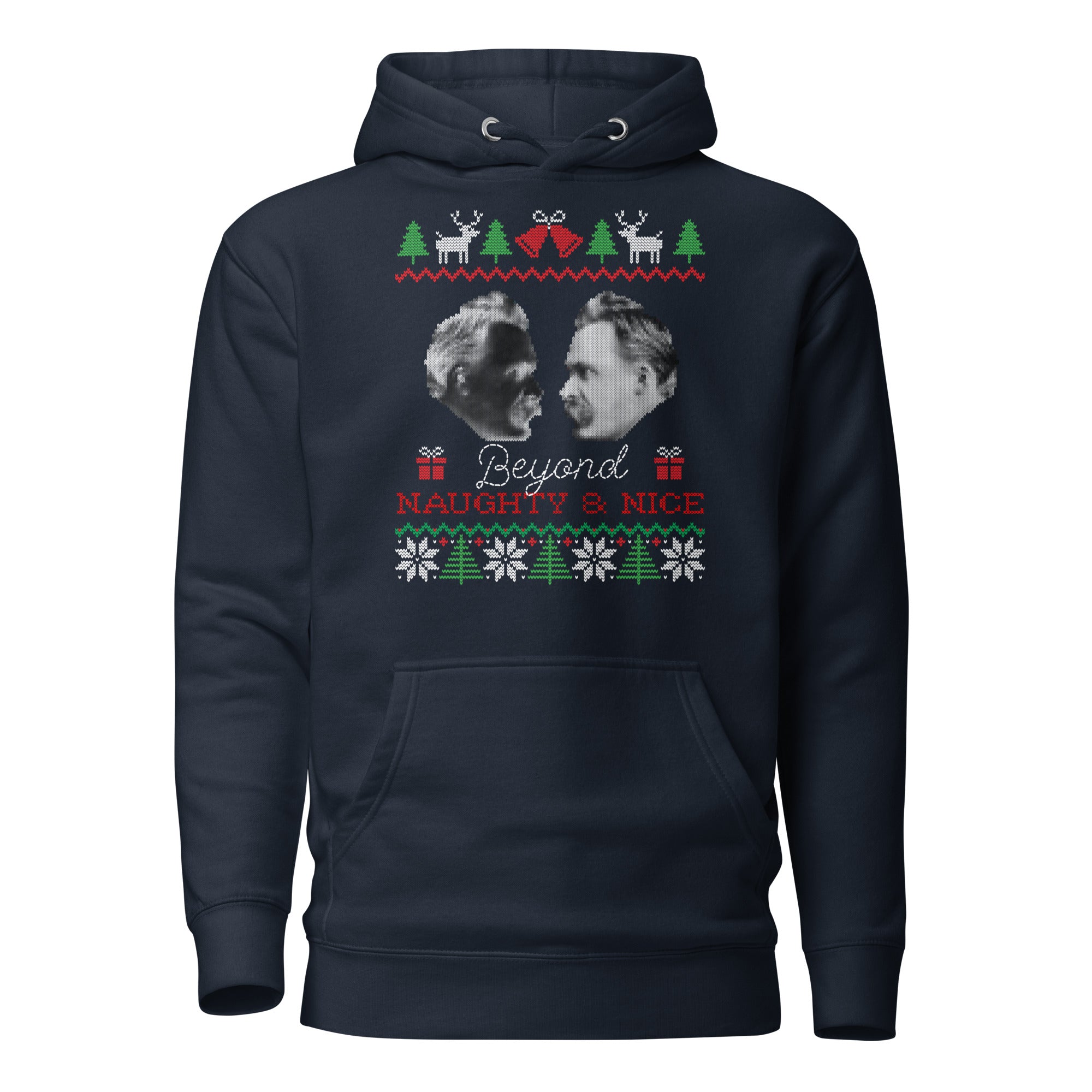
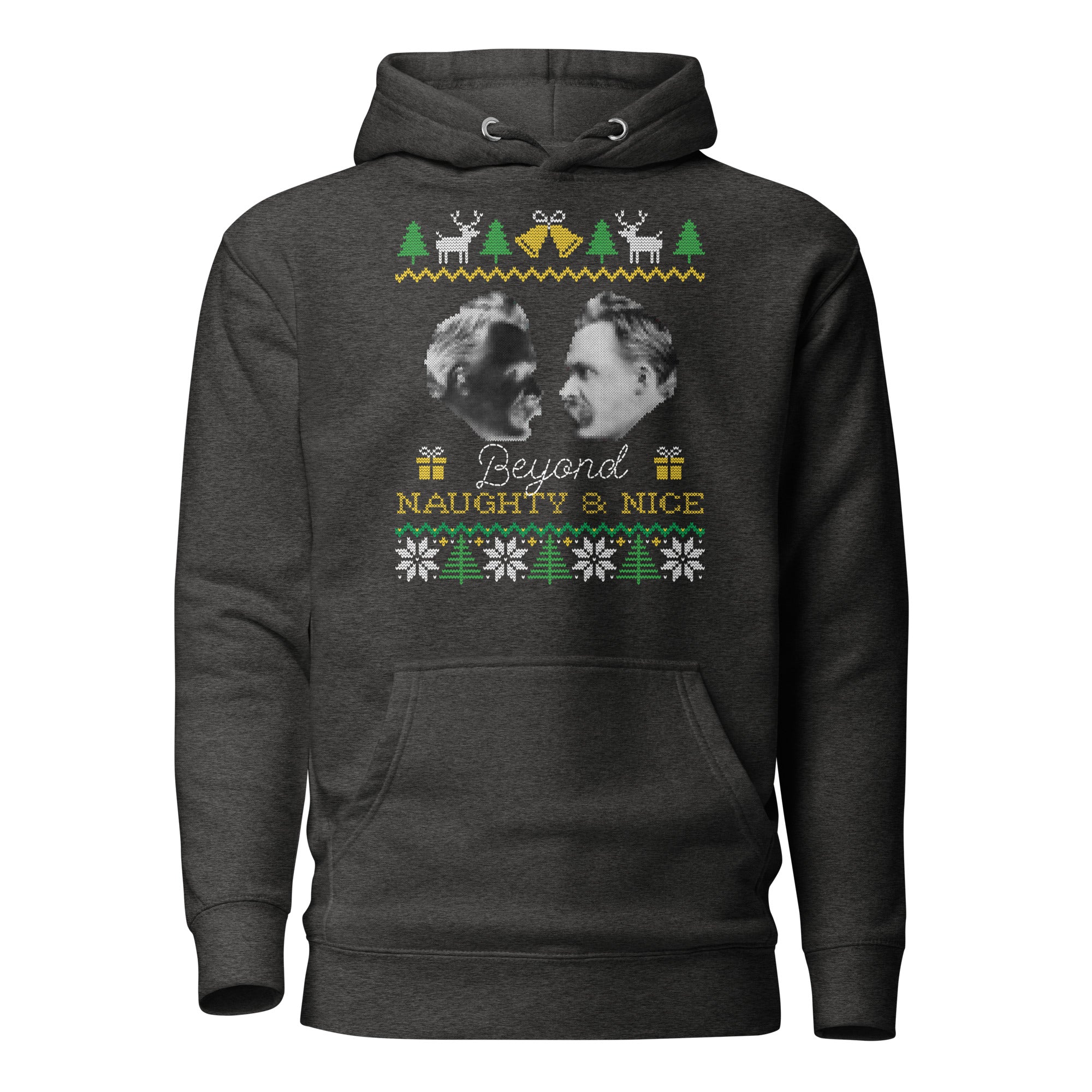
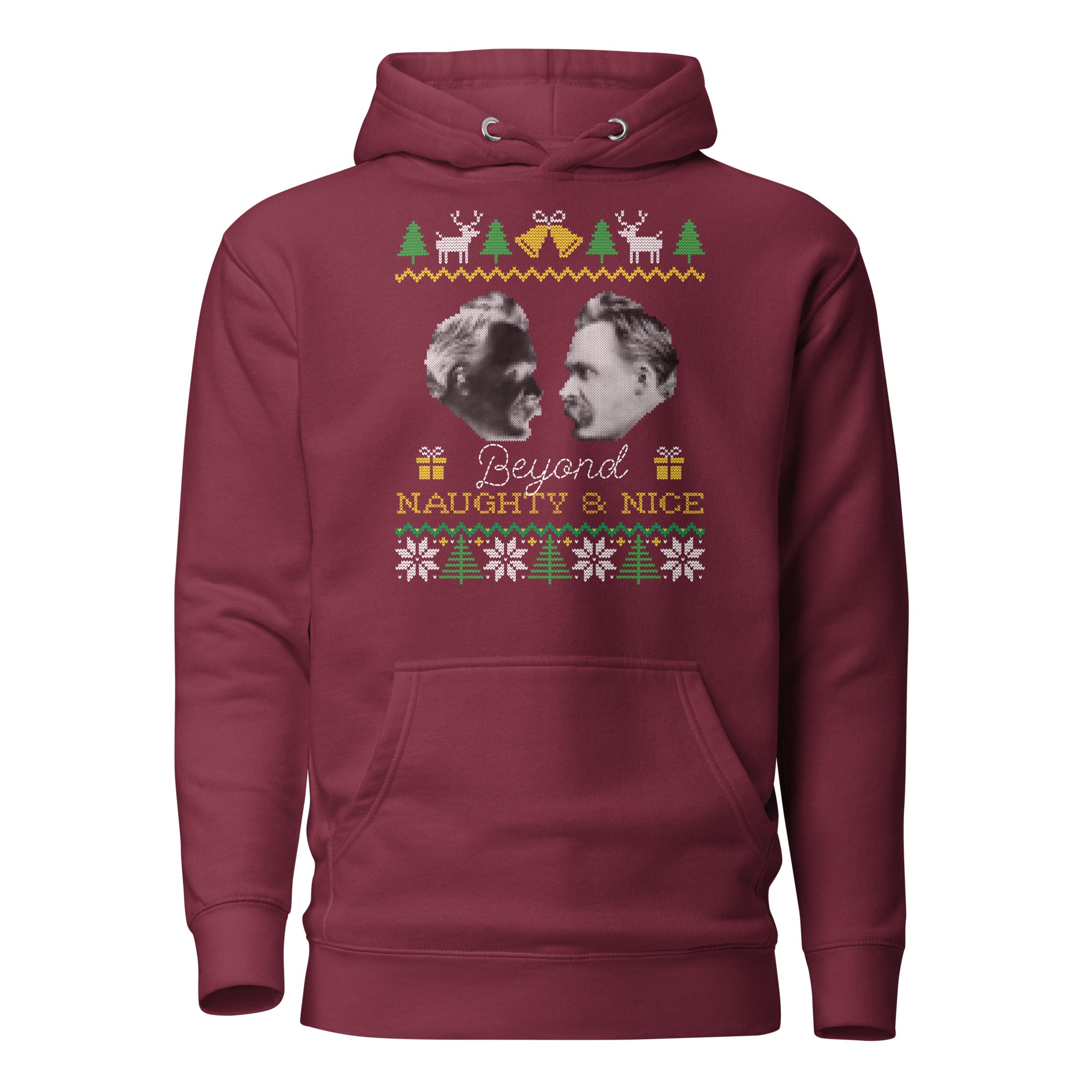
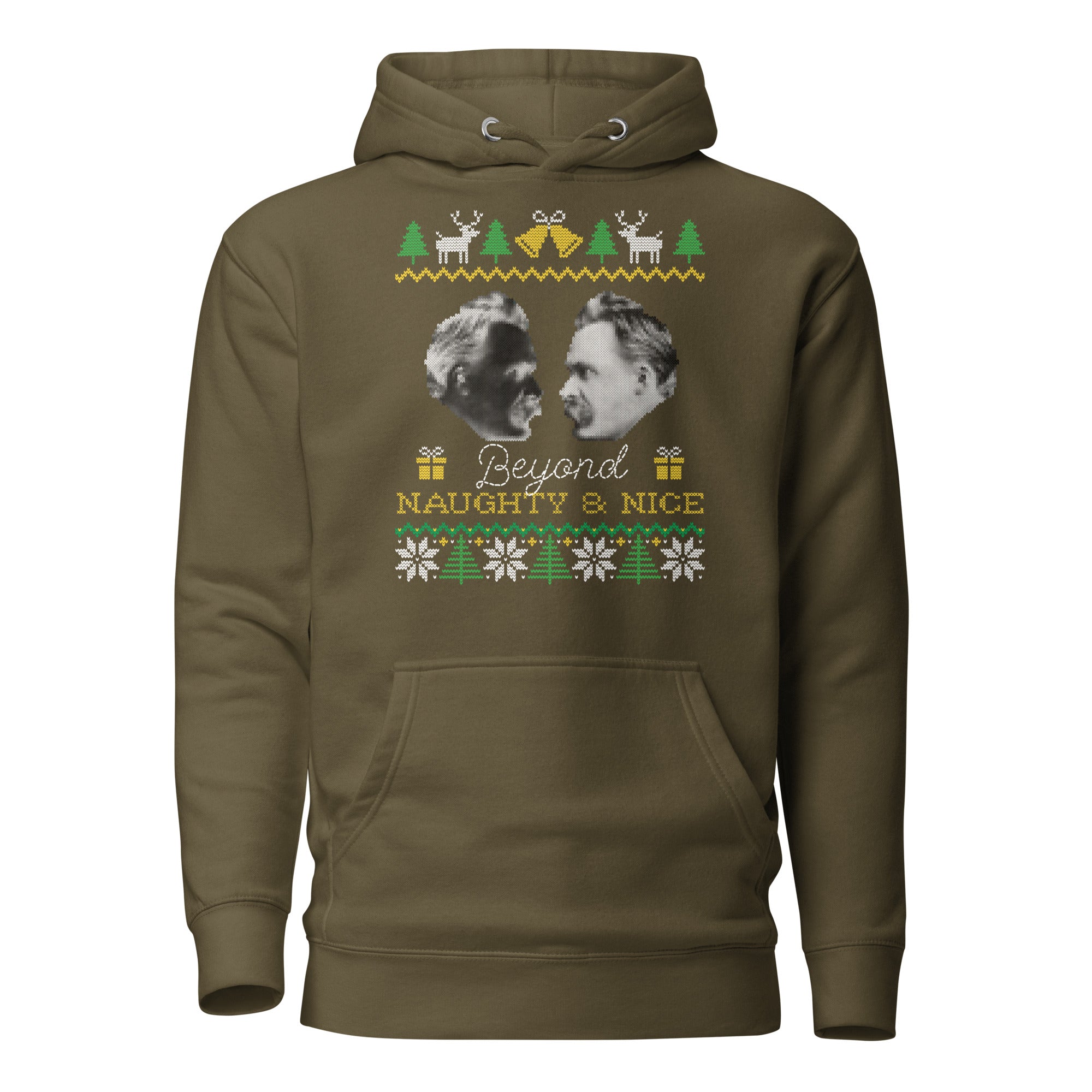
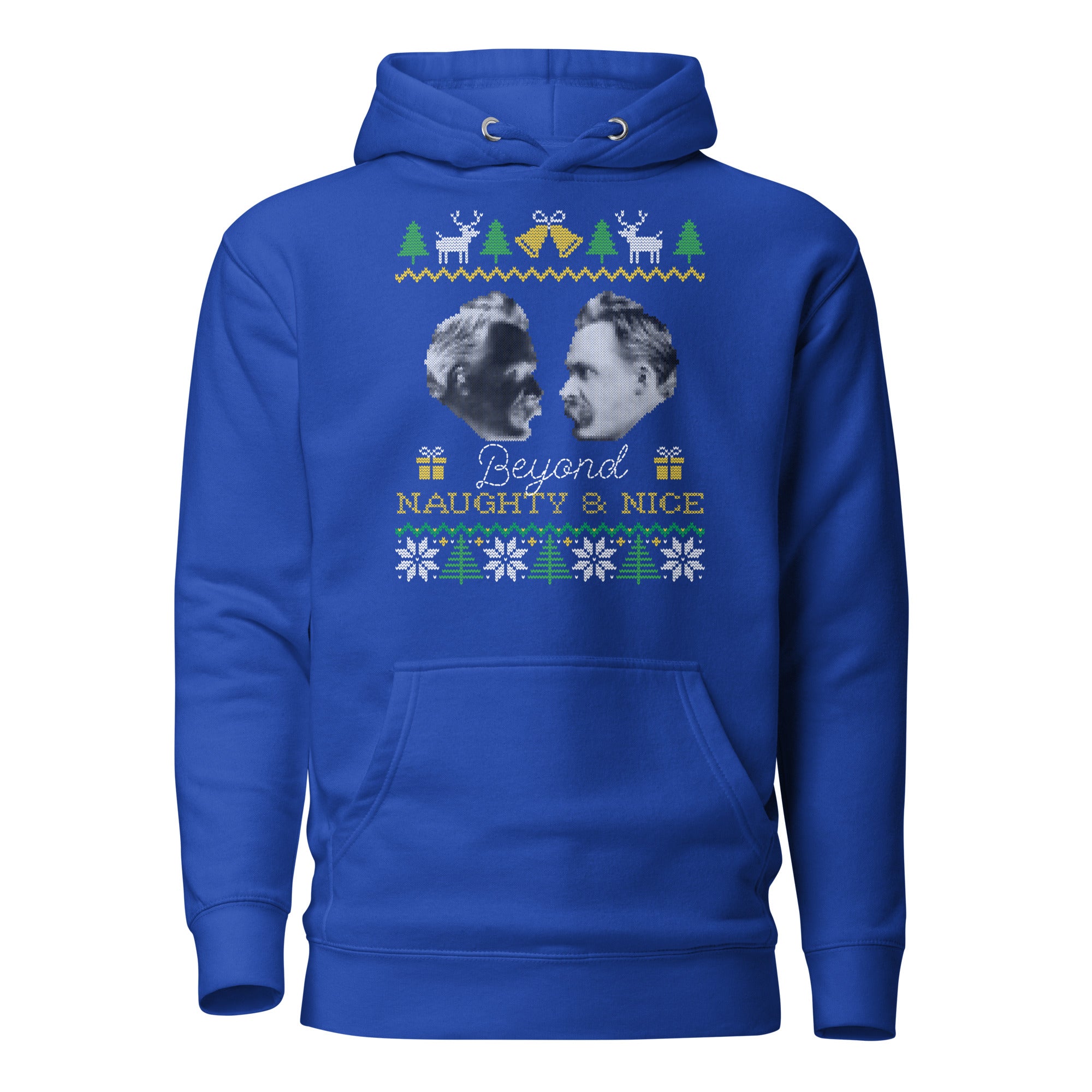
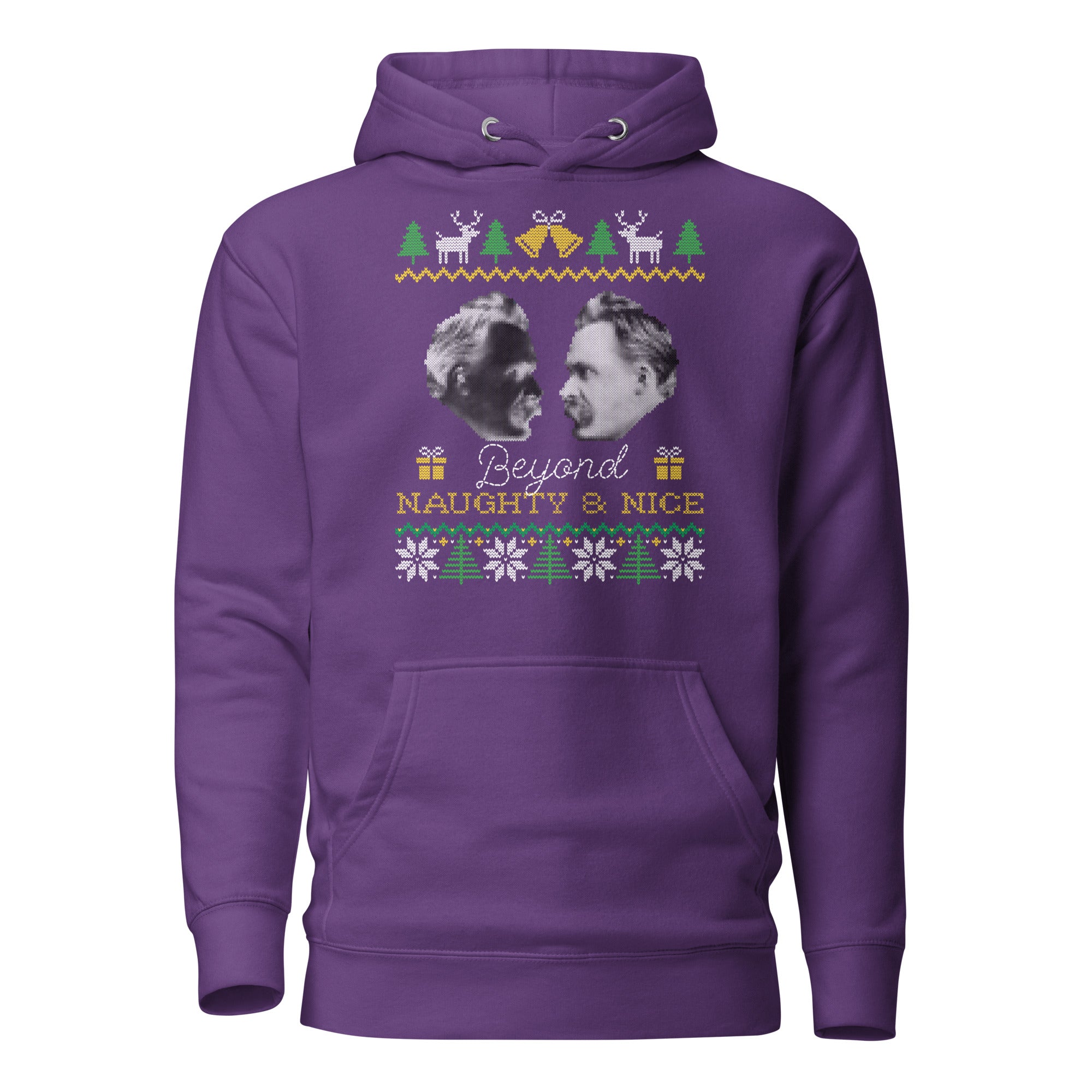
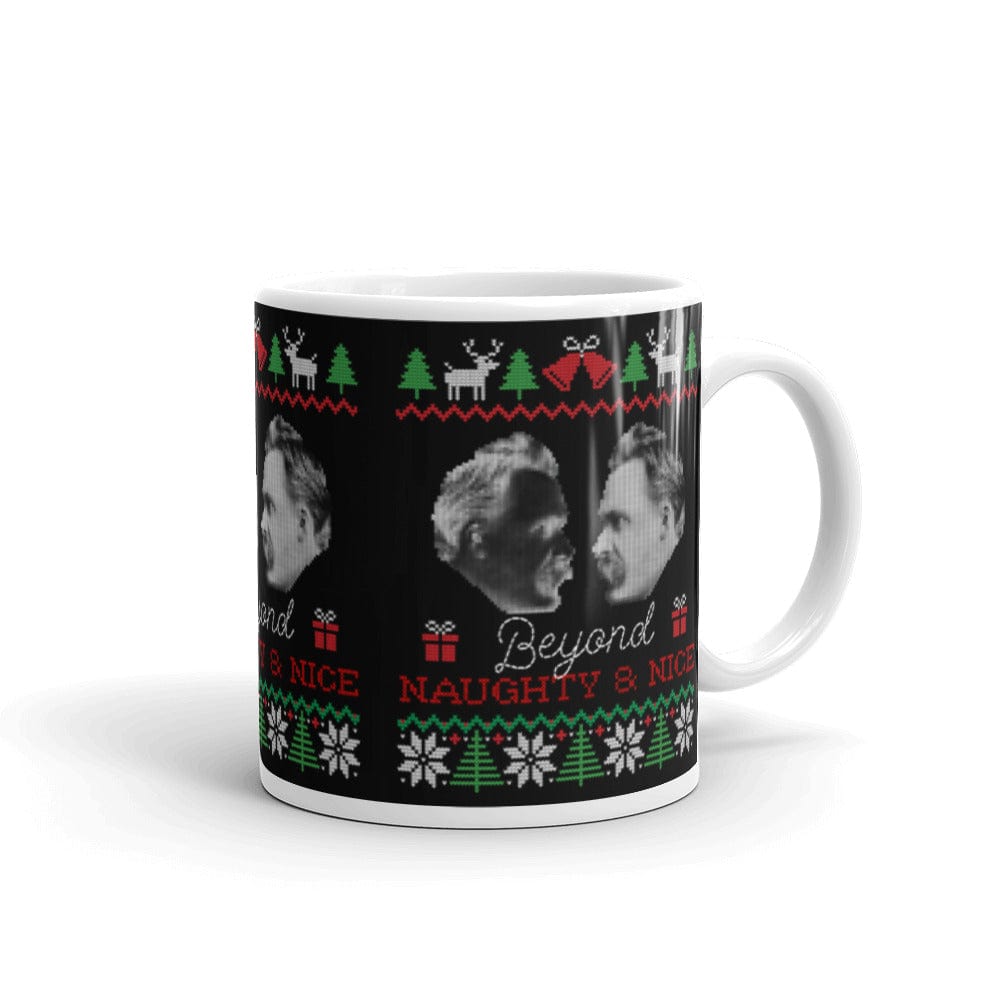
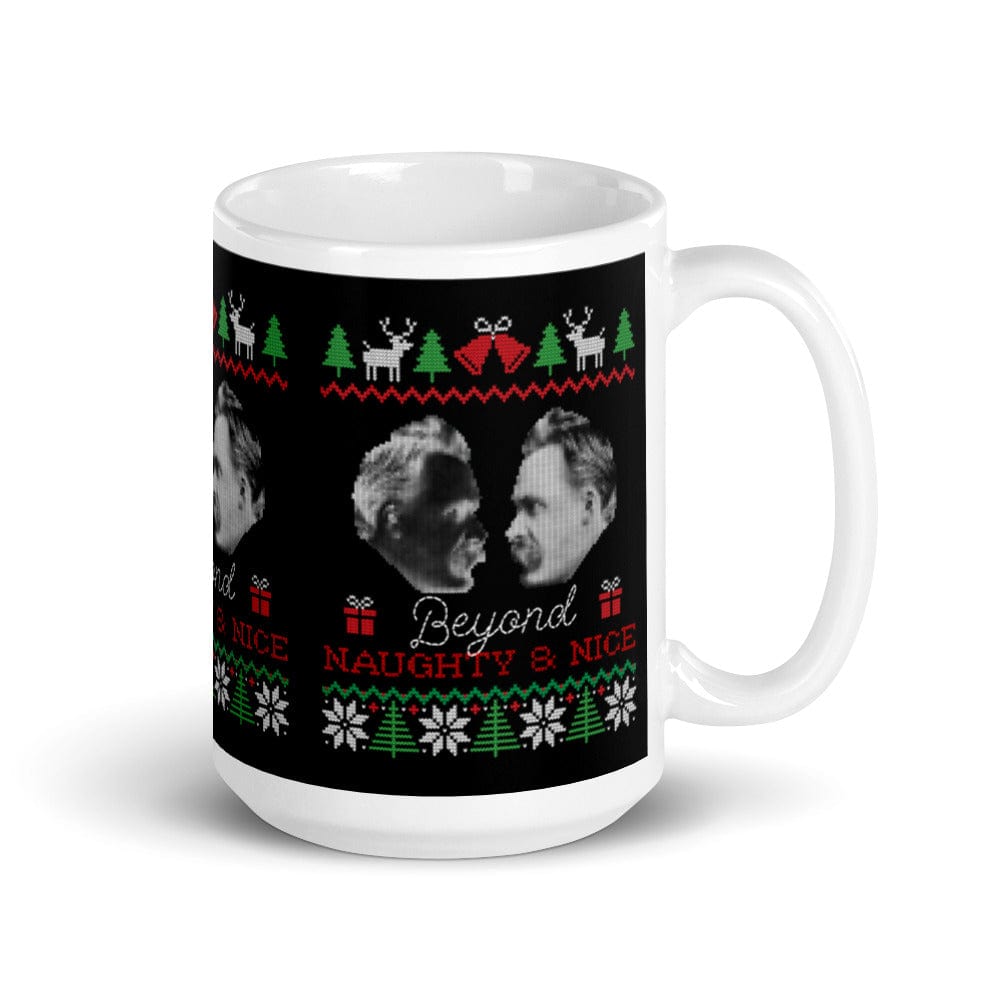
It swaps the title of Nietzsche's Beyond Good and Evil (1886) into Santa's naughty-or-nice list. Santa sorts everyone into two moral boxes; Nietzsche argued that such binaries are historical inventions, not facts of nature. The design dresses the joke as an ugly Christmas sweater, with two knit-look Nietzsche portraits face to face between reindeer, bells and snowflakes.
What is Beyond Good and Evil about?
Nietzsche's Beyond Good and Evil – Prelude to a Philosophy of the Future (1886) attacks the hidden dogmas of earlier philosophers, who he thought dressed up their moral prejudices as pure reason. He calls for free spirits who can question the value of morality itself and think from many perspectives rather than one absolute truth.
What is master and slave morality?
Nietzsche's distinction, developed in Beyond Good and Evil and On the Genealogy of Morality (1887). Master morality calls the strong, proud and life-affirming good and the weak bad. Slave morality, born of resentment, reverses this – it calls the powerful evil and humility good. Nietzsche saw Christian morality as the great victory of the slave revolt in morals.
Did Nietzsche really say “God is dead”?
Yes. The line appears in The Gay Science (1882), most famously in section 125, where a madman cries that God is dead and that we have killed him; it returns in Thus Spoke Zarathustra. Nietzsche meant a cultural event, not a theological proof – belief in God had lost its force, and with it the foundation of European values.
What is Nietzsche's Übermensch?
The Übermensch, often translated overman or superman, is introduced in Thus Spoke Zarathustra (1883–1885) – Zarathustra teaches that man is something that shall be overcome. It is an ideal of a human being who creates their own values after the death of God. The Nazis later misused the idea, although Nietzsche despised antisemitism and German nationalism.
Was Nietzsche a nihilist?
He was a diagnostician of nihilism rather than its advocate. Nietzsche predicted that once the highest values lose their credibility, Europe would face a crisis of meaninglessness. His own project – the revaluation of all values, amor fati and the Übermensch – was an attempt to move through nihilism and beyond it.
What is Nietzsche's The Antichrist about?
Written in 1888 and published in 1895, The Antichrist is Nietzsche's most direct attack on Christianity, which he accuses of turning pity, weakness and guilt into virtues. Notably, he treats Jesus with some respect and directs much of his anger at the church and at Paul. The German title Der Antichrist can also mean the Anti-Christian.
Is this an ugly Christmas sweater?
It is designed as one – a knit-look pattern with reindeer, Christmas trees, bells and snowflakes, printed rather than knitted. The sweatshirt and premium hoodie are the classic choices for an ugly sweater party; the design also comes as a t-shirt, mug and sticker.
Who is this a good Christmas gift for?
For Nietzsche readers, philosophy students and teachers, and anyone who refuses to be sorted into naughty or nice. It works for Secret Santa and office parties, where the joke lands with people who know the book and still looks festive to everyone else.