No tariffs. Ever. We ship locally from the US, Canada, the UK, or the EU + Free shipping over $80 / 70€ / £60 (equivalent in all other currencies).
Search our site

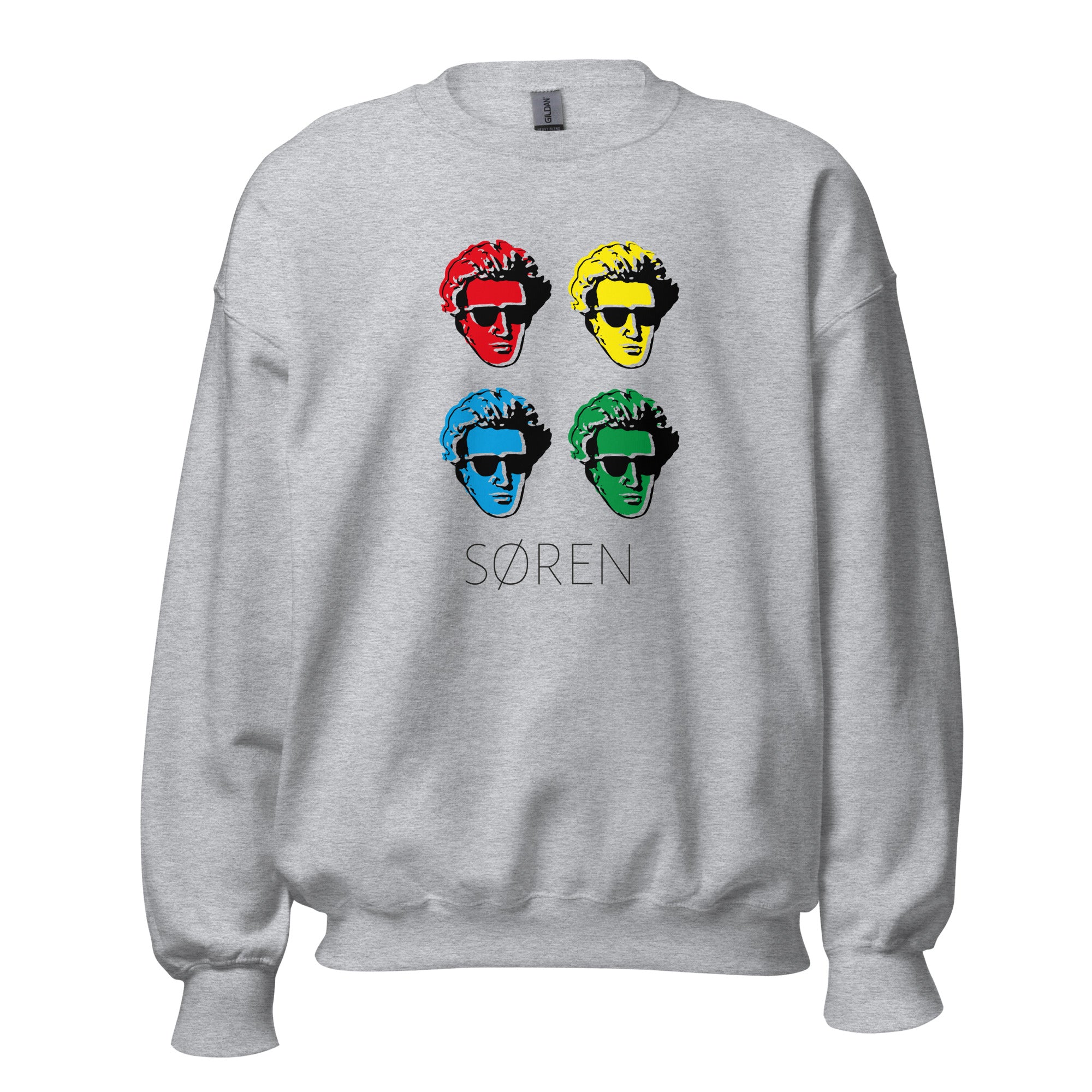
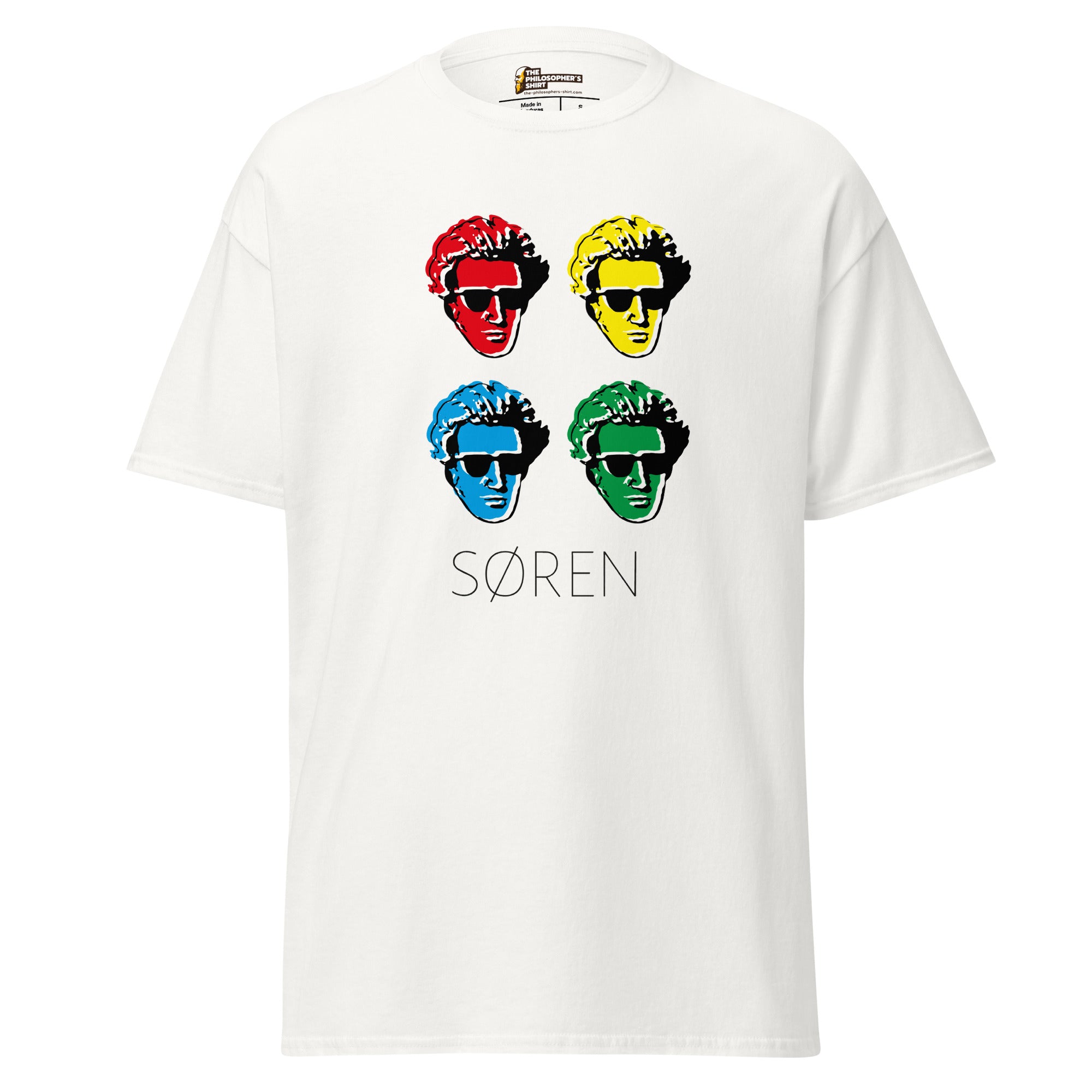
Soeren Kierkegaard Pop Art

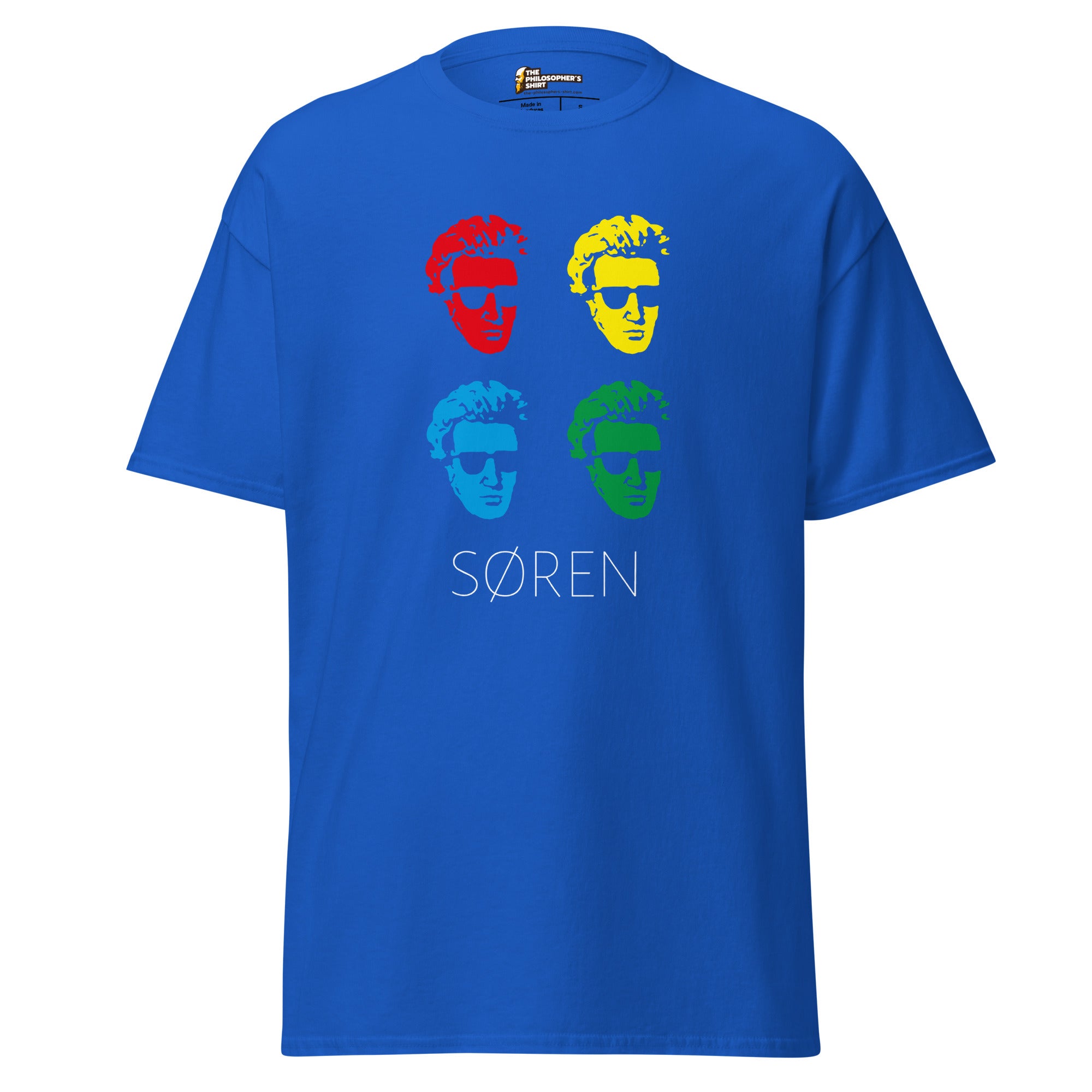
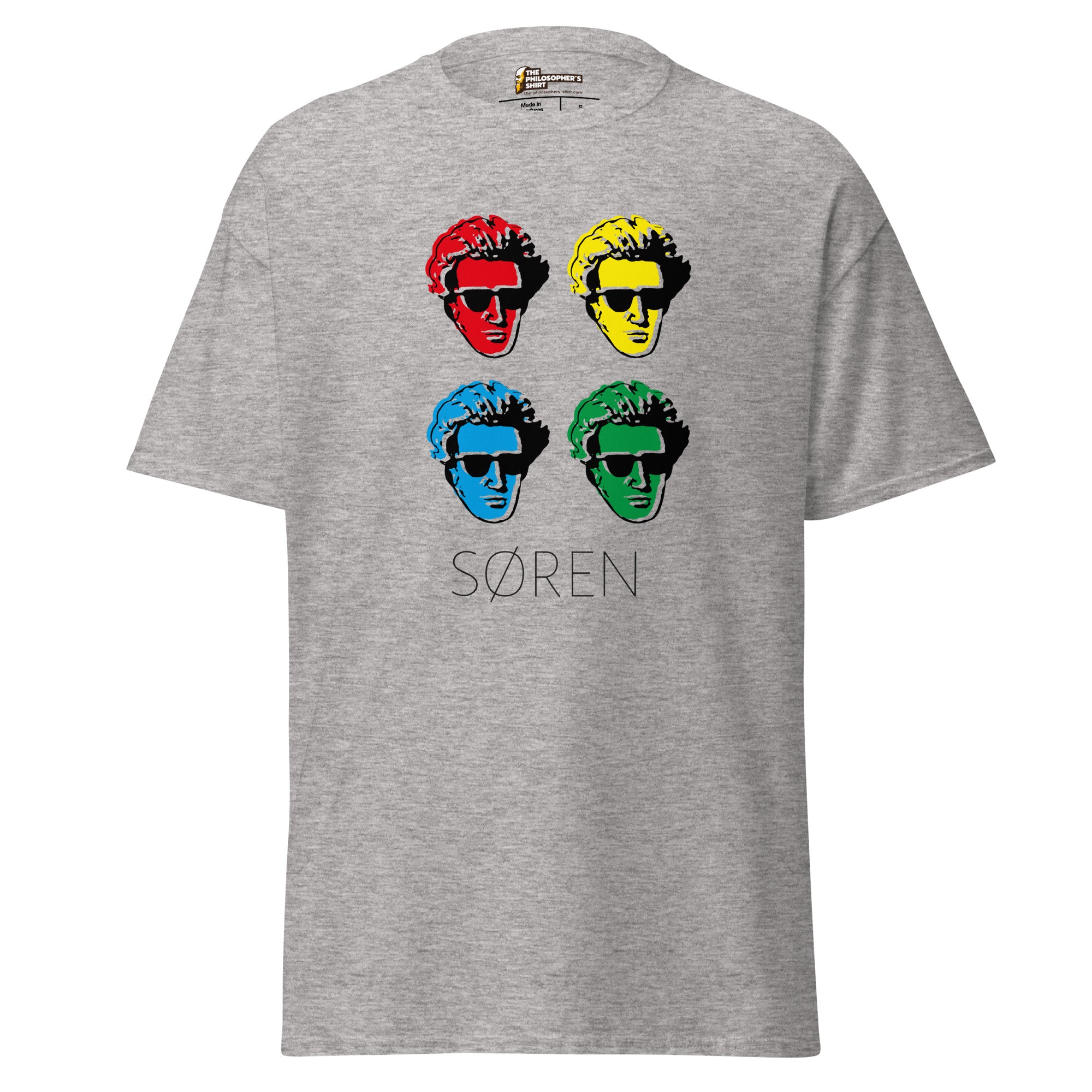
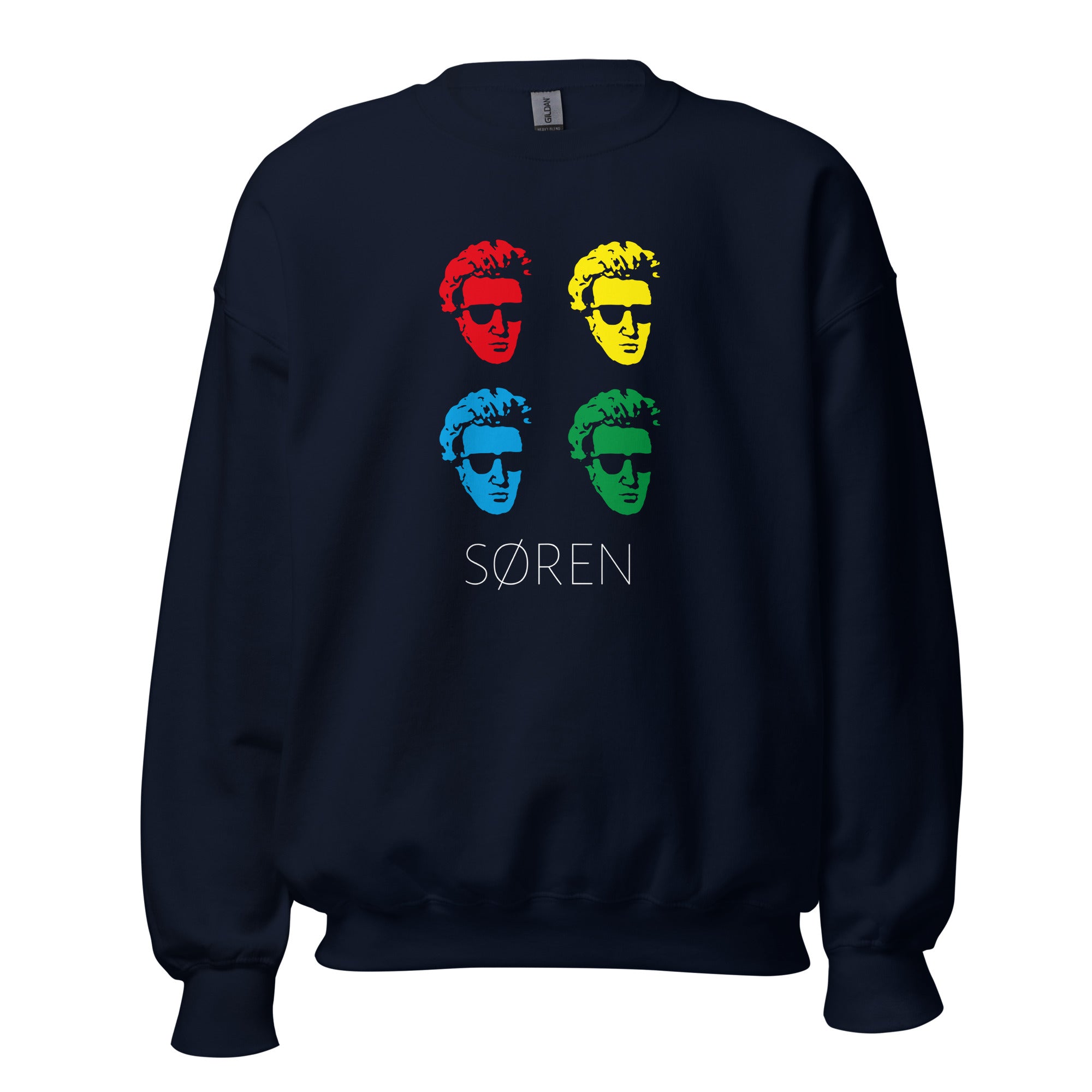
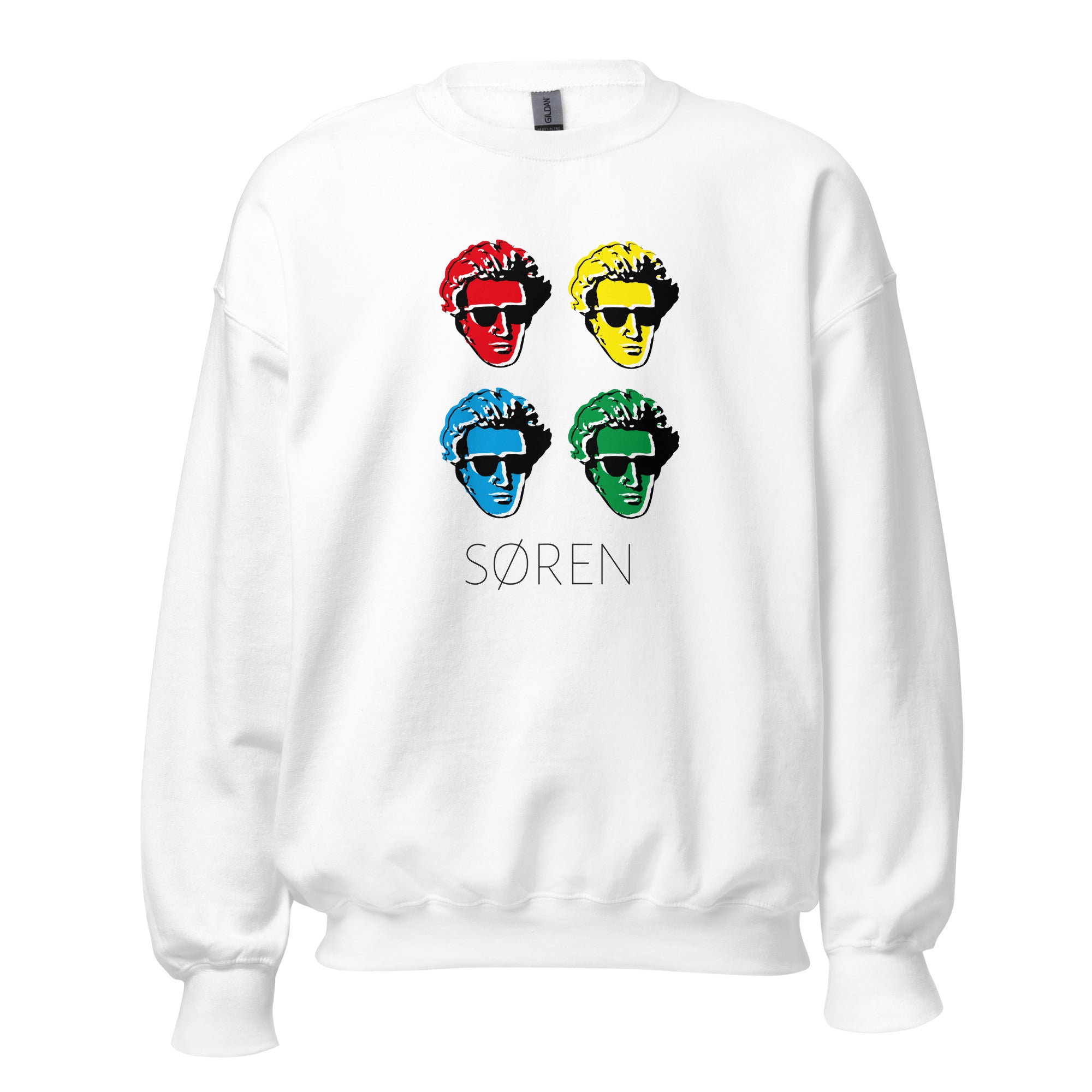
The gloomiest Dane in intellectual history, rendered in Warhol brightness. The contrast is either ironic or exactly what he needed.

Bold flat blocks that read clearly from the other end of a corridor. Everything in one place, across every format we print it on, made to order. An existentialist gift for Kierkegaard readers. Anxiety is the dizziness of freedom. It also photographs beautifully.

Questions about this design

What does the Soeren Kierkegaard Pop Art design show?
Four identical portraits of the Danish philosopher Søren Kierkegaard in red, yellow, blue and green, each wearing dark sunglasses, above his first name SØREN – in the style of 1960s pop-art screen prints. The gloomiest thinker of the 19th century, rendered in the brightest colours possible; whether that is irony or exactly what he needed is up to you.
Who was Søren Kierkegaard?
A Danish philosopher, theologian and writer (1813–1855) from Copenhagen. He published many works under pseudonyms, wrote about faith, anxiety, despair and what it means to become an individual, and fiercely criticised the established Danish church. He is widely seen as the first existentialist.
How do you pronounce Kierkegaard and what does the name mean?
In English usually KEER-kuh-gard; the Danish pronunciation sounds closer to KEER-keh-gor. The name comes from the Danish kirkegård, which means churchyard or cemetery – a fitting name for a man who wrote The Sickness unto Death.
Why is Kierkegaard called the father of existentialism?
Because he put the existing individual at the centre of philosophy, against Hegel’s grand system. For Kierkegaard, what matters is how a person lives, chooses and commits – “truth is subjectivity”, as he puts it in the Concluding Unscientific Postscript (1846). Heidegger, Sartre and Camus all built on these themes.
What does “Anxiety is the dizziness of freedom” mean?
The line comes from The Concept of Anxiety (1844), published under the pseudonym Vigilius Haufniensis. Kierkegaard compares anxiety to looking down into an abyss – the dizziness comes from realising that you are free and that anything is possible. Anxiety is not a malfunction but a sign of human freedom.
What is Kierkegaard’s concept of despair?
In The Sickness unto Death (1849), written as Anti-Climacus, despair is not a mood but a misrelation of the self – either not wanting to be yourself or desperately wanting to be a self of your own making. It is the sickness unto death because it cannot kill you; you go on living with it. Its cure, for him, is faith.
Did Kierkegaard coin the phrase leap of faith?
Not in that exact form. He writes about a qualitative leap and about faith, especially in Fear and Trembling (1843), which retells Abraham’s willingness to sacrifice Isaac. The compact phrase leap of faith became attached to him later, mainly through English translations and commentary.
What are Kierkegaard’s three stages of existence?
The aesthetic stage lives for pleasure and interesting experiences, the ethical stage commits to duty, choice and responsibility, and the religious stage rests on a personal relationship with God. He develops them in Either/Or (1843) and Stages on Life’s Way (1845).
Which Kierkegaard books should I read first?
Fear and Trembling (1843) is short and gripping. Either/Or (1843) shows the aesthetic and ethical lives side by side, and The Sickness unto Death (1849) is his sharpest psychology. Many readers also enjoy his journals, which contain the famous line about life being understood backwards.
Who is the Soeren Kierkegaard Pop Art design a good gift for?
For philosophy and theology students, existentialism fans, Danophiles and anyone who likes their angst in bright colours. It comes on a t-shirt, a back-print t-shirt, a women’s t-shirt, a sweatshirt, a premium hoodie, a mug and a sticker.