No tariffs. Ever. We ship locally from the US, Canada, the UK, or the EU + Free shipping over $80 / 70€ / £60 (equivalent in all other currencies).
Search our site

The Panopticon - Act Normal. They Are Watching

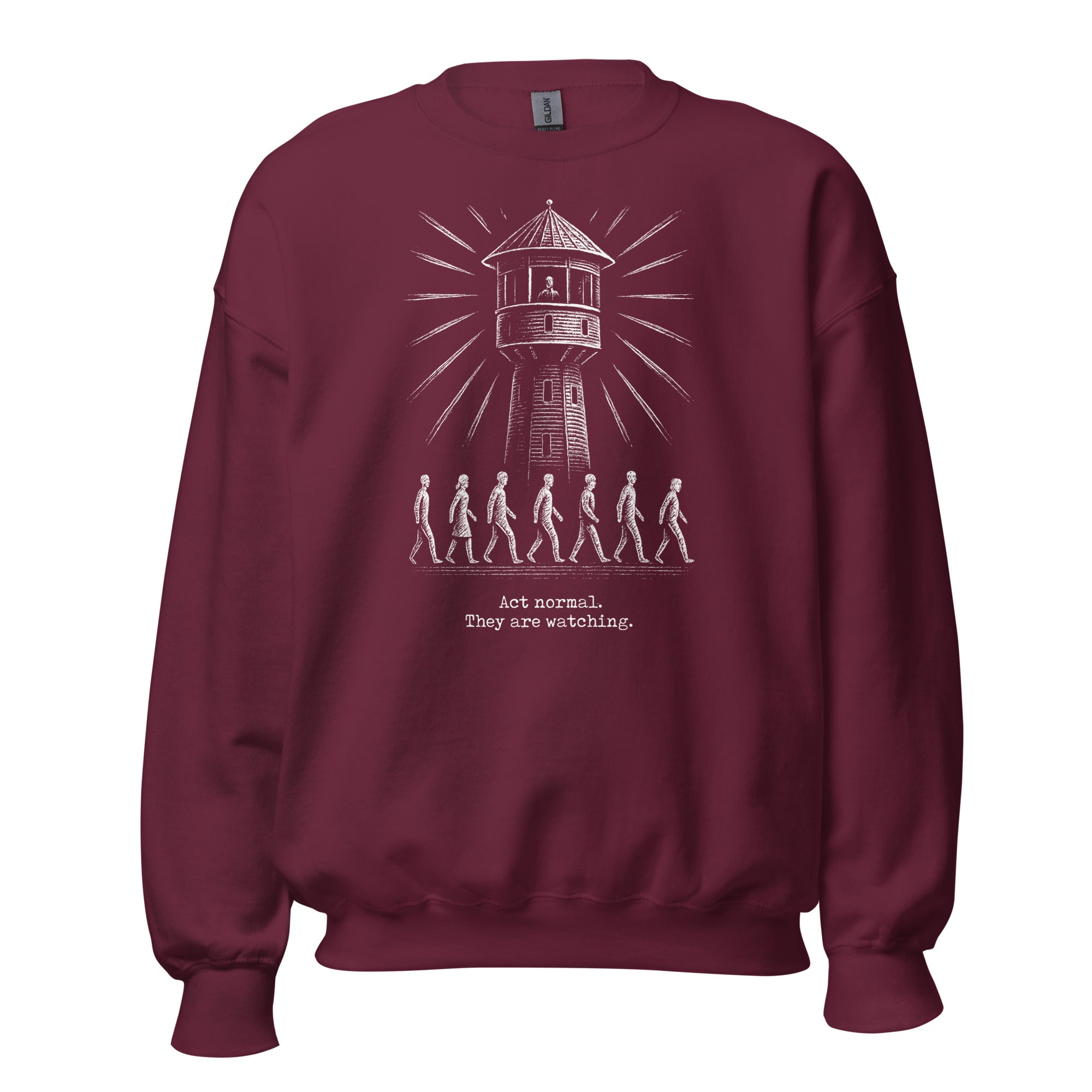
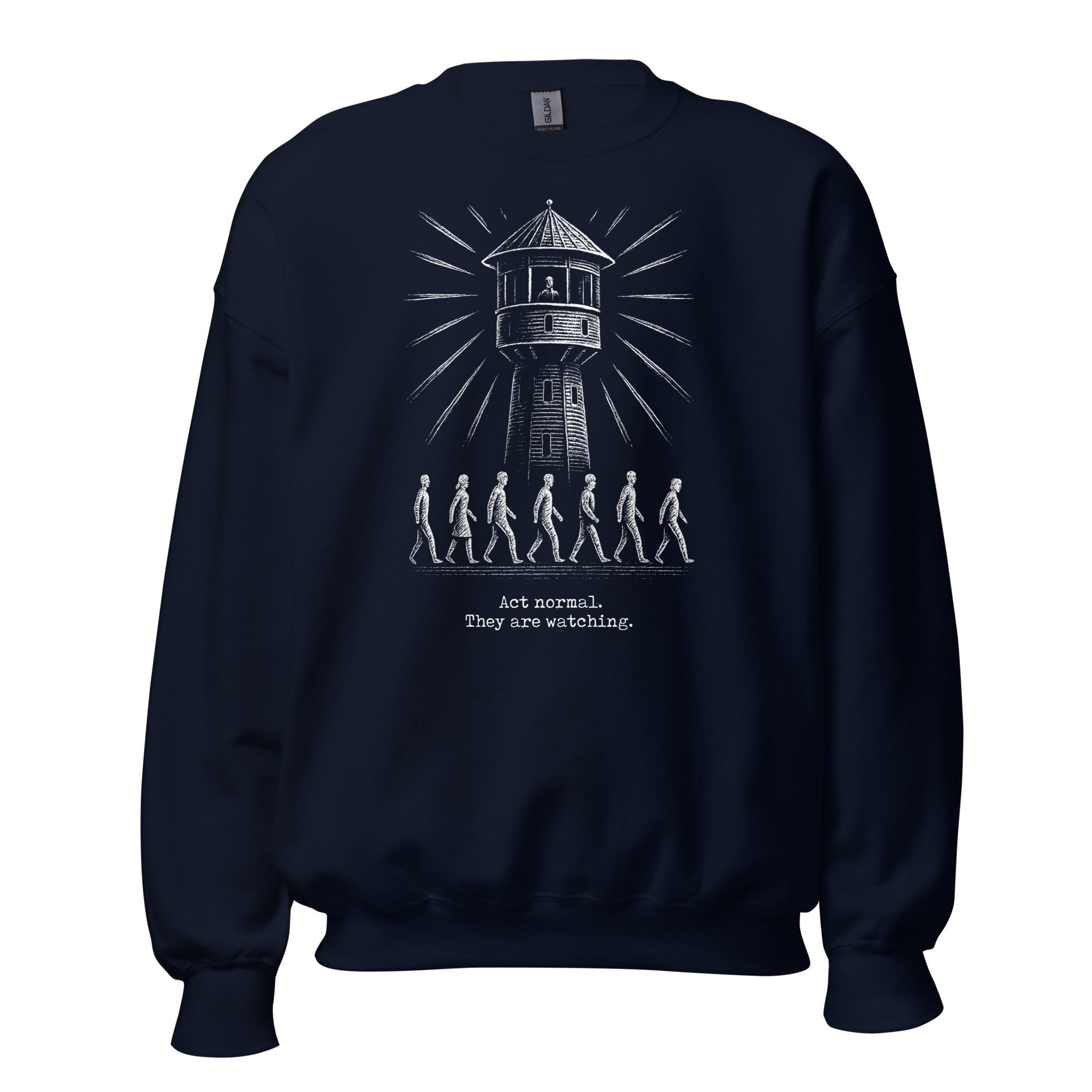
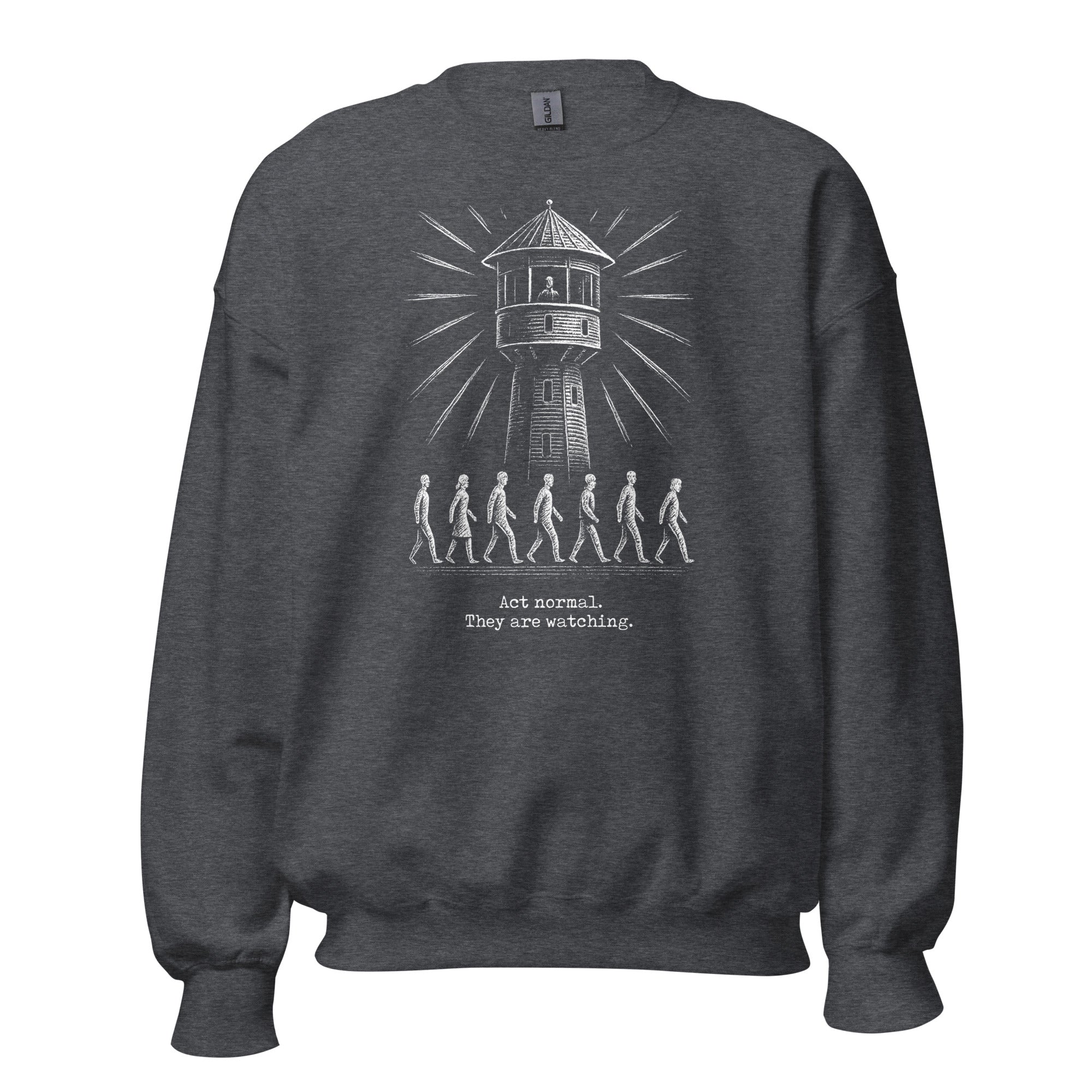
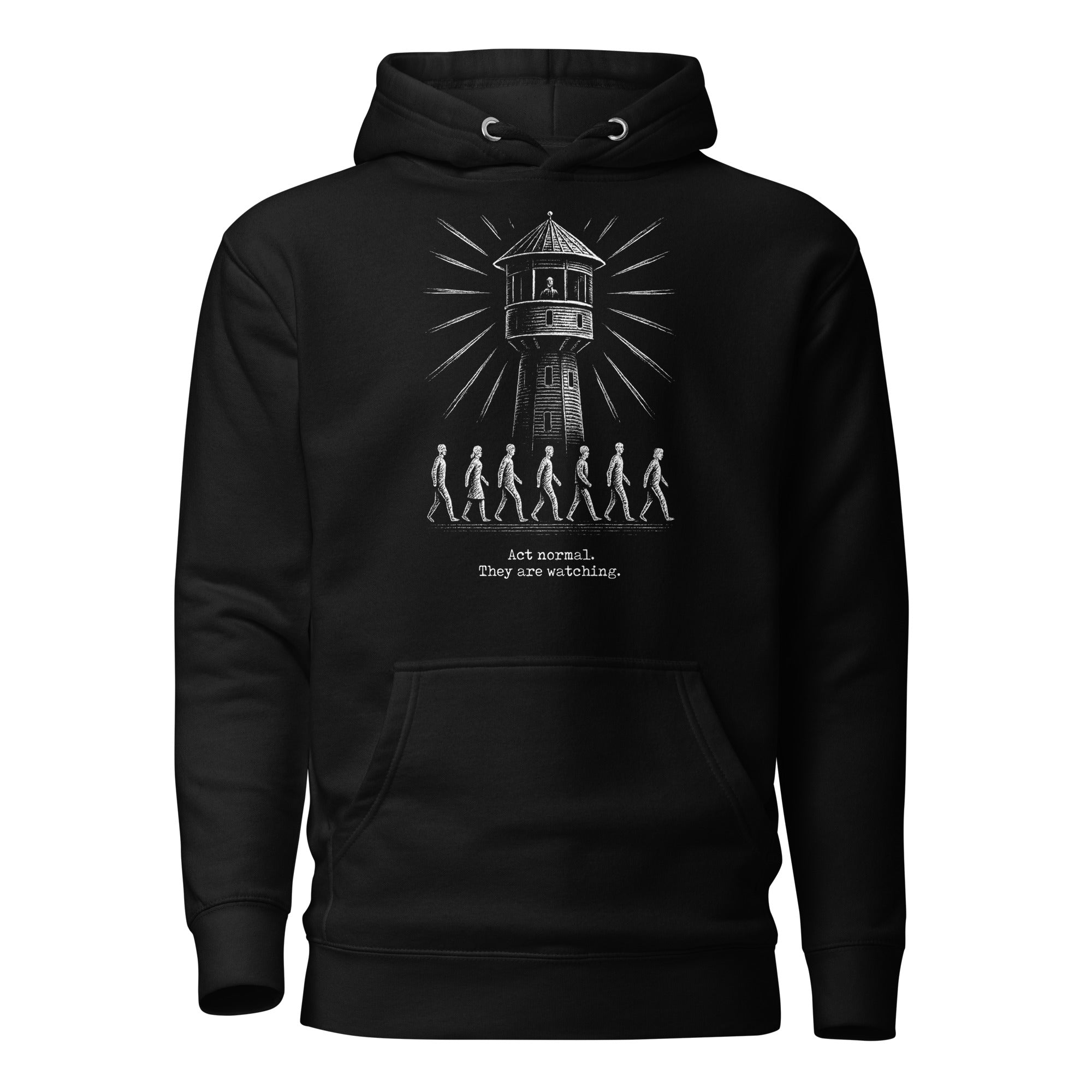
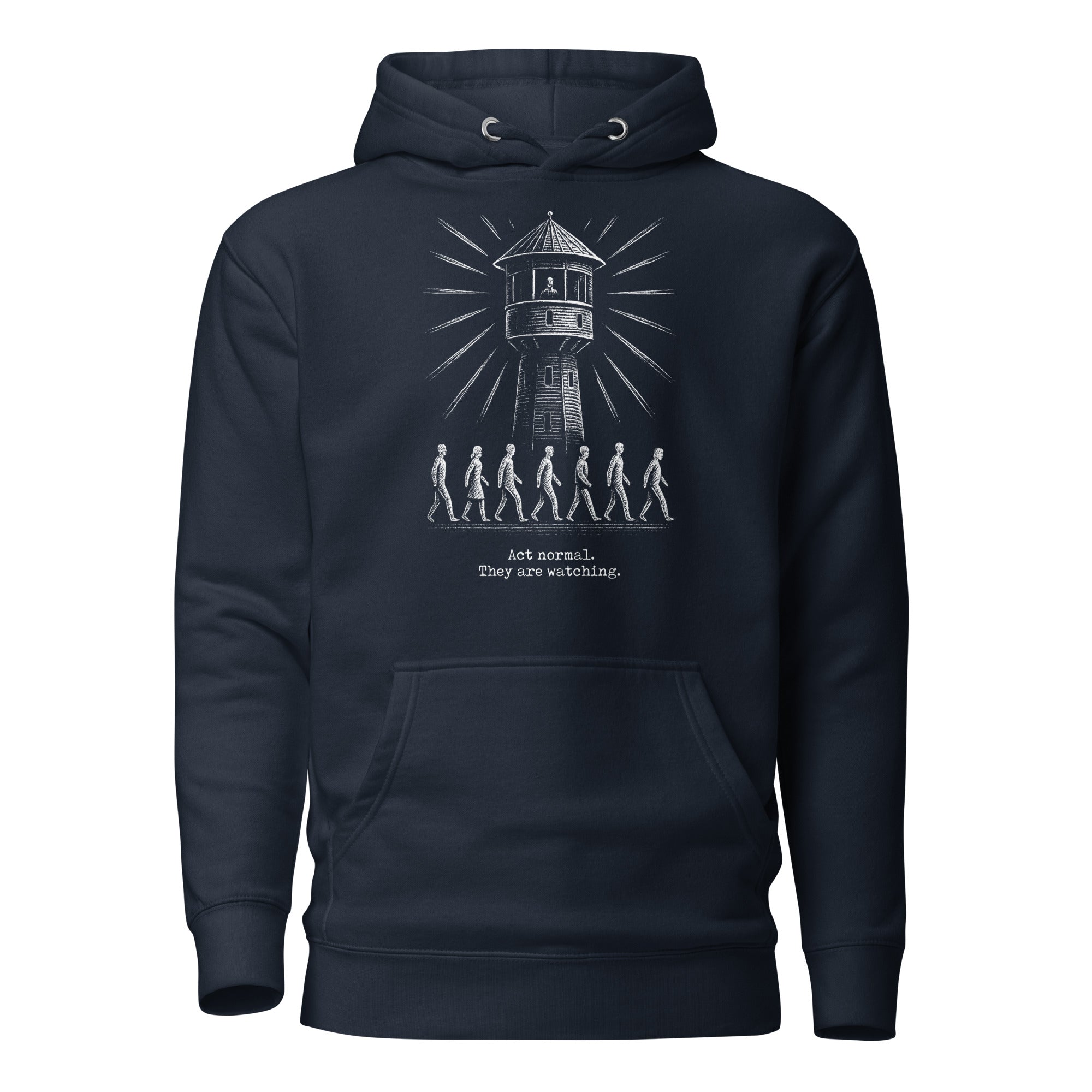
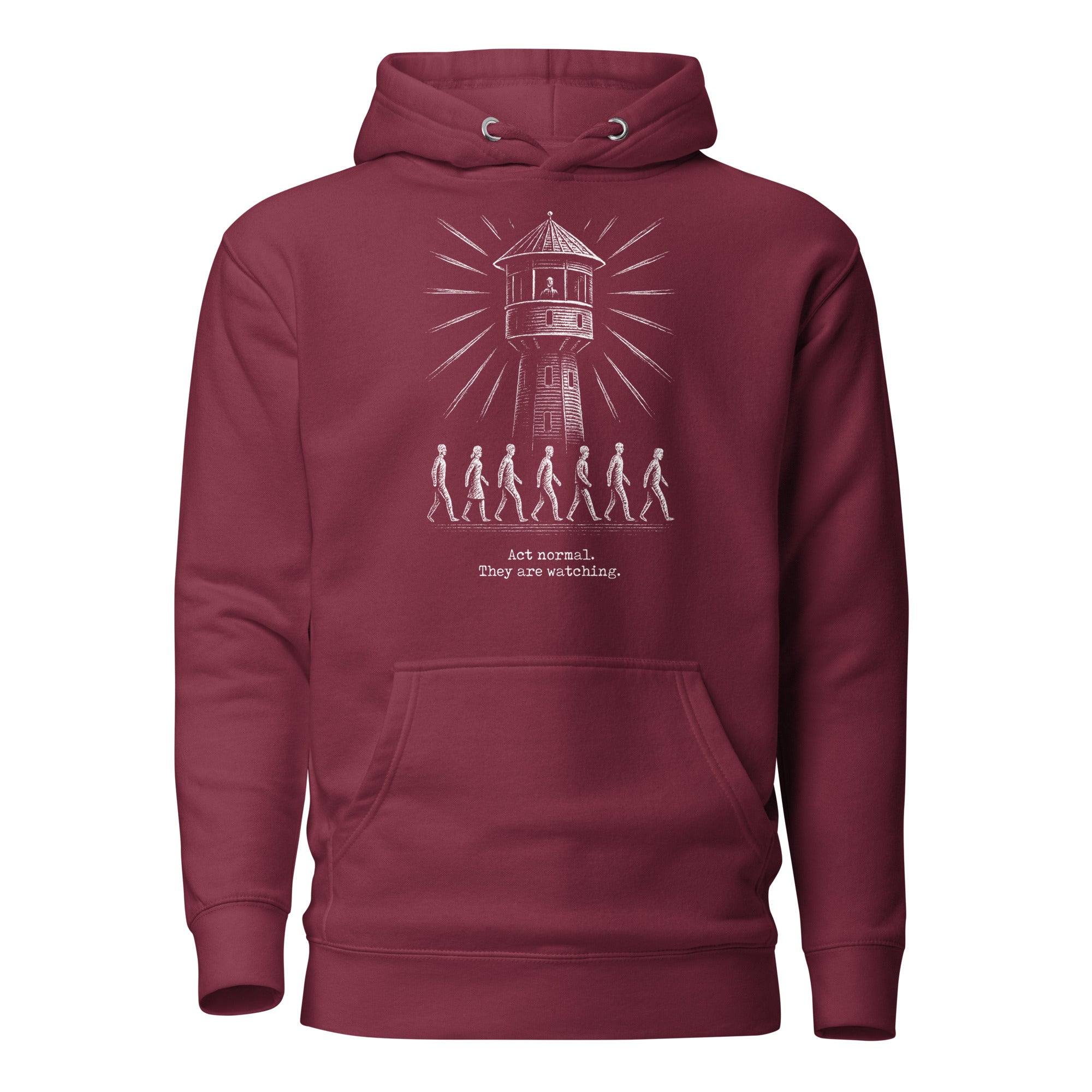
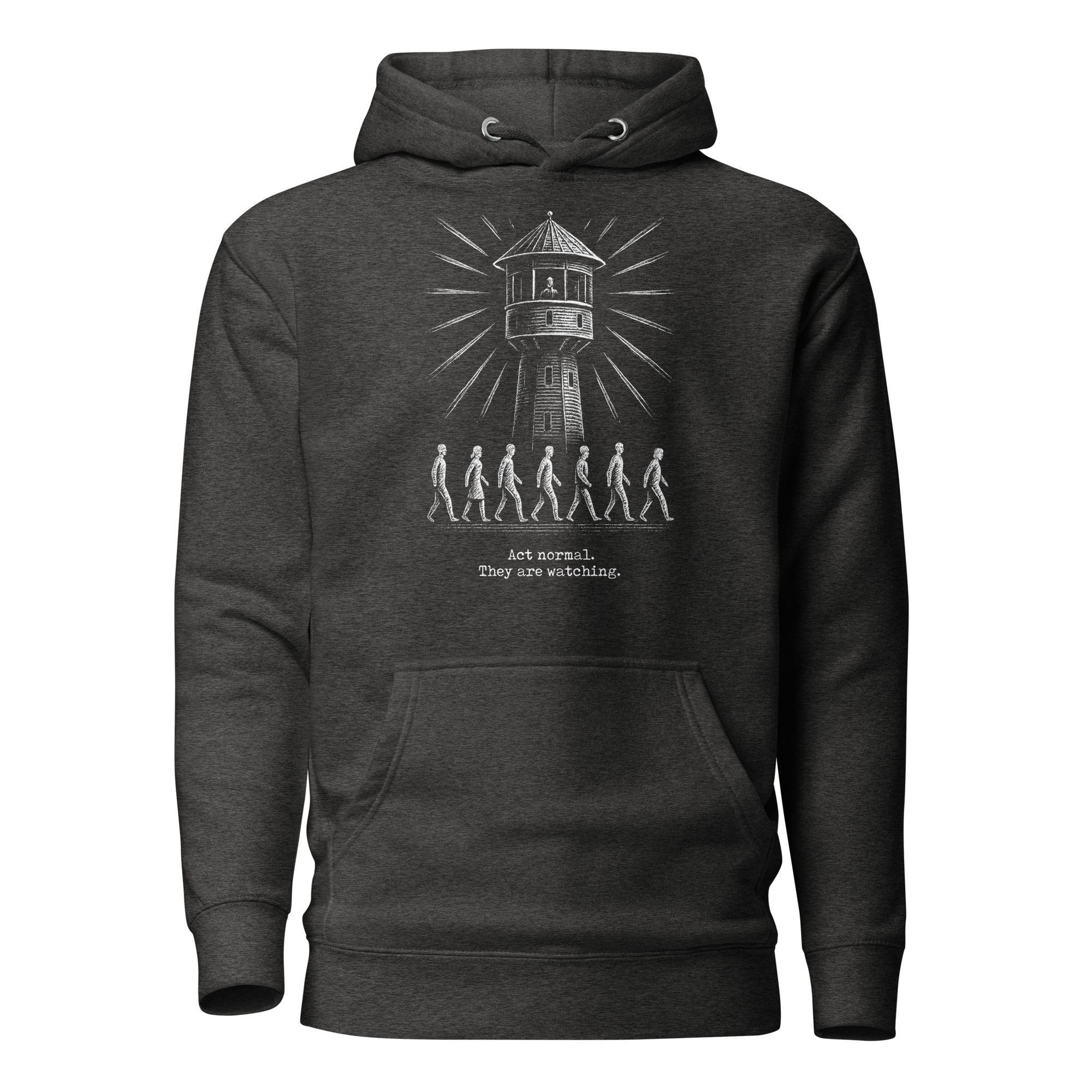
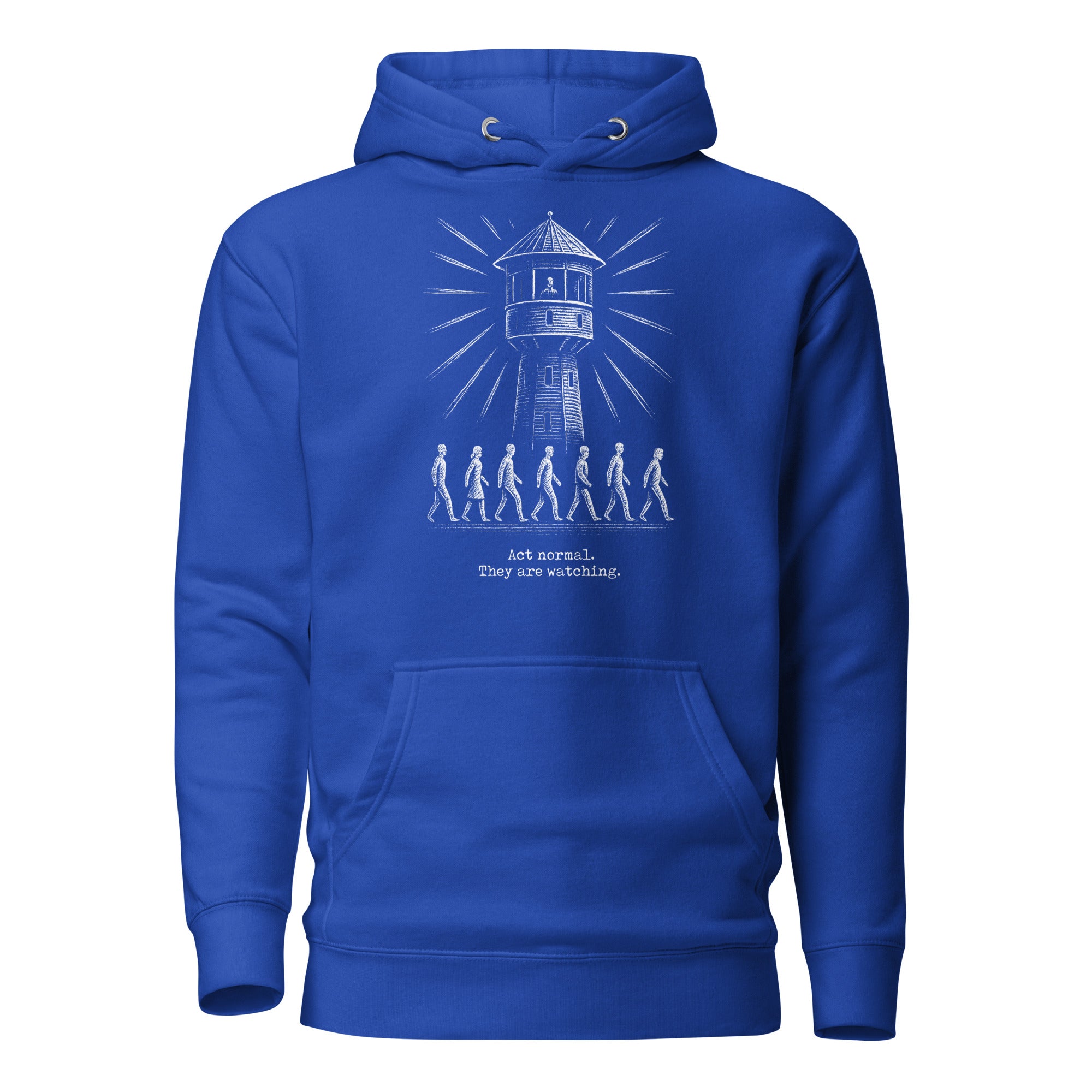
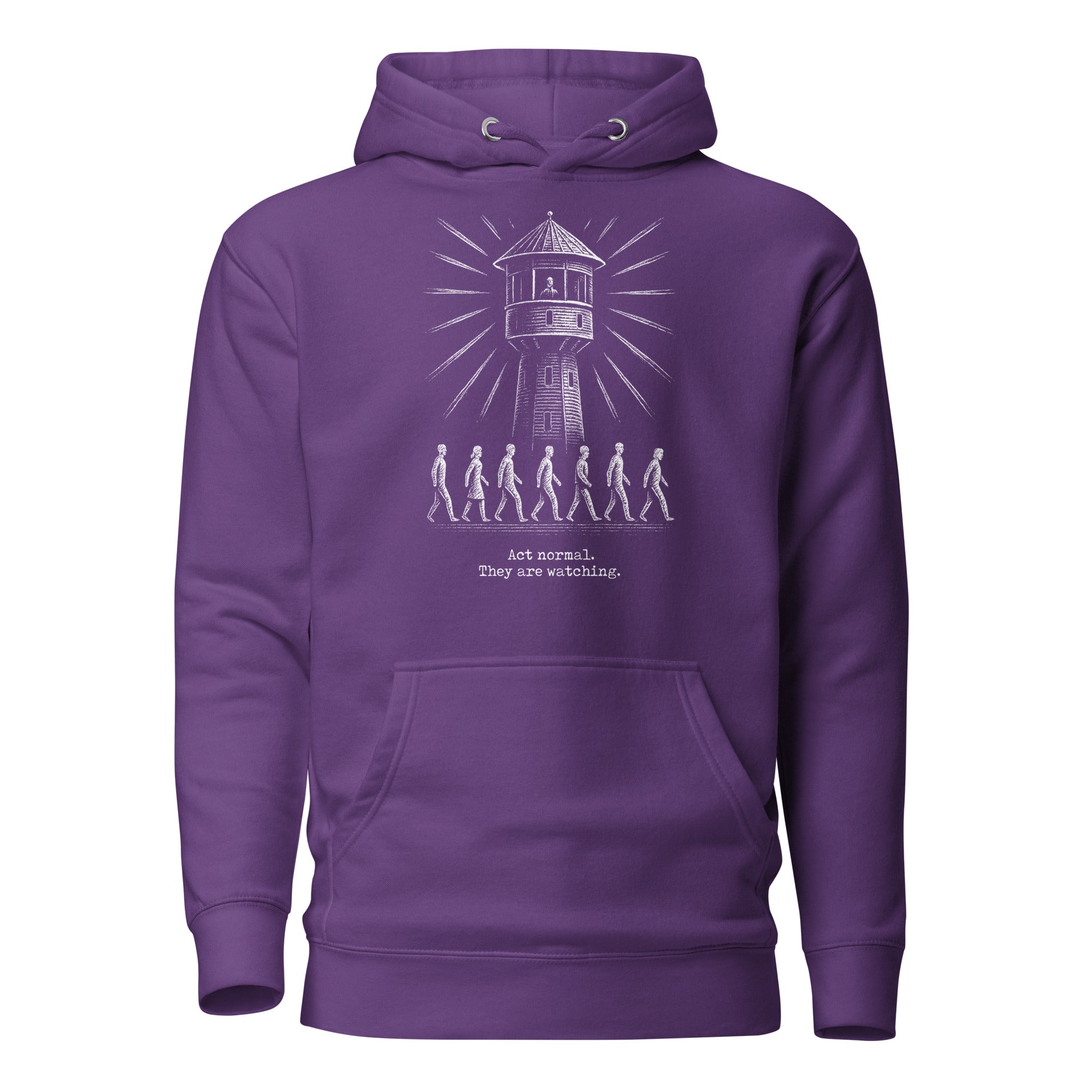
Bentham designed a prison where nobody can tell when they are being watched, so everyone behaves as if always. Foucault pointed out we then built it everywhere.

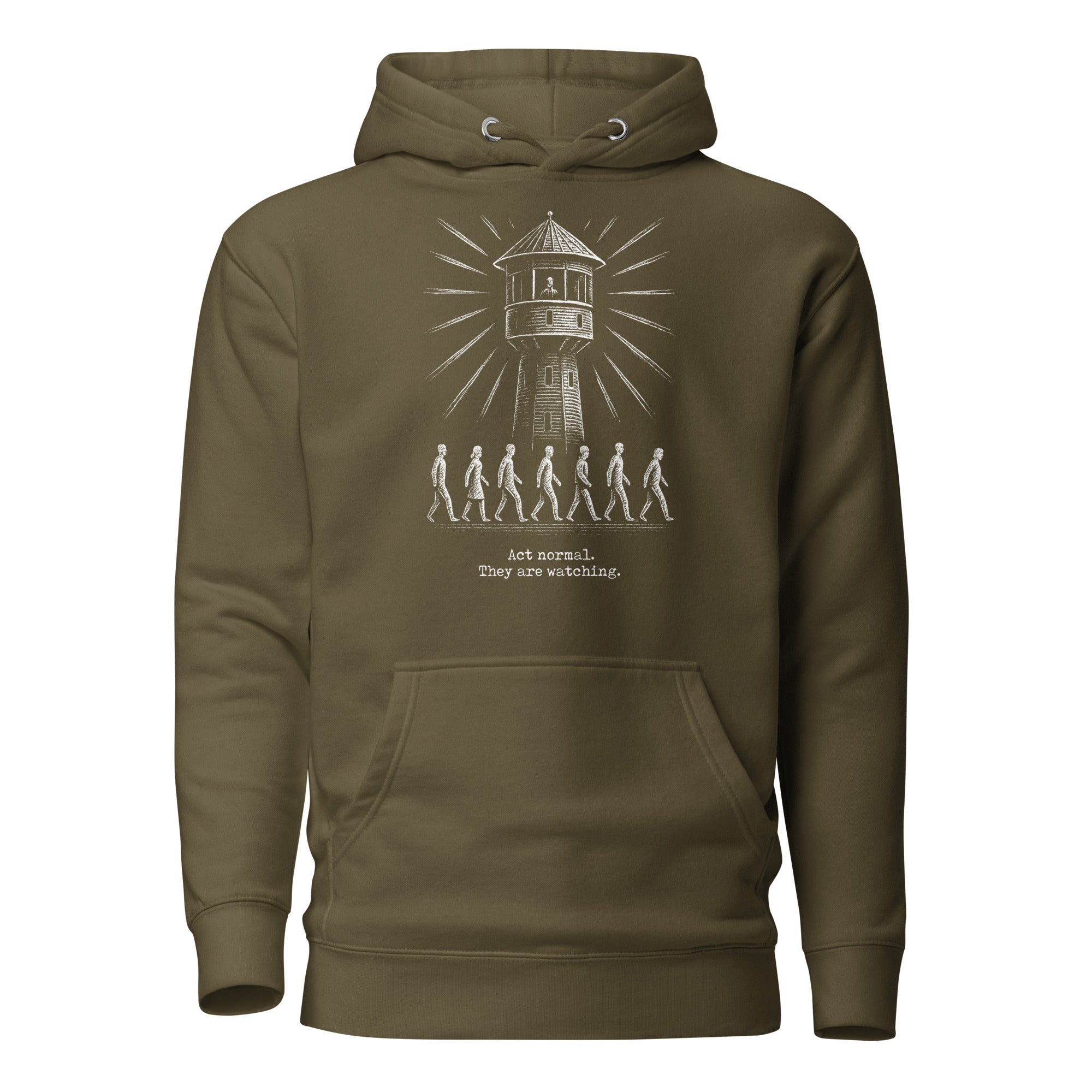
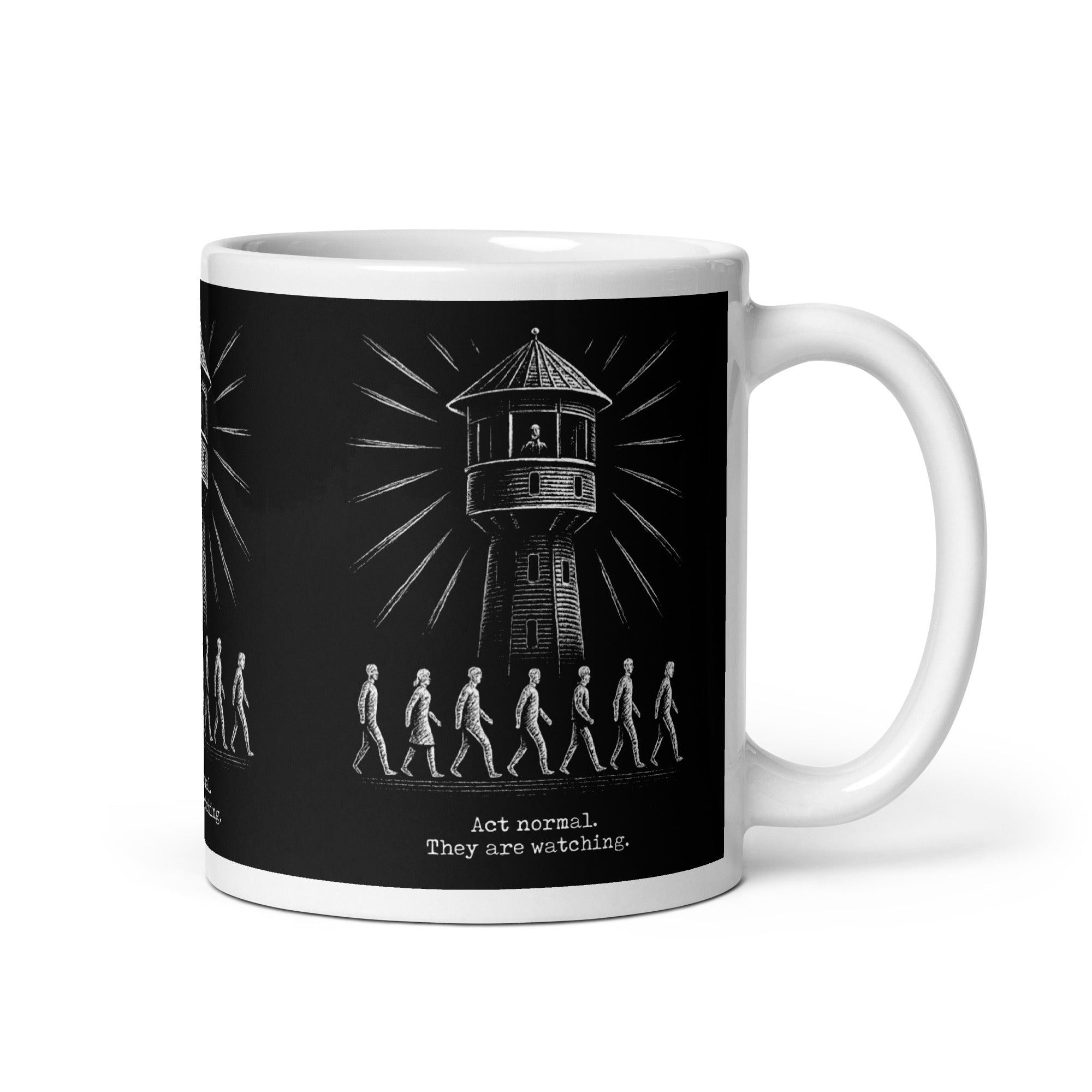
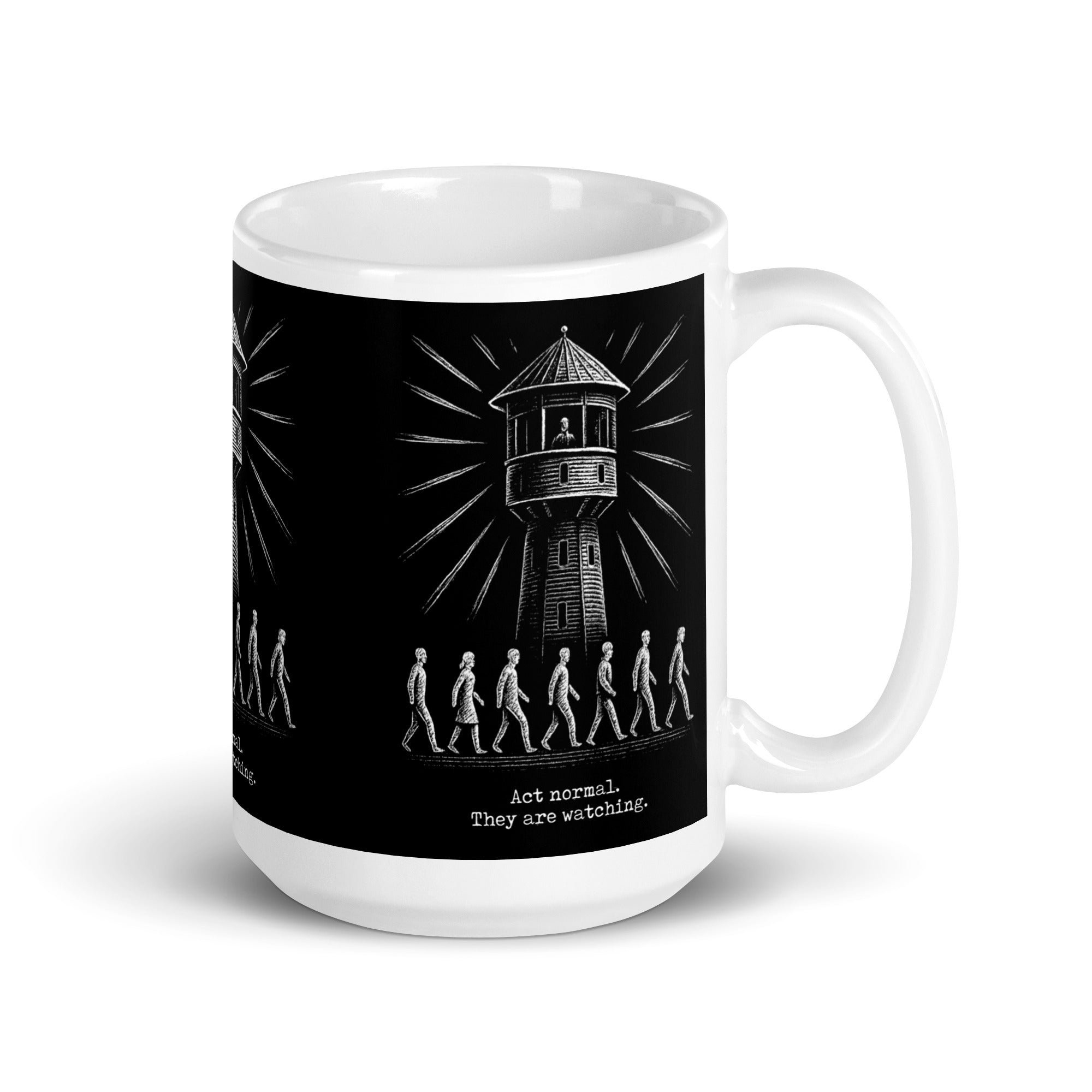
Foucault's sharpest concept, delivered as an instruction rather than an essay. Available across tees, sweatshirts, hoodies and mugs, printed to order. Act normal. The watching does not need a watcher.

Questions about this design

What does The Panopticon – Act Normal. They Are Watching design show?
An engraving-style watchtower with a lone figure in its lit window, light rays streaming out, above a row of identical people walking in single file. Below, in typewriter letters – Act normal. They are watching. It is Jeremy Bentham’s inspection tower turned into a quiet joke about how surveillance makes everyone behave the same.
What is the panopticon?
A prison design by the English philosopher Jeremy Bentham, worked out in letters of 1787 and published in 1791, based on an idea of his brother Samuel. Cells are arranged in a ring around a central inspection tower; the inmates can always be seen but can never tell whether anyone is actually watching. Bentham praised it as a new mode of obtaining power of mind over mind.
What did Foucault say about the panopticon?
In Discipline and Punish (1975) Michel Foucault made the panopticon the emblem of modern disciplinary power. Because people never know whether they are observed, they watch themselves and internalise the rules – visibility is a trap. He argued that the same logic shapes schools, factories, hospitals and barracks, producing a disciplinary society.
Was the panopticon ever built?
Bentham’s own project was never built, despite two decades of lobbying Parliament. Later prisons borrowed the idea – the closest to it is the Presidio Modelo on Cuba’s Isla de la Juventud, built 1926–1928, with circular blocks around central watchtowers. Many 19th-century radial prisons adopted the principle of central inspection in looser form.
Who was Jeremy Bentham?
An English philosopher and legal reformer (1748–1832), the founder of modern utilitarianism. In An Introduction to the Principles of Morals and Legislation (1789) he argued that actions should be judged by how much happiness they produce for everyone affected. At his own request his preserved body, the auto-icon, is on display at University College London.
What is the difference between the panopticon and Big Brother?
Both rely on the same uncertainty. In George Orwell’s Nineteen Eighty-Four (1949) there was no way of knowing whether you were being watched at any given moment, so Winston behaves as if he always is. Bentham hoped this effect would reform prisoners; Orwell shows it in the hands of a totalitarian state that wants to control thought itself.
Is social media a digital panopticon?
Many scholars use the image for online tracking, data collection and self-censorship. But the criminologist Thomas Mathiesen argued in 1997 that modern media also create a synopticon, in which the many watch the few. Today both run at once – platforms watch users, and users watch and judge each other, often performing for an audience they cannot see.
Who is the Panopticon design a good gift for?
For sociology, philosophy, criminology and law students, readers of Foucault and Orwell, privacy-minded tech people and anyone who has felt the urge to act normal on camera. It is available as a unisex T-shirt, sweatshirt, premium hoodie, mug and sticker.