No tariffs. Ever. We ship locally from the US, Canada, the UK, or the EU + Free shipping over $80 / 70€ / £60 (equivalent in all other currencies).
Search our site

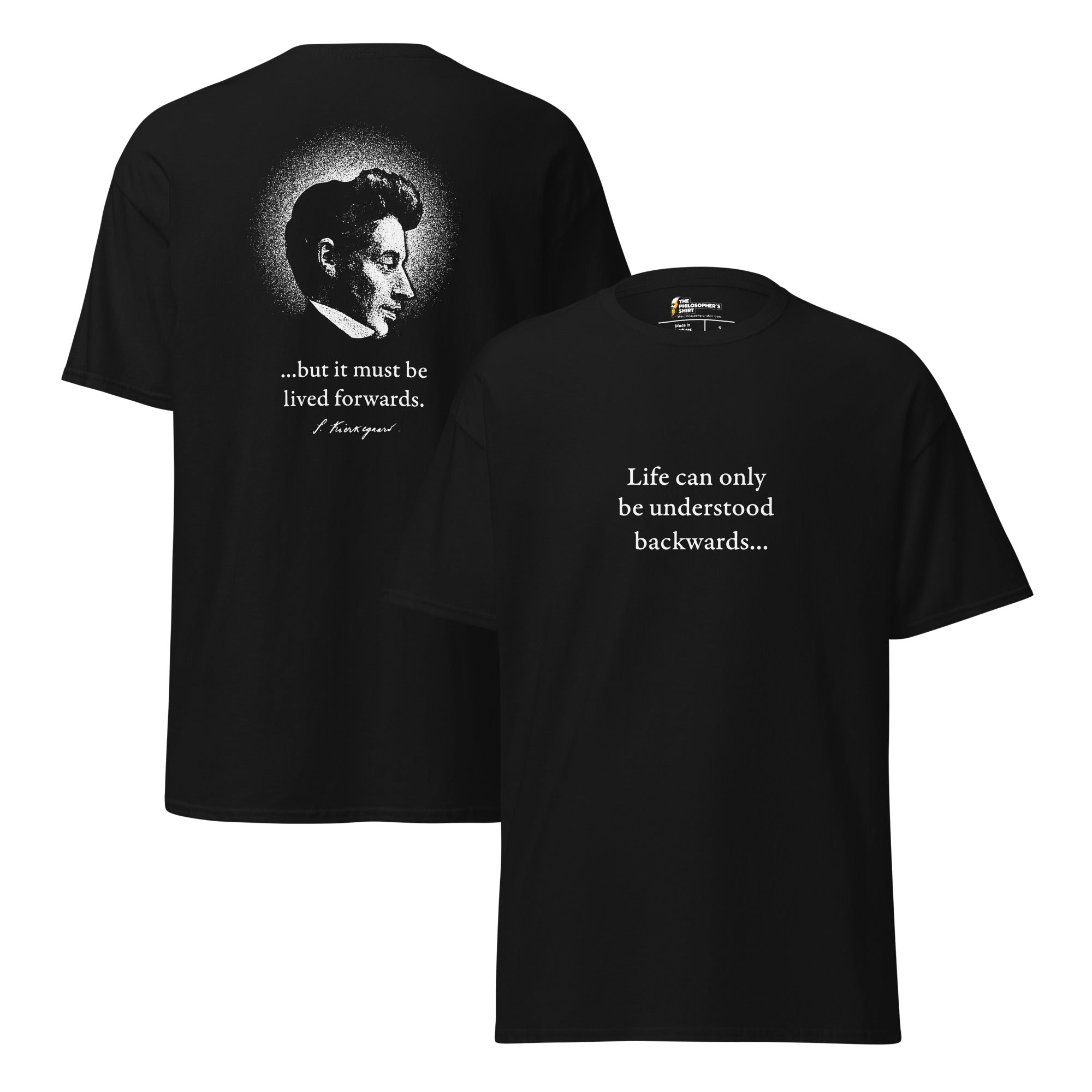
Kierkegaard Quote - Life can only be understood backwards ...

“It is perfectly true, as philosophers say, that life must be understood backwards. But they forget the other proposition, that it must be lived forwards.”

Both halves of the quote, not the truncated version everyone posts. Every format we print it on, made to order as you buy it, from apparel to accessories. No clarity until afterwards. No pause button either.
Questions about this design

What does the Kierkegaard quote design look like?
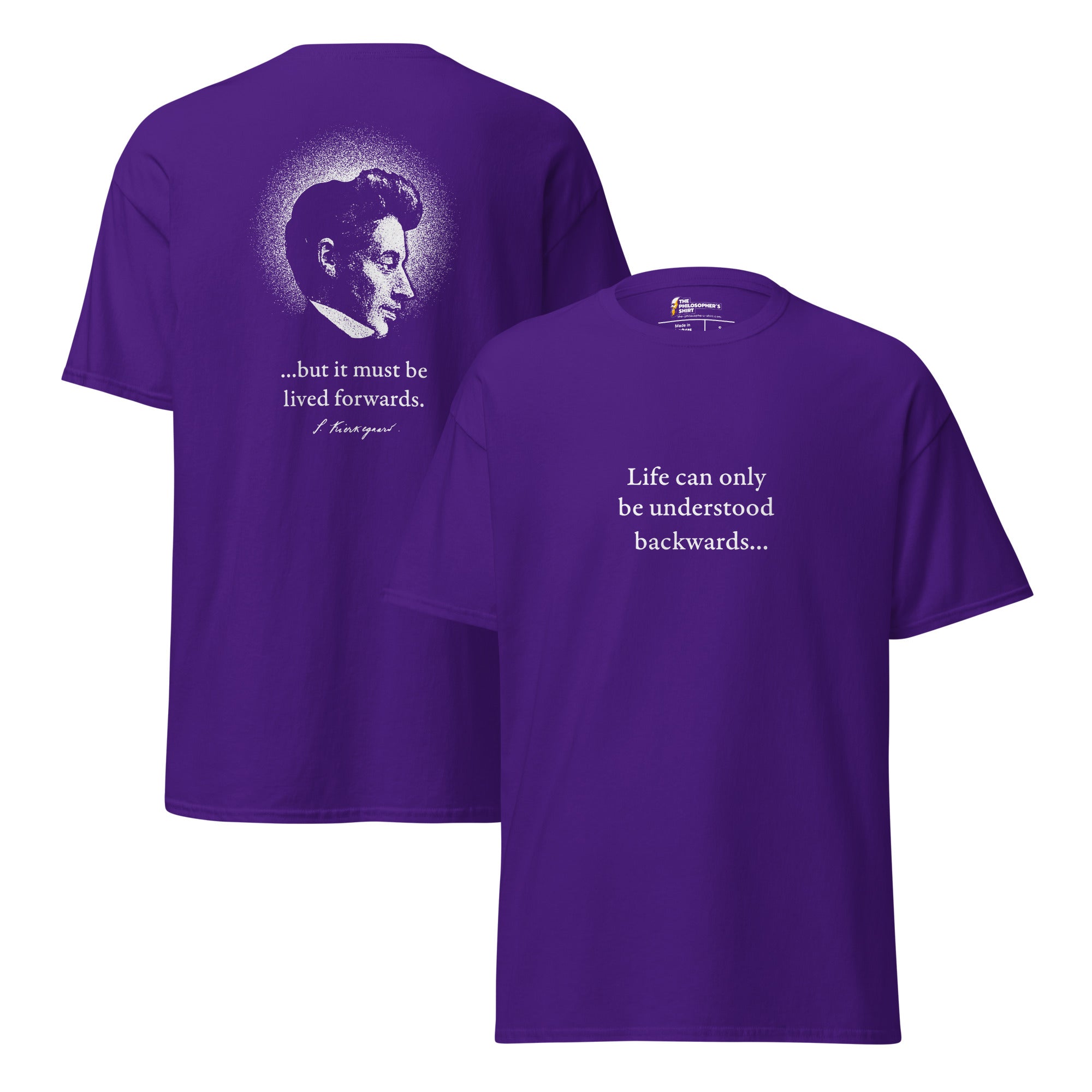
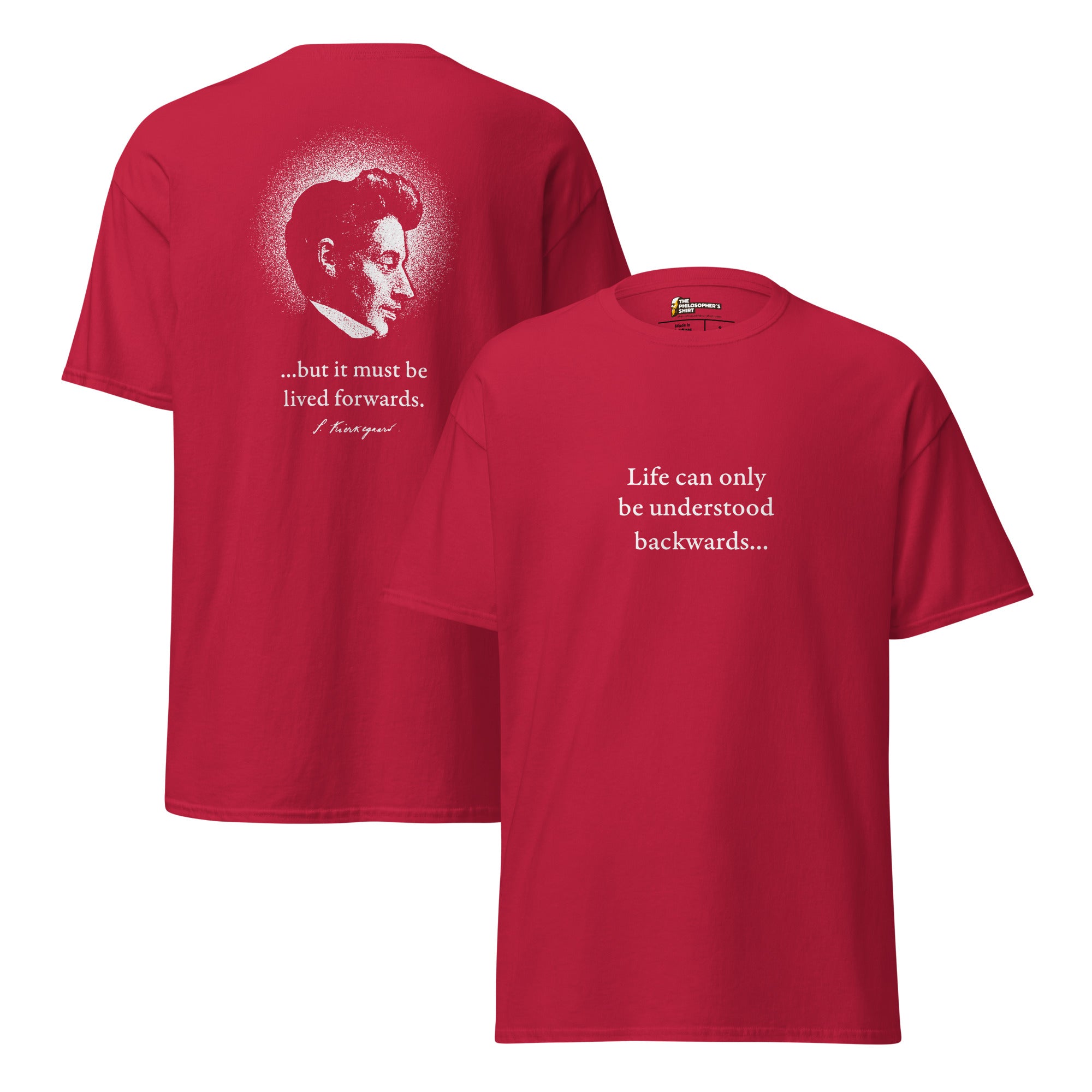
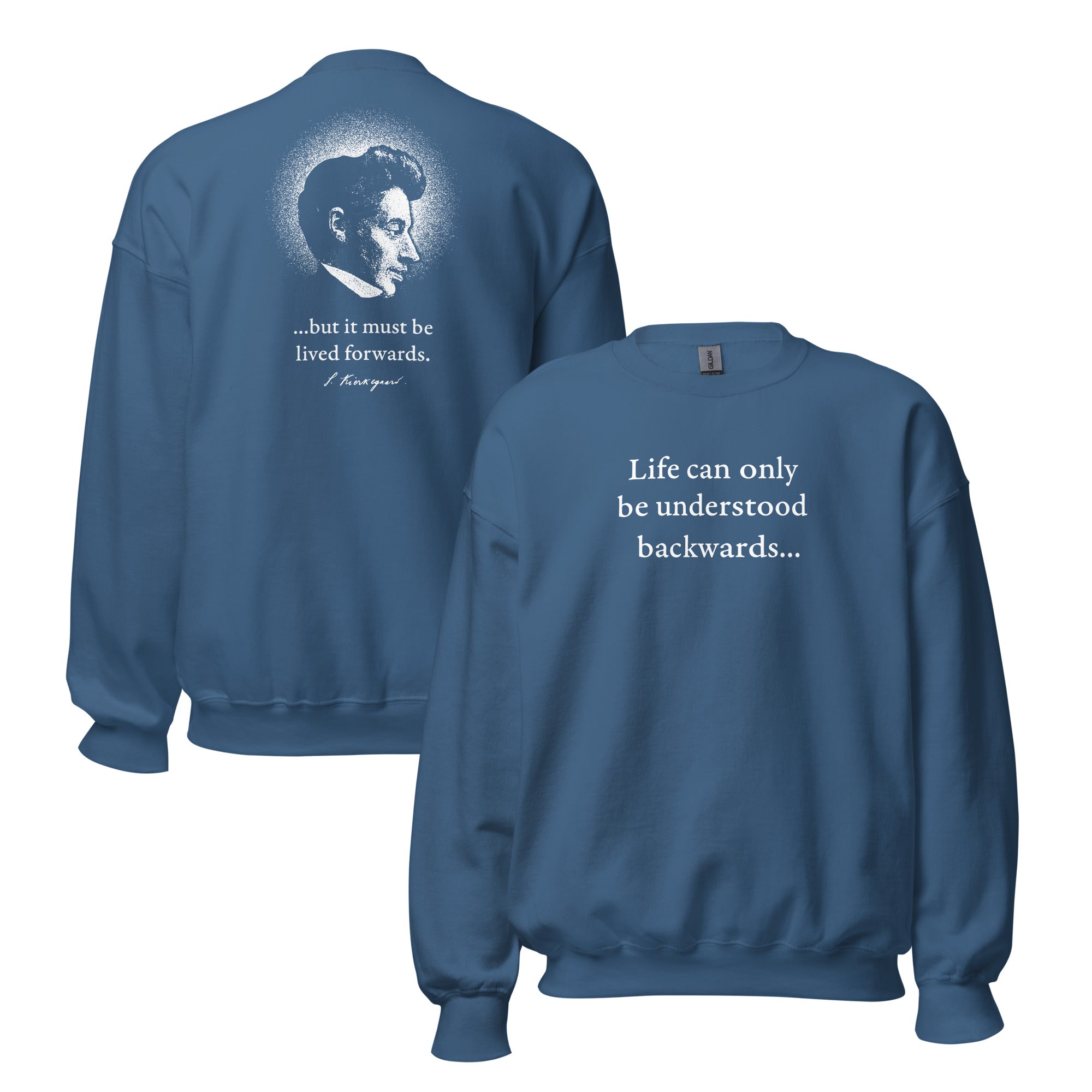
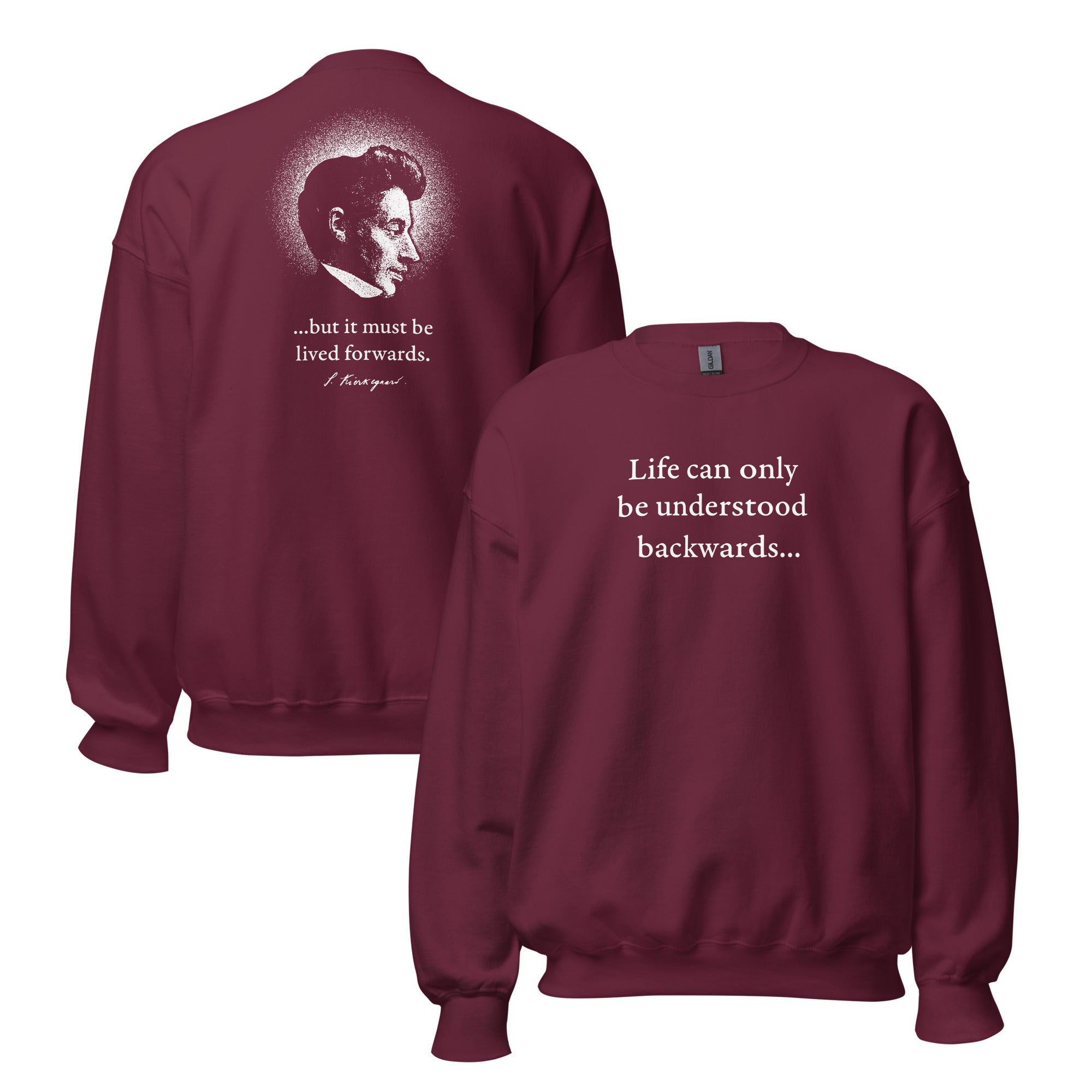
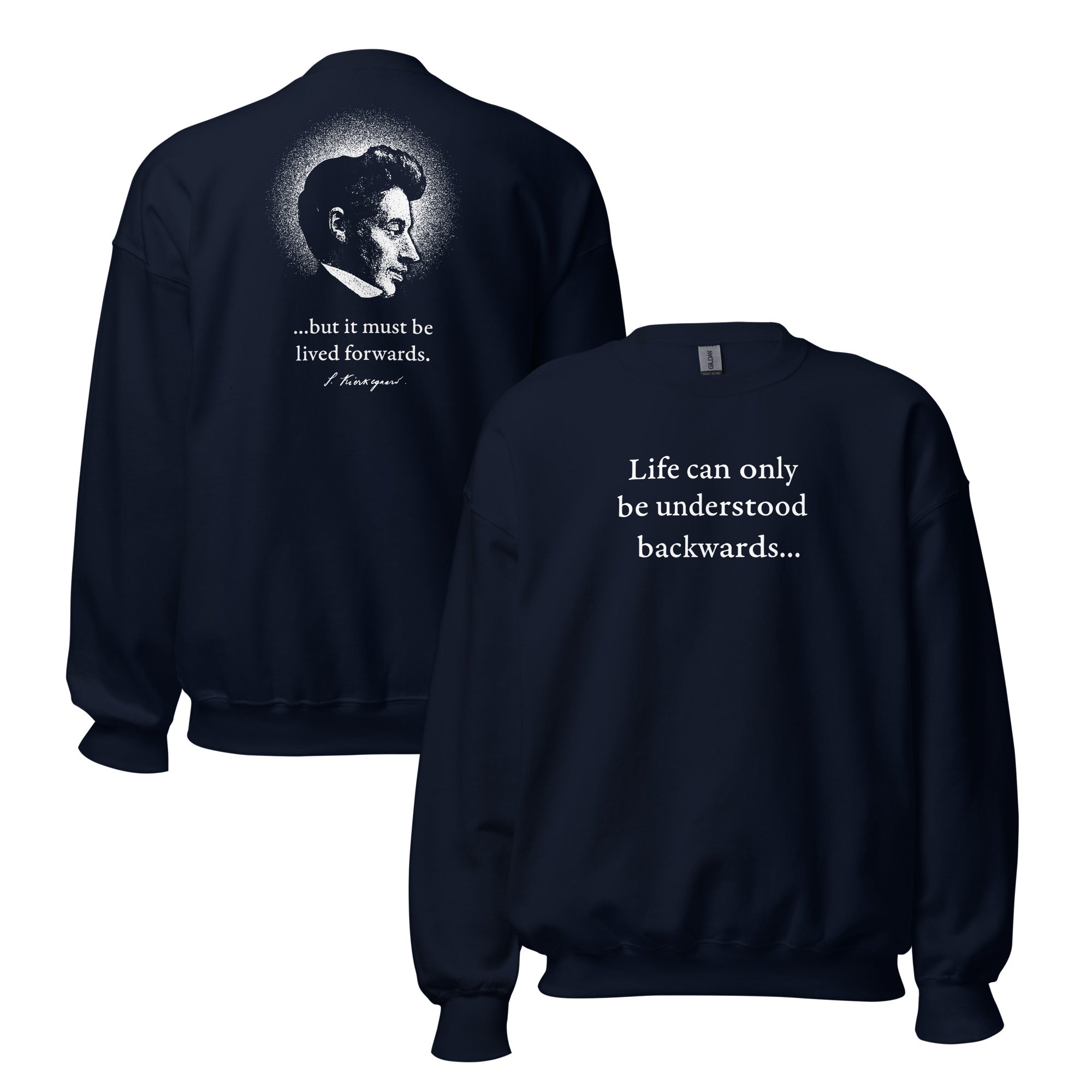
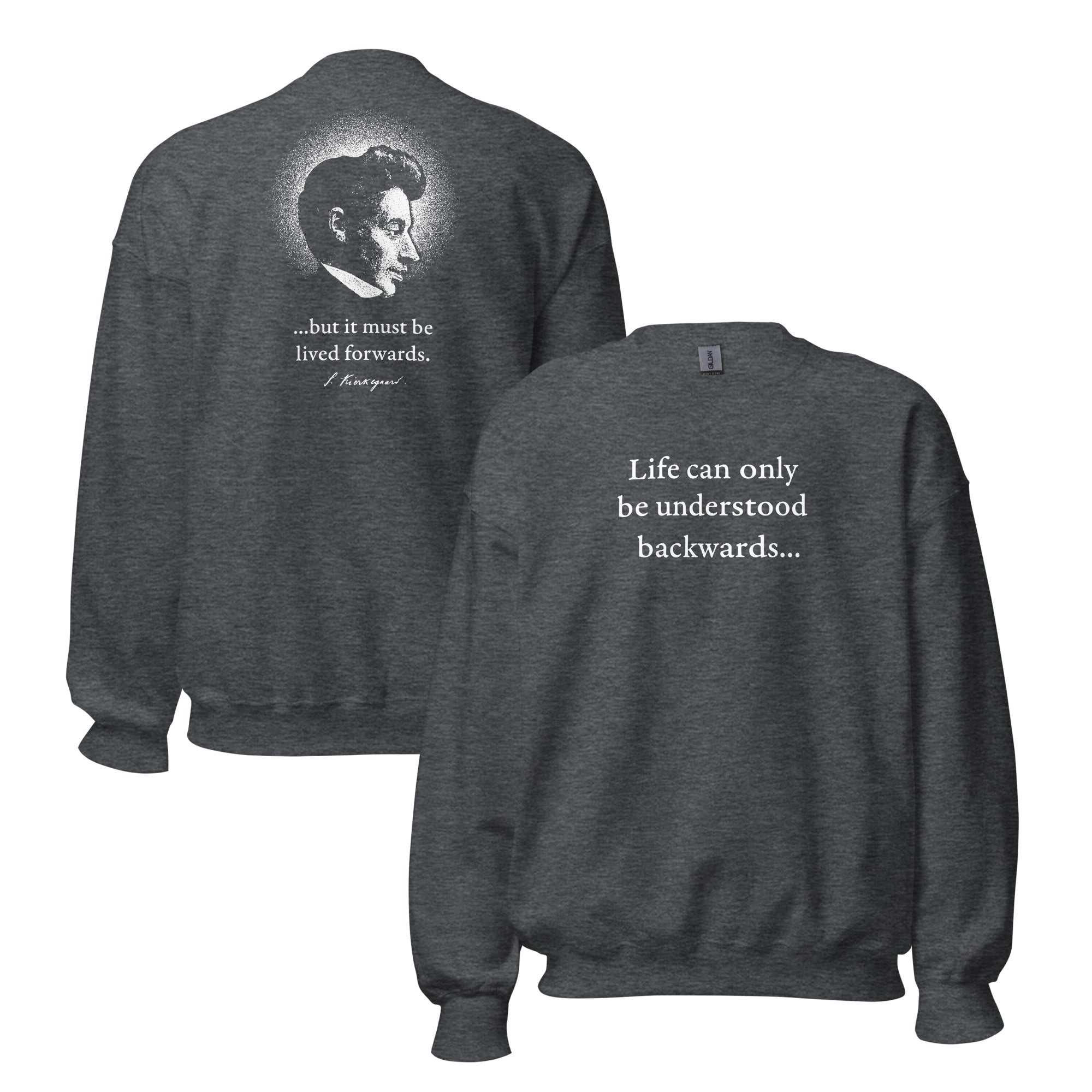
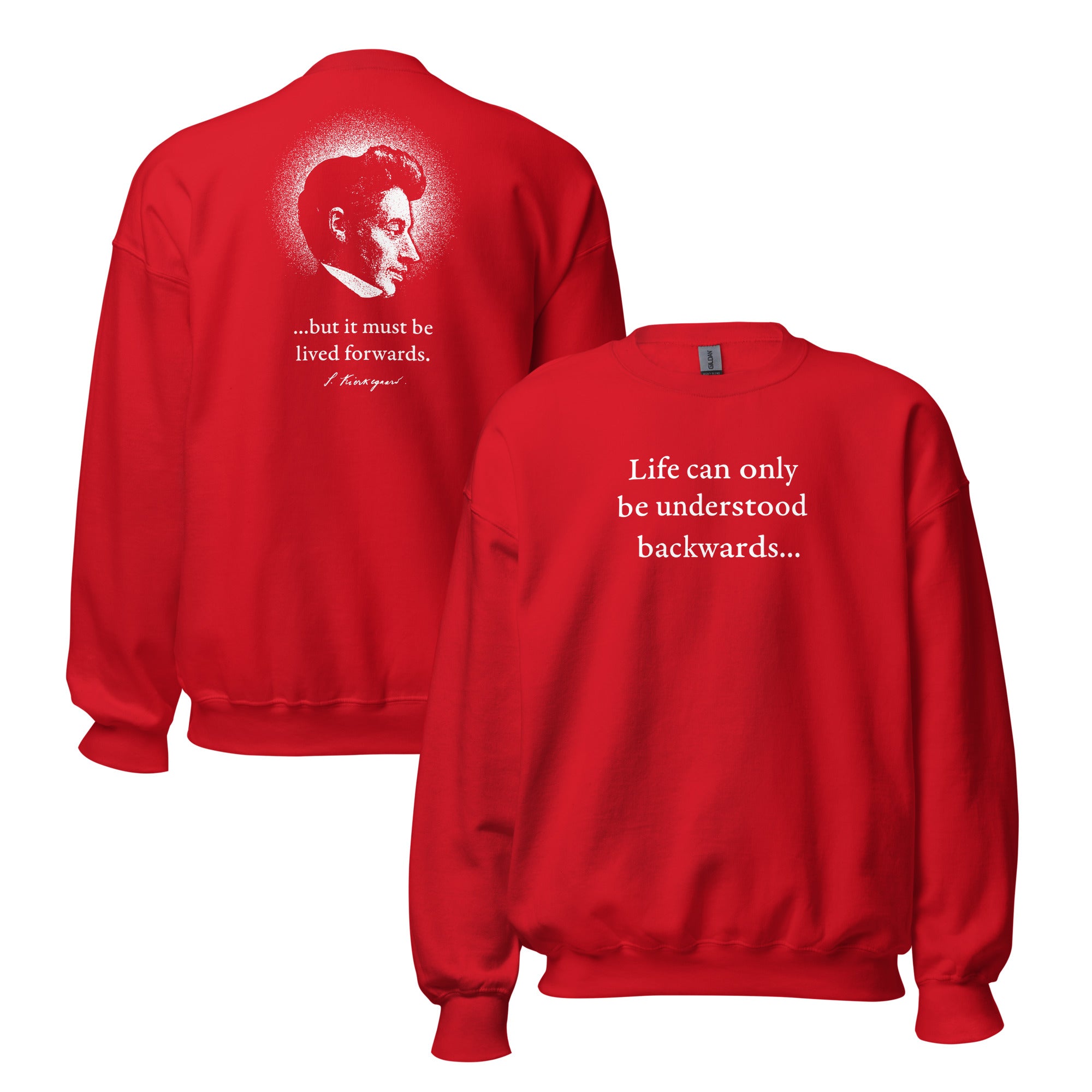
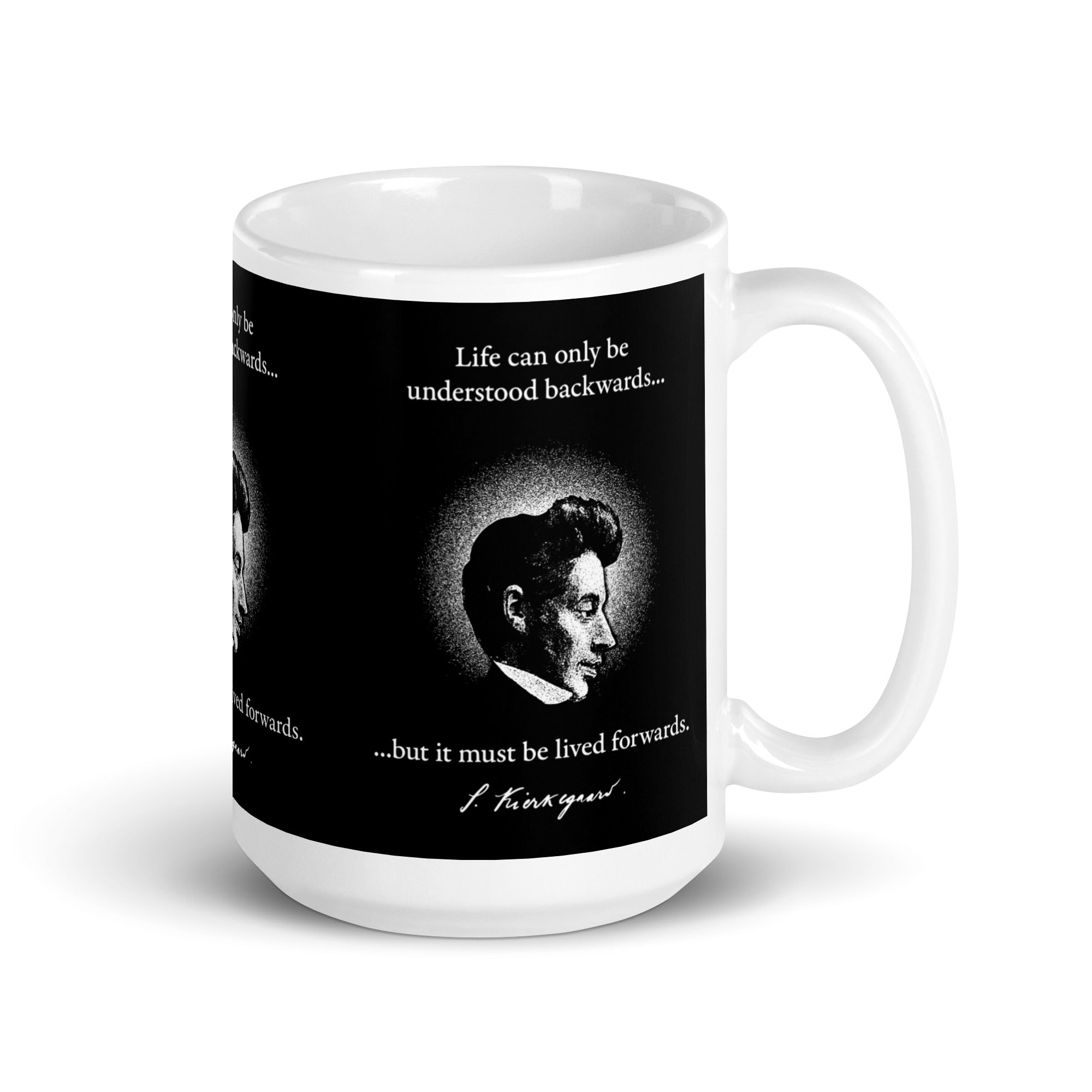
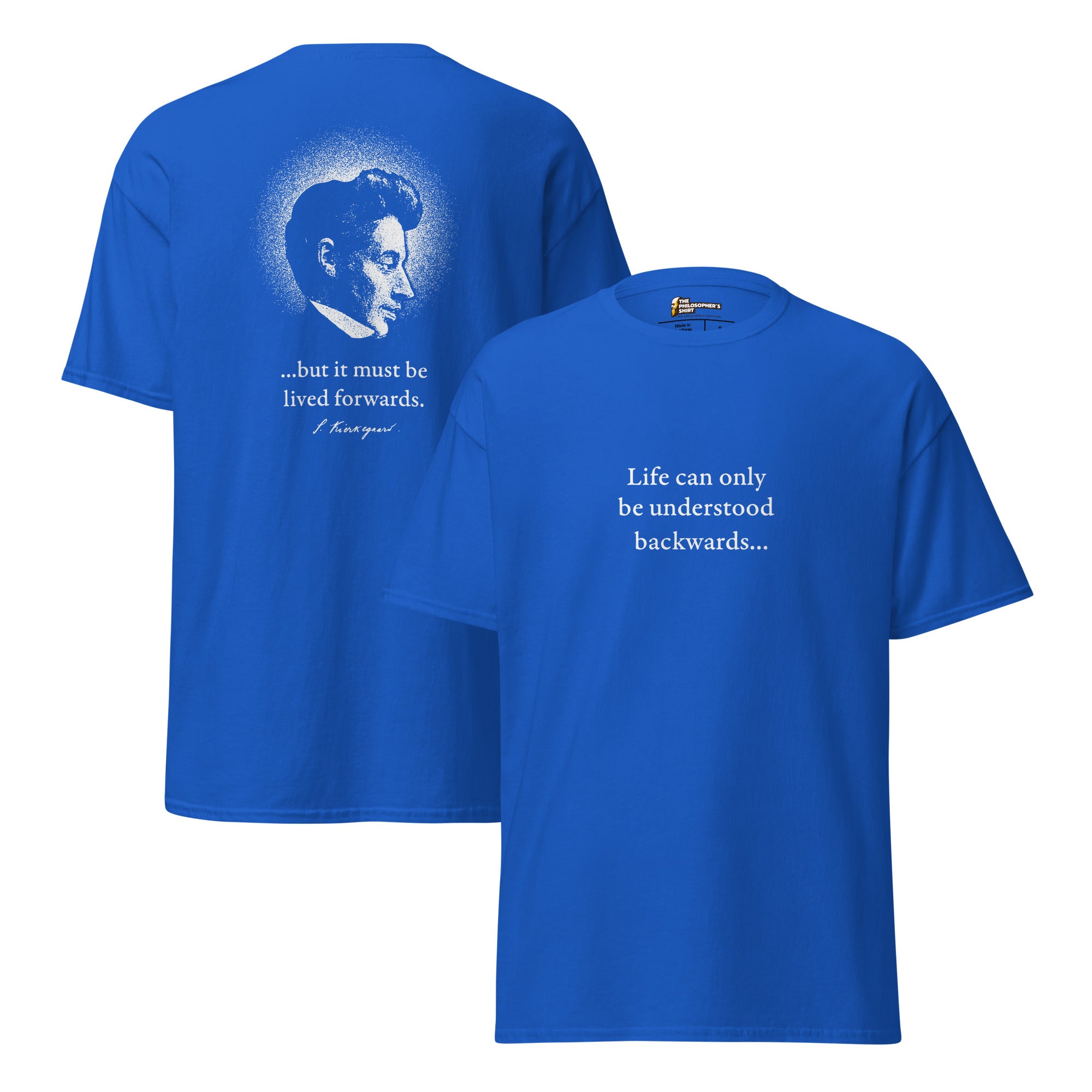
The quote is split across the garment. The front reads “Life can only be understood backwards…”, and the back completes it with “…but it must be lived forwards.” beneath a stippled portrait of Søren Kierkegaard and his signature. Anyone walking behind you gets the second half of the thought.
Who said “Life can only be understood backwards, but it must be lived forwards”?
Søren Kierkegaard, the Danish philosopher. It comes from his private journal of 1843 (entry JJ 167 in the critical edition). In Danish the short form runs “Livet skal forstås baglæns, men leves forlæns”. It is not from one of his published books, which is why many quote sites give no source.
What is the full Kierkegaard quote?
Kierkegaard writes that it is perfectly true, as philosophy says, that life must be understood backwards – but people forget the other proposition, that it must be lived forwards. The more one thinks this through, he adds, the clearer it becomes that life in time can never be fully understood, because we can never find a moment of complete rest to take up the backward-looking position.
What does “life can only be understood backwards” mean?
We make sense of our lives only in hindsight – patterns, reasons and turning points appear once events are behind us. Yet we have to act now, without that clarity. Kierkegaard's point is that no one can step outside life to see it whole; we must choose and commit while the meaning is still open.
Who was Søren Kierkegaard?
A Danish philosopher and theologian (1813–1855) from Copenhagen, often called the father of existentialism. He wrote many of his books under pseudonyms and focused on the single individual, choice, anxiety, despair and faith, attacking both Hegel's system and the comfortable Christianity of the Danish church.
What did Kierkegaard say about despair?
In The Sickness unto Death (1849), published under the pseudonym Anti-Climacus, despair is the sickness of the self – a failure to be the self one truly is. He distinguishes despair at not being conscious of having a self, despair at not willing to be oneself, and despair at willing to be oneself on one's own terms, and argues it is far more common than people admit.
Did Kierkegaard coin the phrase “leap of faith”?
Not in those words. Kierkegaard writes about a leap – for instance the qualitative leap in The Concept of Anxiety (1844) – and about faith as a movement reason cannot fully justify. But studies of his collected works find that the exact phrase leap of faith never appears in his published writings; it is a later summary of his ideas.
Which Kierkegaard books should I read first?
Fear and Trembling (1843) is short and gripping – a meditation on Abraham and faith. Either/Or (1843) contrasts an aesthetic and an ethical way of life. For despair and selfhood, read The Sickness unto Death (1849); for anxiety and freedom, The Concept of Anxiety (1844).
Is this a good gift for Kierkegaard fans?
Yes, especially for philosophy and theology students, anyone at a crossroads in life, and readers who love a quote with a back story. The design is available as a t-shirt, sweatshirt, premium hoodie, mug and sticker.