No tariffs. Ever. We ship locally from the US, Canada, the UK, or the EU + Free shipping over $80 / 70€ / £60 (equivalent in all other currencies).
Search our site

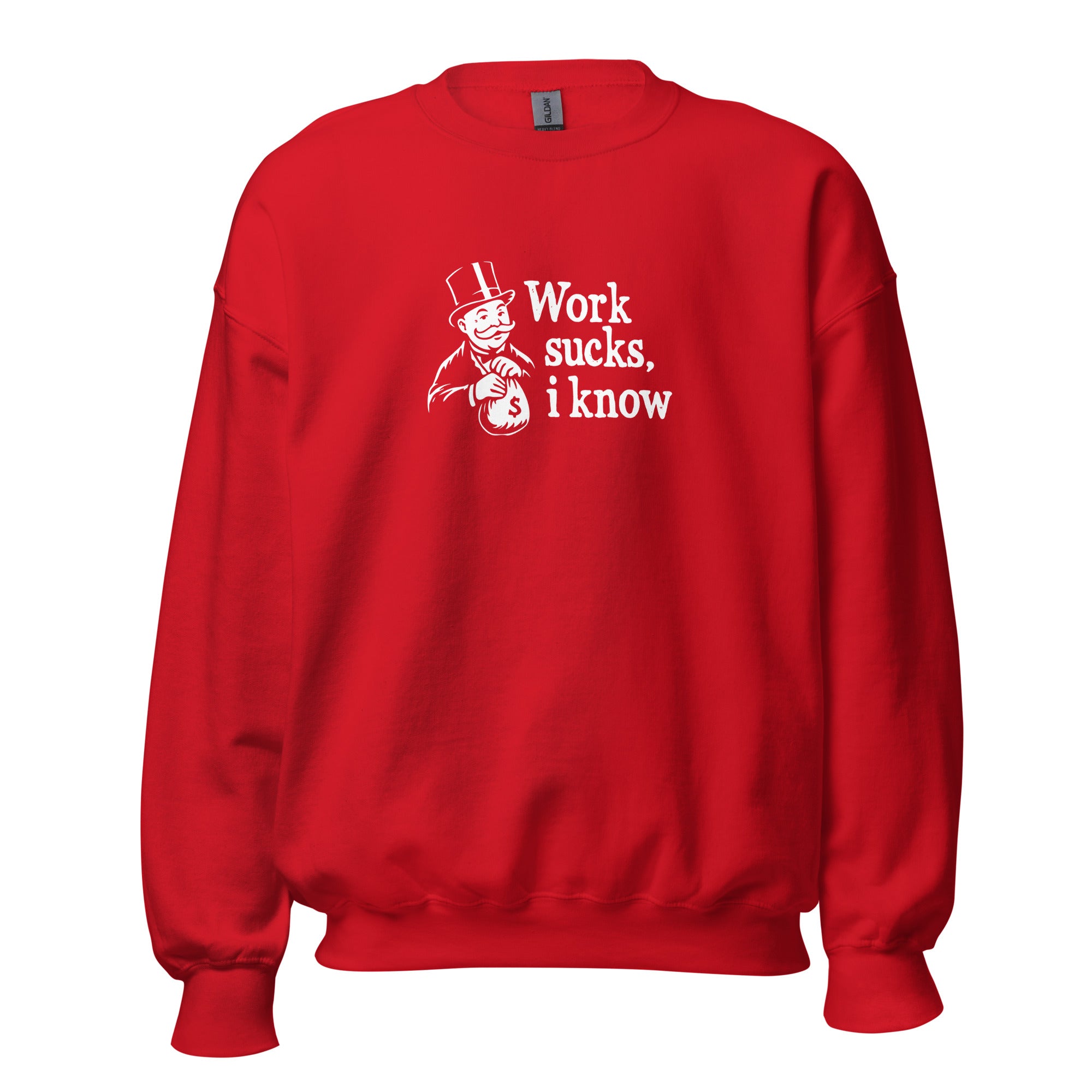
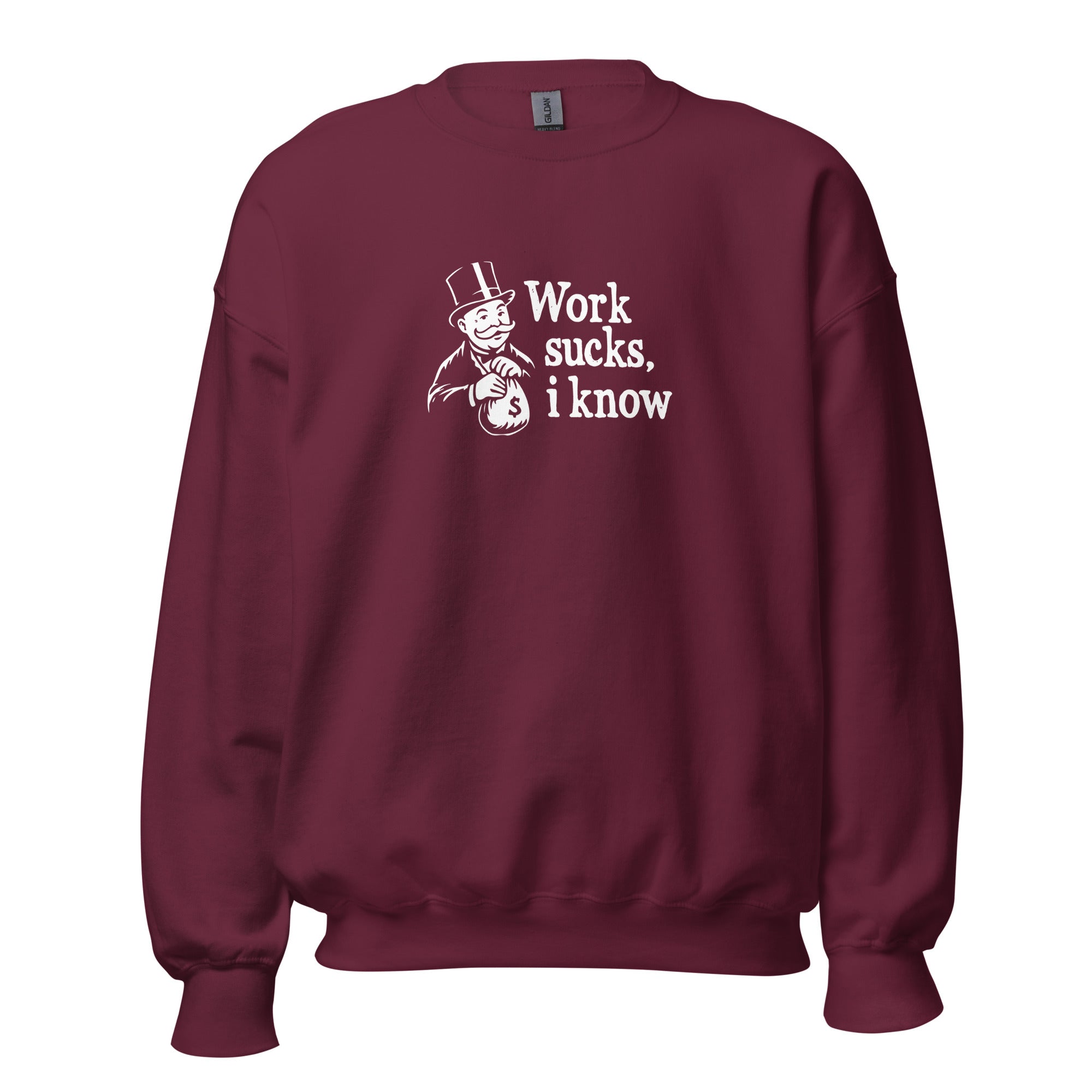
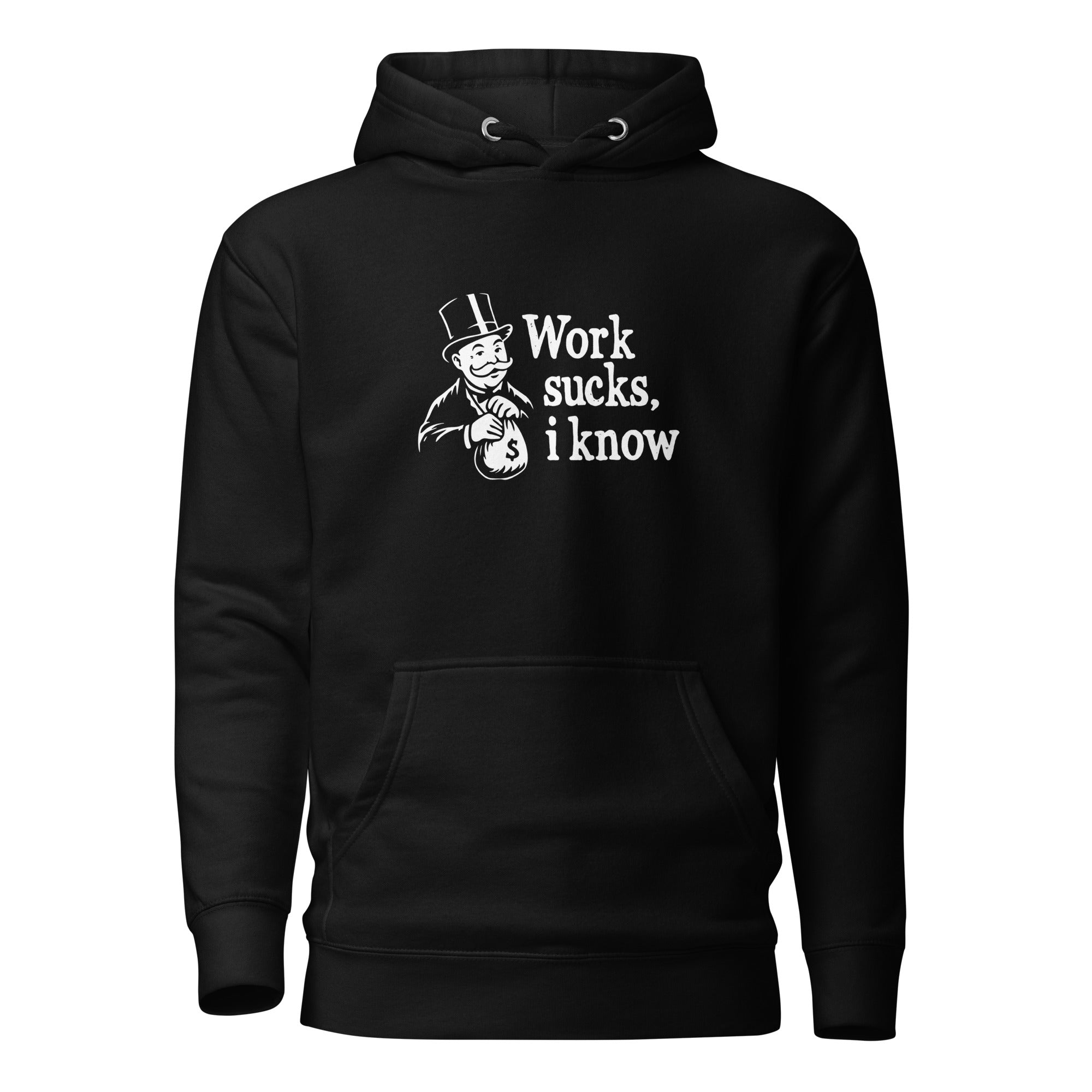
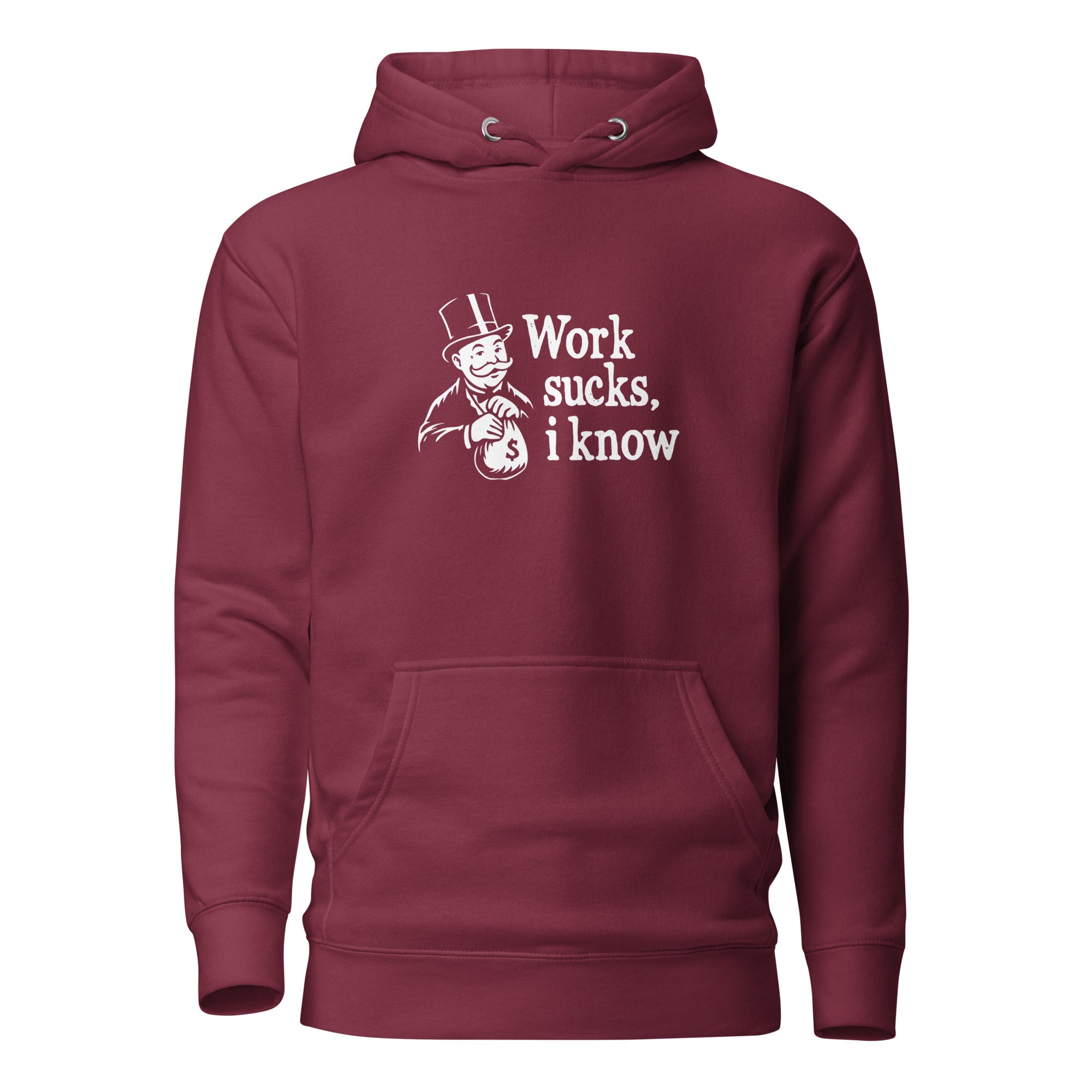
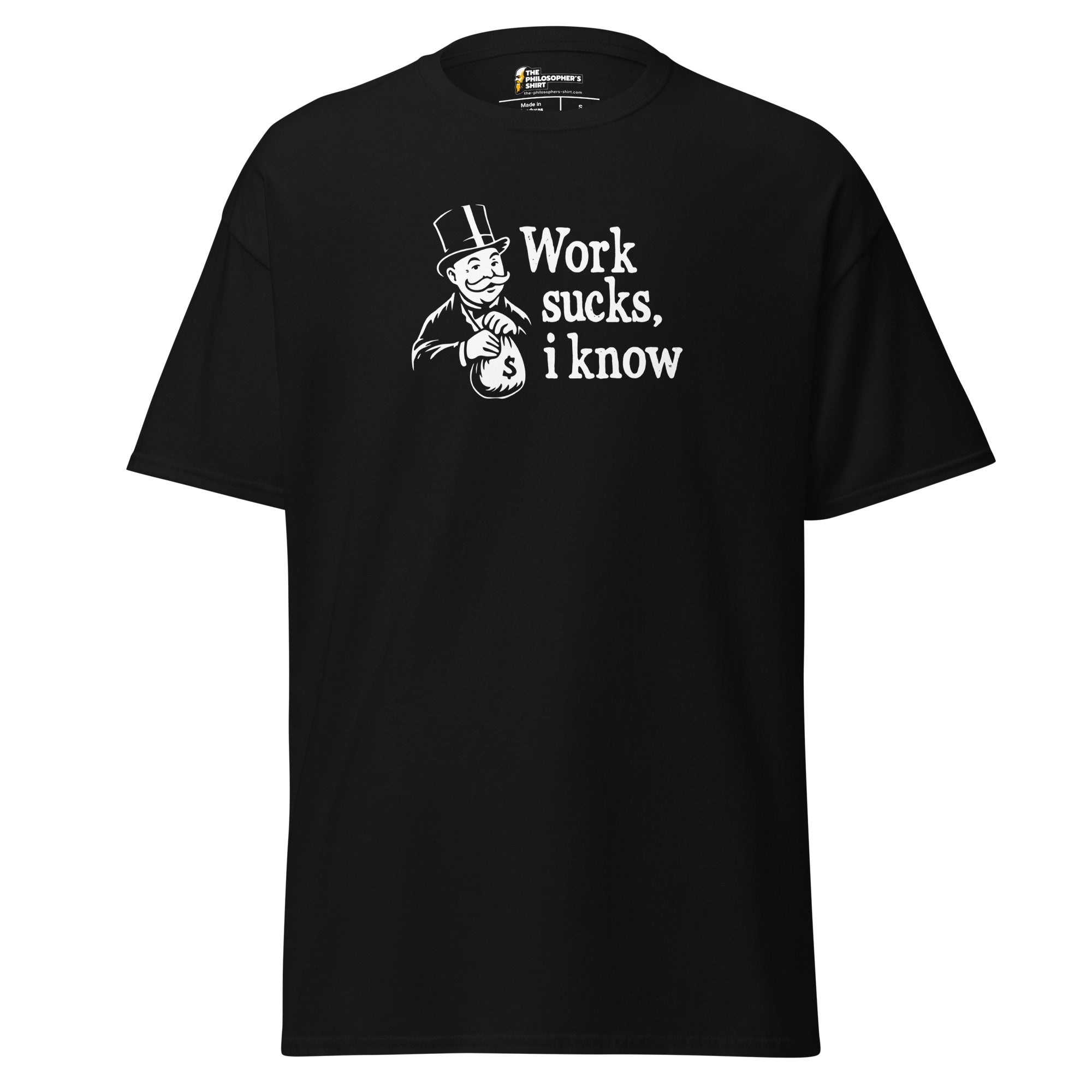
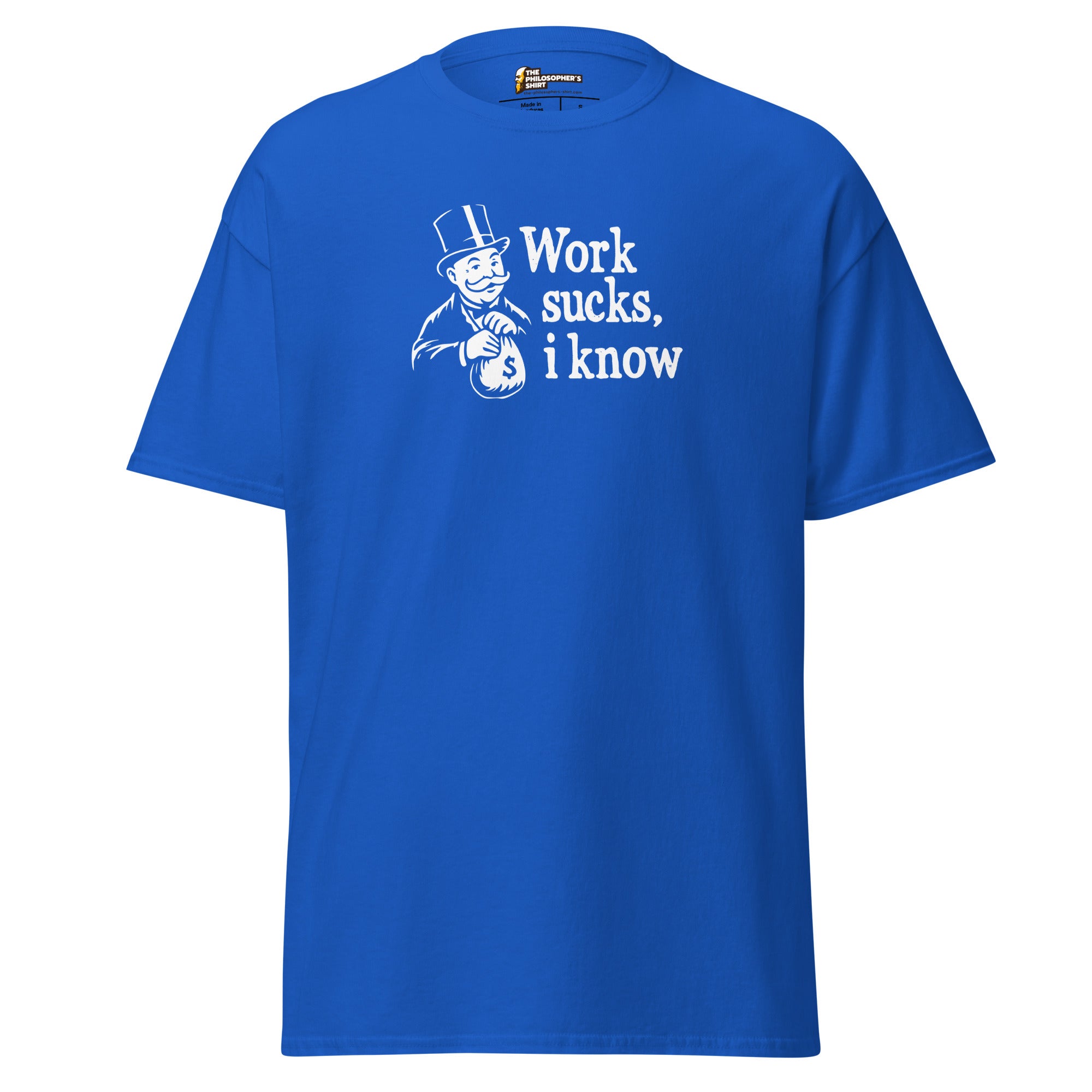
Work sucks I know

No argument, no analysis, no proposed alternative. Just a statement of fact that every single colleague will silently agree with.

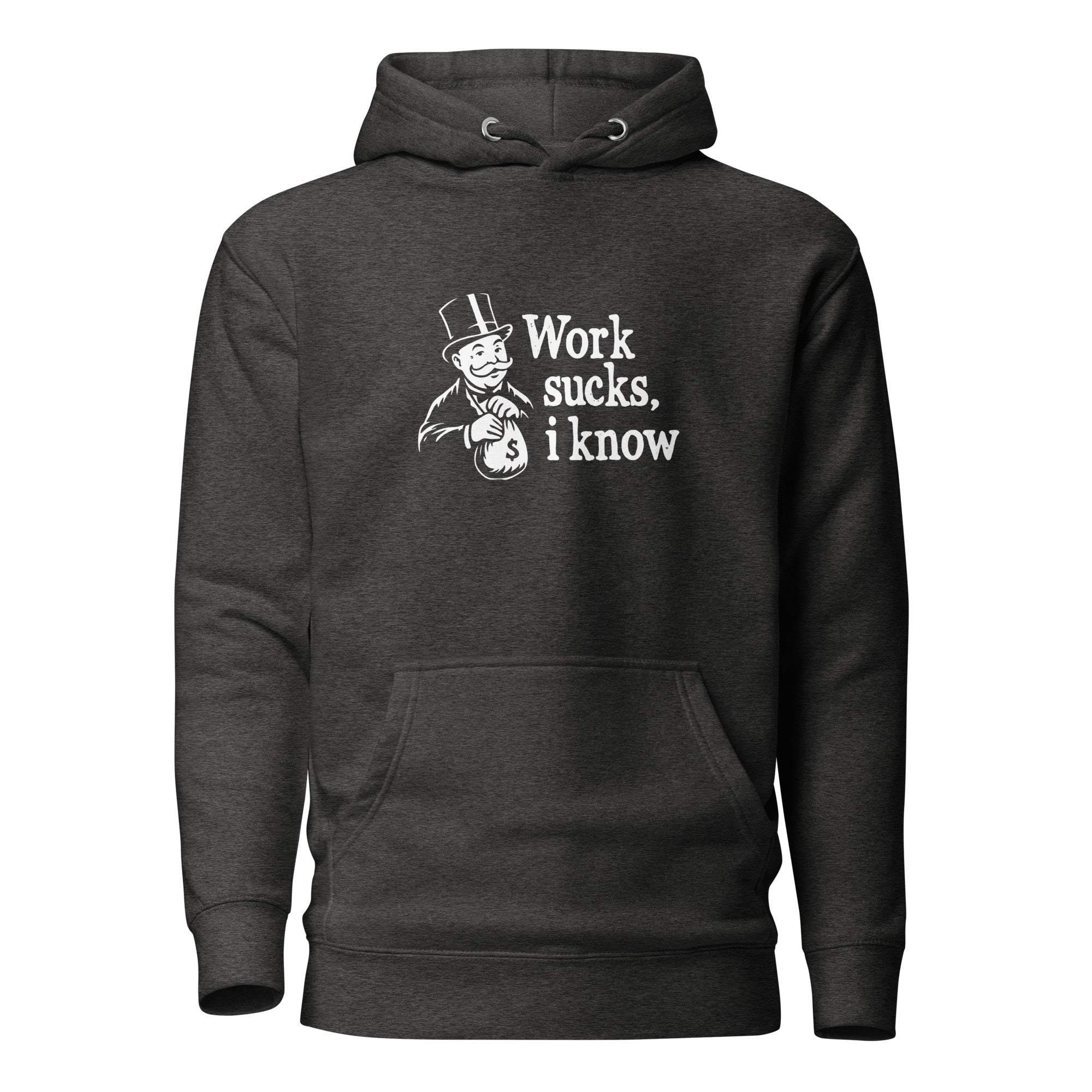
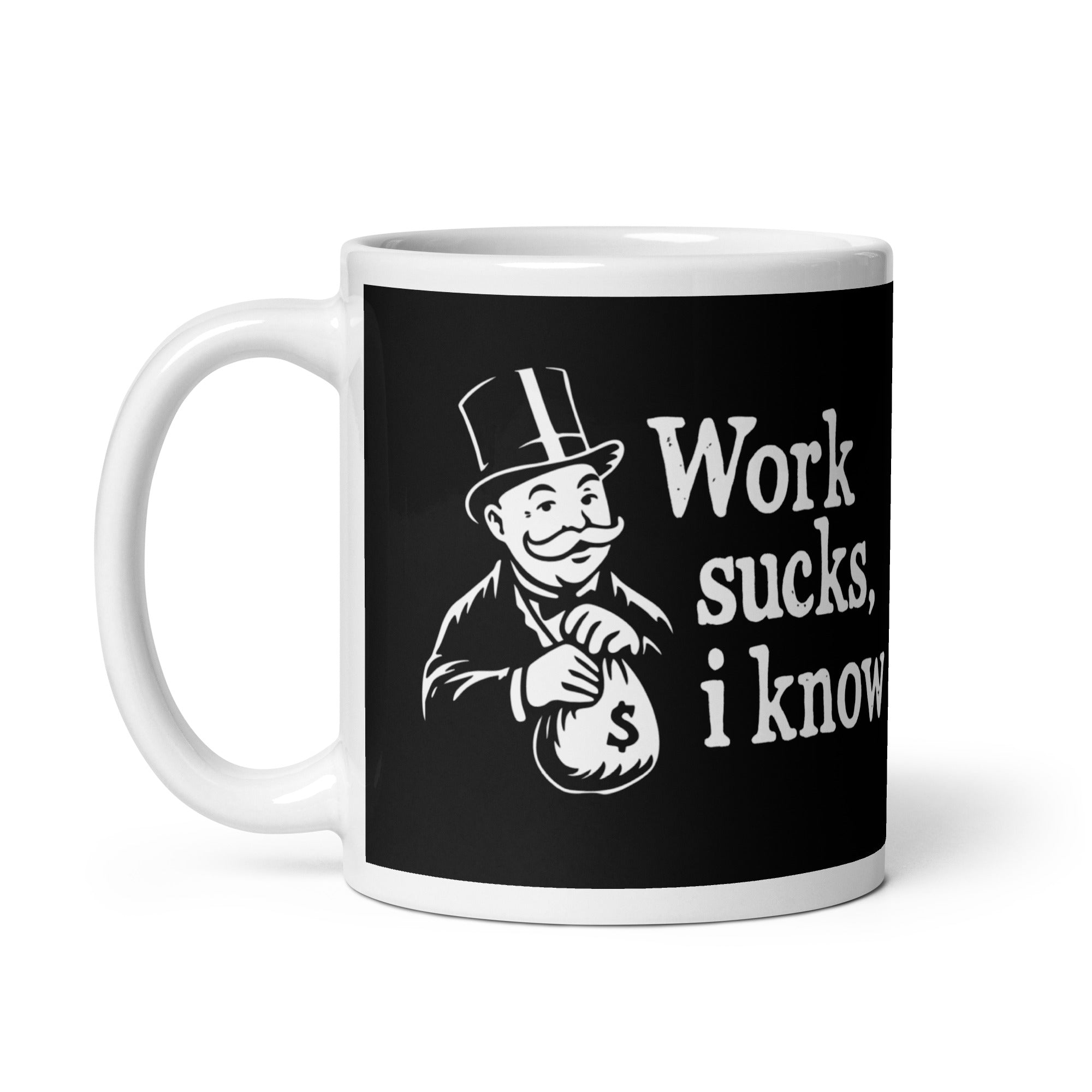
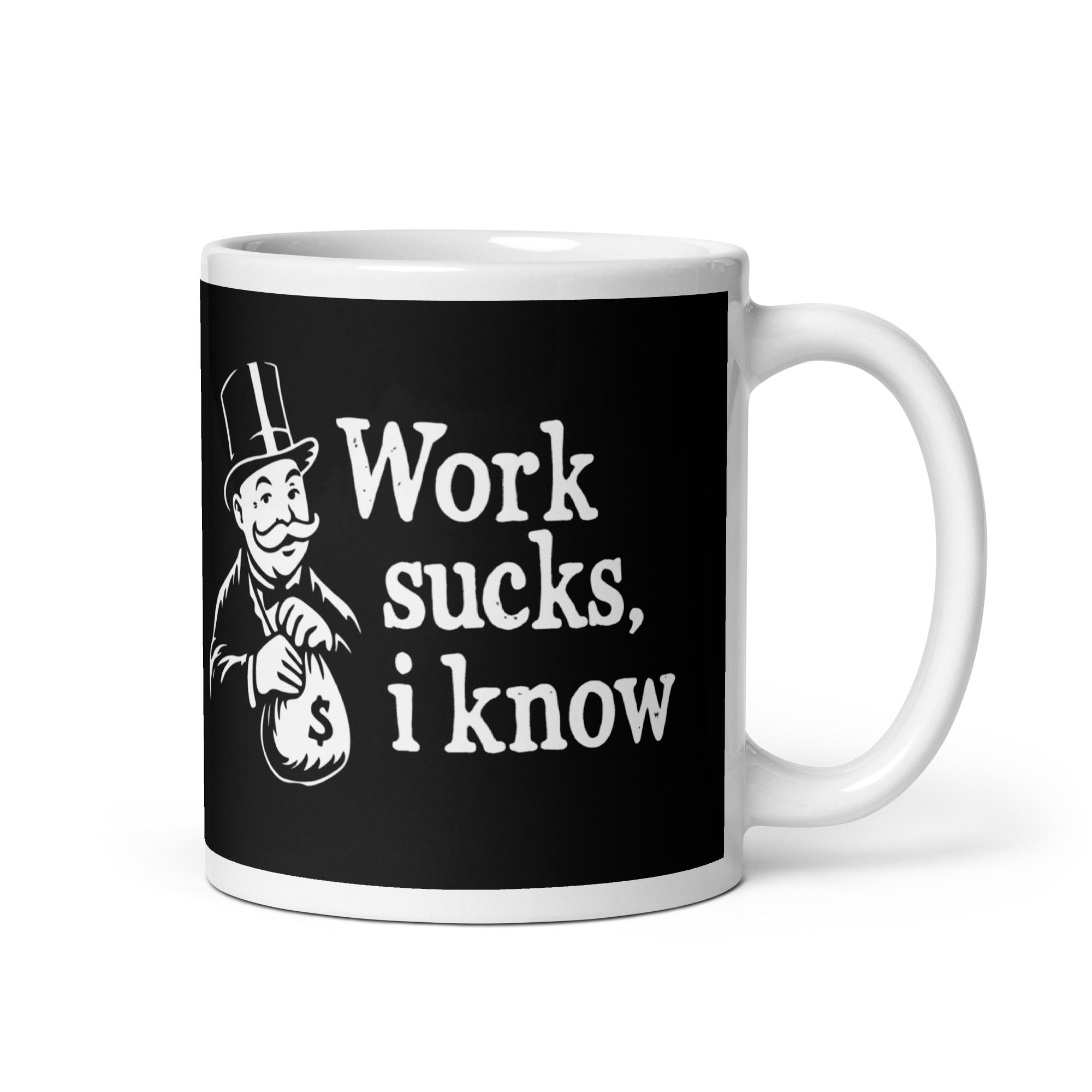
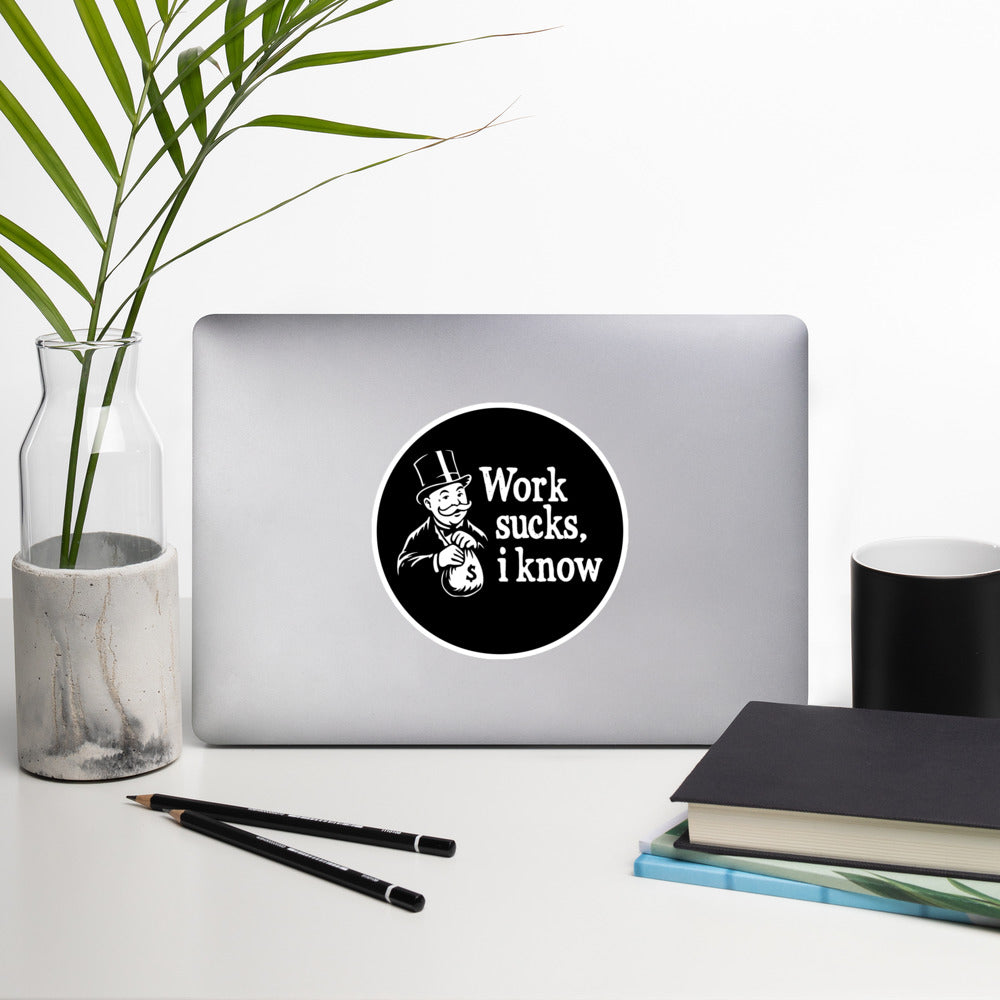
The rare design that unites an entire office regardless of pay grade. Available across tees, sweatshirts, hoodies and mugs, printed to order. An anti-capitalist gift for workers. Everyone knows. Somebody had to print it.
Questions about this design

What does the Work sucks I know design show?
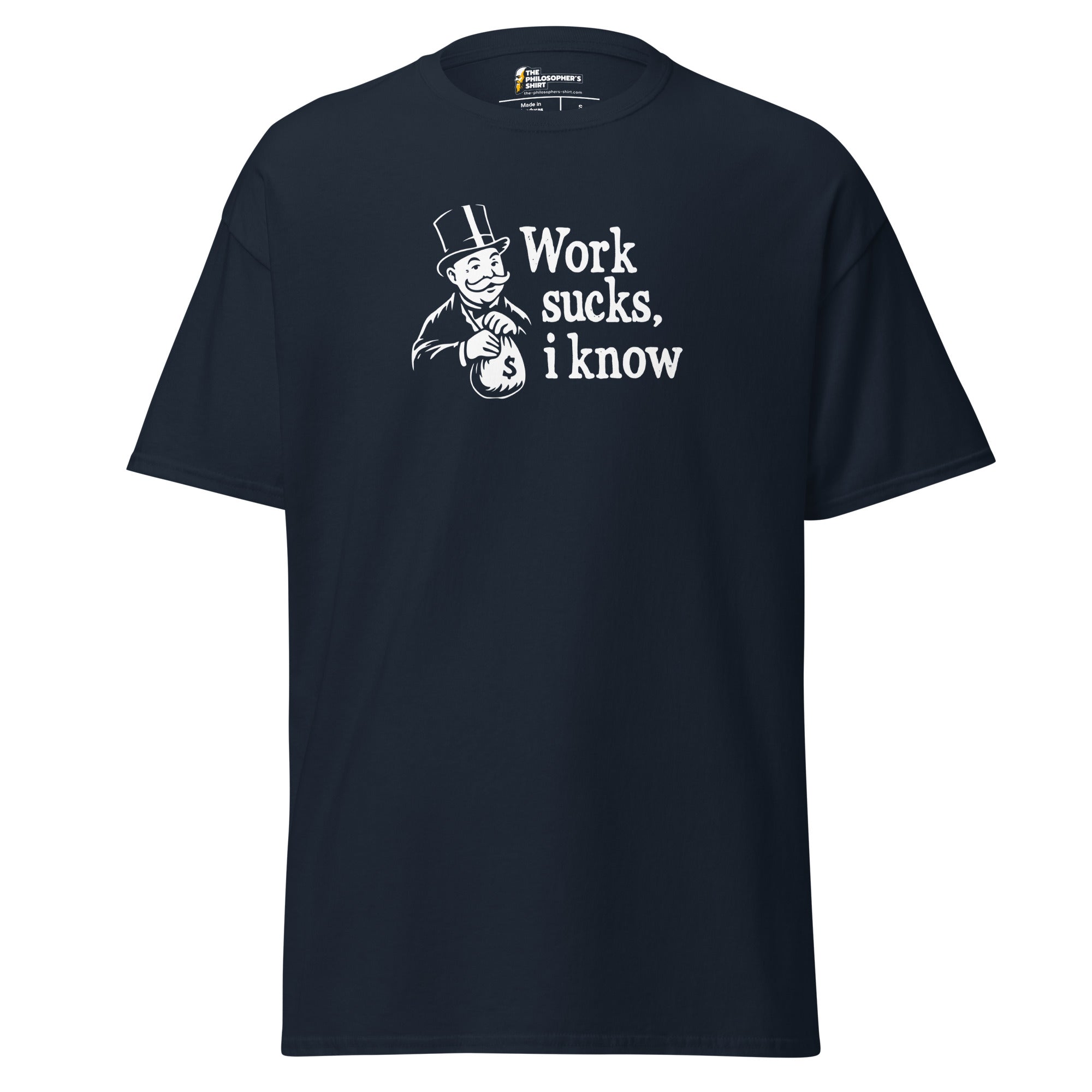
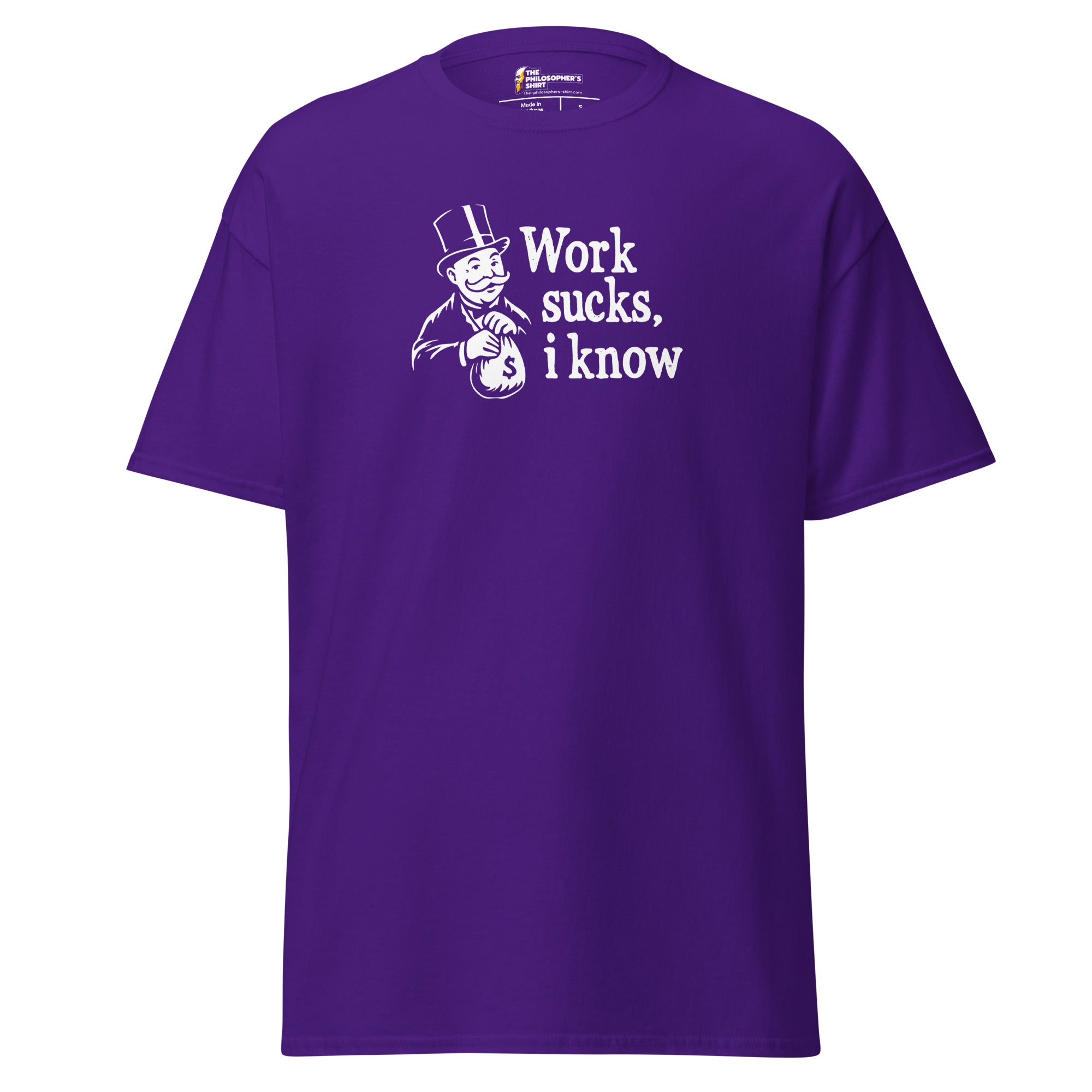
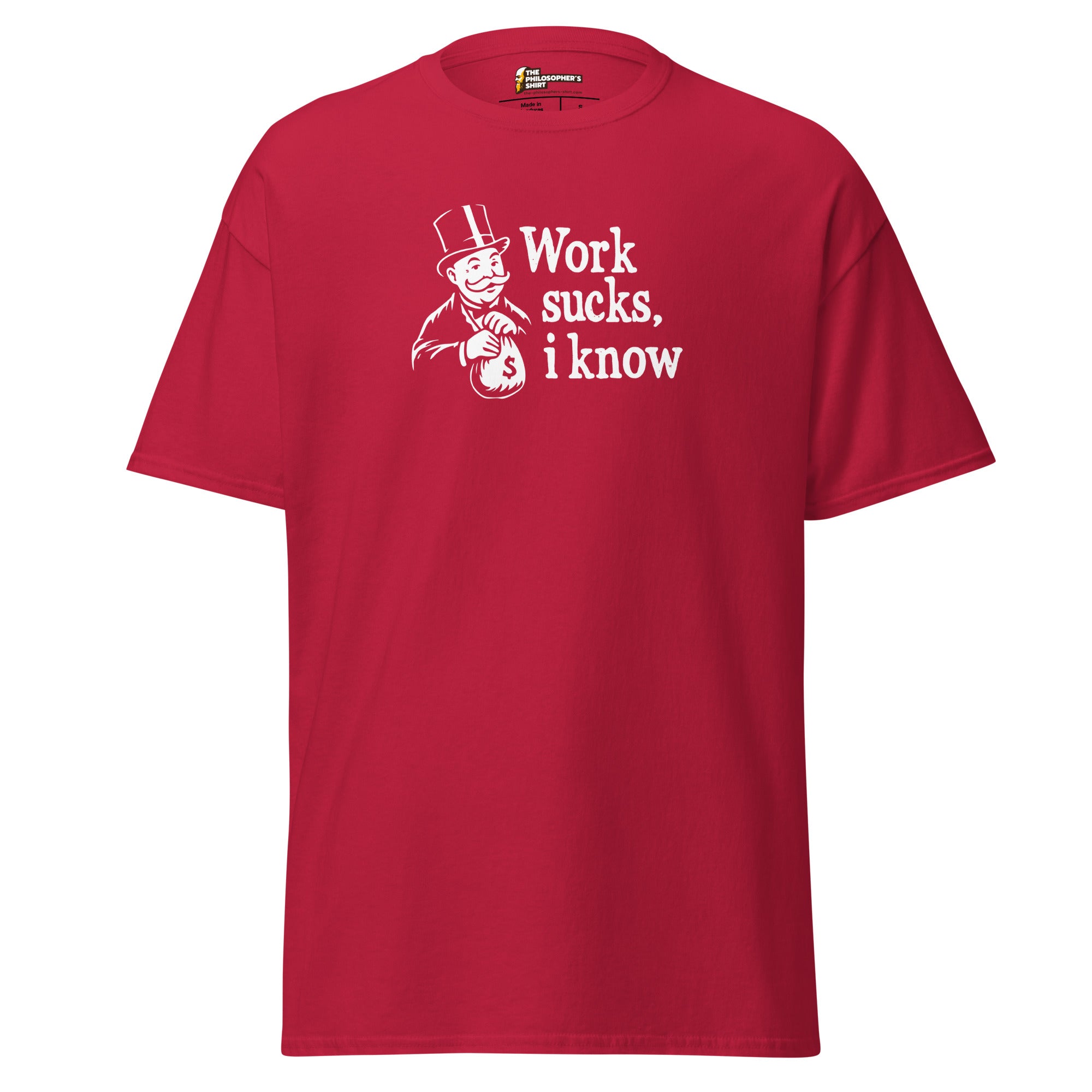
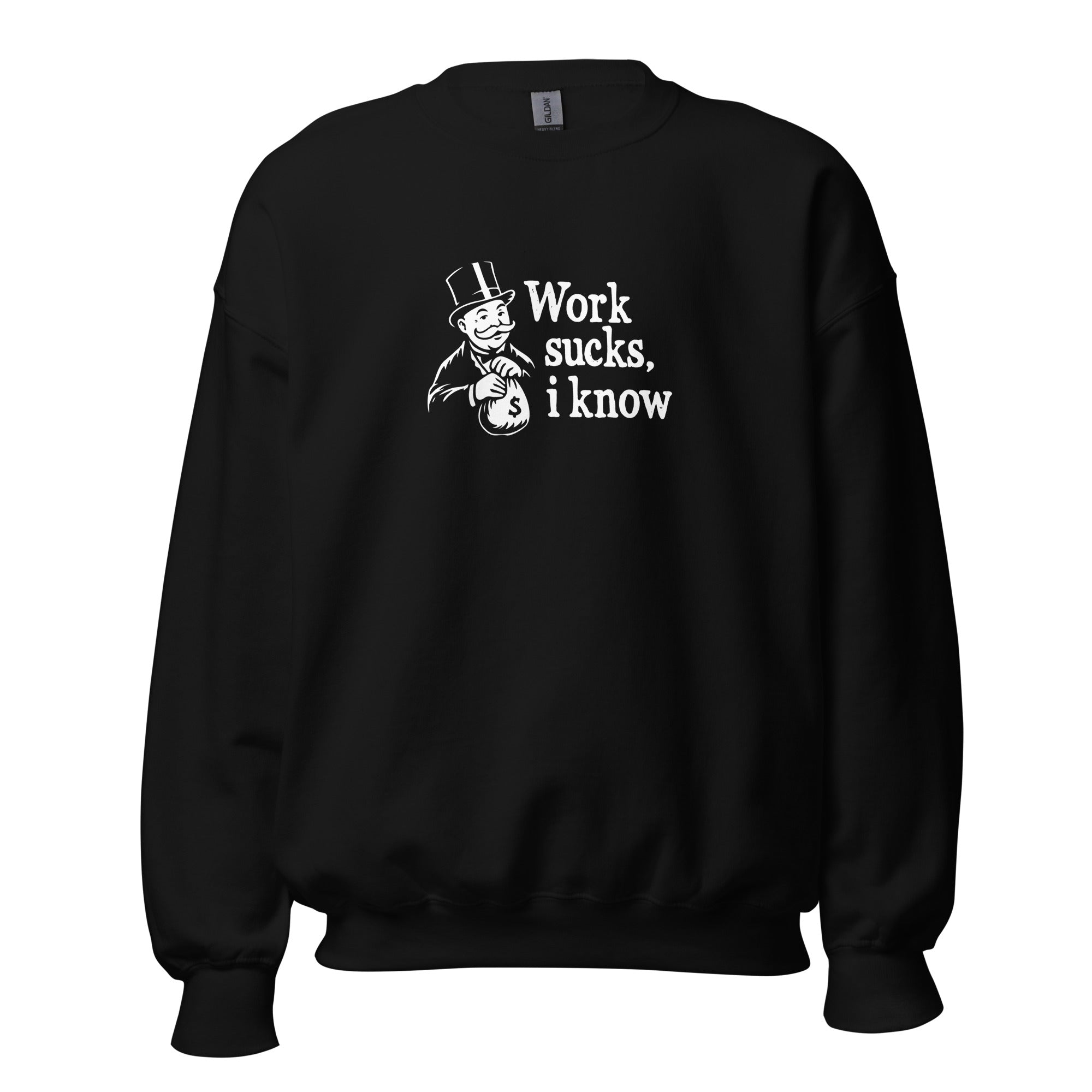
A cartoon tycoon in a top hat, with a twirled moustache and a money bag, next to the words Work sucks, I know. The joke is who is saying it – the figure of capital sympathising with the people whose work fills his bag. It is a one-line summary of two centuries of philosophy of work, from alienation to burnout.
What did Marx mean by alienation?
In his Economic and Philosophic Manuscripts of 1844, Marx argued that under capitalism workers are alienated from the product of their labour, which belongs to someone else, from the activity of work itself, from their human potential for free creative activity, and from other people. Work becomes merely a means to survive rather than an expression of who we are.
What did Aristotle say about leisure?
That leisure, not work, is the point. In the Nicomachean Ethics (Book X) he writes that we are busy so that we may have leisure, as we make war so that we may live in peace. Leisure (scholē) meant time free for thought, learning and civic life – and it is the root of the word school. The catch was that in Athens enslaved people did much of the work.
What is Bertrand Russell’s In Praise of Idleness about?
In this 1932 essay Russell argues that the belief in the virtue of work does great harm, and that modern technology could allow everyone to work about four hours a day. The rest of the time could go to science, art, play and friendship. Overwork for some and unemployment for others, he thought, was a failure of organisation, not a law of nature.
What is The Right to Be Lazy?
A pamphlet by the French socialist Paul Lafargue, Marx’s son-in-law, first published in 1880 and as a book in 1883. Mocking the labour movement’s demand for a right to work, he called the love of work a strange madness and argued that machines could cut the working day to three hours, leaving the rest for leisure and enjoyment.
Did Keynes predict a 15-hour work week?
Yes. In his essay Economic Possibilities for our Grandchildren (1930), John Maynard Keynes predicted that within a century productivity would rise so much that people might work three-hour shifts or a fifteen-hour week. Productivity grew roughly as he expected; working hours fell far less, a puzzle economists and philosophers still debate.
What did David Graeber say about pointless jobs?
The anthropologist David Graeber argued, first in a 2013 essay and then in a 2018 book, that a large share of modern paid work is so pointless that even the people doing it cannot justify its existence, yet feel obliged to pretend otherwise. He distinguished such jobs from merely unpleasant work and argued that they cause real moral and psychological harm.
What is the Protestant work ethic?
Max Weber’s term from The Protestant Ethic and the Spirit of Capitalism (1904–1905). Weber argued that Calvinist believers, anxious about salvation, treated disciplined work and saving as signs of grace, and that this attitude helped create the spirit of modern capitalism. Long after its religious roots faded, the idea that hard work is a moral duty remained.
Is this a good gift for coworkers?
Yes. It is a favourite for colleagues, office secret-gift exchanges, people starting or leaving a job and anyone who has ever stared at a spreadsheet at five to five. It says what everyone thinks without naming anyone, which makes it safe for the office and quietly subversive at the same time.
Which products are available with this design?
Work sucks I know comes as a unisex classic T-shirt, a sweatshirt, a premium hoodie, a mug and a sticker – the mug being the obvious choice for Monday mornings in the office kitchen.