No tariffs. Ever. We ship locally from the US, Canada, the UK, or the EU + Free shipping over $80 / 70€ / £60 (equivalent in all other currencies).
Search our site

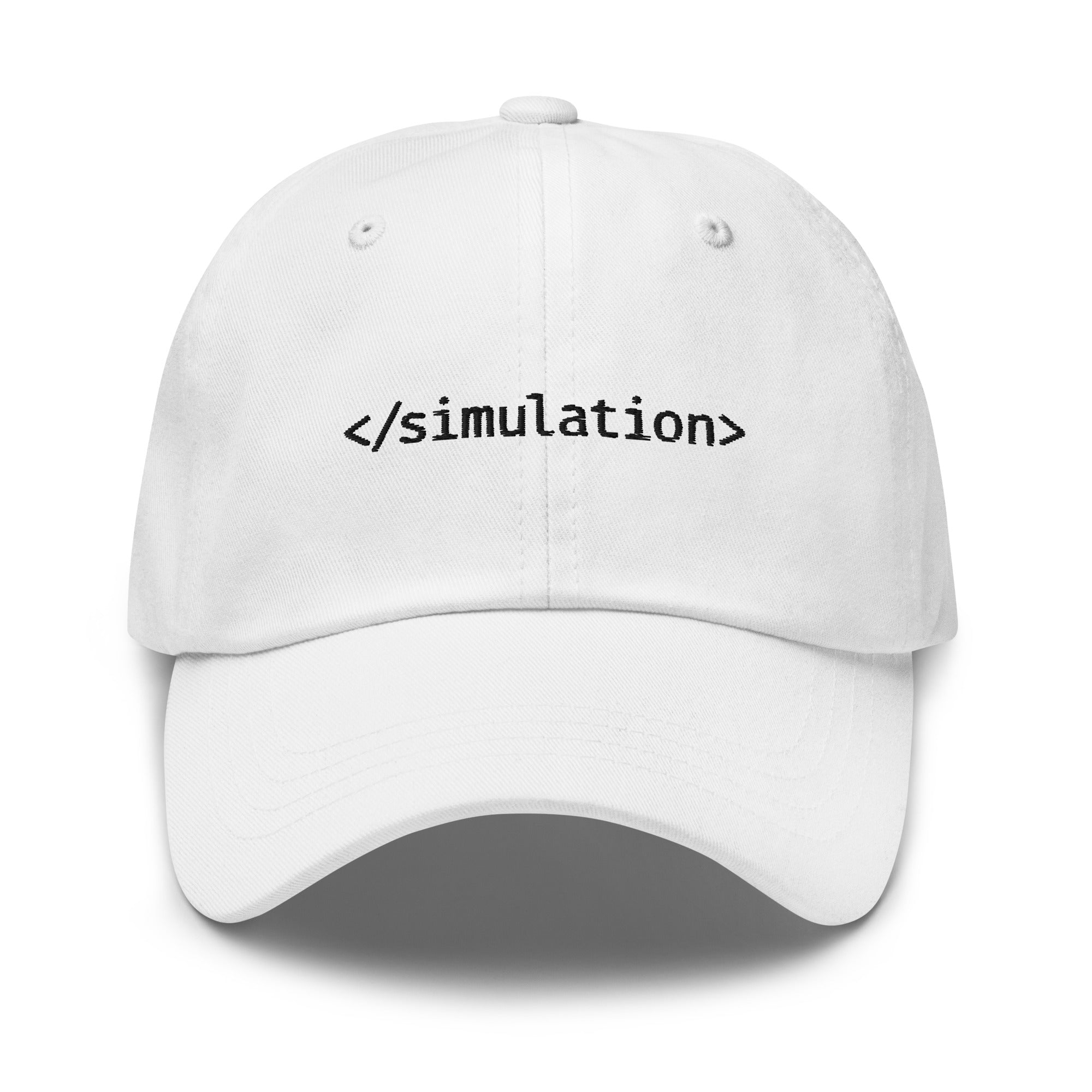
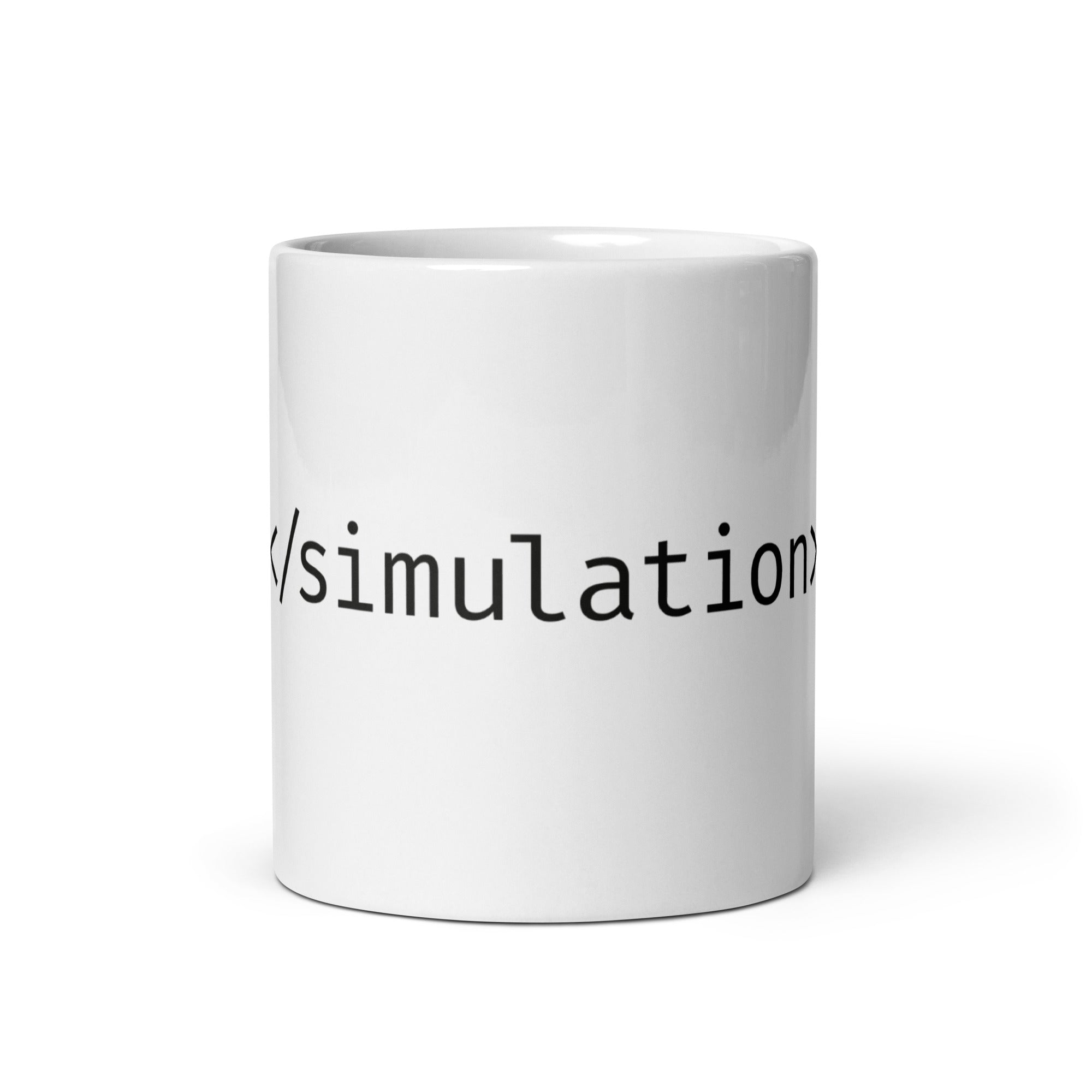
End of Simulation

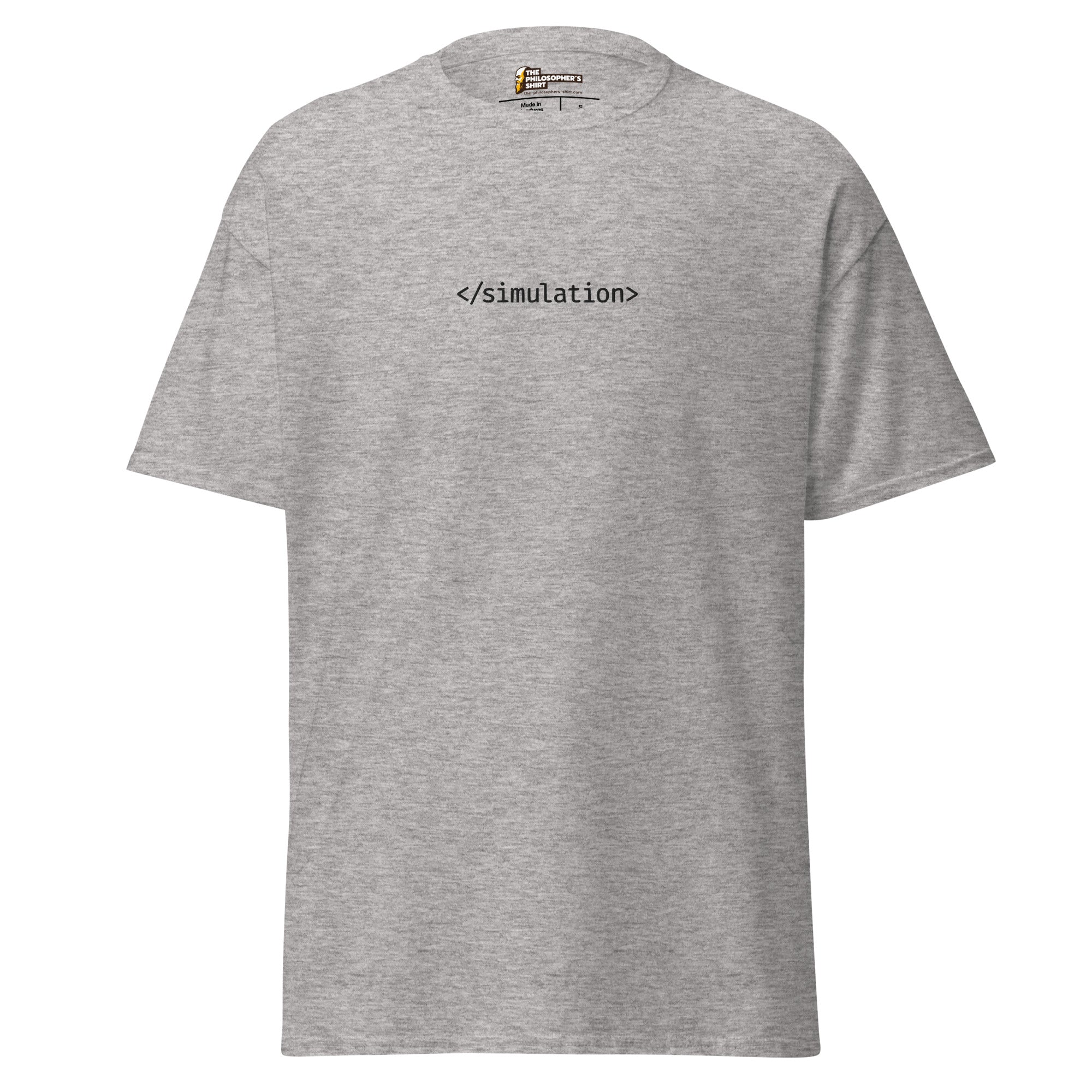
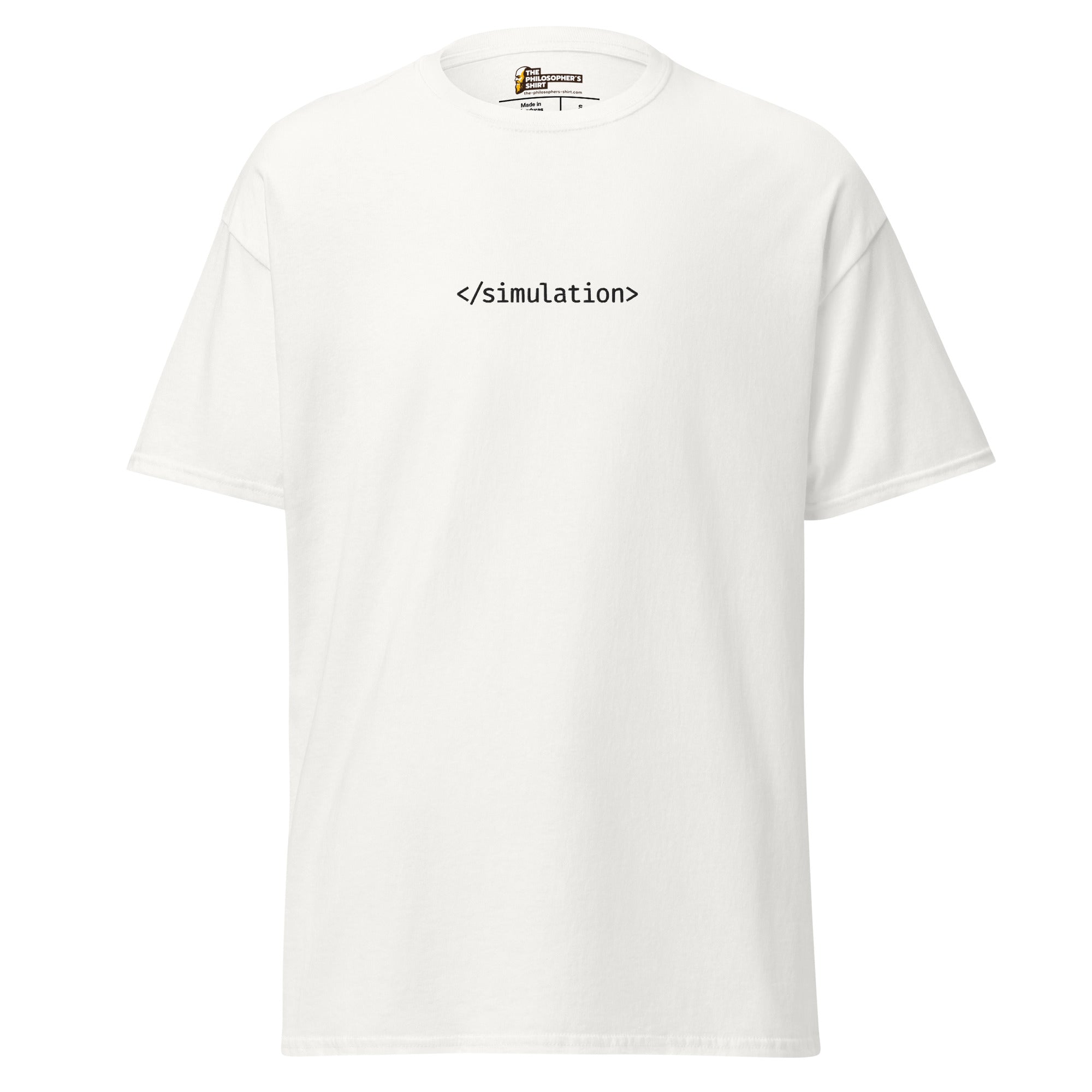
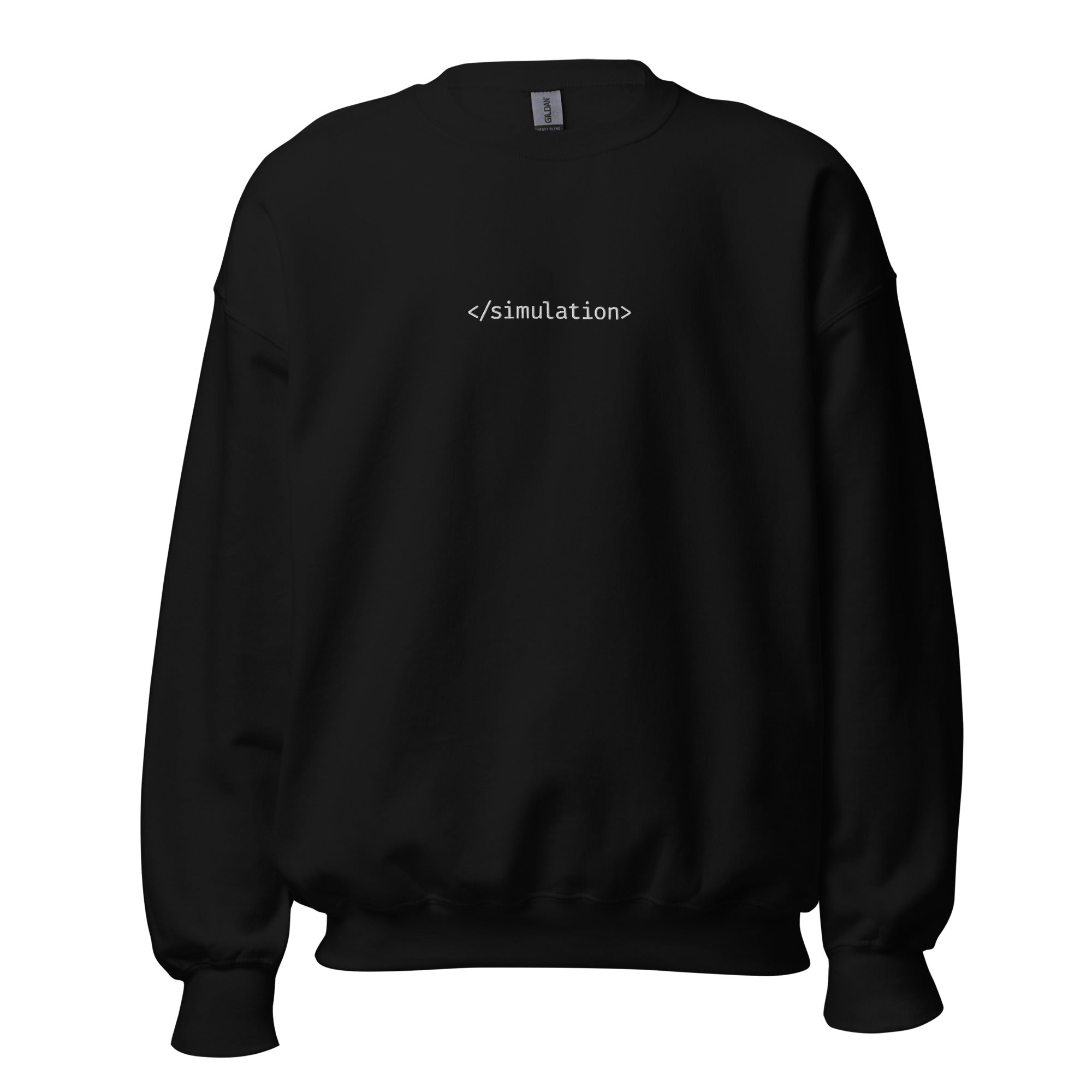
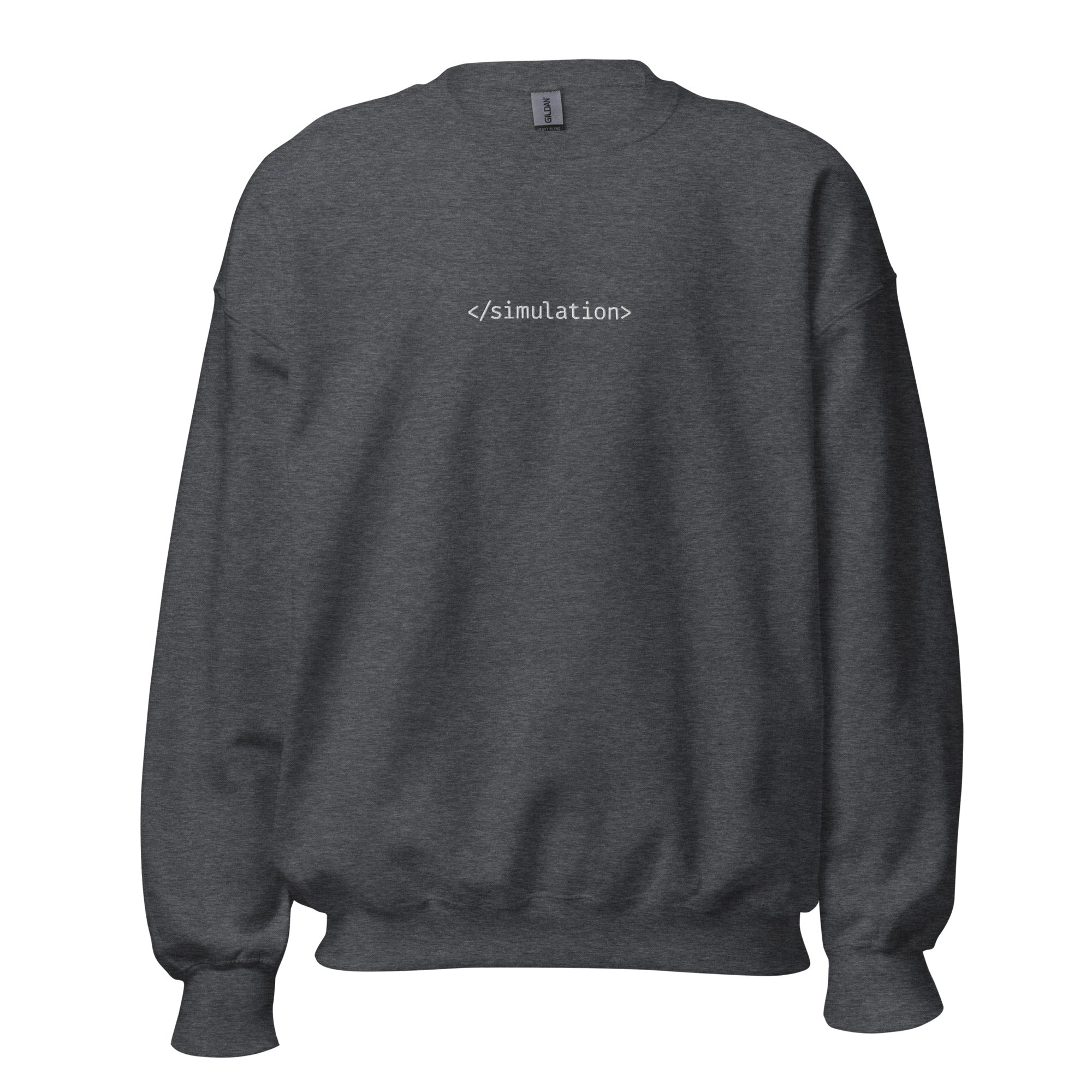
A small, dry announcement that the render has finished. Best applied somewhere you will see it during a long day of pretending things are real.

Compact enough for a laptop corner, unsettling enough to earn the space. The full range, in every format we make it in, all printed to order as you buy it. A simulation-theory gift for sci-fi thinkers. Session ended. No save file found.


Questions about this design

What does the End of Simulation design show?
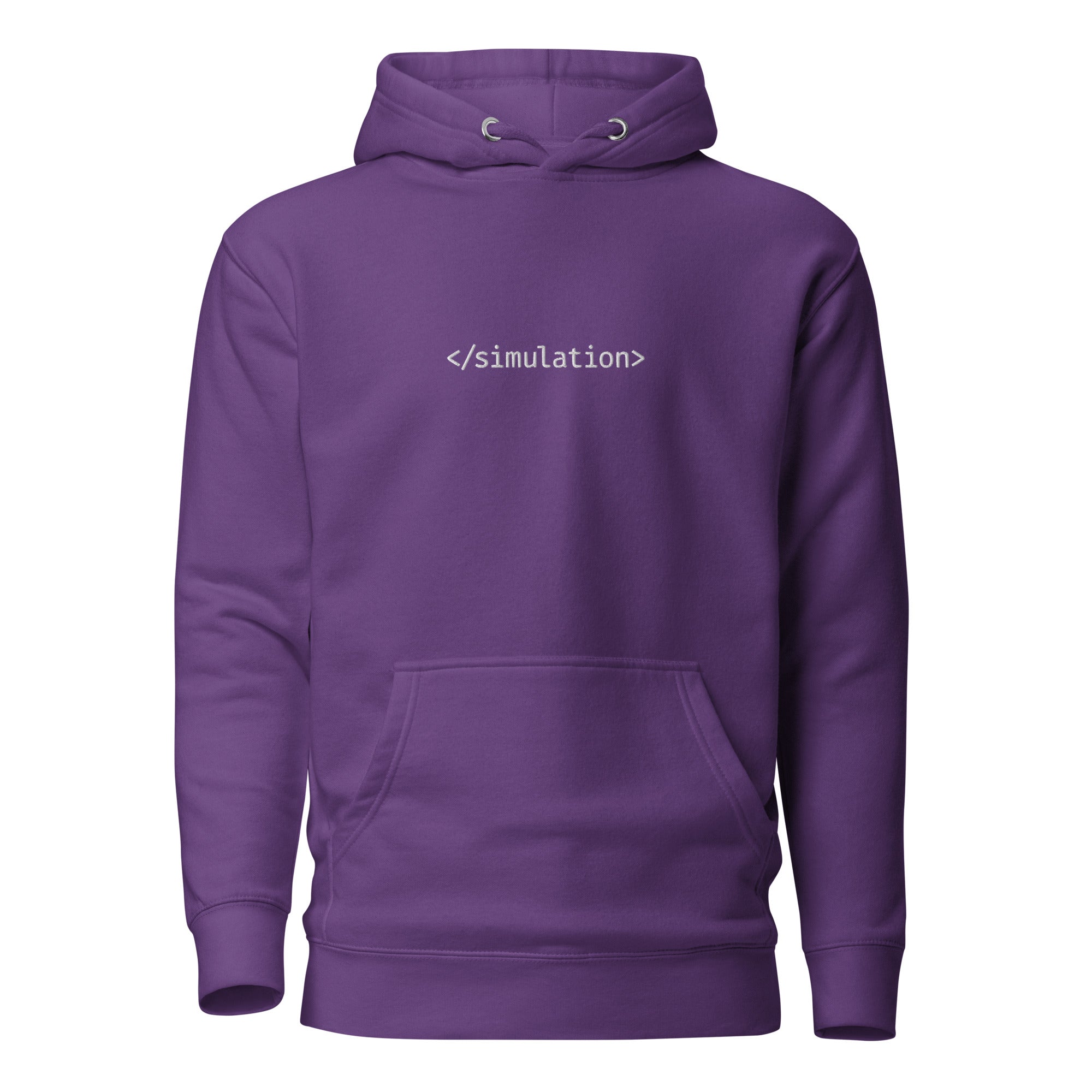
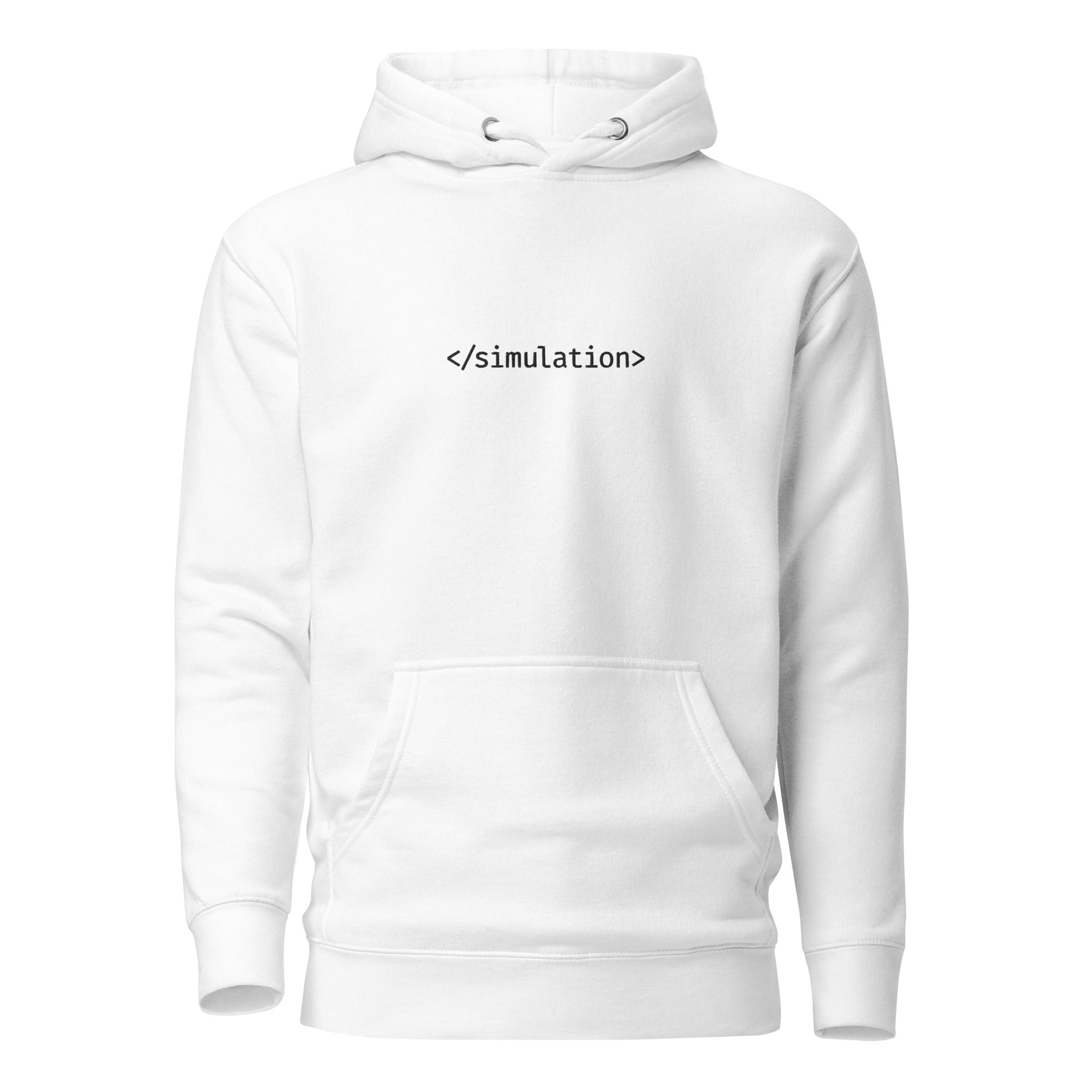
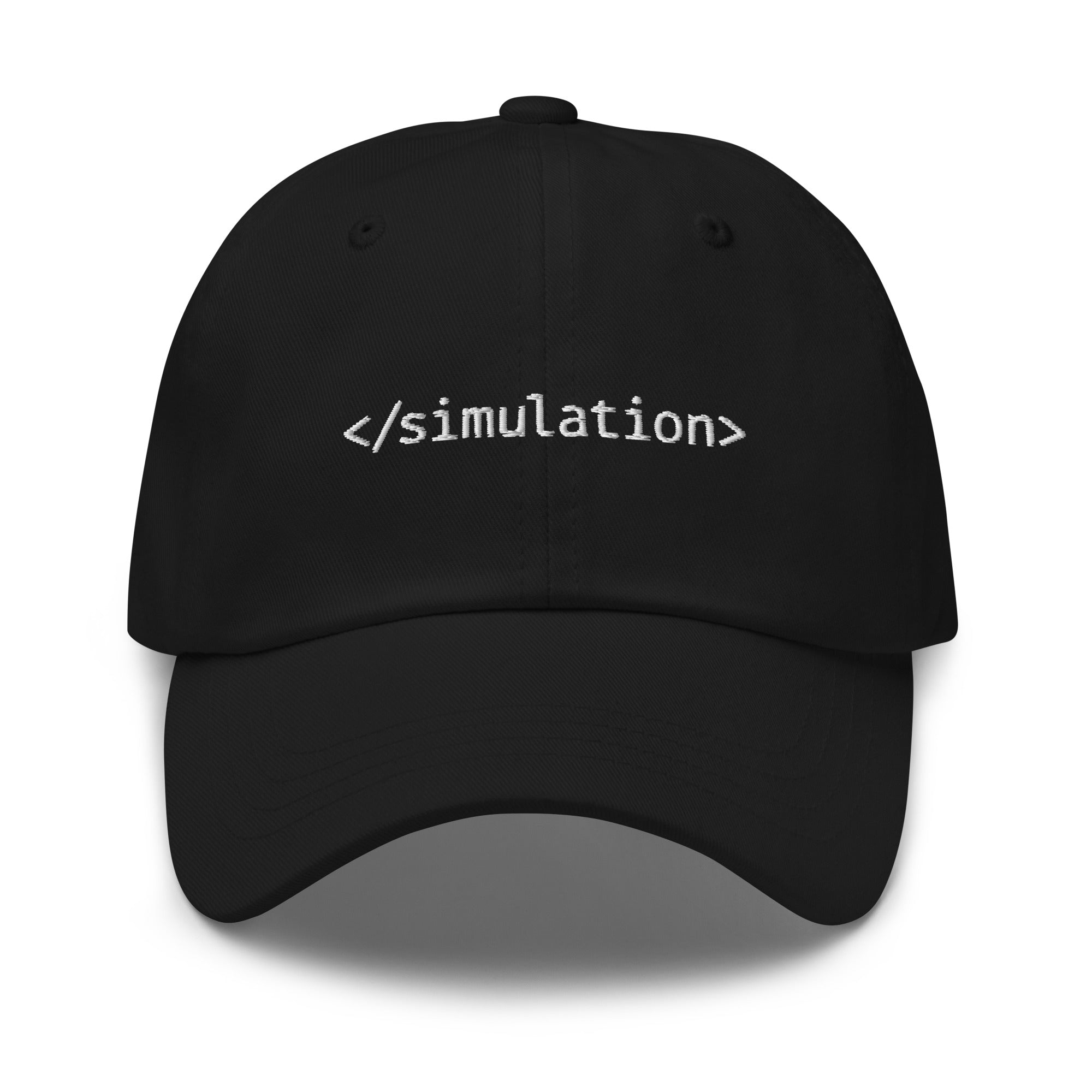
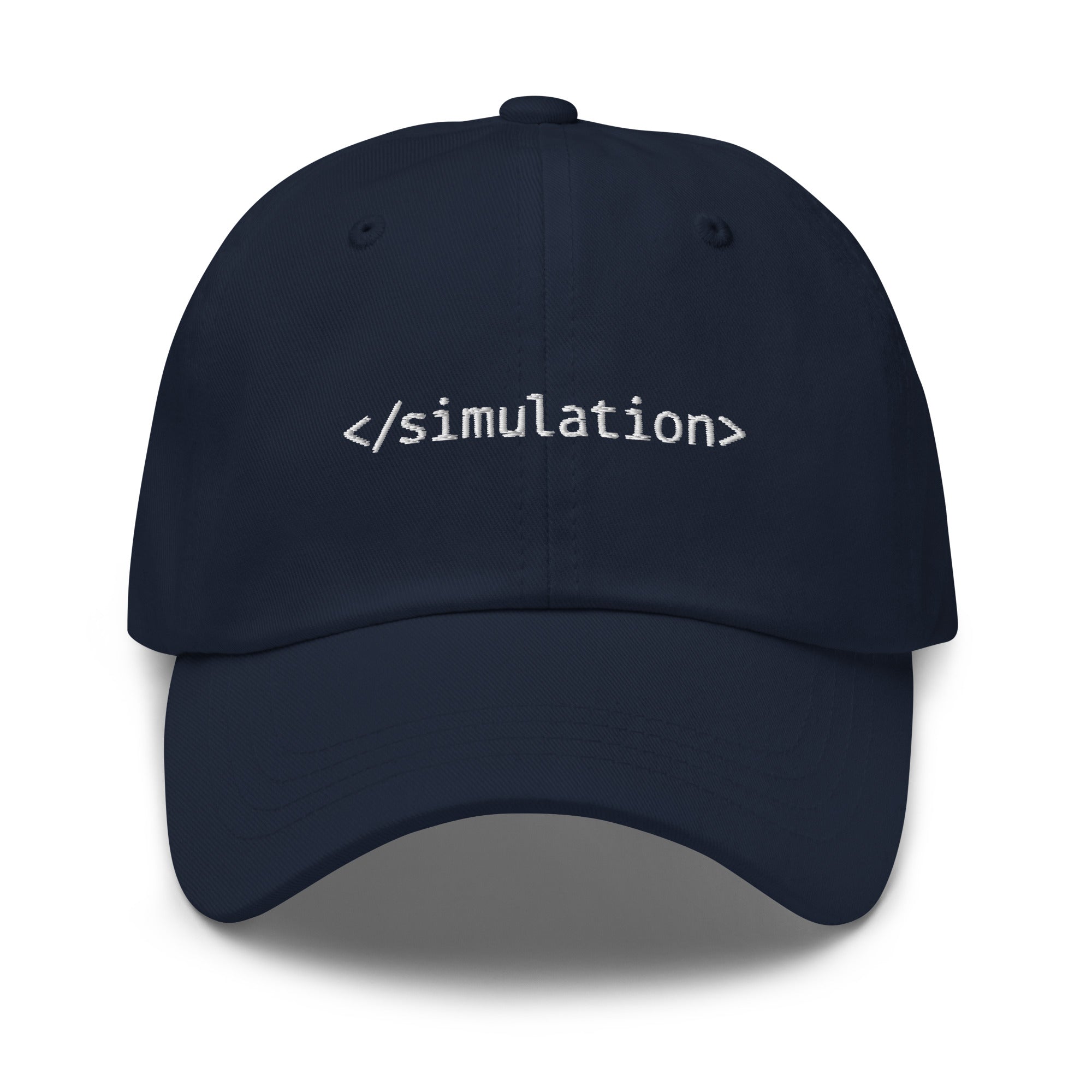
A single line of embroidered code, the closing tag </simulation>. In HTML and XML a tag with a slash marks the end of an element – so the design quietly announces that the simulation we may be living in has just been closed. A small joke for programmers and a large one for metaphysicians.
What is the simulation hypothesis?
The idea that our world, including our minds and everything we experience, could be a computer simulation run by a more advanced civilisation. It is a modern form of an old sceptical worry – that reality might not be what it appears to be – rephrased in the language of computing.
What is Nick Bostrom's simulation argument?
In his 2003 paper Are You Living in a Computer Simulation?, published in The Philosophical Quarterly, Bostrom argues that at least one of three claims is true – almost all civilisations die out before they can run detailed simulations of minds, or almost none of those that could are interested in doing so, or we are almost certainly living in a simulation. He does not say which one holds.
Are we living in a simulation?
Nobody knows, and there is no empirical evidence either way. Critics argue the hypothesis cannot be tested and therefore explains nothing. David Chalmers, in Reality+ (2022), takes a different line – even if we were simulated, tables, people and our lives would still be real, just made of digital rather than fundamental physical stuff.
Is the simulation hypothesis a new idea?
Only its technology is new. Plato's allegory of the cave pictures prisoners who take shadows for reality; Zhuangzi wondered whether he was a man who dreamt of being a butterfly or a butterfly dreaming of being a man; Descartes imagined an evil demon deceiving him about everything. The simulation hypothesis replaces the demon with a computer.
What is Plato's allegory of the cave?
In Book VII of the Republic, Plato describes prisoners chained in a cave since birth, seeing only shadows of objects cast on a wall, which they take for the whole of reality. One prisoner is freed, climbs into the sunlight and slowly grasps the real world. The story illustrates education as a turning of the soul from appearances towards truth and the Good.
What is Zhuangzi's butterfly dream?
In the second chapter of the Zhuangzi, the Daoist thinker dreams he is a butterfly, happily fluttering about. On waking he cannot tell whether he is Zhuangzi who dreamt of being a butterfly, or a butterfly now dreaming of being Zhuangzi. The passage questions how firmly we can separate dream from waking, and is often read as a reflection on the transformation of things.
Is End of Simulation a good gift for programmers and philosophy fans?
Yes – it suits developers, computer science and philosophy students and anyone who has wondered whether reality has a source code. The minimalist design comes embroidered on a classic T-shirt, sweatshirt and premium hoodie, and also on a cap, a mug and a sticker.